The Next Era of Healthcare Is Personal
In this episode, McKinsey’s Eric Kutcher talks with Moderna CEO Stéphane Bancel about how mRNA technology and AI are reshaping healthcare from rapid vaccine development to truly personalized medicines. Bancel explains that mRNA is an "information molecule" that can be programmed to instruct the body to fight viruses, target cancer cells, or correct genetic defects, enabling bespoke treatments for each patient. He highlights the shift from a one‑size‑fits‑all drug model to a manufacturing‑process approval model, which could cut development time and waste while improving outcomes. The conversation also covers Moderna’s expanding platform—including flu‑COVID combo shots, rare‑disease therapies, and upcoming individualized cancer immunotherapies—and the role of AI‑driven labs in accelerating discovery.

TRIBE With Sebastian Junger - Episode 4 - Richard Wrangham
In this episode, host Sebastian Junger talks with Harvard evolutionary biologist Richard Wrangham about the stark differences between chimpanzee and bonobo societies and what they reveal about human violence and cooperation. Wrangham explains how male chimpanzees engage in organized, often...

Beyond Senolytics: Senoadaptive Drugs & Clinical Data on GPX4 Modulation (Dr. Marco Quarta, Rubedo)
In this episode, Dr. Marco Quarta, co‑founder and CSO of Rubedo Life Sciences, discusses the company’s breakthrough first‑in‑class GPX4‑modulating drug RLS1496, which has just reported preliminary Phase 1 basket‑trial data across multiple skin indications. He explains how Rubedo’s AI‑enabled single‑cell multi‑omics...

Turning Abandoned Drugs Into Breakthroughs
In this episode, PureTech Health president Eric Alenko explains the company’s hub‑and‑spoke model for rescuing abandoned therapeutics, focusing on systematic identification of unmet needs, validation of human pharmacology, and solving the specific liabilities that halted development. He details how PureTech...

Philosophy of Physics Meets Quantum Engineering with Elise Crull
In this episode, host Sebastian Hassinger talks with Elise Crull, an associate professor of philosophy of physics, about the growing relevance of philosophical analysis to quantum engineering. Crull explains how the rise of quantum computing forces physicists to confront interpretive...

Can We Reverse Aging?
The episode explores the rapidly advancing field of longevity science, focusing on cellular rejuvenation techniques that aim to reverse aging at the cellular level. It traces the discovery of Yamanaka factors, their initial cancer risks, and subsequent refinements by researchers...
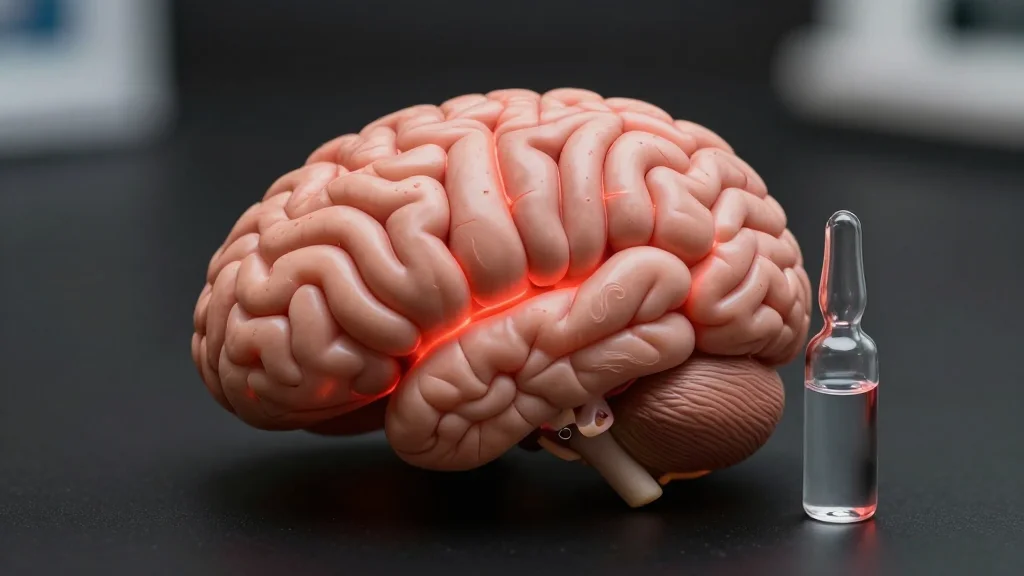
864: Investigating How Brain Inflammation May Contribute to Compulsivity - Dr. Laura Bradfield
In this episode, Dr. Laura Bradfield, a senior lecturer in psychology at the University of Sydney, discusses her research on how neuroinflammation in the brain may drive compulsive behaviors across disorders such as OCD, substance use, Parkinson's and Huntington's disease....

#391 ‒ Colorectal Cancer Screening: Importance of Early Screening, Colonoscopy as a Screening and Preventive Tool, and How to Build...
In this episode Peter Attia explains why colorectal cancer is the most preventable major cancer and walks listeners through the biology, screening options, and personalized strategies for early detection. He highlights colonoscopy’s unique dual role as a diagnostic and therapeutic...

EXCLUSIVE: Peptides, Fauci & MAHA - What You Need to Know | Daily Pulse
In this episode, host Maria Z interviews Dr. Lynn Finn, a retired infectious disease specialist turned clinical researcher, to unpack the rising popularity and risks of peptide supplements. Dr. Finn explains what peptides are, their potential therapeutic uses, and why...
Remembering J. Craig Venter, PhD
In this tribute episode of Touching Base, host Corinna Singelman and Gen editors John Sterling and Kevin Davis reflect on the life and legacy of biotech pioneer J. Craig Venter, who recently died at 79. They recount Venter's groundbreaking role...

The Cadaveric Lottery of Edinburgh
The episode explores how early‑19th‑century Edinburgh, then a premier medical hub, faced a dire shortage of cadavers for anatomy teaching, leading to a black market of grave‑robbing and the infamous murders by Burke and Hare. It details the public horror,...
Tattoos: Are They Toxic?
In this episode of Science Versus, host Rose Rimmler and tattoo enthusiast Blythe Terrell explore the health implications of tattoo ink, discussing recent research that shows ink particles migrate to lymph nodes and can trigger immune responses, including chronic inflammation....

Everything You Need To Know About The Nuclear Energy Boom - EP 70 James Krellenstein
In this episode, host Ashley Vance and nuclear expert James Krellenstein examine the rise, decline, and potential resurgence of nuclear power in the United States, contrasting it with China’s aggressive expansion. They explain how the U.S. went from a 1960s...

The New Space Race: NASA, Artemis, and the Race to the Moon
In this episode, NASA Administrator Jared Isaacman outlines the agency’s aggressive push to accelerate Artemis moon missions, shifting launch cadence from years to months and rebuilding core in‑house competencies. He emphasizes the strategic importance of a sustained lunar presence for...
Addressing Treatment Gaps in Gout
In this episode, Crystallis Therapeutics CEO James McKay explains the biology of gout, why existing urate‑lowering drugs often fail, and how the company’s next‑generation URAT1 inhibitor, detenurad, aims to close the large treatment gap for moderate‑to‑severe patients. He highlights that...
BI 237 Ehud Ahissar: Consciousness and Perceptual Dualism
In this episode, host Paul interviews neuroscientist Ehud Ahissar about his concept of "perceptual dualism," which posits that consciousness arises from two distinct modes of brain activity: digital brain‑brain communication (BB) and analog brain‑world interaction (BW). Ahissar traces his journey...
Your Phone Is Rewriting Your Biology — Daniel DeBaun (Former Bell Labs Engineer)
In this episode, former Bell Labs engineer Daniel DeBaun explains how the electromagnetic fields (EMF) emitted by smartphones and emerging 5G/6G networks can affect human biology, from DNA damage and calcium influx in cells to impacts on the gut microbiome,...

China Is Beating the U.S. in Space?!
In this episode of China Decode, hosts Alice Han and James King examine China's rapid advancements in space, highlighting milestones such as a Mars rover, a lunar far‑side sample return, a new space station, over 90 launches in 2025, a...

863: Developing Novel Materials with Wide Applications From Medicine to Manufacturing - Dr. Tim Long
In this episode, Dr. Tim Long, a chemistry professor and director of the Macromolecules Innovation Institute at Virginia Tech, discusses his research on designing novel macromolecular structures that impact fields ranging from chemotherapy to electroactive prosthetic devices. He emphasizes the...
Orbital Debris Remediation as a Stepping Stone Toward Asteroid Mining.
In this episode, Maria Varmazas interviews Joel Sersel, CEO of TransAstra, about the company's capture‑bag technology, which was demonstrated on the ISS for orbital‑debris removal and is intended as a stepping stone toward asteroid mining. Sersel explains how small near‑Earth...

Psychedelics in Medicine: Curiosity & Caution
In this episode, Dr. Ryan Cole and addiction specialist Dr. Molly Rutherford discuss the surge of interest in psychedelic‑assisted therapies for conditions like addiction, PTSD, and depression, highlighting the recent presidential executive order that accelerates FDA review and funding for these...

Gregory Cochran: 15 Years After The 10,000 Year Explosion
In this episode, host Razeeb Khan talks with evolutionary geneticist Dr. Gregory Cochran about the newly published 2026 Reich Lab paper, “Ancient DNA Reveals Pervasive Directional Selection Across Western Eurasia,” and its implications for the 10,000‑Year Explosion hypothesis that Cochran...

Dr. Kimberly Biss Speaks with Freedom Counsel
In this episode, Dr. Kimberly Biss discusses her observations of dramatically increased miscarriage rates among her patients following COVID‑19 vaccination, citing a rise from a normal 4‑5% to as high as 30% before rates began to normalize. She critiques social‑media...
The Cyborgs Commeth - EP 69 Connor Glass
In this episode, host Ashley Vance talks with Connor Glass, co‑founder and CEO of Phantom Neuro, about the company’s sub‑dermal neural interface that lets amputees control prosthetic limbs using muscle‑derived electrical signals—offering a less invasive alternative to brain‑computer interfaces like...

Episode 154: Visual Navigation in Insects and Robots - Andrew Philippides
In this episode, Professor Andrew Philippides explains how studying the visual learning behaviors of ants and bees—such as learning walks and flights—can inspire efficient navigation algorithms for robots. He outlines a research pipeline that moves from field observations and panoramic...

Will AI Help You Live 50 More Years? Immunologist Derya Unutmaz Weighs In
In this episode, NIH‑funded immunologist Derya Unutmaz discusses his bold predictions that AI will usher in a "biosingularity"—a convergence of artificial intelligence and biotechnology that could extend human lifespan by decades and automate half of white‑collar work within the next...

EXPLAINER: Medicine's Forgotten Biomarker - The Homocysteine Story Your Doctor Missed
In this episode Dr. Robert Lufkin explains why homocysteine, an amino‑acid by‑product of methionine metabolism, is a powerful but overlooked risk factor for heart disease, stroke, and dementia. He reviews the biological mechanisms by which elevated homocysteine damages arterial endothelium...
Boredom: Is It Good For You?
In this episode Wendy Zuckerman and producer Michelle Dang explore the neuroscience and psychology of boredom, interviewing cognitive neuroscientist James Dankert and organizational psychologist Gihan Park. They explain how boredom activates the brain's default mode network and suppresses the salience...

Eat This to Live Longer, Stay Young, and Transform Your Health
In this episode, Mel Robbins talks with Dr. Lucia Aronica, a Stanford epigenetics professor, about how the foods we eat act as a "pencil" that can rewrite our genetic instructions, influencing aging, disease risk, weight, and mood. Dr. Aronica explains...

Earthed: Australian Climate + Sustainability News
In the debut episode of "Earthed," hosts Franziska Curran, an engineer, and Murray Griffin, a former journalist, introduce their new infotainment podcast focused on Australian climate, sustainability, and nature news. They explain the show's format—short, conversational episodes that blend news,...

343. Summary: Can This Nutrient Help Alzheimer's? - Life Extension
In this episode, Dr. Mike and Dr. Crystal discuss a recent pilot study on creatine supplementation as a potential therapy for Alzheimer's disease, featuring insights from lead author Aaron Smith. They explain how creatine, known for its role in muscle...

Could This Be the First Parkinson's Disease Modifier?
In this brief episode, the host and a GAIN representative discuss GT02287, a novel allosteric modulator targeting the glucocerebrosidase (GCase) enzyme, as a potential disease‑modifying therapy for Parkinson’s disease. They explain how the drug stabilizes the misfolded enzyme’s shape, enhancing...
The Machine Ethics Podcast: Organoid Computing with Dr Ewelina Kurtys
In this episode, host discusses organoid-based biocomputing with neuroscientist‑turned‑entrepreneur Dr. Ewelina Kurtys, who advises the Swiss startup Final Spark. They explain how cultured cortical organoids of ~10,000 neurons are wired to electrodes to send and read electrical signals, highlighting the...
AI-Powered Longevity Science — One Gene to Reverse Aging? | Daniel Ives PhD
In this episode, Dr. Robert Lovekin talks with Dr. Daniel Ives, founder of Shift Bioscience, about moving from hypothesis‑driven aging research to data‑driven, AI‑powered approaches. Ives explains how his early focus on mitochondrial DNA mutations as the primary cause of...
Episode 139: Quantum and Chemistry with Bert De Jong
In this episode, senior scientist Bert de Jong from Lawrence Berkeley National Lab explains how his Quantum System Accelerator aims to demonstrate quantum advantage for real-world chemistry and materials challenges, such as more efficient batteries, solar energy capture, and nitrogen...
Are We Computing Quantum in the Wrong Base? With Ivan Deutsch
In this episode, host Sebastian Hessinger talks with quantum information pioneer Ivan Deutsch about the historical development of quantum computing, especially the shift from ion‑trap to neutral‑atom platforms and the foundational role of optical lattices and Rydberg blockade. Deutsch recounts...
Ep. 791: Chang'e Sample Return
In this episode Fraser Cain and Dr. Pamela Gay explore China's Chang'e lunar sample‑return program, covering the progression from early orbital missions to the successful Chang'e‑5 near‑side return and the ambitious Chang'e‑6 far‑side landing in the Apollo crater. They highlight...
The Longevity Economy Is Built for the Rich
The episode examines the $6 trillion "longevity economy"—the booming market built around anti‑aging and wellness innovations—and highlights how its benefits are disproportionately accessible to the wealthy. It outlines macro trends driving investment in longevity, critiques the uneven distribution of cutting‑edge therapies,...

862: Understanding How the Brain Battles Infection - Dr. Tajie Harris
In this episode, Dr. Marie McNeely talks with Dr. Tajie Harris, an associate professor of neuro‑immunology at the University of Virginia, about how the immune system operates within the brain, focusing on infections by the parasite Toxoplasma gondii. Dr. Harris...
Encore: The Atmospheric Impacts of Satellite Re-Entry.
In this encore episode, Maria Varmazas talks with Professor Ming‑Kwon Kim about the UK Space Agency’s studies on atmospheric ablation caused by satellite re‑entry. The research estimates that each satellite could destroy 6‑8 tons of ozone, and large constellations might affect...
AI in Oncology Takes Off, Tackling HIV and Liver Disease, Pharma’s Recent Gains
The episode recaps highlights from the AACR conference, emphasizing that AI is moving from pre‑clinical research into clinical oncology, but adoption is hampered by low digital pathology uptake (under 10% of U.S. labs), trust issues, and infrastructure costs. It then...

Dr George Fareed and Dr Paul Oosterhuis on the Breakthroughs with Turbo-Cancer Treatment
In this episode, Dr. George Fareed and Dr. Paul Oosterhuis discuss their "Turbo‑Cancer" protocol, a repurposed‑drug regimen originally developed for COVID‑19 that they claim has treated between 10,000 and 20,000 patients. They outline the core components—hydroxychloroquine, zinc, doxycycline or azithromycin,...

Ep 373 - Does Bone Predict Hypertrophy?
In this episode of Iron Culture, Eric Trexler and Dr. Eric Helms discuss the challenges of returning to training after long-term detraining and injury, emphasizing the importance of habit formation and auto‑regulation. They explore whether bone geometry can predict muscle...
BI 236 Liset De La Prida: Neurons, Ripples, and Manifolds
In this episode, Lisette de la Prida discusses the complex role of hippocampal sharp‑wave ripples (SWRs) and how they relate to neural manifolds—low‑dimensional structures that capture coordinated population activity. She explains that ripples are not a single, uniform phenomenon but...
Green Frequency
Green Frequency explores cutting‑edge environmental research and frontline conservation stories, covering topics such as forest regeneration, long‑term ocean carbon storage, and the legal tactics used to win environmental lawsuits. The episode highlights how scientific insights translate into real‑world policy and...

Scaling Bio 008: Serif Biomedicines' Jake Rubens on Turning Modified DNA Into a New Class of Medicine
In this episode, Jake Rubens of Serif Biomedicines explains how the company is turning DNA into a new class of medicines by using chemically modified DNA and a protein co‑factor to overcome DNA’s historic immunogenicity and delivery challenges. He contrasts...
Dr. Ryan Cole on Defending His Medical License and Improving Health
In this episode, Dr. Ryan Cole discusses his recent battle defending his medical license, his new role leading medical and scientific affairs at the Independent Medical Alliance, and his advocacy for free‑speech rights in medicine following a landmark Supreme Court...

Keto Saved My Life — The Future of Metabolic Medicine | Nick Norwitz PhD MD
In this episode, Dr. Nick Norwitz, a PhD in human metabolism and new Harvard MD, shares how a ketogenic diet rescued him from severe ulcerative colitis, leading to complete remission and allowing him to finish his PhD and medical training....

Cancer Breakthrough Suppressed?
In this episode, Dr. Peter McCullough discusses a human observational study conducted by the Wellness Company on an off‑label combination of ivermectin and benazole for various solid‑tumor cancers. Among roughly 200 participants, 84% reported positive outcomes, with 48% experiencing tumor regression...
Inside SatEnlight's Spiral Staircase of Lasers: Interview with Startup Space Winner Matteo Vismara
In this episode, Jeffrey Hill interviews Matteo Vismara, CEO and co‑founder of Italy‑based SatNlight, the winner of the Sat Show’s 10th annual Startup Space Entrepreneur Pitch Contest. Vismara explains how his team’s optical‑communication terminal uses stacked vortex beams—visualized as a...