
Creating A Flexible Retirement Date ‘Window’ To Mitigate Sequence And Cohort Risk
Georgios Argyris of bellavia.app argues that treating the retirement date as a fixed assumption overlooks a major source of risk. By allowing a two‑year flexibility window, historical analysis shows a median portfolio value gap of roughly two‑thirds between the best and worst timing choices. Cohort risk— the overall market environment—accounts for about 75% of outcome variability, while pure sequence risk contributes only 25%. Consequently, retirees who stick to their original date hit the optimal market environment only about 15% of the time, making timing adjustments a powerful lever for advisors.

From Patience to Precision: How Family Offices Are Adapting to a More Complex Investment Environment
Family offices, long valued for patient capital, are confronting a more complex investment landscape marked by geopolitical uncertainty, longer private‑market exits and rapid market dislocations. A Bloomberg Family Office Summit poll shows they are becoming more selective, with 63% favoring...

The Wrong Thing to Fear
Investor Safal Niveshak released his new hardcover, *The Long Game*, featuring reflections from 30 seasoned investors on building wealth over decades. The essay uses a turbulent monsoon flight to illustrate how investors often fear external market "weather" while ignoring the...

How AI Will Disrupt Financial Planning
The podcast hosted by Joe Halpern and AI expert Dr. Alex Wissner‑Gross explores how artificial intelligence will reshape wealth management. Key points include the urgency for advisors to adopt AI, the near‑term possibility of full workflow automation, and the enduring...

Estate Planning Before 2028: How Washington's Income Tax Changes the Calculus
Washington will impose a 9.9% income tax on earnings above $1 million starting Jan 1 2028, adding a second layer to its already aggressive estate tax regime. The combined effect creates a double‑tax problem for high‑net‑worth residents, making the pre‑2028 window the most...

Charitable Giving Strategies to Reduce Your Washington Income Tax
Washington’s new 9.9% income tax introduces a charitable deduction under §309, limited to $100,000 per year, which can shave up to $9,900 off a taxpayer’s liability. The deduction mirrors federal IRC §170 gifts, but its cap means high‑income earners must look...

Is Retirement Income Subject to Washington's 9.9% Income Tax? (Social Security, Pensions, 401(k), IRAs)
Washington’s new 9.9% income tax, effective 2028, treats retirement income like any other earnings, with a $1 million exemption threshold. Social Security benefits are only taxed to the extent they are federally taxable, while Roth withdrawals remain excluded. Traditional IRA, 401(k)...

Washington's New Income Tax and Remote Workers: Who Owes What?
Washington will launch a 9.9% personal income tax on Jan. 1, 2028, using a dual‑track residency test that hinges on domicile and physical presence. Residents—defined by domicile or a 183‑day presence test—must allocate all income to the state, subject to a...

Are Real Estate Gains Subject to Washington's New 9.9% Income Tax?
Washington’s newly enacted ESSB 6346 imposes a 9.9% income tax on household income above $1 million, but it expressly excludes gains from the sale of real property. The exclusion covers primary residences, investment rentals, and commercial buildings, stripping those gains from...

Recency Bias (Or: You’re Running Buggy Software)
The article warns investors that recency bias – the tendency to over‑weigh recent market moves – can trigger unnecessary panic when short‑term losses appear. It likens our brain to outdated software that amplifies recent negative events and projects them forward,...

Is Women’s Health a Good Investment Opportunity for Private Wealth?
Women’s health accounts for just 6% of private healthcare investment despite representing half the global population, creating a pronounced supply gap. At the same time, women are set to inherit roughly 70% of the $124 trillion wealth transfer projected over the...
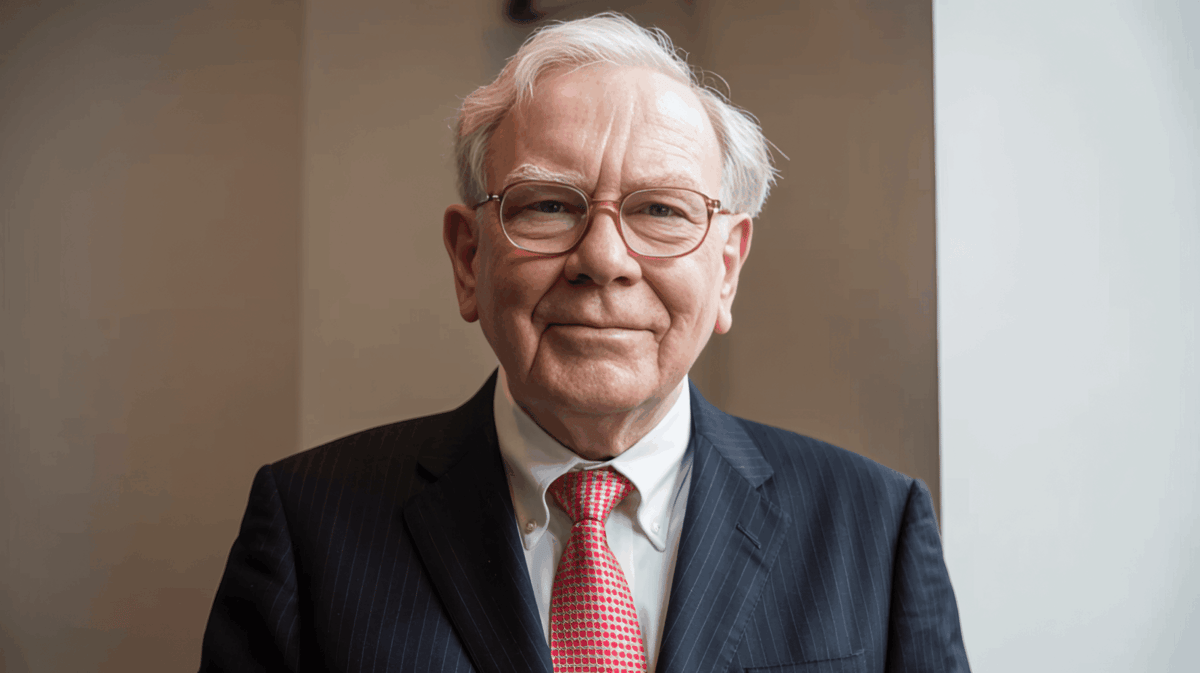
Warren Buffett: The “Toll Bridge” Strategy That Quietly Builds Wealth Over Time
Warren Buffett’s “toll bridge” strategy targets businesses that sit at essential economic chokepoints, charge a modest fee on every transaction, and require little ongoing capital. These firms combine pricing power, low capital intensity, and a durable moat, allowing cash flow...

Charlie Munger: Why Everything Changes After $100,000
Charlie Munger warns that the first $100,000 is the toughest hurdle in wealth building because it requires extreme sacrifice and linear effort. Once that milestone is reached, compounding kicks in, turning capital into a self‑reinforcing growth engine. The shift expands...

15 Best Consistent Dividend Stocks to Buy Right Now
Investors are turning to defensive dividend stocks as the Iran‑Russia conflict fuels market volatility and oil prices stay above $100 per barrel. Jefferies recommends firms with market capitalizations over $10 billion, dividend yields above 3%, and modest EPS growth (0‑10%) that...

5 Best Consistent Dividend Stocks to Buy Right Now
McKesson Corp (NYSE:MCK) remains a top dividend pick despite a recent downgrade by BofA analyst Allen Lutz, who cut the price target to $1,000 from $1,040 while maintaining a Buy rating. The analyst highlighted a rapid decline in cash‑pay GLP‑1...

Best High-Yield Savings Rates for April 6, 2026: Up to 5%
High‑yield savings accounts remain attractive in early 2026, with top online banks offering up to 5.00% APY on limited balances. Varo and Consumers Credit Union each provide the maximum rate on the first $5,000‑$10,000, while PiBank, Axos and CIT Bank...

MB518: Invest Like a Billionaire: Start with the Operator or the Deal? – With Bob Fraser
In a recent episode of "Apartment Building Investing," host Michael Blank sits down with Bob Fraser to unpack how billionaires approach capital allocation differently than most investors. Fraser emphasizes that concentrating wealth in a single asset class is a hidden...

How to Prepare for a Recession in 2026
The article warns that recession risk in the United States has risen sharply in 2026, driven by the Iran‑Russia conflict, higher tariffs, and lingering economic uncertainty. Moody's AI‑based recession model now shows a 49% probability, just shy of the 50%...

Talk Your Book: Income and Momentum
The latest Compound Media podcast examined two distinct income‑focused strategies. Motley Fool Asset Management explained its rules‑based momentum approach, using the MFMO ETF to layer momentum on a high‑quality stock universe while managing turnover and downside risk. Eaton Vance discussed...

Tax Strategies for Dividend Investors in Canada
The article breaks down how dividend income is taxed in Canada, emphasizing the distinction between eligible and non‑eligible dividends and the impact of the gross‑up and dividend tax credit system. It outlines how foreign dividends, especially from the U.S., face...
The Home Ownership Gamble
The author bought a starter home for $375,000 in 2018, sold it for $600,000 in 2022, and saw the property change hands again for $500,000—a $100,000 nominal loss. Including a 5% realtor commission and $30,000‑$40,000 in repairs, the new owners...

A 5-Year TIPS Is Maturing April 15. How Did It Do as an Investment?
A five‑year Treasury Inflation‑Protected Security (TIPS) that matured on April 15 delivered a modest real return, lagging behind comparable Series I Savings Bonds. The bond’s real yield had been negative for much of its life, eroding its inflation‑hedge advantage. Despite...

I Read 100 Wealth Books: These 10 Lessons Separate the Rich People From Everyone Else
After reviewing over 100 wealth‑building books, the author identifies ten recurring principles that separate the rich from the rest. The core ideas emphasize offensive capital allocation, a compounding mindset, and rigorous downside protection. Systems, leverage, independent thinking, and behavioral discipline...

Beyond the Headlines: Strategic Wealth Planning in an Evolving Tax Environment
Recent policy debates over a potential U.S. wealth tax, higher capital gains rates, and changes to valuation discounts are reshaping how family offices and fiduciaries approach multigenerational wealth planning. While no federal wealth tax has been enacted, the heightened scrutiny...

Portfolio Review | March 2026 (+2%, +40% YTD)
In March 2026 the equity market experienced a sharp decline driven by political uncertainty surrounding former President Trump’s policy legacy. The sell‑off sparked a wave of bearish sentiment that even inspired meme‑driven commentary on social platforms. Despite the broader downturn,...

Bottom Fishing
Over the past year the U.S. stock market has risen roughly 19% while almost 30% of Russell 3000 constituents have slipped 10% or more. One‑in‑five stocks are down 20% or worse, including many household names in software, private‑equity, credit‑cards, fintech and...
Investment Versus Speculation
The piece draws a clear line between investments—assets that generate regular income such as dividends, interest, or rent—and speculation, which relies solely on future price appreciation. It argues that income streams enable compounding and lower portfolio volatility, while speculative holdings...

Is The Bottom In For Gold? Silver? Bitcoin? | Lawrence Lepard
Lawrence Lepard, a leading sound‑money advocate, reiterated his conviction that the United States’ unsustainable debt trajectory will drive relentless money printing, bolstering demand for hard assets. He argued that recent sharp declines in gold, silver and Bitcoin represent a healthy...

💰 WARREN BUFFETT'S 8 RULES THAT BUILT $150 BILLION (Most People Ignore ALL of Them — Don't Be that Person)
Warren Buffett attributes his $150 billion fortune to eight disciplined investment rules, from protecting capital to investing in oneself. The core principles emphasize avoiding losses, staying within a circle of competence, and buying quality businesses at a margin of safety. Buffett’s...

Middle-Class Tax Cut Advances From Finance Committee
Senate Bill 513, approved by Connecticut's Finance Committee, would extend the federal pass‑through entity tax credit to middle‑income earners making over $50,000, offering roughly $1,100 in annual savings. The program lets participants voluntarily reduce their salary in exchange for a...

Tax-Free Family Vehicle Transfers en Route to Wyoming This Summer
Wyoming enacted a law, effective July 1, 2024, that eliminates state sales and use tax on motor‑vehicle transfers between qualifying family members. The exemption applies only to genuine sales or gifts, and the donor must have paid the original tax when...

Rich, Rich-Ish, and the $650,000 Between Them
The article explores why physicians, despite high earnings, frequently overpay the IRS and miss key deductions, highlighting a typical $650,000 wealth gap between “rich” and “rich‑ish” doctors. It links to a tax guide that outlines strategies for maximizing deductions, retirement...

How the Ultra-Wealthy Use Wyoming LLCs and Asset-Backed Loans to Build Generational Wealth Without Paying Capital Gains Tax
Ultra‑wealthy investors are using Wyoming LLCs combined with New York asset‑backed loans to grow wealth while sidestepping capital‑gains tax. The structure separates ownership, protection, and financing, leveraging Wyoming’s charging‑order shield and zero state income tax, while New York lenders evaluate...

Home Equity Loan vs HEI: A Complete Comparison
Home equity investments (HEIs) and traditional home equity loans offer two distinct ways for homeowners to tap their property’s equity. An HEI provides a lump‑sum payment in exchange for a share of future home appreciation and carries no monthly payments,...
![Family Offices in Europe: The Complete Guide [2026]](https://hixhlmpcokxhartfkpyi.supabase.co/storage/v1/object/public/images/thumbnails/284687f4baffe01870ea5ea26ea27d76.webp)
Family Offices in Europe: The Complete Guide [2026]
Europe’s private‑wealth ecosystem now hosts over 2,000 single‑family offices, a figure projected to reach roughly 2,300 by the end of 2026. These offices manage an estimated several trillion euros, with an average AUM of about $1.9 billion and allocate roughly 30%...

The Assisted Suicide Of Lofty State And Local Taxes
High combined state, local, and federal taxes are prompting wealthy New Yorkers to consider relocating. A top New York earner faces roughly a 60% marginal tax rate, which drops to about 57% in states with no income tax, effectively delivering...

How to Turn Your Side Hustle Income Into Long-Term Wealth
Side‑hustle income is increasingly common, but many use it for short‑term spending. The article outlines a systematic approach to convert that extra cash into lasting wealth by setting clear goals, separating earnings, building a safety net, automating savings, and investing...

Washington State’s Estate Tax Whiplash
Governor Bob Ferguson signed Senate Bill 6347, overturning Washington’s 2025 estate‑tax hike that raised the top rate from 20 percent to 35 percent for estates over $9 million. The reversal restores the previous 20 percent rate, ending the state’s brief stint as having the...
Coping with Inflation in Retirement, What’s the Plan?
Retirees face rising costs as inflation outpaces many fixed‑income assumptions, even though Social Security’s cost‑of‑living adjustment (COLA) typically tracks overall price gains. The 2025 inflation rate of 2.6% led to a 2.8% COLA for 2026, but the CPI‑E, which weights...

Does It Make Sense to Build a Dividend Portfolio to Generate Steady & Reliable Monthly Dividend Income?
The article examines whether constructing a dividend portfolio that delivers steady monthly cash flow is worthwhile. It outlines the psychological comfort of predictable income but warns that relying on REITs and income trusts can concentrate risk and limit growth. The...

My Conversation with Sonia Shenoy on Fear, Time, and Playing Your Own Game
In a recent podcast with Sonia Shenoy, the author discussed the psychological hurdles of investing, including fear, time perception, and the temptation to quit corporate life. The conversation explored market cycles, the distinction between risk and uncertainty, and the importance...

A 10% Dip Is Not A Green Light To Go All In
The author warns investors not to pour all cash into the market simply because the S&P 500 has slipped 10% from recent highs. A 10% decline is technically a correction, not a market bottom, and Fidelity’s historical data shows many...

GOF's 20% Yield Is Real. The 36% Premium You Used to Pay for It Is Gone.
Guggenheim Strategic Opportunities Fund (GOF) now yields about 20.6% annualized, trading at $10.61 per share—a near‑zero discount to its $10.64 NAV. After five years of premiums that topped 36%, the premium has collapsed, offering investors a price‑aligned entry point. The...
Maximizing Your Tax-Free Wealth & Income For Retirement | Ed Slott
Ed Slott, a leading IRA distribution specialist, outlines tax‑free retirement strategies centered on Roth IRA conversions while current tax rates are low. He emphasizes that 65 % of Americans feel their retirement savings are off track, with a median account balance...

Is It Too Late To Build Wealth? Starting at 35, 45, 55, or Beyond
The article argues that building wealth is never too late, whether you start at 35, 45, or 55, and outlines practical steps to catch up. It highlights how consistent investing, income growth, and automation can generate substantial retirement balances despite...

A Time for Caution
The My Trend Asset Allocation Model has consistently outperformed the traditional 60/40 stock‑bond benchmark on an out‑of‑sample basis, delivering higher returns while maintaining comparable risk levels. Its trend‑following methodology spans a broad set of global equity markets and commodity prices,...
Prepping to Pull the Trigger
A retiree is approaching a 15% rebalance trigger as the Vanguard Developed Asia Pacific fund sits at a 14% loss. Simultaneously, a sizable after‑tax cash reserve from a business sale sits in a money‑market fund, outperforming other holdings. The investor...

Managing Long-Term Care Risk in Retirement
Long‑term care (LTC) is a high‑severity, low‑frequency risk that can derail retirement plans because Medicare and most private health policies do not cover custodial services. Median costs range from $5,000‑$6,000 per month for assisted living to over $9,000 for skilled‑nursing...
Time to Be Fearful
An investor over‑committed to oil stocks and energy ETFs after noticing falling gasoline prices, seeing his portfolio halve before a rebound restored and grew his position. The experience left him alternating between panic at losses and anxiety about missing further...

Uncertainty Around Social Security, Taxes, and Healthcare Is Bad for Households – and the Economy
Recent research by Greenwald Research, partnered with Jackson National Life, surveyed 1,443 near‑retirees and retirees with at least $100,000 in investable assets about policy uncertainty surrounding Social Security, Medicare, taxes and federal debt. The findings reveal that 21% of unretired...