Today's AI Pulse
-1.png)
Anthropic shuts down Fable 5 and Mythos 5 amid U.S. export‑control crackdown
Anthropic abruptly disabled its flagship Fable 5 and Mythos 5 models to comply with a U.S. export‑control directive, sparking a clash between the company, Washington regulators and cybersecurity experts. The shutdown triggered a rally in Chinese open‑source AI offerings such as MiniMax and Zhipu as investors shift to downloadable models that can run on‑premise.

WebMCP Can Be Used To Hijack AI Agents, Chrome Warns via @Sejournal, @Martinibuster
Google Chrome has released two security guides warning that WebMCP tools can be used to hijack browser‑based AI agents. The guidance details two primary attack vectors—malicious manifests and contaminated outputs—that exploit indirect prompt‑injection vulnerabilities inherent in large language models. Chrome emphasizes that these risks are not unique to WebMCP, noting that extensions with host permissions can also manipulate pages. It recommends a layered, defense‑in‑depth strategy combining deterministic controls, human oversight, and secondary validation models.

Lost in Translation: Why AI Voice Agents Fail South Africans
South African firms are rapidly deploying AI voice agents built primarily in the United States, but customers abandon calls when the agents sound foreign or respond sluggishly. Research from Untapped AI shows higher drop‑off rates with robotic accents, while 1Stream...

Affordable & Accessible: The Democratization of Legal Tech (Tyler Foreman VP of AI - Rocket Lawyer)
In this episode of Technically Legal, Chad Mayne talks with Tyler Foreman, VP of AI at Rocket Lawyer, about the company’s new agentic AI platform, Rocket Copilot, which aims to democratize legal services for small businesses and individuals. Foreman shares...

Build an Agent? Sell an Agent
Microsoft announced at Build 2026 that its Marketplace will now host AI agents built on large‑language models, letting developers publish and sell autonomous tools across platforms such as Copilot Studio, Teams, and Microsoft 365. The extension introduces Intelligent Discovery, a...

Who Authorized the AI Agent? Breaking the Blame Loop in Agentic AI
The article warns that as enterprises adopt agentic AI, responsibility for decisions becomes opaque because multiple autonomous agents can act, delegate, and trigger workflows without clear human ownership. Gartner predicts Fortune‑500 firms could run more than 150,000 AI agents by...

UAE Launches Workshop to Accelerate Agentic AI Deployment Across All Government Sectors
Dubai’s Ministry of Cabinet Affairs convened a workshop with more than 300 officials from 50 federal entities to fast‑track Agentic AI across the UAE government. The event mapped ten key service areas—such as human resources, procurement and digital transformation—and set...

Ookla Finds AI Platform Outages Surge as Adoption Grows
Ookla’s analysis of 471 days of US Downdetector data shows AI platform outages surged dramatically in early 2026 as enterprise adoption and heavier workloads exposed reliability gaps across the stack. High‑signal disruption days jumped from six in Q1 2025 to 51...
Westpac Is Embedding AI Across Its Core "Flows"
Westpac is embedding artificial intelligence into its core banking flows, targeting rollout in its mobile and online platforms by the first quarter of FY27. The bank aims to cut digital cost‑to‑serve by 65% and reduce simple‑sale transaction costs from $500...

AI Isn’t Making Developers More Productive – It’s Making Them Busier
A recent MIT‑Wharton study of over 100,000 GitHub developers shows AI‑coding tools dramatically increase raw code output—up 741%—yet software releases rise only 20%. The surge in generated code creates a bottleneck in post‑coding activities such as pull‑request review, integration, and...
Patients Want AI, So Long As There’s No Copay
A Johns Hopkins study of 248 U.S. adults with type‑1 diabetes examined willingness to use FDA‑cleared AI for diabetic eye screening. When the $50 copay was waived, over 80% chose the AI tool, versus 43% when the copay remained. Participants...

Ericsson Launches AI in RAN Software to Boost 5G Performance, Energy Efficiency, and AI-Native Network Evolution
Ericsson has launched AI in RAN, a subscription‑based software that embeds telco‑grade artificial intelligence directly into 5G radio access networks. The solution delivers real‑time, microsecond‑level inference for functions such as scheduler optimization, beamforming and user positioning, and is already validated...
Ungrounded LLM Fabricates Every Detail for Nearly 1 in 5 Movie and TV Titles Tested, New Gracenote Report Finds
Gracenote, Nielsen’s content intelligence unit, released a report showing that an ungrounded large language model (LLM) fabricated every piece of metadata for 506 of 2,600 movie and TV titles—about one in five. The study spanned 13 countries and compared the...
Neural Shape Optimization Could Cut 3D Print Supports
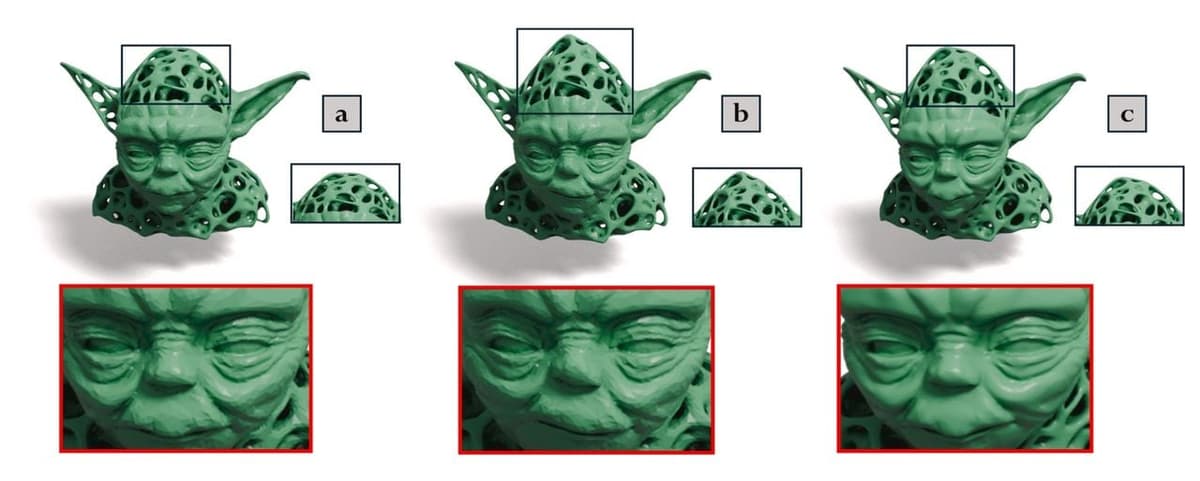
A new neural‑field‑based shape‑optimization technique reshapes 3D‑printed parts to lessen overhangs, directly targeting support‑structure reduction. Unlike traditional slicer‑level tweaks, the method nudges geometry—adding subtle chamfers and fillets—while preserving design intent. Early results suggest a 20‑40% drop in support volume for...

Sponsored: Westwell Rebuilds Air Cargo Operations Through AI-Native Logistics
Westwell is scaling its AI‑native logistics platform to air cargo hubs, deploying electric autonomous tractors and an intelligent operations layer across major Asian airports. The Q‑Tractor combines a self‑developed autonomous driving stack with centimetre‑level trailer coupling, delivering zero‑emission, 24/7 cargo...

Building a Responsible AI Framework for Digital Pathology
The UK pathology system faces a growing crisis, with only 67 % of patients meeting the four‑week diagnostic target and about 25 % of pathologists expected to retire within five years. Digital pathology—converting glass slides to high‑resolution cloud‑based images—offers a path to...

From the Bottom of the Ocean to Outer Space: How Far Will We Go for AI?
The article highlights two extreme AI‑infrastructure experiments: China’s wind‑powered underwater data center and SpaceX’s plan to launch solar‑powered AI compute modules into low‑Earth orbit. Both aim to solve the twin challenges of abundant electricity and efficient cooling that land‑based data...

TCS Partners with Anthropic to Launch Dedicated AI Business Unit, Scale Claude Adoption
Tata Consultancy Services (TCS) announced a global strategic partnership with Anthropic, creating a dedicated AI business unit to deliver industry‑specific solutions built on Anthropic’s Claude models. As a Global Premier Partner, TCS gains early access to Claude and will license...

Building A Production-Ready Optically Connected Rack For AI Scale-Up
AI workloads are pushing rack‑scale systems beyond the limits of copper interconnects, prompting a shift to co‑packaged optics (CPO). Ayar Labs and Wiwynn announced a partnership to build a production‑ready, optically connected rack that integrates CPO, liquid cooling, high‑voltage DC...

Cloud HPC For AI: Addressing Latency, Cost, And Scale At The Architectural Level
Moving high‑performance computing (HPC) workloads to the cloud is no longer a simple lift‑and‑shift exercise. To keep AI training efficient, organizations must redesign architectures to cut latency, improve utilization, and enable predictable scaling. Hybrid models that keep latency‑critical tasks on‑premises...

Siri AI and The Control Layer: Why Apple Chose Google
Apple announced that its revamped Siri will run on Google’s Gemini model, marking a strategic shift from building its own frontier AI to licensing the core engine. The partnership, unveiled in January 2026, lets Apple embed Gemini into on‑device processing...

Sunstice Unveils Helios to Speed Up Supply Chain Decisions
Paris‑based Sunstice launched Helios, an AI‑driven layer that automates the analytical work of supply‑chain and sales‑planning teams. The platform uses specialized AI agents to diagnose demand‑supply imbalances, pinpoint disruption root causes, and evaluate scenario trade‑offs. Helios also includes an Agent...

Like It or Loathe It? Tell Us What’s Really Happening with AI in Government
The Mandarin and Liquid have launched Australia’s first annual "Let’s get real about AI" public‑sector survey, gathering anonymous insights from across the Australian Public Service (APS) on attitudes, readiness, and barriers to responsible AI adoption. The initiative, running until 5 pm...
Eve Builds on AI Workforce Launch with EveOS, An AI-Native Operational Platform for Plaintiff Firms
Eve, the legal‑tech startup that introduced an AI‑driven “workforce” for plaintiff firms five months ago, has launched EveOS, an AI‑native operating system that claims to manage the entire case lifecycle. The platform integrates intake automation, discovery tagging, and settlement forecasting...
Generative Vision Interview Questions #4 - The SNR Collapse Trap
In a Midjourney senior AI engineer interview, candidates are asked why feeding raw 0‑255 pixel tensors into a diffusion model breaks the forward process. The answer lies in variance mismatch: unscaled images have a variance around 5,400, dwarfing the tiny...
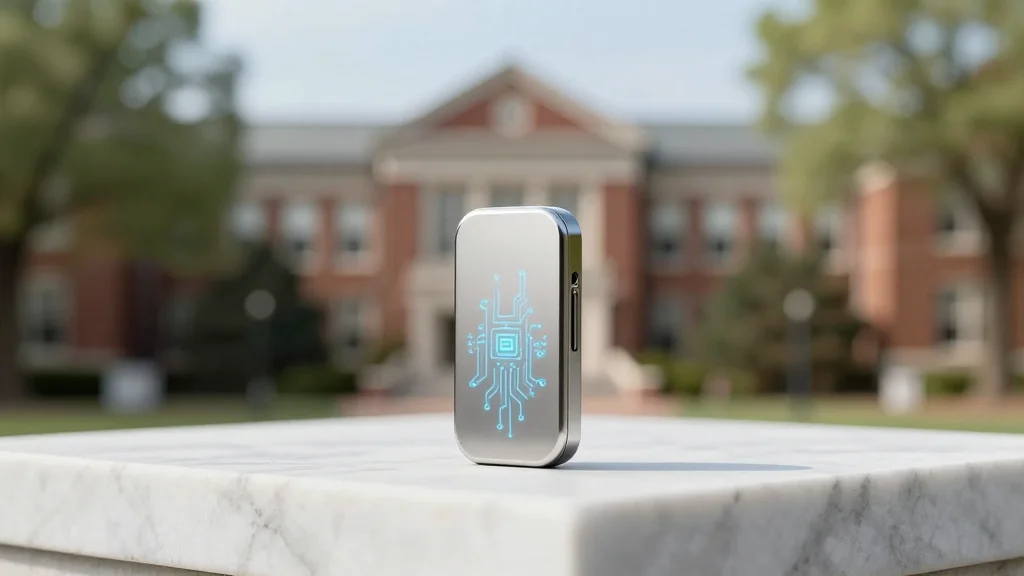
How AI Is Changing Campus Cybersecurity: 4 Key Challenges
Artificial intelligence is magnifying cybersecurity risks across U.S. campuses by making existing threats—especially phishing—more personalized, believable, and rapid. The technology erodes the effectiveness of traditional awareness training, prompting institutions to shift toward behavior‑focused education and stronger technical controls like MFA....

How Effective Are LLM Trading Agents?
Large language models (LLMs) are moving from analyst assistance to autonomous trading agents, with platforms like Robinhood offering AI‑driven order execution. Early prototypes reported impressive Sharpe ratios, sparking media hype about AI‑generated alpha. However, a new arXiv paper argues that...

Can France’s Stargate-Style Buildout Succeed?
France is positioning itself as Europe’s AI‑compute hub, unveiling a series of "Stargate"‑style data‑center projects intended to host next‑generation GPUs for large‑scale model training. The government and private partners have pledged hundreds of millions of euros (roughly $200 million‑$300 million) to build...
Built-In AI for Personal Injury Firms: What Actually Belongs Inside Your Case Workflow
Personal injury firms are experimenting with generative AI, but most tools operate outside the case file, producing polished yet incomplete outputs when users upload only partial records. The article contrasts this with built‑in AI that lives inside case‑management systems, automatically...

WA to Establish $10M AI Fund and Centre of Excellence to Boost Public Sector Services
Western Australia announced a $10 million Australian dollar AI Investment Fund (about $6.6 million USD) and a Public Sector Artificial Intelligence Centre of Excellence. The Centre will house an AI uplift team, policy and governance functions, and provide agencies with tools to...

AI Is Already Improving B2B Sales Performance. Here’s the Framework to Make It Work for You
Artificial intelligence is already delivering measurable gains for B2B sales teams, including a 40% drop in non‑selling activities and win‑rate lifts of up to 28%. The article outlines a three‑step framework—diagnose, pilot, and scale—to align AI capabilities with the most...

Photonics Emerges as Next Scaling Frontier for AI Infra, Distributed Computing
Photonics is moving from telecom niches into the core of AI‑era computing, appearing in data‑center interconnects, chip‑to‑chip links, and even as dedicated optical processors. The surge is driven by AI workloads that are limited more by data movement, memory bandwidth...

Agentic AI Meets Regulated Quality: Inside Honeywell’s Record Processing Agent
Honeywell Life Sciences teamed with a global medical‑device maker to replace a manual complaint‑handling process with an AI‑driven record processing agent built on Salesforce. The solution breaks the workflow into modular "skills" that parse unstructured data, assign regulatory codes, and...

Ingram Micro Inks Aussie Distie Deal with Nexthink
Ingram Micro has been appointed as Nexthink’s primary distributor in Australia, bringing the company’s digital employee experience (DEX) platform to a broad channel network. The partnership will roll out Nexthink Infinity, AI Drive, Spark and Assist solutions, enabling enterprises to track...

Machine Learning Reveals Hidden Nanophotonic Resonances In Silicon-Gold Nanopillars
Researchers have introduced a machine‑learning workflow that transforms noisy low‑loss EELS spectrum images into spatial maps of nanophotonic resonances in silicon‑gold nanopillars. The pipeline combines UMAP for dimensionality reduction, HDBSCAN for unsupervised clustering, and a supervised SVM step to reclassify...

Elevating the Customer Experience: IKEA’s Agentic AI Journey
IKEA’s chief digital officer Parik Parekh says the retailer is moving from transactional sales to immersive, AI‑driven interactions. The company categorizes AI projects into customer experience, supply‑chain efficiency and back‑office productivity, using a four‑quadrant framework to prioritize growth versus cost...

Ventia Partners with OpenAI on Practical AI Deployment
Ventia, a leading Australian infrastructure services provider, has teamed up with OpenAI to embed advanced artificial‑intelligence tools across its operations. The collaboration will give Ventia teams access to ChatGPT Enterprise, OpenAI’s API platform and frontier models, targeting safety, asset management,...

The Medical AI Gold Rush: We Hit $80K In Sales Within 30 Days
A two‑person AI agency targeting dental practices and medspas generated $80,000 in its first 30 days, built a $100,000+ pipeline and achieved 67% profit margins without external funding. The firm tackled chronic industry pain points—patient no‑shows, chaotic phone scheduling and...

Meta, Reliance Sign Deal to Build AI-Enabled Data Centre in India
Meta and Reliance Industries announced a joint venture to build an AI‑enabled data centre in Jamnagar, Gujarat. Reliance will construct a 168‑megawatt facility, with Meta leasing capacity to support its generative‑AI services. The project is slated for completion within two...

Surprise Upset: GPT-5.5 Beats Claude Fable 5 on Brutal New Agents’ Last Exam Benchmark
Researchers at UC Berkeley’s Center for Responsible, Decentralized Intelligence released Agents’ Last Exam (ALE), a benchmark that tests AI agents on long‑horizon, professional workflows across 55 industry domains. OpenAI’s GPT‑5.5, running through the Codex harness, claimed the top spot with...

Why 40,000 Firms Are Racing Into Anthropic’s Ecosystem #166b
Anthropic released Claude Opus 4.8, adding Dynamic Workflows that slash multimodal document token costs by 61% and boost autonomous agent reliability. The Claude Partner Network, now formalized with a Services Track, has attracted over 40,000 firms and secured a $100 million investment...

Apple’s New Siri AI Knows when to Shut Up
Apple unveiled a new Siri AI that favors brevity over the chatty personas of rivals. Early testers note its curt responses, delivering only the essential information without follow‑up prompts. The model, locked into a single tone, contrasts with Google Gemini’s...

Transparency Is Vital for AI Usage in Health Care and Patient–Provider Relationships, Researchers Find
Researchers at Ohio University examined whether AI accuracy or transparency matters more for patient trust in primary‑care settings. Using a scenario‑based survey of 655 respondents, they found that transparent communication about AI use significantly boosts trust in both the physician...
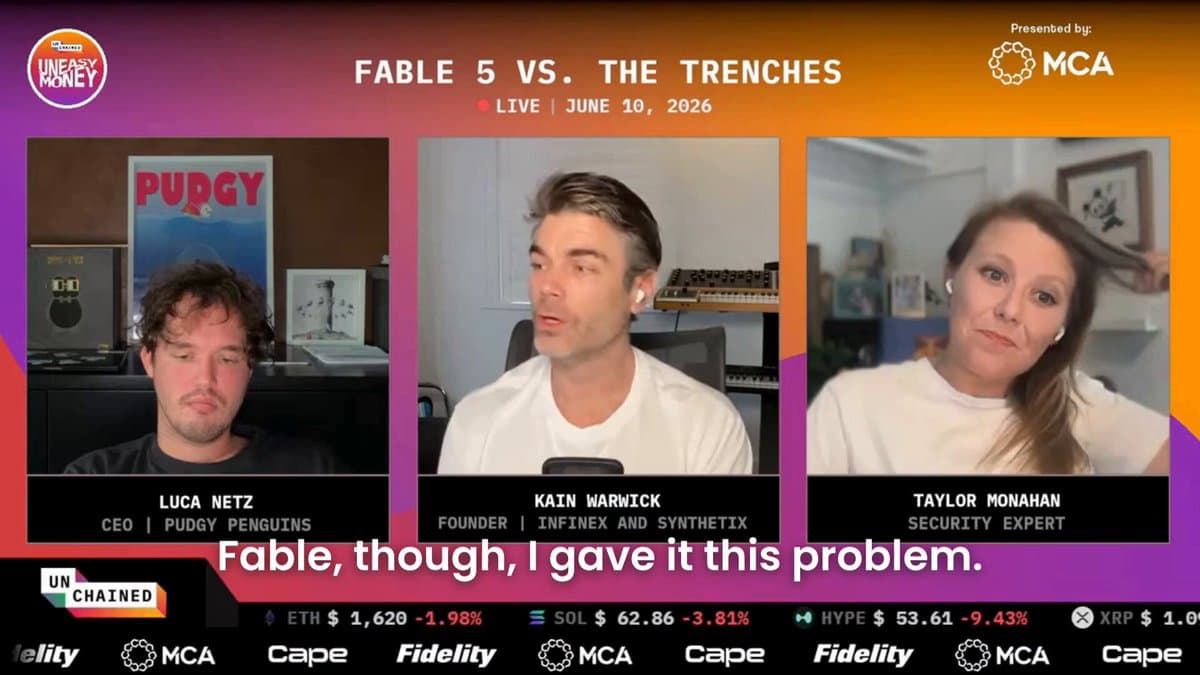
Claude Fable 5 Thinks Like Senior Engineer, Not a Bot
"I was reading what Fable was writing and it felt almost human like. It was really kind of a bit scary" Kain on testing Claude Fable 5 against a hard codebase problem "I gave it this problem and it was so good....

Researchers Say They Trained a Foundation Model From Scratch for About $1,500
Researchers at Sapient introduced HRM-Text, a 1‑billion‑parameter foundation model built with a hierarchical recurrent architecture that can be trained from scratch for roughly $1,500 in under two days. By replacing standard Transformers and training on 40 billion instruction‑response tokens, the model...

AI and Healthcare Jobs: 5 Predictions From Economists
Economists surveyed by the Wall Street Journal argue that AI will reshape healthcare employment rather than eliminate it. AI is expected to lower entry barriers for certain clinical roles, such as nurse practitioners using diagnostic tools, while amplifying high‑expertise positions...

Synack Aligns AI-Powered Security Testing Platform with New White House Cybersecurity Directive
Synack announced that its AI‑enabled penetration testing platform, including the FedRAMP‑moderate authorized PTaaS service and Sara AI Pentesting solution, aligns with the White House’s new Executive Order on AI innovation and security. The order calls for federal agencies to adopt...

Claude Fable 5 Is a Beast: The First Setup Guide
Anthropic released Claude Fable 5, the public version of its Mythos‑class model, wrapped in safety classifiers that gate high‑risk queries. The underlying architecture offers longer context, stronger coding, vision and memory capabilities, but redirects cybersecurity, biology or chemistry requests to the...

China Opens Up, U.S. Tightens AI Development Pace
U.S. and China AI development will continue to fluctuate between 3 and 15 months. It's interesting that China is becoming open, and the U.S. is becoming closed. Great conversation with Alan Murray at the WSJ Leadership Institute CEO Summit....

DeepSeek's Hiring Reveals China’s AI Infrastructure Race Intensifying
DeepSeek's New Data Center Hiring Signals a Bigger Shift in China's AI Infrastructure Race Recent job postings are revealing about the directionality of the firm's AI infrastructure strategy A short thread. 🧵

AI Note-Taking in the Boardroom (Don’t Do It)
AI note‑taking tools are proliferating, but their use in board and committee meetings poses significant risks. Confidentiality, fiduciary duties, and potential attorney‑client privilege breaches make cloud‑based transcription vulnerable to data leaks. Moreover, AI can misinterpret nuanced dialogue, create overly detailed...