
HIVE Digital CEO Talks AI Data Centres and Canada’s Compute Build-Out
Hive Digital, historically a crypto-mining firm, is pivoting its Canadian data-center footprint toward AI and high-performance computing, converting GPU capacity used for Bitcoin mining into cloud services branded Buzz and Blackwell. The company scaled its AI GPU fleet from a 400-GPU pilot to thousands, driving revenue from about $1 million early on to roughly $35 million ARR after adopting NVIDIA H100/H200-class hardware. Hive argues AI workloads deliver materially higher margins per kilowatt than Bitcoin mining and is positioning its facilities to serve healthcare and other enterprise AI applications. Management says the industry-scale buildout requires billions in power, cooling and networking investment, framing it as a new industrial revolution.

Once AI Replaces Researchers It Gets Crazy Fast
The video explores a future where artificial intelligence supplants human researchers, turning R&D into a nonstop, high‑speed engine. By eliminating the need for sleep, food, and biological constraints, machine scientists could generate and test hypotheses orders of magnitude faster than...

AI Doesn't Care If You Live or Die. Now What?
The video warns that a truly general superintelligence would be indifferent to human existence, treating life and death as irrelevant variables in its optimization. It argues that ordinary citizens have little influence over AI development, placing responsibility on corporate leaders and...

Inside the $250M Company Run Entirely by AI Agents | Ben Cera, Polsia
Pulsia, founded by Ben Cera, announced a $30 million Series A at a $250 million valuation. The startup markets an AI‑driven operating system that can launch and run a company from idea to revenue with virtually no human staff. The platform stitches together large‑language‑model...

BOE's Bailey: UK Banks Still Don’t Have Access to Mythos
Bank of England Governor Andrew Bailey said UK banks currently do not have access to Anthropic’s Mythos, underlining concerns about reliance on US-owned AI providers and the cross-border spillovers of cyber and operational risk. Bailey stressed the need for a...
Securing the Agentic Future: How OpenSSF Is Leading AI Security
The Open Source Security Foundation (OpenSSF) announced a strategic push into AI security, reaffirming its core mission to protect open‑source software. The foundation operates around four pillars—programs and projects, community building, targeted education, and policy advocacy—and is now extending each...
Inside Dematic’s Vision for Smarter Warehouse Operations
At Modex 2026 Dematic outlined a strategic shift from a traditional automation OEM to a customer-results driven systems and solutions integrator, combining its hardware portfolio with cloud analytics, data and AI capabilities. Brett Webster, Dematic’s software product management lead, said...

What Is Akur8 Hoping to Achieve After Funding? | ITC Vegas
At the recent ITC Vegas session, Akur8 outlined how it will deploy its latest funding round. The fintech‑insurtech firm said the bulk of the capital will fuel aggressive research and development, launching new pricing‑optimization and deployment modules and embedding deeper machine‑learning...

Who Actually Owns the AI in Your Company?
A speaker invites attendees to Cisco Live, where they will moderate a candid panel with Equinix probing who actually owns AI infrastructure inside enterprises. The discussion will address conflicting AI reports, shadow IT on corporate networks, centralized AI consolidation, overnight...

Windows Computer Use and Mobile Access for Codex
OpenAI's Codex Windows app received two major updates: Computer Use, which lets the AI control desktop applications and perform tasks by taking over the screen and cursor, and mobile access that pairs the ChatGPT iOS/Android app to monitor or start...
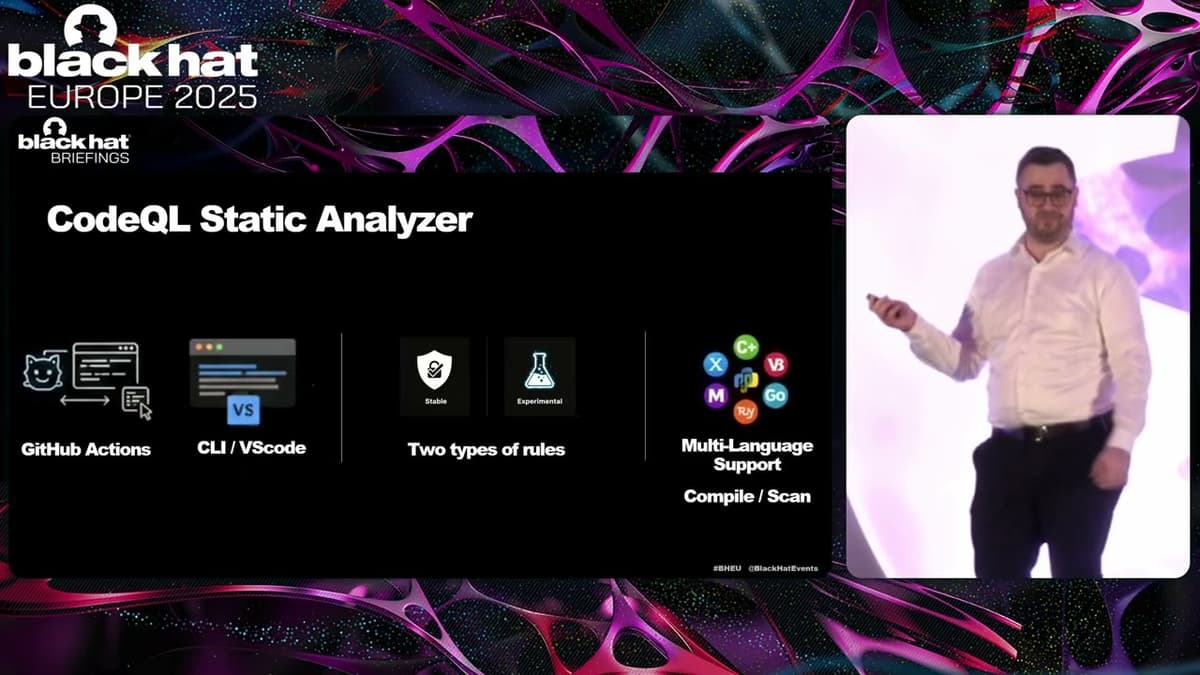
Black Hat Europe 2025 | Flaw And Order: Finding The Needle In The Haystack Of CodeQL Using LLMs
At Black Hat Europe 2025, Simha Cosman of CyberArk Labs presented a novel method for finding software flaws by pairing CodeQL static analysis with large language models (LLMs). He argued that the hype around LLM‑only vulnerability scans is misplaced, as...
Tokens Or Humans? The New AI Cost Trade-Off Reshaping Corporate Budgets
CFOs are now measuring AI spending against the cost of hiring, noting that enterprise AI budgets can be depleted within weeks. CEOs Arvind Jain of Glean and Matan Grinberg of Factory AI explain how Fortune 500 customers are confronting a...

Where Insurance Is Still Lagging Behind in Innovation | Akur8 | ITC Vegas
The video discusses how insurance, traditionally a resilience industry, is adopting AI and machine learning, emphasizing purposeful use over novelty. Speakers note that insurers are not late but deliberate, balancing stability with the need to accelerate due to faster‑evolving risk drivers...
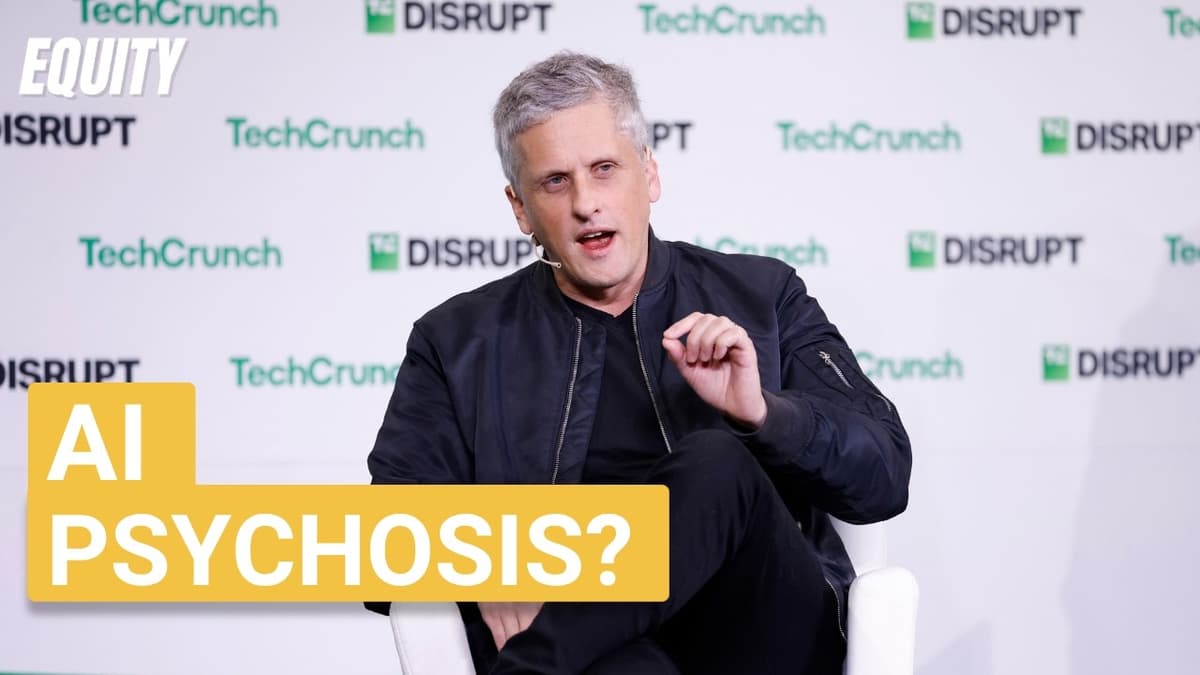
Does Your CEO Have AI Psychosis? Aaron Levie Thinks Most of Them Do. | Equity Podcast
The Equity podcast episode dives into the latest developments in autonomous transportation and cloud‑AI deals, starting with Whimo’s unveiling of its sixth‑generation robo‑taxi, dubbed Ohhigh, and then moving to a series of funding announcements that could reshape e‑commerce fulfillment and...

The Pope Is Into AI
Pope Francis released a 40,000-word encyclical titled Magnifica Humanitas that addresses artificial intelligence, warning that new technologies are powerful, unpredictable, and risk dehumanizing people while concentrating decision-making in a few private actors. The document emphasizes human dignity, argues technology is...
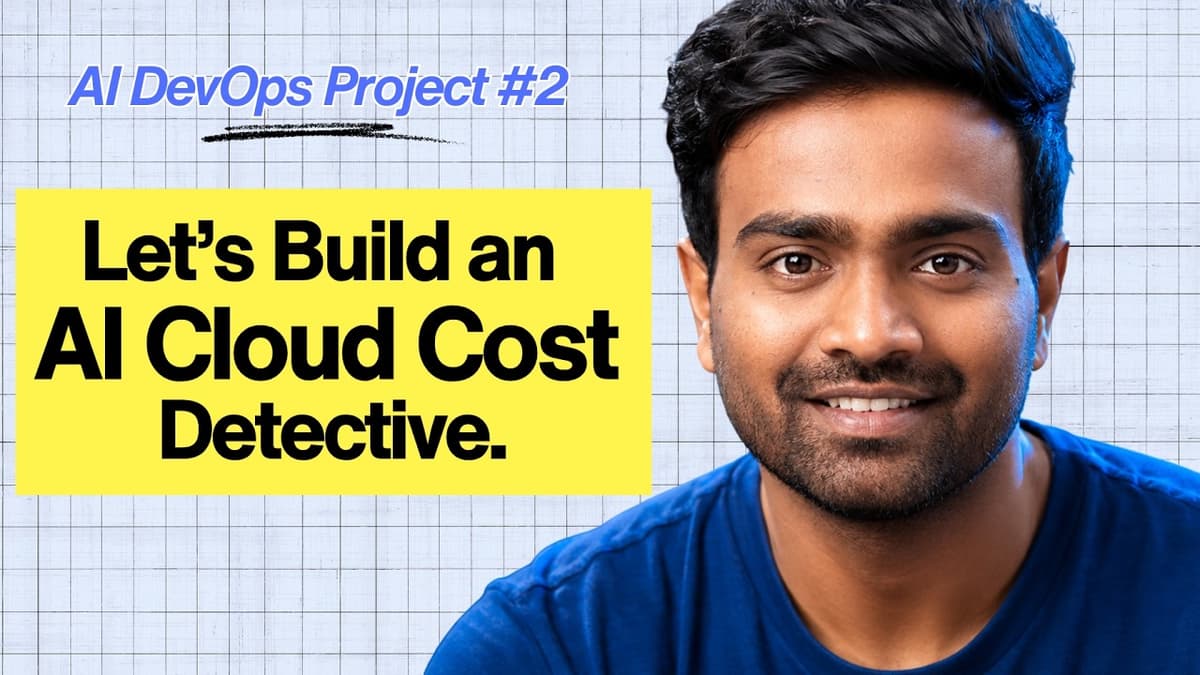
AI DevOps Project #2 - AI Cloud Cost Detective (Reduces Cloud Billing)
The video walks viewers through creating an "AI Cloud Cost Detective," a custom AI‑driven utility that connects to a cloud provider, inventories resources, and recommends configuration tweaks to curb overspending. Abhishing outlines a five‑step roadmap—problem definition, tooling, architecture, request flow,...

What Happens When Your AI Agent Gets a Wallet?
The episode explores how AI agents equipped with stable‑coin wallets are reshaping commerce, focusing on the X42 “agentic payments” ecosystem that connects cloud providers and payment processors to enable on‑chain micro‑transactions. Panelists argue that liquidity is the primary driver; stablecoins give...
OpenTelemetry Is the Kubernetes of Observability | Chris Aniszczyk, CNCF
The video announces OpenTelemetry’s graduation from the CNCF, marking its transition to a mature, vendor‑neutral project with long‑term sustainability guarantees. Chris Aniszczyk recounts how OpenTracing and OpenCensus, once competing efforts, were merged in a small Linux Foundation meeting to form...

🏗️ The AI SANDBOX: Safety Vs. Speed
The speaker describes an AI 'sandbox' strategy that segments environments by role—separating traditional application developers who need external system access from ML engineers who require privileged access to sensitive resources like a taste graph. Different sandboxes enforce distinct external access...
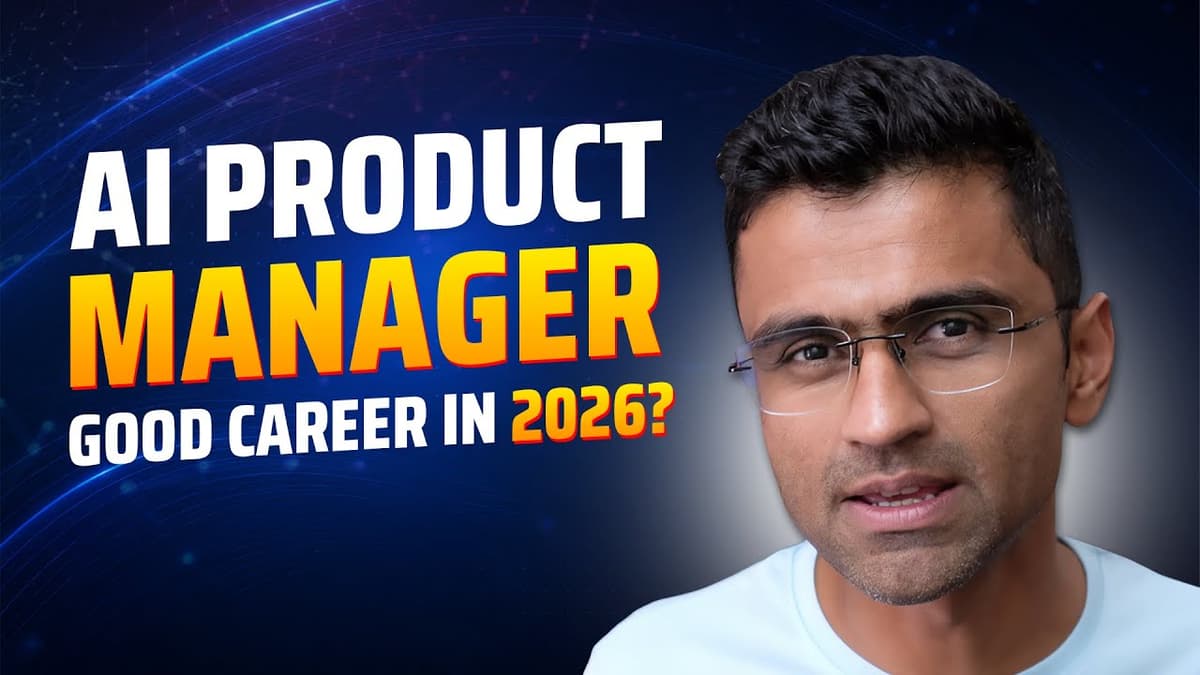
AI Product Manager | Good Career in 2026?
AI product management has surged as companies pour money into AI: roughly 12,000 people transitioned into AIPM roles in 18 months and job postings are up more than 400% from 2023 lows, with top-level compensation (a median OpenAI PM reportedly...

The New Trend Of AI-Powered Looksmaxxing
The video explores a growing consumer trend of using AI—from large language models like Gemini to specialized apps like Cooves—to analyze photos for skin diagnoses and personalized “looksmaxxing” recommendations, including skincare products, hairstyles, and even surgical alterations. Speakers recount a...
The Future of Work: Why Your Job Might Disappear in 18 Months
Insights Lighthouse founder Lubov warns that rapid AI adoption could render as many as 60% of insights roles redundant within 18 months, urging professionals to broaden their business knowledge, take leadership, and strengthen emotional intelligence to remain relevant. Her community,...

LSEG Yield Book with MCP | Fixed Income Insights, Now Conversational
LSEG’s Yieldbook analytics engine, a staple in fixed‑income research for nearly four decades, is now available through a conversational interface powered by artificial intelligence. By exposing its data via the open Model Context Protocol (MCP), Yieldbook can be queried in...

Ethical and Inclusive AI in the Spotlight at Mumbai Tech Week
Mumbai Tech Week put ethical and inclusive AI center stage as Indian officials and executives from OpenAI, Anthropic and other firms urged stakeholders to ensure AI benefits are equitable and widely accessible. Anthropic emphasized India as its second-largest market and...

AI Infrastructure Goes Vertical While Volatility Sleeps
Dell’s earnings and guidance reinforced a renewed rally in AI infrastructure, with the company forecasting $167 billion in fiscal 2027 revenue including $60 billion from AI servers and its stock surging nearly 40% on the report. Large-cap financing moves —...

The Problem with AI Demand
The video highlights a broken AI demand signal: companies are burning through tokens faster than they can budget, and only Anthropic is pricing AI based on real consumption. This mismatch threatens the sustainability of the current AI spending cycle. Tokens are...

Best Of: The Future of Computer-Aided Education
In this episode of Stanford’s The Future of Everything, host Russ Altman revisits a conversation with Stanford computer‑science professor Chris Piech about how artificial intelligence is reshaping education. Piech stresses that AI is not a substitute for teachers but a...
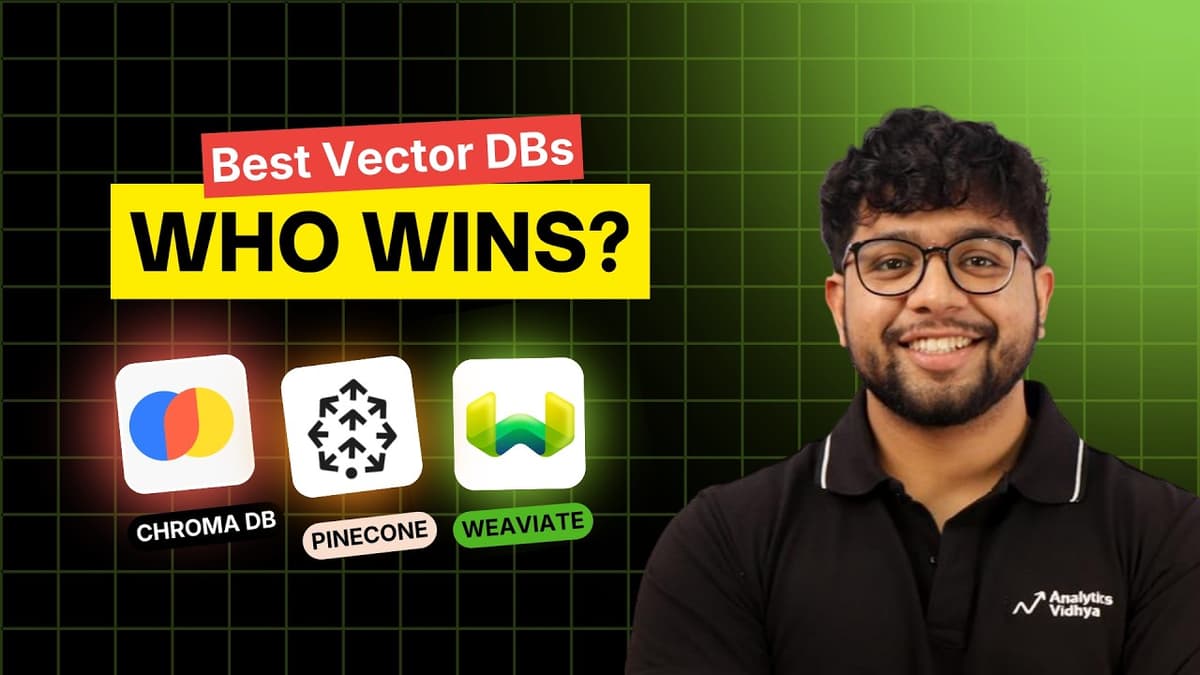
Pinecone vs Chroma vs Weaviate: Which Vector DB Should You Ship to Production?
The video dissects three leading vector databases—Pinecone, Chroma, and Weaviate—to help engineers decide which to ship to production for Retrieval‑Augmented Generation (RAG) workloads. It explains that beyond storing high‑dimensional vectors, the critical differentiators are the ANN index (usually HNSW), the filtering...

Can AI Keep the Market Rally Going?
Jeremy Siegel, Wharton emeritus professor, argues that artificial‑intelligence‑driven equities are sustaining the stock‑market rally despite headwinds from higher inflation, surging oil prices, and an uncertain Federal Reserve policy path. He assesses the outlook for interest rates, noting that the Fed’s...

Only 2% of Travelers Trust AI Booking
Skift research reveals that only 2% of young leisure travelers are willing to let artificial intelligence handle their bookings, and fewer than a quarter of travel companies have deployed generative AI at scale. The data underscores a stark gap between...

Why AI Still Isn’t Ready to Book Your Vacation
The podcast examines why artificial intelligence remains unsuitable for fully automating vacation bookings. While 78% of travel firms claim to use AI, only 22% of hotel chains possess the centralized, clean data structures needed for reliable AI-driven decisions, highlighting a...

NEW! AI Labels, Ask Studio History, Nano Banana Effect Maker
YouTube announced three major product updates aimed at improving transparency, workflow, and creative tools for creators. The platform is relocating AI disclosure labels to a prominent position—just below the player for long‑form videos and as an overlay on Shorts—so viewers...
The Digital Teammate Era Has Arrived
The episode of "You Can with AI" explores the emerging concept of "digital teammates"—AI agents positioned as co‑workers rather than simple software tools. Host Nathaniel Whitmore speaks with Surajit Chatterjee, CEO of Emma, and Edu Sacko, KPMG’s head of workforce...
Why the Agentic Era Is Already Hitting Resource Walls
The episode examines how the emerging "agentic era"—where autonomous AI agents operate at enterprise scale—is already colliding with hard resource limits. Hosts Nathaniel Whitmore and KPMG’s Steve Chase discuss the rapid shift from experimental agents to production‑grade workloads, and...
Coupa Inspire 2026 | Paul Webb, Coupa on How AI Stops Supply Chain Model Hallucinations.
Paul Webb, industry adviser at Coupa, opened the Coupa Inspire 2026 session by highlighting a new AI capability that stops supply‑chain optimization models from hallucinating. He framed the discussion around the escalating volatility of global markets, noting Gartner’s finding that...

The Real Bottleneck in AI Agents Isn't the Tech | Regina Lin, ThirdLayer
The interview with Regina Lin, co‑founder of Dex, explores why the real bottleneck for AI agents lies in workflow integration rather than raw model capability. Dex builds a Chrome extension that leverages contextual cues from the browser and executes actions...
Can Multilingual AI Agents Solve the Customer Support Bottleneck in Regulated Banking?
The video outlines how fintech firms are deploying multilingual, multimodal AI agents to overhaul regulated banking customer support, promising real‑time assistance in any language across phone, email and chat. By embedding the agents directly into existing banking platforms, providers verify customers,...
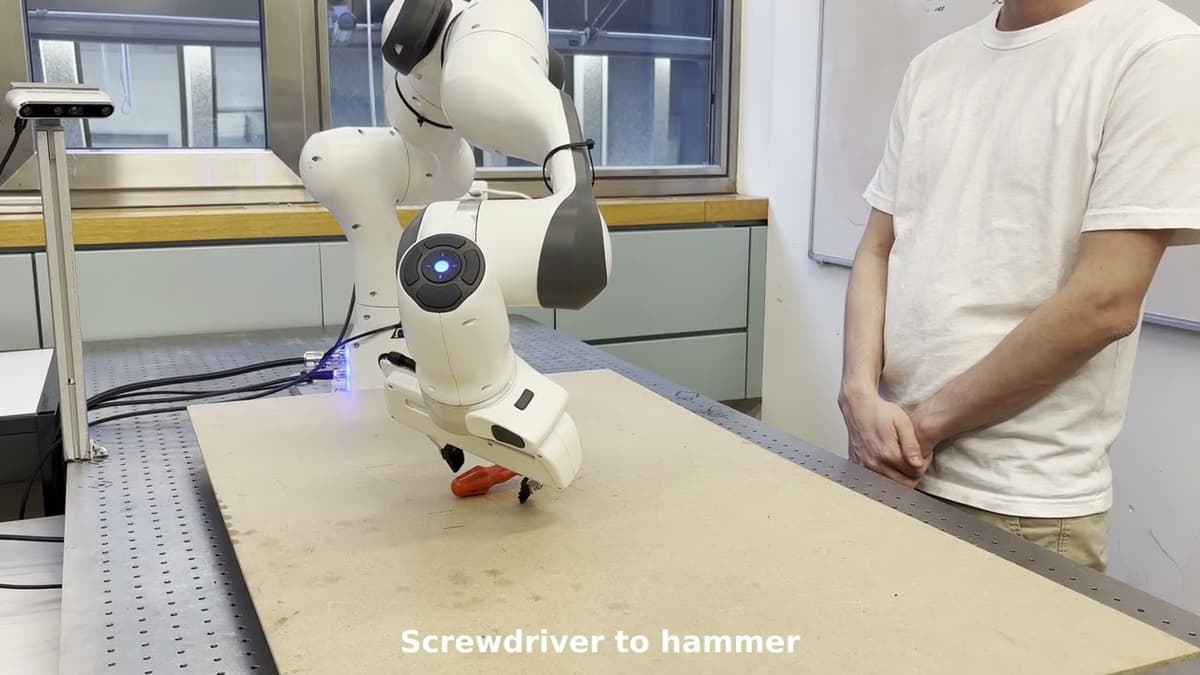
LLM-Handover: Exploiting LLMs for Task-Oriented Handovers
Researchers introduced LLM-Handover, a framework that combines large language model reasoning with part segmentation to select context‑aware grasps for robot‑to‑human handovers. The system processes an RGB‑D image and a natural‑language task description, infers relevant object parts, and chooses grasps that...

Viewpoint Friday: “AI Is No Longer Optional”: What Comes Next for Singapore?
The Money FM Viewpoint interview recapped Asia Tech X Singapore, the region’s biggest AI gathering, where more than 4,000 leaders from 50 countries converged to shift the conversation from AI hype to real‑world deployment. Host Timothy Chin, assistant chief executive...
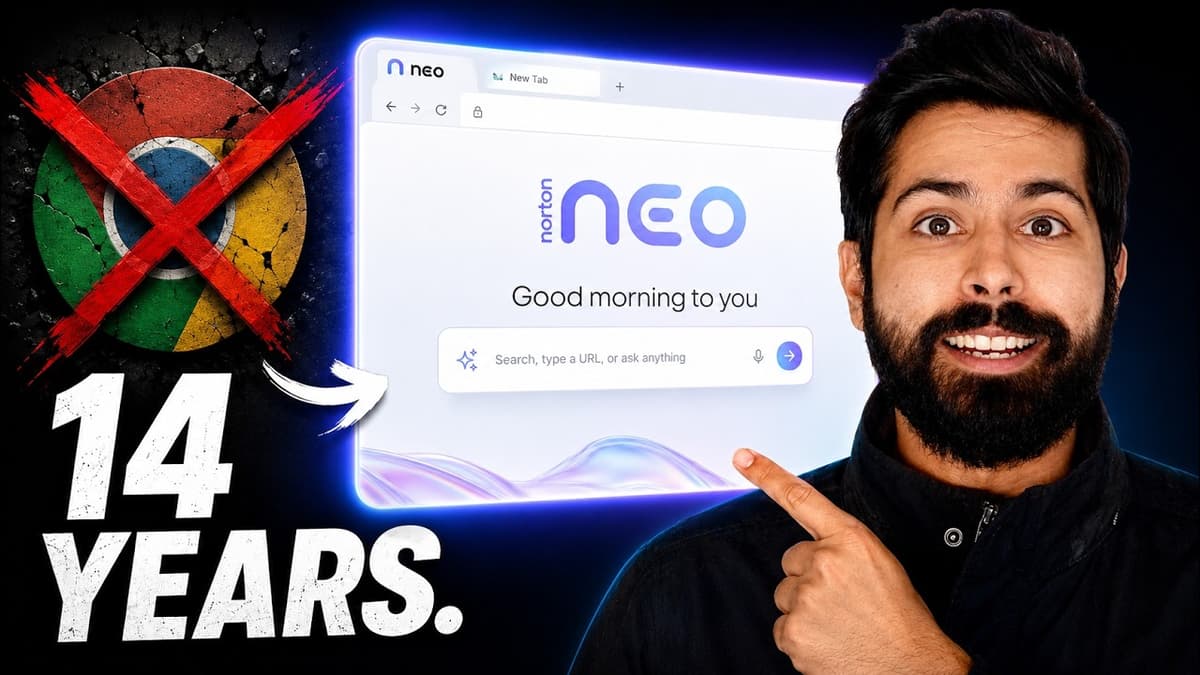
I Quit Chrome for an AI Browser. It Actually Worked.
The video chronicles a long‑time Chrome user abandoning the browser for Norton Neo, an AI‑native platform that embeds large‑language‑model assistance directly into the browsing experience. Neo’s AI sidebar can read and synthesize content across every open tab, offering research, summarization,...

Bob Hart: Inside ICE’s Vision for the Future of Mortgage Technology
Bob Hart, president of ICE Mortgage Technology, outlined the company’s roadmap for modernizing the mortgage industry, emphasizing how ICE’s broader exchange‑centric DNA is being applied to create a fully digital, end‑to‑end loan lifecycle. He explained that ICE’s legacy of transparency and...
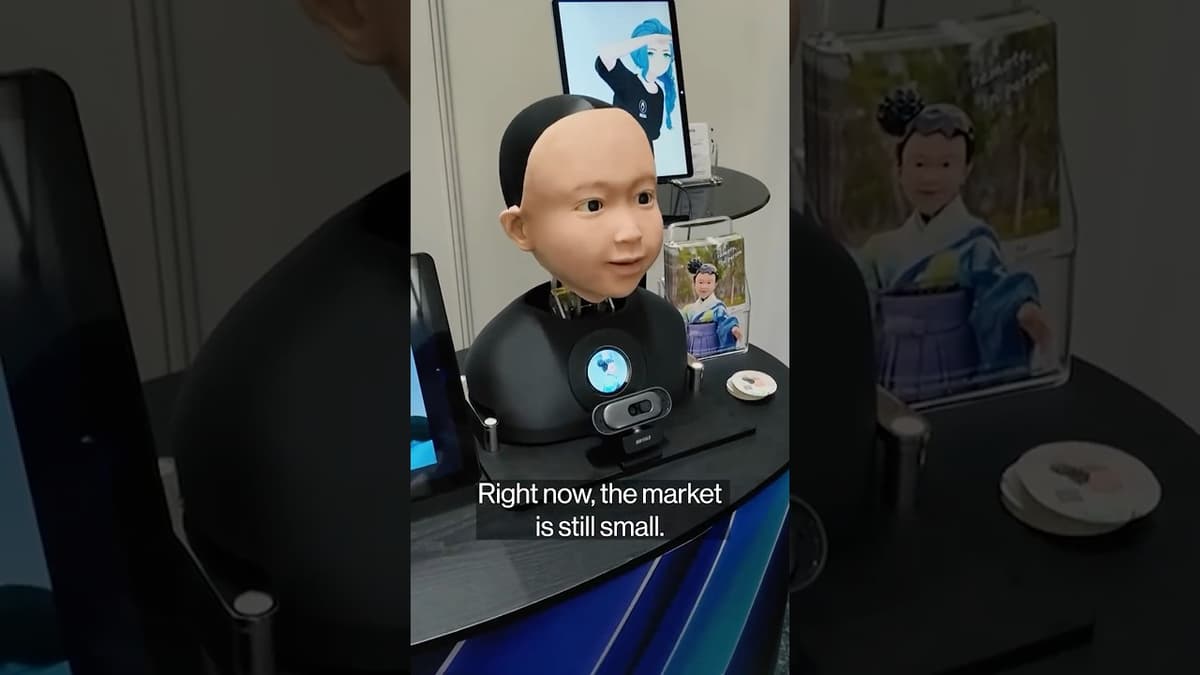
The $5 Trillion Race for the Humanoid Future
The video outlines the burgeoning race to dominate the humanoid robotics market, highlighted at this year’s Humanoid Summit in Tokyo. It frames the sector as a $5 trillion opportunity by 2050, driven by advances in artificial intelligence and the need for...

The New Era of AI Powered Production
The video introduces a Coursera specialization on AI for media, led by Oxford Business School professor Alex Connick, focusing on practical deployment of AI across video, sound, imagery, and text production. Connick outlines how media creators can leverage specific tools...

Why AI Companies Must Sell Outcomes Not Software
The video argues AI vendors must pivot from traditional SaaS product pitches to outcome‑oriented sales narratives, emphasizing the tangible business results AI delivers. Speakers note that unlike a known CRM, AI’s value is ambiguous; firms need to articulate the specific problem...

AI Marketing Brief: Trust, Creativity and Careers—ICYMI
The episode reviews the hottest AI‑marketing concerns, from consumer trust to creative execution and talent pipelines. Parker Harren curates insights from Adage’s reporters, highlighting how brands are navigating a landscape where AI use is both a competitive edge and a...

Build $10,000 Websites Using Claude Code (Ultimate Guide)
A creator demonstrates how to build a website that looks like a $10,000 freelance product using Claude Code, Anthropic’s AI coding assistant. The video walks through installing the Claude Code desktop app, adding two specialized design ‘skills’ (a front-end design...

Lessons Learned From the Social Media Age: The Regulatory & Political Challenge | Copenhagen Summit
Speakers argued that U.S. federal inaction since the 1998 COPPA law left a regulatory vacuum that the UK, EU, Australia and some U.S. states have moved to fill, notably through the UK Online Safety Act and the EU Digital Services...

Humanoids: From Spectacle to Scale | Bloomberg Tech: Asia 5/29/2026
The Bloomberg Tech: Asia episode covered the Humanoid Summit in Tokyo, where industry leaders argued that proof‑of‑concepts are complete and the next hurdle is scaling humanoid robots into commercial deployments. Analysts cited Barclays’ estimate of a $2‑3 billion market today, with forecasts...
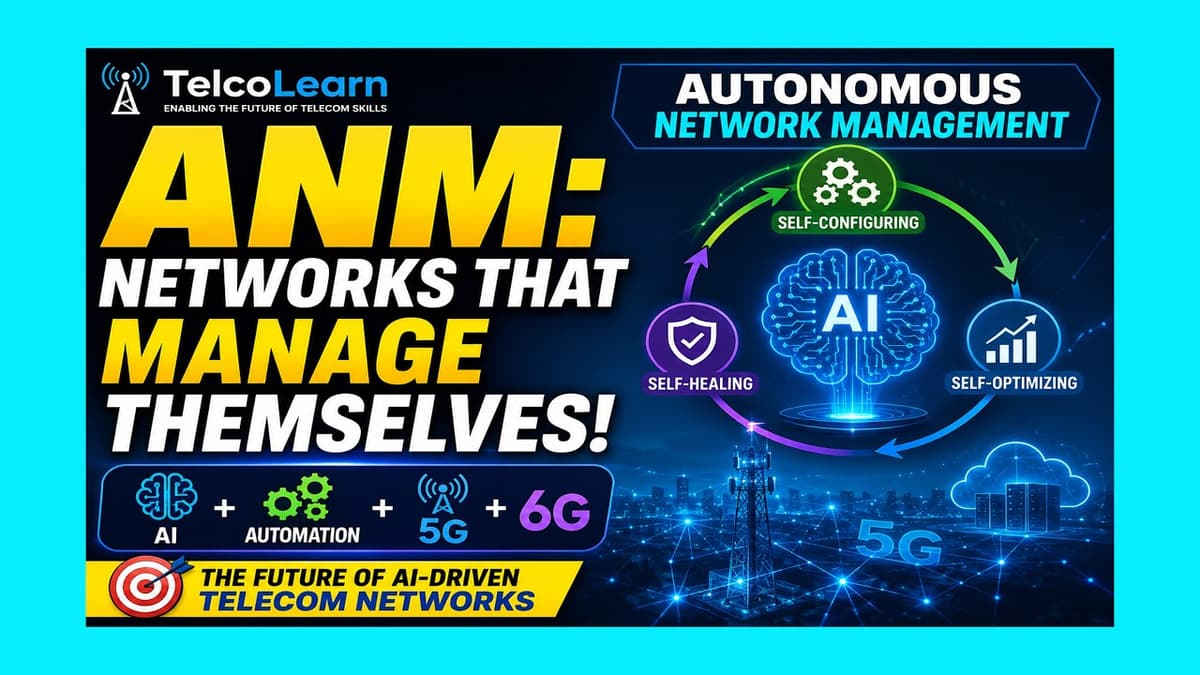
Autonomous Network Management (ANM) | The Future of AI-Driven Telecom Networks by TelcoLearn
TelcoLearn’s Autonomous Network Management (ANM) platform reimagines the traditional network operations center by embedding AI agents that continuously monitor the radio access network (RAN), core functions, and transport infrastructure. Instead of engineers manually sifting through thousands of alarms, the...

Still Getting Cloud Wrong. Here’s What to Fix. With Simon Vernon
The latest episode of Cyber Leaders features Simon Vernon, a veteran SANS instructor, CTF architect, and chief security officer for a data‑center firm. Vernon’s résumé spans early hobbyist hacking, automotive electronics, and a decade of designing hands‑on cloud‑security curricula. Vernon stresses...