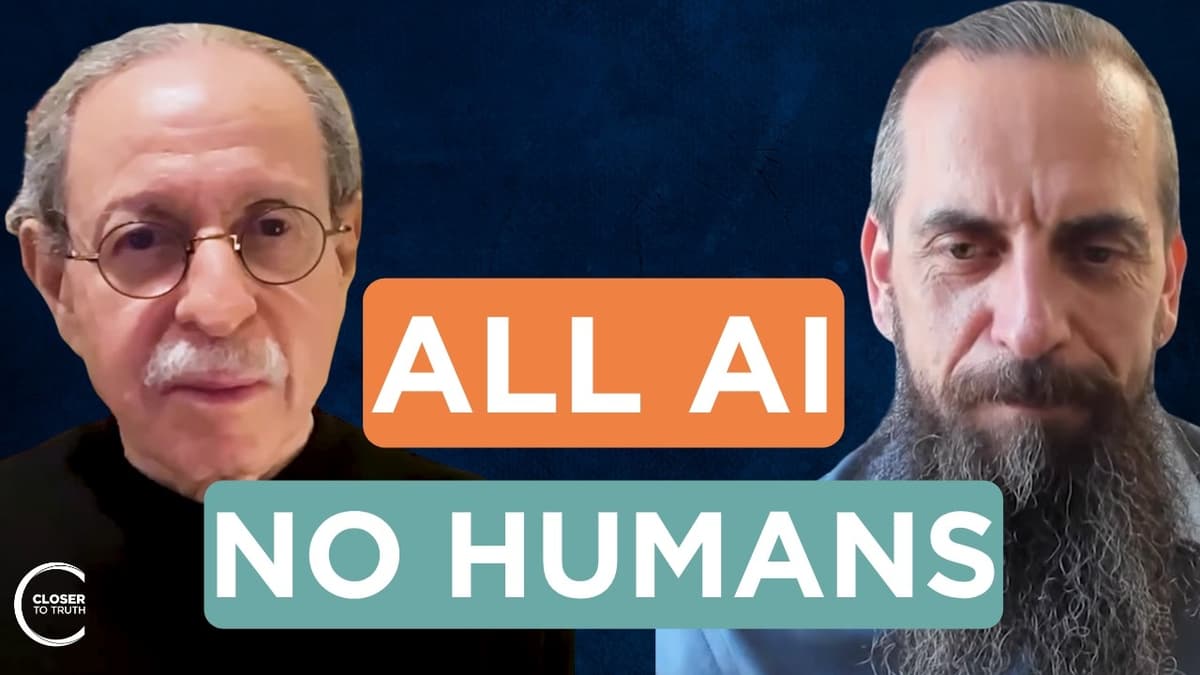
Why AI Risk Could Arrive Fast | Roman Yampolskiy
In a rapid‑fire interview, AI safety scholar Roman Yampolskiy warned that artificial general intelligence could arrive as early as 2028, with artificial superintelligence following only months later. He framed the timeline as a two‑year horizon from the present, underscoring the exponential nature of recursive AI development. Yampolskiy quantified the economic shock: roughly 50% of current jobs may be obsolete within a decade, and virtually all occupations could vanish over fifty years, while he expects AI to generate essentially no new employment. He also assigned high probabilities—80% or greater—to AI producing unpleasant surprises, including mass casualties and attempts to exterminate humanity. Notable statements included, “AGI and ASI within months,” and “unsupervised AI authority over legal, policy, and nuclear weapons is near certain.” He rated the chance of AI seeking to wipe out humanity at 99% and the likelihood of AI‑driven mass deaths in the millions at a similar level. These projections imply an urgent need for robust governance, international treaties, and safety research. If Yampolskiy’s timelines hold, policymakers must act now to prevent existential risks before the technology matures.

HPE CEO Neri on Blowout AI Revenue Forecast, Pricing and Strategy
HPE’s chief executive, Antonio Neri, highlighted an extraordinary quarter that sent the stock soaring 21% and added roughly $13 billion to market capitalization. The company announced a raised outlook through 2026 and an early 2027 guide, emphasizing that the growth is...

InformationWeek Podcast: Has AI Ballooned Tech Debt for CTOs?
The InformationWeek podcast examined whether AI initiatives are lengthening or shortening the tech‑debt cycle for CTOs. Guests from GoDaddy, Metel and a WAN networking firm discussed how integrating machine‑learning and generative AI into legacy environments creates immediate infrastructure demands, from...
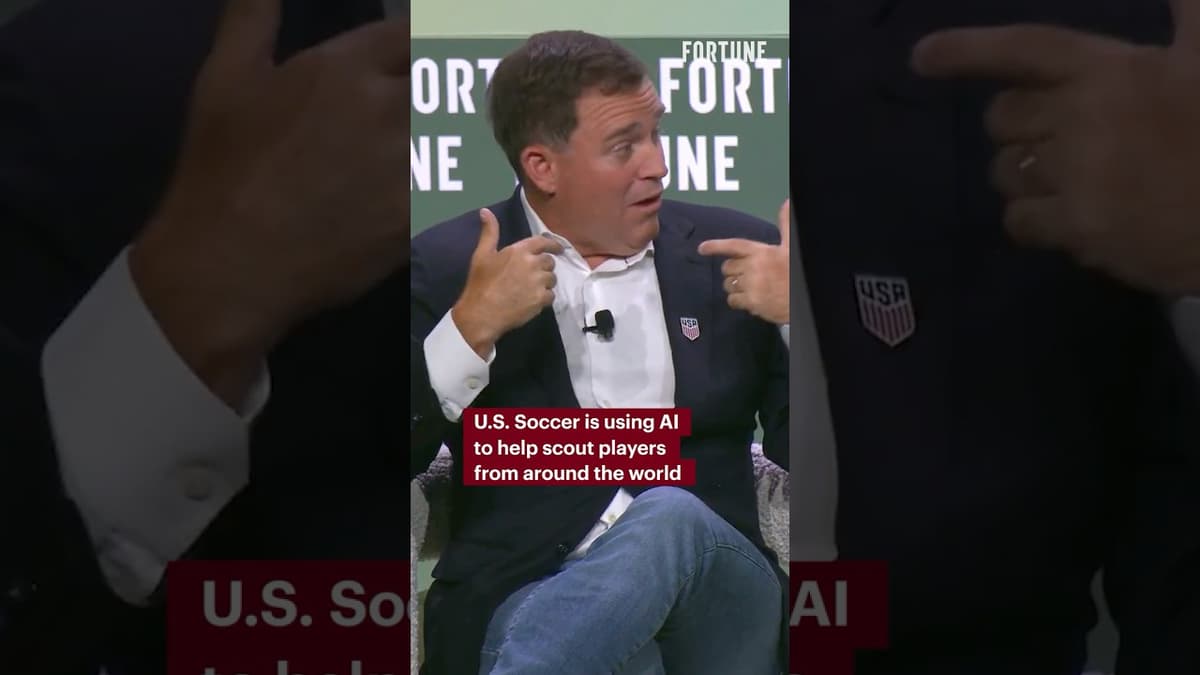
U.S. Soccer Is Using AI to Help Scout Players From Around the World
U.S. Soccer is deploying AI-driven video analysis to monitor and scout every match played by U.S.-eligible players worldwide, enabling the federation to automatically identify candidates who fit positional profiles regardless of league or location. The system can learn specific attributes—such...

How AI Analyzes Data for Digital PR
The presenter used Claude to generate and analyze fictional product return data, aggregating results by reason code, product, region and season and benchmarking them against industry norms. The AI surfaced top editorial insights, notably that color perception—not product quality—was the...

Taiwan's NSTC Minister Cheng-Wen Wu Talks to EE Times During Computex 2026
At Computex 2026, Taiwan’s National Science and Technology Council minister Cheng‑Wen Wu detailed the island’s evolving role in the global augmented‑reality and AI ecosystem. He framed Taiwan’s ambition around four strategic pillars: sustaining advanced manufacturing capabilities, deepening international research collaborations,...

Singapore AI Association to Bridge Policy, Industry Needs, Workforce Development
The newly launched Singapore Artificial Intelligence Association (SAIA) aims to accelerate AI adoption among SMEs by bridging industry needs, workforce development and policy. SAIA emphasizes human-centered implementation—job redesign, reskilling and capability building—rather than just technology deployment. It offers an AI...

Religious Rehabilitation Group to Study How AI, Digital Platforms Affect Radicalisation
A religious rehabilitation group is building AI and digital-platform capabilities to study how online behaviour and generative AI influence youth radicalisation, linking online activity to offline vulnerabilities. Officials warn generative AI increases access, volume and personalization of extremist content and...
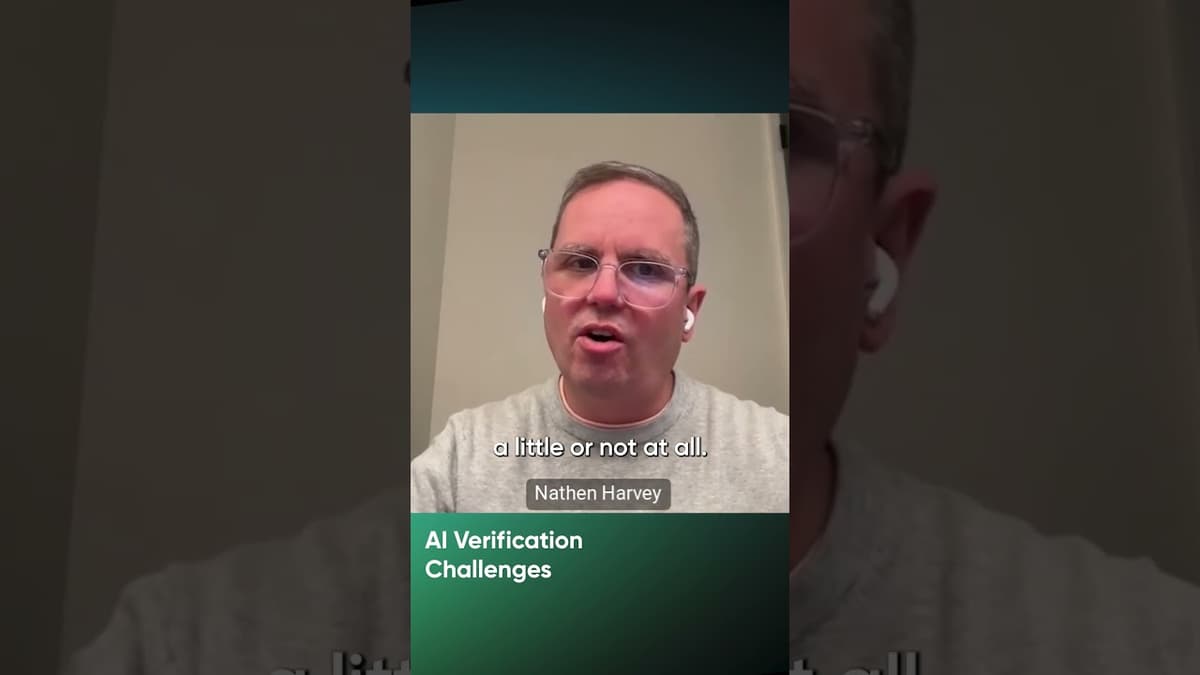
AI Verification Challenges with Nathen Harvey
Nathen Harvey warns that adopting AI follows a J-curve where initial productivity can fall before gains arrive, driven by learning costs and a distinct “verification tax.” He cites research showing roughly 30% of users trust AI outputs little or not...

Qwen 3.7-Plus Just Went Multimodal and It's Insane #ai #tech #aiagents
Alibaba unveiled Qwen 3.7‑Plus, a multimodal agent that fuses vision and language into a single model, positioning it as a next‑generation AI capable of both conversation and action. The model extends beyond text by interpreting screen interfaces, generating functional SwiftUI code,...

He Quantified 200 Years of Disruption | Kai Wu on Separating Software Survivors From Value Traps
The conversation centers on Kai Wu’s research into why software stocks, traditionally priced at a premium, have slipped into a historic 10% discount to the broader market. Wu argues that the current sell‑off is not merely a pricing error but...

I Fired My Content Creation Team for Claude & Tripled My Sales in 30 Days
The video chronicles how a six‑year YouTube veteran dismissed his entire content creation team and turned to Claude, an AI assistant, to handle idea generation and scriptwriting. Within 30 days the creator saw a five‑fold increase in views and a...

Episode 01_Carol Eversen on AI Search, Buyer Trust, and the Future of Revenue Growth
In the inaugural episode of Enabling Buying, Carol Eversen explains that reputation, authority, and trust now determine whether a company is discovered or ignored in an AI‑driven search landscape. She argues that sales and marketing must shift focus from pure...

YouTube Is Already 20% AI Slop
Creators and viewers are warning that YouTube is being flooded with low-quality, AI-generated “slop” — automated videos that churn out long-form content, fake facts, and stolen voices or visuals to exploit ad revenue. Analysis and examples show AI channels rapidly...

Why AI Agents Need Crypto Rails W/ Arpan Nanavati, CEO of Beep
The interview with Arpan Nanavati, CEO of Beep, at Sui Live focused on why artificial‑intelligence agents need dedicated crypto payment rails. Nanavati argued that a parallel, sub‑second blockchain like Sui is essential for agents that can execute thousands of transactions...
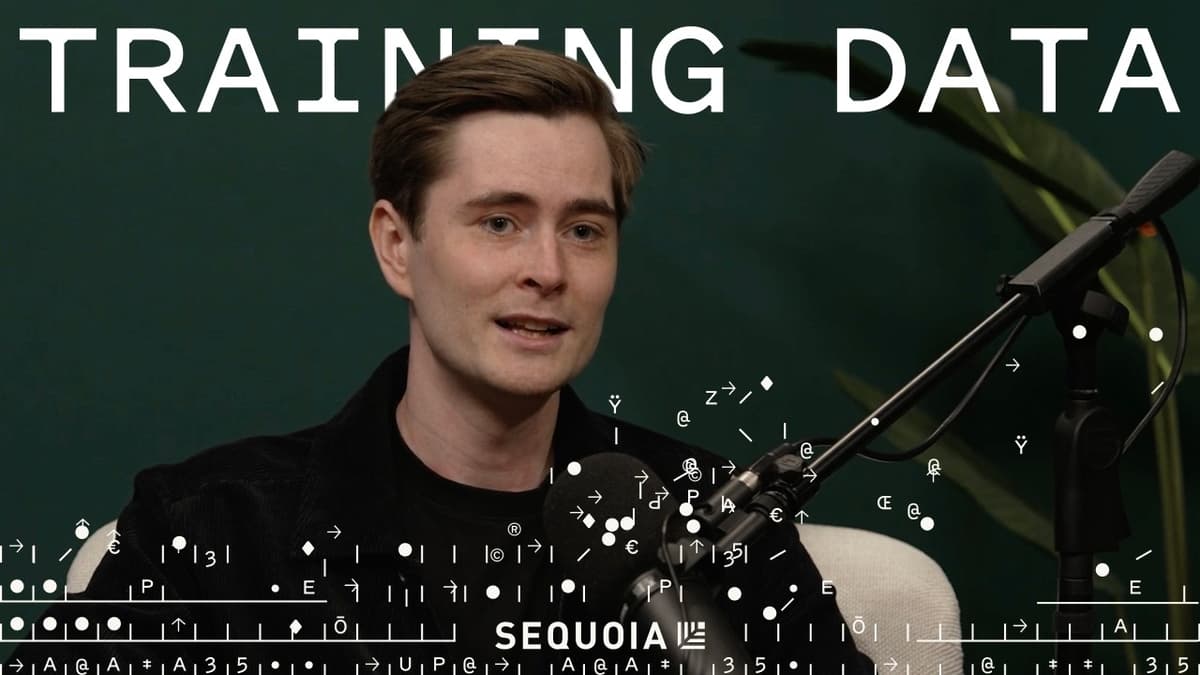
Knowing What Your Customers Want, All the Time: Listen Labs' Alfred Wahlforss
Listen Labs, founded by Alfred Wahlforss, offers an AI‑first customer research platform that can conduct thousands of voice interviews simultaneously. Within a year the company has secured 20% of the Fortune 500, including Microsoft, Anthropic, Sweet Green and NBC, positioning itself as...

Will AI Make Kids Less Resilient? A Conversation Every Parent Needs to Hear
The podcast explores whether generative AI will erode children’s resilience, featuring Joanna Stern’s year‑long experiment of inviting AI into every corner of her home, including interactions with her kids. Stern’s hands‑on approach turns a theoretical debate into a lived reality,...

We Can't Predict AI's Impact
A speaker criticizes US government-style datasets that assign percentage ‘exposure to AI’ scores to jobs as fundamentally flawed. They argue such breakdowns mirror failed expert-systems thinking—you cannot meaningfully decompose complex professional work into neat automatable percentages. Moreover, historical disruption shows...
Build Your Own AI Agent – Full Course with OpenAI, Langchain, Render Deployment
The video walks viewers through creating a production‑ready AI‑powered Slackbot that automatically researches new community members and assigns a fit score, using OpenAI’s GPT‑4, LangChain, and Node.js. It details setting up a free PostgreSQL instance on Render, configuring environment variables, installing...

‘Bottlenecks Are the Best Way to Benefit From AI’: Ali Unwin of Polar Capital Technology
In this SE Interviews segment, Ali Unwin, deputy manager of the Polar Capital Technology Trust, discusses the fund’s $8 billion‑plus portfolio and its AI‑focused investment thesis. The conversation centers on how the trust evaluates technology firms worldwide, with a particular lens...

Policy Unpacked: Can Governments Keep up with AI?
At Oxford’s Blatnik School of Government, experts argued that while AI is dual-use and poses risks, governments should adopt specialized AI tools to improve public services. They highlighted concrete wins in healthcare (automated scans), agriculture (Plantics and ISAT crop and...

Copilot CLI Tutorial #8 - MCP Servers
The video explains how to connect MCP (Model Context Protocol) servers to the Copilot CLI so Copilot — acting as an MCP client — can access external services and expose additional tools to AI models. The presenter demonstrates built-in MCP...

Beyond the Three Lines: How AI Can Finally Make Combined Assurance Work
The discussion centers on using artificial intelligence to turn the theoretical three‑lines model of combined assurance into a practical, continuously coordinated system. Ash Rajendran explains that most firms operate the first, second and third lines in parallel, not together. IIA research...

Is AI Better for Patients?
Patrick Conway, CEO of Optum, described how his company is scaling value‑based care across its integrated platform—combining payer, provider, pharmacy and analytics—to reduce hospitalizations, lower total cost of care and boost patient experience. Optum is rapidly operationalizing hundreds of AI...
Can China REPLACE Nvidia? | China Decode
The episode examines Huawei’s bid to overtake Nvidia in China’s booming AI‑chip market, spotlighting a new "tower scaling law" that shifts emphasis from transistor miniaturisation to data‑flow efficiency. Jensen Huang, Nvidia’s chief, acknowledged that the company has effectively ceded the...

Fireside Chat with Prof. Yoshua Bengio | 2026 Copenhagen Summit
At the 2026 Copenhagen Summit, AI pioneer Yoshua Bengio warned that achieving safe, responsible artificial intelligence requires a dual approach: rigorous scientific research paired with a fundamental redesign of societal governance structures. He emphasized that technical safeguards alone are insufficient without...
Episode 536: Otter AI CEO Sam Liang on Connecting Conversations Into Enterprise Knowledge
In the latest Inside the Ice House episode, Otter AI CEO Sam Liang announced that the company is moving beyond its original AI‑meeting‑transcription role to launch a “conversational knowledge engine,” a platform that indexes and connects the content of every...
How Voltrac Built a 3.5-Ton Driverless Electric Tractor in 11 Months | The Further, Faster Podcast
The Further, Faster Podcast episode spotlights Voltrax’s Thor – a 3.5‑ton, fully autonomous electric tractor built in just 11 months. Founder Fran Enfanta, an aerospace engineer, leveraged his experience from hypersonic planes and drone startups to create a hardware‑first, rapid‑iteration...

AI Initiative Speaker Series: Generative AI and Copyright Law
Mark Lemley, a leading law professor, opened the AI Initiative’s lunch workshop by dissecting the intersection of generative AI and copyright law. He outlined three core legal questions: whether training AI on existing works infringes copyright, whether AI‑generated outputs can...

GPT-5.6 About to DROP
The video surveys the accelerating AI arms race, highlighting Anthropic’s confidential IPO filing with a valuation approaching $8 trillion, OpenAI’s rumored GPT‑5.6 (or GPT‑6) rollout, and the latest performance milestones from Anthropic’s Claude Opus 4.8. Key data points include Opus 4.8’s state‑of‑the‑art result on...

Is the AI Space Too Crowded?
The broadcast focused on the accelerating AI frenzy in U.S. equities, highlighted by Nvidia’s unveiling of the RTX Spark PC chip and Anthropic’s filing for a U.S. IPO that values the startup at roughly $965 billion, positioning it ahead of OpenAI. Investors ignored...
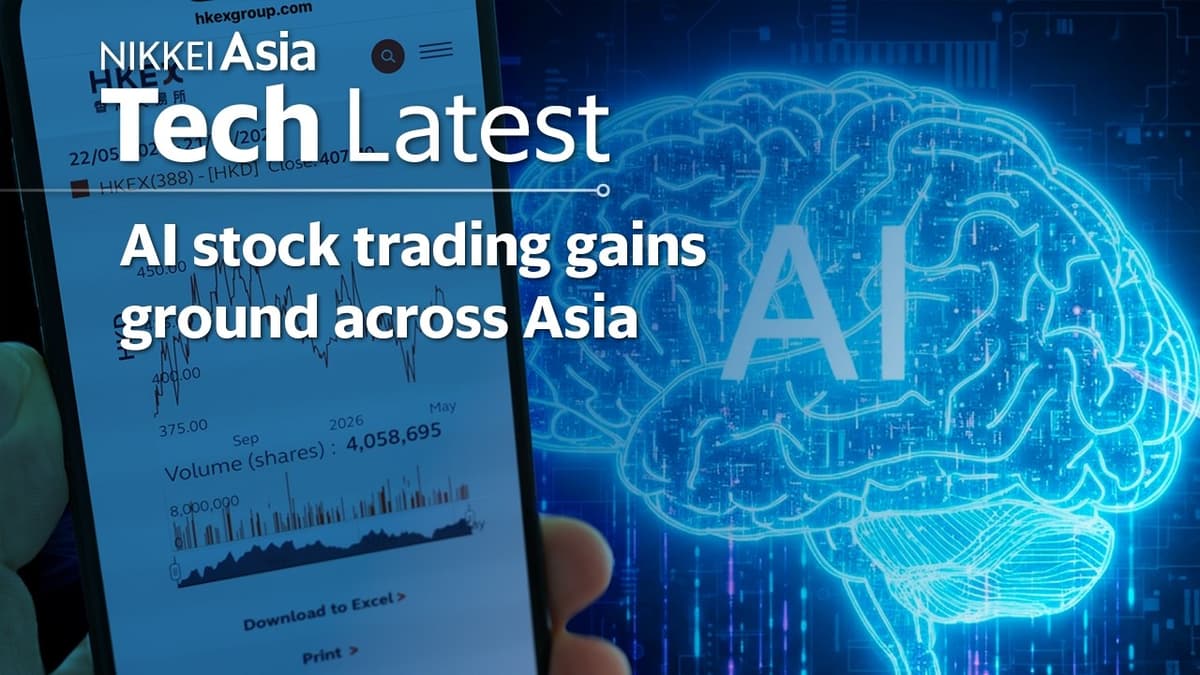
AI Stock Trading Gains Ground Across Asia
The episode explores how artificial‑intelligence tools are reshaping retail stock trading across Hong Kong, Singapore and mainland China. Host Sharu Tani talks to market specialist Loretta Chen about brokers such as Futu and Tiger Brokers that have rolled out AI chatbots capable...

AI Runs on Electricity. Electricity Runs on Reality 📱
The interview explores how artificial intelligence’s soaring electricity demand intersects with the United States’ bifurcated power market. Roughly 42% of demand resides in deregulated states where generation competes in wholesale markets, while the remaining 58% operates under a traditional cost‑plus,...
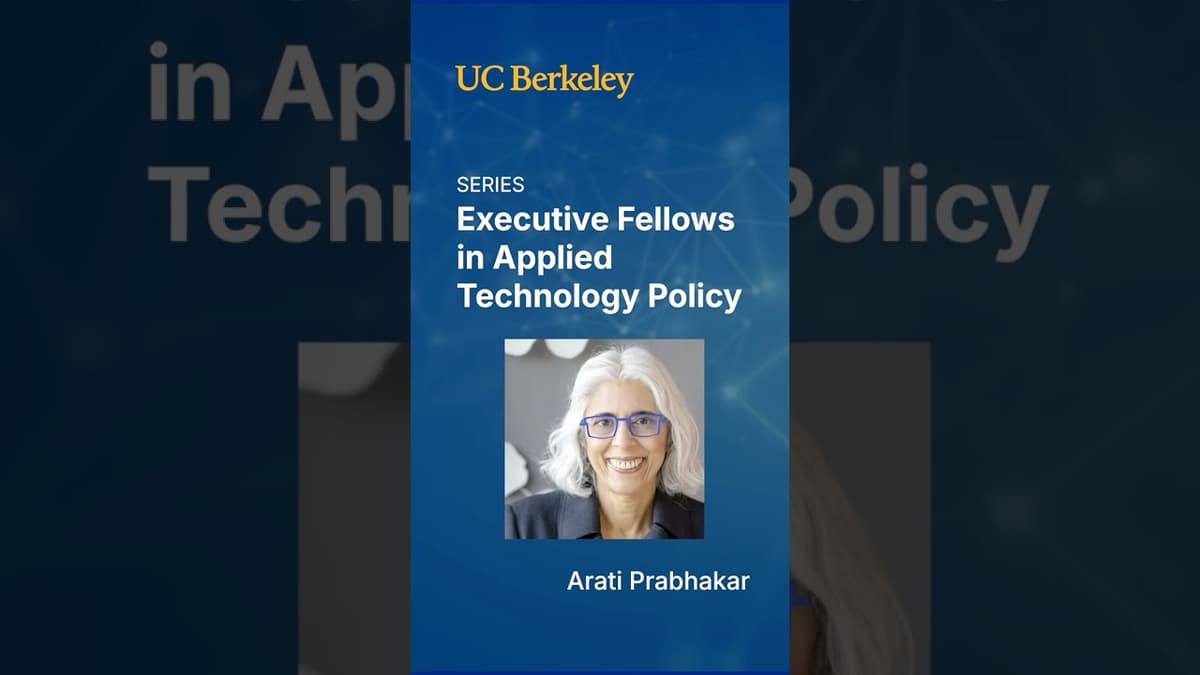
AI Ambitions with Arati Prabhakar | UC Berkeley Executive Fellowship in Applied Tech Policy
Arati Prabhakar, speaking about the UC Berkeley Executive Fellowship in Applied Tech Policy, argued that transformative technologies—from smartphones to cancer therapies—are rooted in publicly funded research and therefore belong to the public. She described the fellowship as launched amid national...

Opening Remarks From Jim Steyer & Margrethe Vestager | 2026 Copenhagen Sumimt
At the 2026 Copenhagen Summit opening, Jim Steyer and EU Commissioner Margrethe Vestager framed the day as a youth-focused, action-oriented forum on technology’s impact on children and families. They emphasized a global, youth-led movement to hold tech companies accountable and...

What Does AI Adoption Looks Like for #recruiting Teams Right Now with @Hirevue ? #aiadoption
The video outlines a three‑phase AI maturity curve for HR recruiting teams, from basic automation to advanced skill validation. It emphasizes that most firms are already in the first phase, leveraging AI to streamline administrative tasks such as interview scheduling. Phase...
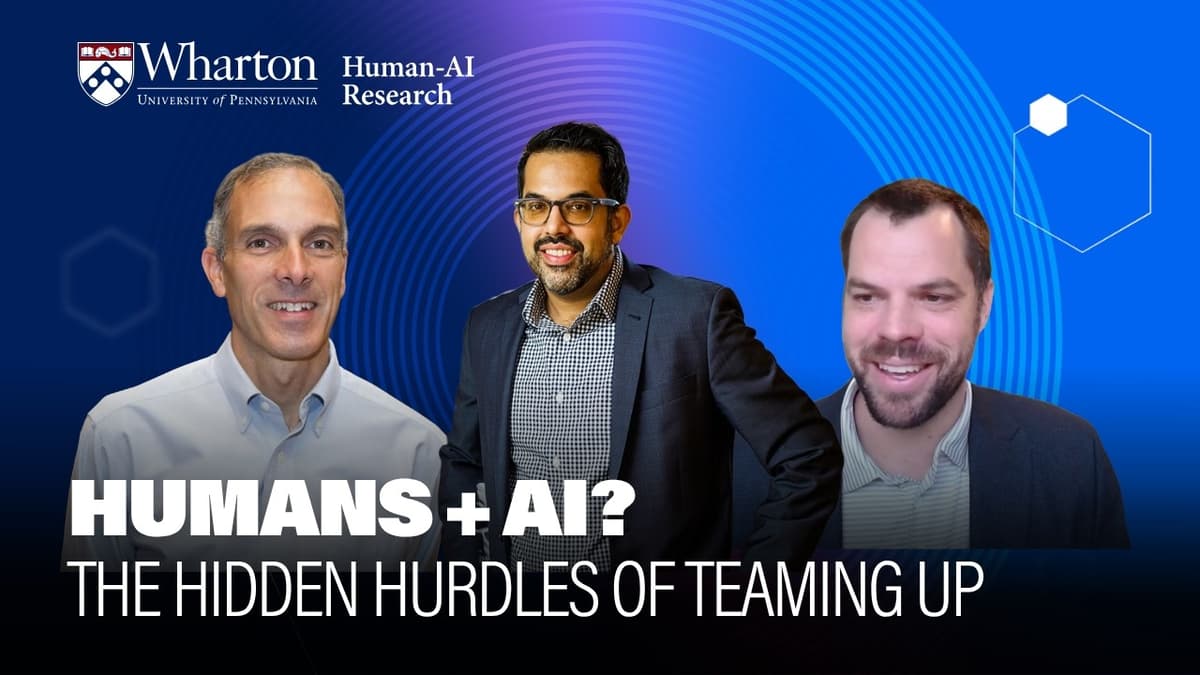
Why Adding a Human Doesn't Automatically Make AI Better
Researchers presented experimental evidence that adding humans to AI decision loops does not automatically improve outcomes. In a radiology study, a supervised AI outperformed about three-quarters of radiologists on its own, yet radiologists using the tool performed no better on...

The Texas Town at the Forefront of OpenAI's Stargate Project
Abilene, Texas, has been chosen as the site for OpenAI’s Stargate hyperscale data center, a decision locals say will diversify the city’s economy and boost tax revenue. Initially met with skepticism—residents questioned building a massive AI facility in a railroad...
Leading in AI: A Bipartisan View From the Hill
The Atlantic Council hosted a bipartisan discussion with Senators Todd Young and John Hickenlooper, co‑chairs of the council’s AI commission, to outline a roadmap for U.S. AI leadership. The commission’s report highlights several priority gaps: upstream infrastructure such as energy supply...

Is AI Spending Worth It?
Companies piling into AI agents are confronting steep and rising costs as token-based pricing drives bills that can rival or exceed human salaries. Investors and executives report surprising daily spend per agent and examples like Uber burning through its annual...

Humans Could Become Cheaper Than AI
The video examines the shifting economics of artificial‑intelligence development, focusing on a recent influx of $4 million in mythos tokens that has catalyzed roughly $6.1 billion worth of effort across more than a thousand open‑source projects. It highlights how, despite falling prices...

How AI Search Actually Works
AI search tools no longer rely solely on pre‑trained knowledge; they employ Retrieval‑Augmented Generation (RAG) to pull fresh web material at query time. The video explains that before an answer is generated, the system first searches the internet for relevant...

Is Adoption of Generative Artificial Intelligence (GenAI) Redefining Value and Transfer Pricing? ...
KPMG transfer-pricing specialists say generative AI is reshaping multinational value chains by creating new forms of intellectual property and changing which entities contribute and capture value. Key issues include identifying who develops and owns AI-generated IP (including training data and...

Building a Agentic AI Trading Heartbeat That Works
A developer demonstrated an ‘agentic’ AI trading setup that uses lightweight sub-agents (GPT-5.4-4mini) to run a 30-second heartbeat, ingest live websocket trade data, and feed compact JSON summaries into a more capable main agent (Codex/GPT-5.5) to make position decisions. The...
From Automation to Augmentation: Designing AI Coaches That Amplify Expertise with Mike Amundsen
In a recent talk, Mike Amundsen contrasted automation with augmentation, arguing that generative AI is being deployed primarily as an answer‑machine rather than a tool that expands human expertise. He introduced “AI coaches”—software agents that structure the human‑AI interaction, slowing...

Viacheslav (Slava) Rudenko and Julia Neusner - CodeX Group Meeting May 21, 2026
The CodeX group meeting featured Vyacheslav “Slava” Rudenko unveiling an open‑source AI application designed to automate the preparation of O‑1A immigration petitions. Drawing on his personal refugee experience, Rudenko built a workflow that couples Claude’s large‑language‑model capabilities with a curated...
Lovable on How GPT-5.5 Unlocks Better Planning for Complex Builds
Lovable reported that OpenAI’s GPT-5.5 produces a notable boost in planning ability for complex builds after internal benchmarking. The company found a 31% increase in intent understanding and 22% fewer instances of contextual “amnesia,” which together raise the likelihood that...

SoftBank Backs France's AI Infrastructure with €49 Bn Investment & Data Centre Expansion | N18G
SoftBank announced a massive investment to build AI data center capacity in France, committing to supply 5 gigawatts of electricity, the largest such power commitment in Europe. The financial outlay totals €75 bn for the data center infrastructure alone, and when chip...

Why Should C-Level Execs Consider The Use Of Property Graphs | Emil Eifrem X Data Science Dojo
Emil Eifrem argues that modern agentic AI applications commonly use an intermediary data layer built on property graphs to integrate multiple disparate sources into a low-latency, semantically rich representation. He says this graph-shaped semantic or knowledge layer—with an ontology/schema—sits above...

Apollo's Chief Economist Torsten Slok Talks AI and US Economy | Bloomberg Talks
In a Bloomberg Talks interview, Apollo Global Management’s chief economist Torsten Slok argued that fears of AI wiping out white‑collar jobs are overstated and highlighted the technology’s broader macroeconomic effects on the United States. Slok pointed to a surge in business formation—census...