
Agios Pursues Accelerated FDA Approval for Mitapivat as Sickle‑Cell Therapy, Shares Jump 21%
Agios Pharmaceuticals announced it will seek accelerated U.S. approval for its oral drug mitapivat to treat sickle‑cell disease, prompting a 21.7% rise in its shares. The company has already filed a confirmatory trial proposal with the FDA and is preparing an sNDA submission in the coming months.

Spermidine Linked to Heritable Red Blood Cell Longevity Trait
The longevity factor spermidine is part of a highly heritable complex erythrocyte phenotype associated with longevity https://t.co/rHT8XoWHFz

Antipsychotic-Like Effects of the Selective Rho-Kinase 2 Inhibitor KD025 in Genetic and Pharmacological Mouse Models of Schizophrenia
The selective ROCK2 inhibitor KD025 (belumosudil) demonstrated antipsychotic‑like activity in both genetic (Arhgap10 S490P/NHEJ) and pharmacological (methamphetamine and MK‑801) mouse models of schizophrenia. KD025 restored reduced spine density in the medial prefrontal cortex and rescued deficits in a touchscreen visual‑discrimination...

Jupiter Neurosciences Inc (JUNS) Q4 2025 Earnings Call Transcript
Jupiter Neurosciences reported total product sales of $2.8 billion in 2025, a 22% year‑over‑year increase driven by INGREZZA and the debut of CRENESSITY. INGREZZA generated just over $2.5 billion, up 9% on volume growth, while CRENESSITY posted $300 million in its first full...

Cysteine Steers T‑cells Toward Proliferation or Tumor Killing
Cysteine directs T cells to either multiply or attack tumors by fueling distinct metabolic pathways, suggesting new strategies to fine-tune immune responses in cancer therapy. immunometabolism

From Free Rider to Innovator: How China Became a Global Pharmaceutical Powerhouse
China has transformed from a pharmaceutical free rider into a leading innovator, largely after the 2016 National Reimbursement Drug List (NRDL) reform. The policy slashed prices by 50‑60% while guaranteeing near‑universal coverage, prompting a five‑fold rise in annual clinical trials...

Reactivation of Dormant Regulatory T Cells Alleviates Asthma Symptoms in Mice
Researchers at Henan Academy, Zhengzhou University and Shenzhen University demonstrated that activating the Dectin‑1 receptor on regulatory T cells (Tregs) can reverse their dormant, senescent state and restore anti‑inflammatory function. Using the small peptide KQS‑1, they epigenetically up‑regulated FOXP3 and...

Genetic Variants Involved in Rapid Immune Response Linked to Earlier Breast Cancer Onset in BRCA1 Carriers
Researchers identified damaging variants in innate immunity genes, especially those governing natural killer (NK) cell activation, as strong modifiers of breast cancer onset in women carrying the BRCA1 185delAG mutation. An analysis of 321 Ashkenazi Jewish carriers showed that these...

28 Months Later: FDA Still Hasn't Revealed Rick Bright and Janet Woodcock's Communications
The episode delves into the controversy surrounding the FDA’s handling of hydroxychloroquine during the COVID‑19 pandemic, focusing on whistleblower Dr. Rick Bright’s claims that Dr. Janet Woodcock pressured him to pursue an Emergency Use Authorization (EUA) rather than an expanded‑access protocol....

Shields and Bodyguards: Scientists Uncover the Hidden Defenses of a Deadly Childhood Cancer
University of Queensland researchers applied spatial multi‑omics to 27 neuroblastoma samples, creating high‑resolution maps that reveal a GPX4‑driven shield protecting tumor cells from ferroptosis and surrounding immune cells acting as "bodyguards." The study, published in Genome Medicine, identifies GPX4 as...

The War on Peptides — Why Retatrutide Is at the Center
In this episode of Business Game Changers, host Sarah Westall and Dr. Diane Kayser discuss the rapidly evolving peptide market, focusing on the upcoming weight‑loss peptide retatrutide (also called Reditrutide). They explain how big‑pharma is moving to control peptide supplements,...

TYK2 Protein Suppresses Breast Cancer Metastasis by Sensing Extracellular Stiffness, Research Finds
Researchers at UC San Diego discovered that the inflammatory protein TYK2 acts as a metastasis suppressor in breast cancer by sensing extracellular matrix stiffness. On soft matrices, TYK2 remains on the cell membrane and blocks invasion, while stiff environments cause...

Dual-Target Strategy Shows Promise in Overcoming Drug Resistance in MCL
A recent preclinical study identified BIRC5 and MCL‑1 as co‑drivers of survival in mantle cell lymphoma (MCL) and demonstrated that simultaneous inhibition with YM155 and S63845 produces strong synergistic killing of cancer cells. The combination was effective across both treatment‑naïve...
Targeting Tumor Supporting Cells: Lipid Nanoparticles Advance CAR T Success in Pancreatic Cancer
Researchers at Penn Vet used lipid nanoparticles (LNPs) to deliver FAP‑CAR mRNA directly to patients' T cells, enabling in‑vivo engineering of CAR T cells that attack cancer‑associated fibroblasts in pancreatic ductal adenocarcinoma. In a preclinical mouse model, a single dose of...

BREAKING STUDY: Half of COVID-19 Vaccinated Military Personnel Suffered Subclinical Heart Stress
A new longitudinal study of 83 healthy military personnel tracked cardiac biomarkers after two mRNA COVID‑19 vaccine doses. Within two weeks of the second shot, 49% of participants exhibited a rise in NT‑proBNP exceeding 1.5 times their baseline, indicating subclinical...

A Startup Has Been Quietly Pitching Cloned Human Bodies to Transfer Your Brain Into
Stealth biotech startup R3 Bio, backed by billionaire investors, announced a fundraising round to develop non‑sentient monkey organ‑sack platforms for donor organs. Investigative reporting by MIT Technology Review revealed that the founders are also exploring the far more controversial concept...

Off-the-Shelf CAR T-Cell Therapy Granted Breakthrough Therapy Designation for Aggressive T-Cell Cancers
Soficabtagene geleucel (WU‑CART‑007), an off‑the‑shelf CRISPR‑engineered CAR‑T therapy, received FDA Breakthrough Therapy Designation for relapsed or refractory T‑cell leukemia and lymphoma. In a phase 1/2 trial of 28 patients, the drug achieved a 91% overall response rate and a 73% complete...

Lipidomics Study Maps Diet to Heart‑Health Risk, Paving Way for Precision Nutrition
Researchers led by Beyene, Wang and Cinel published a landmark lipidomics analysis in Nature Communications that ties distinct lipid profiles to dietary patterns and cardio‑metabolic outcomes, offering a molecular roadmap for precision nutrition.

Using “Left-Handed” Proteins to Block Alzheimer’s
Kobe University researchers engineered a synthetic right‑handed (D) peptide that binds amyloid‑beta, the disordered protein driving Alzheimer’s plaques, and blocks its aggregation. In mouse brain cell cultures the mirror peptide restored cell viability to 100%, compared with 50% survival when...

First‑In‑Human Nuclease‑Free Gene Editing Shows Promise for Methylmalonic Acidemia
Researchers led by Dr. Bedoyan, Dr. Morgan and Dr. Sun completed a phase 1/2 trial that used nuclease‑free homologous recombination to edit the genes of children with methylmalonic acidemia. The therapy lowered toxic metabolite levels and showed durable engraftment without...

FDA Set to Lift Peptide Compounding Ban After RFK Jr. Push
The Food and Drug Administration is preparing to reverse its 2023 restriction on dozens of experimental peptides, permitting licensed compounding pharmacies to produce them again. The move follows Health Secretary Robert F. Kennedy Jr.’s public promise on the Joe Rogan...

NANOBIOTIX Provides Business Update and Reports Full Year 2025 Financial Results
Nanobiotix posted full‑year 2025 results showing a revenue rebound to roughly $35.5 million and a net loss of $26 million, a 65% YoY improvement. The company secured a non‑dilutive royalty financing of up to $71 million, extending its cash runway to early 2028 with...

Low Placebo Response Skews Psychedelic Depression Trial Results
I was interviewed about a study of GH001, vaporized 5-MeO-DMT, for treatment-resistant depression. I commented that, while promising and encouraging, the thing that popped out to me was the almost complete lack of placebo response in the placebo group. Even...

Biogen to Acquire Apellis for $5.6 B, Shares Jump 136% on Deal
Biogen announced a definitive agreement to buy Apellis Pharmaceuticals for $41 a share in cash, valuing the transaction at roughly $5.6 billion. The deal lifts Apellis shares 135.7% to $40.28 and adds two marketed complement‑inhibitor drugs, EMPAVELI and SYFOVRE, to Biogen’s...

Frailty, Innovation, and the Future of Myeloma Treatment With Joseph Mikhael, MD
Joseph Mikhael, MD, highlights a dramatic shift in multiple myeloma care for older adults, driven by refined frailty assessments and the rise of targeted immunotherapies such as CAR‑T cells and bispecific antibodies. These advances have translated into higher survival rates...
New Sensor Could Allow MRIs to See Molecular-Level Changes
University of California, Santa Barbara researchers have engineered a genetically encoded, protein‑based sensor that lets magnetic resonance imaging capture molecular‑level activity inside cells. The modular system, called MAPPER, couples aquaporin water channels with interchangeable protein domains to generate MRI‑detectable signals...

Key Neurons Can Jumpstart Leg Movement After Spinal Injury
Researchers identified a rare subset of graft‑derived interneurons that can reconnect broken spinal circuits and trigger leg muscle activity in animal models of spinal cord injury. When these neurons were experimentally activated, 20‑30% of the subjects showed measurable leg movements,...

Elaine Chen Showcases Biotech Deals and Mind‑bending Insights
I'd like to draw your attention to my fantastic @statnews colleague @elaineywchen. She led the way our obesity drug coverage, is a host on our podcast, and writes our biotech newsletter most days. Today has two big examples of the...

TippingPoint Raises $4.5M Seed to Drug Hidden Epigenetic Targets in Deadly Pediatric Brain Cancer
TippingPoint Biosciences announced a $4.5 million seed round led by SOSV and LKS Fund to advance its epigenetic drug discovery platform. The company targets protein‑protein interfaces within disease‑specific chromatin environments, aiming at sites traditionally deemed undruggable. Its inaugural program focuses on...

Turning Muscles Into Motors Gives Static Organs New Life
MIT researchers unveiled a myoneural actuator (MNA) that rewires sensory nerves to transform existing muscle into a fatigue‑resistant, computer‑controlled motor for paralyzed organs. In rodent models the MNA restored intestinal squeezing and mimicked residual calf muscle function while sending sensory...
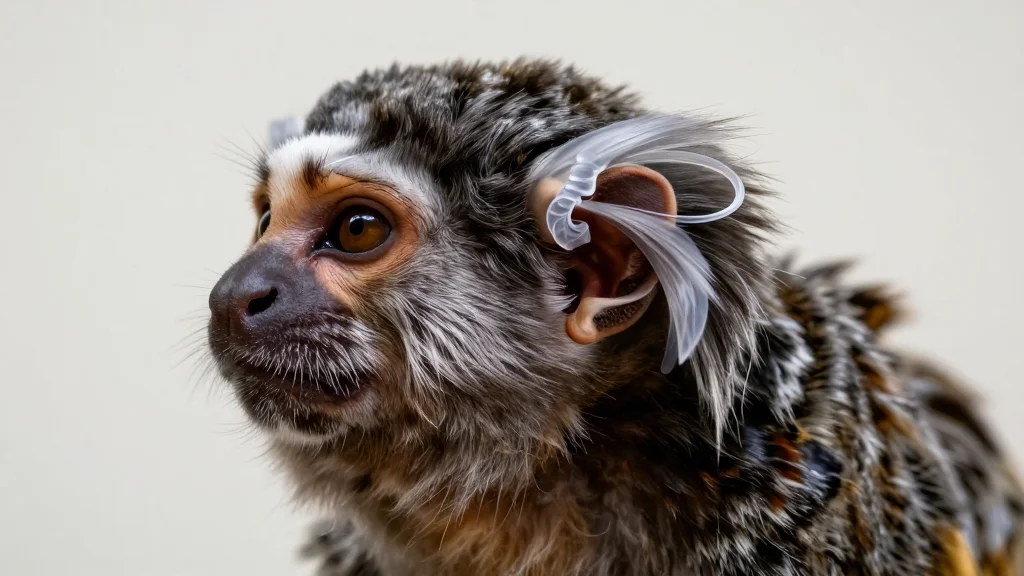
First Primate Model of Congenital Deafness Created
Genetically modified marmosets lacking the OTOF gene now serve as the first primate model for human congenital deafness, offering a precise platform to advance gene therapies targeting hearing loss. genetherapy

AI Cuts Drug Discovery From Years to Months
I joined Sam Fazeli for the latest episode of Bloomberg Intelligence's Vanguards of Healthcare podcast and talk about our partnership with Eli Lilly and why I believe algorithmic approaches are reshaping the earliest stages of pharmaceutical R&D. The biggest impact...

Yuvezzi for Presbyopia Now Available in US
Tenpoint Therapeutics announced that Yuvezzi, the first FDA‑approved eye‑drop for presbyopia, is now commercially available in the United States. The formulation combines carbachol 2.75 % and brimonidine tartrate 0.1 % to induce pupil constriction within 30 minutes, providing up to ten hours...

Vanda’s Tradipitant Has Phase II Success but a Court Setback
Vanda Pharmaceuticals reported that its NK1‑receptor antagonist tradipitant achieved its primary endpoint in a Phase II trial for gastroparesis, showing a roughly 30% improvement in nausea scores versus placebo. The data suggest the drug could address a sizable unmet need in...

AI-Built Intrabodies Target Alzheimer’s Within
University of Essex researchers used artificial intelligence to redesign antibody fragments, creating "intrabodies" that remain stable inside human cells. By adjusting electrical charge, they converted 672 antibodies into intracellularly functional molecules that bind disease‑causing proteins linked to Alzheimer’s, Parkinson’s, Huntington’s...

Time‑Restricted Eating Lowers Testosterone and Improves A1C in Women with PCOS
University of Illinois Chicago nutrition professor Krista Varady reported that a six‑hour time‑restricted eating protocol reduced testosterone, lowered free androgen index and improved A1C in a six‑month trial of 76 women with PCOS, while participants lost an average of 10 pounds....

Scientists Have Discovered an 'Achilles' Heel' In Deadly Superbugs
Scientists have identified pseudaminic acid, a sugar found only on the surface of certain Gram‑negative bacteria, as a vulnerable target. By synthesizing this sugar and creating monoclonal antibodies that bind it, researchers demonstrated in mice that the antibodies flag the...

FLAV-27 Reverses Cognitive Decline in Alzheimer Mice, Study Shows
Scientists at the University of Barcelona Institute of Neurosciences have demonstrated that the novel compound FLAV-27 can reverse cognitive decline in mice engineered to develop Alzheimer's disease. The breakthrough, which targets the brain enzyme EHMT2 to reprogram neuronal epigenetics, offers...

Modified Immune Cells Target Cancer’s Metabolic Signature
Stanford researchers engineered natural killer (NK) and cytotoxic T cells to overexpress metabolite‑sensing G protein‑coupled receptors, most notably GPR183, enabling the cells to home toward tumor‑derived metabolic cues. In mouse models of triple‑negative breast and ovarian cancer, GPR183‑enhanced NK‑92 cells...

Polysaccharide Microneedles and 3D Printing Explored for Cancer Immunotherapy Applications
Researchers reviewed polysaccharide‑based microneedles as a platform for cancer immunotherapy, emphasizing how additive manufacturing—particularly high‑resolution 3D printing—can create customizable transdermal delivery arrays. Natural polymers such as hyaluronic acid, chitosan and alginate provide biocompatibility and enable dissolvable or hydrogel‑based needles with...

Alamar Biosciences Files Nasdaq IPO After $128M Series C and 100‑Hire Surge
Alamar Biosciences, the Fremont‑based proteomics company, filed to go public on Nasdaq after raising $128 million in a Series C round and adding almost 100 employees in two years. The move marks the firm’s transition from research‑focused labs to commercial sales of...

FDA Peptide Loosening Could Power Enhanced Games’ Public Debut
If the FDA follows through with lifting restrictions on several peptides, it could unlock a massive market opportunity in performance medicine. One of the most interesting candidates IMHO – with all the bias I have as one of the founders -...

Killer Cells Eradicate Superbugs in a Single Day
Forget Antibiotics: These Killer Cells Wipe Out Deadly Superbugs in a Day by @ShellyFan https://t.co/KVAaK61555 https://t.co/cXP8loNRHn

Pig Liver Xenotransplant Shows Promise, but More Work Remains
Genetically modified pig livers have entered early clinical testing, with a Chinese patient surviving 171 days after transplantation. Researchers in China are exploring pig livers as auxiliary support, while a University of Pennsylvania team is evaluating extracorporeal pig livers as...

Nature-Inspired Drug Discovery Discussed on The Long Run
Inspired by Mother Nature, Discovering New Drugs. @viswacolluru of @lifeschemistry is the latest guest on The Long Run. Sponsored by @AlphaSenseInc and Dash Bio. https://t.co/F01HMam6Ul

Regulators Lag as AI Accelerates Drug Discovery
AI in drug discovery is moving faster than any other sector right now. Eli Lilly. Computational pharma. FDA timelines under pressure. The bottleneck isn't the AI. It's whether regulatory frameworks were designed for a world where drug candidates get identified in months.

AZD5004
Elecoglipron (ECC5004/AZD5004), an oral small‑molecule GLP‑1 receptor agonist, completed Phase 2 trials in type 2 diabetes and obesity, meeting primary endpoints in the SOLSTICE and VISTA studies. AstraZeneca licensed global rights from Eccogene for an upfront payment of $185 million and potential milestones...

Viral Research Reveals Immune Secrets for Vaccine Design
Here is my talk on how studying viral infections can teach us a lot about the immune system, and how we can use those insights to develop vaccines against viruses. "Night science moments" make science so exciting 🌓 @NightScienceIns @ItaiYanai...

FDA Standards Threaten Affordable Academic Gene Therapies
The scientists behind treating Baby KJ say the FDA is imposing standards that could make it too expensive for them — or any academics — to bring such bespoke therapies to approval. https://t.co/OrxMXBVev4

FDA Hurdles Stall Academic Scaling of Custom Gene Editor
Baby KJ scientists hit speed bump in quest to scale custom gene editor. Stringent FDA requirements could prove stumbling block for academics https://t.co/HsaK7lSuh1 via @Jasonmmast