
NewcelX and Eledon Partner for NCEL-101 Programme
NewcelX has entered a collaborative research agreement with Eledon Pharmaceuticals to advance its NCEL‑101 cell therapy for type‑1 diabetes. The partnership integrates NewcelX’s off‑the‑shelf islet replacement product with Eledon’s anti‑CD40L monoclonal antibody, tegoprubart, which has been used in over 100 transplant patients under FDA‑cleared INDs. By adding targeted immune modulation, the duo aims to enhance graft survival and streamline regulatory pathways, potentially shortening development timelines. Executives highlight the deal as a strategic step toward a functional cure and shareholder value.

For the First Time, Ferring Reports Revenue of Over €2.5 Billion in 2025
Ferring Pharmaceuticals reported revenue above €2.5 billion for 2025, a 7% increase at actual exchange rates and 10% at constant rates. Growth was powered by its flagship reproductive medicine Menopur and the U.S. ramp‑up of gene‑based bladder‑cancer therapy Adstiladrin. Operating profit...

Why the FDA Is Embracing Old Math for New Drugs
The FDA released draft guidance encouraging the use of Bayesian statistics in drug and biologic clinical trials, aiming to shorten development timelines and lower costs. By allowing external data—known as priors—to be incorporated, the approach promises more efficient, adaptive studies,...

Single Pivotal Trials Demand Stronger Data and Risk Strategies
Following the FDA’s recent shift to require only one pivotal trial for new drug applications, sponsors now face heightened pressure to generate robust efficacy and safety data. Regulators expect a single, bullet‑proof study rather than two less conclusive trials, mirroring...

Rapport Therapeutics Partners with Tenacia Biotechnology to Advance RAP-219 in Greater China
Rapport Therapeutics has granted Tenacia Biotechnology exclusive rights to develop and commercialize its TARPγ8‑specific AMPA receptor negative allosteric modulator RAP‑219 in Greater China, covering indications such as focal onset seizures and bipolar mania. The agreement provides Rapport with a $20 million...

How Voluntary Exercise Reshapes Tryptophan Metabolism Through the Gut Microbiota
A study in *Brain Medicine* shows that eight weeks of voluntary wheel running in adult male rats reshapes the gut microbiota, notably decreasing the tryptophan‑metabolizing genera Alistipes and Clostridium. The microbial shift coincides with altered serum metabolites, including a rise...

Mouse Brain Study Reveals Why Blockbuster Weight-Loss Drugs May Work Differently in Females and Males
Researchers at Icahn School of Medicine created the first sex‑specific atlas of GLP‑1 expression in the mouse brain using RNAscope, mapping the peptide across 25 nuclei. The atlas shows pronounced differences between females and males, especially in hindbrain nuclei of...

Cost–Benefit Analysis for Synthetic Nucleic Acid Screening in the European Union
RAND Europe, commissioned by Sentinel Bio, delivered a EU‑wide cost‑benefit analysis of synthetic nucleic acid synthesis screening. The study compares three policy options—voluntary guidance, EU‑funding conditionality, and mandatory regulation—over a ten‑year horizon. Results show all options generate net societal benefits,...

Nonprofit Aims To Modernize Manufacturing by Clearing Capital Hurdle
A nonprofit, the API Innovation Center (APIIC), is tackling the capital barrier that prevents U.S. drug makers from adopting continuous manufacturing. By pooling state, federal, philanthropic and private funds, APIIC installs equipment at manufacturers at no upfront cost, de‑risking the...

Portfolio of SCN2A Gene Variants, and More
A new preprint maps a broad portfolio of SCN2A gene variants onto the Nav1.2 sodium channel, revealing distinct functional impacts that correspond to neurodevelopmental outcomes. Loss‑of‑function mutations linked to non‑syndromic autism reduce channel activity, while co‑expression with wild‑type proteins produces...

Other News to Note for March 10, 2026
Merck released phase III data from its Litespark‑011 trial, showing a potent HIF‑2α inhibitor that could reshape renal‑cell carcinoma therapy. Researchers at INSERM uncovered hypothalamic tanycytes as a primary mechanism for clearing pathological tau, opening new avenues for Alzheimer’s treatment....

Resident Macrophages Play a Role in Maintaining Murine Intraocular Pressure
Duke University researchers discovered that resident tissue macrophages (RTMs) are essential for maintaining intraocular pressure (IOP) in mice. Fluorescent tagging showed that selective removal of RTMs clogged the eye's outflow pathway, causing fluid buildup and elevated IOP, while depletion of...
Biontech SE (BNTX) Q4 2025 Earnings Call Transcript
BioNTech’s Q4 2024 earnings call highlighted a strategic pivot toward oncology, emphasizing the advancement of its bispecific antibody BNT327 and the recent acquisition of Biotheus to secure Chinese manufacturing and development capabilities. The company reported positive Phase 2 data for...
Legend Biotech Corp (LEGN) Q4 2025 Earnings Call Transcript
Biogen reported full‑year 2025 non‑GAAP diluted EPS of $15.28 and $9.9 billion in revenue, a modest 2% YoY increase. Growth‑product sales surged 19% to $3.3 billion, driven by VUMERITY, SKYCLARIS, ZERZUVE and CALSADI, while legacy MS revenues are projected to fall mid‑teens...
Mpox Immune Test Validated During Rwandan Outbreak
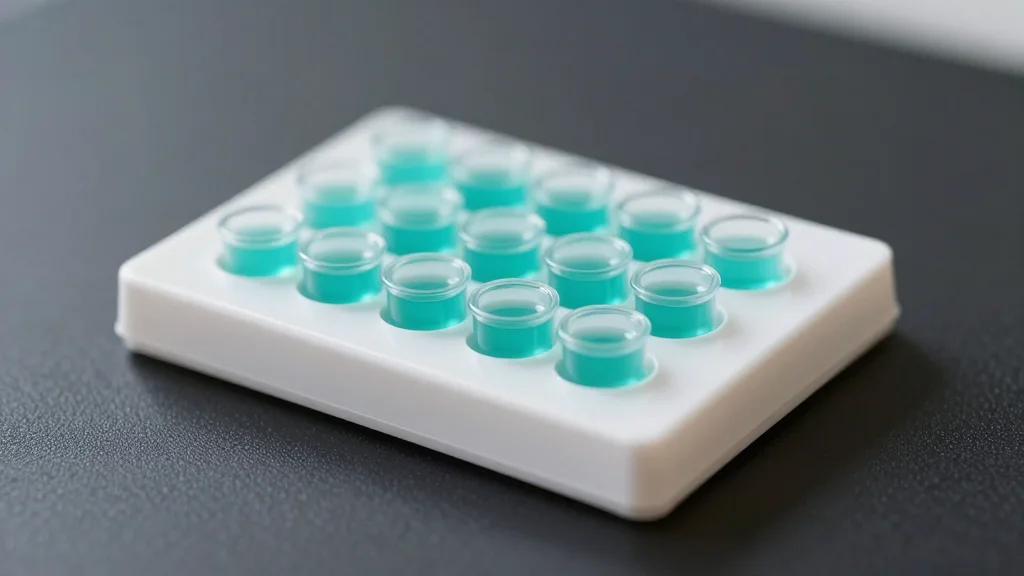
Researchers from the University of Birmingham, Rwanda Biomedical Centre and the University of Rwanda have validated an IgG ELISA assay for mpox antibodies during the clade 1b outbreak in Rwanda. The MpoxCARE test, built on four key antibody signatures, demonstrated high...

Hong Kong: Tech Centre Fosters AI-Driven Healthcare Innovation
The Hong Kong Productivity Council has opened the Future Life and Health Tech Centre, a research‑development hub designed to fast‑track AI‑driven innovations across medical technology, biotechnology, functional foods and modernised traditional Chinese medicine. The facility offers an end‑to‑end platform that...

Hidden Blood Mutations Drive Severe Inflammatory Bowel Disease, but a New Treatment Target Is in Sight
Indiana University researchers linked clonal hematopoiesis of indeterminate potential (CHIP) to heightened severity of inflammatory bowel disease. Analysis of UK Biobank and All of Us data showed women with DNMT3A mutations and younger individuals with TET2 mutations face higher Crohn’s...

Gene Edit Makes Probiotic Safer for Immunocompromised Patients
An international team genetically deleted the ENA1 gene from Saccharomyces boulardii, a common probiotic yeast. In immunosuppressed mice, the ENA1‑deficient strain showed no mortality, raising survival from 30‑40% to 100% compared with wild‑type isolates. The edit also reduced osmotic stress...

Stay or Stray? Why some Gut Microbes Persist After Fecal Transplants
Researchers at King's College London identified genetic markers that determine whether donor microbes persist after fecal microbiota transplantation (FMT). By tracking biosynthetic gene clusters in 86 healthy adults over a year, they distinguished stable clusters that remain long‑term from transient...

Roche’s Giredestrant Miss Refines Treatment Settings for Oral SERDs
Roche’s oral selective estrogen receptor degrader (SERD) giredestrant failed to meet its primary endpoint in a late‑stage Phase III trial, but the data revealed meaningful activity in specific patient subgroups, particularly those with ESR1 mutations. The miss prompted Roche to...

Vertex Kidney Disease Drug Hits Mark in Late-Stage Study
Vertex Pharmaceuticals announced that its experimental IgA nephropathy drug povetacicept met primary and key secondary endpoints in a Phase 3 trial, cutting urine protein by roughly 50% versus placebo after 36 weeks. The interim results also showed reductions in abnormal antibodies...

CRISPR-Based Technique Unlocks Healing Power of Mitochondria for Heart Failure Therapy
Researchers at Rice University and Baylor College of Medicine used a non‑editing CRISPR system to activate the PPARGC1A gene, boosting mitochondrial production in human cardiomyocytes. The technique safely increased cellular energy output, as shown by higher oxygen consumption in cell...

SAB BIO Reports Full Year 2025 Financial Results and Business Highlights
SAB Biotherapeutics announced full‑year 2025 results, highlighting the launch of its registrational Phase 2b SAFEGUARD trial for SAB‑142 and the completion of a $175 million oversubscribed private placement. Phase 1 data demonstrated a favorable safety profile, no serum sickness and low immunogenicity across...

New Technology Unlocks More Autism Gene Varients
Researchers at UC San Diego used long‑read whole‑genome sequencing (LR‑WGS) on 267 autism families, uncovering 33% more structural variants and 38% more tandem repeats than short‑read methods. By pairing the genomic data with DNA‑methylation profiles, they could directly observe how...

APS BioGroup, Inc - 04/05/2018
The U.S. Food and Drug Administration issued a warning‑letter close‑out to APS BioGroup, Inc. on April 5, 2018, confirming that the company’s corrective actions addressing the July 2017 warning letter were satisfactory. The agency stressed that this closure does not relieve APS BioGroup...
James Findling - 598944 - 12/31/2019
The FDA issued a Warning Letter to Dr. James Findling after a 2019 inspection revealed serious protocol violations in a clinical trial of an investigational drug. The investigator randomized two subjects who had exceeded permitted dose levels and failed to...

Modular Cleanroom Supports Scale-Up of Cosmetic Microneedle Production
CipherX, a biotech start‑up specializing in microneedle platforms, partnered with Connect 2 Cleanrooms to install a 12 m² soft‑wall cleanroom for pilot production. The modular unit, validated to ISO 14644 class 7, was delivered and fully operational within 48 hours. Its PVC curtains, steel framing and...

An Emerging Longevity Supplement May Accelerate Cancer Growth, Scientists Say
Researchers at Tokyo University of Science discovered that polyamines, especially spermidine—a compound touted for longevity—can accelerate the growth of cancer cells. Laboratory experiments on cervical and breast cancer lines showed polyamines promote aerobic glycolysis and increase the oncogenic protein eIF5A2....

Unlocking Hidden Pocket on a Billion‑dollar Drug Target
Researchers led by Harvard chemist Christina Woo have mapped a previously unknown allosteric pocket on cereblon, the E3 ligase that underpins billions of dollars in cancer‑drug activity. The study shows that binding a small molecule to this hidden site can...

AbbVie’s Amylin Candidate ‘Competitive’ in Early-Stage Trial
AbbVie announced top‑line Phase 1 multiple ascending‑dose data for its amylin analog ABBV‑295, showing 7.75‑9.79% weight loss after 12 weeks of treatment. The long‑acting compound was administered every other week then monthly, with a favorable tolerability profile and no serious adverse...

AbbVie, Gubra Post Obesity Data; Regeneron Obesity Drug Succeeds in China
AbbVie and its partner Gubra released Phase 2 data on a long‑acting amylin analogue that produced significant weight loss in obese participants, with reductions approaching double‑digit percentages and a clean safety signal. The study highlighted dose‑responsive efficacy and tolerability, positioning the...

Why Simulating an Entire Cell Cycle Took Years, Multiple GPUs and Six Days per Run
University of Illinois researchers led by Zan Luthey‑Schulten have built a three‑dimensional kinetic model of the minimal bacterium JCVI‑syn3A that simulates an entire 105‑minute cell cycle. By assigning DNA replication to a dedicated GPU and running other cellular dynamics on...

GLP-1 Drugs Modulate Gene Expression via MED14 Phosphorylation
Stable GLP‑1 receptor agonists such as Exendin‑4 and Ozempic improve beta‑cell viability by modulating gene expression. Researchers at the Salk Institute discovered that these drugs induce phosphorylation of Med14, a core subunit of the Mediator transcription complex. Phosphorylated Med14 enables...

Regeneron’s Weight Loss Partner Hansoh Delivers Much-Needed Phase 3 Win in China
Regeneron’s Chinese partner Hansoh announced that its dual GLP‑1/GIPR agonist olatorepatide achieved a 19% mean weight loss in a Phase 3 trial of 604 obese or overweight adults, meeting both co‑primary endpoints. The study reported lower gastrointestinal adverse events compared with...

Bristol Myers Says Second CELMoD Succeeds in Phase 3
Bristol Myers Squibb announced that its oral CELMoD candidate mezigdomide met primary endpoints in the Phase 3 SUCCESSOR‑2 trial for relapsed or refractory multiple myeloma. The open‑label study showed a statistically significant improvement in progression‑free survival compared with the current standard...

Medidata, CRIO Boost Clinical Trials with Integration
Medidata, a Dassault Systèmes brand, has partnered with eSource specialist CRIO to automate clinical data flow from site systems into the Medidata Platform. The plug‑and‑play integration now serves over 2,500 research sites in roughly 30 countries, delivering near‑100% data accuracy and...

Carbios Under Pressure: Financing Struggles, China Expansion, and a Growing Legal Dispute
Carbios, once a flagship of France’s industrial biotech, has seen its enzymatic PET recycling ambitions hampered by financing gaps, a delayed Longlaville plant and a costly reorganisation. The company’s cash fell to €72 million by mid‑2025, prompting a 40 % cut in...

How Does Early Pregnancy Lower Breast Cancer Risk? Odd Cells Could Offer Clues
Researchers reported in Nature Communications that early pregnancy prevents the accumulation of a novel hybrid mammary cell type in mice. These cells, which produce the inflammatory cytokine IL33, increase with age in never‑pregnant females and are linked to tissue changes...

Genomics Delegation to Boston – June 2026
The Canadian Genomics Strategy Secretariat, Global Affairs Canada and Genome Canada are organizing a genomics trade mission to Boston during the first week of June 2026, coinciding with the Festival of Genomics, Biodata and Artificial Intelligence. Selected Canadian genomics firms...
A Noble Pursuit: A Long-Time AI-in-Biotech Skeptic Takes Another Look
Tim Harris, a veteran biotech investor, revisits his skepticism about artificial intelligence in drug discovery, noting the surge of AI‑focused startups and sizable funding rounds. He outlines how AI is being applied to molecular dynamics, protein‑protein interaction prediction, and antibody...

Bridging Innovation and Clinical Reality: Shalabh Gupta, CEO of Unicycive Therapeutics, on the Future of Biotech
Shalabh Gupta, CEO of Unicycive Therapeutics, argues that biotech can benefit from tech‑driven design thinking, rapid prototyping, and disciplined capital allocation. He highlights how the company repurposed automotive battery‑shrinkage technology to create Oxylanthanum carbonate, a kidney‑disease candidate now under FDA...

Xenon To Seek Approval of First-in-Class Epilepsy Drug After Exceeding Phase 3 Expectations
Xenon Pharmaceuticals reported that its Phase 3 X‑TOLE2 trial of azetukalner, a novel Kv7 potassium channel opener, achieved a 53.2% reduction in focal onset seizures at the 25 mg dose, far exceeding expectations and representing the highest placebo‑adjusted efficacy recorded in a...
Genome Editing for Biopharmaceutical Manufacturing
Chinese hamster ovary (CHO) cells remain the backbone of biopharmaceutical manufacturing, but traditional gene‑editing tools struggle with low knock‑in efficiency. Transposase‑based platforms such as Leap‑In and piggyBac now provide high‑efficiency, multi‑copy integration and can handle large DNA cargos up to...

Op-Ed | A Toxic Turn for Our Daily Bread: Why GMO Wheat Raises Serious Concerns
The U.S. government has approved HB4, a genetically engineered wheat tolerant to the herbicide glufosinate, marking the first commercial GMO wheat in America. Glufosinate is linked to reproductive toxicity and is banned in the EU, raising concerns about residue buildup...

RNA Editing Startup Tacit Therapeutics Launches with $19M for Brain Diseases
Tacit Therapeutics, an RNA‑editing startup focused on neurological disorders, announced its launch backed by a $19 million financing round. The capital, led by Andreessen Horowitz and DCVC, will fund the development of ADAR‑based therapeutics targeting diseases such as ALS, Huntington’s, and...

Two AstraZeneca Drugs To Be Scrutinized in First FDA Cancer Advisory Panel in 9 Months
The FDA’s Oncologic Drugs Advisory Committee will convene on April 30 to evaluate AstraZeneca’s oral SERD camizestrant for first‑line HR‑positive, HER2‑negative breast cancer and its AKT inhibitor Truqap for metastatic hormone‑sensitive prostate cancer. Camizestrant’s Phase 3 SERENA‑6 trial reported a 56% reduction...

Incyte’s Lung Cancer Expansion Bid Thwarted by Issues at Novo’s Catalent-Acquired Site
The FDA rejected Incyte’s supplemental application to add non‑small cell lung cancer to Zynyz’s label, citing compliance failures at Novo Nordisk’s Catalent‑owned Indiana manufacturing plant. The agency’s complete response letter pinpointed inspection findings at the site as the sole approvability...

The First KRAS Drugs Have Been Sluggish on the Market. Will the Next Generation Fare Better?
Amgen’s Lumakras earned accelerated FDA approval in 2021 as the first KRAS‑targeted therapy, but sales have been modest, reaching $92 million in Q4 2025 with only an 8% year‑over‑year increase. A second G12C inhibitor, Krazati, entered the market in 2022, narrowing Amgen’s...

Roche's Oral SERD Flunks Phase 3 Breast Cancer Test
Roche’s oral SERD giredestrant failed to meet its primary endpoint in the phase 3 persevERA trial, showing no significant improvement over letrozole when combined with palbociclib in first‑line HR‑positive, HER2‑negative advanced breast cancer. The company now limits U.S. filing to ESR1‑mutated...

Photothermally Triggered Intratumoral In Situ Drug Synthesis: A Smart Nanoplatform for NIR‐Controlled Precise Activation of Antitumor Precursors
Researchers have engineered an iron‑doped mesoporous silica nanoplatform (FOBA) that, when exposed to 808 nm near‑infrared light, uses the Y6 photothermal converter to heat and trigger a PEG gate, creating a transient solvent that enables in‑situ synthesis of the cytotoxic agent...