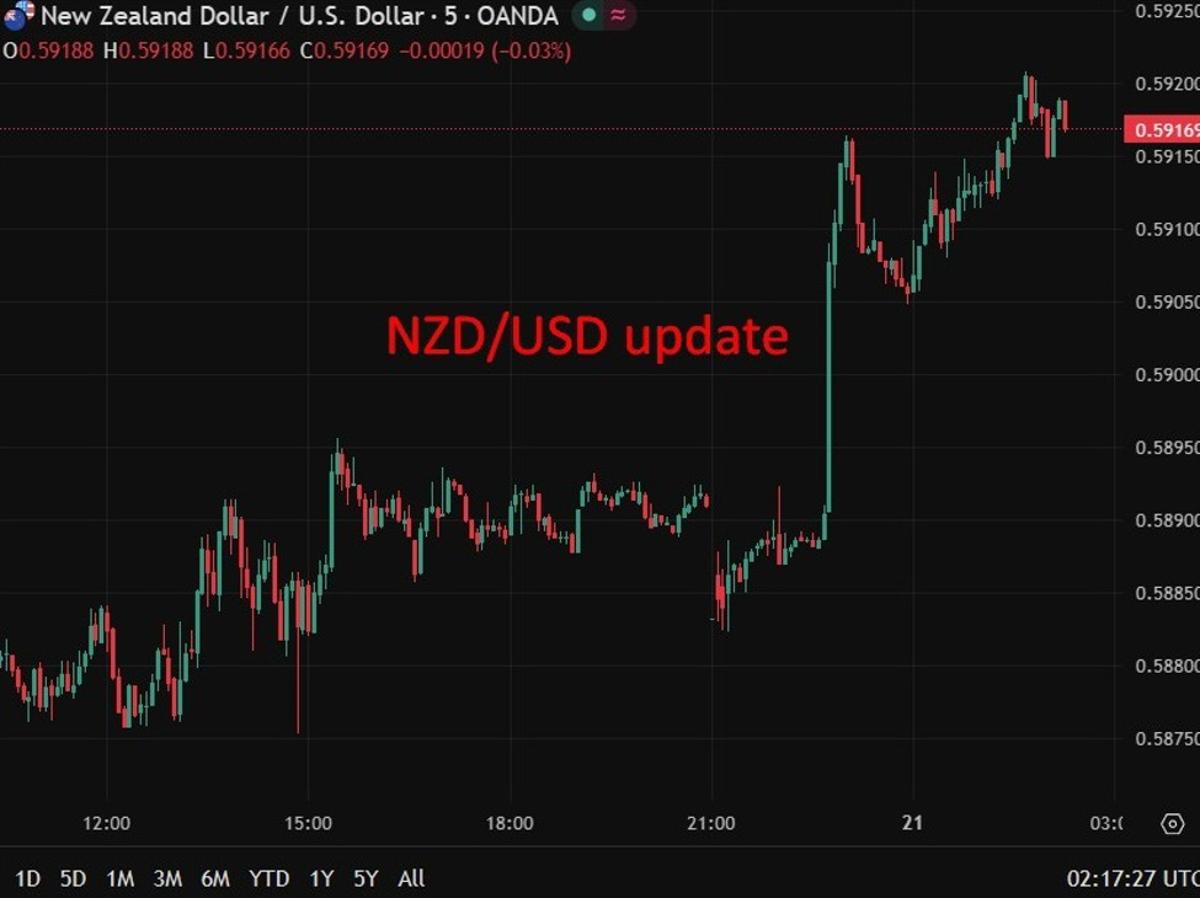
Recapping - NZD Rises After CPI Beat as Markets Price Higher Odds of May RBNZ Rate Hike
New Zealand’s consumer price index rose 0.9% in the March quarter, leaving annual inflation at 3.1%—still above the Reserve Bank’s 1‑3% target. The surprise pushed the market’s implied probability of a May RBNZ rate hike to roughly 45%, up from about 25‑30% a week earlier. Government bond yields surged as traders priced in a more hawkish stance, while a separate survey showed business confidence slipping sharply. The kiwi outperformed the Australian dollar as rate differentials shifted in New Zealand’s favour.

Treasury Sec Paulson: US Needs Emergency "Break The Glass Plan" Ready To Deal With Dumped Treasuries & Spiking Interest Rates
Former Treasury Secretary Henry Paulson warned that the United States needs an emergency “break‑the‑glass” plan to address a possible flood of Treasury sales and rapidly rising interest rates. He linked the threat to a potential erosion of the petrodollar system...

"The Foundations Of Dollar Dominance Are Weaker than Anticipated..."
Economist Barry Eichengreen argues that the dollar’s dominance, while still covering about 60% of global foreign‑exchange reserves, is on a secular decline due to weakened U.S. political institutions, soaring public debt, and a lack of coherent foreign‑policy strategy. Recent safe‑haven...

Elliott Wave Analysis of USDJPY – April 20th, 2026
USD/JPY slipped for the third straight week as markets priced in a potential peace deal with Iran, reducing expectations that the Federal Reserve will raise rates to combat inflation. The easing of geopolitical risk has shifted sentiment toward a softer...

Newsquawk Week Ahead Highlights (and Week in Review)- 20-24th April
The week’s headline is the looming expiry of the US‑Iran ceasefire on April 22, heightening geopolitical risk for energy markets. China’s People’s Bank is expected to leave its benchmark Loan Prime Rates unchanged at 3.00% (1‑year) and 3.50% (5‑year) amid Middle‑East...

More Central Bank Independence?
Bank of England Governor Andrew Bailey is urging a push for stronger central‑bank independence, arguing it will shield the institution’s price‑stability mandate from political interference. In a recent discussion, economist Steve Keen challenged this narrative, describing the prevailing monetary‑policy framework...

Week Ahead: Dollar and Stocks Due for Corrections?
US equity markets pushed to fresh record highs as progress in US‑Iran talks and a tentative cease‑fire between Israel and Lebanon lifted risk appetite. Meanwhile, WTI crude slipped 7.6% last week, briefly breaching $79 a barrel after a steep March...

Elliott Wave Analysis of EURUSD – April 20th, 2026
EUR/USD rose above 1.18 on April 20, 2026, marking its first breach since February. The move is driven by market optimism that the Iran‑Israel conflict may be winding down. Elliott Wave analysts interpret the price action as the start of...

MacParity, January 2026
Menzie Chinn’s January 2026 MacParity note applies the Big‑Mac Index to the United States’ top trading partners, regressing log‑relative burger prices against log‑relative per‑capita income. The analysis treats the Euro Area as a proxy for Germany and Ireland due to data gaps....

What Makes a Forex Trading Platform Good for Daily Trading?
The article outlines a practical framework for retail day traders to evaluate forex platforms, focusing on five core features: ultra‑fast order execution, transparent cost structures, advanced charting, robust security, and real‑time market data. It explains how latency above 50 ms, hidden...

3 Numbers of Oil & JPY
Ashraf Laidi’s latest market note ties three oil‑related numbers to a specific date and uses them to justify a short USD/JPY position, targeting the 157.70 level. The trade, still valid for readers who receive the note late, reflects his inter‑market view...

Next Week’s Menu: April 18-24, 2026
The week of April 18‑24, 2026 is packed with macro‑economic events, including monetary‑policy reviews in China, Indonesia, Turkey, Russia, Kazakhstan and the Philippines, and a Senate Banking Committee hearing for Kevin Warsh’s Fed chair nomination. Bulgaria’s National Assembly election and the conclusion...

Monetary Policy Transmission in Primary and Secondary Markets: Evidence From Indian Government Securities
A new XKDR paper by Barik, Singh and Harsh Vardhan examines how RBI policy‑rate changes affect borrowing costs of Indian government securities. Using monthly data from 2004‑2025 and an ARDL error‑correction model, the authors find that policy‑rate pass‑through is near‑instant and...

ECB's Kazaks: Market Pricing of Two Rate Hikes This Year Is Reasonable
ECB Governing Council member Martins Kazaķs said market pricing of two additional rate hikes in 2024 is reasonable, with a 67 % probability for a June increase and about 50 basis points of tightening priced in by year‑end. The odds of an...

InvestingLive European Markets Wrap: No Rocking the Boat Just Yet
European markets edged higher as investors remained cautiously optimistic while awaiting concrete progress in the US‑Iran nuclear talks. The Nasdaq posted a new record high, its first in five months, buoyed by the same optimism that lifted S&P 500 futures....

FX Alert: Dollar Drifts Lower as the Reach For Risk Returns
The U.S. dollar is slipping modestly as investors gravitate toward risk assets, but the decline lacks the momentum of a sustained downtrend because the Federal Reserve has kept rates steady at 3.75%. Foreign investors continue to pour money into long‑term...

It May Be Time for Sweden to Join the Euro
Swedish economist Lars Calmfors argues that the benefits of euro adoption now outweigh the costs. Sweden has remained outside the monetary union since a 2003 referendum rejected the euro, but recent analysis finds limited economic differences between membership and non‑membership....

Cross-Border Flows, the Dollar Devaluation, and the Global Trade Rebalancing
Capital Flows researcher argues that modern money is created primarily through bank credit, not central‑bank printing, and that every financial asset is simultaneously a liability. He identifies two universal risks—duration risk from inflation and credit risk from growth—that price all...

THE 40% WEALTH CONFISCATION: Positioning for Debasement, M2 Money Supply Explosion Coming as Fed Inevitably Returns to Money Printing, Drives...
The article warns that the Federal Reserve will likely resume aggressive money‑printing to buy Treasury securities as soaring debt‑service costs strain the U.S. fiscal balance. By expanding the M2 money supply well above its 6.8% historical average, the Fed will...

The Decline of Mexico’s Central Bank, Explained
Mexico’s central bank, Banxico, has been trimming its benchmark rate from a peak of 11.5% toward a long‑term target near 3% to stimulate borrowing. In July 2024 it lowered the policy rate modestly from 7.00% to 6.75% amid an oil‑price...

Elliott Wave Update of USDCAD – April 15th, 2026
The USDCAD pair slipped for a second consecutive week as markets grew hopeful that the Iran conflict will de‑escalate, reducing pressure on the Federal Reserve to hike rates. Traders are eyeing the 1.3730 level as a potential support zone. The...

Monetary Policy Tightened in Singapore
The Monetary Authority of Singapore (MAS) announced a tightening of its exchange‑rate‑based monetary policy, the first adjustment since April 2022. The change follows quarterly reviews that earlier in 2025 delivered modest easings. MAS cited heightened uncertainty for growth and inflation, driven...

BRICS Payment System – What Does It Mean for the Nordics?
The article examines the BRICS countries’ effort to build a cross‑border payment system that could be operational by 2029‑2030, offering an alternative to Western‑controlled settlement rails. It notes the New Development Bank’s role, having approved over $42.9 billion in loans and...

Euro Continues to Climb as the Market Senses an End to the Iran War
The euro has recovered to its pre‑conflict level as traders price an end to the Iran‑Israel war and the reopening of oil shipments through the Strait of Hormuz. Europe’s heavy reliance on Hormuz‑bound crude makes the currency especially sensitive to...
THE $7 TRILLION FLOOR: It's 50% Above Pandemic Levels as a Starting Point, It's Expanding Again, & Why the Fed's...
The Federal Reserve has ended its balance‑sheet runoff and resumed large‑scale asset purchases, effectively restarting a new quantitative‑easing phase. The central bank’s balance sheet now hovers around $7 trillion, more than 50% above its pre‑pandemic size, establishing a higher permanent floor....

The Dollar’s Special Status: Sources and Threats
A recent Al‑Jazeera analysis highlights Iran and China’s move to collect Strait of Hormuz tolls in yuan or cryptocurrency, signaling a push against US dollar dominance. The piece revisits long‑standing "dollar doomerism" narratives that predict the currency’s imminent decline, noting...

Warsh and the Fed's Balance Sheet
Kevin Warsh, a Fed chair hopeful, argues that shrinking the Federal Reserve’s balance sheet will free up stimulus that can be redirected into lower fed‑funds rates. The piece challenges that view, noting that reserve balances—about $3 trillion, roughly 9% of U.S....

Elliott Wave Analysis of USDCAD – April 13th, 2026
The USDCAD pair slipped more than 100 pips during the first full trading week of April, prompting a fresh Elliott Wave assessment. Analysts debate whether the move represents a short‑term buying dip or the onset of a larger bearish impulse....

Elliott Wave Analysis of USDJPY – April 13th, 2026
USDJPY slipped for a second consecutive week, but the 158.00 support level held firm, providing a technical foothold for bulls. Elliott Wave analysts interpret the move as the tail end of a corrective wave, setting the stage for a potential...

GBPUSD Will Have the Ceiling to Define the Bias in the New Trading Week
The GBP/USD pair is trading near the lower edge of a well‑defined resistance ceiling between 1.34708 and 1.3488 that has capped upside for six weeks. Buyers remain active, but a break above the ceiling would force short covering and spark...

Next Week’s Menu: April 11-17, 2026
Next week (April 11‑17, 2026) brings a packed economic calendar, beginning with the Federal Reserve’s Beige Book and a series of speeches by Fed officials such as Williams, Goolsbee and Barkin. Central banks in Singapore and Turkey will review monetary stances, while...

Yuan Settlements Hit Record Amid Iran war...Beijing Looks to Curb Hidden Local debt...China’s Car Exports See Growth Despite Global Volatility
China’s cross‑border payment system hit a record RMB 1.22 trillion ($178.5 bn) single‑day settlement amid heightened Middle‑East tensions, while regulators moved to block banks from creating hidden local‑government debt through agricultural loans. March saw Chinese car exports surge 73.7% to roughly 700,000...

Dollar Reserves in the Wake of Trump
The IMF’s COFER data show the U.S. dollar’s share of global foreign‑exchange reserves has slipped, driven by a weaker dollar and a rally in gold prices. When exchange‑rate effects are stripped out, the dollar’s share actually rose after 2024 Q4,...

DEBATE | Marc Faber vs Brent Johnson: What Comes Next After The Iran War?
Thoughtful Money moderated a live debate between Marc Faber, editor of The Gloom, Boom & Doom Report, and Brent Johnson, founder of the Dollar Milkshake Theory, to assess the fallout from the US‑Israel war with Iran. The discussion explored whether...

Ceasefire of the Madman
HSBC’s latest geopolitical paper argues that a de‑escalation of global tensions will diminish the U.S. dollar’s safe‑haven appeal. With reduced risk, demand for the dollar should fall, allowing higher‑risk, undervalued currencies to rally. Emerging‑market (EM) currencies and those of energy‑importing...
DON'T BE A VICTIM OF THE MATH: The M2 Explosion That's Coming, Inevitable Debt Monetization & How to Protect Your...
The United States faces a projected cumulative deficit of $22 trillion over the next ten years, far exceeding official forecasts that assume no new wars or recessions. To fund this gap, the Federal Reserve will likely resort to massive balance‑sheet expansion,...

The USD Is Mixed vs the Major Currencies to Kickstart the Thursday Trading
The US dollar showed mixed performance Thursday, edging higher against the yen while slipping modestly versus the euro and pound. The move comes amid lingering uncertainty over a potential cease‑fire in the Israel‑Iran conflict, which has driven oil prices up...

How Have Interest Rate Expectations Changed After the Ceasefire Announcement?
After the ceasefire announcement, market pricing shows a broadly dovish repricing of interest‑rate expectations as inflation worries ease. The Fed now shows a 7‑basis‑point cut probability with a 98% chance of holding rates at the next meeting. Most other central...

Dollar Holds Steadier Today as Fragile US-Iran Truce Keeps Traders Guessing
The U.S. dollar held modest gains on Thursday as traders remained cautious amid a fragile U.S.-Iran truce. Risk‑off sentiment tempered the rally, leaving European equity indices slightly lower and the DAX still riding yesterday’s 5% surge. In the FX market,...

Is the Australian Dollar Entering a Super Cycle?
Australian dollar momentum has surged as the US Dollar Index stalls, while the Chinese yuan continues its upward trajectory. Commodity markets have shifted, with oil prices plunging and gold prices rallying, creating a backdrop for a potential AUD super‑cycle. Analyst...
The Dollar’s Slow Unraveling: How Bitcoin, Digital Currencies, and a Secret Oil Deal Are Reshaping the World’s Money
A new paper in the Journal of Post‑Keynesian Economics details how the US dollar became the world’s primary currency, largely thanks to a secret 1974 Saudi‑oil‑for‑Treasury‑bond pact that expired in 2024. The study argues that the petrodollar arrangement allowed the...
FX Alert: Back From The Brink
A two‑week ceasefire in the Middle East has pulled oil prices and related markets off the brink of extreme stress. Brent crude slid roughly 16%, prompting a mechanical unwind of the war‑driven risk premium, while equities steadied and the yield...

DXY Elliott Wave Analysis - Approaching the Final Washout
The latest Elliott Wave analysis of the U.S. Dollar Index (DXY) indicates the currency is approaching a decisive low, often termed the "final washout." While market chatter focuses on imminent Fed rate cuts, rising liquidity, and a structurally weaker dollar,...

Elliott Wave Update of USDJPY – April 8th, 2026
The USD/JPY pair slipped this week as a relief rally lifted the yen against the dollar following the announcement of a US‑Iran cease‑fire agreement. Traders are debating whether the dip represents a buying opportunity or a temporary correction. Elliott Wave...

Elliott Wave Update of EURUSD – April 8th, 2026
EWM Interactive released an Elliott Wave update on the EUR/USD pair, highlighting a sharp rally on April 8, 2026. The analysis applies Elliott Wave theory to the recent price surge, identifying the move as a potential Wave 3 impulse. Key price targets and...
PBOC Sets USD/ CNY Central Rate at 6.8680 (Vs. Estimate at 6.8369)
The People’s Bank of China (PBOC) set the USD/CNY central reference rate at 6.8680 for the current trading session, modestly weaker than the Reuters estimate of 6.8369. The central bank maintains a +/-2% daily trading band around this reference, allowing...

March CPI Inflation Preview: Q/Q AR at 5.2% to 5.9%
The Cleveland Federal Reserve’s nowcast projects March headline CPI rising at an annualized quarter‑on‑quarter rate of 5.2%‑5.9%, slightly above the Bloomberg consensus. The nowcast blends recent CPI and PCE releases with daily oil and gasoline price data, indicating inflation remains...
The ECB and the Euro's Global Role
The European Central Bank has broadened its euro‑repo liquidity facility (EUREP) to offer funding to any central bank that provides high‑quality euro‑denominated collateral. This move underscores the ECB’s growing geopolitical role as the euro seeks to become a more prominent...

Stop Trading on Hope: How Discipline and Risk Management Lead to Consistent Profits
The article warns that trading on hope—holding losing positions, skipping stop‑losses, and chasing headlines—creates predictable losses. It contrasts this with disciplined traders who use strict risk management, predefined entry and exit rules, and data‑driven analysis. By treating each trade as...

Upward Shift: Market-Implied Path of 3 Month SOFR, Pre-War Vs. Now
The secured overnight financing rate (SOFR) now trades about 23 basis points above the Federal Reserve’s median funds‑rate projections for both year‑end 2023 and the end of 2027. This premium emerged after the war in the Middle East shifted market...