
Piodata SecureX USB Flash Drive with Enterprise-Grade Security
Piodata unveiled SecureX, a USB flash drive that combines AES‑256 encryption with biometric authentication and cross‑platform compatibility. The device supports PCs, Macs, iOS, and Android, and is Apple MFi‑certified for seamless iPhone and iPad use. Its proprietary Trust Circle technology lets the owner control up to 16 users, granting or revoking access in real time. Positioned for high‑risk sectors such as medical, military and technology, SecureX offers an offline alternative to cloud storage that guarantees immediate, secure file access.

Regulators Confront AI-Driven Cyber Risk After Anthropic Warning
British regulators—including the Bank of England, FCA and NCSC—are urgently assessing Anthropic’s new AI model Claude Mythos Preview after it flagged thousands of serious software vulnerabilities. The model, released as a gated research project called Glasswing, has prompted parallel concern...

Day 157: Building Intelligent Threat Detection Rules - Your Security Autopilot
The post walks readers through building a production‑ready threat detection rule engine that can ingest more than 1,000 logs per second, identify over 15 common attack patterns, and issue real‑time alerts with zero false negatives for critical threats. It uses...

Sweden Reports Cyberattack Attempt on Heating Plant Amid Rising Energy Threats
Sweden’s civil defense ministry confirmed that a pro‑Russian group attempted a cyberattack on a western heating plant in 2025, but the intrusion was stopped. The operation is tied to Russian intelligence and mirrors a wave of sabotage that has hit...

The Data Sovereignty Vise: Two Governments, One Compliance Trap, No Safe Harbor
China’s State Council rolled out two sweeping regulations in April 2024—Decree 834 on industrial and supply‑chain security and Decree 835 on countering foreign extraterritorial jurisdiction—both effective immediately and without a transition period. The rules clash directly with the U.S. Department of Justice’s Data...
Timely Takes Podcast: J.T. Ho’s Latest “Fast Five”
Cleary Gottlieb’s J.T. Ho hosts the latest Timely Takes podcast, delivering a monthly briefing on securities and governance trends. The episode covers five hot topics: prediction‑market considerations for public companies, board‑level cybersecurity guidance amid cyber‑warfare, the 2026 CISO AI Risk...

Smashing Security Podcast #463: This AI Company Leaked Its Own Code. It’s Also Built Something Terrifying
In the Smashing Security #463 episode, host Graham Cluley and guest Tanya Janca discuss Anthropic’s accidental leak of the Claude Code CLI source via a mis‑published source‑map and the company’s new AI model, Mythos, which can autonomously discover and chain...

News Alert: NTT Research Launches SaltGrain—Advanced Attribute-Based Encryption Security
NTT Research unveiled Scale Academy, an incubator that will commercialize its lab inventions, and launched its first product, SaltGrain, a zero‑trust data‑security suite built on attribute‑based encryption (ABE). The suite binds access policies to ciphertext, enabling granular control over who...

Five Carriers Got Breached. They Wouldn't Insure Themselves
Over the past year ransomware group Scattered Spider breached five major insurers—Beacon Mutual, Farmers, Erie, Philadelphia Insurance Companies, and Aflac—by exploiting help‑desk social engineering, incomplete multi‑factor authentication, and weak endpoint monitoring. Those same control failures are now non‑negotiable requirements in...

98% of Buyers Will Ask About Your AI Agents at Renewal
Okta announced the general availability of its AI Agent solution on April 30, giving enterprises a reference implementation for discovering, governing, and revoking autonomous AI agents. A survey of 150 IT decision makers revealed that 98% will factor agent‑governance controls...
Copy of Trump’s Cyber Strategy Is a Strong Playbook, but It’s All in the Execution
The White House released a new National Cyber Strategy that structures U.S. cyber policy into six pillars, ranging from offensive capabilities to workforce development. While the document names Russia and China as top adversaries and outlines modernizing steps like zero‑trust...

DefenseClaw, MAESTRO, and the Security Boundary Agentic AI Has Been Missing
DefenseClaw is an open‑source security control plane built for the OpenClaw autonomous AI agent. It centralizes asset scanning, AI Bill of Materials generation, policy enforcement, and optional NVIDIA OpenShell sandboxing to protect both supply‑chain and runtime operations. By integrating Cisco...

NTT Scale Academy: Quantum Startup Incubator
NTT Research unveiled Scale Academy, a startup incubator aimed at turning its lab discoveries into market‑ready products. Its first offering, SaltGrain, is a zero‑trust data security suite built on attribute‑based encryption originally proposed by Sahai and Waters. The suite provides...

How to ACATS Lock Your Brokerage Account
Automated Customer Account Transfer Service (ACATS) lets investors move securities between brokerages without tax consequences, but criminals can hijack the process by opening fraudulent accounts and initiating unauthorized transfers. Recent reports, including a Bogleheads forum post, show thieves siphoning up...

U.S. CISA Adds Microsoft SharePoint Server, and Microsoft Office Excel Flaws to Its Known Exploited Vulnerabilities Catalog
The U.S. Cybersecurity and Infrastructure Security Agency (CISA) has added two Microsoft flaws to its Known Exploited Vulnerabilities (KEV) catalog: CVE‑2009‑0238, a remote‑code‑execution bug in Excel, and CVE‑2026‑32201, a spoofing/XSS issue in SharePoint Server. The Excel vulnerability carries a CVSS...

Effective Defense Against Hacks at the Edge
PQShield unveiled its MicroCore IP, a post‑quantum security suite that fits within as little as 5 KB of SRAM for edge‑device IoT applications. The offering covers secure boot, post‑quantum TLS, and side‑channel‑resistant cryptography, all deliverable as software‑only updates or with optional...

How the Enterprise Supply Chain Has Created a Global Attack Surface
Enterprises are increasingly exposed to cyber threats through their expanding global supplier ecosystems. Third‑ and fourth‑party vendors, cloud services, and offshore teams now form a sprawling attack surface that extends far beyond traditional network perimeters. Geopolitical tensions, such as the...

90% of Firms Plan PQC Funding, Sectigo Offers Low-Risk Path
Sectigo has added Private PQC to its Certificate Manager, letting enterprises test post‑quantum TLS certificates directly in live PKI workflows. The move responds to a survey showing 90% of firms plan to fund PQC projects within the next 12 months, while...

BTQ, Daou Data Partner on Post-Quantum Security
BTQ Technologies and Daou Data have teamed up to embed hardware‑rooted post‑quantum cryptography into Korea’s payment gateways and value‑added networks. The collaboration builds on BTQ’s prior investment in Keypair, enabling faster integration of dedicated cryptographic modules. By securing key generation...

Blog 113a. Is Your Email Stealing Your Identity?
Email has become the primary digital identity anchor, governing password resets, financial approvals, SaaS access, and enterprise workflows. Traditional phishing defenses focused on spotting suspicious sender addresses, but that model is now obsolete. Modern attackers compromise the legitimate account itself,...

Only 16% of Businesses Are Fully Compliant with NIS2 Despite 2024 Compliance Deadline
A CyberSmart survey of 670 leaders across eight European countries found that only 16% feel fully compliant with the EU’s NIS2 directive, despite the October 2024 transposition deadline having passed. Budget constraints (20%) and lack of implementation guidance (16%) are the...
Claude Mythos Is Everyone’s Problem
Anthropic has unveiled Claude Mythos Preview, an AI model that can locate thousands of software vulnerabilities across major operating systems and browsers. The tool is being offered exclusively to a consortium that includes Apple, Microsoft, Google and Nvidia for internal...

PHP Composer Flaws Enable Remote Command Execution via Perforce VCS
Two high‑severity command‑injection flaws were discovered in PHP Composer’s Perforce VCS driver (CVE‑2026‑40176 and CVE‑2026‑40261). The vulnerabilities allow attackers to inject shell commands via malicious composer.json files or crafted source references, potentially executing code with the user’s privileges. Composer versions...

Europe Shouldn’t “Move Fast and Break Things” With Fundamental Rights
The European Union is considering the Digital Omnibus, a package that would simplify its digital rules but also roll back key safeguards in the GDPR, ePrivacy and the upcoming AI Act. The proposals would narrow the definition of personal data,...

The Digital Omnibus Reopens the EU Data Acquis Before It Has Even Been Tested
The European Union’s Digital Omnibus proposal folds the Data Governance Act, Open Data Directive and other recent statutes into the 2023 Data Act, turning it into the central hub for data access, reuse and governance. While marketed as simplification, critics...

Major Crypto Exchanges Including Coinbase and Binance Are Racing to Access Anthropic’s Mythos Model to Defend Against AI-Powered Attacks
Major crypto exchanges are scrambling to secure Anthropic’s new Mythos AI model to protect against AI‑driven attacks. Coinbase’s CSO confirmed close talks with Anthropic, while Binance is already testing Mythos alongside its own tools. Fireblocks reported that Claude Opus 4.6 exposed...
Intent-Based Access Control(IBAC) for Coding Agents
Coding agents such as Claude Code, Gemini CLI, Cline, and OpenClaw are expanding beyond developer use into HR, marketing, security, and finance, exposing a hidden security gap. Traditional human‑centric access controls cannot reliably interpret natural‑language prompts issued to autonomous agents....

Fraudulent Cryptocurrency App in Mac App Store Stole $9.5 Million From 50-Some Users
April 2026 saw a cascade of high‑profile crypto security breaches, starting with a counterfeit Ledger wallet app on Apple’s App Store that siphoned $9.5 million from roughly 50 users. Within the same month, Bitcoin Depot’s ATM network lost $3.67 million, Hyperbridge’s bridge contract...

ZeroTier Named Cyber Security Solution of the Year 2026
ZeroTier was named Cyber Security Solution of the Year 2026 by The Cyber Security Review. The award highlights its software‑defined networking platform that secures AI‑driven traffic and meets NIST/NSA CNSA 2.0 post‑quantum standards. CEO Andrew Gault said the honor validates ZeroTier’s...

Building a CUI Enclave in Fintech: A Practical Guide to CMMC Compliance
Fintech firms handling Controlled Unclassified Information (CUI) are increasingly required to isolate that data in hardened digital enclaves to meet Cybersecurity Maturity Model Certification (CMMC) standards. The latest CMMC 2.0 condenses the original five levels into three, with Level 2 aligning...

Hardening the Silicon: Why Analog Anti-Tamper IP Is the New Security Baseline
Analog anti‑tamper IP is emerging as a baseline for hardware security as billions of IoT and automotive SoCs face increasingly sophisticated physical attacks. Hackers now employ fault injection, glitching, side‑channel, and micro‑probing techniques that can bypass software‑only protections and compromise...

Comcast Agrees to $117 Million Settlement Over 2023 Data Breach
Comcast has agreed to a proposed $117.5 million settlement to resolve a class‑action lawsuit stemming from a data breach in October 2023. The breach exposed customers’ personal information after a third‑party gained unauthorized access. The settlement fund will pay claimants for documented...

EFF to State AGs: Investigate Google's Broken Promise to Users Targeted by the Government
The Electronic Frontier Foundation filed complaints with the California and New York attorneys general accusing Google of violating its promise to notify users before handing over data to law‑enforcement agencies. The complaint centers on Amandla Thomas‑Johnson, whose ICE subpoena was...

Your Accountant Handles Your Books. Let CyberFin Handle Your Cybersecurity
CyberFin urges insurance agencies to treat cybersecurity like accounting or HR by delegating it to specialists. The firm provides a managed security service that monitors firewalls, endpoints and a security operations center, and offers a free cyber assessment to pinpoint...
LMT's Security System Blocks over 2 Mln Spam Calls in First 2 Months
Latvian telecom operator LMT reported that its Call Firewall solution blocked more than 2.3 million spam calls in the first two months since rollout. The system, part of a broader industry initiative to curb fraudulent calls, saw a sharp spike in...
![Defense & Aerospace Daily Podcast [Apr 14, 2026] Lewis & Montgomery on Iranian Cyber Ops](https://hixhlmpcokxhartfkpyi.supabase.co/storage/v1/object/public/images/thumbnails/ae2ebbedad9b2864804d6077c9daa6e9.webp)
Defense & Aerospace Daily Podcast [Apr 14, 2026] Lewis & Montgomery on Iranian Cyber Ops
Dr. Jim Lewis and Mark Montgomery warned that Iran’s cyber operations are intensifying against U.S. targets, exploiting gaps created by recent cuts to the federal cyber workforce and a partial DHS shutdown. They contrasted Iran’s capabilities with those of Russia...

Cloud Storage Security Announces the Official Launch of DataDefender, a Novel DSPM Platform Focused on Data Stored in the Cloud
Cloud Storage Security launched DataDefender, an AI‑driven Data Security Posture Management (DSPM) platform that classifies and monitors cloud‑stored data in real time. The solution spotlights sensitive information across AWS environments, flagging misconfigurations, insider threats, and external attacks while supporting compliance...
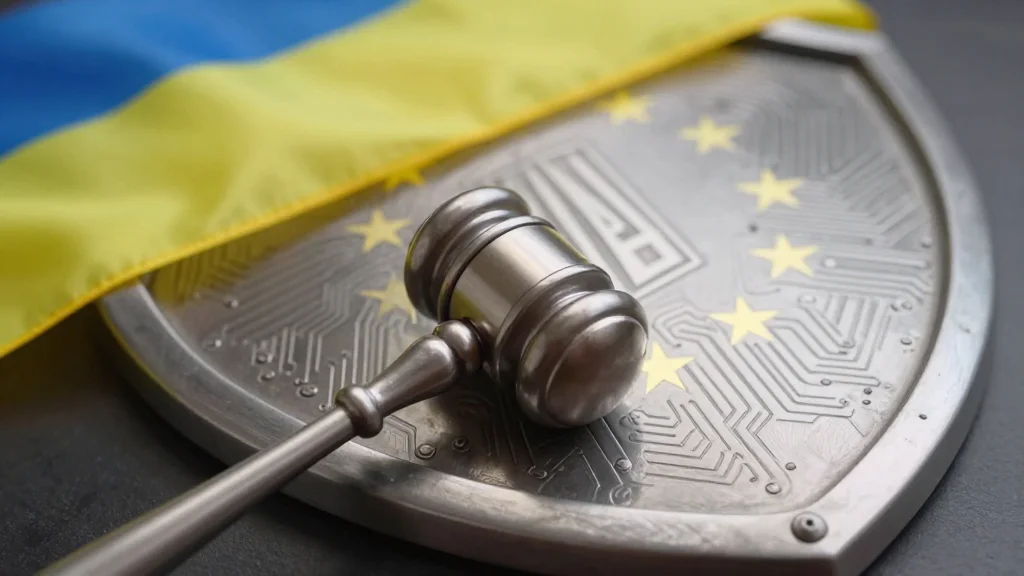
The Veto Is Gone: Hungary’s Election Upends EU-Ukraine Cyber Defense and Data Sovereignty Dynamics
Hungarian Prime Minister Viktor Orban’s defeat and Peter Magyar’s landslide win removed Hungary’s veto that blocked a €90 billion ($97 billion) Ukraine aid package. The loan is now expected to be finalized, channeling funds into Ukraine’s digital infrastructure, cyber‑defense capacity, and EU‑aligned...
How Hackers Are Thinking About AI
A new academic paper examines over 160 cyber‑crime forum posts collected across seven months, revealing how hackers are beginning to incorporate artificial intelligence into their operations. The research shows a dual mindset: strong curiosity about leveraging both off‑the‑shelf AI services...

Italtel, Quantum Bridge Partner to Protect Critical Communications
Italian system integrator Italtel has formed a strategic partnership with Canadian quantum‑security specialist Quantum Bridge Technologies to deliver post‑quantum communication solutions worldwide. The collaboration aims to embed quantum‑safe encryption into existing network infrastructures, targeting telecom operators, enterprises, and critical‑infrastructure owners....

Cisco Warns of Critical IMC Vulnerabilities – Ironically, the Server Manager Itself Has Become a Point of Entry
Cisco issued critical advisories on April 1, 2026 for its Integrated Management Controller (IMC), revealing an authentication‑bypass flaw (CVE‑2026‑20093) that grants unauthenticated admin access and a suite of command‑injection/RCE bugs (CVE‑2026‑20094‑20097) that let even read‑only users execute code as root. Cisco provides...
![[Sponsor] WorkOS FGA: The Authorization Layer for AI Agents](/cdn-cgi/image/width=1200,quality=75,format=auto,fit=cover/https://images.workoscdn.com/images/85740be5-63b5-46b9-be9f-eb687428dc69.png?auto=format&fit=clip&q=80)
[Sponsor] WorkOS FGA: The Authorization Layer for AI Agents
WorkOS introduces Fine‑Grained Authorization (FGA) to secure AI agents that now operate inside enterprise environments. Traditional IAM models—OAuth tokens, service‑account keys, and flat RBAC—grant agents the same broad privileges as humans, exposing Confused Deputy attacks. FGA extends role‑based control with...

SWJ–El Centro Book Review: Cybersecurity Governance in Latin America
Dr. Carlos Solar’s new book Cybersecurity Governance in Latin America offers a comprehensive academic study of how emerging democracies in the Western Hemisphere are building cyber capacity, shaping governance frameworks, and militarizing digital operations. The analysis focuses on Brazil, Mexico, Colombia, Argentina,...

Why a Temporary Phone Number for Verification Matters in Modern Online Business
Modern online businesses increasingly rely on SMS verification to secure access to tools, marketplaces, and payment systems. Because many of these checks are one‑time, using a personal or permanent business number creates friction and privacy concerns. Temporary phone numbers provide...

Bad News If You Downloaded HWMonitor OR CPU-Z Late Last Week
On April 9‑10, CPUID’s website was breached for about six hours, during which hackers swapped the legitimate download links for HWMonitor and CPU‑Z with malicious URLs. The attackers did not alter the original installers but redirected users to malware‑laden copies hosted...
When the Insurer Becomes the Insured
Tariffs on auto parts, steel and aluminum are inflating loss costs for U.S. personal auto insurers, prompting carriers like Acuity to file double‑digit rate increases while rivals such as State Farm and USAA pursue cuts. Evercore ISI notes that personal...

Claude Mythos, Evaluated
The UK AI Security Institute evaluated the unreleased Claude Mythos Preview and found it to be the first model to complete an end‑to‑end cyber‑range assessment. Unlike earlier models that could only handle beginner‑level tasks in 2023, Mythos can autonomously compromise...

What ‘Nude’ Means Now
A new AI Forensics report reveals a thriving underground market on Telegram where non‑consensual nude images of women are harvested, weaponized, and sold alongside spyware. The study of 16 groups in Spain and Italy uncovered over 82,000 abusive images and...

On Anthropic’s Mythos Preview and Project Glasswing
Anthropic announced Claude Mythos Preview, a powerful AI model it will not release publicly due to its advanced cyberattack capabilities, and launched Project Glasswing to automatically probe public and proprietary software for vulnerabilities. The move has sparked widespread media coverage...
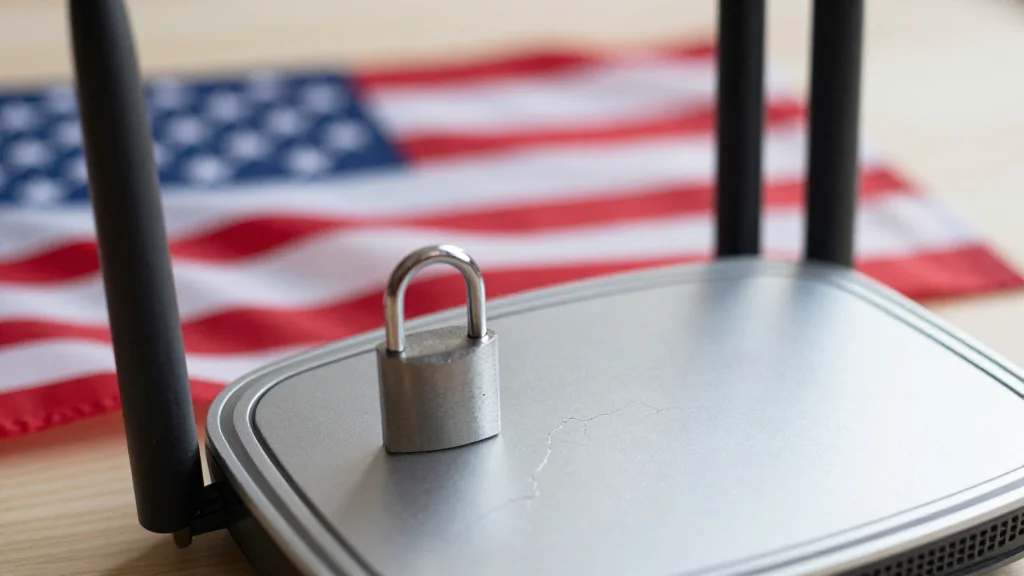
From the Studio — Everybody’s on the Ban List: Separating Espionage From Fear in the US-China Tech War
A wave of U.S. bans targeting Chinese‑origin tech—from TP‑Link routers to DeepSeek AI—has sparked a debate over real security threats versus political overreach. While TP‑Link devices were used in state‑backed botnets, the vulnerabilities stem from firmware flaws, not intentional backdoors,...