
Copado Releases Agentia, a Context-Aware AI Agent DevOps Solution for Salesforce
Copado has launched Agentia, a context‑aware AI agent platform that embeds directly into Salesforce DevOps pipelines. The solution lets autonomous agents generate code, execute tests, diagnose failures and orchestrate multistep releases. Copado brands the approach as "AgentOps," a framework that adds governance to nondeterministic AI actors. Agentia Studio provides a low‑code workspace for teams to design and customize their own agents and workflows.

Invicti Launches DAST-to-SAST Correlation
Invicti announced a new DAST-to-SAST correlation feature that links runtime vulnerability scans with static code analysis. The capability maps verified DAST findings to exact source‑code lines, developer ownership, and remediation steps within a single workflow. By overlaying results on a...

Why Smart Openclaw Operators Are Getting More Careful with Updates
OpenClaw operators are treating updates as formal change‑management events after recent regressions broke critical messaging channels. The April 2026 packaging bug omitted essential files, causing the gateway to fail, while a February issue showed a bot that appeared connected yet...

Cloudflare Unveils Mesh Private Networking to Replace VPNs for Agents and Workers
Cloudflare announced the launch of Cloudflare Mesh, a private networking service that integrates with its Cloudflare One platform to give developers, AI agents and serverless workers secure, zero‑trust access to internal resources. The solution promises minutes‑long setup, automatic policy enforcement...

Airbnb Switches to OpenTelemetry, Handles 100M Metrics per Second
Airbnb’s observability engineering team has moved its core metrics pipeline from StatsD and a proprietary Veneur system to an OpenTelemetry‑based stack, now ingesting more than 100 million samples per second. The migration leverages the OpenTelemetry Protocol, the OpenTelemetry Collector, and VictoriaMetrics’...

April Patches for Azure DevOps Server
Microsoft released Azure DevOps Server Patch 3, the latest update for its self‑hosted DevOps platform. The patch addresses a null‑reference exception that could abort pull‑request completions, tightens sign‑out validation to block malicious redirects, and resolves a failure when creating personal access...

Explore Software Factory: A New Control Plane for Enterprises
Here is a very detailed walkthru of Software Factory. This is best suited for PMs and Engineers who want to start tinkering with a potential new control plane for how software is made... ...we've made a lot of inroads into establishing...

Spring Creator Wants Java’s Type System to Tame Agentic AI
Rod Johnson, creator of the Spring Framework, unveiled Embabel, an Apache‑licensed agentic AI framework for the JVM, at Microsoft’s JDConf. Built on Spring Boot and written in Kotlin, Embabel leverages Java’s strong type system and GOAP planning to deliver deterministic,...

Stanford AI Engineering: 10 Lessons Most Builders Get Wrong
Stanford’s CS230 AI engineering session distills ten hard‑won lessons about why most AI products fail at the engineering layer, not the model. A BCG‑led study showed that untrained AI performs worse than no AI, highlighting prompt training as the highest‑leverage...

Can You Make Kubernetes Invisible? Here’s Why AWS Is on a Mission to Do It.
AWS Elastic Kubernetes Service principal product manager Jesse Butler outlined a mission to make Kubernetes effectively invisible to developers. He highlighted that roughly 80% of enterprises now run Kubernetes in production, yet operational complexity remains a barrier. Butler showcased AWS‑backed...

Introducing Enhancements in Kiro CLI 2.0
The AWS Kiro CLI team launched version 2.0, adding a headless mode, native Windows support, and a refreshed terminal UI. Headless operation lets users run Kiro agents in CI/CD pipelines by using an API key stored as an environment variable,...

10 Best Automation Testing Tools on G2: My Go-To Picks
The article outlines the ten top automation testing tools on G2, ranging from cross‑browser platforms like BrowserStack to AI‑driven solutions such as UiPath Agentic Automation and no‑code options like ACCELQ and Testsigma. It highlights the rapid expansion of the global...

Claude Code Routines Let AI Fix Bugs and Review Code on Autopilot
Anthropic has launched "routines" for Claude Code, enabling the AI to automatically fix bugs, review pull requests, or respond to events without a developer’s local machine. The routines can be scheduled, triggered by GitHub events, or invoked via API and...

GitHub Invokes Spirit of Phabricator with Preview of Stacked PRs
GitHub has introduced Stacked PRs, a private‑preview feature that lets developers create a series of dependent pull requests. Each PR in the stack can be reviewed and merged independently, provided its predecessors are merged first, encouraging smaller, more manageable changes....
GitHub Invokes Spirit of Phabricator with Preview of Stacked PRs
GitHub has opened a private preview of Stacked PRs, a feature that lets developers build a series of dependent pull requests that can be reviewed and merged one at a time or all together. By encouraging smaller, logical units of...

Claude Code Routines
Anthropic introduced Claude Code Routines, a cloud‑hosted automation feature that bundles a prompt, repositories, and connectors into a reusable task. Routines can be triggered on a schedule, via an API call, or by GitHub events, and multiple triggers may be...

FinanceFeeds Highlights Tech Overhaul Driving Global Brokerage Management
FinanceFeeds, the independent fintech newsroom, released a detailed analysis of how technology is reshaping the management of global brokerage firms. The report flags infrastructure modernization, platform experience, automated compliance and data‑driven decision‑making as the four pillars redefining speed, resilience and...

Meta Builds AI Replica of CEO Mark Zuckerberg for Internal Employee Interactions
Meta is creating a lifelike, AI‑powered digital twin of CEO Mark Zuckerberg to interact with employees, driven by its new Superintelligence Labs. The project, announced alongside the launch of the Muse Spark language model, signals a push to embed AI...

SEA Sets Out Fast-Update Sonar Approach at UDT 2026
At UDT 2026, SEA showcased its KraitSense towed sonar system and unveiled a fast‑update software architecture aimed at shortening sonar processing development cycles. The compact system combines a thin‑line KraitArray with low‑weight, low‑power processing suitable for small crewed, remotely operated...

How Exante Rebuilt Its Test Framework for Scale
Exante’s SDET team dismantled a decade‑old monolithic test repository and rebuilt a new framework in a separate repo to support a growing engineering headcount, expanding backend services, and AI‑assisted development. The old codebase suffered from tangled dependencies, ad‑hoc fixes, and...

Grafana Alerting: Respond Faster and Get Situational Awareness with Alert Enrichment in Grafana Cloud
Grafana Cloud has launched a public‑preview feature called alert enrichment, which lets users attach contextual data—such as log snippets, dashboard links, and AI‑generated explanations—to alert notifications. The enrichment process runs at the rule level or globally, pulling information from external...

Unified Dev Ops Fuels AI Agent Success
Just adding one thing regarding Google... AI agents thrive when the whole company has: - unrestricted token to access next gen frontier models - all its codebase in a monorepo - the best code search - a common build and test infra - standardized its code...
AI Builds MVP, Humans Fix Production‑critical Bugs
AI coding tools handle 90% of development perfectly. The other 10%? • Race conditions in payment webhooks • Memory leaks in long-running containers • SQL injection in "vibe-generated" auth logic That 10% is where your startup dies. Vibe coding got you to MVP. It won't get...

Engineering Teams Cost Over $1 M Annually Yet Most DevOps Leaders Lack Visibility
A recent deep‑dive into software‑team economics reveals an eight‑engineer DevOps unit costs roughly €1.04 million ($1.12 million) per year, yet most firms cannot quantify the expense or the value it delivers. The analysis highlights how blind spots in cost awareness hinder prioritization...

Host Your App at Home with Free Cloudflare Tunnel
Oh, I forgot to mention that you can even host your app at home if you have a spare PC lying around. PostGrip uses Cloudflare Tunnel, which is free, to securely expose your app to the internet.😀

Faster Releases With DevOps: Java Microservices and Angular UI in CI/CD
Jenkins now powers end‑to‑end CI/CD pipelines for Java microservices and an Angular front‑end on AWS. By defining build, test and deployment stages in a Jenkinsfile, teams trigger automated Maven or Gradle builds, Docker image creation, and static‑site generation on every...

FossID Launches Agentic SCA to Bring Real-Time Compliance to AI-Driven Code Development
FossID AB introduced Agentic SCA, a real‑time software composition analysis layer designed for AI‑driven code development. The solution embeds compliance checks directly into AI agents, enabling instant detection of open‑source components, license obligations, and vulnerabilities as code is written. By...
43% of AI-Generated Code Changes Need Debugging in Production, Survey Finds
A Lightrun survey of 200 senior SRE and DevOps leaders finds that 43% of AI‑generated code changes still require manual debugging in production, even after QA and staging. Engineers are spending roughly 38% of their work week—about two full days—on...
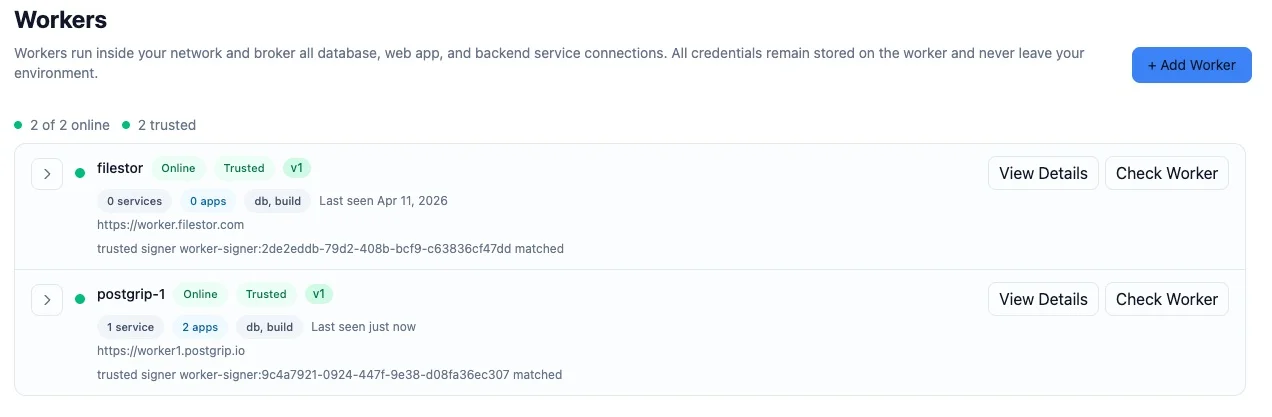
Deploy PostGrip: VPS, Docker Worker, Simple Setup
So, how does PostGrip work? It’s very simple. You go to a VPS provider like Hetzner and provision a VPS for your app(S). You download the worker Docker image from Docker Hub, run it on your VPS, and then follow the...

Why Developers Are Adding the Open-Source Superpowers Plugin to Claude Code
The open‑source Superpowers plugin, built by Jesse Vincent for Claude Code, introduces a five‑phase workflow that automates brainstorming, design, planning, coding, and verification. Controlled tests show a 14% drop in token usage and roughly a 9% reduction in overall costs...

Top 7 Docker Compose Templates Every Developer Should Use
The article spotlights seven ready‑to‑use Docker Compose templates that accelerate local development for a range of stacks—WordPress, Next.js, PostgreSQL, Django, Kafka, n8n AI, and Ollama/OpenWebUI. Each GitHub‑hosted template bundles core services such as databases, web servers, message brokers, and AI...

Anchore Enterprise and the DoD DevSecOps Reference Design
Anchore Enterprise has been tightly woven into the Department of Defense’s DevSecOps Reference Design, providing automated security guardrails across every stage of the software factory. By generating SBOMs, enforcing policy‑as‑code, and continuously scanning containers, Anchore stops vulnerable code before it...

GitHub Finally Introduces Stacked Pull Requests, Devs Have Thoughts
GitHub has launched a private beta for stacked pull requests through its GitHub CLI, delivering a long‑awaited capability for developers. The feature enables a series of dependent changes to be submitted as a chain of pull requests, each building on...

Day 51: Build Dashboards for Visualizing Analytics Results
The post outlines how to build a real‑time analytics dashboard that consumes aggregated metrics from Kafka streams and pushes updates via WebSockets. It highlights a query‑optimization layer that combines Redis caching with PostgreSQL time‑series partitioning to keep latency sub‑second. Multi‑dimensional...

Cloudflare Unveils Unified "Cf" CLI to Cover Entire API Surface
Cloudflare released a technical preview of a new unified command‑line interface, "cf," that will eventually expose the full set of its 100‑plus products and roughly 3,000 HTTP API operations. The move targets developers and operators who rely on CLIs for...

Solo Founder’s Daily Tech Stack for Side Project
My actual tech stack for building BlackTwist as a solo founder with a full-time job. No fluff. Just the tools I use every day and why.
Scan AWS GovCloud and More Partitions with Pulumi Insights
Pulumi Insights has expanded its account‑scanning capability to cover every AWS partition, including GovCloud (US), ISO, ISO‑B, ISO‑F, ISO‑E, European Sovereign Cloud, and China. The service now offers the same AI‑assisted resource discovery and cross‑account search that commercial AWS accounts...

API Spector Open Source API Testing Tool
API Spector is a newly released, free, open‑source tool for testing HTTP APIs and WebSocket services. It stores every request in files, enabling version control and Git integration, a rarity among free testers. The tool imports collections from Postman, Insomnia,...

One Engineer + AI Agents Replace Seven-Person Teams
Sid Sijbrandij, the co-founder of GitLab, just said: "One developer with parallel AI agents will outproduce an entire team of seven." And at his new company Kilo, that's already the standard. He has 20 engineers. Each one manages multiple AI agents across...

All Top AI Models, Fully Managed on Google Cloud
All the best models in one place. We just lit up @grok 4.20 and Grok 4.1 Fast as fully-managed APIs on @googlecloud. Pay as you go, no infrastructure to provision or manage. Party on. https://t.co/UsUQzqy8sv https://t.co/Zi4ooO3471

Why Your Cache Is Serving Stale Data (5 Invalidation Bugs Explained)
The article explains why caches often serve stale data, focusing on five real‑world invalidation bugs that surface as systems scale. It highlights how missed write paths, misaligned TTLs, and other patterns let outdated information linger despite a healthy‑looking stack. By...

Agents Don’t Need Instant Spin‑up; Seconds Don’t Matter
I keep hearing "agents can't wait". Sandboxes and DBs must spin up as fast as possible. But I don't understand why. Agents typically work in the background. Few extra seconds won't matter. And I see Codex use Docker, waiting for...

Scaling AI Feature From One to 8000 Customers
Thrilled to see this one ship to everyone. It's one thing to hand roll an AI feature once for one customer. Rolling this out reliably to 8000 customers is a different type of challenge. Kudos to Pratik & Team...

Vault Enterprise 2.0 Modernizes Identity Security at Scale
HashiCorp announced Vault Enterprise 2.0, now generally available, adding identity‑first secret distribution, expanded Linux credential rotation, and high‑performance envelope encryption for streaming workloads. The release also introduces a new versioning and support model aligned with IBM’s lifecycle policies, guaranteeing at...

Open‑source AI Tool Detects Real Bugs Automatically
Open sourced simple AI model that finds real bugs, from the folks at @Aisle_Inc . Is it getting hot in here? 🔥
Nearly Half of AI-Generated Code Fails in Production
43% of AI-generated code changes need debugging in production, survey finds https://t.co/OoNEi3VQ03 < maybe all that unattended agent-generated code going to prod will work out fine. Or, it won't.

Agentic Coding at Enterprise Scale Demands Spec-Driven Development
AWS’s Kiro platform demonstrates that spec‑driven development can shrink enterprise software cycles dramatically, turning multi‑week feature builds into multi‑day sprints. By anchoring AI agents to rich, structured specifications, teams can generate code, run property‑based tests, and let agents self‑correct without...

Deploy GPU Kernels as Easily as Models
Introducing Kernels on the Hugging Face Hub ✨ What if shipping a GPU kernel was as easy as pushing a model? - Pre-compiled for your exact GPU, PyTorch & OS - Multiple kernel versions coexist in one process - torch.compile compatible - 1.7x–2.5x speedups over...

Evaluating Trust, ROI, and Risks of Anthropic's Security Model
Mythos ~ Anthropic released a new model they claim is scary good at finding security vulnerabilities. What questions should we be asking? No hot take. Just pondering how we can trust a model, the ROI, and how we can evaluate the...

AI Agent Builds, Tests, and Ships Code Solo
I thought Cursor was the end game. CatDoes v4 just dropped an AI agent that lives in the cloud on its own machine. It writes the code, runs the tests, catches the errors, fixes them, and ships. https://t.co/SSgaM4kAJu https://t.co/WcrDDHD6pw