
Change Intelligence and Deployment Connectors for Liquibase Secure
Liquibase Secure announced two new capabilities—Change Intelligence and Deployment Connectors for ServiceNow, GitHub, Harness, and Terraform. Change Intelligence aggregates change data, applies AI‑driven risk analysis, and automatically captures audit evidence in a single view. Deployment Connectors embed governed database change directly into existing workflow tools, supporting over 65 database platforms. Together they aim to close visibility and governance gaps as release velocity and AI initiatives accelerate.

Day 153: Unified Infrastructure & Log Monitoring - The Complete Observability Picture
The post introduces a unified observability solution that merges infrastructure metrics with application logs across a 50‑pod Kubernetes cluster. It walks readers through building a collector, real‑time dashboard, and intelligent alerting that ties CPU, memory, network, and disk data to...

Joined SiG-Docs, Now Part of Kubernetes Community
We were able to join the #SiG-Docs. We are now part of the kubernetes open source community.

Swedish Endform Raises €1.5 Million to Speed up Web Testing for AI-Era Development
Swedish startup Endform announced a €1.5 million (approximately $1.6 million) Series A round led by Alliance VC and other investors. The funding will accelerate its platform that slashes Playwright end‑to‑end test execution from roughly 30 minutes to under two minutes by running thousands of...

From Annoyance to Appreciation: Google’s Monore
When I joined Google, I found it annoying that: 1. Everyone works in the same repo at head 2. All dependencies are explicitly declared 3. External dependencies are copied in a central third_party folder 4. Everything can be re-built from source I had changed my...

Turning AI Code Reviews Into a Personal Coaching Tool
my cofounder and I did a live code review today and I gave Claude Code the transcript. It also has all the reviews he has ever given our code base, all his comments, and I am using it to make...

Fortis Solutions Unveils Integrated Intelligent‑Infrastructure Platform for Enterprise Automation
Fortis Solutions announced the launch of an integrated intelligent‑infrastructure platform that merges its NetRaven visual layer with the Source of Truth intelligence engine. The system promises real‑time visibility, automated remediation and vendor‑agnostic translation, targeting the consistency and scalability goals of...

Load Balancers: Same Goal, Different Layers, Different Jobs
Day 13 of AWS while being a mom AWS load balancers finally clicked for me when I thought about them like this: ALB → smart routing (Layer 7) NLB → speed & performance (Layer 4) GWLB → security checkpoint (Layer 3) Same goal (handle traffic)… completely...

Six Viable Deployment Paths for OpenClaw AI Agent
From Mac Mini M4 to cloud VPS and edge AI hardware, these are the six deployment options worth considering for hosting your OpenClaw AI agent. https://t.co/QJsc243Cjq

AI-Generated Code Verification Startup Qodo Raises $70M
Qodo, operating as Codium Ltd., announced a $70 million Series B round, bringing its total capital to $120 million. The startup offers an AI‑driven code verification platform that inserts a governance layer into developers' CI/CD pipelines, using specialized agents to detect bugs, compliance...

Beyond Pinning: Harden Node and Python Supply Chains
Supply chain attacks are becoming more frequent, and far more serious. What are sensible practices to protect against these when using Node or Python packages? I assume pinning versions is the bare minimum; for those with security teams / tools: why else...

Developer Guide for Migrating to Reproducible Environments without Rewriting
The guide proposes an incremental, configuration‑first path to reproducible, production‑identical environments without rewriting legacy code. It starts by mapping runtime, OS, and service drift, then introduces a sidecar .upsun/config.yaml that clones production settings on a low‑risk branch. Sanitized production data...

Changes to packages.gitlab.com: What You Need to Know
GitLab is completing a migration of its packages.gitlab.com infrastructure to a new hosting system, keeping the same domain but changing URL structures, GPG key locations, and network endpoints. The legacy PackageCloud UI will be retired on March 31, 2026, and...

Using Containers to Bring Software Engineering Rigor to AI Workloads
Enterprises are moving AI models, MCP servers, and agents from experimental prototypes into production and need the same governance applied to traditional software. The Open Container Initiative (OCI) provides a vendor‑neutral format that lets organizations package AI components as containers...

JBoss EAP XP 6.0: Achieving Observability with OpenTelemetry
Red Hat’s JBoss EAP XP 6.0 arrives with full MicroProfile 7.0 compliance and the new MicroProfile Telemetry 2.0 extension, bringing native OpenTelemetry support to Java EE workloads. The guide demonstrates two deployment paths: a local Podman environment that spins up Jaeger and an OpenTelemetry collector, and a...

How We Eliminated Long-Lived CI Secrets Across 70+ Repos
Pulumi eliminated long‑lived CI secrets across more than 70 repositories by swapping static GitHub secrets for short‑lived, OIDC‑driven credentials via Pulumi ESC. The new flow exchanges a GitHub‑issued JWT for a Pulumi access token, which then opens an ESC environment...

Responsible AI Agents: Prioritize Security, Durability, Availability
When Opus 4.5 came out, it was a one-way door to a new way of engineering. Agents now do most of our coding. Knowing the inherent flaws and over-confidence of LLMs, we sent a clear message to our teams. Vibing and...
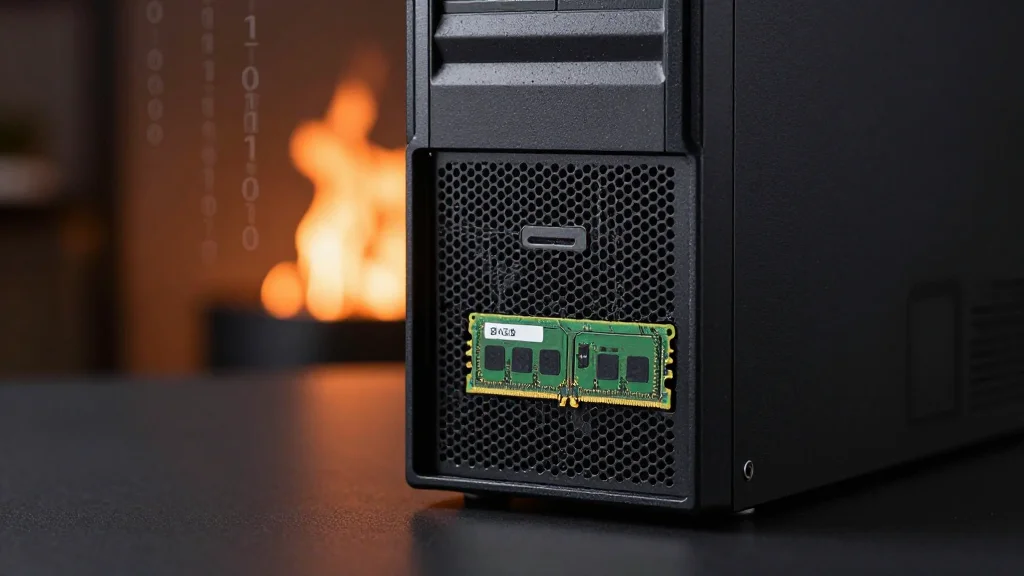
Webminal Defies DevOps Trends, Running 15 Years on a Single 8 GB Server
Webminal, the browser‑based Linux learning platform, has remained operational on a single 8 GB CentOS server for 15 years, serving half a million users. The site survived a datacenter fire, power outages and traffic spikes without adopting Kubernetes, micro‑services or auto‑scaling,...

ScaleOps Raises $130M Series C to Slash AI Compute Waste
ScaleOps closed a $130 million Series C round led by Insight Partners, valuing the Israeli startup at over $800 million. The funding will accelerate its autonomous platform that promises up to 80% reductions in cloud and AI infrastructure spend, a move that...

Queues Don't Absorb Load — They Delay Bankruptcy
Backend teams often add a queue during traffic spikes, seeing immediate latency drops, but the queue merely postpones work. As consumer throughput lags, queue depth grows unchecked, turning milliseconds into minutes of processing delay and eventually causing memory exhaustion or...

Scaling Kafka Consumers: Proxy Vs. Client Library for High-Throughput Architectures
Apache Kafka’s pull‑based model excels for event‑driven microservices, but scaling consumer groups creates operational overhead, head‑of‑line blocking, and complex error handling. Large enterprises such as Wix and Uber have addressed these limits by deploying a centralized push‑based consumer proxy, achieving...

Grafana Labs Brings Grafana Cloud & Grafana BYOC to Japan with AWS Tokyo Region Availability
Grafana Labs announced that its Grafana Cloud SaaS and Bring Your Own Cloud (BYOC) offerings are now available in the AWS Tokyo region, marking the company’s first dedicated infrastructure in Japan. The move enables Japanese customers to host observability workloads...
Why Customer Data Infrastructure Is Moving to Infrastructure as Code
Customer data infrastructure, essential for attribution, personalization, and AI‑driven experiences, is still managed through manual UI clicks and scattered documentation. This operating model creates versioning, audit, and recovery challenges as data volumes and AI use cases grow. Applying infrastructure as...

Google Rolls Out TurboQuant, PolarQuant and QJL Model Compression Tools
Google introduced three AI model compression algorithms—TurboQuant, PolarQuant and QJL—aimed at cutting compute costs and speeding deployment. The announcement sparked a swift response on Wall Street and ignited discussion among cloud providers, chip makers and enterprise AI users.

Rust Powers Ultra-Fast AI Automation for VC Workflow
I needed AI-powered automation that could actually keep up with my day. Existing tools were too slow, too error-prone. So I rewrote everything in Rust — 45+ APIs that Claude Code uses to run my VC workflow end-to-end. I'm presenting the architecture...
Percona and Chainguard Partner to Deliver Secure Open Source Software
Percona has teamed up with Chainguard to offer secure, production‑ready container images for its open‑source database portfolio, including MySQL, PostgreSQL, MongoDB and others. Chainguard builds minimal, provenance‑verified images that aim for near‑zero CVE exposure, while Percona provides enterprise‑grade support and...

Beyond Static Checks: Designing CI/CD Pipelines That Respond to Live Security Signals
Traditional CI/CD pipelines rely on pre‑deployment tests and static scans, but they miss real‑time security signals. Modern distributed systems can become vulnerable after a build due to compromised hosts or newly discovered exploits. The article proposes augmenting pipelines with runtime...

How Swarmit Turned Testing Into a Growth Engine with the Xray Partner Program
Swarmit, an Atlassian Platinum Solution Partner, leveraged Xray to transform its test‑management services into a growth engine. After a 2019 hackathon identified Xray as the most capable Jira‑native tool, the partnership deepened into joint marketing, webinars, and localized DACH content....
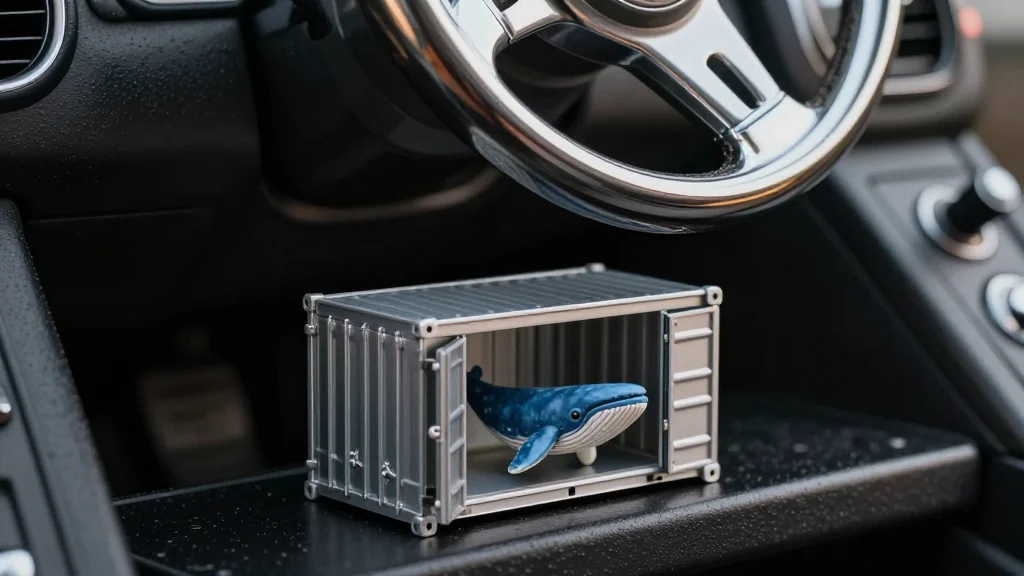
Master Docker First, Then Tackle Kubernetes
Learn Docker before Kubernetes. Learn Docker before Kubernetes. Learn Docker before Kubernetes. Learn Docker before Kubernetes.

🎙️ This Week on How I AI: How Stripe Built “Minions”—AI Coding Agents that Ship 1,300 PRs per Week +...
Stripe engineer Steve Kaliski revealed how the company’s AI “minions”—autonomous coding agents—produce roughly 1,300 pull requests each week, often triggered by a simple Slack emoji. The system relies on robust developer experience, cloud‑based development environments, and automated confidence signals to...

How Small Medical Practices Can Build HIPAA-Aligned DevSecOps Without Enterprise Budgets
Small medical practices handle protected health information but often lack the security resources of large hospitals. The article outlines how adopting a HIPAA‑aligned DevSecOps approach—using AWS native tools, strict access controls, secret management, and automated CI/CD pipelines—can close common gaps...

Feature Flag-Based Rollout: A Safer Way to Ship Software
Feature‑flag‑based rollout decouples code deployment from user release, letting teams push code to production while controlling exposure via runtime switches. By incrementally enabling a feature—internally, to beta users, or by percentage—organizations can test in live environments, detect issues early, and...
Deploying Java Applications on Arm64 with Kubernetes
The article details how to optimize Java workloads on Arm64‑based Kubernetes clusters by tuning both the operating system and cluster configuration. It explains Java’s container awareness, recommends matching CPU requests to limits, and using flags like -XX:ActiveProcessorCount and MaxRAMPercentage for accurate...

AI Coding Agents Poised to Reignite Free‑Software Development
A wave of AI coding agents is being hailed as a catalyst to restore the practical relevance of free software, while maintainers grapple with a flood of low‑quality AI contributions. Industry heavyweights like AWS and xAI are pouring billions into...

Arcfra Launches Neutree: Bridging the Gap Between AI Experimentation and Enterprise Production
Arcfra unveiled Neutree, a Model‑as‑a‑Service platform that turns AI models into production‑grade services. The solution adds an enterprise‑grade layer to an open‑source inference manager, offering unlimited workspaces, 24/7 support, and deep integration with the Arcfra Enterprise Cloud Platform. Neutree’s vendor‑agnostic...
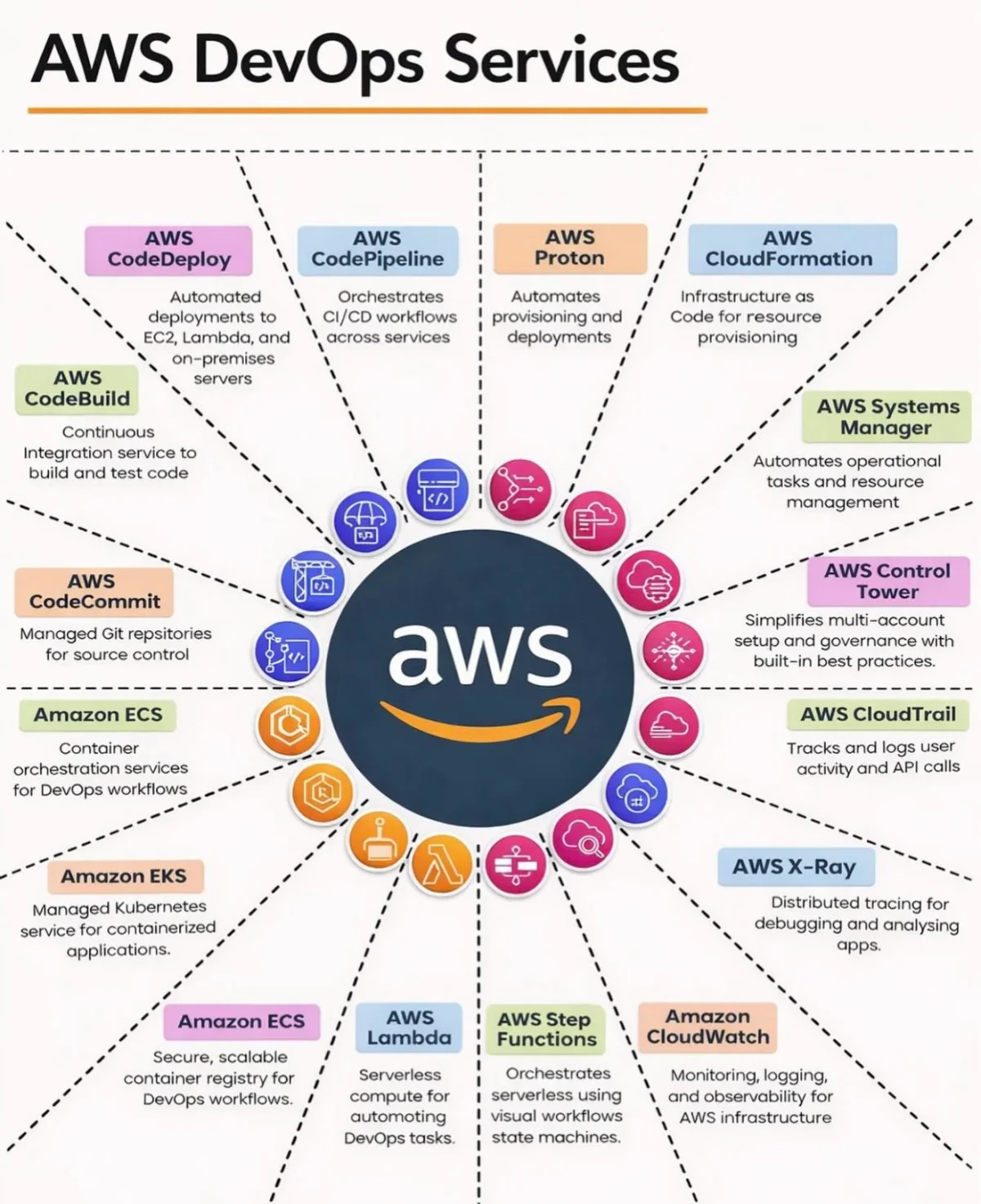
AWS Provides End‑to‑End DevOps Toolchain Mastery
Mastering DevOps on AWS 🚀 From code to production, AWS gives you everything you need to build, automate, deploy, and monitor at scale. 🔹 CI/CD: CodeCommit → CodeBuild → CodePipeline → CodeDeploy 🔹 Containers: ECS & EKS 🔹 Serverless: Lambda & Step Functions 🔹 IaC:...

DoD Expands Software Factories to Embed DevOps Across All Services
The Department of Defense announced the expansion of its software factories to embed DevOps practices—continuous integration, automated testing and rapid deployment—across the Air Force, Army and Marine Corps. The move formalizes soldier‑developer pipelines and aims to curb duplication while accelerating...

Create Tests in Reflect Directly From Your Coding Agent!
Reflect now lets coding agents such as Claude Code, Copilot or Cursor create automated tests via the SmartBear MCP server. By supplying high‑level intent—like “log in and create a sales quotation”—the agent determines the necessary UI interactions, self‑heals when errors...

'The Missing Piece' For Automating Patching Containers at Scale
Container security teams are grappling with the complexity of patching container images at scale, often stalled by tangled dependency trees and coordination across multiple teams. A new automation framework, dubbed the "missing piece," integrates vulnerability scanning, dependency resolution, and rollout...

DevOps Digital Transformation: From Maintenance Trap to Market Speed (2026) – Shopify
Engineering teams devote 60‑80% of their time to maintaining infrastructure, leaving little capacity for customer‑facing innovation. While DevOps promises faster delivery, many enterprises add layers of pipelines and tooling without addressing the underlying maintenance burden, causing initiatives to stall. The...

Lessons From Using the Outbox Pattern at Scale
Zapier adopted a transactional outbox backed by local SQLite to keep its high‑throughput Events API running during Kafka outages, then scaled the design to handle about 15,000 events per second. By switching the SQLite journal mode to WAL, sharding the...

Choreography Vs. Orchestration: Mastering Event-Driven Workflows on AWS
The article contrasts choreography and orchestration as two core patterns for managing communication in event‑driven microservice architectures on AWS. Choreography relies on decentralized broadcasting via Amazon SNS and rule‑based routing with Amazon EventBridge, keeping services loosely coupled. Orchestration centralizes workflow...

Looped Code Review: Keep Fixing Until One Issue Remains
When doing a code review with Codex, instead of just asking it to review the code, say this instead: “Review the code and keep fixing the findings in a loop until only one finding remains.” Otherwise, you will just iterate, iterate, and...

Claude Code Now Supports OpenAI Codex Plugin
Wow. Starting today you can use Codex in Claude Code 🤯 /plugin marketplace add openai/codex-plugin-cc you can try it with: /codex:review for a normal read-only Codex review /codex:adversarial-review for a steerable challenge review /codex:rescue to let codex rescue your code https://t.co/hSOe0Kldt4

Platform Teams Cut $43,800 Annual Kubernetes Control‑Plane Cost with Virtual Clusters
Modern platform engineering teams are deploying virtual‑cluster technology to eliminate a $43,800 yearly hidden tax on Amazon EKS control‑plane costs. By consolidating dozens of isolated environments onto a single host cluster, firms achieve near‑zero control‑plane overhead while preserving tenant isolation.

Qodo AI Beats Claude, Prevents 800+ Monthly Bugs
This AI code review tool just outperformed Claude on its own benchmark. It's called Qodo and Fortune 100 engineering teams are using it to catch what Cursor, Copilot, and Claude Code quietly miss. 800+ issues prevented per month Here's how it works 👇...

AI Success Hinges on QA and DevOps Maturity
RT 77% of orgs are confident in AI outputs? while many still lack secure CI/CD, automated audit trails, and even basic defect escape metrics. Your QA and DevOps maturity will make or break AI agents in production. #AI #DevOps #QA @Star_CIO ...
Database Indexing Explained: How B-Trees Make Queries 1000x Faster
The article explains how database indexes, built on B‑Tree structures, can accelerate query performance by up to 1,000×. It contrasts full table scans, which require linear O(N) reads of every row, with indexed lookups that use sorted pointers to jump...

Treat AI as Junior Developer to Spot Code Bugs
RSAC 2026: Treat AI like a ‘junior developer’ to catch coding errors | news | SC Media https://t.co/3YTxTJOxYF

37K LOC Daily Across 5 Projects, Speeding Up
Absolutely insane week for agentic engineering 37K LOC per day across 5 projects Still speeding up https://t.co/VR3utsduYx