
Secrets Management Vs. Secrets Elimination: Where Should You Invest?
Enterprises are weighing two divergent authentication philosophies: traditional secrets management, which safeguards static credentials in vaults, and secretless authentication, which eliminates static secrets by issuing short‑lived tokens tied to workload identities. While secretless reduces attack surface and operational friction for cloud‑native workloads, many legacy systems and SaaS APIs still require a secrets manager. Most organizations adopt a hybrid approach, applying each model where it fits best. The strategic decision centers on where to invest—upfront identity infrastructure or ongoing vault operations—to balance security, cost, and compliance.

Security Considerations on Istio's CRDs with Namespace-Based Multi-Tenancy
Istio’s VirtualService resource, when configured as a mesh gateway, applies routing rules across the entire service mesh, not just the namespace where it is defined. This design flaw enables tenants with permission to create or modify Istio CRDs to launch...

AI Can Write Your Infrastructure Code. There’s a Reason Most Teams Won’t Let It.
Spacelift co‑founder Marcin Wyszynski says AI is now writing infrastructure‑as‑code in HCL, eliminating the need for developers to hand‑craft Terraform or OpenTofu configurations. While this speeds provisioning, it creates a comprehension gap that can lead to dangerous production changes. Spacelift’s...
Announcing Ingress2Gateway 1.0: Your Path to Gateway API
SIG Network announced Ingress2Gateway 1.0, a migration assistant that converts Kubernetes Ingress‑NGINX resources into Gateway API manifests. The release expands support to over 30 common NGINX annotations and adds extensive integration testing that validates runtime behavior across controllers. It also...
Trusted Java Containers: Azul Zulu OpenJDK Joins Docker’s Official Images
Azul Systems announced that its Zulu OpenJDK builds are now part of Docker’s Official Images, making them directly pullable from Docker Hub. The images meet Docker’s rigorous security, signing and maintenance standards and cover all current LTS Java versions—8, 11,...

Running Agents on Kubernetes with Agent Sandbox
The AI landscape is shifting from brief, stateless inference calls to long‑running, coordinated agents that require persistent state and secure execution. Traditional Kubernetes objects like StatefulSets struggle to manage thousands of singleton agents efficiently. The open‑source Agent Sandbox project introduces...

How to Monitor LLMs in Production with Grafana Cloud,OpenLIT, and OpenTelemetry
Grafana Cloud now offers AI Observability, a unified platform for monitoring large language model (LLM) workloads in production. By integrating the OpenLIT SDK and OpenTelemetry, developers can automatically capture traces, metrics, and logs for multiple model providers, vector databases, and...
Enterprise Data Protection, Governance, and Cost Optimization with Xray and Revyz in Jira
Revyz has launched an integrated backup and governance layer for Xray, Atlassian’s test‑management add‑on in Jira. The solution replaces native Atlassian backups with automated, forever‑incremental, immutable snapshots that also deduplicate attachments. By adding configuration‑drift analytics and role‑based access controls, Revyz...
Honeycomb Offers New Observability Tools for AI Agents
Honeycomb.io announced the general availability of Honeycomb Metrics and a suite of AI‑driven observability tools. The new features include Agent Skills for Claude Code, Cursor and AWS DevOps Agent, Automated Investigations, a Slackbot with natural‑language queries, and Pipeline Intelligence that...

Advanced Object Recognition in Test Automation: Comparing Leading Enterprise Solutions
Object recognition is the linchpin of modern test automation, enabling scripts to locate and interact with UI elements across web, desktop, mobile, and legacy environments. The article compares four enterprise‑grade tools—SmartBear TestComplete, Ranorex Studio, Tricentis Tosca, and Keysight Eggplant—focusing on...
Stop Trusting Your RAG Pipeline: 5 Guardrails I Learned the Hard Way
The author recounts a payroll‑tax error caused by a stale document in a retrieval‑augmented generation (RAG) pipeline, illustrating that simple vector similarity is insufficient for enterprise AI. Five non‑negotiable guardrails are presented: relevance re‑scoring, forced citation, post‑generation NLI validation, staleness...

Crossplane and AI: The Case for API-First Infrastructure
AI‑assisted development has moved the bottleneck from writing code to post‑push activities such as provisioning, compliance, and day‑two operations. Traditional platforms expose policies and state through fragmented UIs and pipelines, which hinders AI agents that require machine‑readable interfaces. Crossplane extends...

Seer Fixes Seer: How Seer Pointed Us Toward a Bug and Helped Fix an Outage
On February 21, 2026 Sentry’s AI‑powered Seer service suffered an 80‑90% failure rate in its EU Issue Summary API after a Google Cloud Vertex AI Gemini outage triggered a bug in Seer’s region‑fallback logic. The bug blocklisted the provisioned‑throughput region europe‑west1,...

Shift Gears: 10 Stories Redefining Enterprise IT
Red Hat unveiled a suite of production‑ready tools aimed at simplifying enterprise AI, container, and virtualization workloads for 2026. Highlights include the Sovereignty Readiness Assessment, an enterprise‑grade Podman Desktop, and a migration toolkit that accelerates VM moves tenfold. The company also...
Solve Multi-Controller Contention with Red Hat OpenShift Networking
Red Hat OpenShift now supports governed multi‑controller load balancing using the Kubernetes loadBalancerClass field. By assigning a class to external services, enterprises can separate MetalLB’s internal load‑balancing from hardware‑based solutions like F5 BIG‑IP, preventing controller contention. The approach eliminates race conditions, ensures deterministic...

From DLT to Lakeflow Declarative Pipelines: A Practical Migration Playbook
Databricks is rebranding Delta Live Tables as Lakeflow Spark Declarative Pipelines, adding open‑source Spark alignment and new features. Existing DLT pipelines run unchanged, but Databricks recommends updating imports, decorators, expectations, and CDC logic to the new `dp` API. The migration...

Pulumi IAM Expands: Manage Access at Scale with Tags, Roles, and Teams
Pulumi has added three major IAM capabilities—tag‑based access control, team role assignments, and user role assignments—to its existing custom‑role framework. Tag rules let permissions be granted automatically when stacks, environments, or accounts carry matching tags, eliminating manual selection. Teams can...

DevOps Anti-Patterns: What They Are and How to Avoid Them
The article outlines common DevOps anti‑patterns that undermine speed, quality, and collaboration, such as creating a dedicated DevOps team, over‑investing in tools, and inserting manual approvals into CI/CD pipelines. It highlights cultural pitfalls like blame‑oriented environments and misapplied microservices, as...

KubeCon + CloudNativeCon Europe 2026 Co-Located Event Deep Dive: Platform Engineering Day
Platform Engineering Day returns for its fifth edition at KubeCon + CloudNativeCon Europe 2026 in Amsterdam, expanding on the original Paris launch. The two‑track program blends deep technical sessions with security guardrail discussions and a CNCF Platform Engineering Technical Community...

Why Installing Argo CD Didn't Fix Your Deployments
Many organizations adopt Argo CD expecting it to automatically resolve flaky or failing Kubernetes deployments. The article explains that while Argo CD excels at declarative sync and drift detection, it does not repair underlying CI pipeline defects, misconfigured manifests, or...

Building Fault-Tolerant Spring Boot Microservices With Kafka and AWS
The article outlines how to build fault‑tolerant Spring Boot microservices using Apache Kafka on AWS. It explains core patterns—retries, dead‑letter topics, idempotency, circuit breakers—and shows code snippets for Spring Kafka error handling. It also demonstrates integrating AWS Lambda as a...

OpenText ALM (AQM) vs Tricentis qTest: Features, Integrations, and Best-Fit Use Cases
OpenText Application Quality Management (AQM) builds on the legacy Mercury Quality Center platform and targets governance‑heavy, regulated environments where end‑to‑end traceability and auditability are mandatory. Tricentis qTest, delivered primarily as a SaaS solution, is engineered for agile and DevOps teams...

JFrog Agent Skills Registry Released
JFrog unveiled its Agent Skills Registry, a secure catalog that governs AI agent skills, models, and software packages. The registry is validated through early integration with NVIDIA, supporting the NVIDIA OpenShell runtime and AI‑Q Blueprint. It leverages Artifactory to scan,...

Chainguard Introduces the Guardener
Chainguard unveiled the Guardener, an AI‑driven agent that automatically converts bloated, legacy Dockerfiles into minimal, zero‑CVE Chainguard container images. The tool rebuilds Dockerfiles layer by layer, validates functional equivalence, and delivers migration reports, cutting conversion time from weeks to under...

Agentic Code Reviews for $0.25 Each
GitLab Duo Agent Platform’s Code Review Flow introduces an agentic AI reviewer priced at a flat $0.25 per merge request, tackling the growing code‑review bottleneck that has surged 91% on AI‑assisted teams. Engineers now wait a median 13 hours for PR...

GitLab 18.10: Agentic AI Now Open to Even More Teams on GitLab
GitLab 18.10 introduces a usage‑based credit model that lets free GitLab.com teams purchase monthly GitLab Credits to unlock the Duo Agent Platform without upgrading their subscription. The shared credit pool grants all members access to AI agents for planning, code...

From Kubernetes Gatekeeper to Full-Stack Governance with OPA
Pulumi has released version 1.1.0 of its pulumi-policy-opa plugin, making OPA/Rego a stable, first‑class policy language alongside TypeScript and Python. The update introduces full feature parity, including resource‑level and stack‑level policies, configurable enforcement levels, and metadata annotations. A key addition...
.png)
Designing MCP for the Age of AI Agents
Harness released MCP server v2, slashing the tool count from over 130 to just 11 while still covering 125+ resource types across its DevOps platform. The redesign replaces a one‑tool‑per‑API model with a registry‑based dispatch system, cutting context‑window consumption from roughly...

Optimizing Cluster Observability: A Strategic Approach to Selective Log Routing in Red Hat OpenShift
Red Hat OpenShift’s ClusterLogForwarder (CLF) lets operators route logs selectively using drop and keep filters, moving away from a collect‑everything model. By defining pipelines that fork streams to Loki for developer logs and to remote syslog or S3 for audit...
GitLab 18.10 Brings AI-Native Triage and Remediation
GitLab 18.10 adds AI‑driven security features that cut vulnerability triage time and automate remediation. The release ships generally available SAST false‑positive detection, beta agentic SAST vulnerability resolution, and beta secret false‑positive detection, all powered by the GitLab Duo Agent Platform....
Code Review without the Bottlenecks or the Bill
GitLab introduced Code Review Flow, an AI‑driven automated code review feature within its Duo Agent Platform. The service scans merge requests, incorporates repository context, security findings and compliance rules, and delivers structured inline feedback. It can run hundreds of reviews...

UST Widens Tricentis Partnership to A/NZ for Testing Software Tool Boost
UST has broadened its partnership with test‑automation leader Tricentis to cover Australia and New Zealand. The collaboration will deploy Tricentis’s platform to modernise testing, shorten test‑cycle timelines and reinforce Agile and DevOps delivery models. UST’s Australian vice‑president Kumaran C R highlighted the...

What Are Test Hooks in AI-Native Development?
Test hooks attach existing test and lint commands to deterministic lifecycle events in AI coding agents such as Claude Code and Cursor. When the event fires, the command runs automatically and a non‑zero exit code blocks the agent, forcing an...
Capital One Deprecated an AI Tool It Once Championed. Its DevEx Chief Says That’s the Point.
Capital One’s developer experience (DevEx) team, led by SVP Catherine McGarvey, recently retired an AI‑driven ticket‑assignment tool after engineers expressed dissatisfaction. The group emphasizes "enablement"—providing the right tools, knowledge, and feedback—to boost productivity across its 14,000 technologists. AI tooling is...
Why Your Observability Bill Keeps Growing (and It’s Not Your Vendor’s Fault)
Observability spend is exploding across large engineering orgs, not because of vendor pricing but due to unchecked telemetry generation. Companies report monthly bills exceeding $200,000 while most data lacks proper service attribution and often contains leaked credentials. Auto‑instrumentation and high‑cardinality...

Camunda 8 Helm Chart Update and the Future of Bitnami Sub-Charts
Camunda announced a three‑phase overhaul of its Helm charts after Bitnami moved many public container images to a legacy repository that no longer receives security patches. Version 8.8 updates chart references to the legacy repo and introduces Camunda‑maintained enterprise images...
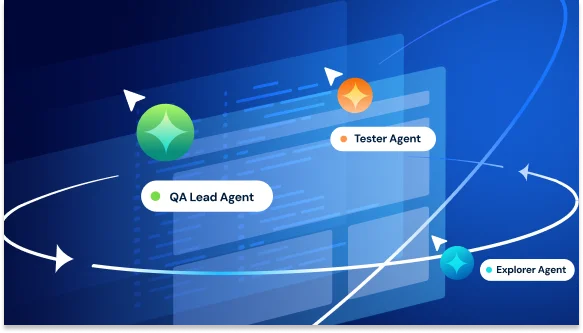
Application Integrity: The New Standard for AI-Era Software Quality
AI-driven coding tools are delivering software at unprecedented speed, but testing, security, and deployment processes have not kept pace. This mismatch creates a risk to application integrity, defined as continuous, measurable assurance that software works as intended. SmartBear introduces BearQ,...

The Silent Infrastructure Tax: Why AI Agents Will Break Your Legacy Cloud
In 2025 AI‑driven agents surpassed humans, accounting for 51% of web activity and driving a 693% YoY surge in generative‑AI referrals to retail sites. Legacy web stacks, built for human think‑time and CDN caching, crumble under the high‑concurrency, zero‑latency demands...

Rafay Launches AI Grid Orchestration Solution to Help Telcos Intelligently Deploy Distributed AI Infrastructure
Rafay, an NVIDIA Inception startup, unveiled an AI Grid orchestration platform that turns existing telco edge infrastructure into a self‑service, multi‑tenant AI factory. The solution lets operators express intent—such as latency, cost, or security requirements—and automatically places GPU workloads across...

Lock Down Values in Pulumi ESC with Fn::final
Pulumi introduced the fn::final built‑in function for its Environments, Secrets, and Configuration (ESC) service. The function lets users flag configuration values as final, preventing child environments from overriding them. When an override is attempted, ESC emits a warning and retains...

Sauce Labs Introduces Sauce AI for Test Authoring
Sauce Labs announced the general availability of Sauce AI for Test Authoring, an AI agent that converts business intent into framework‑agnostic, executable test suites for web, Android and iOS. The tool promises 90% faster test case generation, 99%+ automated coverage,...

Cloud MCP: Give Your AI Assistant Access to Your Test Runs
Cypress has launched the beta of Cloud Model Context Protocol (MCP), a remote server that links AI coding assistants directly to Cypress Cloud test data. By exposing real‑time run statuses, failure details, stack traces, and flaky test reports, MCP eliminates...

Deprecating Span Events API
OpenTelemetry announced the deprecation of its Span Event API, shifting new event emission to the Logs API. The change removes the overlapping span‑event and log‑based event models, while preserving existing span‑event data through a compatibility layer. Language SDKs will phase...

Netflix Found a Faster Way to Load Containers
Netflix migrated its Kubernetes workloads from Docker to containerd and uncovered a severe container‑initialization slowdown caused by per‑layer UID mapping and mount‑lock contention, especially on legacy Intel Xeon r5.metal instances. The problem manifested as 30‑second health‑check delays after scaling to...
Using Grafana and Steadybit MCP Servers in LLM-Based Reliability Workflows
Observability leader Grafana and chaos‑engineering platform Steadybit have each released Model Context Protocol (MCP) servers, enabling seamless LLM‑driven integration. By connecting the two MCP endpoints, SRE teams can ask large language models to combine real‑time dashboards, alerts, and historical incident...

Pod Requests Are the Input to Every Kubernetes Cost Control Loop
In Kubernetes clusters, pod resource requests are the primary input for multiple control loops, including scheduling, cluster autoscaling, and pod autoscaling. When requests are inflated, stale, or omitted, the platform over‑provisions capacity, leading to wasted spend and performance degradation. The...

The Evolution of Chaos Engineering: From Chaos Monkey at Netflix to Reliability Management in the AI Era
Chaos engineering began with fault‑injection tools at Amazon and Netflix’s open‑source Chaos Monkey, evolving into hypothesis‑driven experiments. Gremlin, launched in 2016, packaged safety controls, methodology, and CI/CD integrations to make the practice scalable across organizations. The approach now includes automated...
8 Best Machine Learning Tools in 2026: What I Recommend
The article ranks the eight top machine‑learning platforms for 2026, highlighting Google Vertex AI, IBM watsonx.ai, SAS Viya, Azure OpenAI Service, Dataiku, Amazon Personalize, Python’s ecosystem, and B2Metric. It bases the selection on G2’s Winter 2026 Grid® data, user reviews, and a criteria set that includes lifecycle...

Generate a No-Cost VMware Migration-Readiness Report with the OpenShift Migration Advisor
The OpenShift migration advisor is a free, self‑service tool that evaluates VMware workloads for migration to Red Hat OpenShift. It connects to a vCenter environment via an RVTools inventory file or an OVA agent and produces a detailed report covering...

The Hidden Reliability Risks in Your Agentic AI Workflows
Artificial intelligence has moved from conversational assistants to autonomous agents that act on behalf of enterprises, introducing new reliability challenges. The article highlights three primary risks: unstable network connections, cascading dependency failures, and the non‑deterministic nature of model outputs. It...