
A New Product, a Hidden EU Deadline, and the Real Secret in Sales
The author accidentally built a newsletter‑analytics product that categorizes and compares publishing patterns, now ready for beta testing. A quiet EU directive will require every online retailer to embed a digital withdrawal button by 19 June 2026, turning post‑purchase flows into a transaction‑architecture project. Romania’s draft receipt reform threatens costly, rushed upgrades for retailers that miss the signal. The issue also shares a sales‑value insight, a reflection on early‑stage innovation, and a new student‑network initiative.

Why Freight Forwarders Are Becoming Essential for Growing E-Commerce Brands
E‑commerce brands that scale internationally quickly outgrow parcel‑only shipping, facing complex customs, carrier coordination, and warehouse handoffs. Freight forwarders step in as single‑point partners, handling mode selection, compliance paperwork, and end‑to‑end visibility. Their services lower landed costs, accelerate transit, and...

Which Amazon Sellers Are Exempt From the April 15 Ad Change
Amazon announced that starting April 15 ad costs will be deducted directly from seller proceeds, but a follow‑up email clarified the change only applies to a subset of high‑spending advertisers. Sellers who receive the notice will lose credit‑card billing and the...

The Dropshipping Method That Turns First-Time Sellers Into Million-Dollar Founders
AC Hampton grew a dropshipping store from $1,000 to $1.8 million in six months after a crane collapse forced him to sleep on a church floor. He later founded Supreme Ecom, a 43‑person education and software company that has helped students generate...

AI For Ecommerce: How Ecommerce AI Solutions Are Shaping The Future Of Retail
Artificial intelligence has moved from novelty to necessity in ecommerce, reshaping how retailers recommend products, enable visual and voice search, and interact with shoppers. Modern recommendation engines now analyze hover time, add‑to‑cart behavior and removal patterns to deliver real‑time, hands‑free...

Sezzle Launches a Virtual Card in Canada Powered by Marqeta, Bringing Its BNPL Service to In-Store Checkout for the First...
Sezzle introduced a virtual card in Canada, enabling its buy‑now‑pay‑later service through Apple Pay and Google Wallet for in‑store purchases. The card, built on Marqeta’s issuing platform, is already accepted by SoftMoc, JD Sports Canada, Mastermind Toys and QE Home,...

Nearly Half of U.S. Buy Now Pay Later Users Paid Late on at Least One Loan in the Past Year,...
A LendingTree survey of 2,049 U.S. consumers shows 47% of Buy‑Now‑Pay‑Later (BNPL) borrowers missed at least one installment in the past year, a 13‑point increase from two years ago. More than half (54%) claim they couldn’t make ends meet without...

Neato Raises $25M to Expand Its 2P E-Commerce Accelerator Model Beyond Amazon Into Additional Marketplaces
Neato, a Las Vegas‑based 2P e‑commerce operator, announced a $25 million growth‑capital round led by Advantage Capital. The funding will finance new fulfillment hubs in Las Vegas and Chicago and accelerate the rollout of its AI‑driven agent stack. Neato plans to move...

Flips To Trips - Our Secret System That Shows You How Flip Amazon Products To Pay For Your TRIPS And...
The post promotes a "Flips to Trips" system that lets users buy low‑priced items on Amazon or Walmart and resell them on Facebook Marketplace for a profit that can fund travel. It emphasizes a no‑website, no‑brand approach, requiring only a...

Amazon Autos Expands to Chevrolet, Jeep, Kia, Mazda, and Subaru as Its New Car Buying Service Grows to 130+ Cities
Amazon Autos has broadened its vehicle‑buying platform to include Kia, Mazda, Subaru, Chevrolet and Jeep, expanding the service to more than 130 U.S. cities. The program, which debuted with Hyundai in late 2024, lets shoppers browse inventory, arrange financing and complete...

Veo 3.1 API for Ecommerce: Faster Creative Testing, Better Product Videos, and Scalable Content
Veo has launched its 3.1 API, a video‑generation tool aimed at ecommerce teams that need to produce large volumes of product‑focused videos quickly. The API promises to cut the time between creative concept and usable asset, enabling brands to test...

Northbeam Review 2026: Is It the Right Attribution Platform for Your Shopify Brand?
Northbeam is a third‑party attribution platform for Shopify and DTC brands that spend $50,000‑$500,000 monthly on paid media across multiple channels. It combines machine‑learning multi‑touch attribution (MTA) with media‑mix modeling (MMM) and feeds data back to ad‑platform algorithms via its...

ReferralCandy Review 2026: The Honest Shopify Referral and Affiliate App Assessment
ReferralCandy is a Shopify‑focused platform that automates both referral and affiliate programs for merchants generating $20K‑$2M in monthly revenue. The app promises 10‑25% of total revenue from referrals within 90 days and requires only a 30‑60 minute setup plus an...

Optional Product Pricing Best Practices + Benefits
Optional product pricing lets firms sell a low‑priced core item while monetizing add‑ons, upgrades, or custom features. The model, exemplified by airlines, Leatherology, and car manufacturers, boosts average order value and widens market appeal. Best practices include anchoring a fair...

The Numbers Behind the Buy Box: What Amazon Pricing Data Reveals About Why Most Sellers Leave Revenue on the Table
Amazon sellers are leaving substantial revenue on the table because many rely on static, poorly tuned repricing rules. Data from Alpha Repricer shows that 80‑83% of purchases flow through the Buy Box, and a loss of that position can slash...

American Airlines Shopping Portal Promo: Spend $200 & Earn 500 Bonus Miles
American Airlines’ AAdvantage eShopping mall is running a limited‑time promotion that awards members a one‑time 500‑mile bonus after they spend at least $200 between April 13 and April 20, 2026. The bonus is added on top of the regular miles earned from qualifying...

RedNote Chases U.S. Expansion After Its “TikTok Refugee” Moment Fades
RedNote, the Chinese‑origin "little red book" app with 300 million monthly users, is launching a U.S. expansion by opening offices in Palo Alto and New York, hiring talent, and staging university‑focused events. It has also rolled out RedShop, a cross‑border marketplace featuring...

Amazon’s New Ad Payment Policy Sparks Seller Revolt
Effective April 15, Amazon will automatically deduct advertising fees from sellers' account balances, ending the ability to pay with credit cards and the 60‑day cash‑flow buffer. The change removes cashback rewards and forces sellers to keep larger cash reserves, prompting...

Amazon’s Direct Review Crackdown Hits Sellers Hard
Amazon is poised to cancel "direct reviews" on its marketplace starting April 8, ending a loophole that let sellers add unverified feedback to boost new products. The platform is already limiting direct reviews to four per ASIN and deleting them...

Befrugal: Shop $25 & Get $5 Bonus
Befrugal’s shopping portal is repeatedly offering a $5 cash‑back bonus for a minimum $25 purchase at select merchants, most recently re‑activated on April 13, 2026 and running through April 17. The promotion has cycled through various spend thresholds ($10‑$25) and bonus amounts ($3‑$5)...

How SMS Verification Tools Can Strengthen Trust and Security for Independent Retailers
Independent retailers are turning to SMS verification to combat rising mobile‑fraud while preserving a frictionless checkout. By sending time‑limited codes via text, tools like SMSPool enable real‑time identity checks that curb account takeovers, fake registrations, and chargebacks. The approach offers...

Why a Temporary Phone Number for Verification Matters in Modern Online Business
Modern online businesses increasingly rely on SMS verification to secure access to tools, marketplaces, and payment systems. Because many of these checks are one‑time, using a personal or permanent business number creates friction and privacy concerns. Temporary phone numbers provide...

The 10 Best Customer Service Apps of 2026
The article ranks the ten best customer service apps for 2026, highlighting Shopify Inbox, Zendesk, Gorgias, Dialpad, Zoho Desk, Salesforce Service Cloud, HubSpot Service Hub, Shared Inbox, LiveAgent and Sprout Social. It outlines each platform’s core capabilities—real‑time chat, AI‑driven ticketing,...

Scaling Your Shopify B2B Catalog From 500 to 50,000 SKUs: The Operations Playbook
The new playbook outlines how Shopify B2B merchants can expand a product catalog from a few hundred SKUs to 50,000 without sacrificing data integrity. It identifies three data types—attributes, pricing tiers, and inventory—that break first as scale increases, and quantifies...

Cross-Border eCommerce Mastery — How to Eliminate Hidden Currency Costs
Cross‑border Shopify merchants often lose 2%–4% of revenue to hidden currency costs, including FX spreads, platform conversion fees, and settlement‑timing exposure. A typical $50,000 monthly international sales stream can bleed $1,250 per month from a 2.5% spread alone, while Shopify Markets...

Japan Post Lifts Suspension of US-Bound Merchandise
Japan Post announced it will resume accepting merchandise destined for the United States starting April 14, 2026, ending an eight‑month suspension triggered by the U.S. de minimis rule change. Under the new protocol, senders must prepay customs duties and related charges through a...
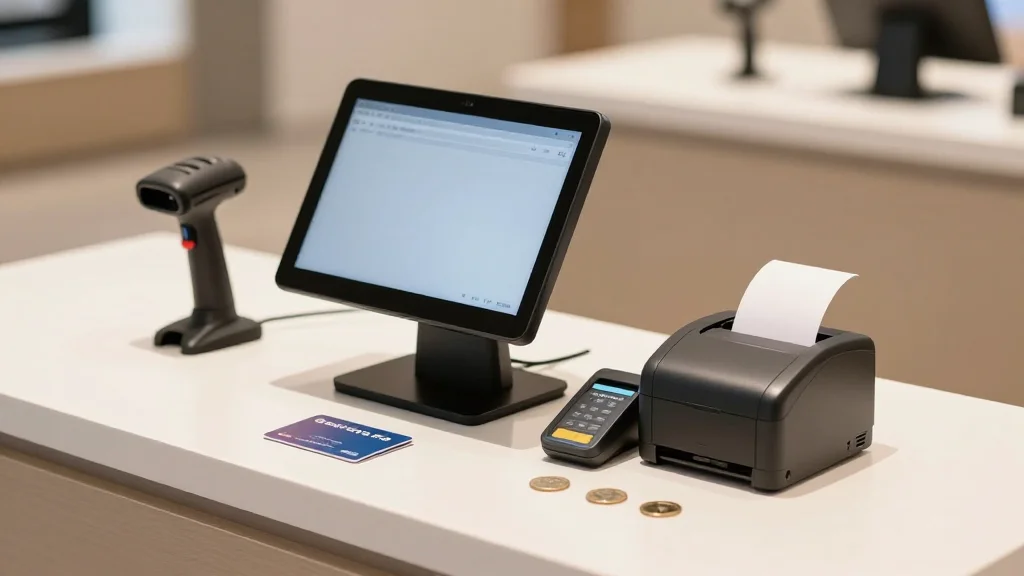
Shopify Retail Roundup (March 2026 – v11.1, v11.2 and v11.3)
Shopify rolled out a series of Point‑of‑Sale updates in March 2026 across versions 11.3, 11.2 and 11.1. Version 11.3 introduces enhanced cash‑management tools—including a Register Sessions tab, custom workflow APIs, low‑value gift‑card cash‑out, pickup order creation, Epson TM‑T88 printer support, Tap to Pay...

Customer Service Workflows: Types + Tips for Small Business
Customer service workflows turn ad‑hoc support into repeatable, automated processes, helping small businesses deliver consistent experiences. Tools such as Shopify Flow let merchants build no‑code automations for ticket routing, order updates, onboarding, cart recovery, and feedback collection. By standardizing steps,...

Impact on “Taipei International Chain and Franchise Spring Exhibition 2026”
The 2026 Taipei International Chain and Franchise Spring Exhibition, held in March, set a new scale record with hundreds of exhibitors and highlighted themes of Smart Retail, Low Labor Dependency, and AI‑Driven Entrepreneurship. Attendees experienced robotic tea dispensers, AI‑enhanced photo...
Amazon Expands Global Logistics With Shenzhen GWD Facility in 2026
Amazon will launch its first Global Warehousing and Distribution (GWD) hub in Shenzhen, China, in March 2026, creating a single‑origin inventory model for sellers worldwide. The AI‑driven facility will handle warehousing, customs, cross‑border transport and global distribution from one location,...

Customer Friction: How To Spot and Reduce Customer Friction
Customer friction describes any obstacle that makes it harder for shoppers to complete a purchase or engage with a brand, ranging from confusing checkout steps to limited payment options. The article explains how friction differs from pain points and why...

The 10-Person, $10 Million Brand: Where AI Compresses Teams and Human Judgment Wins
Shopify’s 2025 AI‑first memo now forces teams to prove a task can’t be done with AI before requesting new hires, reshaping hiring logic for fast‑growing merchants. A contrasting example from Klarna shows that full automation of customer service can erode...

Why Ecommerce SEO Is More Complicated Than It Looks
E‑commerce SEO is far more complex than standard website SEO because online stores must optimize thousands of product pages, manage crawl‑budget constraints, and handle faceted navigation. Technical factors such as page speed, duplicate content, and structured data become critical, especially...
![[Targeted] Amazon: Get Up To 50% Off When Using $3 American Express Reward Dollars (Up To $80 In Discounts)](/cdn-cgi/image/width=1200,quality=75,format=auto,fit=cover/https://www.doctorofcredit.com/wp-content/uploads/2023/06/amazon.webp)
[Targeted] Amazon: Get Up To 50% Off When Using $3 American Express Reward Dollars (Up To $80 In Discounts)
Amazon is running a limited‑time promotion that offers up to 50% off, capped at an $80 discount, when shoppers use at least $3 of American Express Reward Dollars from Blue Cash, Blue Cash Business, or Cash Magnet cards. The deal...

Guide To Sticker Sizes: Tips for Sizing and Pricing Stickers
Sticker size is a critical factor for online sellers, influencing pricing, profit margins, shipping costs, and perceived value. The guide outlines common shapes—circle, square, rectangle, oval, die‑cut, and kiss‑cut—and lists typical dimensions such as 2 in × 2 in up to 5‑6 in formats for...

How to Build an AI-Powered Print on Demand Business on Shopify: The Complete Guide for 2026
The guide outlines a stage‑aware framework for Shopify merchants to launch an AI‑powered print‑on‑demand (POD) operation, emphasizing platform choice after the FYUL merger of Printful and Printify. It details revenue‑stage recommendations—Printify for sub‑$10K/month, Printful for $10K‑$100K, and Gelato for $100K+—and...

Shopify Plus Migration Checklist: What Growing Brands Must Prepare Before Switching
Migrating to Shopify Plus offers high‑volume merchants checkout extensibility, advanced automation, B2B tools, and higher API limits, but the upgrade can backfire without disciplined preparation. The article provides a six‑phase checklist—from data audit and SEO mapping to integration testing, checkout...
![A $27K/Month Ranking System That Silently Buried 45,000 New Listings Daily [Edition #4]](/cdn-cgi/image/width=1200,quality=75,format=auto,fit=cover/https://substackcdn.com/image/fetch/$s_!fOxT!,w_256,c_limit,f_auto,q_auto:good,fl_progressive:steep/https%3A%2F%2Fsubstack-post-media.s3.amazonaws.com%2Fpublic%2Fimages%2F444d8dff-2e3d-4216-b86d-30b379177d49_1200x1200.png)
A $27K/Month Ranking System That Silently Buried 45,000 New Listings Daily [Edition #4]
SwiftMarket, a Series B e‑commerce marketplace, raised $45 million to scale its discovery engine, processing 520 million search requests and adding 45,000 new listings daily. Its new learning‑to‑rank system, an XGBoost model refreshed weekly, has lifted search click‑through rate by 12% while costing...

Kuehne+Nagel, Casaideas Expand Logistics Partnership in Chile
Kuehne+Nagel and Casaideas have expanded their Chilean logistics partnership with a 30,000 m² semi‑automated distribution center dedicated to the retailer. Since its 2025 launch, the hub has processed 34.8 million inbound units and shipped 24.7 million products to more than 40 stores across...

Best Bundle Apps For Shopify
Shopify merchants need bundle apps that align with their revenue stage, and a new guide outlines five tools mapped to launch, growth, and scale phases. Free options like Bundler and Fast Bundle suit stores under $150K annual revenue, while BOGOS...

A Retailer’s Guide to AI Shopping Protocols: ACP, UCP, and MCP Explained
Retailers must adopt three new AI‑shopping protocols—MCP, ACP, and UCP—to appear in AI‑driven product recommendations. MCP provides the data plumbing that lets agents read real‑time catalog information, while ACP handles ChatGPT‑specific checkout flows and UCP offers a platform‑agnostic commerce layer...

Apple Business Redefines the Future of Local Search
Apple unveiled Apple Business, a unified platform that consolidates Apple Business Connect, Essentials, and Manager into a single interface, launching globally on April 14, 2026. The rollout spans more than 200 countries and introduces Apple Maps Ads for U.S. and...

Essential Ecommerce KPIs to Track for Growth (2026)
The guide outlines how ecommerce businesses can drive growth by selecting a focused set of key performance indicators tied to clear objectives. It recommends starting with core metrics—conversion rate, average order value, and customer acquisition cost—before expanding into specialized KPIs...

How to Build a Shopify Retention Framework That Actually Drives Profit
Shopify merchants earning $50K‑$2M annually are urged to replace ad‑heavy acquisition tactics with a systematic retention framework. The guide shows how moving the repeat‑purchase rate from the 28% industry average toward 40%+ can lift profits without extra ad spend. It...

Instagram Is Finally a Sales Channel: What Meta’s Affiliate Commerce Rollout Means for Shopify Merchants
At Shoptalk 2026 Meta unveiled native affiliate product tagging on Instagram and Facebook, turning creator Reels into trackable sales events. The phased rollout begins in spring 2026 across 22 countries and includes affiliate partners such as Amazon, Shopee, Temu and eBay. For...

Checkout.com Integrates with SAP Commerce Cloud’s Open Payment Framework to Simplify Enterprise Payment Deployments
Checkout.com has linked its Flow checkout platform to SAP Commerce Cloud’s Open Payment Framework (OPF), offering enterprises a plug‑and‑play payment layer. Flow’s pre‑built components support global cards and local methods, delivering up to a 5% lift in acceptance rates and...
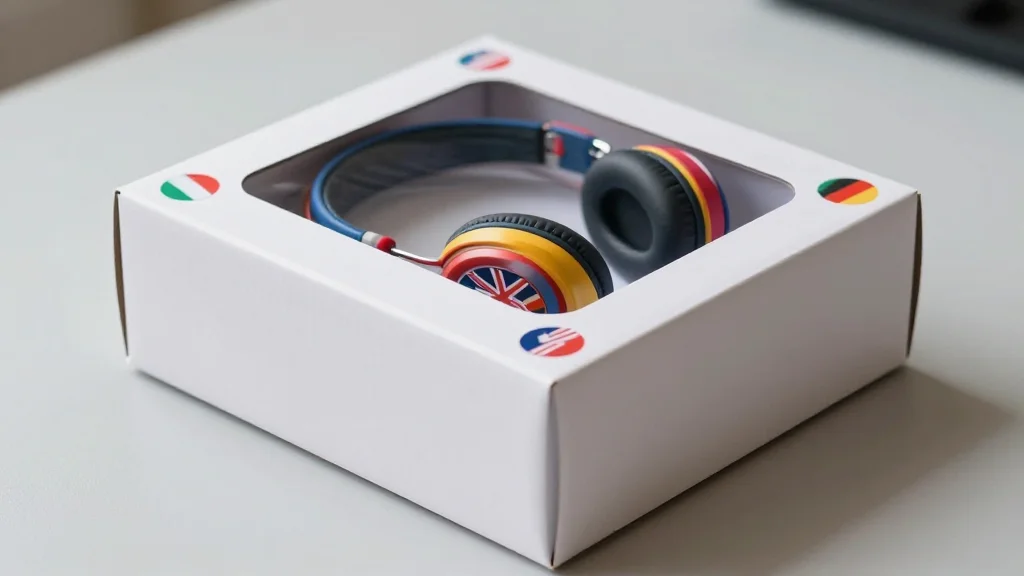
How E-Commerce Translation From Rapid Translate Helps Your Online Store Reach
Rapid Translate’s API‑driven platform lets e‑commerce merchants localize product data, UI strings, and SEO metadata in under 48 hours, turning language barriers into revenue. A recent Black Friday rollout localized 200 SKUs into Italian for roughly $1,200 and produced an extra $25,000...

Dina Foods Announces Nationwide Ocado Retail Partnership
Family‑owned Mediterranean specialist Dina Foods announced a nationwide partnership with Ocado Retail, launching its artisan flatbreads, sourdough pittas and handcrafted Baklawa on Ocado.com from April 13. The deal adds the Paninette® range, Tasty Goodness sourdough pittas and 200 g Baklawa packs to...
Amazon Bets $200 Billion on AI: Jassy’s Full Plan
Amazon CEO Andy Jassy announced a $200 billion capital‑expenditure plan for 2026, centered on AI infrastructure, custom silicon, satellite internet, and faster delivery. AWS AI revenue has hit a $15 billion annual run rate, propelled by contracts such as OpenAI’s $100 billion commitment....

Robotics Is Key to Lower Costs, Faster Deliveries, Says Amazon CEO
In his 2025 shareholder letter, Amazon CEO Andy Jassy highlighted robotics as a core lever to cut costs and speed deliveries. The company now runs more than 1 million robots in fulfillment centers and has acquired RIVR and Fauna Robotics to...