
A Dynamic Molecular Sunscreen for Perovskite Solar Cells
Researchers at Northwestern Polytechnical University introduced a photoisomeric molecule, BTTM, into perovskite solar cells, achieving a power conversion efficiency of 24.71% versus 22.07% for untreated devices. The additive anchors lead and iodide ions, suppressing migration and stabilizing the crystal lattice under ultraviolet exposure. After a cumulative UV dose of 5 kWh m⁻², BTTM‑treated cells retained roughly 90% of their initial efficiency, compared with only 60% for controls. Additional tests showed markedly improved longevity in nitrogen storage, underscoring the additive’s dual role in performance and durability.

Indonesia’s EV Transition Not Just to Cut Emissions, More So to Cut Oil Dependence, Study Says
Indonesia’s transport sector, long sustained by cheap fuel subsidies, now faces mounting fiscal strain as global oil prices surge. A new ICCT working paper highlights that fossil‑fuel subsidies consumed about 10% of the 2023 state budget while road transport accounts...

A History of OPEC: Why Its Crisis Is Bad News
The United Arab Emirates announced it will leave OPEC on May 1, arguing that the cartel’s production quotas limit its roughly 5 million barrels‑per‑day capacity. The move marks the first exit of a major producer since OPEC’s founding and underscores a shift...

Big Oil Pulls Back From Green Spending in 2025
A BloombergNEF chart shows that seven oil‑and‑gas supermajors cut low‑carbon investment by 65% in 2025, bringing total spend to $25.7 billion – the lowest level since 2019 and the first annual decline in eight years. The United States saw the steepest...

Solid Power (SLDP) Q1 Revenue Falls, But EV Battery Milestones Keep Growth Story Alive
Solid Power reported Q1 2026 revenue of $3.1 million, a roughly 50% year‑over‑year decline after the SK On line‑installation agreement hit its final milestone and closed the associated revenue stream. Net loss narrowed to $13.0 million, or $0.06 per share, helped by a...

Atlas Lithium (ATLX) Locks In Four Construction Partners for Its Brazil Lithium Mine
Atlas Lithium Corp. announced on April 27 that it has signed four Brazilian engineering and construction firms—Promon Engenharia, TSX Engineering, Cerne Construções, and RETC Infraestrutura—to begin building its flagship Neves lithium project in Minas Gerais. The contracts were awarded through...
Stardust Power (SDST) Secures a $150 Million Framework for Its Oklahoma Lithium Refinery
Stardust Power Inc. signed a non‑binding LOI with an institutional investor to provide up to $150 million of project‑level financing for its planned lithium refinery in Muskogee, Oklahoma. The flexible structure can be deployed as equity, debt or hybrid instruments and...

Daily Energy Report
Global gasoline exports have plunged after the Strait of Hormuz was shut, eliminating roughly 120,000 barrels per day that previously flowed through the chokepoint. The abrupt loss sparked localized shortages and nudged retail prices higher, although the overall gasoline market...

Regulatory Reform Is Headed for the Nation’s Largest Grid
New Jersey’s Board of Public Utilities announced a comprehensive review of the state’s century‑old utility business model, targeting a shift from capital‑intensive returns to performance‑based incentives. The move follows a 48% jump in residential electricity bills over four years, with...

Paper Mill Waste and Liquid Metal Combine Into a 96% Efficient Solar Absorber
Researchers have engineered a coating that blends paper‑mill lignin with gallium‑indium liquid‑metal nanoparticles, achieving 96% broadband solar absorption. The graded structure traps light and channels heat, raising surface temperature to about 75 °C under one‑sun and delivering a power density of...
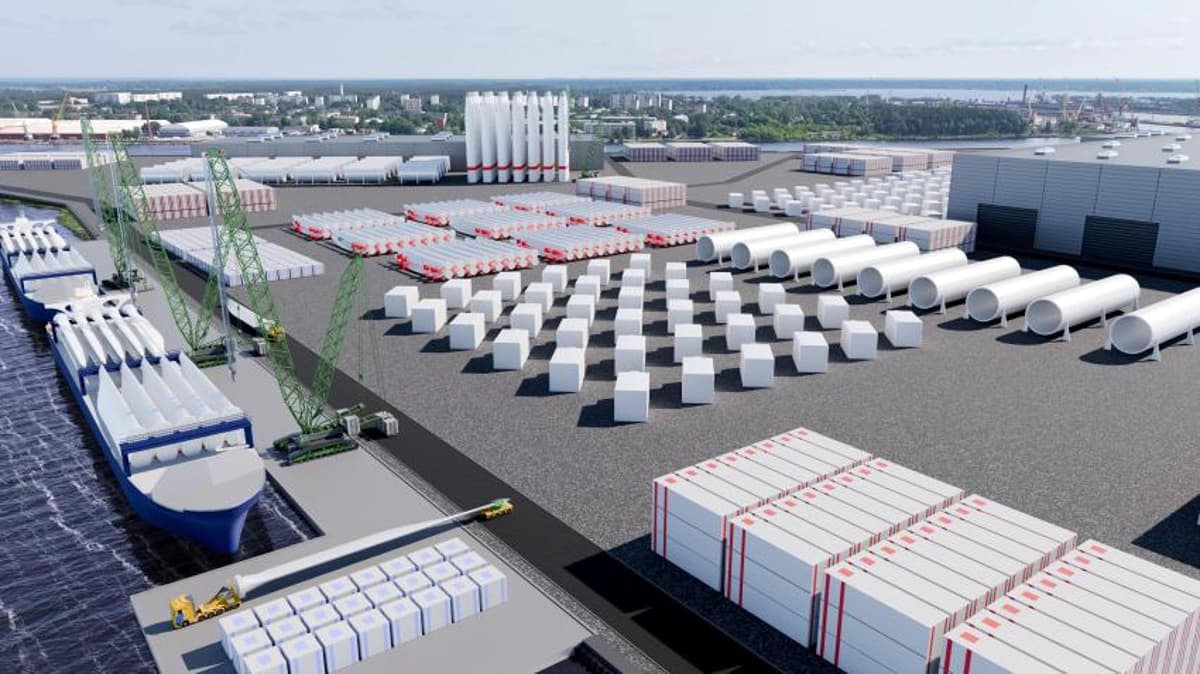
Port of Riga Secures Investors for Wind Technology Production Hub
Latvia’s Freeport of Riga has secured three international investors to develop a wind‑technology production hub on Kundziņsala, with combined private investment exceeding €700 million ($763 million) through 2034. The EU‑co‑financed project includes €86 million ($94 million) in public funding for port infrastructure such as...

Virginia’s Carbon Market Is a Wealth Transfer the Democrats Are Trying to Hide
Virginia is set to rejoin the Regional Greenhouse Gas Initiative (RGGI) in July 2026, reopening a carbon‑allowance market that could generate up to $1 billion a year in auction revenue. Recent RGGI auctions have cleared $25‑$28 per ton, with futures topping...

Funding Friday: Robots Want Fast-Charging Batteries
Cambridge‑based Nyobolt announced a $60 million Series C round that lifts its valuation to $1 billion, driven by ultra‑fast‑charging batteries that can reach 80 percent charge in under five minutes. The company is targeting data‑center and robotics customers, leveraging its niobium‑tungsten‑oxide anode for higher...

100 Free EV Chargers Installed In Saudi Arabia
Lucid Motors has installed 100 free public electric‑vehicle chargers across Saudi Arabia, joining a growing network of complimentary charging points at malls, workplaces, and supermarkets. The rollout leverages billions of dollars of Saudi Public Investment Fund backing and aligns with...

Trump Administration Violates Alaska Native Agreement, Sells Land to Oil Companies
In December 2025 the Trump administration’s Interior Department cancelled a 2024 right‑of‑way agreement that protected Teshekpuk Lake in Alaska’s National Petroleum Reserve, a deal originally secured by the Nuiqsut village in exchange for support of the Willow oil project. A...

Clean Energy’s Nickel Rush Is Heading Straight for some of Earth’s Richest Ecosystems – by University of Queensland (Phys.org –...
An international study led by University of Queensland researcher Jayden Hyman warns that meeting the surging demand for nickel—driven by stainless steel and clean‑energy technologies—will likely draw heavily on ecologically sensitive regions. By 2050, roughly half of the world’s mined...

Blowback Is Building Against Trump’s Cash-For-Quitting Offshore Wind Scheme
President Trump’s administration offered a $1 billion payout to TotalEnergies to abandon two offshore wind leases, marking a rare cash‑for‑quitting deal. The arrangement has sparked a wave of backlash, including a House Democratic inquiry, a California regulator probe, and a reevaluation...
4 Big Energy Stories - 5.8.2026: Another 'Above Average' Hurricane Season Looms as API Takes the Wrong Side on E15...
The American Petroleum Institute (API) is backing a bill that would make E15 ethanol fuel available year‑round, a move the author argues harms small refiners and offers no real environmental benefit. The proposal, sponsored by Rep. Michelle Fischbach, was rejected...

She Refused to Normalise Blackouts. So She Built a Home That Doesn't Need the Grid.
South Africa endured a record 332 days of load‑shedding in 2023, costing the economy roughly R2.8 trillion (about $150 billion). Similar grid failures have hit Texas, Spain and large parts of the U.S., highlighting systemic reliability risks. In response, entrepreneur Ansie van...

What the UAE’s OPEC Exit Means for the Global Energy Market
The United Arab Emirates announced its departure from OPEC, effective May 1, ending a five‑decade affiliation. The move reflects a decade‑long strategic pivot toward economic diversification and reduced reliance on hydrocarbon revenues. Abu Dhabi’s broader vision includes expanding non‑energy sectors and...

US Treasury’s “Economic Fury” Targets Iraqi Oil Official, Iran-Backed Terrorist Militias in Iraq
On May 7, 2026, the U.S. Treasury’s Office of Foreign Assets Control (OFAC) designated Iraq’s Deputy Minister of Oil, Ali Maarij Al‑Bahadly, and senior leaders of Iran‑aligned militias for facilitating oil smuggling that funds Tehran’s terror networks. The sanctions also...

State Action: AGs Warn Credit Rating Agencies on ESG-Related Fossil Fuel Company Downgrades
Twenty-three state attorneys general have sent a joint letter to Fitch, Moody’s and S&P Global demanding that the agencies stop using ESG criteria to downgrade fossil‑fuel companies and related state economies. The AGs allege the rating firms rely on undisclosed...

Clean Energy Technologies’ Vermont Renewable Gas Reaches MOU with State Agriculture Agency for Lyndon Biogas Facility
Clean Energy Technologies' affiliate Vermont Renewable Gas (VRG) has signed a Memorandum of Understanding with the Vermont Agency of Agriculture, Food and Markets to address agricultural safeguards for its proposed 2.2 MW renewable energy facility in Lyndon. The MOU, filed with...
Avangrid Brings Thousands of Sheep Back to Solar Sites in Oregon and Washington for Vegetation Management
Avangrid has deployed more than 5,000 sheep across four solar farms in Oregon and Washington to manage vegetation naturally this spring. The initiative, run with Krebs Solar Grazing and fifth‑generation rancher Cameron Krebs, expands a 2023 pilot into a full‑scale...

Tesla Semi’s Official Battery Capacity Leaked by California Regulators
A California Air Resources Board filing released in April 2026 confirms that Tesla’s Semi trucks use two battery sizes: an 822 kWh pack for the Long‑Range model and a 548 kWh pack for the Standard‑Range version. Both variants share the same lithium‑ion...

A Look at the Progressive Updating of Outage Plans for Queanbeyan BESS.
The Queanbeyan battery energy storage system (BESS) has been offline since its initial commissioning in October 2024, and the outage remains unplanned as of May 2026. Recent updates to the ez2view ‘Forecast Convergence’ widget reveal a series of staggered extensions to the...
Overlapping Planned Outages at Callide C3 and C4
CS Energy’s Callide power station is experiencing overlapping planned outages, with unit C4 offline until 27 June 2026 and unit C3 scheduled to return on 6 June 2026. The C4 shutdown, announced in early April, has already been in effect for several weeks, while...

One Day in Trump’s Iran War
President Trump’s administration faced a fresh legal defeat as a federal trade court declared his latest global tariff illegal, marking the second broad‑based tariff overturned this year. The ruling comes as Trump threatens the European Union with steep new duties...

Tesla Semi and Megachargers Costs Versus Diesel
Tesla unveiled two charging solutions for its Semi: the $40,000 Basecharger for modest fleet needs and the $188,000 Megacharger capable of 1,200 kW output. A hardware‑only cost analysis shows a 4‑truck electric fleet costs $1.23‑$1.35 M versus $760,000 for comparable diesel Cascadias,...

Labor’s East Coast Gas Reservation Copies Coalition Policy
The Albanese government introduced a 20% East Coast gas reservation on new contracts and spot cargoes, a policy that mirrors the Coalition’s pre‑election proposal. Resources Minister Madeleine King and Energy Minister Chris Bowen not only adopted the idea but added further provisions....

Lubricant Disruption Threatens Machinery Operation & Economic Upheaval; Chevron CEO Glazes US Low Risk (Not Low)
The United States imports roughly 44% of its base‑oil feedstock from the Persian Gulf, a critical component for all lubricants and industrial oils. Recent disruptions to that supply threaten to halt machinery, potentially sparking broader economic slowdown. Chevron’s CEO reassured...

Cuatro Claves Para Reducir La Dependencia Del Gas en México
A new NRGI report warns that Mexico’s structural reliance on natural gas—particularly imports from the United States—poses serious energy‑security, economic, and climate risks. The analysis argues that simply boosting domestic gas output will not solve the problem because the country’s...

Rally Stalls Into Friday Jobs Number
The market rally paused on Friday as traders braced for the upcoming non‑farm payrolls report, with the S&P 500 slipping and every major sector ending in the red. Yields on the 10‑year Treasury rose to 4.39%, pressuring small‑cap stocks like...

California Has Four to Six Weeks of Gasoline Left
The California Energy Commission reported that the state’s gasoline and diesel inventories are sufficient for four to six weeks of normal consumption. The data comes as the final tanker of crude oil from the Strait of Hormuz, which Iran shut...
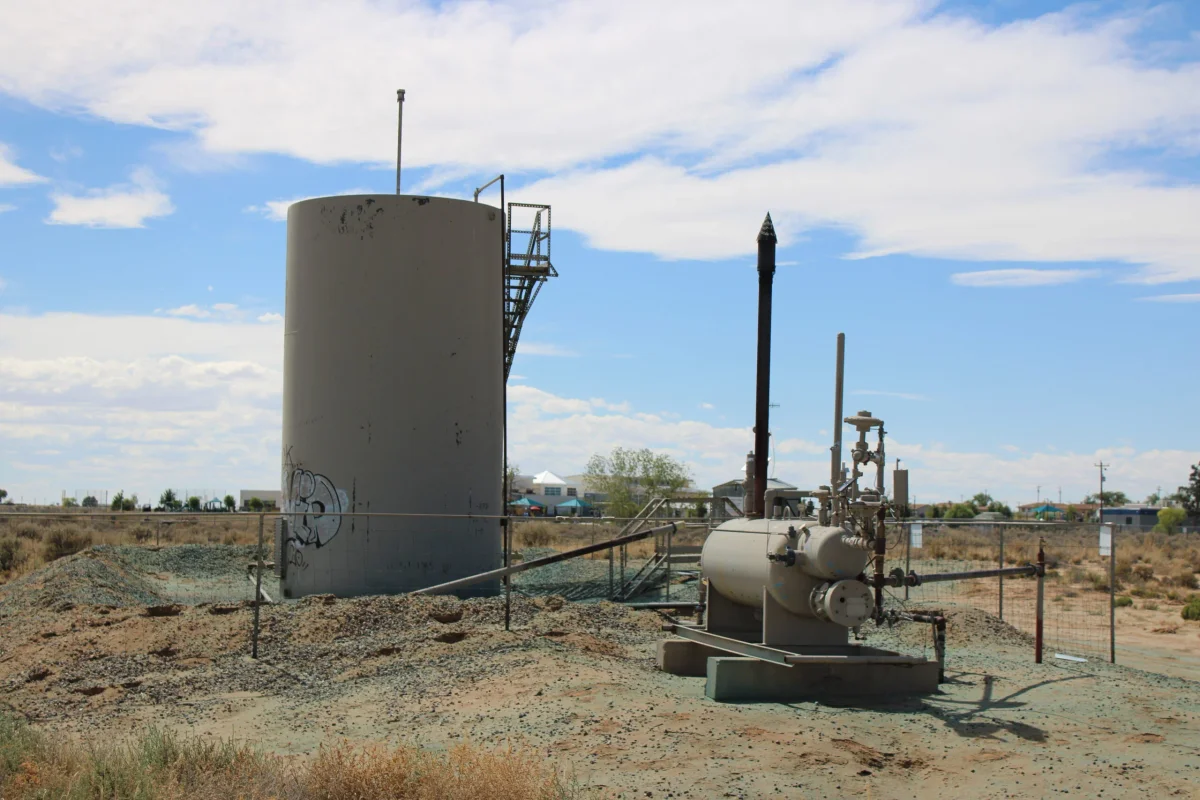
”It’s Deja Vu All Over Again”: How New Mexicans, Advocates Repeatedly Fight Back A Push to Allow Oil and Gas...
In February 2026 the New Mexico House Agriculture, Acequias and Water Resources Committee voted 5‑4 to table HB207, a bill that would have permitted the discharge of treated oil and gas wastewater into rivers, streams, and for uses such as...
Daily Energy Report
Global jet fuel exports slumped roughly 50% after the Strait of Hormuz was closed, triggering a sharp price spike and widespread flight cancellations. The supply shock compressed jet fuel demand and, by extension, overall oil demand. Data shows that several...

More Turbulence for Washington State’s Giant Wind Farm
The Horse Heaven wind farm in Washington faces renewed FAA scrutiny after Scout Clean Energy filed fresh airspace determinations, while the project’s tower count has been cut and heights increased amid ongoing litigation. In Utah, the Box Elder County commission...

What the ‘Eco Right’ Wants From Permitting Reform
Nick Loris of C3 Solutions argues that the emerging "eco‑right" sees the data‑center boom as a catalyst for sweeping permitting reforms. He advocates tech‑neutral, consumer‑first policies that streamline federal statutes such as NEPA, the Clean Water Act and the Endangered...

Trump Is Getting Away With Murdering an American Industry
The Trump administration is effectively halting new U.S. wind projects by using the Department of Defense to refuse the Federal Aviation Administration’s clearance, creating a de‑facto ban. The American Clean Power Association reports 165 wind farms—about 30 GW of capacity—are now...
Strait Of Hormuz: Spin and Win?
The United States and Iran recently announced a limited disengagement and a push to normalize civilian shipping through the Strait of Hormuz, coinciding with the May 1 expiration of the Pentagon’s 60‑day war‑powers authority. After declaring Operation Epic Fury complete, the...
![[COPY] Does the Market Need OPEC/OPEC+?](/cdn-cgi/image/width=1200,quality=75,format=auto,fit=cover/https://substackcdn.com/image/fetch/$s_!U0yT!,w_256,c_limit,f_auto,q_auto:good,fl_progressive:steep/https%3A%2F%2Fbucketeer-e05bbc84-baa3-437e-9518-adb32be77984.s3.amazonaws.com%2Fpublic%2Fimages%2Ff871be01-f761-4d21-9cd5-ffe117586429_188x188.png)
[COPY] Does the Market Need OPEC/OPEC+?
The article questions OPEC’s relevance after the United Arab Emirates left the cartel, arguing that OPEC’s governance differs from classic commodity cartels. It highlights the oil sector’s capital‑intensive nature, where sunk costs dominate and operating expenses are low. During prolonged...

SOHAR Port and Freezone Launches Energy Efficiency Guideline
SOHAR Port and Freezone, together with Oman’s Ministry of Energy and Minerals, unveiled an Energy Efficiency Guideline for industrial buildings. The framework provides a step‑by‑step methodology to assess performance, pinpoint inefficiencies and implement upgrades across cooling, lighting, ventilation and water...

U.S. Electricity Prices Keep Rising
U.S. electricity prices climbed 6.7% year‑over‑year in April 2026, with the 12‑month trailing average up 6.5% and regional spikes of 21%‑25% in New Jersey and Washington, D.C. The rise mirrors a five‑year trend driven largely by natural‑gas fuel costs. Meanwhile, political opposition...

Electricity Prices Went Up In April — But Not Because of Iran
Electricity prices in the United States rose 6.7% in April 2026 compared with the same month a year earlier, and the 12‑month trailing average climbed 6.5%. The increase follows a five‑year pattern of steady growth driven chiefly by natural‑gas fuel...

First Chinese Tanker Attacked Near Hormuz As Beijing Urges Waterway Reopened
A Chinese-owned refined‑products tanker was struck and set ablaze near Al Jeer port in the Strait of Hormuz, marking the first Chinese vessel hit in the three‑month U.S.–Iran conflict. The incident came as Iran escalated attacks on commercial ships following a...
5 Big Energy Stories - 5.7.2026: Oil Spills, Peace Deals, New Drills, and More
An apparent major oil spill was reported off Iran's Kharg Island early Thursday, though Tehran has not confirmed the incident or its source. The spill coincides with Iran’s recent practice of loading decommissioned tankers as on‑shore storage reaches capacity. Meanwhile,...

Nickel Demand to Grow on EV Shift, but Africa’s Global Production Share Remains Small
Global nickel demand is set to rise as electric‑vehicle and energy‑storage markets expand, with batteries already representing 13 % of consumption in 2023. Production surged 47 % from 2019 to 2023, driven largely by Indonesia’s rapid output growth. Africa, despite holding about...
Zimbabwe’s Oil Dream Takes Flight: Invictus Breaks Ground on Musuma 1 Wellpad
Invictus Energy announced that surveying and wellpad preparation for the Musuma 1 exploration well in Zimbabwe’s Cabora Bassa Basin are complete, and civil‑works tendering has begun. The company plans to drill a low‑cost vertical well targeting 1.2 trillion cubic feet of gas and...

The Oil Security Paradox: Every War Becomes an Oil Crisis in a Fossil-Fuel Economy
On March 10, 2026 Iran closed the Strait of Hormuz, removing roughly 20 percent of global oil trade and sending Brent crude above $120 a barrel. The shock rippled worldwide, pushing US gasoline to $4 a gallon and prompting emergency measures in over...

Natural Gas Prices Weekly Update – JKM, TTF and Henry Hub (7 May 2026)
Natural gas prices rose across the major benchmarks last week as geopolitical tension and supply constraints tightened markets. In Asia, the JKM index climbed to the low $18s per MMBtu after fears of a prolonged Strait of Hormuz closure. Europe’s...