
Should the Breadwinner Control the Budget? #money #marriage #debate #marketwatch
The clip discusses rising instances of women as primary earners and how couples can manage finances and respect when one partner brings in most income. Speakers argue the arrangement can work if both partners share goals, maintain responsible spending, and the non‑earning partner contributes through childcare or household management. Tension arises when the breadwinner feels disrespected by frivolous or risky spending, but alignment on priorities—like retirement accounts and child care savings—creates a multiplier effect for the household. Ultimately, success depends on finding a partner comfortable with and supportive of the breadwinner’s ambition.

Adam Grossman: Asset Allocation Is an Investor’s Best Defense
Adam Grossman, founder of flat-fee RIA Mayport and longtime contributor to Humble Dollar, argues that prudent asset allocation — not stock picking — is investors’ best defense. He built his firm around a fixed, flat-fee model because managing portfolios typically...

Why These Things Aren’t Worth Your Money (Feat. @ErinTalksMoney)
The video, hosted by Brent with guest Erin Talks Money, breaks down everyday expenses that drain wealth and offers smarter alternatives. They focus on four high‑visibility categories—food delivery, sports betting, whole‑life insurance, and luxury automobiles—while acknowledging a nuanced view of...

Why Millions of Borrowers Must Find a New Way to Pay Back Student Debt
The Education Department announced the termination of the SAVE repayment plan, giving borrowers 90 days to transition to a new system. The upcoming Repayment Assistance Plan, slated for July, will require at least $10 per month and a 30‑year repayment...

Lioness Jill Scott: I Should’ve Been Putting More Into My Pension
Former England Lioness Jill Scott said she initially treated pension contributions as a distant concern, likening them to something for her grandparents and preferring to spend money in her 20s. After retiring from a relatively short professional football career and...

He Had Everything. Then He Retired. (Don't Let This Happen to You)
A financial planner recounts a client who retired comfortably after selling his long-time employer’s business, enjoyed an initial period of travel, then slid into disorientation, loss of identity and social isolation once the daily structure of work vanished. Weeks turned...

2 Paths to $1,000,000
The video frames two routes to earning a living: traditional employment—working for a single employer—and self-employment or freelancing—serving multiple clients. The presenter urges viewers to keep an open mind about entrepreneurship and to experiment across roles to discover what work...
What Home Can You Afford? #shorts
Lenders typically estimate mortgage eligibility by applying income multipliers to household earnings, but the actual amount you can borrow also hinges on personal circumstances, outgoings and your credit report. A strong credit history not only increases the likelihood of loan...
Why Is Money so Hard with ADHD? A Financial Therapist Explains | Experts Answer
Dr. Christine Hargrove, a certified financial therapist, explains why ADHD creates a perfect storm for money management, from distorted time perception to emotional shame that fuels avoidance. She outlines practical steps—auto‑pay, unified due dates, reminder apps, and “bill‑paying buddies”—to break...

Unpacking the New Rules for 401(k) Catch-Up Contributions
The video explains new 401(k) catch‑up contribution rules effective 2026, focusing on high‑income workers over age 50. It details that the $8,000 catch‑up contribution must now be placed in a Roth account for employees whose prior‑year employer wages exceed $150,000...

Rising Food Prices Makes Growing Your Food More Important Than Ever
With rising oil prices driving up supermarket costs, the presenter argues that small-scale home growing is now a financially sensible response. He showcases a new project of six 3x1m raised beds (about 18 sq m total) built for roughly £86...

2 5x the Performance of Nvidia's Most Advanced GPU
Cerebras Systems says its first-generation wafer-scale engine (WSE-1), announced in August 2019 after years of development, delivered a dramatic leap in AI inference performance. The company claims its inference platform can run up to 15 times faster than competing GPU...

Superannuation Success: The Educational Impact of Compulsory Saving
Australia’s compulsory superannuation system, now about 35 years old and growing to an estimated A$7.5 trillion by 2035, has made Australians among the world’s wealthiest per capita and is shifting focus from accumulation to retirement services. As members approach retirement,...

How Writing a Letter to Your Future Self Can Save You Money
In a brief explainer, David Brancaccio highlights research from the Journal of Experimental Psychology: Applied showing that writing a letter to your future self creates psychological continuity that changes behavior. In the study, undergraduates who wrote to their future selves...

100 Doors. 35% Returns. Why He's Walking Away.
This episode follows Ray Smith’s dramatic pivot from a 100‑door single‑family portfolio yielding 35% annual returns to a strategic exit and shift into commercial real‑estate. After bankrupting ten properties in 2009, he leveraged a $500 private‑money course, convinced a friend...

He Invested Through Five Bubbles | Andy Constan on What Works — and What Always Breaks
Andy Constan outlines a framework for identifying and navigating bubble regimes, which progress from an initial change (tech, regulatory or monetary) to a normal bull phase, an escalation often aided by easing central banks, and finally a parabolic ‘bubble regime’...

Jim Bianco: The Hidden Risk in Private Credit
Market strategist Jim Bianco warns that private credit’s risks are underappreciated, noting the asset class has receded from the spotlight even as liquidity strains persist. His research shows more than 200 private-asset funds have imposed gates since 2009, often in...

What the Budget Means for Your Wealth (and Did Boomers Win?)
The Australian federal budget unveiled the most sweeping tax reforms in 25 years, targeting investment income with a flat 30% rate on capital gains, trusts and non‑super savings while leaving the owner‑occupied home and superannuation largely untouched. Labor frames the...

The Uncomfortable Truth About Index Funds
Index funds are a powerful, low-cost way for ordinary investors to access long-term market returns, notably the S&P 500’s roughly 10% annualized return since 1957 and the consistent underperformance of most active managers. But the video outlines four uncomfortable truths:...

The Long View: Bill Bengen - ‘Inflation Is the Greatest Enemy of Retirees’
Veteran researcher William Bengen discusses A Richer Retirement, his new book that updates and expands his landmark work on safe withdrawal rates. Using expanded historical asset classes — including microcaps, midcaps, international stocks and T-bills — Bengen’s back-tested “safe max”...
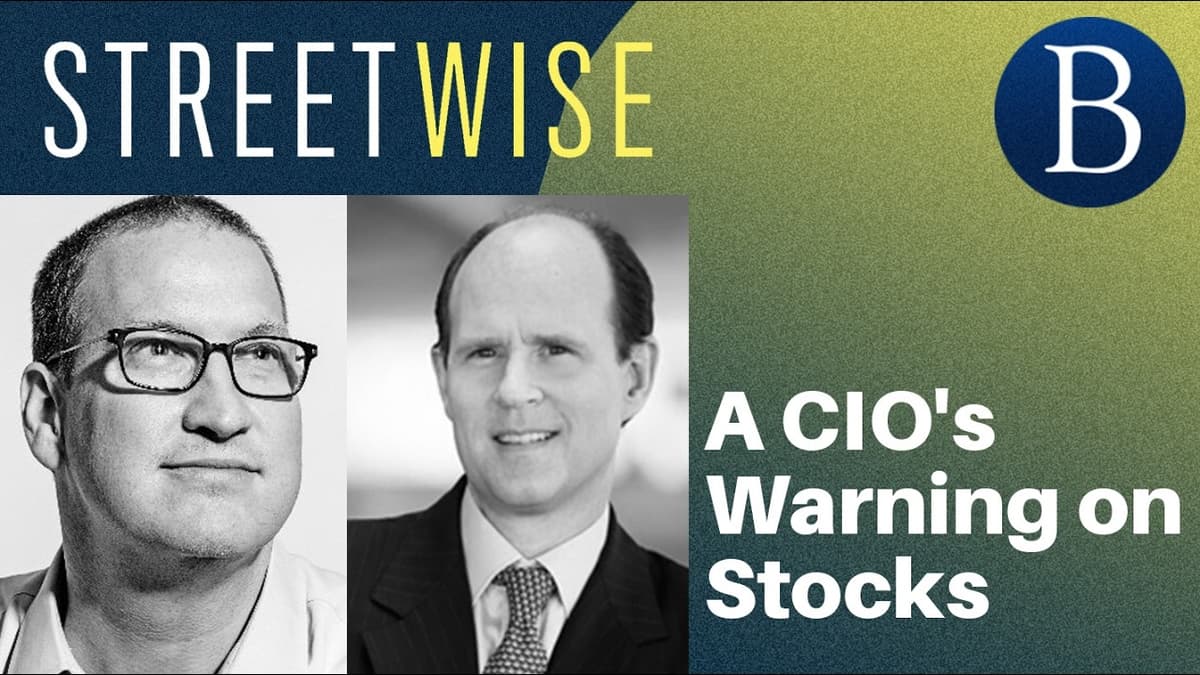
A CIO's Warning on Stocks | Barron's Streetwise
The Barron Streetwise podcast features Hurdle & Company CIO Brad Conger warning that today’s stock market may be overvalued. He explains the equity risk premium (ERP) – the extra return investors demand over risk‑free bonds – and shows it sits...
The Last Hedge Left in This Market
Mike McGlone, senior commodity strategist at Bloomberg Intelligence, argues that long‑term U.S. Treasury bonds, now yielding close to 5%, could serve as the market’s last hedge. With equities, gold, copper and crypto all flashing risk signals, the 30‑year Treasury acts...

Episode 533: Charles Schwab CEO Rick Wurster on The Power of Investing and Expanding Access
In a May 1 episode of the Inside the Ice House podcast, Charles Schwab CEO Rick Wurster highlighted the firm’s National Investing Day at the NYSE, underscoring a push to broaden financial literacy and market participation across the United States. Wurster argued that early...

How to LEGALLY Pay Your Kids Through Your Business (And What the IRS Thinks)
The Taxmart REI podcast explains how parents can legally employ their children in a family‑run real‑estate business to generate earned income and capture tax benefits. By hiring kids through a sole proprietorship or husband‑and‑wife partnership, owners can deduct the wages...

Four Reasons You Shouldn’t Refinance
A mortgage adviser warns that not every refinance improves your finances and outlines four clear situations to avoid it. Don’t refinance if your current rate is below about 4% to cover relatively small needs (use a HELOC instead), if you...

3 Things Saved America From Debt in 1946... All 3 Just Reversed.
Publicly held U.S. debt has topped 100% of GDP for the first time since 1946, rekindling comparisons to the post‑World War II era but with a crucial difference: the three structural tailwinds that enabled rapid debt reduction then have reversed....
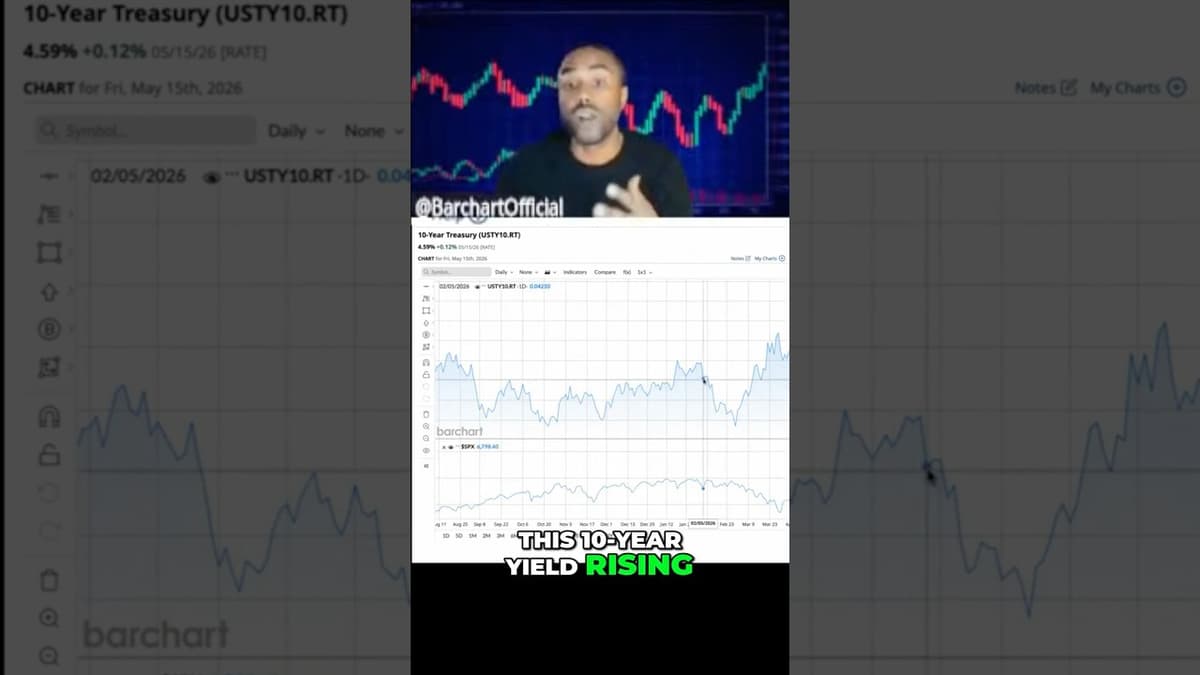
Stocks vs Bonds: Which Wins at 4.5% Yields? 🥊🆚🏛️ #Treasury #Yields
A market commentator highlights the recent rise in the 10-year Treasury yield to about 4.5% and examines its historical inverse relationship with the S&P 500, noting periods when higher yields drew capital away from stocks. Using price charts, the speaker...

The Budget Just Changed the Rules for Property Investors. What It Really Means | Dr Andrew Wilson
The May 12 federal budget overhauled Australia’s property‑investment tax regime, scrapping negative gearing for any property bought after the announcement and eliminating the long‑standing 50 percent capital‑gains‑tax discount. Existing holdings retain their current benefits until July 1 2027, but new investors will face a...

Chase Ritz-Carlton Credit Card: Still Worth Getting in 2026?!
The legacy Ritz-Carlton Card carries a $450 annual fee but still delivers material perks: an annual anniversary free night certificate up to 85,000 Bonvoy points (expires after 12 months), up to $300 annual airline incidental travel credit, Marriott Bonvoy Gold...

Nailing This Retirement Strategy Can Save You Many $1,000s
The video walks viewers through a systematic way to decide whether a traditional 401(k) or a Roth IRA will save the most taxes in retirement. It emphasizes the core comparison: the tax rate applied when you contribute versus the rate you’ll...

Financial Advisors React to MASSIVE Money Mistakes
The video brings together financial advisors who dissect common, costly money mistakes, ranging from overly long auto loans to misguided real‑estate purchases and career stagnation. They stress that many consumers finance cars for up to ten years, far exceeding the...

Spend Your Money & Time Wisely
In a brief Money Monday message, the speaker argues that money and time are the two primary resources people must learn to manage, emphasizing that both can be spent, wasted, or invested. He urges viewers to budget not only their...

The Best Small Business Tax Hack 🏦
With high earnings from a big year, exit or real estate sale, or a spouse’s employer benefits already maxed via Roth and HSA contributions, small-business owners can further reduce taxable income by making pre-tax retirement contributions. Options include contributing more...

S1E269: The Great Yield Shift: Why Banks Are Gaining Altitude as Reits Seek Grounding
The episode examines the widening performance gap between Singapore’s bank and REIT sectors as global interest rates stay elevated. Higher‑for‑longer rates are reshaping earnings dynamics: banks see net‑interest‑margin (NIM) expansion and robust loan‑growth, while REITs grapple with tighter yield spreads,...

Why Use a Factor Investing Model Portfolio?
Alpha Architect promotes factor‑investing model portfolios by emphasizing education, customization, and fiduciary care. The firm positions itself as a partner for advisors, whether they manage $1 or $1 billion, and seeks to demystify the investment process. When an advisor reaches out, a...
Stopping Poor Financial Decisions: Masters in Business with Sheila Bair
In a Bloomberg Masters in Business interview, former FDIC chair Sheila Bair discusses her unconventional path from philosophy graduate to top regulator and author, emphasizing the urgent need for financial literacy at every age. She recounts how a crash‑course in...

The Undeniable Math That Convinced Me to Go All-In on EVs | WSJ
The Wall Street Journal segment follows a family’s decision‑making process as they evaluate a second vehicle for city driving, using a detailed five‑year cost model to compare a used 2025 Nissan Leaf electric car with a hybrid Hyundai Elantra, a...

Second Home Loan vs Investment Property Loan 
The video explains how lenders treat a second‑home purchase differently from an investment property, affecting down‑payment requirements, interest rates, and overall loan cost. Misclassification can turn a personal getaway into a far more expensive investment loan. Key data points include a...

Solar Panels: An Energy Decision or a Financial One?
The video reframes residential solar panels from an environmental nicety to a financial instrument that can protect households from volatile energy prices and geopolitical shocks. Solar arrays generate daytime electricity, which can be consumed immediately or stored in batteries for use...

Holy Sh*t...Did The Bond Market Just Break!?
The video focuses on a dramatic 13‑basis‑point surge in the 10‑year Treasury yield, prompting the host to ask whether the U.S. bond market is finally “breaking” after years of fiscal warnings. He contrasts two prevailing theories: one that attributes rising...
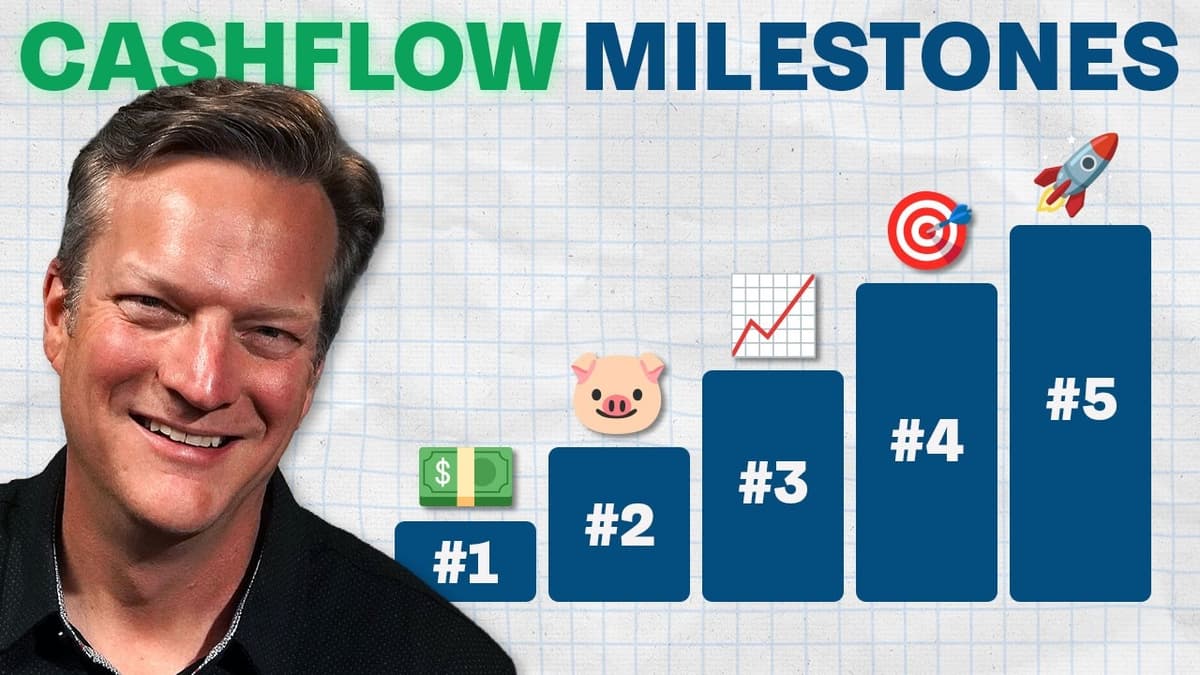
7 Cashflow Milestones Worth Celebrating (2026 Edition)
The video presents seven cash‑flow milestones designed to guide viewers toward financial independence, emphasizing behavioral changes over market conditions. It starts with the foundational step of becoming cash‑flow positive—spending less than you earn—before moving to incremental savings targets. Key insights include...

Bond ETF Flows Just Flipped. Here's What It Means for You
Investors poured a record $24 billion into ultrashort bond ETFs in March, only to withdraw $1.6 billion in April – the largest outflow in two years. The segment, which includes ultrashort, short‑term, and short‑term government bond ETFs, focuses on securities with...
Mad Money 05/14/26 | Audio Only
Jim Cramer opened the episode by dissecting the Cerebras Systems IPO, which opened at $350 and vaulted the company to a $17 billion market cap—roughly 111 times last year’s sales and briefly soaring to 230 times. He warned that the pricing...
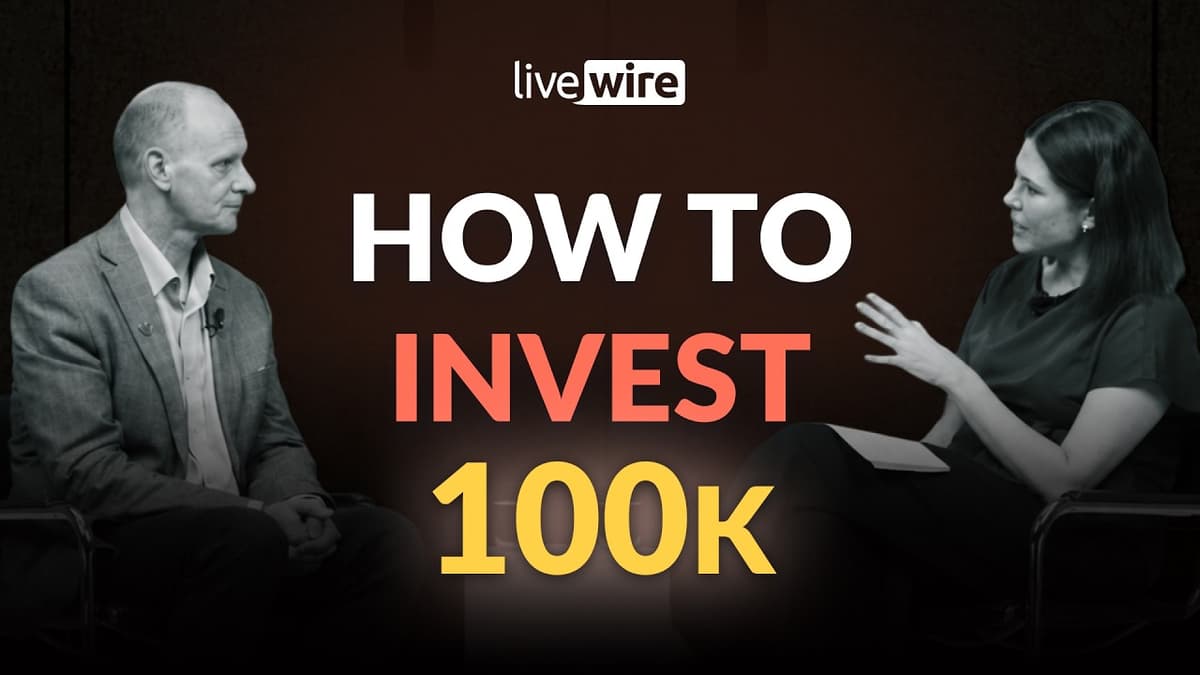
How to Invest $100,000 when Nothing Feels Certain
Livewire Markets host Anna Dadich and DP Wealth Advisory’s Andrew Wyland dissect how to allocate a $100,000 windfall amid stubborn inflation, rising rates, geopolitical tension, and rapid AI disruption. They stress that even in a turbulent backdrop, staying fully invested...

Stop Paying Off Your Mortgage (Do This Instead)
The video challenges the conventional wisdom of paying off a mortgage early, arguing that the financial rules that once made that strategy sensible have changed. Instead of asking a binary "should I pay it off?" viewers are urged to define...

The Stage | Carol Knight, CEO, TISA UK
Carol Knight, CEO of TISA (The Investing and Saving Alliance), says the trade body helps firms design savings and investment products and works with government and regulators to shape guidance and rules that improve customer outcomes. TISA is engaged on...

Did The IRS Illegally Charge You Penalties and Interest During COVID? How to Get Your $$$ BackBack
A recent legal ruling in Kuang v. United States found that Internal Revenue Code section 7508A automatically suspended federal filing and payment deadlines from Jan. 20, 2020 through July 11, 2023, meaning many penalties and interest assessments during that period...

We've Absorbed the Budget. Here's Where Property Investors Stand Now.
Metropole property adviser Michael Yardney says recent budget changes to capital gains tax and negative gearing won’t derail long-term property investment, arguing his firm never relied solely on tax deductions. He outlines a five-pronged wealth strategy—capital growth, leverage, rental growth,...

There Are Over 1.2 Million Retirement Millionaires (How To Become One)
There are more than 1.2 million retirement millionaires as of late 2025—about 654,000 401(k) millionaires and 559,000 IRA millionaires—underscoring how tax-advantaged retirement accounts compound wealth. The video explains key distinctions between taxable accounts, IRAs, and 401(k)s (including Roth options and...

Picturing an Older Version of Yourself Can Actually Help You Save Money
Marketplace’s David Brancaccio reports a 2011 Journal of Marketing Research study that finds visualizing an aged avatar of oneself can dramatically increase personal savings. In the experiment, participants who viewed a realistic rendering of their future self saved an average of...