Today's Personal Growth Pulse

NYT launches ‘Ask the Therapist’ column to democratize mental‑health advice
The New York Times introduced a weekly column called “Ask the Therapist,” written by psychotherapist and best‑selling author Lori Gottlieb. The feature invites readers to submit personal dilemmas, which Gottlieb answers with clinical insight, aiming to make professional mental‑health guidance accessible to a broad audience.

Secret of Adulthood: The Days Are Long, But the Years Are Short
Gretchen Rubin recounts how a simple observation on a school bus—“The days are long, but the years are short”—became her most quoted aphorism. The line, born from watching her daughter Eliza’s daily commute, captures the paradox of everyday fatigue versus the swift passage of life milestones. It has since proliferated across parenting forums, LinkedIn feeds, retirement speeches, and even the Netflix series *Queer Eye*, often without attribution. Rubin now features the phrase in her recent collection, *Secrets of Adulthood: Simple Truths for Our Complex Lives*.

Investing in Yourself Unlocks New Possibilities and Confidence
I actually remember the first time I invested in myself… I genuinely thought I was being irresponsible. Like, you want me to spend money to go to a conference? For what 😭 It literally took pulling teeth to get me there....

The Marshmallow Test Revisited: Turn Patience Into Profit
The blog revisits the classic Marshmallow Test to argue that wealth creation hinges on engineered systems rather than raw willpower. It highlights research showing environment and smart strategies trump discipline, and proposes high‑yield savings accounts (HYSAs) as a behavioral tool...

STOP APOLOGISING FOR BEING YOU
The piece urges readers to stop apologizing for their true selves and to unleash the inner fire that defines their purpose. It argues that owning one’s identity is essential for realizing a destiny of influence, leadership, and impact. The author...

Using Your Emotions as Tactical Alerts
The post reframes emotions as real‑time alerts that can be decoded like tactical intelligence. By naming a feeling, spotting its external trigger, and inserting a brief pause, you create a decision gap between impulse and action. It then recommends pre‑wired...

Pittsburgh Jewish Chronicle Links Parshat Shemini to Modern Intentional Living
The Pittsburgh Jewish Chronicle published a piece titled “Beyond the details: Finding meaning and intention in Parshat Shemini,” interpreting the biblical portion for modern readers and framing its rituals as a guide to purposeful living. The article positions the ancient...

Housatonic Valley Health District Launches Stress Awareness Newsletter with Mindfulness Tools
The Housatonic Valley Health District released its April 2026 Stress Awareness Month newsletter, delivering practical mindfulness and coping techniques to residents across western Connecticut. The public‑health guide emphasizes daily small steps, emergency flood preparedness, and broader health education, aiming to...

LV Longevity Lab Claims Up to 47% Cognitive Boost for Executives via Concierge Optimization
LV Longevity Lab in Las Vegas announced that its executive‑performance concierge service can raise cognitive processing speed by as much as 47% and decision‑making accuracy by 62% through evidence‑based optimization protocols. The clinic projects a potential annual ROI of $2.3 million...

Are We Saying One Thing and Showing Another?
Leo Bottary argues that the traditional triangle used to illustrate leadership reinforces a top‑down hierarchy that no longer fits modern organizations. He replaces it with a Venn diagram that positions leader, individual, and team as intersecting forces whose combined effort...

Loftie Launches Loftie+ Habit System to Cut Phone Use and Boost Sleep
Loftie introduced Loftie+, a subscription‑based habit‑change app that blocks phone use at night, offers a credit‑card‑sized NFC focus tool, and costs £9.99 a month. The service targets the 73% of UK 18‑24‑year‑olds who stay up later because of their phones,...

Leadership When There Is No Clear Answer
The article argues that effective leadership in today’s fast‑changing world hinges on judgment under ambiguity rather than waiting for perfect information. It cites real‑world examples—from global decisions at Fedders to rapid pivots at Haier—to illustrate how leaders must treat decision‑making...

Early Routines and Minimal Distractions Drive My Productivity
I am most productive with this system: - 5:30 AM wake up - Light mobility & cardio - 4 hours of focused writing - No phone usage in the morning - Only espresso & water until 11 AM - Meetings & calls only one day per...

Leaders Must Embrace Intellectual Humility Amid Uncertainty
I cannot stress enough - if you want to meet the moment as a leader today you MUST build some intellectual humility. We are all guessing about the future - some more educated than others but no one knows....

An Executive’s Survival Guide to Capital Projects
The article outlines seven leadership lessons for executives overseeing large‑scale capital projects, emphasizing independent validation of cost and schedule, early design‑contract integration, collaborative team structures, daily risk discipline, and proactive regulator and community engagement. It draws on insights from senior...

Stop Worrying, Embrace Life, Learning, and Growth
Do not use your energy to worry. Life is too short to worry about stupid things. Have fun. Fall in love. Regret nothing and do not let people bring you down. Study, think, create and grow. Teach yourself and teach others. —Professor Richard...

What It Takes to Build ‘Genius at Scale’
Harvard Business School professor Linda Hill argues that innovation depends on building a system where every employee’s "slice of genius" can be harnessed, not on occasional eureka moments. In her new book *Genius at Scale* she outlines three leadership roles—the...

From Entertainment to Influence: Why Smart Leaders Audit What They Watch
The article argues that leaders should treat media consumption like any other business metric, auditing what they watch and listen to. It explains how movies, shows, and music subtly shape executives' risk appetite, communication style, and decision‑making. By applying a...

How Leaders Can Become Truly Holistic
The article argues that holistic leadership is a state of being, not a checklist of courses or certifications. It defines leadership formation as an inside‑out process of self‑awareness, values exploration, and purpose discovery. Practical tools such as the “See‑Judge‑Act” framework...

Measure Sales by Revenue per Hour, Not Activities
I measure my selling day in revenue per hour. My blended target is $3,000 per hour, and on prospecting specifically I push for $10,400. Most salespeople track activities: calls made, emails sent, meetings booked. Those are inputs, and inputs don't pay your mortgage. Revenue...

The Human-Centric Leader
The article argues that today’s leadership crisis is a mindset gap rather than a lack of skills, with many executives failing to practice self‑awareness and empathy. It proposes a human‑centric leadership model that balances people and profit, especially in a...

Stop Seeking More Info—Choose Courage over Fear
You likely don’t need more information. You need to remember all the reasons to overcome whatever fear or friction holding you back from applying what you already know. Less content, more courage.
Adriana Midence Discusses Achievements and Advice as a Distinguished Leader Honoree
Adriana R. Midence was spotlighted as a Distinguished Leader by Jackson Lewis, where she shared insights on leading by example, prioritizing tasks, and meticulous attention to detail. The Daily Report interview highlights her extensive experience in employment law and her commitment...

Psychology Says the People Who Grew up Reading Books, the Kind Who Hid Under Blankets with a Torch, Who Read...
Psychology research shows that children who immerse themselves in fiction develop a richer inner life and stronger social‑emotional skills. Studies by Raymond Mar, Keith Oatley and colleagues link frequent fiction reading to higher empathy and theory‑of‑mind performance. Neuroscientists such as...

Uncontacted Tribes Reveal Secrets of Trust and Status
What can uncontacted tribes teach us about trust, status, and connection? Psychologist Guillaume Dulude treks into the wild to find out. Notes https://jordanharbinger.com/1318 Apple https://buff.ly/tPMb9Cf Spotify https://buff.ly/wCRqgBj Overcast https://buff.ly/Z1IRuIG

Self-Attunement for Trauma Survivors: Putting It Into Practice
Dr. Odelya Gertel Kraybill outlines a neurobiological self‑attunement protocol for trauma survivors, centering on a three‑step cycle—Observe, Notice, Respond. The model stresses repeated practice to rewire the nervous system and cultivate sustained regulation. Kraybill introduces the concept of “emergent life,”...

This Is How the Industry Can Develop the Next Generation of Leaders: Summit Place Founder Liz Miller
Summit Place Financial Advisors founder Liz Miller says the wealth‑management industry must overhaul talent development to meet the looming advisor shortage. Her boutique firm, managing about $325 million, spends the first two years training new hires on client‑facing skills before introducing...

Authentic Intent Drives Unlimited Impact, Says Oprah
It was wonderful to share the stage with @Oprah at this year’s @youtube Creator Summit and watch her inspire the next generation of storytellers. As Oprah built a global media empire, she stayed true to her roots: authenticity and trust....

8 Key Techniques to Boost Confidence and Become a Better Leader
The article outlines eight practical techniques for building confidence and strengthening leadership effectiveness. It emphasizes a growth mindset, clear communication, incremental goal setting, regular feedback, vulnerability, leading by example, continuous personal development, and celebrating achievements. Each method includes actionable advice...

10 Hacks Every Slack User Should Know
Slack remains a cornerstone of workplace communication, but its depth of features often goes untapped. The article outlines ten practical hacks—from creating custom sidebar sections and using slash commands to scheduling messages and leveraging AI‑driven note‑taking in Huddles. It highlights...

Sachin Tendulkar Urges Students to Shut Out External Pressures and Follow Their Purpose
At Andhra University's centenary closing ceremony in Visakhapatnam, Sachin Tendulkar urged students to silence external pressures and pursue their own purpose. The legend shared personal anecdotes and a framework for distinguishing internal from external pressure, positioning his advice as a...

Sabastian Sawe’s Sub‑Two‑Hour Marathon Shows Power of Mindset
Kenyan runner Sabastian Sawe shattered the marathon barrier by finishing in 1:59:30 at the London Marathon, becoming the first athlete to break two hours in a legal race. Sawe credited relentless competition, disciplined training and a focused mindset for the...

Ron Friedman Reveals Seven Practices to Build Ever‑Improving Superteams
Ron Friedman, author of a new Harvard Business Review feature, presents seven practices that enable any group to become a "superteam" that constantly gets better. The guidance draws on a survey of more than 6,000 knowledge workers and the Oklahoma...

Guard Your Cognitive Fitness Against Digital Distractions
Feeling drained at work? Maybe it’s time to protect your “cognitive fitness.” Our digital environments are making it harder for us to think and concentrate. According to Deep Work author, Cal Newport, we need “a full revolution in defense of thinking,” one...

Founders Can Thrive By Leaving Work at 5
In my 20’s, I used to work on Wall Street. People my age now (45) said they were working 70, 80, 90 hours a week for their families…but all their families actually wanted was their presence. They didn’t understand why their...

Former Waste Management CFO to Women: Don’t Wait for Perfect
Devina Rankin, who spent nine years as Waste Management’s chief financial officer, stepped down in November and now serves as an advisor before leaving the company. In a candid interview she urged women aspiring to finance leadership to abandon perfectionism...

Ethical, Measurable Goals Curb Recklessness and Build Skills
Goals and plans are powerful because they keep a guy from behaving recklessly. At the very least, they force him to act in a way that gets him closer to his goals than further away from them. That’s one of my...

Psychology Says People Who Reread the Same Five Books Every Few Years Aren’t Stuck, They’re Checking Which Version of Themselves...
Psychologists argue that rereading a handful of favorite books isn’t a sign of stagnation but a self‑administered diagnostic. By returning to the same five titles every few years, readers use the fixed text as a control variable to measure how...

One Scorecard, 45 Minutes, Multiple Companies
I run multiple companies from a single scorecard… …in under 45 minutes a week. I used to work 100-hour weeks. Always in meetings. Always the bottleneck. Till I learned my businesses run better without me in the weeds. That’s why I created...

Embrace Feelings, Let Go, Keep Moving Forward
Let It Go...Just Let It Go https://t.co/zX7Q2yt0Zv Life throws situations at us that we can’t turn off in our heads. Recognizing these feelings helps us understand ourselves and keeps us moving forward. @fsonnenberg https://t.co/IW8O8vk4Nr

Feeling Worse? It’s Actually Emotional Growth
Things that make you feel like you are getting worse, but are actually a sign you're learning how to regulate your emotions.

Stay the Course: Overwhelm Fades, Success Awaits
Don’t quit too early. I know it may seem too overwhelming right now, but trust me… it’s worth it. Crush it friend 👊💯

Meditation Uncovers the Innate Stillness Within You
Meditation is not about adding some thing. It’s about discovering what is already there - inside yourself - silence, stillness, awareness, peace. These qualities flow from that non-action part of you that "just is." Meditation is the great uncovering. https://t.co/LOm0U71gAs

Even Giants Can Pivot: Nokia’s Tire‑to‑phone Transformation
Nokia was a tire company before it became a phone company. A company is just a group of like-minded people on a mission. Nothing holds you back from becoming anything you want to be. The question is CAN you pivot?

Live by Your Own Moral Compass, Not Audience
Do not do things that you know are morally wrong. Not because someone is watching, but because you are. Self-esteem is just the reputation that you have with yourself. You will always know. —Naval Ravikant (@naval)

Scary Tasks Are Signals You Must Act Now
The biggest lesson that I have to keep reminding myself: If there's something you know you should do, but it scares you, it means you REALLY HAVE TO DO IT ASAP. True for everything from hitting "publish", checking the bank balance, scheduling...

Speak to One, Connect with All Through Eye Contact
Eye contact is the first step in the public speaking conversation. I define good eye contact as conversational eye contact. I genuinely consider myself speaking to one person at a time. When you’re truly connected with one person, everyone in...

Five Key Areas for a Balanced, Fulfilling Life
There are five things you can focus on in your life that will help you lead a balanced and fulfilling life. https://t.co/BWmNyPrCL2

Silicon Valley Thrived by Uniting Dismissed Entrepreneurs
Why did Silicon Valley succeed? Because it united all the entrepreneurs who were told by society they couldn't change the world. https://t.co/6X6WBHo1jI
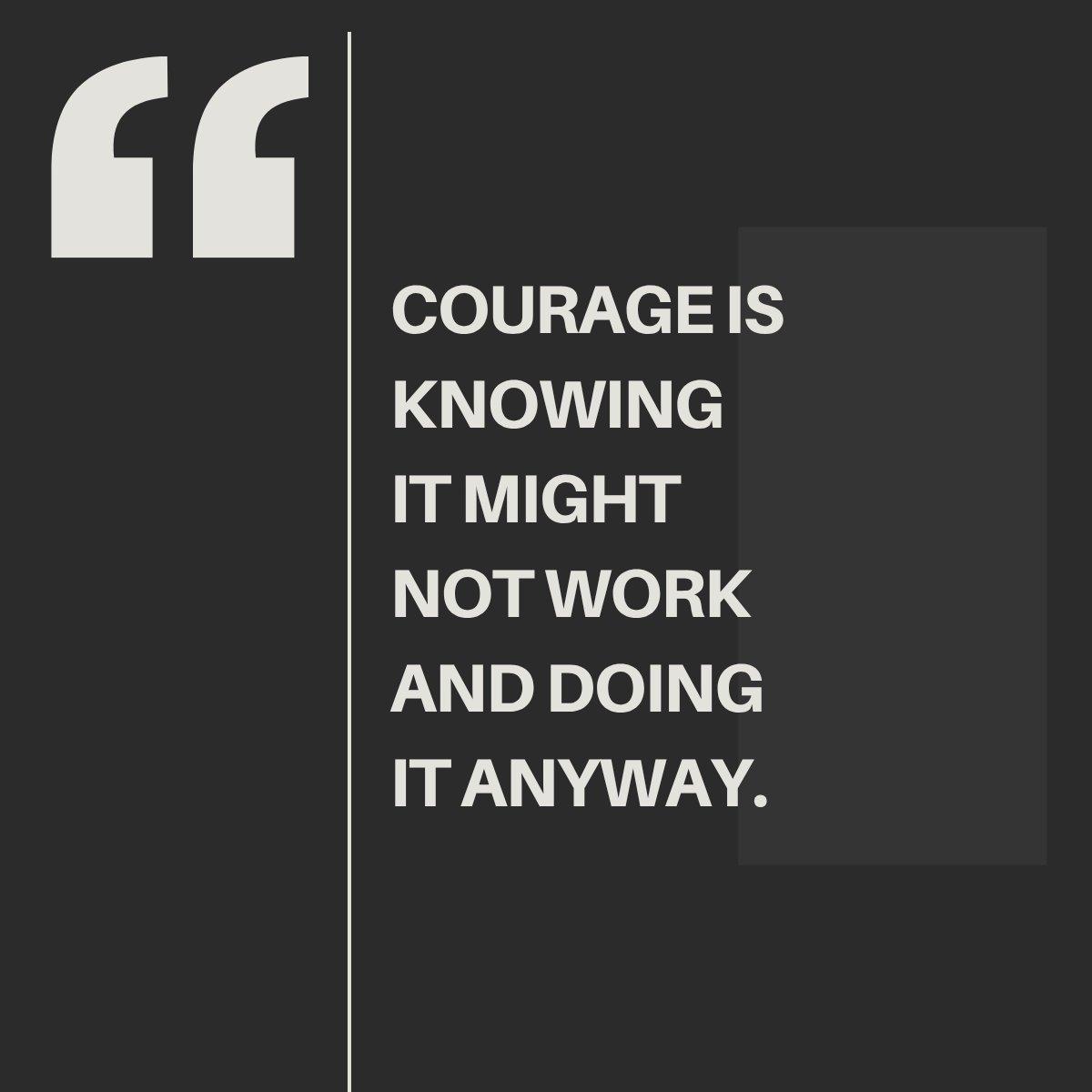
Act Despite Doubt: Growth Comes From Courageous Starts
Courage isn’t certainty—it’s action despite doubt. Trying a new process, speaking up, testing an idea that might fail… that’s where growth happens. You don’t need perfect timing. Start, learn, and build confidence along the way. 💥 https://t.co/AOCrr7Oyjc

Your Response Matters More than Any Setback
“Bad things happen to everybody. It’s not about the bad decision you made or the bad thing that happened to you; it’s what you do after that.” — Cathy Lanier Listen to my interview with Cathy Lanier: https://t.co/zxvxzw4szM