Today's Quantum Pulse
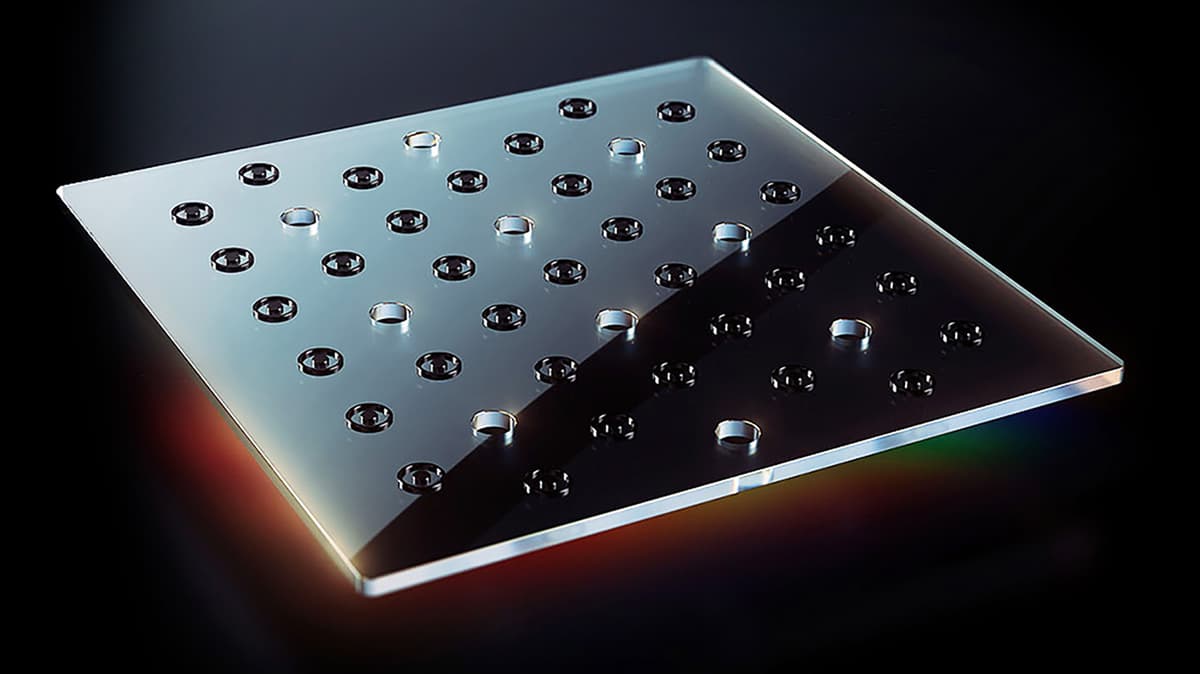
JPMorgan, OQC and AMD launch a hybrid quantum‑AI data centre in London
Oxford Quantum Computing, JPMorgan Chase and AMD announced a joint research effort to build a colocated quantum‑AI data centre in London. The facility will combine OQC’s Genesis quantum processor with AMD’s AI and high‑performance computing hardware to create a hybrid platform for finance‑focused workloads such as portfolio optimisation and quantum machine learning.

Quantum Models Now Simulate Complex Processes with Far Simpler Circuits
Researchers at Nanyang Technological University introduced quantum sequence models that use recurrent quantum circuits to generate coherent superpositions of stochastic processes. The new architecture achieves linear scaling of circuit complexity with simulation time, a stark contrast to the exponential growth of traditional quantum methods. Benchmarking shows distortion dropping from 1.06 to 0.108 with 500 training sequences and further to 0.042 using a two‑qubit recurrent memory, outperforming baseline quantum Born machines especially when data is scarce. The advance promises more accurate, resource‑efficient simulations for applications such as risk analysis and DNA sequencing.

Entangled Light Sustains Quantum Links Across Any Distance in New System
Researchers led by Sugar Singh Meena have devised a theoretical protocol that uses spontaneous parametric down‑conversion in circular arrays of nonlinear waveguides to generate multipartite continuous‑variable entanglement. The analytical solution proves full inseparability for any array whose number of waveguides...

Quantum Calculations Become Far Simpler with New Operator Weighting Method
Researchers led by Jialiang Tang introduced a weighted nested‑commutator (WNC) ansatz to approximate adiabatic gauge potentials using only local operators. The method expands the variational space, allowing more efficient optimization than traditional nested‑commutator approaches. Numerical tests showed dramatically faster preparation...

Complex Systems’ Long-Term Behaviour Now Accurately and Efficiently Simulated
Researchers from UC Berkeley, University of Michigan, Flatiron Institute and Lawrence Berkeley National Lab proved that simulating non‑Markovian Gaussian baths scales logarithmically with the inverse error tolerance, not with simulation length. The new bound O(log₂(1/(ω_c ε))) holds for zero‑temperature super‑Ohmic...

Xanadu Becomes 1st Pure-Play Photonic Quantum Computing Company to Go Public
Xanadu Quantum Technologies went public on Nasdaq and the Toronto Stock Exchange, raising $302 million in gross IPO proceeds. The listing also unlocks up to $288 million in Canadian federal and provincial funding and an additional $17 million from the Canadian Quantum Champions...

Google Pushes Post‑quantum Deadline to 2029, Warns of Quantum‑apocalypse
Google announced that it now expects quantum computers capable of breaking RSA encryption by 2029, accelerating the industry‑wide post‑quantum cryptography rollout to that year. The shift tightens timelines for governments and enterprises to adopt quantum‑resistant algorithms amid growing AI‑driven data...

Mid‑circuit Measurements Add Magic, Making Adaptive FLO Classically Hard
Measurement-induced non-commutativity in adaptive fermionic linear optics We show that mid-circuit measurements of fermions with internal degrees of freedom can induce the equivalent of "magic" to free fermionic circuits and render them classically hard to sample. https://t.co/r7rZBcyLHL Fermionic linear optics (FLO) with Gaussian...

Google Targets 2029 for Post‑quantum Authentication Rollout
Quantum cryptography now has a deadline. Google has announced that it has set 2029 as the year by which it will have migrated authentication services to post-quantum cryptography. Will it win the race to secure against quantum attacks before they...

Unlocking Scalable Entanglement Will Enable Next-Generation Quantum Computing
University of Central Florida researchers have demonstrated a scalable method to generate high‑dimensional topological photonic entanglement. By rearranging silicon photonic waveguide arrays, they entangle protected modes of superlattices without increasing system complexity. The approach yields robust, high‑capacity quantum states that...
Google PhD Fellowship Now Accepting Quantum Computing Applicants
Applications are open for the Google PhD Fellowship Program. A nice opportunity for graduate students working in quantum computing, computer science, and related areas. More info and application details (deadline April 30, 2026): https://t.co/OWucYQEO1p
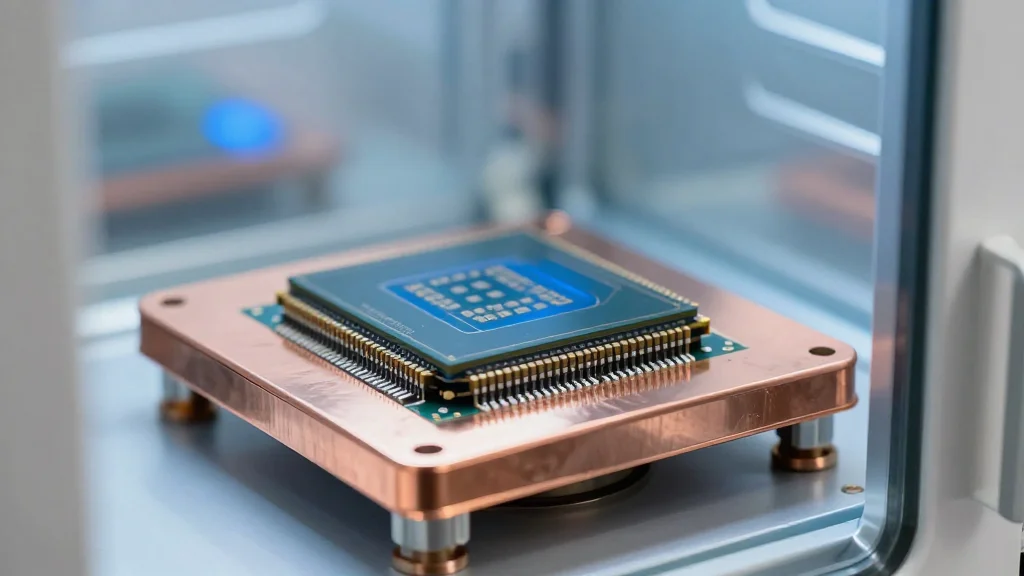
Dual‑Rail Superconducting Qubits Achieve Record‑Low Error Rates for Logical Entanglement
A team of scientists in Shenzhen, China, has built a superconducting processor that encodes each logical qubit across two physical qubits, delivering high‑fidelity logical entanglement with error rates lower than any prior dual‑rail implementation. The breakthrough addresses a long‑standing bottleneck...

New Randomized Measurement Protocol Estimates Arbitrary Nonlinear Quantum Observables Optimally
Optimal randomized measurements for a family of nonlinear quantum properties: We answer how non-linear quantities can be estimated with the same standards as expectation values in classical shadows. https://t.co/6e3fWUyL0p Quantum learning encounters fundamental challenges when estimating nonlinear properties, owing to the inherent linearity...

Programmable Superconducting Diode Can Flow on Command
Researchers at the University of Pittsburgh have created a programmable superconducting diode using the LaAlO₃/KTaO₃ (LAO/KTO) interface. By employing conductive atomic force microscope (c‑AFM) lithography, they can reposition the weak link to reverse diode polarity without altering the material. The...
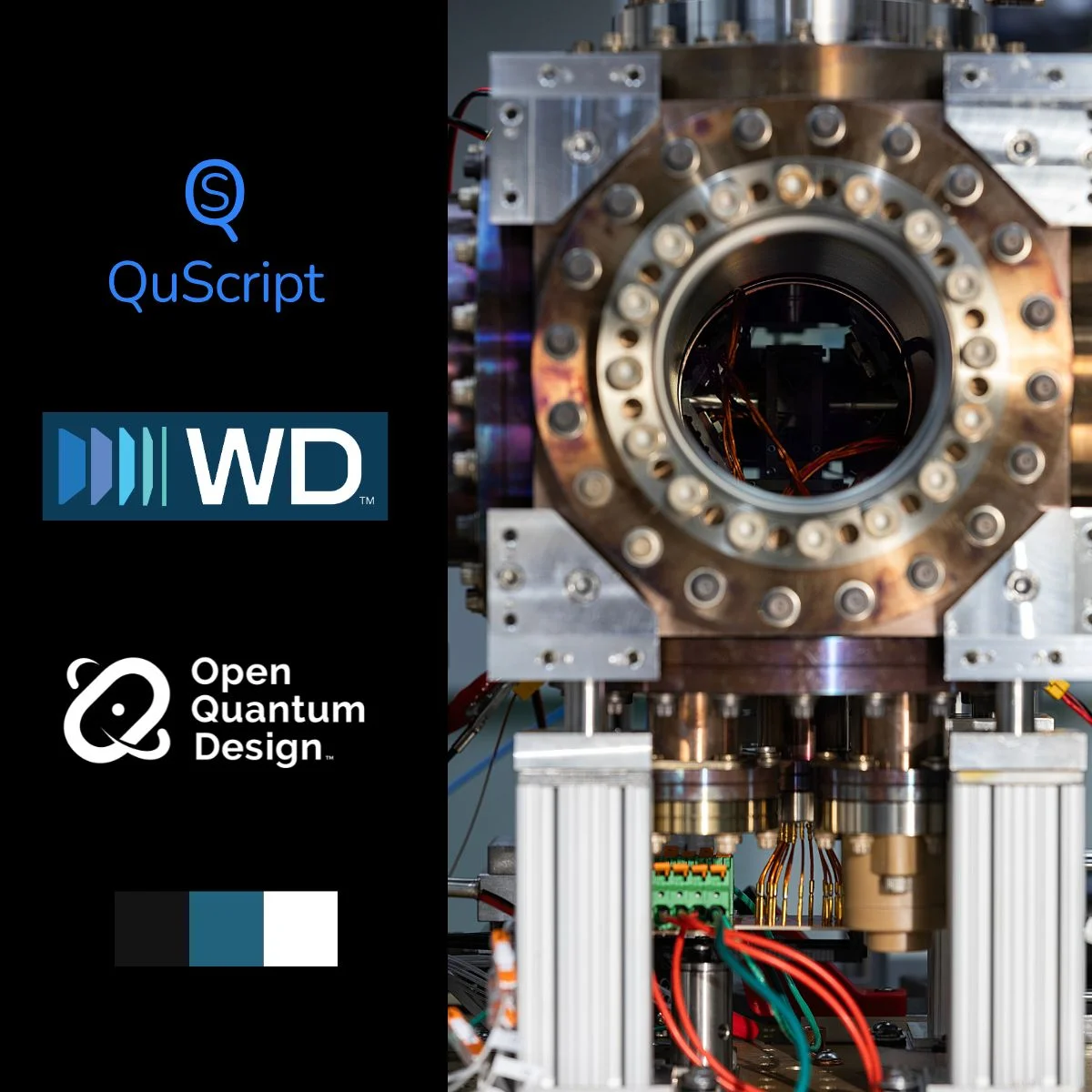
Open Quantum Design, Western Digital, and QuScript Form Open-Source Error Correction Working Group
Open Quantum Design, Western Digital, and QuScript have formed an open‑source Error‑Correction Working Group to build a full‑stack quantum computer prototype. The collaboration will integrate trapped‑ion hardware, decoder technology, and specialized algorithms to demonstrate quantum error correction (QEC) and create...
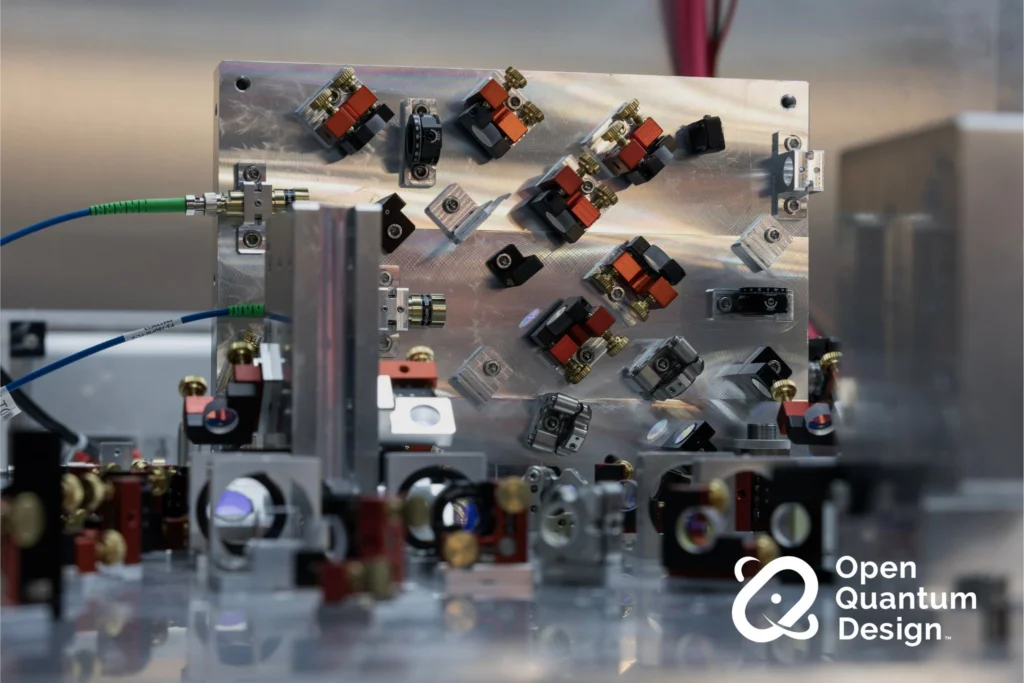
Open Quantum Design Launches Open-Source Hardware Repository for Trapped-Ion Quantum Computing
Open Quantum Design (OQD) has published an open‑source hardware repository on GitHub that contains detailed designs for its Blade Trap Assembly and Optical Circuit Boards, the core components of its trapped‑ion quantum computers. The release extends OQD’s open‑source strategy from...

IBM Quantum Processor Successfully Simulates Magnetic Material Dynamics
Researchers from the DOE Quantum Science Center and IBM used IBM's 50‑qubit Heron quantum processor to simulate the magnetic crystal KCuF₃. The quantum‑derived dynamical structure factors matched neutron‑scattering measurements from Oak Ridge and the Rutherford Appleton Laboratory, proving quantitative accuracy....

Cleveland Clinic and IBM Implement Quantum Workflow for Protein Simulation
Cleveland Clinic and IBM have demonstrated the first quantum‑centric supercomputing workflow that simulates a protein’s electronic structure. The team modeled the 303‑atom miniprotein Trp‑cage on an IBM Quantum Heron r2 processor linked to classical high‑performance computing. By using wave‑function‑based embedding to split...

IBM Quantum Computer Accurately Simulates Real Magnetic Materials
IBM announced that its 127‑qubit quantum processor successfully simulated the magnetic properties of real‑world materials, achieving 99% fidelity compared with laboratory measurements. The experiment reproduced the behavior of iron oxide at room temperature, a benchmark previously out of reach for...
Google Says Quantum Computers Could Break RSA by 2029, Raising Security Alarm
Google announced that a quantum computer with just one million noisy qubits could factor a 2048‑bit RSA key in under a week, shifting the industry‑wide “Q‑Day” deadline to 2029. The warning accelerates calls for rapid adoption of post‑quantum cryptography across...
Investors Boost Bets on Emerging Quantum-Computing Stocks as Sector Gains Traction
Investors are shifting capital toward two obscure quantum‑computing companies, spurring a surge in market attention. The move reflects broader enthusiasm for advanced‑technology sectors, even as detailed financials remain undisclosed.

Bitcoin Community Mobilizes Against Long‑Term Quantum Threat to Crypto Security
Bitcoin developers and governance bodies are racing to harden the network against a future quantum computer capable of breaking elliptic‑curve signatures. Proposals such as Pay‑to‑Merkle‑Root, the Hourglass mitigation, and post‑quantum hash‑based signatures aim to protect millions of BTC that could...
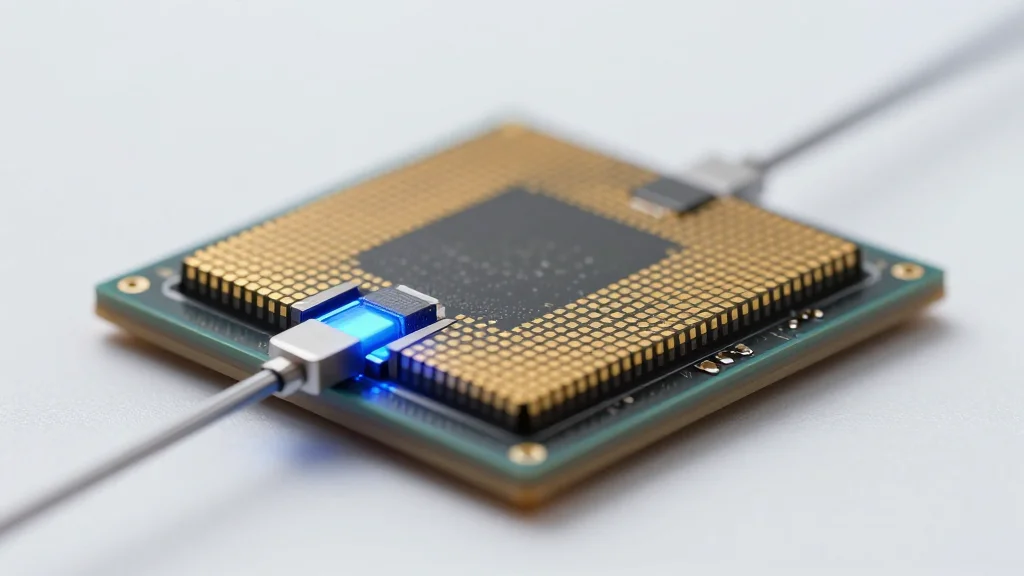
Silent Waves Launches Zephyr, a Traveling Wave Parametric Amplifier for Scaling Quantum Architectures
Silent Waves introduced Zephyr, a traveling‑wave parametric amplifier that integrates the microwave pump coupler onto the chip, eliminating bulky external directional couplers in dilution refrigerators. The design targets the spatial constraints of scaling quantum processors, enabling higher multiplexing—potentially up to...
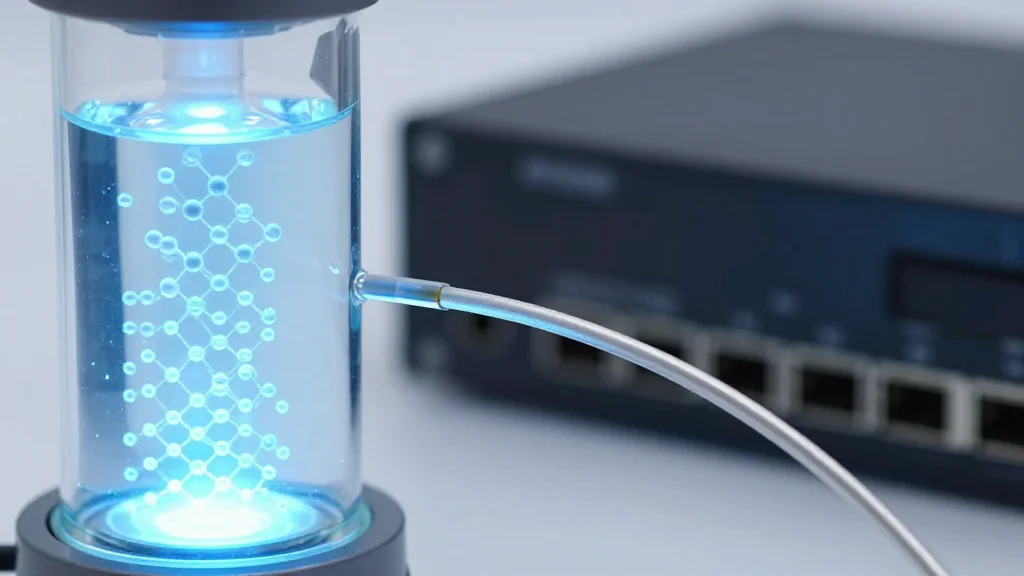
Atom Computing and Cisco Establish Collaboration for Distributed Quantum Architectures
Atom Computing and Cisco have signed an MOU to explore integrating neutral‑atom quantum processors into distributed quantum architectures. The partnership will combine Cisco’s quantum networking protocols and a network‑aware compiler with Atom’s 1,000‑qubit neutral‑atom platform, aiming to create a fault‑tolerant,...
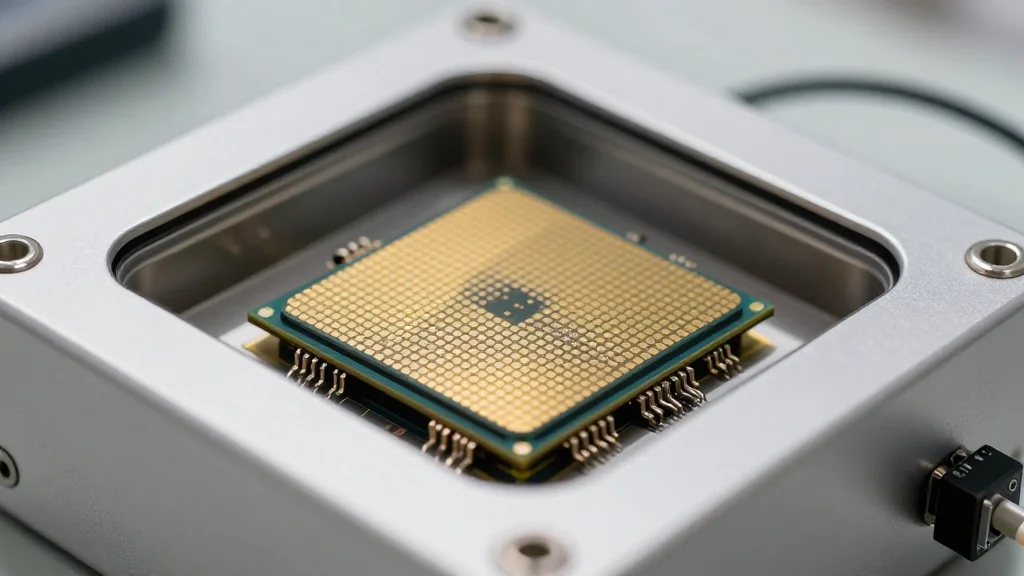
QpiAI Implements High-Speed Hardware Decoder for 64-Qubit Kaveri Processor
QpiAI unveiled a custom hardware quantum error correction decoder for its 64‑qubit Kaveri superconducting processor. The decoder employs a union‑find algorithm to implement a distance‑5 rotated surface code, requiring 49 physical qubits to encode a single logical qubit. It achieves...

Quantum-Centric Supercomputing Accelerates Future Computing Frontier
It was a great pleasure—and truly exciting—to moderate the “Key Dialogue Quantum Technologies” and to listen to the great and impressive talk “Transforming Computing with Quantum-Centric Supercomputing” by @jmchow. His talk at the #GCConference was a wonderful showcase of cutting-edge technology and the...
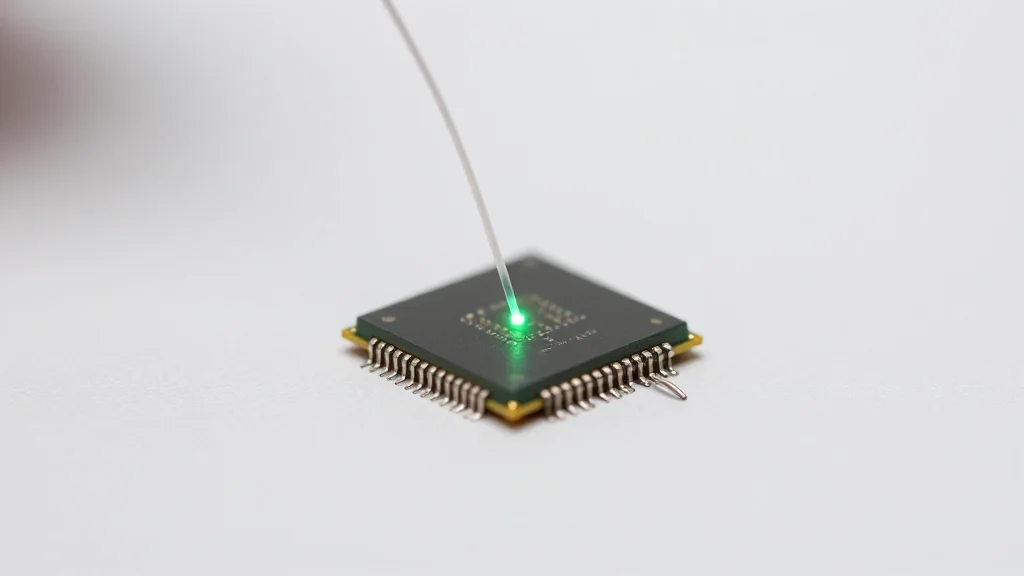
Electrically and Optically Controlled Silicon-Based Quantum Device Created by Simon Fraser University (SFU) Physicists
Simon Fraser University physicists, together with Photonic Inc., have demonstrated a silicon‑based quantum device that can be controlled both optically and electrically. The new diode nanocavity structure produces the first electrically‑injected single‑photon source using silicon T‑centre qubits, as reported in...

QpiAI and Alliance University Establish AU QUASAR Experience Center in Bengaluru
QpiAI and Alliance University have launched the AU QUASAR Experience Center at Alliance’s Electronic City campus in Bengaluru. The center houses QpiAI’s 8‑qubit superconducting QVidya quantum processor and the Explorer software, delivering on‑site quantum computing as a service. It aims to...

Fujitsu and University of Osaka Develop New Tech for Chemical Material Energy Calculations on Early-FTQC Quantum Computers
Fujitsu and the University of Osaka have unveiled a new technology that couples the third version of Fujitsu’s STAR quantum architecture with a novel molecular model optimization technique. The combined approach dramatically lowers the quantum resources needed for chemical energy...
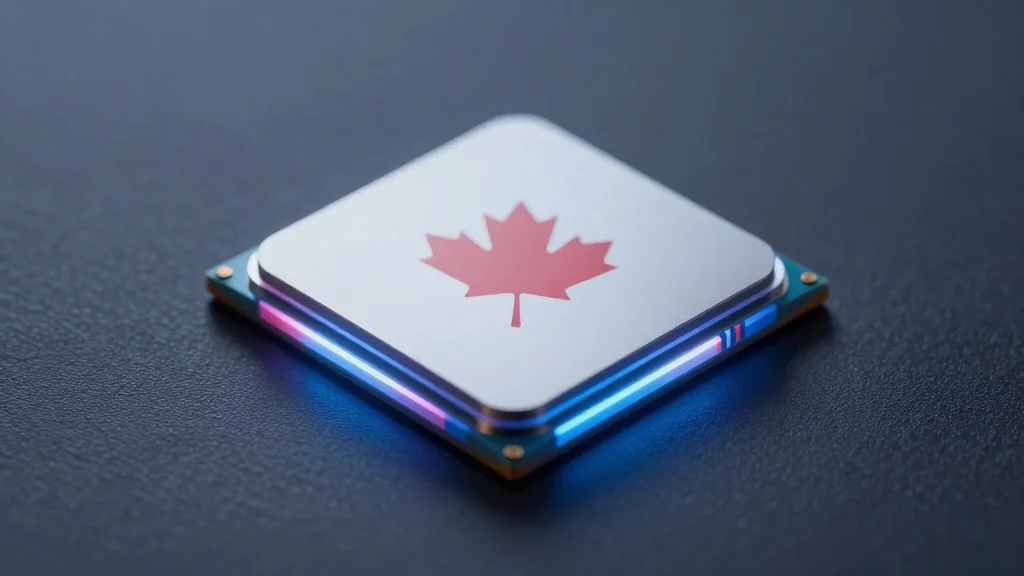
Canada and Norway Announce Quantum Research Pact; Details Not Disclosed
Canada and Norway have publicly announced a bilateral agreement to collaborate on quantum technology research. The announcement did not include specifics on funding, timelines, or participating institutions, and none of the supplied sources contain further information.

First PAC‑Bayesian Data‑Dependent Generalization Bounds for Quantum Models
A PAC-Bayesian approach to generalization for quantum models. We take steps towards non-uniform and data-dependent bounds for generalization of quantum machine learning models. https://t.co/czcmNpnD0q In detail, #generalization is a central concept in machine learning theory, yet for quantum models, it is predominantly analyzed...

Trump’s New Science Panel Is Stuffed with High-Tech Billionaires
President Donald Trump announced a new President’s Council of Advisors on Science and Technology (PCAST) dominated by high‑tech billionaires and AI specialists, naming 13 members with only one academic scientist. The roster includes Larry Ellison, Mark Zuckerberg, Jensen Huang, Lisa...

Bitcoin Security Under Scrutiny as Quantum Threat Looms and Developers Start Mitigation
A security report warned that Bitcoin’s elliptic‑curve cryptography could be vulnerable to future quantum computers, prompting core developers to begin post‑quantum mitigation work. The warning comes as Bitcoin rallied over 4% and the U.S. government’s $15 bn Bitcoin forfeiture draws renewed...

QC Ware and CQE to Co-Host Q2B X Chicago Quantum Summit
QC Ware and the Chicago Quantum Exchange are co‑hosting the Q2B26 × Chicago Quantum Summit from December 8‑10, 2026, at the Marriott Marquis and McCormick Place. The event merges Q2B’s business‑focused agenda with the Summit’s research and economic‑development emphasis, creating a full‑stack quantum...

Continuous-Variable Quantum Compiler for Optical Phase Learning
Researchers have built a continuous‑variable quantum compiler that learns optical phase operations using two‑mode squeezed light. By digitizing the analog process into a sequence of native gates, the system creates a quantum digital twin that delivers a 5.4‑fold boost in...

Building Superconducting and Neutral Atom Quantum Computers
Google Quantum AI announced the launch of a neutral‑atom quantum computing program to complement its decade‑long superconducting qubit effort. While superconducting chips have demonstrated millions of gate cycles and aim for tens of thousands of qubits, neutral‑atom arrays already scale...

Quantum-Resistant Cryptography Breakthrough: The Race to Secure Our Digital Future
Researchers at the Global Quantum Security Institute unveiled ShieldQ, a new lattice‑based cryptographic algorithm designed to resist attacks from both classical and quantum computers. The open‑source solution promises only a 15% performance overhead, making it viable for existing financial, cloud...

Atoms Linked to Light on a Nanofiber Promise Scalable Quantum Tech
Researchers at Waseda University and NICT have demonstrated a quantum interface that couples photons traveling in a 310 nm optical nanofiber to an array of about 155 individually addressable cesium atoms. The system achieves single‑atom trapping verified by photon‑correlation measurements with...

Neural Networks Simplify Quantum Error Correction, Reducing Decoding Complexity
Researchers at Germany's DLR have introduced a neural belief‑matching decoder for the toric quantum error‑correction code that dramatically lowers decoding complexity. By embedding a convolutional neural network within the belief‑propagation framework, the method reduces calls to the costly minimum‑weight perfect...

Inside DOE’s Genesis Mission to Power AI-Driven Science
The Department of Energy’s Genesis Mission is creating an integrated ecosystem that ties together supercomputers, artificial‑intelligence platforms and emerging quantum technologies across its 17 national laboratories. Argonne National Laboratory, leveraging its multidisciplinary CELS Directorate, is positioned to accelerate discovery through...

Quantum Simulations Target Real-World Industrial and Societal Challenges
The third session of the #QuantumTechnologies track at the #GCConference of the @BerlinUAlliance is dedicated to exploring how quantum simulation can address industrial and societal challenges. Stefan Kühn opens the session with perspectives on using quantum computers to tackle problems in...

Quantum Matters: D-Wave Explores Real-World Applications of Quantum Technology In A Podcast
D‑Wave, the pioneer commercial quantum computing firm, has launched the "Quantum Matters" podcast to spotlight real‑world quantum applications. Each episode features researchers, academics, and industry leaders discussing how quantum solutions are solving complex problems in sectors such as automotive manufacturing...

Quantum Data Storage Gains Stability with Fibre Optic Error Correction
Researchers at the Technical University of Denmark have quantitatively analysed an all‑optical quantum memory that stores a qubit in a fibre loop and stabilises it via teleportation‑based error correction. By optimising the syndrome decoder, they predict logical infidelity below 1 %...

Atoms Read Multiple Times Boost Quantum Computer Accuracy
Researchers at Caltech have demonstrated a suite of tools that enable repeated, high‑fidelity readout of neutral‑atom qubits using ancilla atoms, achieving 0.98 measurement fidelity after four cycles. The approach includes coherence‑preserving atom‑loss detection and a circuit‑based algorithmic cooling method that...

Rigetti Computing Develops Qubit-Efficient Algorithm for Combinatorial Optimization
Rigetti Computing secured a DARPA contract to advance quantum algorithms for optimization and unveiled a qubit‑efficient method that maps candidate solutions onto entangled wave functions, dramatically reducing the qubit count needed. The technique extends the quantum approximate optimization ansatz and...

Quantum Computing Meets AI at GCConference Kickoff
We had a great start to the #quantumtechnologies theme at the #GCConference, with two sessions. Christian Gogolin delivered an inspiring and insightful keynote on the use of quantum computers in quantum chemistry. This was followed by three eminent researchers who explored...

Post‑Quantum .NET Encryption Boosts Performance by Stripping Excess
Tonight was learning about post-quantum encryption in .Net & performance improvements by ditching ... well most everything 😆 https://t.co/LAUpVGDpiW
Google Announces Dual Quantum Computing Platforms
Big news of the day, at Google we are building both superconducting and neutral atom quantum computers. https://t.co/Q8fbzebAyu #quantum #atom #google

Google Quantum AI Launches Colorado Neutral-Atom Team
If anyone is left on quantum twitter, this is a BIG announcement from the @GoogleQuantumAI group on expanding their footprint in Colorado with a dedicated neutral atom quantum computing team. More details here: https://t.co/5NQduB6Fhm https://t.co/WU0ubqcGS5