Today's Quantum Pulse

JPMorgan, OQC and AMD launch a hybrid quantum‑AI data centre in London
Oxford Quantum Computing, JPMorgan Chase and AMD announced a joint research effort to build a colocated quantum‑AI data centre in London. The facility will combine OQC’s Genesis quantum processor with AMD’s AI and high‑performance computing hardware to create a hybrid platform for finance‑focused workloads such as portfolio optimisation and quantum machine learning.

Palo Alto Networks Launches Post‑Quantum Trust Security Platform
Palo Alto Networks introduced Next‑Generation Trust Security (NGTS), a network‑native platform that automates certificate lifecycle management and supports a mandatory 47‑day renewal cycle. The solution aims to eliminate outages caused by expired or non‑compliant certificates while preparing customers for post‑quantum cryptography.

Silicon Quantum Computing Receives $20 Million NRF Boost
Silicon Quantum Computing (SQC) secured a ~13 million USD investment from Australia’s National Reconstruction Fund to accelerate production of its silicon‑based quantum chips and the Watermelon quantum‑machine‑learning platform. The SAFE‑note funding follows a $50 million USD Series A round in 2023 and aims to scale...

New Supercool Alloy Could Take the Heat Off Helium-3
Chinese researchers have created a rare‑earth alloy, EuCo₂Al₉, that cools to 106 millikelvin using adiabatic demagnetization refrigeration, eliminating the need for scarce helium‑3. The solid‑state material combines ultra‑low temperature performance with high thermal conductivity, enabling compact, moving‑part‑free cooling modules. Laboratory tests...

Every Quantum Strategy Needs Solid Data Behind It
The article stresses that quantum‑focused strategies must be anchored in comprehensive, up‑to‑date data rather than intuition. It highlights the risks of “guess‑work” approaches, such as missed market shifts, supply‑chain shortages, and potential "quantum winter" during economic downturns. Global Quantum Intelligence...

Dell Technologies Integrates Quantum-Ready Security and AI Resilience Across Portfolio
Dell Technologies announced a portfolio‑wide security upgrade that embeds quantum‑resistant cryptography into firmware and BIOS across its commercial PCs and data‑center products. The company also introduced AI‑driven recovery tools in its PowerProtect line, delivering up to twice the backup speed...

Conductor Quantum Launches CODA MCP to Integrate Quantum Tools with AI Agents
Conductor Quantum unveiled CODA MCP, a Model Context Protocol server that lets AI agents such as Claude Desktop and VS Code treat quantum computers as native tools. The platform aggregates access to more than 1,000 qubits across IBM, AQT, IQM,...

IBM Creates New Blueprint for Quantum-Centric Supercomputing
IBM unveiled the industry’s first quantum‑centric supercomputing reference architecture, detailing how quantum processors (QPUs) can be tightly coupled with CPUs, GPUs, high‑speed networking, and shared storage. The blueprint supports on‑premises, research‑center, and cloud environments, enabling coordinated quantum‑classical workflows for scientific...

Wall Street Analysts Flag Rigetti and IonQ for up to 200% Upside
Mizuho and Rosenblatt analysts have lifted price targets on Rigetti Computing and IonQ, suggesting upside of 162% and 197% respectively. The bullish forecasts come amid volatile market swings and a surge of AI‑driven enthusiasm for quantum technology.

Bob Sorensen, Chief Quantum Analyst, Hyperion Research
In this episode, Bob Sorensen, Chief Quantum Analyst at Hyperion Research, explains how HPC centers should approach quantum computing by first identifying their most pressing workload pain points and quantifying the cost of inaction. He stresses building a business case...

IQC Showcases Research and Innovation During Defence Minister Visit
Canada’s Minister of National Defence, David J. McGuinty, toured the Institute for Quantum Computing’s Quantum‑Nano Centre at the University of Waterloo, underscoring a federal commitment to fund quantum technologies for defence. The visit highlighted direct government financing aimed at accelerating research,...

Issue 60 - Quantum of Promise
Quantum computing is moving from theory toward deployment as research labs and governments receive their first shipped systems. Issue 60 of DCD Magazine examines the pivotal moment in quantum chip design, where the industry is split between building dedicated superconducting processors...

Quantum Algorithms Optimise Highway Vehicle Pairings for Fuel Savings
Researchers at Volkswagen and Jülich Supercomputing Centre have introduced a Quadratic Unconstrained Binary Optimisation (QUBO) formulation to standardise the vehicle platooning problem. The study benchmarks classical heuristics—simulated annealing and tabu search—against quantum approaches such as quantum annealing and QAOA, showing...
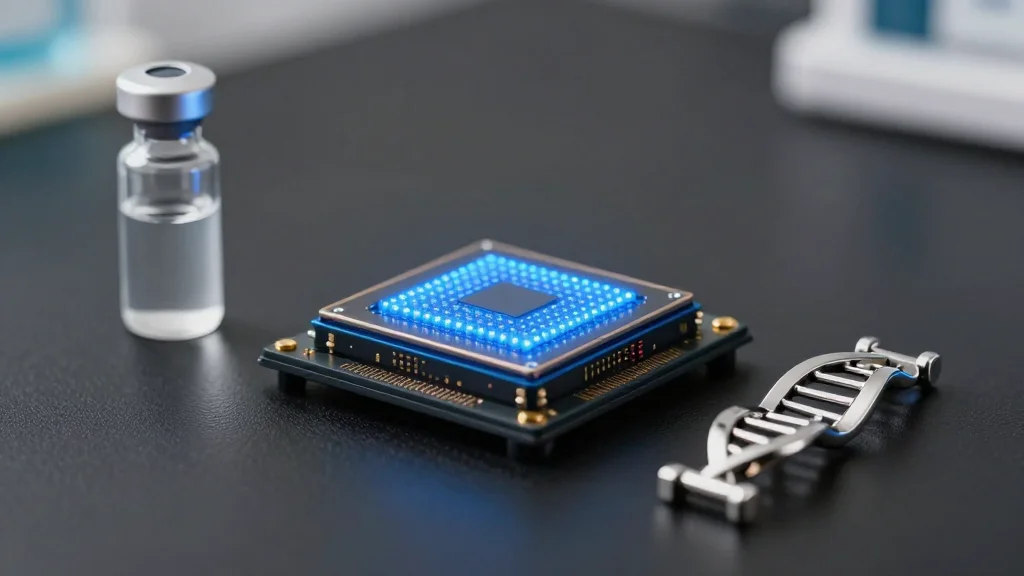
Quantum Computers Poised to Tackle Healthcare Challenges Soon
Can quantum computers now solve health care problems? We'll soon find out. | MIT Technology Review https://t.co/fQ3aSQxhdd
IBM Shares Double Over Three Years as Quantum Push Reignites Investor Confidence
IBM's stock surged 1.56% in early trading, marking a rebound after a 2026 pullback. Analysts cite the company's renewed emphasis on quantum computing as the catalyst, despite lingering concerns that AI could pressure short‑term earnings.

Quantum Computers Gain Speed with Network Achieving 100ps Synchronisation
Researchers at Fermilab and Stanford introduced XCOM, a full‑mesh network that synchronises Quantum Instrumentation Control Kit (QICK) boards to within 100 picoseconds and delivers sub‑185 nanosecond latency for deterministic data exchange. The system maintains long‑term stability without drift, supports up to five...

You Can Now Buy a DIY Quantum Computer
Barcelona‑based Qilimanjaro has unveiled EduQit, a DIY quantum‑computer kit that bundles a superconducting qubit chip, a dilution refrigerator, and the necessary microwave control electronics in a flat‑pack format. The company markets the system as a relatively affordable entry point for...

NQCC Announces UK’s £2 Billion Quantum Computing Investment
The UK government has announced a £2 billion ProQure procurement programme to accelerate quantum computing development. The initiative will solicit proposals from companies to deliver prototype quantum processors, with the most promising designs scaling into the national computing infrastructure. Building on...

AI Cuts Quantum Computing Steps for Complex 144-Qubit Codes
Researchers at University College London and Quantinuum introduced QuSynth, an AI‑driven method that converts graph representations of stabilizer states into quantum circuits with far fewer operations. By integrating reinforcement learning and Monte Carlo tree search, the technique reduces two‑qubit gate counts...

Quantum Computers Now Account for Realistic Error Types
Researchers at Sandia National Laboratories introduced a detector error model (DEM) that translates realistic coherent and non‑Pauli noise into a compact probabilistic framework. The technique enables Monte Carlo estimation of logical error rates and supports noise‑adapted decoding for fault‑tolerant quantum circuits....

Wall Street Undervalues Quantum Computing Leader as Investor Appetite Soars
Investors are pouring capital into a leading quantum computing company, yet analysts argue that Wall Street’s valuation metrics lag behind the sector’s growth potential. The disconnect highlights broader concerns about market pricing in high‑tech stocks.

IBM Offers Special Promotion to Open Plan Users
IBM announced a one‑time promotion for its Open Plan quantum‑cloud users, granting 180 minutes of free runtime over the next 12 months. Eligibility is limited to users who have consumed at least 20 minutes in the prior year, and the...

Planqc Partners with University and Industry to Tackle Complex Industrial Problems
planqc, Saarland University, BMW and Infineon have secured €2.3 million from the German Federal Ministry to launch the QIAPO project, a hybrid quantum‑classical effort aimed at industrial optimization. The initiative will use planqc’s neutral‑atom quantum computer to pre‑process complex problems in...
IBM Simplifies Access to Quantum Computing for All
Doubling down on open-access quantum computing | IBM #Quantum Computing Blog https://t.co/g1m7raN54Y >> Congrats - always good to see makitng it easy to evaluate / learn new technology - today it is @IBM. #NextGenApps
Canada’s NRC Allocates C$161M to Quantum Tech Within Broader C$900M Defense Plan
Canada’s National Research Council (NRC) is earmarking C$161 million over five years for quantum‑technology research as part of a broader C$900 million Defence Industrial Strategy. The funding targets quantum sensing, internetworking, and quantum‑safe communications, while C$28 million is set aside for biomedical counter‑measures...

Oxford Physicist Claims Quantum Computers Won’t Crack RSA, Citing 1,000‑Qubit Limit
Tim Palmer, a physicist at the University of Oxford, published a PNAS paper proposing “Rational Quantum Mechanics,” which caps quantum computing capacity at roughly 1,000 qubits. The limit, he says, prevents quantum algorithms like Shor’s from outperforming classical machines, keeping...

ML and Quantum Computing Unite for Next‑Gen Drug Discovery
#compchem #machinelearning #quantumcomputing New preprint: "The Convergence Frontier: Integrating Machine Learning and High Performance Quantum Computing for Next-Generation Drug Discovery". @qubit_pharma https://t.co/4D23DV0uAk

Team Unveils Probabilistic Silicon Primitives After Herculean Effort
Absolute herculean effort by the team. Excited to share more about some of our probablistic primitves in silicon.
Galaxy Digital Says Quantum Risk to Bitcoin Is Real but Not an Existential Crisis
Galaxy Digital’s research chief Alex Thorn warned that roughly 7 million Bitcoin – about $470 billion at current prices – could be exposed to a future quantum computer, but he said the threat is long‑term and not imminent. The report outlines a...

Quantum Simulations Feed Classical AI with Electron Data
Chi Chen and Matthias Troyer at @Microsoft propose using quantum computers to generate data on electrons, which can then be used to train AI models on classical machines. https://spectrum.ieee.org/quantum-chemistry

Post-Quantum Web Could Be Safer, Faster
The IETF’s draft Merkle tree certificates (MTCs) promise a quantum‑resistant web that is both smaller and faster than existing post‑quantum solutions. By compressing certificate data to roughly 840 bytes, MTCs cut bandwidth and latency compared with ML‑DSA signatures that can exceed...
Qilimanjaro Announces SpeQtrum QaaS for Tri-Modal Quantum Computing
Qilimanjaro Quantum Tech unveiled SpeQtrum QaaS, a cloud‑based platform that grants remote access to a Barcelona data centre housing digital QPUs, analog fluxonium QPUs, and classical HPC accelerators. The tri‑modal architecture blends digital gate‑based processing with continuous‑dynamics analog computation to...

BTQ Launches First Working BIP 360 on Bitcoin Quantum Testnet, Sparking Market Reaction
BTQ Technologies announced that its Bitcoin Quantum testnet v0.3.0 now runs the first working implementation of BIP 360, a quantum‑resistant Pay‑to‑Merkle‑Root output type. The rollout, backed by over 50 miners and more than 100,000 blocks, triggered a 7.12% drop in...

Alice & Bob Reduces Quantum Error Correction Decoding Time via NVIDIA CUDA-Q Integration
Alice & Bob announced a 9.25× speedup in quantum error‑correction decoding by moving simulations from a 16‑core AMD Ryzen CPU to an NVIDIA GH200 Grace Hopper GPU using the CUDA‑Q platform. The runtime for 100,000 syndrome‑decoding shots fell from 18 hours 2 minutes...

Bennett and Brassard Win $1 Million Turing Award for Quantum Cryptography Breakthrough
IBM physicist Charles H. Bennett and Université de Montréal computer scientist Gilles Brassard have been awarded the 2025 ACM A.M. Turing Award, a $1 million prize funded by Google, for their 1984 BB84 quantum‑key‑distribution protocol and foundational work on quantum teleportation....

Quantum Computing Deep Dive Begins at MPE2026 with QuSecure
Been looking forward to this. Serious session on quantum computing at #MPE2026 kicking off with Rececca Krauthamer from QuSecure https://t.co/JcOtrlMUnE
U.S. Department of Energy (DOE) Announces “Genesis Mission” Which Includes a Goal to Accelerate Quantum Advantage via AI
The U.S. Department of Energy launched the Genesis Mission, a $293.76 million initiative spanning thirty challenge areas to fuse artificial intelligence with quantum information science. Challenges 7 and 8 specifically aim to use AI to discover provable quantum‑advantage algorithms and to enhance the...

Exploring the Path to Quantum Advantage at Kavli Symposium
I'm looking forward to the Kavli Symposium tomorrow at the APS Global Physics Summit, where I'll speak about "The Road to Quantum Advantage" https://t.co/PVExMVwgFr

Technology Innovation Institute Integrates Quantum Cloud with NVIDIA CUDA-Q and Scales Annealing Simulations
The Technology Innovation Institute (TII) has linked its Quantum Computing Cloud Platform with NVIDIA’s CUDA‑Q environment, giving researchers worldwide direct access to TII’s quantum processors and simulators via a unified Python or C++ interface. The integration delivers a “write‑once, run‑anywhere”...
Quantum Pioneers Bennett and Brassard Win Turing Award, First for Quantum Cryptography
IBM physicist Charles H. Bennett and University of Montreal computer scientist Gilles Brassard have been awarded the 2025 ACM A.M. Turing Award, sharing a $1 million prize. Their 1984 BB84 protocol is recognized as the first quantum‑secure encryption method, a milestone...
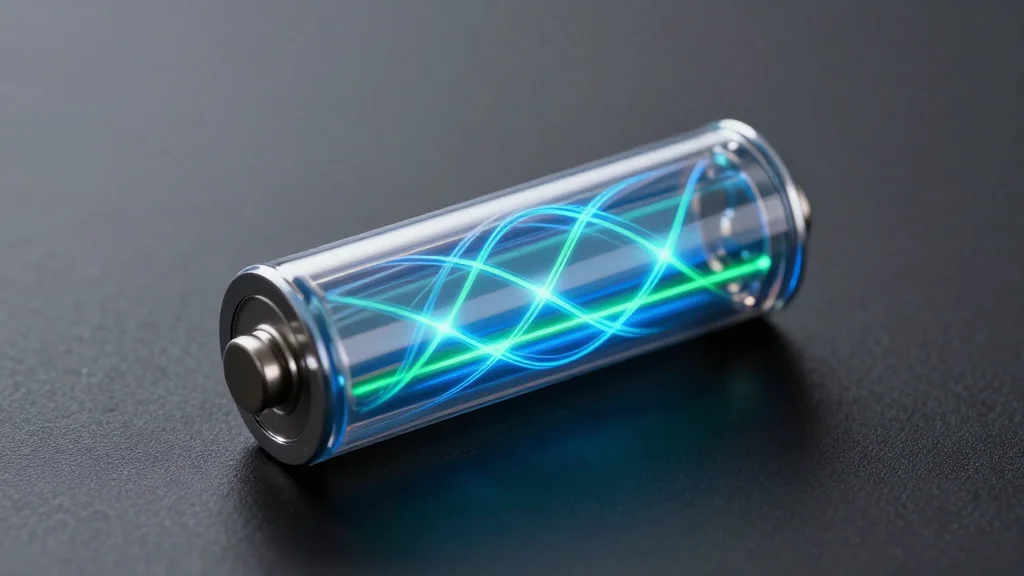
Xanadu Introduces Quantum Algorithm for Battery Materials Simulation and Analysis
Xanadu Quantum Technologies, together with the University of Toronto and the National Research Council of Canada, unveiled a fault‑tolerant quantum algorithm that simulates resonant inelastic X‑ray scattering (RIXS) for lithium‑rich cathode materials. The pre‑print demonstrates that the method can model...

Nvidia Accelerates Quantum Research with GPU‑Coupled Platform
@Nvidia is moving ahead with their Quantum computing efforts, after their 2024 remarks which stir a big debate. I got a lowdown of what’s latest from #GTC2026 expo today. #GTC26 #GTC @NVIDIAGTC @NVIDIAAI @NVIDIAAIDev @furrier @dvellante @MarshaCollier @Scobleizer RELATED INFORMATION: _________________________ NVIDIA Quantum...

Smart Money Targets Quantum Computing for Future Growth
The Smart Money In Quantum: Where Leaders Are Investing Attention, Talent And Capital by @pravirmalik @Forbes Learn more: https://t.co/RnpmK1CgnV #QuantumComputing #EmergingTech #Technology #Innovation #Tech https://t.co/K5WXGxVERl
Bennett and Brassard Win $1 Million Turing Award for Quantum Cryptography Breakthrough
IBM physicist Charles H. Bennett and University of Montreal computer scientist Gilles Brassard have been awarded the 2025 ACM A.M. Turing Award, sharing a $1 million prize for their 1984 BB84 quantum‑key‑distribution protocol and early work on quantum teleportation. The honor...

Pasqal and Kipu Quantum Demonstrate Analog Counterdiabatic Optimization on 100 Qubits
Pasqal and Kipu Quantum have experimentally realized Analog Counterdiabatic Quantum Computing (ACQC) on neutral‑atom platforms, scaling the protocol to 100 qubits to solve the Maximum Independent Set (MIS) problem. By analytically deriving counterdiabatic corrections for Rabi frequency, detuning and phase,...
Building Trust in the Future of Quantum Computing
Researchers at Japan Advanced Institute of Science and Technology (JAIST) have launched a formal‑methods program to make quantum computers trustworthy. Their Laboratory on Formal Methods for Quantum Computing has introduced Concurrent Dynamic Quantum Logic (CDQL), a framework that can model...

SEEQC Reports 1st Quantum Computer with Integrated Qubit Control on a Chip at Millikelvin Temperatures
SEEQC announced the first full‑stack quantum computer that integrates superconducting digital control circuitry directly on a chip operating at 10 millikelvin. The five‑qubit processor, paired with a separate SFQ control chip, achieved single‑qubit gate fidelities above 99.5% and demonstrated nanowatt‑scale power...

Logarithmic-Depth Quantum Circuits Efficiently Prepare Polynomial States
New #quantumcomputing preprint with @qubit_pharma team and CERFACS: "Logarithmic-depth quantum state preparation of polynomials" Check it out: https://t.co/DWGkoTImjK

Quantum Pioneers Charles Bennett and Gilles Brassard Win $1 Million Turing Award
IBM researcher Charles Bennett and University of Montreal professor Gilles Brassard have been awarded the 2025 ACM Turing Award, sharing a $1 million prize for their 1984 BB84 quantum key distribution protocol. Their win spotlights the urgency of quantum‑secure communications as...

Atom Computing Integrates NVQLink Into Quantum Systems
Atom Computing announced that it has successfully integrated NVIDIA’s NVQLink, a low‑latency, high‑bandwidth communication interface, into its proprietary quantum control‑systems stack. The integration delivers ultra‑low latency pathways that accelerate logical‑qubit cycle speeds and support scaling to thousands of qubits. Validation...

Italy's Antitrust Authority Opens Probe Into Quantum Computing Market Concentration
Italy's competition regulator (AGCM) has launched a fact‑finding inquiry into the quantum computing sector, citing risks of market concentration, technological lock‑in and the growing sway of cloud hyperscalers. The probe invites stakeholder comments until April 30 and aims to wrap...