Today's Quantum Pulse
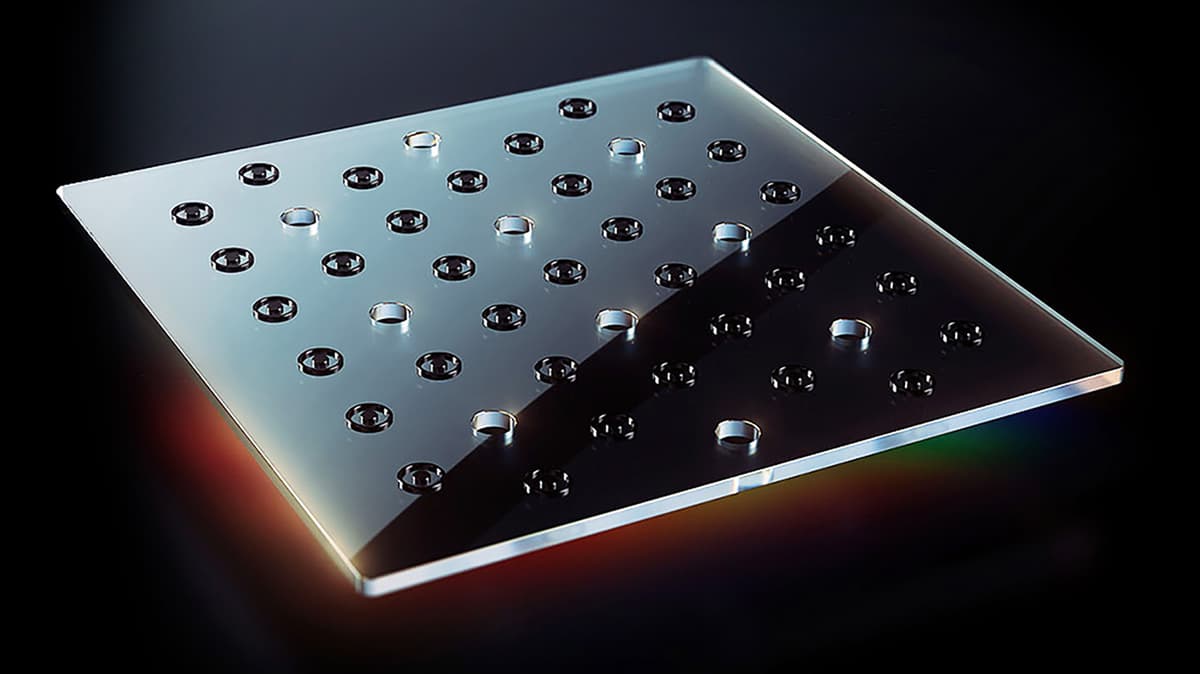
JPMorgan, OQC and AMD launch a hybrid quantum‑AI data centre in London
Oxford Quantum Computing, JPMorgan Chase and AMD announced a joint research effort to build a colocated quantum‑AI data centre in London. The facility will combine OQC’s Genesis quantum processor with AMD’s AI and high‑performance computing hardware to create a hybrid platform for finance‑focused workloads such as portfolio optimisation and quantum machine learning.

Scientists Used 7,000 GPUs to Simulate a Tiny Quantum Chip in Extreme Detail
Berkeley Lab researchers used the ARTEMIS exascale tool on the Perlmutter supercomputer, employing nearly 7,000 NVIDIA GPUs to simulate a 10 mm quantum chip with 11 billion grid cells. The full‑wave, time‑domain electromagnetic model captured material properties, wiring, and resonator geometry, allowing three circuit configurations to be evaluated in a single day. This level of physical detail surpasses typical black‑box simulations and will be benchmarked against fabricated chips. The effort highlights how exascale computing can accelerate quantum hardware design by providing predictive, high‑fidelity insights before manufacturing.

U.S. Launches Record-Breaking Quantum Network in Under Five Months
In less than five months, a consortium led by Dutch firm QuantWare and U.S. partners has deployed the Q-PAC quantum network at the Quantum Commons campus in Denver, marking the United States’ first fully operational quantum communications system. The network...

Quantum Processor Yields 2.44 Å Distance via ZNE
Sharing a snapshot from my second talk at #APSSummit26 — this one on NMR OTOCs and Pauli‑path approaches to zero‑noise extrapolation (ZNE) to learn an inter-atomic distance of 2.44 +- 0.04 angstroms on a Google's Willow quantum processor. https://t.co/350lCfheQM
Mathematical Foundations for Noise-Tolerant Quantum Catalysts in Real-World Environments
An international team led by Prof. Seok Hyung Lie mathematically proved that most existing quantum catalyst schemes are highly sensitive to even minimal environmental noise, causing degradation and limiting reusability. They introduced catalytic channels, a quantum operation that restores the...

Perovskite Crystals Can Host Qubits, Challenging Long-Held Assumptions
Researchers at Linköping University have shown that perovskite crystals can host spin qubits, a finding published in Nature Communications. By doping halide double perovskites with chromium and synthesizing them at 480 °C, the team created qubits that operate at temperatures far...

Hybrid Quantum Computing Boosts Atom Simulations
Jihyeon Park and colleagues introduced CANOE, a Classically Assisted Non‑Orthogonal Eigensolver that distributes the computational load between quantum and classical hardware. By combining a few highly entangled quantum basis states with a large pool of classical determinants, the method reaches...

Planned Cities Optimise Quantum Algorithms More Reliably Than Organic Layouts
Researchers led by Abdul Sami Rao examined street networks from Islamabad and Lyari, showing that planned grid topologies dramatically improve the Approximate Optimisation Algorithm (QAOA) at shallow depth p=1. Islamabad’s layout achieved 95% reliable convergence on the minimum vertex cover...
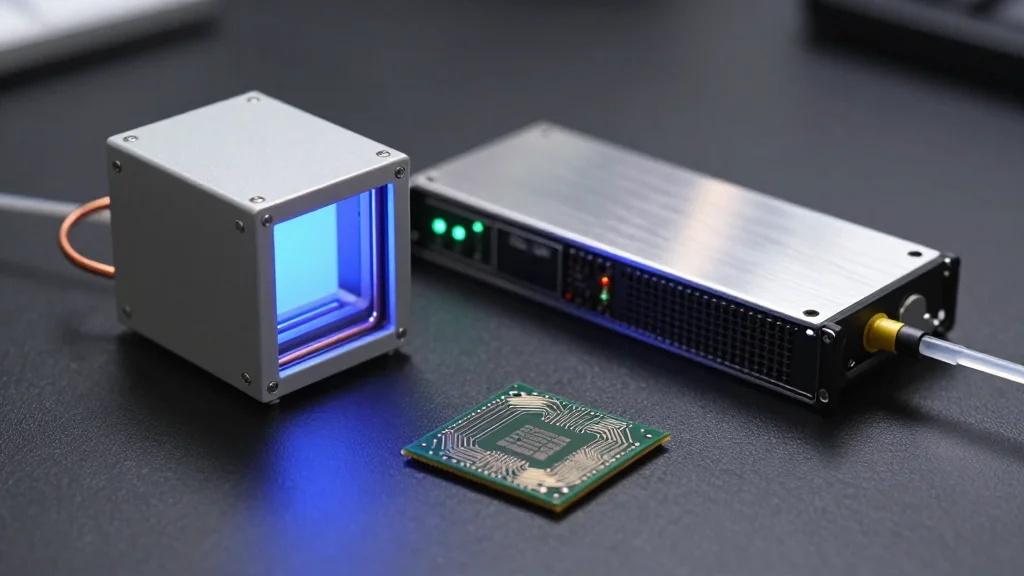
The New Threat IBM's Quantum Computing Research Poses to D-Wave
IBM introduced a quantum‑centric hybrid supercomputing architecture in March 2025, blending qubits with classical CPUs and GPUs to accelerate scientific simulations. The model, already tested at the Cleveland Clinic and RIKEN, promises practical enterprise integration. Financially, IBM posted a record...

It’s Time to Get Serious About Post-Quantum Security. Here’s Where to Start.
Quantum computers are nearing practical use, threatening current encryption like RSA and ECC, with a potential "Q‑Day" as early as 2029. The economic fallout of a successful quantum attack could exceed $3 trillion, prompting CISOs and CTOs to prioritize post‑quantum cryptography...

India Advances Quantum Research and Education Across Academia
India approved quantum teaching facilities and laboratories in 23 academic institutions under the National Quantum Mission, with a further 100 institutions under consideration. The programme aims to boost research capacity, provide specialised training in quantum technologies, and foster international collaborations....

Pasqal Integrates NVIDIA CUDA-Q with QRMI for Slurm-Native Hybrid HPC-Quantum Workflows
Pasqal announced the integration of NVIDIA’s open‑source CUDA‑Q platform with its Quantum Resource Management Interface (QRMI), allowing quantum workloads to be scheduled through standard Slurm job queues. The coupling makes Pasqal’s neutral‑atom QPUs appear as native accelerators alongside CPUs and...
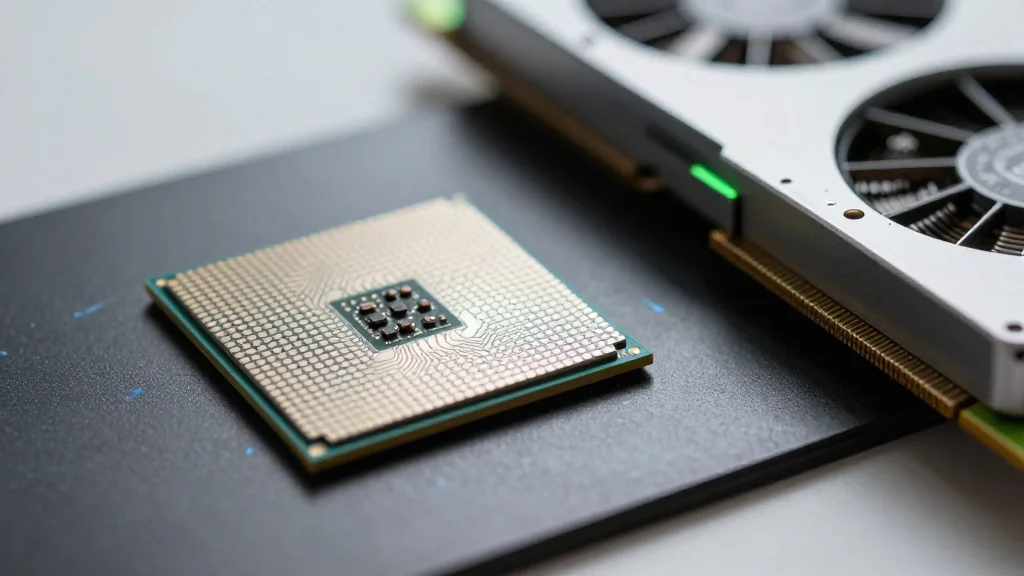
IQM and Zurich Instruments Launch Real-Time Quantum Error Correction Demonstrator with NVIDIA NVQLink
IQM Quantum Computers, Zurich Instruments and NVIDIA announced a joint effort to build a real‑time quantum error correction (QEC) demonstrator. The system merges IQM’s 20‑qubit superconducting processor, Zurich’s ZQCS quantum control hardware, and NVIDIA’s NVQLink GPU‑accelerated link. By enabling closed‑loop,...

Telus and Xanadu Sign MOU on Developing Quantum Data Centre Infrastructure
Telus and Xanadu Quantum Technologies have signed a memorandum of understanding to develop a sovereign quantum data centre that blends photonic quantum processors with high‑performance computing. The partnership will leverage Telus’s PureFibre network and secure, Canadian‑controlled infrastructure alongside Xanadu’s expertise...

Machine Learning Advances Practical Quantum Error Mitigation
Thank you to everyone who packed the room this morning at #APSSummit26 for my 30 min talk on our machine learning for practical quantum error mitigation (Nature Machine Intelligence) work. https://t.co/na3tJ45loA

Quantum Threat to Bitcoin Is Overstated, Says Alden
One of the most asked questions in the markets: Will Quantum Compute destroy everything in #Bitcoin and #Crypto? I asked this to @LynAldenContact and this was her response: https://t.co/NwbtWIPRQt

Reeves to Pledge £1bn for British Quantum Computers
British entrepreneur Sir Jim Reeves announced a £1 billion commitment to accelerate quantum computing in the United Kingdom. The pledge will fund new quantum hardware facilities, software platforms, and a talent pipeline across leading research universities. The initiative aligns with the...

Why Universities Should Anchor State Quantum Computing Initiatives
Universities are urged to become anchors of state quantum computing initiatives, mirroring their early role in the AI boom. As quantum hardware moves from research labs to operational systems, federal agencies and private firms are investing heavily. The article argues...

A Strange New Quantum State Appears when Atoms Get “Frustrated”
Researchers at UC Santa Barbara have discovered a new quantum state that emerges when magnetic and bond frustration coexist in a triangular‑lattice antiferromagnet. The interleaved frustration creates a quantum‑disordered ground state capable of long‑range spin entanglement. By applying strain or...

Possible New Result in Quantum Factorization
A new preprint claims a theoretical speedup for quantum factoring of large integers. Bruce Schneier, noting his lack of expertise, expresses skepticism about the result’s validity. If the claim holds, it would represent an improvement over Shor’s algorithm. The announcement...

Invited Talk on Error Mitigation at APSSummit
Join me tomorrow (Monday, 9 AM) at #APSSummit for the session “Advances in Error Mitigation and Noise Reduction,” where I’ll be giving an invited talk. https://t.co/WYeF6sOiCy
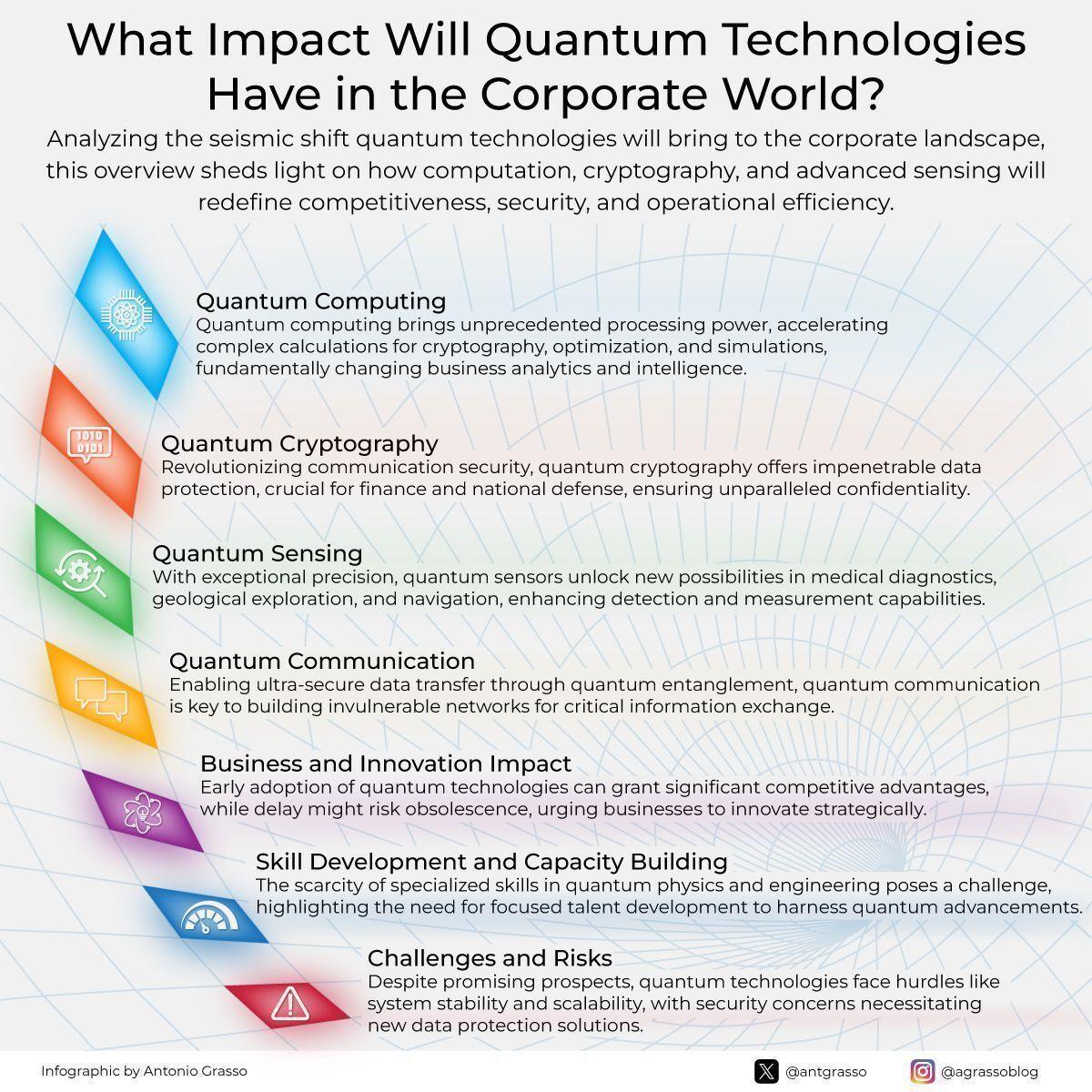
Quantum Tech Will Transform Corporate Strategies and Operations
What Impact will Quantum Technologies Have in the Corporate World? by @antgrasso #QuantumComputing #EmergingTech #Technology #Innovation #Tech https://t.co/L8nncOybkd

Quantum Computing Offers Potential for Smarter, Optimised Transport Networks
Lachlan Oberg and colleagues at Queensland University of Technology conducted a systematic review of 103 Scopus‑indexed studies on quantum computing for transport. The analysis identifies Quadratic Unconstrained Binary Optimisation (QUBO) as the dominant modelling approach, linking quantum annealers and hybrid...

Startup Preps Enterprises for Future Quantum Computing
Before quantum computing arrives, this startup wants enterprises already running on it | TechCrunch https://t.co/XD7GvI5k43 https://t.co/4IZRELxxb5

Prepare for the Emerging Quantum Technology Ecosystem
Quantum on the Cusp—What to Prepare for in the Emerging Ecosystem of Quantum Tech and Computing. By @ChuckDBrooks Link: https://t.co/RKbGLabUlf #quantum https://t.co/J3vFBFms4M

Quantum Computing Weekly Round-Up: Week Ending March 14, 2026
The U.S. Department of Energy announced a $37 million initiative to accelerate quantum algorithm research, underscoring federal commitment to the field. Finnish quantum‑hardware maker IQM delivered its latest system to Aalto University, marking a significant European deployment. Quantinuum opened a new...

Classical Heuristics Advance Guides Future Quantum Chemistry
In this thoughtful essay, Garnet Chan reflects on recent progress using classical heuristics in computational quantum chemistry—and what it means for quantum computing. The lessons he draws can help to steer both classical and quantum approaches in scientifically productive directions. https://t.co/XSXMNQTy3b

Quantum Computing Model Simplifies Complex Simulations with Spin Particles. New Research From Parity Quantum Computing And NEC
Researchers at Parity Quantum Computing and NEC introduced a spin‑1/2 model that replaces the exponential photon‑state basis of Kerr parametric oscillator (KPO) quantum annealers with just two states per oscillator. The projection technique accurately reproduces experiments using up to ten...

Bain & Company and IBM Address Emerging Cybersecurity Risks for Clients
Bain & Company and IBM have formed a strategic alliance to help private‑equity and corporate clients prepare for the post‑quantum cryptography (PQC) era. The partnership blends IBM Consulting’s quantum‑safe transformation expertise with Bain’s due‑diligence capabilities to assess and remediate emerging...
Quantinuum Implements High-Rate Iceberg Codes on Helios Processor
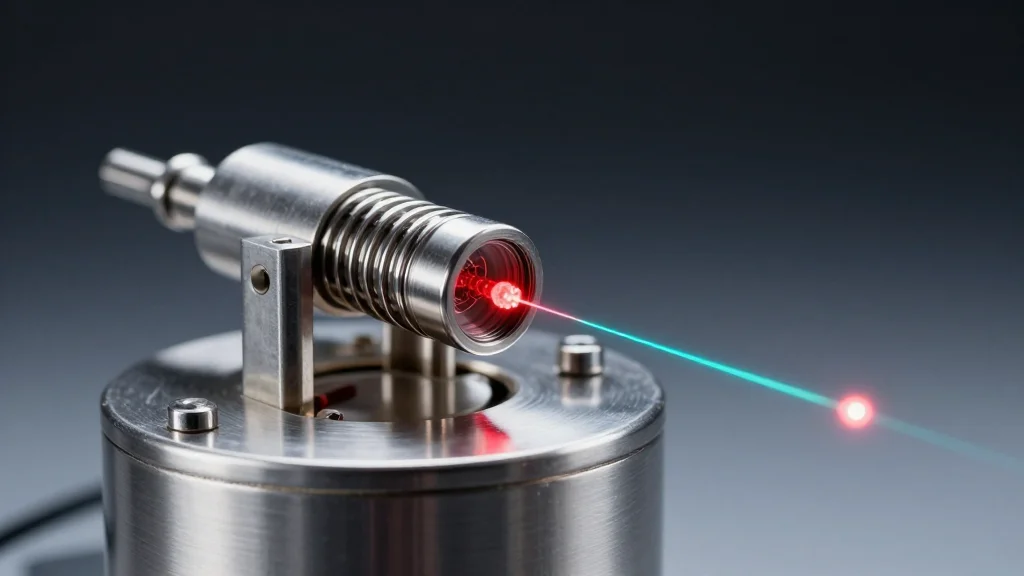
Quantinuum deployed high‑rate iceberg quantum error‑detecting and concatenated error‑correcting codes on its 98‑qubit Helios trapped‑ion processor. The implementation produced 94 logical qubits for error detection and 48 logical qubits for full error correction, achieving a near 2:1 physical‑to‑logical ratio for correction...

Faster Qubit Readings Now Avoid Unwanted Energy State Changes
Google Quantum AI researchers have added an inductive shunt to transmon qubits, eliminating offset‑charge sensitivity that caused measurement‑induced state transitions (MIST). The shunt provides an alternate current path, allowing dispersive readout without large detuning or extensive calibration. Tests at 10 mK...

Entanglement Aids Robust State Transfer Via Noisy Analogue Channels
Researchers at Aalto University and partners introduced a hybrid quantum communication protocol that merges quantum teleportation with analogue feedforward transmission. The method achieves a 3 dB fidelity gain over conventional teleportation when entanglement resources are limited and the channel preserves entanglement....

Quantum Simulation Reveals How Disorder Drives System Thermalisation
Researchers at Phasecraft Ltd and Virginia Tech used IBM’s Nighthawk superconducting processor to simulate a 10 × 10 qubit disordered Heisenberg Floquet model. They introduced a collision‑entropy metric that quantifies ergodicity within spatial patches, revealing a hierarchy where smaller regions become ergodic...

Quantum Purification Boosts Fidelity and Cuts Error Rates in Computations
Researchers at NYU Shanghai introduced Purification Quantum Error Correction (PQEC), a technique that leverages the SWAP test to purify noisy quantum states without prior knowledge or post‑selection. The method achieves a 75% error‑threshold for depolarizing noise across any register size...
Shor, QLDPC Codes, and the Compression of RSA Resource Estimates (Part II)
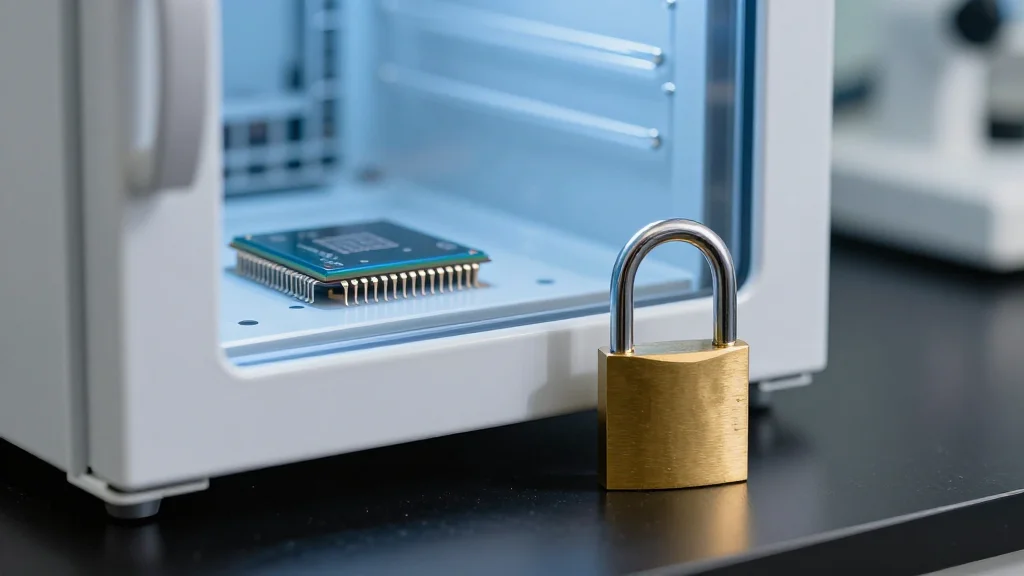
The latest "Pinnacle Architecture" analysis shows that factoring RSA keys may require only about 100,000 physical qubits, dramatically lowering the hardware threshold for a cryptographically relevant quantum computer. While the quantum breakthrough narrows the theoretical gap, many critical‑infrastructure systems still...
Polynomially Efficient Quantum Enabled Variational Monte Carlo for Training Neural-Network Quantum States for Physico-Chemical Applications
Researchers propose a polynomially efficient, quantum‑enabled variational Monte Carlo (VMC) method to train neural‑network quantum states (NQS). The algorithm scales linearly with circuit width and depth, requires only constant measurements, and avoids mid‑circuit reads, while simultaneously handling amplitude and phase...

Quantum Computers Must Overcome Major Technical Hurdles Before Tackling Quantum Chemistry Problems
A new Physical Review B feasibility study finds that both the variational quantum eigensolver (VQE) and quantum phase estimation (QPE) algorithms face prohibitive technical barriers for quantum chemistry. VQE demands error rates far below today’s noisy devices and can require decades...

SEALSQ and Parrot Expand Partnership to Secure Drones with PQC
SEALSQ Corp and Parrot SA are expanding their partnership to embed post‑quantum cryptography (PQC) into Parrot’s next‑generation professional drones. The collaboration will integrate NIST‑approved CRYSTALS‑Kyber and CRYSTALS‑Dilithium algorithms at the semiconductor level, building on existing SEALSQ secure elements in the...

Institut Quantique Joins Qblox Excellence Center Program to Advance Distributed Quantum Computing
The Institut quantique at Université de Sherbrooke has become a Qblox Excellence Center, integrating Qblox’s modular control electronics into its Quantum FabLab. The partnership targets distributed heterogeneous quantum computing, aiming to build scalable, fault‑tolerant architectures across superconducting, spin and hybrid...
PsiQuantum and National Cancer Center Japan Partner on Quantum Computing
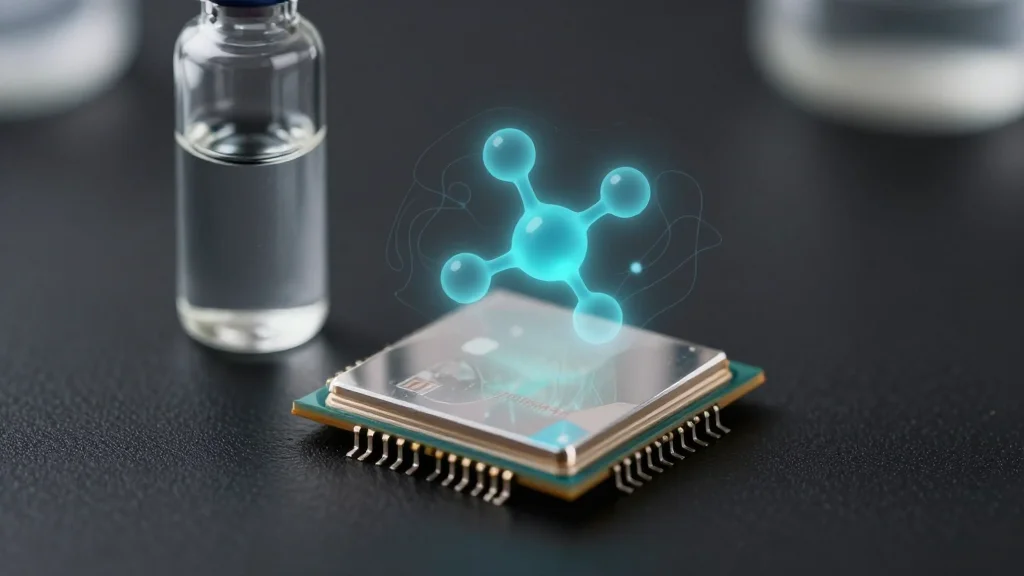
PsiQuantum and Japan’s National Cancer Center have signed a research agreement to explore utility‑scale quantum computing for oncology drug discovery. The collaboration will focus on developing fault‑tolerant quantum algorithms and deploying PsiQuantum’s Construct platform across the healthcare value chain. Additional...

PsiQuantum and National Cancer Center Japan Partner on Quantum Computing
PsiQuantum has signed a research agreement with Japan's National Cancer Center to explore utility‑scale quantum computing for oncology drug discovery. The partnership will focus on developing fault‑tolerant quantum algorithms and clinically relevant applications using PsiQuantum's Construct platform. It also brings...

Quantum Method Processes Problems in Parallel, Cutting Solution Time by 20%
Researchers at Tokyo University of Agriculture and Technology introduced multi‑tasking quantum annealing (MTQA), a method that runs multiple combinatorial optimisation problems simultaneously on a single quantum annealer. By embedding distinct problem graphs into separate regions and using idle qubits, MTQA...

Precision Measurement Now Underpins Industrial Technology Development
Researchers at Japan's AIST and NMIJ have released a strategic review outlining how precision metrology will become the backbone of quantum‑technology industrialisation. By establishing traceable electrical standards linked to fundamental SI constants, the framework aims to enable automated, large‑scale verification...

Binary Optimisation Networks Unlock Efficient Permutation Calculations
Researchers introduced a sparse QUBO formulation for permutation problems that leverages oblivious compare‑exchange networks, cutting the variable count from quadratic to O(n log₂ n). The new encoding supports unbiased sampling of permutations as well as algebraic operations such as multiplication and inversion....

The Race to Solve the Biggest Problem in Quantum Computing
Quantum computers remain hampered by high error rates that prevent practical use. Recent advances in quantum error correction—particularly the development of logical qubits that spread information across entangled groups—are narrowing the gap to fault‑tolerant operation. Researchers have demonstrated surface‑code implementations...

IBM Unveils Blueprint for Quantum‑Centric Supercomputing Integration
IBM Releases a New Blueprint for Quantum-Centric Supercomputing “The architecture shows how quantum processors (QPUs) can work alongside GPUs and CPUs—across on‑premises systems, research centers, and the cloud—in order to tackle scientific challenges that no single computing approach can solve...

Quantum Annealing Work Shows Hydrogen Storage Unlocks Better Power Grids
Researchers from multiple universities have introduced a quantum‑annealing‑based power allocation framework that optimises energy scheduling across large residential hydrogen microgrids. The hierarchical model predictive control splits decisions into a day‑ahead startup/shutdown plan and a short‑term real‑time refinement, dramatically reducing computational...

Local Droplet Etching Yields More Symmetric Quantum Dots for Integrated Photonics
Researchers at Johannes Kepler University and the State University of Campinas have demonstrated a local droplet etching (LDE) technique to fabricate InGaAs quantum dots embedded in AlGaAs with unprecedented symmetry and low surface density. The dots exhibit radiative lifetimes around...
QphoX Launches Quantum Transducer for Distributed Long-Distance Networking
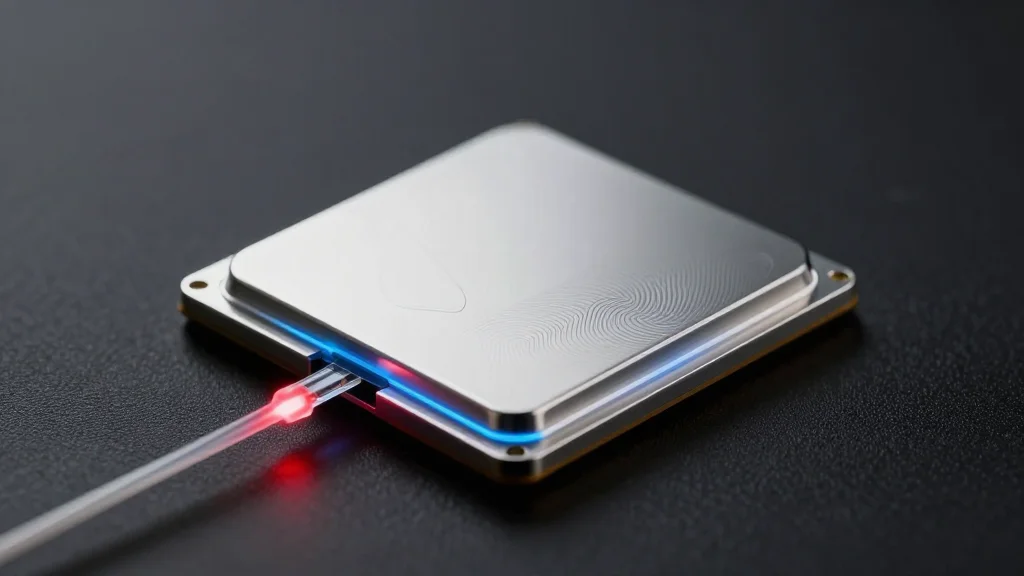
QphoX has released a commercial Quantum Transducer that converts microwave‑based qubit states into optical photons for transmission over standard fiber at room temperature. The device leverages photonic integration, MEMS and superconducting nanofabrication to achieve high‑fidelity, low‑noise state conversion. IBM will...

Four Months Into Its Comeback, Zapata Stakes Its Claim In Quantum Software
Zapata Computing, once a leading quantum‑software startup, collapsed after a mis‑guided SPAC pivot and filed for bankruptcy in late 2024. In September 2025 the company re‑emerged as Zapata Quantum, resolving over $18 million in debt and attracting fresh capital while preserving...

Does Quantum Teleportation Duplicate Your Identity?
Are you destroyed by teleportation? If your quantum information over here is copied and posted over there into another set of particles, is it still you? https://t.co/GTCLhiF2rD