
We Built an AI VP of Customer Success That Replaced Hundreds of Human Hours. Here's Exactly How.
SaaStr’s Chief AI Officer Amelia Lerutte created QB1, an AI‑powered VP of Customer Success, to replace a legacy SaaS onboarding tool. The agent now handles hyper‑personalized outreach for over a hundred sponsors, delivering task‑specific emails to 100 customers in under ten minutes. Deploying QB1 cut billable agency hours by roughly 70% and kept AI token costs under the $200‑per‑month cap. The session also reveals security tactics like agent hopping and lessons learned from production‑stage bugs.

How WiseTech Is Compounding Advantages Across Global Trade
WiseTech, a leading logistics software platform, is embedding artificial intelligence directly into the core workflows that power global trade. CEO Zubin Appoo explained how the company’s AI strategy differs from superficial add‑ons, focusing on deep integration across freight, customs, and...

Box’s Strategic Pivot From Content to Context
Box is redefining its platform by shifting from a content‑centric model to a context‑driven architecture that empowers autonomous AI agents. The company argues that traditional workflows assume users start with zero context, but agents need just‑right, surgical context to act...

Switch From Openclaw to Claude Code Channels RIGHT NOW
The video announces a rapid migration from the open‑source OpenClaw framework—dubbed “Bob”—to Anthropic’s Claude Code Channels, highlighting how the new tool can be deployed on a Mac Mini in under ten minutes and serve as a phone‑based AI assistant. Lead Gen...

Aggregate Metrics Are Dangerous to Your SaaS Health | SaaS Metrics School | Aggregate Metrics
In today’s SaaS Metrics School episode, Ben Murray explains why aggregating data can be dangerous for a SaaS company’s health and why operators must segment metrics by revenue streams and go‑to‑market motions. He frames the discussion around two core dimensions—revenue...
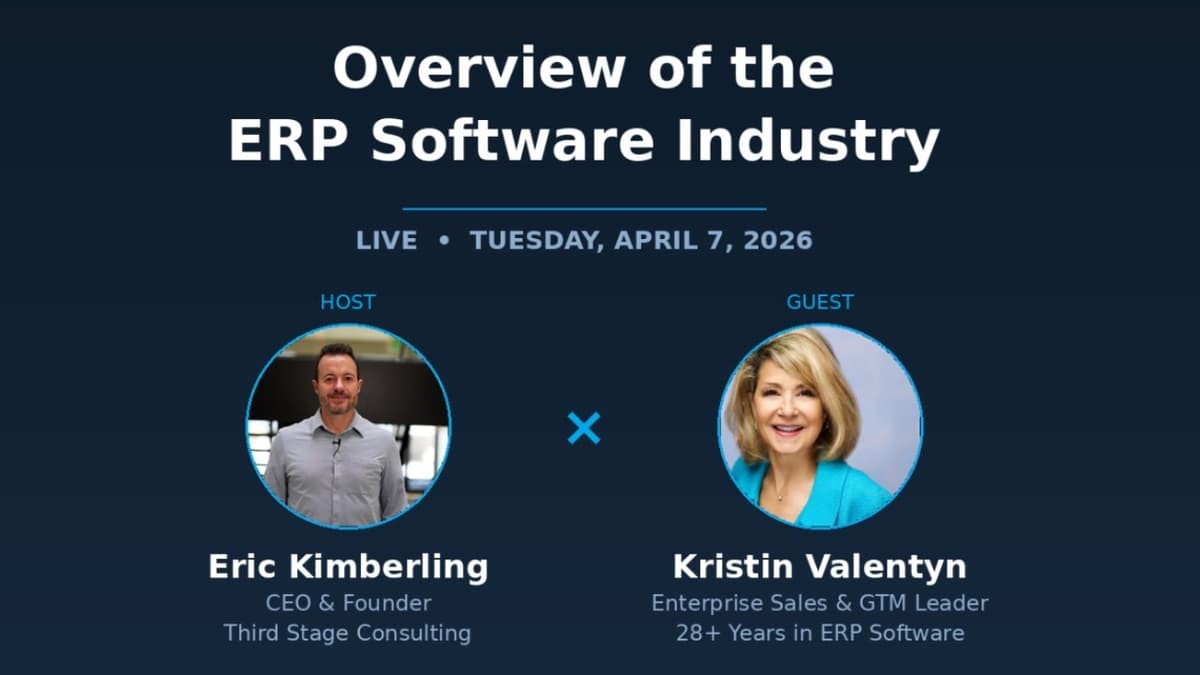
🎙 𝗢𝘃𝗲𝗿𝘃𝗶𝗲𝘄 𝗼𝗳 𝘁𝗵𝗲 𝗘𝗥𝗣 𝗦𝗼𝗳𝘁𝘄𝗮𝗿𝗲 𝗜𝗻𝗱𝘂𝘀𝘁𝗿𝘆
Eric Kimberling hosts Kristin Valentyn, a veteran ERP executive, to dissect the current state and future trajectory of enterprise resource planning software. They highlight how cloud migration and AI integration are reshaping the market, enabling faster, subscription‑based deployments for manufacturers...

In Conversation With Yuzu's Max Kauderer & Ryan Lee
The interview centers on Yuzu, a startup founded by Max Kauderer and Ryan Lee, which aims to modernize health‑insurance administration. After an initial attempt to launch their own insurer, the founders realized the real bottleneck lay in third‑party administration (TPA)...

Valuing Constellation Software's Spinoffs: Finding the Next 10-Bagger
The video dissects Constellation Software’s successful VMS acquisition engine and argues that its smaller spin‑offs could deliver the next “10‑bagger” returns for investors. It reviews four candidates—Topicus, Lumine Group, Signity and Aiko Poland—highlighting how each mirrors Constellation’s playbook of buying niche,...

Paul Richmond - Novidea - Insurtech Insights Europe 2023
Paul Richmond, product manager at Novidea, outlined the company’s insurtech solution tailored for the UK retail insurance market. He explained that Novidea’s platform serves brokers, policy‑holders, and underwriting teams by delivering a single, end‑to‑end digital journey—from a branded customer portal...

LinkedIn Sales Navigator Cost - Is It Worth $100/Month in 2026?
The video dissects whether LinkedIn Sales Navigator’s $100‑plus monthly price tag remains justified for B2B sellers in 2026, comparing its three plans and outlining a practical test‑drive. Core costs $80/month (billed annually) and offers unlimited searches, 50 InMail credits, and 10,000...

@Filevine Released Their 2026 AI Legal Index Survey at ABA Techshow, and Discusses on LawNext PR
Filevine unveiled its 2026 AI Legal Index at the ABA Techshow, highlighting how legal professionals feel about and employ artificial intelligence. Madison Doyle, representing Filevine, framed the survey as a barometer of current adoption rates and future expectations, noting that...

Link Your Brokerage to Barchart | Turn Your Portfolio Into a Trading & Screening Tool
The video walks users through linking a brokerage account to Barchart’s Investor Portfolio, turning a simple holdings list into an interactive trading and screening hub. After selecting the Investor Portfolio under the Tools tab, users can choose to link a brokerage,...

Ramsoft OmegaAI and Blume Review: A Hands-On PACS and Portal Walkthrough
The video provides a hands‑on walkthrough of Ramsoft’s OmegaAI cloud‑based radiology platform and its companion patient‑portal, Bloom. Sponsored but editorially independent, the reviewer demonstrates how a pure web, zero‑footprint solution lets users log in from any browser without installing software,...

Day 494 Growing My SaaS Startup to $1M
The video chronicles a founder’s sprint to scale a SaaS startup toward a $1 million valuation, leveraging AI‑assisted development and a strategic move to Cyprus for tax and banking advantages. Over a week the team built four distinct applications—ranging from a...

Avory's Sean Emory on Clear Security $YOU
The podcast centers on Clear Security (ticker YOU), a biometric identity platform that sells a $200‑a‑year subscription allowing members to skip traditional TSA security lines. Host Andrew Walker interviews Shawn Emery of Avery Capital to dissect Clear’s business model, growth...

Webinar Replay: Inside Harvey’s AI Agents & Shared Spaces
The webinar explored Harvey’s new AI agents and Shared Spaces, positioning them as the next evolution of legal‑tech automation. Panelists from Harvey, a legal‑engineer, and Densu’s global ops head discussed how the platform moves beyond simple chat‑based assistants toward agentic...

The Discipline Behind Scaling From PLG to Enterprise with Sahir Azam
The Revenue Builders podcast features Sahir Azam, former chief product officer of MongoDB, discussing how to scale a product‑led growth (PLG) business into the enterprise segment. Azam stresses that adaptability and resilience are non‑negotiable in hyper‑growth firms, noting that roles evolve...

AI Keyword Research for SaaS: Powtoon Strategy Revealed #shorts
The video walks viewers through an AI‑driven keyword‑research workflow tailored for SaaS firms, using Powtoon.com as a live case study. The presenter demonstrates how to turn a generic search term—“best AI video creator”—into a structured SEO and PPC plan. He starts...

Applying AI/ML to FinOps Forecasts at Snowflake
Alex Landis, Snowflake’s Director of Product Finance, outlined how the company is embedding AI/ML into its FinOps processes. He emphasized that a robust, operational data foundation is a prerequisite for any AI initiative to deliver real business impact. Snowflake’s internal...

Should Web Designers Be Moving to Go High Level?
The video examines whether web designers should adopt Go High Level, a platform the creator long dismissed as a step back from design‑centric tools like Webflow and Framer. He discovers that Go High Level isn’t a competitor to site‑builders but an...

How We Built Our AI VP of Customer Success "Qbee"
SaaStr is the world’s largest B2B software community, offering a weekly newsletter and a presence across major social platforms. It connects founders, investors, and operators through both North American and European events. The organization promotes continuous learning and networking for...

Figma Make: My WORST Vibe Coding Experience Yet! #shorts
The video is a candid rant about the author’s first real encounter with Figma Make, an AI‑driven "vibe coding" platform that promises to redesign websites automatically. After six months without using any similar tool, the creator tried Figma Make on...

Most Landlords Are Doing This Wrong… (It’s Costing You Thousands)
The Taxmart REI podcast episode spotlights Rent Ready, a property‑management platform built to make landlord operations smarter, simpler, and more human. Founded in 2016, the SaaS solution now oversees over $33 billion in assets and offers a flat $12‑per‑month pricing model...
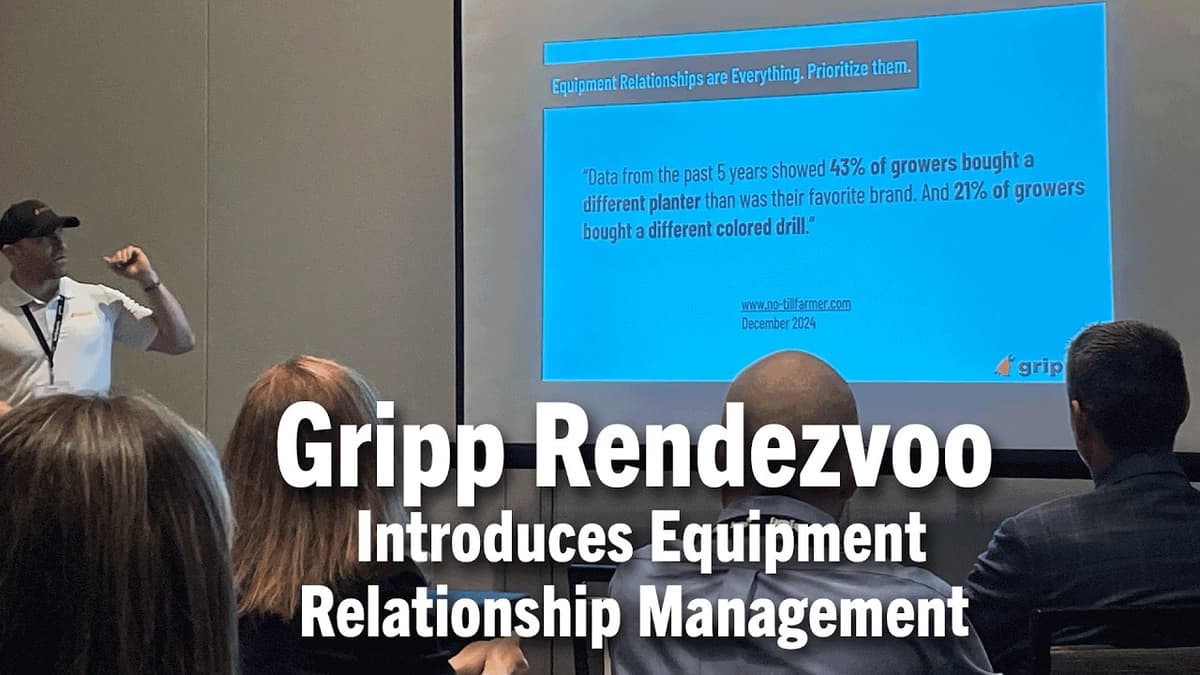
Gripp Rendezvoo Introduces Equipment Relationship Management
Grip’s CEO Tracy Woodmire unveiled a new Equipment Relationship Management (ERM) platform that expands the company’s existing QR‑code tracking solution for farm machinery. The ERM layer lets equipment owners assign QR tags to tractors, pumps, pivots and other assets, then store...

The Tool that Keeps Things Moving at Unbox Therapy...#SlackPartner
Unbox Therapy, the tech‑review channel, showcases how the new Slackbot AI is embedded directly within its Slack workspace, allowing the team to stay inside a single app while leveraging generative AI. The demo walks through real‑time queries: retrieving missed direct messages,...

Claude Doubles Paid Users!
Mad Tech Daily highlighted three distinct tech‑industry developments. First, Anthropic’s AI assistant Claude saw its paid user base more than double in early 2026, propelled by the newly introduced 20 Pro tier. The surge pushed Claude to the No. 2 spot on...

DashThis Tutorial – Build Google Analytics & Google Ads Dashboards Fast
The video walks viewers through building marketing dashboards in DashThis, showcasing how the platform links Google Ads, Google Analytics, Meta Ads and other data sources to deliver actionable insights within seconds. Benjamin demonstrates creating a Google Ads performance dashboard using a...

How Does Net Revenue Retention Impact Your Valuation? | SaaS Metrics School | NRR
Net revenue retention (NRR) is a pivotal metric that directly influences SaaS company valuations, as explained by Ben Murray in the SaaS Metrics School episode. He cites Meritech Capital data showing that firms with 102% NRR command sub‑5x revenue multiples,...

OpenClaw Architecture Deep Dive (Reduce Costs & Better Tools/API Use)
The video provides a step‑by‑step deep dive into the OpenClaw architecture, focusing on how to slash API expenses, boost performance, and secure the deployment. The presenter walks viewers through provisioning a fresh instance on a virtual private server, configuring API...

Jeremy Bergstein, Founder & CEO of POSTPALS, the World’s First Data-to-Adventure Platform.
Jeremy Bergstein introduced PostPals, the world’s first Data‑to‑Adventure platform that converts real‑time shark telemetry into tangible, print‑based learning experiences. Partnering with O Search’s shark‑tracking app, the service generates monthly postcards that turn each tagged shark’s location into a personalized adventure...

How to Bootstrap and Sell a SaaS: 10 Lessons From WebinarNinja Founder Omar Zenhom
Omar Zenhom, co‑founder of Webinar Ninja, delivered a ten‑lesson playbook on how he and his wife built, scaled, and eventually sold a webinar‑software SaaS without any external funding. He traced the journey from a modest conference networking effort in 2014...

The Loadstar Snapshot Ep. 1: DSV Migrates From CargoWise
The Loadstar Snapshot examines DSV’s decision to pull back from WiseTech’s CargoWise platform and adopt the Tango system originally built by DB Schenker. The move reflects a broader debate in global logistics over buying off‑the‑shelf software versus developing proprietary solutions. Insiders say...

CDW ERP Modernization Case Study | Workday & Deloitte
CDW, a Fortune 500 IT solutions provider with more than $20 billion in revenue, announced a comprehensive ERP modernization driven by Workday and Deloitte. The company sought a cloud‑based platform to replace a legacy system riddled with manual data extraction and...

Why Some SaaS Founders Choose Debt Instead of Venture Capital
The video explains why a growing number of SaaS founders are turning to debt financing instead of traditional venture capital, highlighting the launch of Rack—a lender built to serve companies that have outgrown bootstrapping but aren’t ready for a large...

AI Did in 20min What Took Us 6 Months 😱
The video showcases Axio 2.0, an AI platform that transforms a basic basketball bag concept into a fully specified soccer bag product in roughly twenty minutes. The presenter walks through the process, from prompting the AI for design variations to...

The EXACT System To Build a SaaS From 0 to $100M Exit
The video outlines a step‑by‑step framework for turning a SaaS startup into a $100 million exit‑ready company. It begins with a strategic decision—whether to chase a lifestyle business or to design an acquisition‑ready machine from day one. The speaker stresses that...

March 2026 Demo Day
Rev Genius hosted its March 2026 Demo Day, a fast‑paced showcase designed to streamline the evaluation of go‑to‑market (GTM) technologies. Over a single session, four vendors—Madic, Vidyard, Tero Agentic, and Revo—each received a 15‑minute slot to demonstrate how their tools...

LTH Product Briefing - Harvey 2026 Update
The Legal TechHub briefing introduced the 2026 iteration of Harvey, the firm’s AI‑powered legal assistant, highlighting a suite of new capabilities aimed at turning the platform into a fully integrated, end‑to‑end workflow engine for law practices. Hosted by CEO...

Building Confluent: From Open Source Side Project to Public Company | Jay Kreps (Co-Founder and CEO)
In this interview, Confluent co‑founder and CEO Jay Kreps recounts how a side project at LinkedIn evolved into a publicly traded data‑streaming company built around Apache Kafka. He outlines the pivotal moments—from the open‑source release to landing the first enterprise...

Spacelift Intelligence: Infrastructure Keeping Pace with AI-Enhanced Development (Sponsored)
The video introduces Spacelift’s newest offerings—Spacelift Intent and Spacelift Intelligence—as a response to the widening gap between AI‑accelerated developer productivity and the slower, ceremony‑heavy world of infrastructure provisioning. Marine Wizinski explains that while developers can now generate code and ship...

How MangoMint Increased Win Rates with an AI-Powered Stack
The podcast features Marshelle Mooney, VP of Sales at Manglement, explaining how the company leveraged an AI‑powered operating stack to turn a fragmented remote sales organization into a high‑visibility, high‑performance engine. By consolidating dozens of SaaS tools into a single Notion‑based...

How GFT & Mambu Are Replacing Legacy Core Banking Systems
The video outlines how GFT, a global banking‑technology integrator, and Mambu, a cloud‑native composable core platform, have joined forces to replace legacy mainframe systems. Their joint offering combines Mambu’s standardized code base with GFT’s regulatory and implementation expertise, promising a...

Gaps in Your MRR Schedule Wreak Havoc on Retention | SaaS Metrics School | MRR Schedule
The video warns SaaS operators that gaps in their monthly recurring revenue (MRR) schedule can distort retention metrics, turning ordinary renewals into apparent churn. Using a $12,000 annual contract amortized to $1,000 per month, the presenter shows how a delayed renewal...

How Telkomsel and Circles Delivered a Live SaaS Migration at Scale
Telkomsel’s by.U brand completed a live migration of millions of subscribers to a next‑generation SaaS platform, partnering with cloud‑native specialist Circles. The brownfield transformation was executed with zero downtime, preserving continuous service for all customers. CIO Joyce Shia and CTO...

Finance Teams Want More Than ERPs Can Give Accounts Receivables
Finance leaders are increasingly frustrated that traditional enterprise resource planning (ERP) systems fall short on accounts‑receivable (AR) capabilities. Billtrust’s chief product officer Lee An Schommer argues that purpose‑built AR platforms can transform raw transaction data into faster payments, sharper cash...

How to Write SaaS Copy That Actually Converts: Using Emotion to Drive Trials, Revenue & Retention
The talk centers on how SaaS copywriters can boost trials, revenue, and retention by weaving emotion into every stage of the funnel. The speaker outlines six core feelings—frustration, skepticism, hope, excitement, and two others—explaining where each belongs, from top‑of‑funnel ads...

This AI Call Center Works While You Sleep (VAPI Demo)
The video showcases Vappy, an AI‑powered outbound call platform that lets businesses run a fully automated call center while they sleep. Users simply upload a CSV of phone numbers, select a Twilio number, and assign an AI assistant to conduct the...

3 No-Code Automation Platforms to Build Workflows Without Coding
The video spotlights three leading no‑code automation platforms—Zapier, Make, and Lately—showcasing how they enable users to build, connect, and launch digital workflows without writing code. It frames the narrative around the question, “What if you could automate your entire digital...

How Private Equity Firms Can Drive Value Through SaaS Retention and Pricing
The video explains how private‑equity firms can unlock hidden value in SaaS businesses by tightening customer‑success metrics and pricing structures. It emphasizes that retention metrics such as gross and net revenue retention are critical levers for boosting exit multiples, and...

How to Scale SaaS Customer Acquisiton With Paid Ads (353% Increase)
The video walks through a B2B SaaS firm that amplified its new‑customer acquisition by 350% over two years using a disciplined paid‑advertising playbook. Ryan Allis, a veteran SaaS founder and coach, frames the case study as proof that paid media...