
How to Make Money While You Sleep Is Only Partially Real — Here’s the Honest Truth About Passive Income in...
Passive income remains a hot pursuit in 2026, with 53% of Americans reporting at least one stream but a modest median earnings of $4,200 annually. A 2026 survey shows 72% rely on secondary income, driven by stagnant purchasing power as wages rose 18% while inflation outpaced at 21% from 2020‑2024. The most lucrative earners diversify across dividend portfolios, real‑estate, semi‑absentee franchises, and automated ecommerce, leveraging built‑in management and recession‑proof demand. Success hinges on upfront capital, patient ROI horizons, and disciplined system building rather than quick‑fix schemes.

The Top Funds to Buy According to DIY Pension Investors
DIY SIPP investors are increasingly turning to diversified fund portfolios, with funds now representing almost 40% of all holdings on Interactive Investor’s platform as of March 31, 2026. Money‑market funds dominate both accumulation and drawdown lists, offering yields around 3.75% that match...

Republicans Eye Capital Gains Tax Cut to Ease Voters' Anxieties
Republican lawmakers are weighing a proposal to index capital‑gains taxes to inflation as a way to ease voter concerns about the cost of living ahead of the November midterms. Senators Ted Cruz and Tim Scott have urged Treasury Secretary Scott...

How to Keep Your Tax Bill Down as Frozen Thresholds Drive Millions Into Paying Higher Rates
UK income‑tax thresholds have been frozen since 2021 and will stay that way until 2031, creating fiscal drag that pushed an extra 2.17 million people into paying tax in 2023/24. Total pre‑tax income rose 9.8% to £1.53 trillion, lifting income‑tax liabilities by...

SimCorp Summit: STOXX, APG Discuss Index Capabilities, 4D Investing
At the SimCorp Global Summit in Copenhagen, STOXX and Dutch pension giant APG unveiled a custom "4D" emerging‑market equity index designed for a $21.8 billion portfolio. The index adds a fourth dimension—turnover discipline—to traditional risk‑return and sustainability criteria, aiming to lower...

Households Are Holding Record Amounts in Cash - How Much Should You Invest?
UK households are holding a record 35% of their financial assets in cash, the highest share since the 1980s, according to Fidelity’s analysis of four decades of data. Direct investment in equities and funds has fallen to just 17%, a...
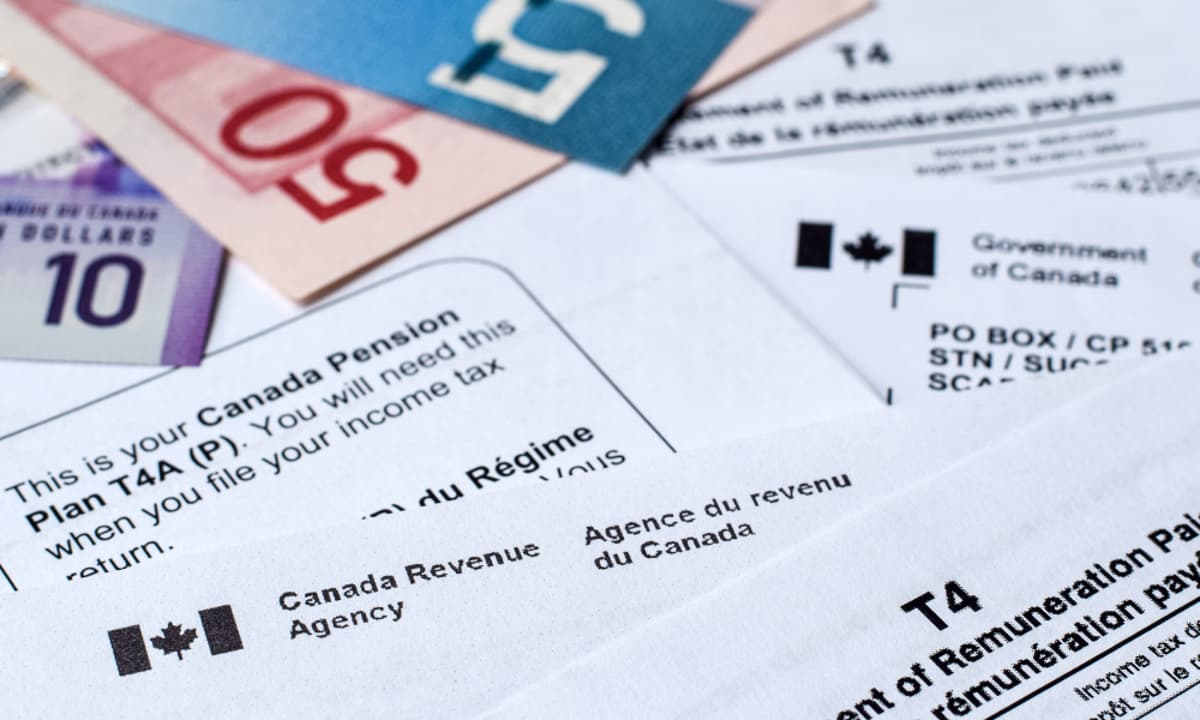
Why so Many Canadians Say No Thanks to Free Money at Tax Time
A new H&R Block Canada survey shows 28% of Canadians—about 9 million people—still haven’t filed their 2025 personal tax returns as the April 30 deadline approaches. The delay is most pronounced in Ontario, where one‑third of residents are unfiled, and it exposes taxpayers...

The Illusion of Diversification: Most Canadian Portfolios Are Far More Concentrated than They Appear and That's Not Good
The article warns that many Canadian investors mistake label‑based diversification for true risk spreading. A 2022 market shock showed the classic 60/40 stock‑bond mix can fail when equities and bonds fall together. Typical Canadian portfolios start with a domestic equity...

Should You Relocate to a New State for Retirement? The Ultimate Checklist for Those With a Pension and $1 Million-Plus
Retirees in the “2% Club” – those with a pension and at least $1 million in assets – are weighing whether relocation can improve their financial picture. The article explains that state income tax is only one piece of the puzzle;...

I'm a Financial Planner: These 4 Spending Mistakes Can Derail Your Retirement Plan
Financial planners warn that retirement success hinges on realistic spending assumptions, not just portfolio size. Four common mistakes—relying on estimates, ignoring irregular costs, assuming static spending, and treating all expenses alike—can erode a solid plan over a 25‑30‑year horizon. Using...

ETF Adoption Rises in Canada as Knowledge Gaps Persist, CETFA Survey Finds
Canada’s ETF market is expanding, with 21% of investors now holding at least one fund, a share that rises to 25% among 35‑to‑54‑year‑olds. Younger investors are also more likely to own both Canadian and U.S. listings, especially in western provinces....

Changing Jobs and Tempted to Cash Out Your 401(k)? Read This First (Future You Will Thank You)
The article highlights how today’s mobile workforce—averaging 12 jobs and frequent moves—creates fragmentation in the 401(k) system, leaving millions of accounts inactive or cashed out. Inactive defined‑contribution accounts rose to 29.2% in 2023, and about one‑third of workers cash out...

UK Ministers Gain Power to Force Pension Funds to Invest in British Companies
UK ministers have been granted new statutory powers to require pension schemes to allocate a portion of their assets to UK‑listed companies. The measure, introduced under recent financial legislation, seeks to channel private retirement savings into domestic businesses and support...

Rachel Reeves’s Tax Shake-Up: Time to Plan Ahead, From Isas to Self-Assessment
The UK Treasury, led by Finance Minister Rachel Reeves, will tighten several tax rules on 6 April 2027. Cash ISAs for people under 65 will be capped at £12,000 (≈ $15,200), forcing any excess into stocks‑and‑shares ISAs, while the full £20,000 allowance (≈ $25,400)...

Two Investment Strategies for People Who Are Afraid of the Stock Market
The article outlines two low‑risk investment approaches that rely on buffered exchange‑traded funds, which cap downside losses while preserving upside potential. It highlights how these defined‑outcome ETFs let cautious investors “tiptoe” into equities without fearing market crashes. Innovator Capital Management,...

Don’t Neglect Financial Planning’s Missing Middle
Many fee‑only planners turn away clients who lack defined goals, leaving a large “missing middle” of people without a financial plan. The article argues that the gap can be closed by adding a scenario‑planning step between discovery and solution phases....

New Bill Would Autofill Tax Forms
Rep. Bill Foster (D‑Illinois) introduced the “Autofill Act,” a bill that would let taxpayers download tax forms already filled with data the IRS receives from employers, the Social Security Administration and financial institutions. The pre‑populated forms would be available both...

How Mortgage Revenue Bonds Can Boost Your Portfolio
The article explains how state and local housing finance agencies issue mortgage revenue bonds (MRBs) to fund affordable single‑ and multi‑family housing, detailing their structures, credit quality, and market dynamics. It highlights that MRBs, backed by government‑pledged assets and often...

Garry Marr: Are Young FHSA Savers About to Get Duped Again?
Canada’s First Home Savings Accounts (FHSA) have surged to roughly $8.07 billion CAD (about $6 billion USD) by the end of 2024, with an average balance of $8,000 CAD (~$5,900 USD) per holder. Meanwhile, the housing market remains soft, with average home...

The Fiduciary Question Nobody Is Asking About Life Insurance
Hundreds of thousands of seniors surrender life‑insurance policies each year without considering the secondary market. A life settlement—selling the policy to institutional buyers—can fetch two to ten times the cash‑surrender value, with the market handling $4‑5 billion annually across 43 states....

How Financial Advisors Track Their Clients’ Alternative Investments
Alternative investments have moved from niche to mainstream, with nine‑in‑ten financial advisors now allocating to them and nearly half assigning more than 10% of client assets to alternatives, according to the fourth CAIS‑Mercer survey. Advisors need reliable tracking systems to...

Seeking Fixed Income Solutions? Give Municipals a Chance
Advisors are urged to reconsider municipal bonds as a core fixed‑income allocation amid a volatile macro backdrop. With a new Federal Reserve chair expected later this year, the prospect of additional rate cuts could depress cash yields, making tax‑exempt muni...
How to Find the Best Sector ETFs 2Q26
The article highlights the overwhelming number of sector ETFs—403 across 11 sectors, averaging 36 choices per sector—making selection increasingly complex. It stresses that ETFs can differ dramatically, with technology funds ranging from 21 to 2,495 holdings, leading to varied risk...

Costs Vs. Retirement: The Case for TIPS ETFs
Fidelity’s 2026 State of Retirement Planning Study found that roughly one‑third of Americans are unsure they can ever retire, with 42% believing retirement is unaffordable. The top competing priority across generations is the rising cost of living, a pressure that...

3 Stocks to Buy From a Prospering Electronics Components Industry
The Zacks Electronics‑Miscellaneous Components industry is riding a wave of automation, AI adoption, and IoT‑driven demand, delivering a 35.3% total‑return over the past year—far outpacing the S&P 500’s 14.2% gain. Analysts have lifted earnings estimates 9.4% since mid‑2025, and the sector’s...

The Biggest Drag on Investor Returns Is Behavior
Investor behavior, not market fundamentals, is the biggest drag on portfolio returns, according to Morningstar’s annual “Mind the Gap” study. The research shows that the more frequently investors trade, the larger the gap between fund performance and their personal outcomes,...

These Adviser Fees Are a Hit to Your Portfolio — Here Are 2 Questions to Stop Them
Financial advisers often charge a visible advisory fee, but many hidden costs can silently erode client returns. Cash held in money‑market funds may be subject to expense ratios of 0.11%‑0.37% and an additional advisory charge of around 0.50% on idle...

How to Incorporate Rising Political Risk Into Investment Management
The article outlines how investment managers can systematically embed rising political risk into portfolio construction and oversight. It highlights the shift from ad‑hoc news monitoring to quantitative scenario modeling, stressing the need for granular country‑level exposure data. The piece also...

How Looking Back One Year Can Transform Your Small Cap Returns
A new Bridgeway Capital paper shows the small‑cap premium is alive but hidden by stocks that only recently became small. By excluding "fallen angels"—large caps that fell into the small‑cap bucket—and fresh IPOs, the annual premium jumps from 1.3% to...

For Many Pro Athletes, Post-Career Financial Worries Loom Large
Professional tennis player Mackenzie McDonald, 31, has earned over $7 million in prize money but faces mounting financial pressure after his ranking fell from a career‑high No. 37 to No. 125. In 2025 he collected $710,040 despite a modest win‑loss record and early...

ATRAM Launches Nasdaq Feeder Fund
ATRAM Trust Corp. launched the ATRAM Nasdaq Equity Income Feeder Fund, a Philippine‑focused vehicle that invests in J.P. Morgan’s Nasdaq Equity Premium Income Active UCITS ETF. The fund employs a covered‑call strategy on the Nasdaq‑100 to generate premium income, targeting an...
Vanguard Adds to Its Fixed Income Model Portfolio Menu
Vanguard has introduced a new suite of ten Target Maturity Corporate Bond ETFs, expanding its fixed‑income model‑portfolio menu. The ETFs combine the diversification and liquidity of exchange‑traded funds with defined‑maturity characteristics traditionally found in individual bonds. Each fund carries a...

9 No-Capital-Gains-Tax States in 2026 Ranked by Cost of Living: Are They Really Cheaper?
A new ranking evaluates the nine U.S. states that do not levy a state capital‑gains tax against 2026 cost‑of‑living data, housing prices, and local tax burdens. While states like Missouri and South Dakota combine low living costs with full capital‑gains...

Investment Trusts Are Outperforming Funds - Which Is Best for Your Portfolio?
Research from the Association of Investment Companies shows investment trusts have outperformed comparable open‑ended funds across multiple time horizons. Over the past decade, trusts delivered an extra £31 per £100 invested (about $39 per $100), equivalent to a 1.3 percentage‑point annual...
:max_bytes(150000):strip_icc()/GettyImages-1254423087-5b845f35a49d4cf99b247a34b641e5b4.jpg)
Covered Calls Strategy: Generate Income and Manage Risk
A covered call pairs a long stock position with a sold call option, letting investors collect premium income while retaining ownership of the shares. The strategy shines in neutral or mildly bullish markets, where the stock is expected to stay...

How Sudden Inheritances Can Hobble Next-Generation Heirs
Over the next two decades trillions of dollars will shift from baby‑boomers to their heirs, yet many families remain unprepared. A Raymond James survey finds only 45% of individuals with at least $500,000 in investable assets are “extremely transparent” with their...

Peers Rival Wealth Managers as Succession Advisers to the Next Generation
UBS’s 2026 Global Next Generation Report shows that 27% of high‑net‑worth heirs now view peers as their primary source of succession advice, surpassing traditional wealth managers and private banks, each at 21%. Younger heirs, especially those aged 22‑25, rely heavily...
Bond ETFs Take on Expanded Role as BlackRock Report Highlights Shift in Portfolio Construction
BlackRock’s new report declares bond ETFs no longer peripheral but central to modern portfolio construction. Higher global yields and expanding alternative assets are prompting investors to treat fixed‑income ETFs as income anchors, liquidity engines, and stabilizers. Global bond‑ETF assets have...
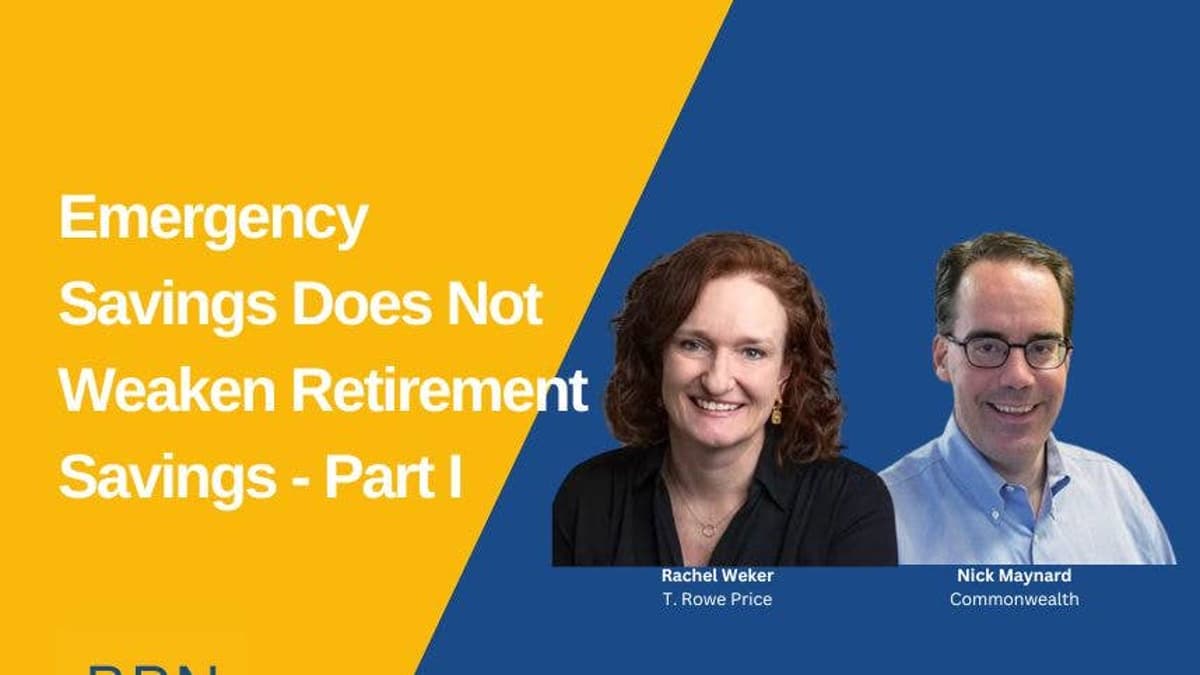
Emergency Savings Does Not Weaken Retirement Savings
Broadcast Retirement Network hosted a roundtable with Commonwealth and T. Rowe Price to examine how workplace emergency‑savings features are reshaping 401(k), 403(b) and 457(b) plans. Research cited shows employees with an emergency fund are 70% more likely to contribute to...

Schwab Flags the Risk Lurking in Your Winning Stocks
Charles Schwab warns investors that when a single stock exceeds 10% of a portfolio, the account becomes over‑concentrated and vulnerable to sharp losses. The firm notes a 40% plunge in a stock representing 20% of assets would erase about 8%...

Buy 3 Aberdeen Mutual Funds for Long-Term Growth
Aberdeen Asset Management (abrdn) oversees roughly $505.6 billion across more than 80 countries, offering a broad suite of equity, fixed‑income and multi‑asset products. The firm highlights three mutual funds for long‑term growth: the Emerging Markets ex‑China fund with an 18.2% three‑year...

Retiring Early? Here's How to Turn Low-Income Years Into a Roth Conversion Goldmine.
Early retirees can leverage low‑income years to perform Roth conversions, turning taxable traditional IRA or 401(k) balances into tax‑free growth. Converting while in a reduced tax bracket avoids higher marginal rates and eliminates future required minimum distributions. The strategy also...

Hawaii Taxes: What Retirees Should Know Now
Hawaii’s tax system combines high marginal income rates—up to nearly 11%—with several retiree-friendly offsets. Social Security benefits are fully exempt, many pensions receive favorable treatment, and the state’s property taxes are modest, typically $3,000‑$4,000 on a $1 million home after a...

Are Millennial Parents Savers? New Data Reveals They Are
A new Embark‑Angus Reid survey of 579 Canadian millennials (90% aged 30‑45) shows that expecting and new parents are actively saving for their children despite rising living costs. Seventy‑three percent have opened a Registered Education Savings Plan (RESP), and 84% would...

3 Diversified Bond Mutual Funds for Stable Portfolio Growth
Zacks highlights three top‑ranked diversified bond mutual funds—Federated Hermes International Bond Strategy (FIBPX), Goldman Sachs Dynamic Bond (GSOPX) and iShares U.S. Intermediate Credit Bond Index Fund (BICBX)—each holding a Zacks Rank #1 Strong Buy. Over the past three years, FIBPX...

Giving Gamechanger: Why Now's the Time to Use a Donor-Advised Fund
The One Big Beautiful Bill Act, enacted last summer, introduced a 0.5% of AGI floor for charitable deductions and lowered the top‑bracket deduction cap to $0.35 per dollar. Corporations now need contributions exceeding 1% of taxable income, with a 10%...

Great Depression Coming? Rich Dad Poor Dad Author Robert Kiyosaki Predicts ‘Giant Crash’ in 2026–27: Here’s His Strategy
Robert Kiyosaki warned on Twitter that a "giant crash" could hit markets in 2026‑27, potentially echoing a Great Depression‑type downturn. He reiterated his long‑standing belief that downturns create buying opportunities for assets like real estate, stocks, gold, silver, Bitcoin and...

401(k) Loans Vs. Withdrawals for Homebuyers: Risks, Rules, and Real Costs
Using retirement savings for a home purchase is allowed, but the choice between a 401(k) loan and a hardship withdrawal carries distinct tax, debt‑to‑income and long‑term wealth consequences. Loans can be up to $50,000 or 50% of the vested balance...

How to Overcome Our Highly Concentrated Markets
Passive investors face heightened concentration risk as the Australian ASX 200 and U.S. S&P 500 are now dominated by a handful of miners, banks and big‑tech firms, each accounting for roughly half of their respective market caps. While index funds remain the...

Government-Backed NS&I's New Fixed-Rate Savings Pay up to 4.5% Interest – Close to Topping the Tables
NS&I has introduced a suite of fixed‑rate savings bonds ranging from one to five years, offering rates as high as 4.5% AER on the one‑year product. Deposits start at £500 (≈ $625) and can go up to £1 million (≈ $1.25 million), with every...