
STAT+: Cancer Cells Can ‘Barf’ Proteins Onto Their Cell Surface. That May Create New Targets for Immunotherapies
Researchers at UCSF discovered the Src kinase, traditionally an intracellular signaling protein, displayed on the outer membrane of malignant cells. The finding, published in Science, showed surface Src was absent from healthy donor tissue, suggesting a tumor‑specific marker. This unexpected localization could provide a new antigen for antibody‑based or cellular immunotherapies targeting solid tumors. Experts caution that translational impact remains to be proven, but the result revives hopes for more precise cancer treatments.

Beyond the Safety Check: Why First-in-Human Trials Demand a New Approach in 2026
Phase I trials have evolved from simple safety checks into data‑rich, adaptive studies that integrate biomarker strategies, exposure‑response analyses, and formulation optimization. Regulators now expect sponsors to justify Phase II dosing decisions, making early pharmacodynamic and target‑engagement data essential. Emerging biotechs face...

Biotech Recovery: Fundamentals Meet Opportunity
Small- and mid‑cap biotechnology has rebounded sharply, climbing over 35% year‑to‑date in 2025 after a 20% early‑year dip and a 60% drawdown during the COVID‑era bubble. The rally is fueled by stronger clinical data, successful product launches, heightened M&A activity,...

No Evidence of Health Risks From Genetically Modified Crops Found
South Korean researchers from Seoul National University and Chosun University published a paper showing no scientific link between genetically modified (GM) crops and chronic diseases, confirming earlier findings from the 2016 National Academies report. Their analysis of PubMed literature and...

The Many Dangers of 7-Ketocholesterol
Researchers led by Matthew O’Connor have published a comprehensive review of 7‑ketocholesterol (7KC), an oxidized cholesterol formed by reactive oxygen species. The paper details how 7KC accumulates in atherosclerotic plaques, transforms macrophages into inflammatory foam cells, and exerts neurotoxic effects...

Pfizer to Close Ignite, Its R&D Services Unit for Small Biotechs
Pfizer announced the shutdown of its Ignite unit, a dedicated R&D services platform that partnered with early‑stage biotech companies. Ignite offered fee‑based scientific, regulatory, and strategic support, helping dozens of startups advance drug candidates. The closure aligns with Pfizer’s cost‑discipline...
Propanc Advances PRP Toward Clinical Trials for Pancreatic Cancer
Propanc Biopharma announced that its proenzyme therapy PRP is moving toward a Phase Ib first‑in‑human study for advanced pancreatic cancer. The company highlighted preclinical data showing more than 85 % tumor‑growth inhibition and secured FDA orphan‑drug designation. A validated pharmacokinetic assay developed...

Can High-Dose Vitamin D Prevent Long-COVID Cognitive Decline?
Researchers in the VIVID trial, one of the largest randomized studies on vitamin D and COVID‑19, found that a high‑dose vitamin D3 regimen (3,200 IU/day after a loading dose) did not lower acute disease severity, hospitalizations, or death. However, among participants...

In the Clinic for March 12, 2026
BioWorld’s March 12, 2026 clinic roundup aggregates a suite of data snapshots and special reports spanning biopharma, medical technology, and emerging therapeutic areas. The collection links to analyses on mRNA vaccine research, China’s GLP‑1 market, CAR‑T developments, and the med‑tech outlook for...

Diatom-Based Microrobots Show Promise for Targeted Photodynamic Therapy of Glioblastoma
Researchers at China’s Shenyang Institute of Automation have created magnetically controlled microrobots from diatom frustules for glioblastoma photodynamic therapy. The robots retain natural chlorophyll, serving as a built‑in photosensitizer, and can be steered via external magnetic fields to tumor sites....

Stanley Family Foundation Renews Commitment to Accelerate Psychiatric Research at Broad Institute
The Stanley Family Foundation has renewed its support for the Stanley Center for Psychiatric Research at the Broad Institute, bringing its cumulative investment to over $1 billion, including a fresh $280 million pledge. The funding fuels large‑scale genetic studies aimed at uncovering...
LLNL-Led Study Uses Machine Learning, Veterans’ Health Records to Identify ALS Drug-Repurposing Candidate
Lawrence Livermore National Laboratory and partners applied causal‑inference machine learning to electronic health records of more than 11,000 U.S. veterans with amyotrophic lateral sclerosis. The analysis, published in The Lancet Digital Health, identified 27 existing medications that correlate with longer...

A Simpler Form of DNA May Be Key to Non-Viral Gene Therapy, Study Suggests
Researchers have identified a streamlined DNA construct that could replace viral carriers in gene‑therapy applications. The study demonstrates that this minimalist DNA format delivers therapeutic genes with efficiency comparable to adeno‑associated viruses while eliciting a weaker immune response. Production of...
FDA to Unify Agency’s ‘Fragmented’ Safety Surveillance System
The FDA launched the Adverse Event Monitoring System (AEMS), a unified dashboard that merges seven previously fragmented safety databases into a single platform. Four databases are already live, with the remaining three slated for integration by May, covering drugs, vaccines,...
FDA to Unify Agency’s ‘Fragmented’ Safety Surveillance System
The FDA has launched the Adverse Event Monitoring System (AEMS), a unified platform that merges seven previously fragmented safety‑surveillance databases. Four of those databases are live today, with the remaining three slated for integration by May 2026. The agency processes...
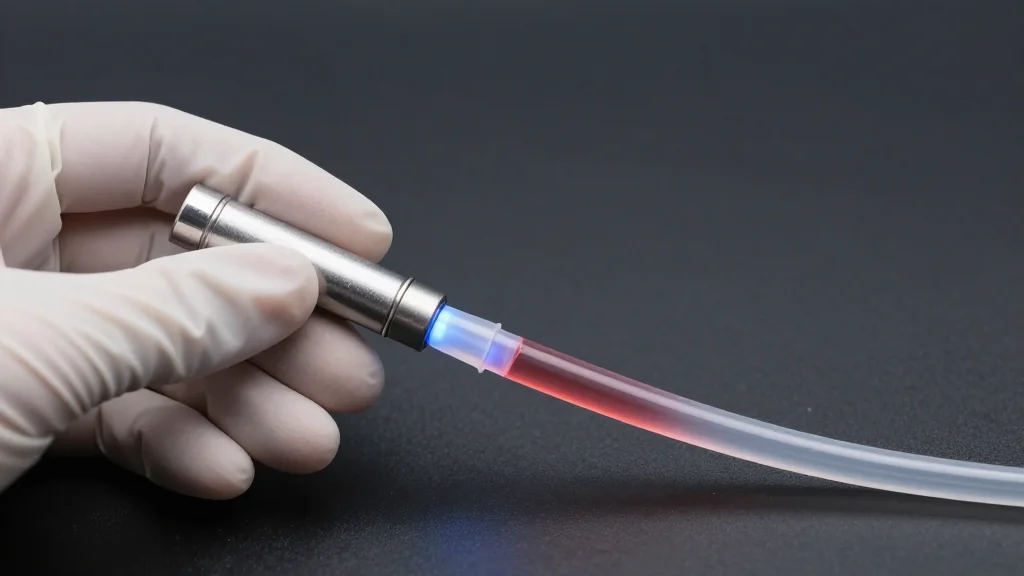
FDA Clears Intravascular Device Billed as ‘World’s Smallest Camera’ as Physicians Share New Data
Vena Medical secured FDA clearance for its Vena MicroAngioscope System, marketed as the world’s smallest intravascular camera, for peripheral artery imaging. The device provides real‑time color images without X‑ray fluoroscopy by pairing a balloon distal access catheter with a saline...

The Hepatitis B Birth Dose Trial That Triggered the WHO Alarm
The World Health Organization issued a formal warning on 13 February 2026 about a proposed randomized trial in Guinea‑Bissau that would withhold the hepatitis B birth‑dose vaccine from roughly half of 14,000 newborns. The study seeks to measure non‑specific effects...

Why African Striped Mice Can Be the Best of Dads — or the Worst
Researchers discovered that the Agouti gene acts as a molecular switch governing paternal behavior in African striped mice. Males housed together displayed aggression toward pups, while solitary males became attentive fathers, a shift linked to reduced Agouti activity in the...

PharmaShots Magazine-March-2026 Edition
AI is reshaping clinical trial oversight by moving from periodic checks to continuous, real‑time intelligence. Advanced analytics and machine learning now power predictive, risk‑based monitoring that aggregates data from decentralized sites, wearables, ePROs and multiple clinical systems. This integration enables...
/https://tf-cmsv2-smithsonianmag-media.s3.amazonaws.com/filer_public/6f/6f/6f6fdcf4-2eb5-46b7-bbae-350f4e5da15b/smithmag-podcast-s04-ep23-snake_venom-article.jpg)
Venomous Snakes Represent a Serious Public Health Problem. Scientists Are Biting Back With a Groundbreaking Antidote
Snakebite envenoming kills over 125,000 people each year and leaves three times as many disabled, while current horse‑derived antivenoms trigger severe allergic reactions in nearly half of patients. The high cost—up to $100,000 per course—and limited hospital access leave rural...

BridgeBio Builds Case for Early 2027 Launch of Dystrophy Drug
BridgeBio Pharma reported that its small‑molecule candidate BBP‑418 produced a 1.8‑fold increase in the α‑dystroglycan biomarker in a Phase 3 FORTIFY trial for limb‑girdle muscular dystrophy type 2I/R9, with effects sustained through 12 months. The trial enrolled 81 patients and also showed...

Aplagon Doses First Patient in P-IIa (HEALING) Trial of APAC for Peripheral Arterial Occlusive Disease/Chronic Limb Threatening Ischemia
Aplagon Therapeutics has administered the first dose of its intravenous APAC candidate to a patient in a Phase 2a (HEALING) trial for peripheral arterial occlusive disease leading to chronic limb‑threatening ischemia in Finland. The study will enroll approximately 42 CLTI...
Bridging Promise and Evidence in Psychedelic Medicine
Jacobs and colleagues present a state‑of‑the‑art review of psilocybin and MDMA‑assisted therapies, highlighting their potential for treatment‑resistant depression and PTSD. The authors emphasize the distinct, session‑based paradigm that leverages acute neurobiological changes to produce lasting clinical benefits. However, they also...

New FDA Guidance Could Elevate Pharma’s Biosimilar Market
The FDA issued draft guidance that could lower biosimilar testing requirements by permitting foreign comparator data, potentially cutting development costs by about half. Over 80 biosimilars have been approved in the U.S. since the first approval 11 years ago, yet...
Bavarian Nordic and SII Sign Agreement for Chikungunya Vaccine Production
Bavarian Nordic has signed a manufacturing agreement with the Serum Institute of India to transfer full technology for its chikungunya vaccine, CHIKV VLP (branded Vimkunya). The deal replaces an earlier partnership with Biological E and builds on the companies' existing mpox‑vaccine collaboration....

Breakthrough Capsule Technology Offers New Insights Into Individual Cells
Researchers at Umeå University have unveiled a capsule‑based platform that encapsulates individual cells in semi‑permeable shells, enabling multiple, sequential molecular assays on the same cell. The design permits small reagents to diffuse in while retaining DNA and RNA, and it...

Lilly Warns of Impurity Risk in Certain Compounded Forms of Mounjaro and Zepbound
Eli Lilly warned that compounded versions of its GLP‑1 drugs Mounjaro and Zepbound, when mixed with vitamin B12, may contain unsafe impurities. The alert follows growing off‑label compounding as demand outpaces supply. Lilly’s notice urges clinicians and patients to verify product sources...

From Two Trials to One, Sponsors Face a Higher Standard
The FDA announced that a single pivotal trial can now satisfy efficacy requirements for new drug applications, replacing the previous two‑study mandate. This change raises expectations for data depth, quality, and risk‑based management throughout the trial lifecycle. Guests Oxana Iliach...

FAST‐CRISPR: Fusogenic Association and Secured Transfection of CRISPR/Cas9 Ribonucleoproteins Using Lipid‐Silica Hybrid Nanoparticles for Therapeutic Genome Editing
Researchers introduced FAST‑CRISPR, a lipid‑silica hybrid nanoparticle that fuses directly with cell membranes to deliver CRISPR/Cas9 ribonucleoproteins. By combining a 1:1 weight ratio of cationic DOTAP and ionizable DODMA lipids with large‑pore silica cores, the platform achieves high RNP loading...
FAST‐CRISPR: Fusogenic Association and Secured Transfection of CRISPR/Cas9 Ribonucleoproteins Using Lipid‐Silica Hybrid Nanoparticles for Therapeutic Genome Editing (Small 15/2026)
Researchers at UNIST and collaborators introduced FAST‑CRISPR, a lipid‑silica hybrid nanoparticle system designed to ferry CRISPR/Cas9 ribonucleoproteins into cells. The platform leverages a fusogenic lipid coating that promotes rapid endosomal escape, securing high‑efficiency genome editing while preserving RNP integrity. Preclinical...

Long-Term Neurodevelopment Effects of Antenatal COVID-19
A new longitudinal study finds that children born to mothers infected with COVID-19 during pregnancy exhibit measurable neurodevelopmental deficits. Brain scans at two years reveal reduced cortical thickness and lower IQ scores compared with unexposed peers. The research, spanning over...

Early Life Probiotics May Support Gut and Immune Development, Study Suggests
A randomized controlled trial of 119 infants showed that daily supplementation with Bifidobacterium infantis YLGB‑1496 for 12 weeks markedly improved gastrointestinal health, reducing stomach aches, diarrhea episodes, and related clinic visits. The probiotic also sustained higher fecal sIgA levels and...

George Medicines Partners with Ahngook Pharmaceutical to Commercialize GMRx2 in Korea
George Medicines has signed an exclusive licensing and supply agreement with South Korea’s Ahngook Pharmaceutical to bring its triple‑combination antihypertensive pill, GMRx2, to the Korean market. The single‑pill formulation blends telmisartan, amlodipine and indapamide in three dose strengths, aiming for...

In Vitro Generation of Highly Infectious Recombinant Prions Adopting Structural Architectures of Bona Fide Prions
Researchers have developed a protein misfolding cyclic amplification (PMCA) assay that reliably produces recombinant prion fibrils with infectivity comparable to the RML brain‑derived strain. Cryo‑EM analysis shows these fibrils adopt the characteristic V‑shaped, parallel in‑register β‑sheet architecture, though the C‑terminal...

C2N Diagnostics Partners with BeauBrain Healthcare to Offer PrecivityAD2 Blood Test for Alzheimer’s Disease in South Korea
C2N Diagnostics has signed a partnership with BeauBrain Healthcare to introduce its PrecivityAD2 blood test for Alzheimer’s disease in South Korea, targeting patients aged 50 and older with mild cognitive impairment or dementia. Clinical studies published in JAMA and npj...

Experimental Study on the Construction of a Rabbit Biliary Stent Model via Transduodenal Puncture and the Placement of an Modified...
Researchers have created a New Zealand rabbit model that mimics biliary stenting by using a transduodenal wall puncture and a modified intravenous catheter. The experimental group achieved an 86.7% technical success rate, with most complications being mild and transient. Serum liver...

Ancient Mushroom, Modern Medicine: Paul Stamets Says Agarikon Mycelium May Be Key to Fighting Viral Pandemics
Mushroom mycologist Paul Stamets presented data indicating that Agarikon (Fomitopsis officinalis) mycelium possesses broad antiviral properties. In two placebo‑controlled trials, a combined Agarikon‑turkey‑tail extract reduced COVID‑19 vaccine side effects, sustained antibody titers, and accelerated recovery in hospitalized patients. The research,...

Nektar Therapeutics (NKTR) Q4 2025 Earnings Call Transcript
Nektar Therapeutics reported strong Q4 2020 results, highlighting robust progress on its cytokine platform. The IL‑2 agonist BEMPEG demonstrated a median progression‑free survival of 30.9 months in melanoma and is now enrolled in six registrational trials across melanoma, renal, bladder,...

Daily Briefing: Vaccine-Carrying Mosquitoes Could Inoculate Bats Against Rabies
Researchers have engineered Aedes aegypti mosquitoes to carry vaccine antigens in their saliva, successfully inoculating bats against rabies and Nipah viruses in laboratory experiments. The mosquitoes were fed vaccine‑laden blood, then transmitted the immunogen when they fed on or were...

DNA Origami Vaccine Rivals mRNA Shots While Being Easier to Store and Manufacture
Researchers at Harvard’s Wyss Institute and Dana‑Farber unveiled DoriVac, a DNA origami‑based vaccine platform that delivers antigens and adjuvants on a self‑folding nanostructure. In pre‑clinical mouse studies and a human lymph‑node‑on‑a‑chip model, DoriVac generated antibody and T‑cell responses comparable to...

Researchers Use AI to Develop RNA-Based Synthetic NAND Switch in Living Cells
Researchers at TU Darmstadt have engineered the first RNA‑based synthetic NAND gate by linking two riboswitches that respond to distinct ligands. Using high‑throughput screening combined with a deep‑learning‑driven Bayesian optimization loop, they evaluated only 82 variants to isolate sequences that exhibit...

Startup Vima Adds Parkinson’s to Movement Disorder Scope, Expanding Series A Round to $100M
Vima Therapeutics announced an additional $40 million raise, taking its Series A funding to $100 million. The capital will support parallel Phase 2 trials of its lead candidate VIM0423 in isolated dystonia and Parkinson’s disease, expanding the startup’s focus beyond the rare movement disorder....

Can FDA Tolerate Cancer Risk for Rare Pediatric Disease Gene Therapies?
The FDA placed a clinical hold on Regenxbio’s RGX‑111 and RGX‑121 gene‑therapy trials after a pediatric MPS I patient developed a tumor four years post‑treatment. The case marks the first documented long‑latency cancer linked to an adeno‑associated virus (AAV) vector in...

Science Spotlight: New Ways to Attack Β-Amyloid Plaques in Alzheimer’s
Two pre‑clinical studies propose active clearance of β‑amyloid as a new Alzheimer’s strategy. Researchers at Washington University engineered astrocytes with chimeric antigen receptors (CARs) that engulf plaques, while another team designed bispecific peptides that ferry amyloid into cells for lysosomal...

Artificial Kinetochores Take the Pressure Off Aging Chromosomes During Meiosis
Researchers at RIKEN have engineered protein‑based artificial kinetochores that compete with natural chromosome kinetochores for microtubule attachment during meiosis. By lowering the overall pulling force, these constructs keep weakened chromosome pairs together in aged mouse oocytes, restoring accurate DNA segregation....
Hawley Unveils Bill to Ban Abortion Pill, Strip FDA Approval
Senator Josh Hawley introduced a bill to immediately withdraw the FDA's safety approval for mifepristone, the primary abortion medication. The legislation follows recent Supreme Court and Trump‑era reviews of the drug and cites a controversial conservative study alleging serious adverse...

AGENT IDE Midterm Results Still Give DCB an Edge for In-Stent Restenosis
Three‑year follow‑up of the AGENT IDE trial shows the Agent paclitaxel‑coated balloon (DCB) outperforms uncoated balloon angioplasty in treating in‑stent restenosis (ISR), with target‑lesion failure (TLF) rates of 32.7% versus 40.9% (hazard ratio 0.72). The advantage is driven mainly by...
Foghorn Therapeutics Provides Financial Update for 2025 and 2026 Strategic Outlook
Foghorn Therapeutics announced a financial update highlighting progress on its lead oncology candidate FHD-909, which remains on schedule in Phase 1 dose‑escalation for SMARCA4‑mutant NSCLC. The company also confirmed that its selective CBP and EP300 degrader programs are slated for...

Elutia Reports Fourth Quarter and Full Year 2025 Financial Results; Initiates NXT-41 Regulatory Process
Elutia Inc. reported its Q4 and full‑year 2025 results, highlighting the $88 million sale of its BioEnvelope business to Boston Scientific and a cash position of $36.4 million plus $8 million in escrow. The company submitted a 510(k) for the base biologic matrix...

NanoTess Lands Embecta Deal to Put Its Tech in 14,000 Canadian Pharmacies
Calgary‑based NanoTess has signed a distribution agreement with diabetes‑care company Embecta to place its NanoSALV Catalytic gel in more than 14,000 Canadian pharmacies. NanoSALV, authorized by Health Canada in 2022, uses micron‑scale catalytic particles to speed cellular reactions, reduce inflammation...