Today's Cybersecurity Pulse

CISA adds critical Android and Linux flaws to KEV catalog
The U.S. Cybersecurity and Infrastructure Security Agency (CISA) listed two high‑severity vulnerabilities in its Known Exploited Vulnerabilities catalog: Android CVE‑2025‑48595, an integer overflow that enables privilege escalation on Android 14‑16 without user interaction, and Linux CVE‑2022‑0492. Google released patches for the Android bug in June 2026.
Also developing:
By the numbers: Ingeteam receives $82.5M loan from EIB

Hasbro Says It Was Hacked, and May Take ‘Several Weeks’ to Recover
Hasbro confirmed a cyberattack discovered on March 28, prompting the company to shut down parts of its IT infrastructure. The toy maker activated business continuity plans to keep order processing and shipping functional while external cybersecurity experts work on remediation. Hasbro warned investors that full resolution could take several weeks, and it has not yet determined whether data was stolen or ransom demands were made. The incident underscores the vulnerability of consumer‑brand companies to disruptive cyber threats.
Commvault Expands Integrations with Microsoft Security to Connect AI Threat Detection, Investigation, and Trusted Recovery
Commvault announced an expanded integration with Microsoft Security, linking its Cloud platform to Microsoft Sentinel and Security Copilot. The new Sentinel connector streams backup‑related alerts—such as malware detections and ransomware anomalies—into a centralized data lake for real‑time analysis. An Investigation...
Meeting Regulatory Requirements with Informatica
Informatica highlighted the critical role of trusted data in meeting ever‑growing regulatory demands during a DBTA webinar. A recent survey cited by David Thain shows 93% of data leaders say regulations impede their initiatives. Speakers emphasized that siloed data hampers...

NYC Mayor Zohran Mamdani Lifts Government TikTok Ban, Citing Need to Reach New Yorkers on Social Media
New York City Mayor Zohran Mamdani has lifted the 2023 ban on TikTok for government use, allowing agencies to operate on the platform under strict guidelines. The new policy requires dedicated government devices, designated staff, and agency‑managed credentials to address...

Kaufman Rossin and Synack Partner to Scale AI-Powered, Continuous Penetration Testing for Regulated Companies
Kaufman Rossin, a top‑50 public accounting and advisory firm, has partnered with Synack, the leader in penetration testing as a service, to deliver AI‑powered, continuous security testing for regulated enterprises. The collaboration blends Kaufman Rossin’s deep cybersecurity advisory expertise with...

European-Chinese Geopolitical Issues Drive Renewed Cyberespionage Campaign
Proofpoint reports that Chinese state‑aligned cyberespionage group TA416, also known as Twill Typhoon, has re‑engaged Europe in mid‑2025, targeting diplomatic missions, NATO delegations and EU institutions amid heightened EU‑China tensions following the 25th EU‑China summit. The campaign coincides with disputes over...

North Korean Hackers Linked to Axios Npm Supply Chain Compromise
On March 31, 2026, attackers compromised a maintainer’s npm account and published two malicious versions of the popular Axios HTTP client library. The backdoored packages contained a hidden dependency that executed a post‑install script, downloading the WAVESHAPER.V2 remote‑access trojan targeting...

Unauthorised Access Reported in Ministry of Finance Systems
Hackers breached primary processes at the Dutch Ministry of Finance, raising concerns over employee personal data exposure. The intrusion did not affect any financial information, and services provided by the Tax and Customs Administration remain operational. Access to the compromised...
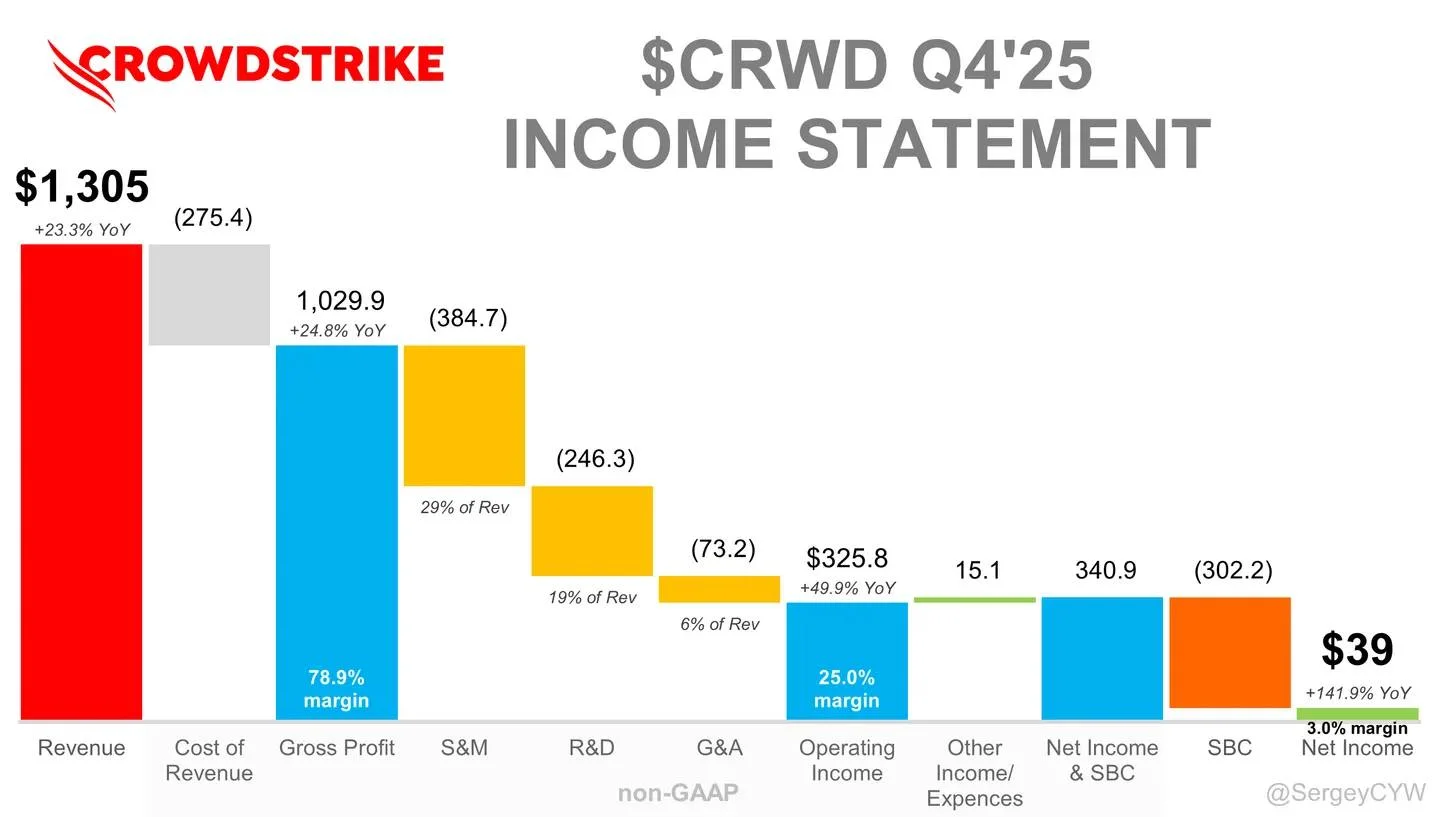
CrowdStrike Becomes AI Era’s Core Security Layer
AI-driven cyberattacks are scaling rapidly — and $CRWD is positioning itself as a core security layer for the AI era AI is not only increasing attack volume, but also redefining how attacks are executed. Security is shifting from reactive to autonomous. $CRWD...

H33.ai Introduces HICS to Provide Mathematically Verifiable Software Security Scores
H33.ai unveiled HICS (H33 Independent Code Scoring), a free platform that generates mathematically verifiable software security scores using STARK zero‑knowledge proofs and Dilithium post‑quantum signatures. The tool evaluates code across five dimensions and issues a .h33 certificate containing a SHA3‑256...

Chinese Captain Sentenced for Taiwan Cable Damage
A Chinese captain was sentenced to three years in prison for deliberately damaging the Taiwan‑Penghu No. 3 submarine communications cable by anchoring in a restricted zone. The court ordered him to pay NT$18.22 million (about US$570,000) in damages to Chunghwa Telecom. The...

Apple Deploys Lock‑Screen Alerts and macOS Paste Warning to Counter ClickFix Threats
Apple has begun pushing lock‑screen alerts to iPhones running iOS 13‑17.2.1 and introduced a macOS Terminal paste blocker in the Tahoe 26.4 update. The moves target the fast‑growing ClickFix social‑engineering campaign that tricks users into executing malicious commands.

CIS Benchmarks March 2026 Update
The Center for Internet Security released its March 2026 benchmark update, refreshing dozens of hardening guides across Windows, Linux, cloud, and database platforms. Highlights include Windows 11 Enterprise (v5.0.0) with nine new settings, Windows Server 2022/2025 revisions, and a minor OCI Foundations tweak....

Exabeam Expands Agent Behavior Analytics to Secure AI Agents Across ChatGPT, Copilot and Gemini
Exabeam announced an expansion of its Agent Behavior Analytics platform to monitor AI agents in ChatGPT, Microsoft Copilot, and Google Gemini. The new suite creates dynamic baselines, detects prompt injection and model abuse, and tracks identity, privilege, and lifecycle events...

Our Ongoing Commitment to Privacy for the 1.1.1.1 Public DNS Resolver
Cloudflare celebrated the eight‑year anniversary of its 1.1.1.1 public DNS resolver by publishing the results of a fresh independent privacy audit conducted by the same Big 4 accounting firm that examined the service in 2020. The audit confirms that the resolver’s...

Sars to Give Every Taxpayer a Digital Identity in Sweeping Tech Overhaul
South Africa's revenue agency SARS unveiled Modernisation 3.0, a digital overhaul that will issue every taxpayer a biometric, two‑factor digital identity. The programme adds AI‑driven case management, instant payments with the Reserve Bank, and automatic VAT assessments. In FY 2025/26...

Ransomware Groups Exploit Legit IT Tools to Bypass Antivirus
Researchers at Seqrite have identified a "dual‑use dilemma" where ransomware groups repurpose legitimate IT utilities such as IOBit Unlocker and Process Hacker to disable antivirus software. These signed tools allow attackers to create a silent zone, bypassing traditional signature‑based defenses...

Casbaneiro Phishing Targets Latin America and Europe Using Dynamic PDF Lures
Brazilian cyber‑crime group Augmented Marauder, also known as Water Saci, is running a multi‑vector phishing campaign against Spanish‑speaking organizations in Latin America and Europe. The campaign delivers the Casbaneiro banking trojan and the Horabot spreader via password‑protected PDF attachments that are...

Kaspersky Warns of New Phishing Technique Exploiting Trusted Platforms
Kaspersky has identified a new phishing method that hijacks trusted digital platforms such as task‑management and notification services to deliver seemingly authentic messages. The attacks mimic internal corporate communications, prompting users to click links that lead to counterfeit login portals...

Storware Releases Backup and Recovery v7.5 with Platform9 Integration and Expanded OpenStack Migration Support
Storware announced Backup and Recovery 7.5, adding native Platform9 Private Cloud Director integration and expanding V2V migration to Citrix Hypervisor and XCP‑ng. The release also brings full Nutanix v4 API support, Proxmox compatibility with Ceph v19 and synthetic backups, and performance enhancements...

Kingston Introduces Next-Gen XTS-AES 256-Bit Hardware-Encrypted Up to 256GB USB Drive
Kingston Digital unveiled the IronKey Locker+ 50 G2, a hardware‑encrypted USB flash drive featuring FIPS 197‑certified XTS‑AES‑256 encryption. The device offers BadUSB protection, brute‑force lockout, and dual admin/user passwords with complex or passphrase modes. Available in 32 GB to 256 GB capacities, it delivers up...

NinjaOne Revolutionizes Vulnerability Management with AI-Driven Assessment to Reduce Risk Faster
NinjaOne launched NinjaOne Vulnerability Management, an AI‑driven module embedded in its Unified IT Operations Platform that delivers continuous, real‑time vulnerability detection and automated patching for Windows and Linux endpoints. The solution replaces periodic scans with server‑side analytics, providing always‑current risk...

FBI Warns Against Using Chinese Mobile Apps Due to Privacy Risks
The FBI issued a public service announcement warning Americans that many popular mobile apps developed in China pose significant privacy and data‑security risks. The advisory highlights that these apps can collect extensive personal information, store it on servers in China,...

WhatsApp Malware Campaign Uses Malicious VBS Files to Gain Persistent Access
Microsoft Defender has identified a WhatsApp‑based malware campaign that distributes malicious Visual Basic Script (VBS) files. The scripts employ social engineering and living‑off‑the‑land techniques, renaming legitimate Windows utilities to download additional payloads. Attackers host these payloads on trusted cloud services...

Blog 111a. Banking’s Identity Problem: Why Digital Cards and Instant Payments Need a Human-Verified Security Layer
The article argues that modern banking’s security still leans heavily on credentials, sessions, and device identifiers, leaving digital cards and instant payments exposed to fraud. It highlights regulators’ push for layered authentication yet notes that criminals routinely bypass these controls...

Venom Stealer MaaS Handles Attacks From ClickFix to Crypto Theft
Venom Stealer, a new malware‑as‑a‑service, enables cybercriminals to launch ClickFix attacks that harvest credentials and cryptocurrency wallets. The service is priced at $250 per month or $1,800 for a lifetime license and includes four Windows and macOS phishing templates. Its...

CrystalX Malware-as-a-Service Spreads via Telegram With Stealer, RAT Tools
Hackers are marketing a new Malware‑as‑a‑Service platform called CrystalX RAT through private Telegram channels, offering a subscription‑based toolkit that blends remote‑access, data‑stealing, keylogging, crypto‑clipping, and prankware capabilities. The service provides an automated builder with geofencing, anti‑analysis, and ChaCha20‑encrypted payloads, while...

ImageMagick Zero-Day Enables RCE on Linux and WordPress Servers
Octagon Networks uncovered a critical ImageMagick zero‑day that enables remote code execution on major Linux distributions and WordPress sites. The flaw, dubbed a “magic byte shift,” lets attackers disguise malicious scripts as harmless images, bypassing file‑extension checks and even secure...

Are We Training AI Too Late?
GreyNoise warns that AI‑driven security models are trained on data that arrives after attacks have succeeded, creating a reactive lag. Their 2026 State of the Edge report shows over half of remote‑code‑execution traffic originates from IPs with no prior reputation,...

5 of the Most Common Accounting Cybersecurity Threats
Accounting systems are the financial backbone of any enterprise, making them prime targets for cyber attacks. The article outlines five prevalent threats—AI‑powered email scams, ransomware, ERP and application flaws, insider risk with privilege creep, and insecure cloud accounting services—and recommends...

Hackers Exploit Hotel Booking Systems to Send Fake Payment Requests to Guests
Hackers are weaponizing compromised hotel staff credentials to infiltrate booking management systems and send personalized payment requests to guests. By blending real reservation details with urgent language, the "Reservation Hijack Scam" tricks travelers into entering card information on counterfeit pages....

Accenture Teams with Anthropic to Launch Cyber.AI, an AI‑driven Security Ops Platform
Accenture announced a partnership with Anthropic to launch Cyber.AI, an AI‑driven cybersecurity operations platform built on Anthropic’s Claude model. The solution automates threat detection, investigation and response, and Accenture says it has already seen speed and coverage gains in internal...

NIST Finalizes PQC Standards, NSA Sets 2027‑2035 Deadlines, Sparking $15B Enterprise Migration
NIST completed its first three post‑quantum cryptography standards in August 2024 and the NSA announced a phased migration deadline ending in 2035. The combined mandates are projected to drive a $15 billion market, with QSE unveiling its QPA v2 platform to...

Mercor Hit by Supply‑chain Cyberattack Tied to Compromised LiteLLM Library
Mercor disclosed that a supply‑chain attack on the open‑source LiteLLM library compromised its systems, joining thousands of firms hit by the breach. The incident, linked to hacking group TeamPCP and later claimed by Lapsus$, underscores growing risks in open‑source components...

A Taxonomy of Cognitive Security
K. Melton introduced a five‑level taxonomy of cognitive security, framing the brain as a layered system akin to IT architecture. The NeuroCompiler—mirroring Kahneman’s System 1—interprets raw sensory input before conscious awareness and can route outputs directly back to behavior, creating a...

Eight in 10 UK Manufacturers Hit by Cyber Incident in a Year
New ESET research shows 78% of UK manufacturers suffered a serious cyber incident in the past year, with 95% reporting direct business impact. Over half (53%) incurred financial losses, averaging six‑figure amounts, while 44% faced supply‑chain disruptions and 39% missed...

9 Ways CISOs Can Combat AI Hallucinations
AI hallucinations are undermining governance, risk and compliance (GRC) processes as generative tools begin making judgment calls on control effectiveness and incident handling. Security leaders warn that unchecked AI can produce convincing yet inaccurate assessments, leading to faulty risk scores...

SentinelOne Autonomous Detection Blocks Trojaned LiteLLM Triggered by Claude Code
SentinelOne’s AI‑driven endpoint platform automatically detected and halted a supply‑chain attack that leveraged a compromised LiteLLM package. The malicious chain was triggered after an AI coding assistant installed the tainted library, leading to hidden Python code execution, data theft and...

Anthropic Leaks 2,000 Claude Code Files, No Data Breach
Anthropic inadvertently included internal source code for its AI coding assistant Claude Code in a recent update, exposing nearly 2,000 files on GitHub; no sensitive customer data or credentials were compromised. cybersecurity

Banks Fail to Shield Your Money From Digital Scams
Your money is not safe. You are left completely exposed to digital financial crimes and e-banking scams. The latest BNM 2025 report proves that financial institutions are failing to properly protect you. Wake up before your hard-earned life savings vanish forever.

10 Data Security Stories to Know About (March 2026)
March 2026 saw a wave of data‑security incidents spanning municipal ransomware, high‑profile corporate breaches, and controversial law‑enforcement data purchases. A ransomware attack forced Foster City, California to declare a state of emergency, while a Verizon‑authorized retailer exposed over 6.3 million customer...

Russia Bans Apple ID Payments to Curb VPN Use
Russia's Ministry of Digital Development has ordered mobile operators to disable Apple ID payments in a bid to make accessing VPNs harder. https://t.co/oKO2qFNeHk

Crypto's Security Flaw: Quantum Attacks Expose Real Risk
Literally the most braindead cope Newsflash: cryptographic currencies are vulnerable to cryptographic attacks Nic investing in quantum solutions to Bitcoin is conviction in the problem, not conflict of interest Focusing on the COI is denial cope

CBN Gives Banks 21 Days to Grade Their Cyber Defences
Nigeria's central bank has issued a circular requiring banks, fintechs and other financial institutions to complete a new Cybersecurity Self‑Assessment Tool (CSAT) within 21 days for deposit banks and five weeks for other entities. The move follows a surge in...

Quantum Computers Require Far Fewer Resources to Crack Encryption
Quantum computers need vastly fewer resources than thought to break vital encryption - Ars Technica https://t.co/pLuvHMFLOP

KiloClaw Releases First Public AI Coding Security Audit
🚨 KiloClaw just published something no AI coding platform has ever done. An independent 10-day security audit. Full findings. Public. Here's what every developer needs to know ↓ https://t.co/ykYrYWTIYX

Claude Code Source Leak Sparks Massive Online Uproar
Claude Code's entire source code has been leaked and the internet is up in arms. https://t.co/KcenyVm6zg

Data Sovereignty Now a Board‑level Infrastructure Priority
Sovereignty has gone from being a niche compliance concern to a board-level infrastructure priority. https://t.co/p9o7WKQHF9

OpenClaw's Powerful Automation Carries Significant Security Risks
OpenClaw can browse the web, run shell commands, and send emails on your behalf, but it comes with documented security risks that every user should understand before deploying it. https://t.co/UmAoMn8hSv

TEEs Have Been Fundamentally Flawed From the Start
I’ve been saying this for past decade at least. TEEs are a bad idea, from inception.