Today's Cybersecurity Pulse

Google sues Chinese cybercrime network for AI‑driven scam campaign
Google has filed a civil lawsuit against the Chinese group Outsider Enterprise, accusing it of using the Gemini generative‑AI model to mass‑produce phishing sites and send millions of fraudulent text messages. The operation deployed roughly 9,000 fake websites, a million malicious domains and dispatched 2.5 million scam texts in two weeks, scamming hundreds of thousands and causing losses in the millions of dollars. Google says the suit aims to dismantle the network and prevent further AI‑enabled abuse.
Also developing:
Why Identity Security Must Move Beyond MFA
Enterprise MFA usage has reached roughly 70% in early 2025, cementing it as a core defense against automated attacks. Yet cybercriminals exploit AI‑driven phishing, SIM swapping, and credential theft to bypass even strong multi‑factor controls. Recent data shows a 63% surge in phishing‑resistant authenticators such as FIDO2 keys, while email OTPs and SMS codes remain weak points. Experts argue that combining MFA with continuous identity‑threat detection is essential to protect the human element and reduce breach risk.

Tesla Hacked, 37 Zero-Days Demoed at Pwn2Own Automotive 2026
Security researchers at Pwn2Own Automotive 2026 demonstrated 37 zero‑day vulnerabilities in Tesla's infotainment system, earning $516,500 on day one. Synacktiv secured $35,000 by chaining an information leak and out‑of‑bounds write to gain root, while other teams exploited EV chargers and navigation...

Internet Voting Is Too Insecure for Use in Elections
A recent open letter warns that internet voting remains fundamentally insecure, with no existing or foreseeable technology able to guarantee its safety. Despite decades of academic consensus, vendors continue to market online voting solutions as secure. The letter specifically calls...
Cyber Insights 2026: API Security – Harder to Secure, Impossible to Ignore
SecurityWeek’s Cyber Insights 2026 warns that APIs, already handling roughly 83 % of internet traffic, will become even more critical as agentic AI proliferates. The rise of autonomous AI agents is set to double the number of API endpoints by 2026, expanding...

Last Rites for Perpetual Enterprise Software Licenses?
Enterprise software vendors are accelerating the retirement of perpetual‑license products, declaring many versions End of Availability and pushing customers toward cloud‑based SaaS suites. While the shift may raise short‑term costs, research shows that modern subscription models deliver better cybersecurity, functionality,...

Adversa AI Wins 2026 BIG Innovation Award for Agentic AI Security Platform
Adversa AI’s Agentic AI Security Platform has been named a winner in the 2026 BIG Innovation Awards for Innovative Products – Software, as announced by the Business Intelligence Group. The platform tackles the emerging attack surface of autonomous AI agents,...

Enterprise-Grade Identity Verification for AI-Enhanced Workflows
Enterprises accelerating AI adoption face a critical gap in identity verification. A GBG report shows 31% of businesses struggle to detect fraud during onboarding, exposing AI workflows to manipulation. Enterprise‑grade verification combines biometrics, document validation, API checks, MFA and continuous...

Qers Achieves Universal Post-Quantum Cryptography Resilience Scoring for IoT and IIoT Systems
Researchers at Luleå University of Technology introduced QERS, a Quantum Encryption Resilience Score that evaluates post‑quantum cryptography (PQC) suitability for IoT and IIoT devices. The framework aggregates six normalized metrics—latency, packet reliability, CPU load, energy use, RSSI, and key size—into...

ErrTraffic Exploits Visual Page Breaks to Fuel ClickFix Attacks, Rebranding Exploits as “GlitchFix”
ErrTraffic is a traffic‑distribution system that powers ClickFix social‑engineering attacks by deliberately corrupting website visuals—a technique dubbed “GlitchFix.” When a victim visits a compromised page, the script distorts text, CSS and cursor movement before presenting a fake update prompt that...

Crooks Impersonate LastPass in Campaign to Harvest Master Passwords
LastPass disclosed an active phishing campaign that began around January 19, 2026, in which attackers impersonated the service with urgent‑maintenance emails to harvest master passwords. The messages contain links to an Amazon S3‑hosted page that redirects to a counterfeit LastPass...

Oracle’s First 2026 CPU Delivers 337 New Security Patches
Oracle has issued its first Critical Patch Update for 2026, delivering 337 security patches that address roughly 230 unique CVEs across more than 30 products. More than two dozen of the fixes target critical‑severity bugs, and over 235 patches remediate...

Meet Confer: Signal Founder’s Privacy-Focused, End-to-End Encrypted ChatGPT Alternative
Signal founder Moxie Marlinspike has launched Confer, a privacy‑first AI chatbot that encrypts every conversation end‑to‑end. The service uses passkey authentication, server‑side encryption, and runs in a Trusted Execution Environment to prevent data leakage. A free tier allows 20 messages...

Vulnerability Prioritization Beyond the CVSS Number
The article argues that relying solely on CVSS scores misguides vulnerability prioritization. Real‑world incidents like Equifax, SolarWinds, and Log4Shell show that medium‑scoring flaws can cause outsized damage when they propagate through interconnected systems. It introduces the Unified Linkage Model (ULM)...
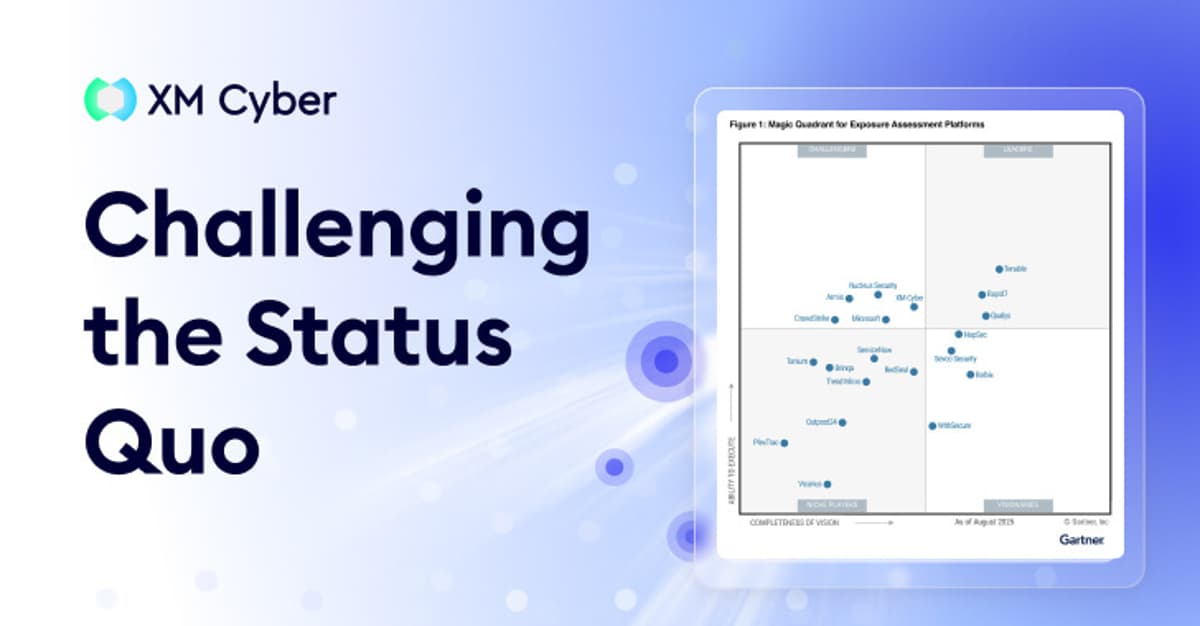
Exposure Assessment Platforms Signal a Shift in Focus
Gartner’s inaugural Magic Quadrant introduces Exposure Assessment Platforms (EAP) as a formal replacement for traditional vulnerability management, emphasizing Continuous Threat Exposure Management. The report evaluated 20 vendors on continuous discovery, risk‑informed prioritization, and cross‑environment visibility. Data shows 74 % of identified...
Linux Users Targeted by Crypto Thieves via Hijacked Apps on Snap Store
Security researcher Alan Pope revealed that crypto thieves are hijacking expired domains linked to Snap Store publishers to gain Snapcraft account access and push malicious updates. The attackers replace benign snaps with crypto‑wallet malware that steals recovery phrases via automatic...

Magecart Hack Injects JavaScript to Steal Online Payment Data
Security researchers have uncovered a new Magecart‑style campaign that injects obfuscated JavaScript from cc-analytics.com/app.js into e‑commerce checkout pages. The script captures credit‑card numbers and billing details, then exfiltrates them to attacker‑controlled servers at pstatics.com via XMLHttpRequest POSTs. Infrastructure analysis reveals...

Cside Targets Hidden Website Privacy Violations with Privacy Watch
cside unveiled Privacy Watch, an AI‑driven platform that continuously monitors client‑side third‑party scripts for hidden data collection and privacy violations. The tool automatically generates evidence logs and regulation‑specific reports to help organizations meet GDPR, CPRA, HIPAA and emerging state‑level requirements. With...

IonQ Appoints New SVP to Lead Quantum Networking and Security Division
IonQ announced the appointment of Domenico Di Mola as Senior Vice President of Engineering for its Quantum Networking, Security, and Sensing (QNSS) division. Di Mola will steer engineering and strategy for quantum‑secure networking, distributed‑sensing architectures, and the integration of quantum processors with...

Risk of AI Model Collapse to Drive Zero Trust Data Governance, Gartner Says
Gartner predicts that within the next two years up to 50% of global enterprises will adopt zero‑trust data governance as AI‑generated content floods books, code repositories, and research papers. The feedback loop of large language models training on prior AI...

Crittora Introduces APP, an Execution-Time Authorization Layer for AI Agents
Crittola launched the Agent Permission Protocol (APP), a runtime authorization layer that cryptographically binds a specific AI agent, its intended action, and the tools it may use. The protocol enforces least‑privilege, time‑bound permissions and fails closed if verification is missing....

13 Cyber Questions to Better Vet IT Vendors and Reduce Third-Party Risk
Enterprises are increasingly exposed to cyber‑risk through third‑party IT providers, as recent high‑profile breaches—Marks & Spencer’s £300 million loss, a Chinese group stealing OAuth tokens from 700 firms, and a SAP NetWeaver zero‑day—demonstrate. Attackers exploit trusted vendor pathways, bypassing traditional perimeter...

Cybercriminals Speak the Language Young People Trust
Criminal networks are systematically recruiting minors through familiar platforms such as TikTok, Instagram, Snapchat and Discord, using encrypted messaging and crypto payments to mask their activities. They speak in coded, game‑like language that makes illegal tasks appear low‑risk and rewarding,...

For Cyber Risk Assessments, Frequency Is Essential
Cyber risk assessments function like medical check‑ups, enabling organizations to detect vulnerabilities before attackers exploit them. The article highlights that regular assessments uncover data exposure—one in ten cloud data sets is openly accessible—and reveal that over 99% of compromised accounts...

Bandit: Open-Source Tool Designed to Find Security Issues in Python Code
Bandit is an open‑source Python security scanner maintained by the PyCQA community. It parses source files and flags risky patterns such as unsafe eval calls, weak cryptography, hard‑coded credentials, and insecure temporary file handling. Each finding is annotated with severity...

The 2026 State of Pentesting: Why Delivery and Follow-Through Matter More than Ever
Penetration testing has shifted from static, point‑in‑time reports to continuous, outcome‑driven programs. Modern teams now demand real‑time delivery, automated routing of findings, and closed‑loop validation to reduce risk. Platforms like PlexTrac enable centralized visibility, integration with ticketing tools, and automated...

Security Leaders Push for Continuous Controls as Audits Stay Manual
Security and risk teams still rely heavily on manual GRC processes, spending thousands of person‑hours each year collecting evidence and preparing audits. While organizations adopt automation for policy management and evidence gathering, deeper workflow automation and continuous controls monitoring remain...
.webp?ssl=1)
Threat Actors Exploit LinkedIn for RAT Delivery in Enterprise Networks
A new phishing campaign is using LinkedIn private messages to deliver remote access trojans to enterprise networks. Attackers send self‑extracting WinRAR archives that contain a legitimate PDF reader, a malicious DLL, and a portable Python interpreter. The DLL is loaded...

The Email Insider Threat Has Evolved in the Era of Generative AI
The article warns that generative AI is reshaping email insider threats, turning everyday tools like grammar checkers into vectors for intellectual property loss. Attackers now use AI‑crafted phishing emails and malicious attachments that bypass traditional filters, while browser extensions silently...

Risky Business #821 -- Wiz Researchers Could Have Owned Every AWS Customer
In episode #821 of Risky Business, hosts Patrick Gray and Adam Boileau, joined by BBC World Cyber Correspondent Joe Tidy, dissect a week of cyber news ranging from alleged U.S. attacks on Venezuela’s power grid to a major AWS console...

NSFOCUS Enters the Global Top Tier of DDoS Security: NSFOCUS DDoS Solutions Positioned in the MarketsandMarkets™ Star Quadrant
NSFOCUS has been placed in the Star Quadrant of MarketsandMarkets' Global DDoS Protection and Mitigation Security Market Forecast to 2030, marking its entry into the industry’s top tier. The ranking reflects NSFOCUS’s mature technology stack, broad solution portfolio, and expanding...

Attribute-Based Access Control (ABAC): Complete Guide with Policy Examples
Businesses are abandoning passwords for B2C apps, citing high friction and security risks. Password resets cost about $70 each and cause significant support expenses, while passwordless solutions can boost conversion rates by more than 10%. The CIAM market is expanding,...

Data Destruction: Why Secure ITAD and Certified Partners Matter More Than Ever
Data destruction is now a strategic imperative, requiring more than simple file deletion. Certified IT asset disposition (ITAD) vendors, especially those with R2v3, Appendix B, and Appendix C credentials, guarantee logical sanitization, physical destruction, and secure refurbishment. These certifications provide...

Coherent and Quside Demonstrate Scalable, Verifiable Quantum Entropy for Data Security
Coherent Corp. and Quside have demonstrated a mass‑manufacturable quantum entropy source using Coherent’s 6‑inch VCSEL line combined with Quside’s QRNG technology. The system generates true, verifiable randomness by measuring VCSEL phase fluctuations and includes real‑time entropy monitoring to detect tampering....

Everest Ransomware Claims McDonalds India Breach Involving Customer Data
Everest ransomware announced a breach of McDonald’s India, claiming to have stolen 861 GB of customer and internal data. The leaked material reportedly contains financial reports, ERP migration files, investor contact lists, and store‑level employee details. HackRead published screenshots to substantiate...
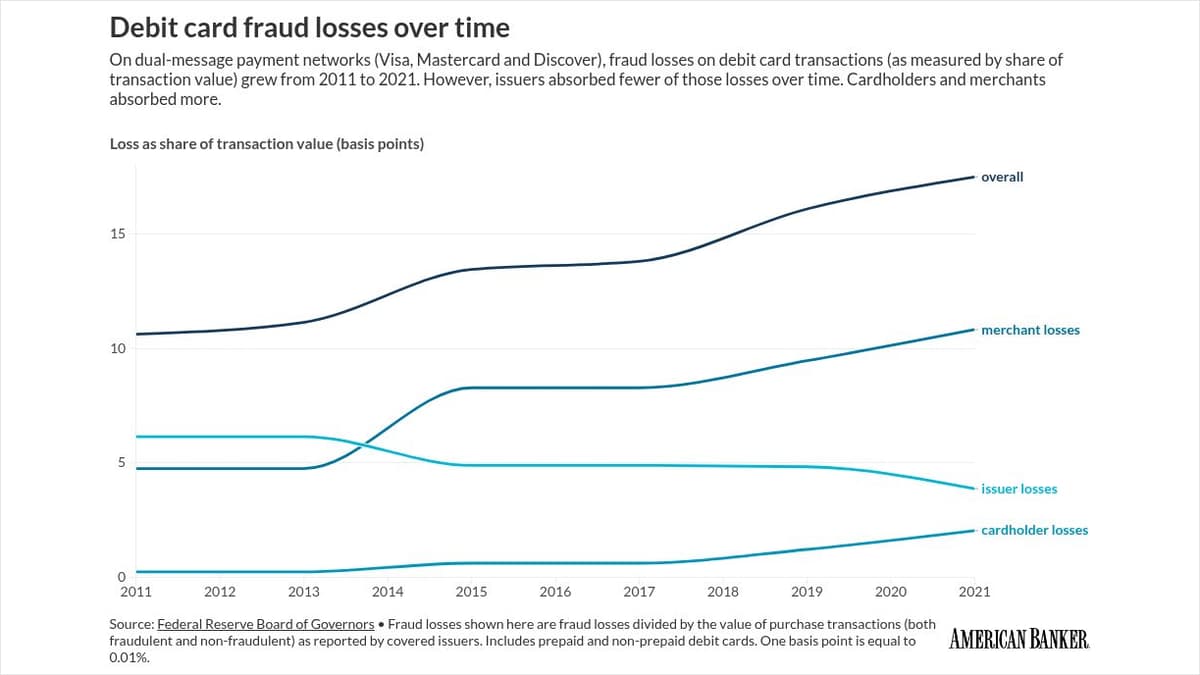
Brazen Scheme Combines Fraud, Visiting Customers' Homes
Barnegat Township Police warned New Jersey residents of a hybrid fraud scheme that combines phone spoofing with a physical courier pickup to steal debit cards. Criminals pose as bank fraud agents, claim unauthorized out‑of‑state activity, and arrange a courier to...

Integrating Enzoic Alerts Into Microsoft Sentinel with Azure Logic Apps
Enzoic’s real‑time breach alerts can now be piped into Microsoft Sentinel using Azure Logic Apps, turning each webhook into a Sentinel incident. The guide walks through provisioning a Log Analytics workspace, creating a consumption‑based Logic App, parsing Enzoic’s JSON payload,...

UStrive Security Lapse Exposed Personal Data of Its Users, Including Children
UStrive, a nonprofit mentoring platform for students, fixed a security lapse that let any logged‑in user view personal data of others, including children. The flaw stemmed from a vulnerable Amazon‑hosted GraphQL endpoint, exposing at least 238,000 records containing names, emails,...
Introducing Mend.io’s AI Security Maturity Survey + Compliance Checklist Available Today
Mend.io launched an interactive AI Security Maturity Survey and a companion Compliance Checklist to help organizations assess and document AI risk. The tools map to OWASP AIMA, NIST AI RMF, ISO 42001 and the upcoming EU AI Act, delivering a personalized...
Airlock Digital Announces Independent TEI Study Quantifying Measurable ROI & Security Impact
Airlock Digital released an independent Total Economic Impact study by Forrester Consulting showing a 224% return on investment and a $3.8 million net present value over three years for its allow‑listing solution. The research reports more than a 25% reduction in...

Mass Spam Attacks Leverage Zendesk Instances
Zendesk reported a wave of mass spam campaigns that exploit its customer‑service platform to send phishing emails. The messages appear to originate from legitimate Zendesk subdomains, tricking recipients into opening malicious links. Zendesk clarified that the campaigns are not linked...
NDSS 2025 – Studying the Defensive Registration Practices of the Fortune 500
Researchers at NDSS 2025 examined defensive domain registrations by Fortune 500 firms, uncovering 19,523 domains registered across 447 companies. The study found most firms register only a handful of domains, yet they collectively rely heavily on online brand protection (OBP)...

The Zero Risk Trap: How to Ditch Perfection and Prioritize Real Cyber Resilience
Cybersecurity leaders are trapped in a zero‑risk mindset, chasing perfect audit scores while real threats evolve. The article argues that this pursuit leads to burnout, misallocated resources, and a false sense of security. It proposes a shift toward ruthless risk...

EU Plans Cybersecurity Overhaul to Block Foreign High-Risk Suppliers
The European Commission has unveiled a comprehensive cybersecurity package that gives it authority to conduct EU‑wide risk assessments and restrict high‑risk foreign suppliers in critical telecom infrastructure. The proposal builds on the voluntary 5G Security Toolbox and expands the Cybersecurity...

10 Defining Moments in Space and Cybersecurity in 2025
2025 marked a turning point for space cybersecurity as the National Reconnaissance Office unveiled a centralized Space Cyber Program, while Ukraine publicly confirmed a 2023 hack on Russia’s Dozor‑Teleport satellite network. Academic research revealed that low‑cost satellite receivers can capture...

The Data Center Is Secure, But Your Users Are Not
Data centers now feature layered physical safeguards, redundant systems and zero‑trust digital controls, creating a robust perimeter. Despite these defenses, most breaches stem from human error, especially phishing and weak passwords. The article highlights that 90 % of 2021 data breaches...

Beyond the Interface: Assessing the Security and Payment Infrastructure of Today’s Top Digital Wallets
Digital wallets are evolving beyond UI to prioritize security architecture, payment infrastructure, and regulatory intelligence for 2026. Agentic commerce will enable AI agents to execute transactions autonomously, requiring cryptographic consent and continuous trust orchestration. Multi‑biometric authentication, AI‑driven predictive security, and...

Zero-Trust UTM: TII, VentureOne, and High Lander Join Forces at UMEX to Forge New Airspace Security Standards in the UAE
High Lander Aviation, Abu Dhabi’s Technology Innovation Institute (TII) and venture builder VentureOne announced a strategic collaboration at UMEX 2026 to develop national‑level zero‑trust security standards for unmanned traffic management (UTM) in the UAE. The partnership will focus on end‑to‑end security...

ECommerce Outsourcing Philippines: Battling Cyber Threats with Next-Gen Fraud Detection Systems in BPO
E‑commerce retailers are shifting Philippine outsourcing from a pure cost play to a fraud‑resilience strategy as cyber threats intensify. Leading BPOs now embed machine‑learning, behavioral analytics, device intelligence and seasoned fraud analysts, delivering 40‑60% lower fraud losses, 50‑70% fewer false...

Why Smart Contract Security Can’t Wait for “Better” AI Models
In 2024, smart‑contract vulnerabilities cost the Web3 ecosystem $1.42 billion across 149 incidents, with access‑control flaws alone responsible for $953.2 million. While the community debates perfect AI solutions, current AI‑powered static analysis tools already capture roughly 80 % of known issues, and models...