
Warp Expands Oz Platform to Orchestrate Claude Code, Codex and Warp Agent
Warp announced that its Oz cloud‑agent orchestration platform now runs Claude Code, Codex and Warp Agent side‑by‑side, adding cross‑harness memory and automatic multi‑agent coordination. The upgrade aims to give enterprise engineering teams a single control plane for scaling coding agents without locking into a single model.

Kilo Launches Cloud‑Hosted Gas Town, Turning Solo Devs Into AI‑powered Engineering Teams
Kilo has made its Gas Town multi‑agent orchestrator generally available as a cloud‑hosted service, promising to let one developer command a team of AI agents. The launch positions the platform as a new layer for automated DevOps pipelines and AI‑assisted...

Camunda Launches ProcessOS, AI‑Powered Operating System for Enterprise Automation
Camunda introduced ProcessOS, an AI‑driven operating system for enterprise process automation, at CamundaCon before 1,200 leaders from 25 countries. The new layer promises to discover, redesign and continuously improve legacy workflows, addressing the industry’s struggle to embed AI beyond task‑level...

How to Scale AI Test Automation without Losing Test Visibility
Software teams are racing ahead with AI‑generated code—93% already use it and 60% expect AI to write half of all code within a year. The speed surge is outpacing traditional testing, leaving 60% of teams reporting quality issues and fragmented...

The CTO Checklist for AI-Ready IT Operations in 2026
AI is moving from a side project to the core of IT operations, but most enterprises still rely on fragmented toolchains that dilute its impact. The article argues that true AI‑ready operations require a single, connected platform that unifies service...

LaunchDarkly Unveils AgentControl Runtime Layer for Real‑Time AI Feature Governance
LaunchDarkly introduced AgentControl, a runtime control layer that lets teams intervene in AI agents within 200 ms, addressing model drift and unpredictable outputs. The feature extends the company’s feature‑flag platform to the emerging agentic AI era, promising tighter CI/CD governance.
Announcing Etcd 3.7.0-beta.0
SIG‑Etcd released the first beta of etcd v3.7.0, featuring the long‑awaited RangeStream RPC, a full removal of legacy v2store code, and updates to bbolt and raft libraries. RangeStream enables applications to receive large key‑value result sets in chunks, cutting latency...

Bringing Claude Self-Hosted Sandboxes to OpenShell on Red Hat AI
Anthropic’s new self‑hosted sandboxes let Claude Managed Agents keep reasoning in the cloud while executing code on a customer’s own infrastructure. The integration with OpenShell—an open‑source sandbox runtime backed by Red Hat—adds kernel‑enforced isolation layers such as Landlock, seccomp, and per‑binary...
Neo, Now in the Terminal
Pulumi has extended its Neo AI assistant from the cloud console to the developer terminal with the new `pulumi neo` command. The CLI inherits the user’s existing Pulumi login, kubeconfig, environment variables and project files, allowing Neo to operate against...

Discord Completes End‑to‑End Encryption for All Voice and Video Calls
Discord announced on May 18, 2026 that it has finished rolling out its DAVE protocol, delivering end‑to‑end encryption (E2EE) to every voice and video call on the platform. The multi‑year effort began in September 2024 after early experiments in 2023...

Meet Gordon: Docker’s AI Agent For Your Entire Container Workflow
Docker announced Gordon, an AI‑powered agent built into Docker Desktop 4.74+ and the CLI, that can read container logs, compose files, and the local environment to diagnose and fix issues. Gordon proposes actions—such as repairing broken builds, generating Dockerfiles, or...

Not All Open Source Is Equal: Choosing a PostgreSQL Operator for Kubernetes in 2026
Choosing a PostgreSQL operator for Kubernetes in 2026 now hinges on licensing, image redistribution, and long‑term openness rather than just features. Recent shifts—MinIO’s archive, Bitnami’s paid Secure Images, and Crunchy Data’s restricted Docker builds—show that many once‑free projects have become...

AI‑Powered Defenses Become Critical as Cloud Attack Speed Slashes to Days
Google Cloud Security’s new report shows the window between vulnerability disclosure and mass exploitation has collapsed from weeks to days, while Mandiant’s 2025 survey finds automated attack handoffs now average 22 seconds. The twin findings push DevSecOps teams toward AI‑augmented,...

AI Agents Work Fine, Your Workflow Doesn’t
Enterprises are rushing to deploy AI agents, but pilots often stall when moved to production because the surrounding workflow—monitoring, ownership, and failure handling—is missing. In regulated sectors, the model itself is trivial compared to the domain‑specific processes that must be...

BT and Accenture Launch Multi‑year AI‑Ops Programme to Boost UK Business Resilience
BT Business and Accenture have announced a multi‑year AI‑Ops programme that will embed advanced artificial‑intelligence capabilities across BT’s operational stack. The partnership aims to improve resilience, cyber‑security and customer experience for UK public‑sector and private‑sector clients.

Anthropic Buys Stainless in $300M+ Deal to Own AI Agent SDKs
Anthropic announced it has acquired Stainless, the startup behind widely used SDK generators, in a deal reported to exceed $300 million. The move removes a key infrastructure provider from rivals and consolidates Claude’s agent‑connectivity stack under Anthropic’s control.

SurfaceGX Unveils AI Visibility Repair Platform to Fix Brand Misrepresentation in LLMs
SurfaceGX launched its AI Visibility Repair Infrastructure platform, a tool that not only monitors but also diagnoses why brands are missing or misrepresented in large language model answers and delivers concrete remediation. The solution targets the fragmented AI observability stack,...
Ubuntu Core 26 Targets IoT Devices and Embedded Systems, Offers up to 15 Years of Security Maintenance
Canonical has launched Ubuntu Core 26, an immutable OS built on Ubuntu 26.04 LTS for IoT and embedded devices. The platform offers up to 15 years of security maintenance, live‑patching for AMD64 and ARM64, and a new snap‑delta format that shrinks updates by 50‑90 %....
The Agentic Infrastructure Era
Pulumi announced a suite of new platform features designed to make infrastructure management fully agentic. By leveraging infrastructure-as-code in familiar languages, the company reports that LLM‑driven agents now handle about 20% of deployments, with a goal of exceeding 50% by...

Day 59: Implement Active-Passive Failover for Critical Components
The post details building an active‑passive failover system for Kafka consumers, featuring automatic leader election, heartbeat‑based health monitoring, and zero‑data‑loss state migration. It demonstrates sub‑second recovery times and contrasts active‑passive with more complex active‑active designs. By moving from 99.9% to...
GitHub Launches General Availability of Copilot Spaces API for Automated AI‑assisted Development
GitHub announced that its Copilot Spaces API is now generally available, allowing developers to create, read, update and delete AI‑assisted workspaces via code. The move targets enterprise teams that need to scale context management without relying on the GitHub UI,...

AWS and Red Hat at Red Hat Summit 2026: Accelerating AI, Innovation, and Open Source Infrastructure
At Red Hat Summit 2026, AWS and Red Hat unveiled a suite of AI‑focused integrations that tighten the bond between AWS’s custom silicon and Red Hat’s OpenShift platform. The rollout includes Kiro, an agentic AI IDE embedded in OpenShift Dev...

Red Hat Unveils Agentic AI Suite to Streamline Secure Development, Testing and Deployment
Red Hat announced a new agentic AI development suite that bundles Red Hat Desktop with Podman Desktop support and an upgraded Advanced Developer Suite. The tools add sandboxed testing, AI‑driven vulnerability intel and trusted libraries to help enterprises apply DevOps...
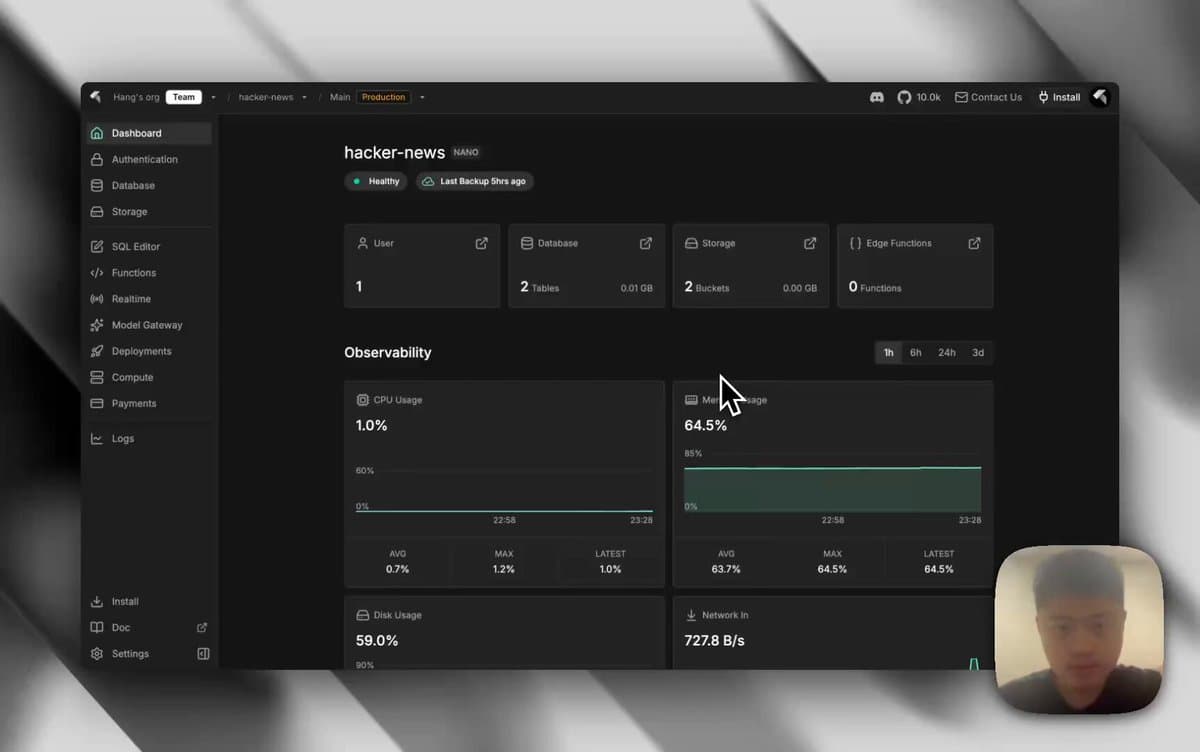
InsForge Lets Coding Agents Manage Full Backend Infrastructure
.@InsForge turns your coding agent into a principal backend engineer. Backend servers, database, LLM gateway, frontend deployment, and more. Every primitive built for how coding agents actually work, so they can run your entire infrastructure. Congrats on the launch, @hanghuang_ &...

TIMVERO Launches timveroAI, Slashing Lending Platform Build Time to Weeks
TIMVERO announced the general availability of timveroAI, an AI layer built directly into its timveroOS building platform. The technology compresses initial deployments from four‑to‑six months down to three‑to‑six weeks and automates 70‑80% of the engineering effort, promising faster credit‑product launches...

Enterprises Accelerate Standardized Infrastructure Workflows to Boost Cross‑Team Collaboration
Organizations are moving to standardized infrastructure workflows to tighten cross‑team coordination, reduce deployment errors, and increase operational visibility. The shift, highlighted by env zero, reflects a broader push for unified IaC pipelines and shared governance in large cloud environments.
LogicMonitor Collaborates with IBM and Red Hat to Support Autonomous Data Centers?
LogicMonitor announced a partnership with IBM and Red Hat to embed IBM watsonx and the Red Hat Ansible Automation Platform into its Edwin AI agent. The integration lets Edwin AI automatically generate or trigger Ansible playbooks when anomalies are detected, enabling self‑healing across hybrid and...

CNX Launches AI Assistant for Valence No‑Code Platform, Targeting IBM I DevOps
CNX unveiled an AI‑driven Valence Assistant at the COMMON POWERUp conference, enabling developers to generate full‑stack IBM i applications from natural‑language prompts. The tool aims to accelerate modernization of legacy greenscreen apps and narrow the chronic IBM i talent shortage.

Announcing AWS CDK Mixins: Composable Abstractions for AWS Resources
AWS announced CDK Mixins, a new composable abstraction layer for the Cloud Development Kit that lets developers attach reusable capabilities to any construct—L1, L2, or custom—without rewriting libraries. Mixins decouple features from concrete implementations, enabling day‑one access to new AWS...

Rafay Systems Brings Software Standardization to Neocloud and Sovereign AI Factories Through Its Nvidia-Validated Platform
Rafay Systems announced that its AI orchestration platform has received Nvidia AI Cloud‑Ready validation, confirming compliance with Nvidia’s software standards for production‑grade AI cloud infrastructure. The validation positions Rafay among a select group of independent software vendors offering API‑driven, multi‑tenant...
What Kubectl Debug Doesn’t Tell You: The Silent Evidence Gap
Kubernetes’ API design for ephemeral containers deliberately omits a persistent termination record, so a kubectl debug session’s exit code, duration, and target container disappear once the pod is updated. The `EphemeralContainerStatus` lacks a `lastState` field, unlike regular containers, causing vital...

GitLab Integrates Anthropic Claude AI Models Into CI/CD Platform
GitLab announced a deep integration of Anthropic’s Claude AI models, including the latest Claude Opus 4.7, into its Duo Agent Platform. The move lets enterprises run AI‑assisted DevSecOps workloads on Google Cloud or AWS Bedrock while keeping actions auditable and...
BT Business and Accenture Launch Multi‑year AI‑Ops Partnership in the UK
BT Business announced a multi‑year partnership with Accenture to roll out AI‑Ops and AI‑driven journey mapping across its UK enterprise and public‑sector client base. The collaboration builds on BT’s existing ServiceNow tie‑up and aims to cut fault‑resolution times while bolstering...

Meet the DF Score: Your Deployment Report Card
The deployment friction (DF) score provides a single number that captures how painful it is to release software or AI models into production. It combines average deployment time, failure rate, and rollback frequency into one metric, exposing operational bottlenecks that...

Gabriele Bartolini: CloudNativePG and Crunchy PGO: An Honest, Opinionated Comparison
The article pits CloudNativePG against Crunchy PGO, two leading open‑source PostgreSQL operators for Kubernetes, and argues that CloudNativePG’s design—embedding high‑availability logic directly in the operator and using minimal images—offers a stronger, more Kubernetes‑native foundation. It contrasts architectural choices, upgrade mechanisms, backup...

Kernel Tuning for High-Load Systems: File Descriptors, TCP Buffers, and Ephemeral Ports
The post warns that high‑load Linux services often fail because the kernel silently runs out of resources such as file descriptors, TCP buffers, and ephemeral ports. Default limits—1,024 FDs per process, 87 KB receive buffers, and a 28 k‑port ephemeral range—are far...

Gkh_clanker_t1000 & Gkh_clanker_2000 Continue Uncovering Linux Kernel Bugs
Linux maintainer Greg Kroah‑Hartman’s AI‑driven tools gkh_clanker_t1000 and gkh_clanker_2000 added roughly two dozen patches to the driver‑core t1000 branch over the weekend. The changes target USB‑Type‑C, input, media and Industrial I/O drivers, fixing stack leaks, missing bounds checks and other validation gaps....
Vercel Labs Unveils Zero, an AI‑Optimized Systems Language for DevOps Automation
Vercel Labs announced Zero, an experimental systems programming language whose compiler and toolchain are designed for AI agents rather than human engineers. The language adds structured repair IDs and capability‑based I/O to make automated debugging and deployment more reliable, a...

Beyond BYOK: Why Governance Matters for AI Agents
GitHub announced that its Copilot CLI now supports bring‑your‑own‑key (BYOK) and fully offline models, letting developers route requests to private providers or run models locally. In contrast, GitLab’s Duo CLI is built on the Duo Agent Platform and provides headless,...

Introducing the TrafficExtension API
Istio 1.30 launches the TrafficExtension API, consolidating WasmPlugin and Lua-based extensibility into a single resource. The new API lets users embed inline Lua scripts or pull WebAssembly modules from OCI registries for sidecars, gateways, and waypoint proxies. It introduces unified...

GitLab Dedicated for Government Now GovRAMP-Authorized
GitLab announced that its Dedicated for Government offering has earned GovRAMP authorization, clearing a major procurement hurdle for state and local agencies. The single‑tenant SaaS solution provides U.S.‑only data residency, isolated infrastructure, and private networking to satisfy stringent compliance rules....

ChatPlayground Introduces Multi‑Model AI Playground, Lifetime Access $70
ChatPlayground AI unveiled a new multi‑model playground that lets users send a single prompt to more than 20 AI models, including ChatGPT, Claude and Gemini. A limited‑time lifetime subscription is priced at $69.97, a $549 discount, aiming to streamline prompt...

Study Finds AI-Generated Code Adds Hidden Cleanup Costs as Commits Surge to 14 Billion by 2026
A recent analysis published by The New Stack estimates that AI‑generated code will push GitHub commits to 14 billion by 2026—a tenfold increase. The study warns that the speed and scale of AI‑produced code create hidden cleanup costs in maintenance, security...
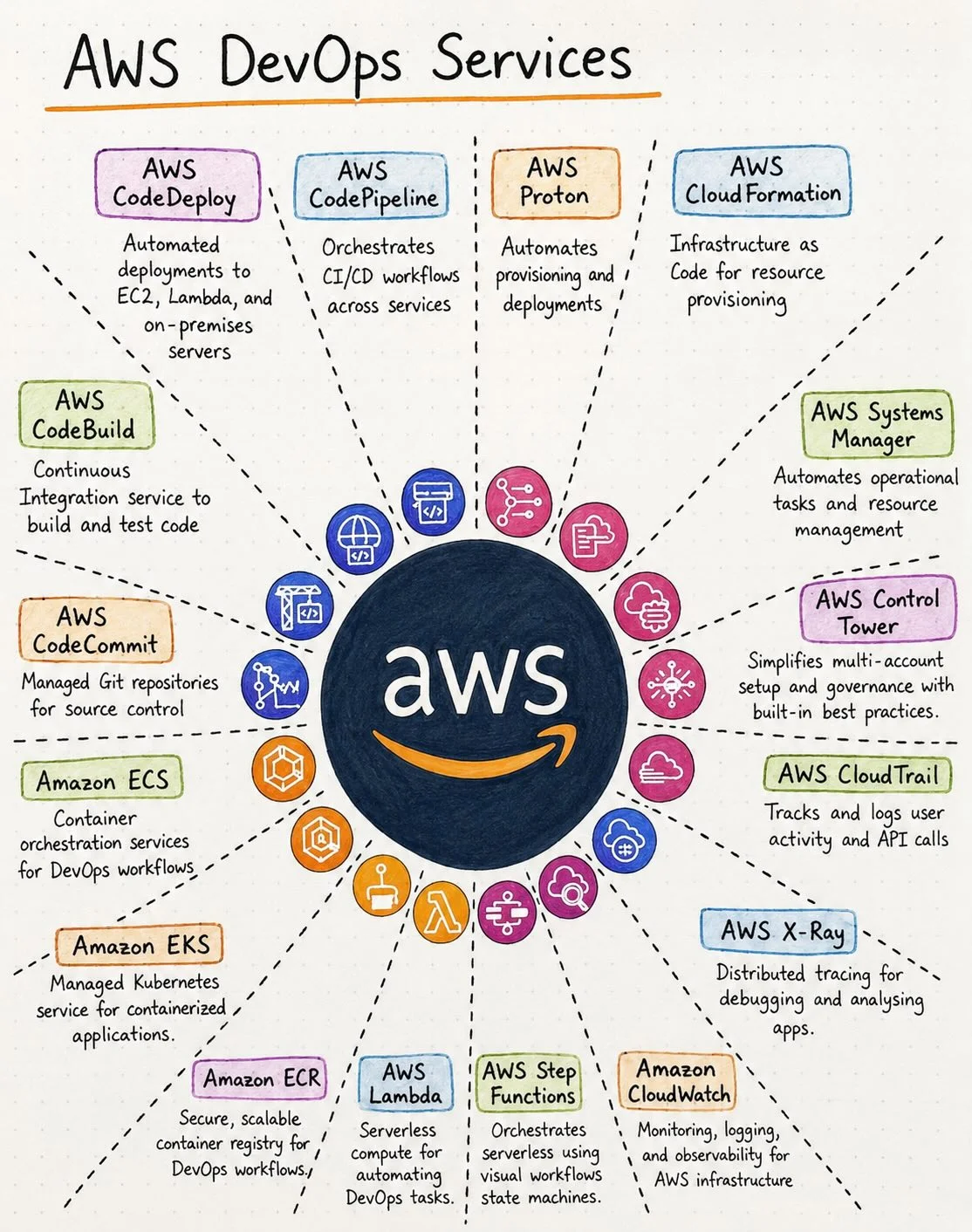
Essential AWS DevOps Tools Every Cloud Engineer Needs
AWS DevOps services every cloud engineer should know ☁️⚙️ CI/CD, containers, serverless, monitoring, IaC, and automation — all in one roadmap. 🚀

OpenAI’s $4 B Deployment Company Triggers 700% Surge in Forward‑Deployed Engineer Demand
OpenAI unveiled a $4 billion Deployment Company to staff enterprises with forward‑deployed engineers, while Google Cloud announced hundreds of openings for the same role. The combined hiring push has lifted demand for forward‑deployed engineers by more than 700% in the past...
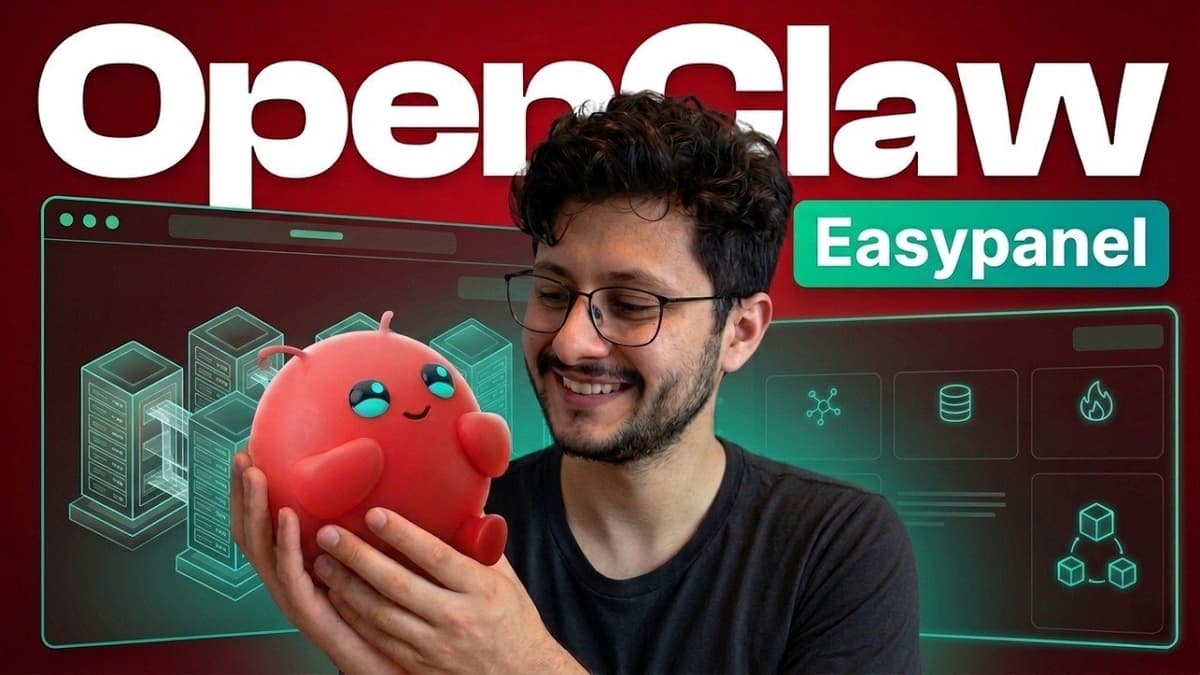
The Secret to Self-Hosting OpenClaw Without the Headache
Self‑hosting OpenClaw via EasyPanel on a virtual private server (VPS) offers a structured, low‑maintenance way to run AI agents while retaining full control over the underlying infrastructure. The EasyPanel dashboard streamlines installation of OpenClaw and ancillary services such as Postgres,...
GitHub Unveils Standalone Copilot Desktop App to Centralize AI Coding Agents
GitHub, a Microsoft subsidiary, released a technical preview of a standalone Copilot desktop application that consolidates coding agents, issue tracking and pull‑request management. The app is available on macOS, Windows and Linux for Business and Enterprise customers, with Pro users...
Anyscale Introduces Persistent Ray Dashboards to Boost AI Debugging
Anyscale rolled out persistent Cluster and Actor dashboards for the Ray framework, ending the loss of telemetry after jobs finish. The new tools store events indefinitely, letting engineers trace failures in AI pipelines that span hundreds of nodes and millions...

Qoder 1.0 Unveils Fully Autonomous Code Generation, Verification and Delivery Platform
Qoder announced the release of version 1.0, an autonomous development desktop that automates the entire software delivery pipeline. The platform, now available on Windows, macOS and Linux, claims to boost development efficiency with an 11% rise in code retention, a...

AI Data Center Boom Reaches 4,900 U.S. Sites, Raising DevOps Scaling and Community Concerns
Data Center Map reports that the United States now hosts 4,900 AI‑focused data centers, up from 3,100 operational facilities. The surge clusters facilities near residential neighborhoods, prompting DevOps teams to wrestle with water, power and zoning constraints while community groups...