
The Sandbox Solution: Closing the AI Testing Gap
Mike Vizard interviewed Waldemar Hummer, CEO of LocalStack, at KubeCon Europe about high‑fidelity sandbox environments that emulate cloud services for AI‑driven applications. The discussion highlighted how LocalStack’s local emulation layer lets developers test AI agents without provisioning real AWS resources, slashing costs and eliminating latency. By providing a repeatable, production‑like testbed, sandboxes bridge the gap between code creation and reliable deployment. The solution is positioned as essential as AI agents increasingly automate infrastructure provisioning.

Why Cursor Is Bringing Self-Hosted AI Agents to the Fortune 500
Cursor is launching self‑hosted cloud agents that let Fortune 500 firms run its AI coding assistants inside their own infrastructure, keeping source code, tests and build artifacts on‑premise. The move tackles security, compliance and latency concerns that have limited enterprise...
Portkey Open-Sources Its AI Gateway After Processing 2 Trillion Tokens a Day
Portkey has released its unified Portkey Gateway as an open‑source project after the service began processing two trillion tokens per day and handling more than 120 million AI requests. The platform currently supports $180 million of annualized AI spend across roughly 24,000...

JFrog Partners with iZeno
JFrog announced a partnership with Singapore‑based iZeno to deliver its full platform to enterprises across Southeast Asia. The collaboration combines JFrog’s DevSecOps tools—including Artifactory, Xray, Advanced Security, Runtime, ML, AI Catalog, and AppTrust—with iZeno’s regional consulting, compliance, and cloud‑native modernization...

Kubernetes Autoscaling: What Breaks Under Real Traffic
Kubernetes autoscaling appears simple but falters under real‑world traffic spikes. The Horizontal Pod Autoscaler samples metrics every 15 seconds and new pods can take minutes to become ready, creating a window of overload. Relying solely on CPU utilization misses memory,...

We Migrated Our Email Infrastructure to KumoMTA. Here's Why It Matters for You.
Postmark has completed a full migration from the proprietary PowerMTA platform to KumoMTA, an open‑source, Rust‑based mail transfer agent. The new engine cuts average queue times by roughly 30‑40% for Gmail, Yahoo, Microsoft and Apple, while bounce rates stay flat....

Bet365 Partners with TestMu AI to Accelerate Global Release Velocity with Agentic AI Quality Engineering
bet365 has partnered with TestMu AI, the first full‑stack Agentic AI Quality Engineering platform, to consolidate its software testing across a single interface. The collaboration gives bet365 access to over 3,000 browser/OS combinations and more than 10,000 real iOS and...

Pilot v2.86.3 Adds Crash Cleanup, Dashboard Graph, Repo Migration
Pilot v2.86.3 released. Fixed: — Stale worktrees after OOM/SIGKILL never cleaned up (818MB each) — Squash merges dropped PR titles → broke release tagging — GoReleaser pointed to old repo after migration New: — Dashboard git graph follows active task's project — Worktree cleanup on crash and...

Sustaining OpenTelemetry: Moving From Dependency Management to Stewardship
Bloomberg is partnering with the Cloud Native Computing Foundation to run a structured mentorship cohort focused on OpenTelemetry from April 8 to June 17, 2026. The program will involve 30‑45 Bloomberg engineers working two hours per week with seven OpenTelemetry maintainers on...
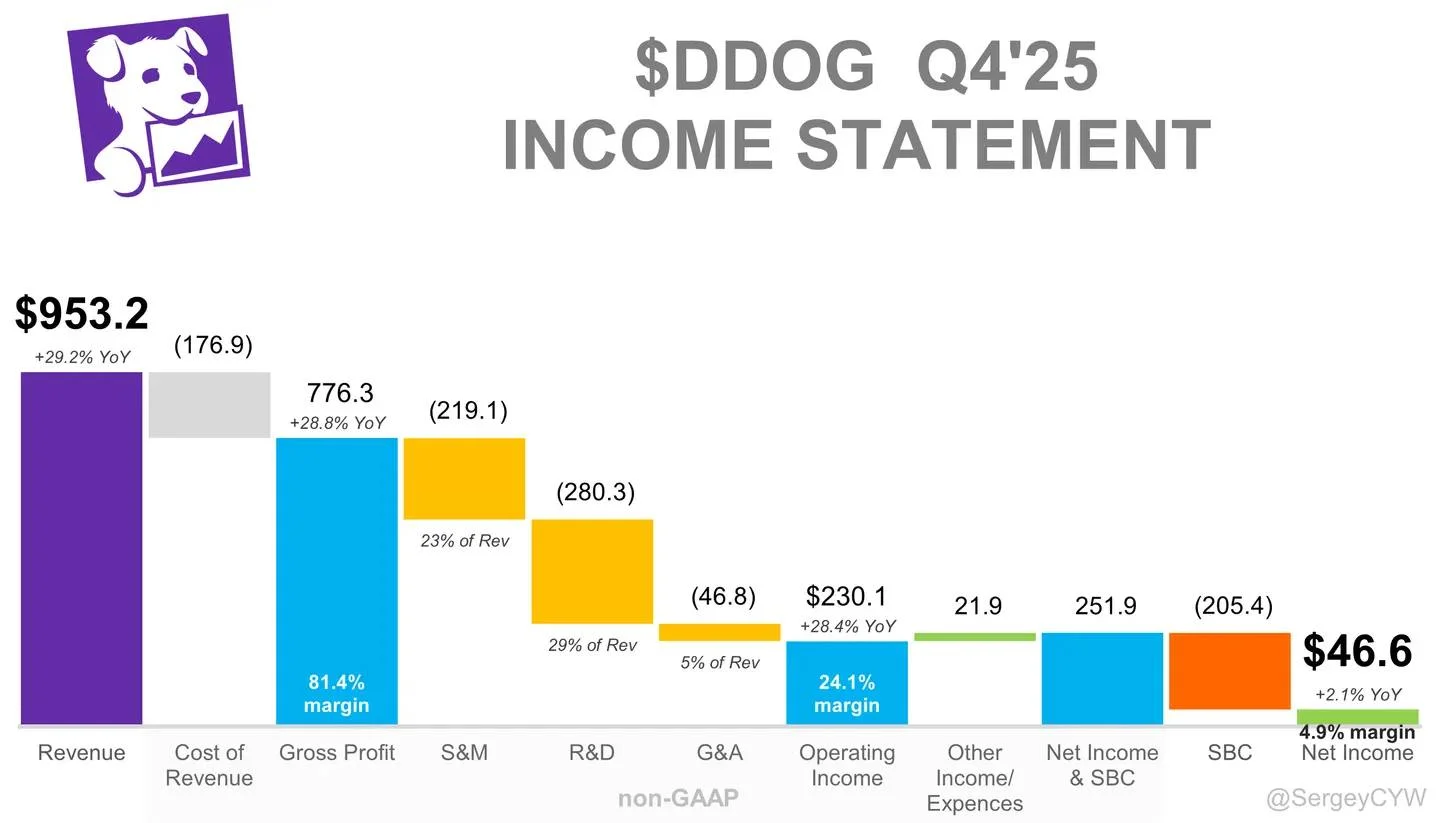
Datadog Launches AI‑Powered Observability Layer with MCP Server
Datadog is turning observability into an AI operating layer $DDOG made MCP Server generally available, pushing live logs, metrics, and traces directly into AI coding agents and developer environments. Datadog is moving closer where AI systems do not just assist engineers,...
Harness Rolls Out Release Orchestration Features with AI-Enabled Verification and Rollback
Harness announced new Release Orchestration capabilities that embed AI‑enabled verification and automatic rollback into its Continuous Delivery platform. The features also bring native warehouse‑level feature management from the Split acquisition and Database DevOps support for Snowflake, allowing code and data...

SmartBear Delivers AI Enhancements Across Software Application Testing Lifecycle
SmartBear unveiled a suite of AI enhancements spanning its testing portfolio, including agentic test generation in Reflect, natural‑language query skills for Zephyr, AI‑driven API test creation in ReadyAPI, and improved object detection in TestComplete. The new features pull contextual data...
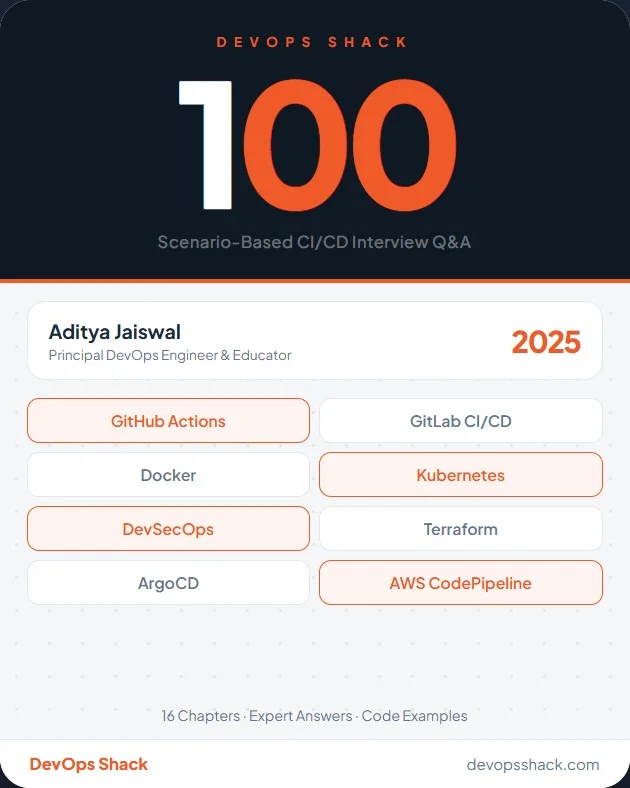
Scenario-Based DevOps CI/CD Q&A – DM for Details
DevOps CICD Scenario Based Q&A ✅ Comment 𝗗𝗲𝘃𝗢𝗽𝘀 To Get it in DM. #devops #devopsshack

Shipping GenAI Into an Existing App: How to Integrate AI Features Without Rewriting Your Stack
Integrating generative AI into existing applications requires a disciplined, contract‑first approach rather than a full stack rewrite. The article outlines a repeatable pattern that starts with selecting bounded, reviewable workflows, then defining a strict JSON contract that separates input, output,...
DoD Expands Internal Software Factories, Boosting DevOps Across All Services
The Department of Defense announced an expansion of its internal software factories—including the Air Force’s Kessel Run, the Army Software Factory and the Marine Corps Software Factory—aimed at embedding DevOps pipelines, automation and rapid delivery across all services. The move...

Flagstar Bank Completes First Phase of $1 Billion Tech Modernization with Mphasis
Flagstar Bank and technology partner Mphasis have completed the first phase of a multi‑year, $1 billion modernization program, consolidating six legacy data centers into two next‑generation facilities and migrating hundreds of applications with zero downtime. The milestone positions Flagstar to accelerate...

Elizabeth Garrett Christensen: Postgres Vacuum Explained: Autovacuum, Bloat and Tuning
PostgreSQL relies on periodic vacuuming to reclaim space from dead tuples created by its MVCC architecture and to prevent transaction ID wraparound. The built‑in autovacuum daemon, enabled by default, triggers when dead rows exceed a threshold of 50 rows plus...

Kelsey Hightower Warns AI Will Amplify Open‑source Neglect at KubeCon 2026
Kelsey Hightower, former Google engineer and Kubernetes evangelist, told a packed KubeCon audience that AI can’t replace open‑source stewardship. He warned that companies that ignore community contributions will struggle with AI‑driven workloads, a message that resonated with developers like Electrolux’s...

Tata Communications Launches IZO™ Data Centre Dynamic Connectivity, Promising >99.99% Uptime
Tata Communications introduced IZO™ Data Centre Dynamic Connectivity, a self‑healing, software‑defined network that spans five continents and guarantees more than 99.99% service availability. The platform uses deterministic multi‑path routing and AI‑driven predictive analytics to let enterprises scale bandwidth on demand...

Change Intelligence and Deployment Connectors for Liquibase Secure
Liquibase Secure announced two new capabilities—Change Intelligence and Deployment Connectors for ServiceNow, GitHub, Harness, and Terraform. Change Intelligence aggregates change data, applies AI‑driven risk analysis, and automatically captures audit evidence in a single view. Deployment Connectors embed governed database change...

Day 153: Unified Infrastructure & Log Monitoring - The Complete Observability Picture
The post introduces a unified observability solution that merges infrastructure metrics with application logs across a 50‑pod Kubernetes cluster. It walks readers through building a collector, real‑time dashboard, and intelligent alerting that ties CPU, memory, network, and disk data to...

Joined SiG-Docs, Now Part of Kubernetes Community
We were able to join the #SiG-Docs. We are now part of the kubernetes open source community.

Swedish Endform Raises €1.5 Million to Speed up Web Testing for AI-Era Development
Swedish startup Endform announced a €1.5 million (approximately $1.6 million) Series A round led by Alliance VC and other investors. The funding will accelerate its platform that slashes Playwright end‑to‑end test execution from roughly 30 minutes to under two minutes by running thousands of...

From Annoyance to Appreciation: Google’s Monore
When I joined Google, I found it annoying that: 1. Everyone works in the same repo at head 2. All dependencies are explicitly declared 3. External dependencies are copied in a central third_party folder 4. Everything can be re-built from source I had changed my...

Turning AI Code Reviews Into a Personal Coaching Tool
my cofounder and I did a live code review today and I gave Claude Code the transcript. It also has all the reviews he has ever given our code base, all his comments, and I am using it to make...

Fortis Solutions Unveils Integrated Intelligent‑Infrastructure Platform for Enterprise Automation
Fortis Solutions announced the launch of an integrated intelligent‑infrastructure platform that merges its NetRaven visual layer with the Source of Truth intelligence engine. The system promises real‑time visibility, automated remediation and vendor‑agnostic translation, targeting the consistency and scalability goals of...

Load Balancers: Same Goal, Different Layers, Different Jobs
Day 13 of AWS while being a mom AWS load balancers finally clicked for me when I thought about them like this: ALB → smart routing (Layer 7) NLB → speed & performance (Layer 4) GWLB → security checkpoint (Layer 3) Same goal (handle traffic)… completely...

Secure Hybrid Self‑Managed and Managed MCP Server Setup
You could use a mix of self-managed and managed MCP servers. Here's an example of using both, and securing them in a production-ready way. https://t.co/reHeaq6QEV https://t.co/5pLxHwGKWv

AI-Generated Code Verification Startup Qodo Raises $70M
Qodo, operating as Codium Ltd., announced a $70 million Series B round, bringing its total capital to $120 million. The startup offers an AI‑driven code verification platform that inserts a governance layer into developers' CI/CD pipelines, using specialized agents to detect bugs, compliance...

Treat AI Prompt Standards as Versioned Infrastructure
NEW POST The quality of what AI coding assistants produce depends on how well the prompter articulates team standards. @techygarg proposes treating such instructions as infrastructure: versioned, reviewed, and shared artifacts. https://t.co/fqAeB6irlB

Document Successful Commands Immediately, Never Postpone
You ran 15 commands. One worked. You moved on. In 6 months you'll need to re-run it and you won't remember which one. Write the working command down right after it works. Not later. Later is never. https://t.co/JLnbmkFUoA

Developer Guide for Migrating to Reproducible Environments without Rewriting
The guide proposes an incremental, configuration‑first path to reproducible, production‑identical environments without rewriting legacy code. It starts by mapping runtime, OS, and service drift, then introduces a sidecar .upsun/config.yaml that clones production settings on a low‑risk branch. Sanitized production data...

OpenAI Adds Codex Plugin to Claude Code
Inception for AI :) -> OpenAI introduces a Codex plugin for Claude Code, letting users invoke Codex from inside Claude Code to review code or delegate tasks https://t.co/TBBjbwpSgL
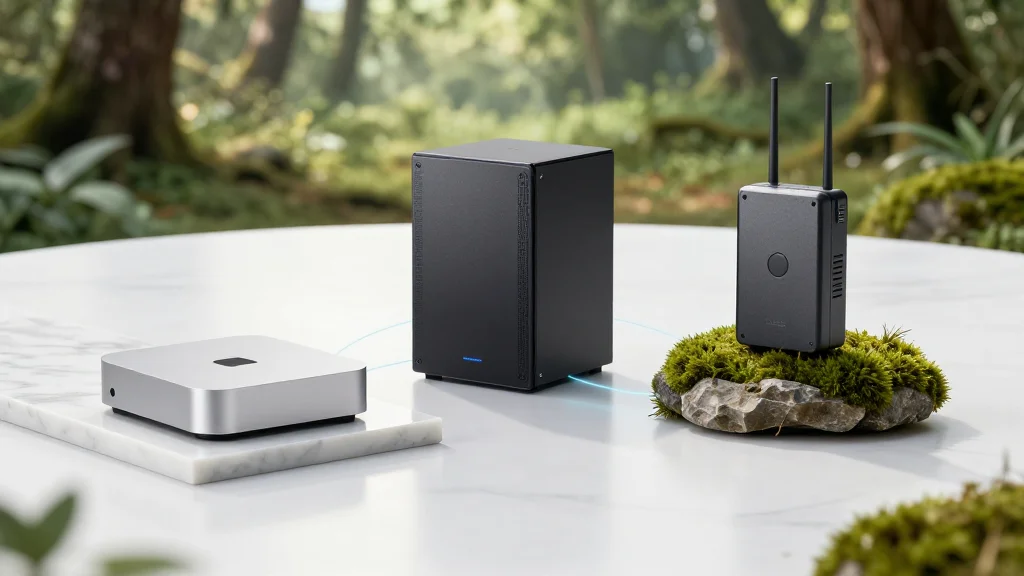
Six Viable Deployment Paths for OpenClaw AI Agent
From Mac Mini M4 to cloud VPS and edge AI hardware, these are the six deployment options worth considering for hosting your OpenClaw AI agent. https://t.co/QJsc243Cjq

Changes to packages.gitlab.com: What You Need to Know
GitLab is completing a migration of its packages.gitlab.com infrastructure to a new hosting system, keeping the same domain but changing URL structures, GPG key locations, and network endpoints. The legacy PackageCloud UI will be retired on March 31, 2026, and...

Beyond Pinning: Harden Node and Python Supply Chains
Supply chain attacks are becoming more frequent, and far more serious. What are sensible practices to protect against these when using Node or Python packages? I assume pinning versions is the bare minimum; for those with security teams / tools: why else...
Using Containers to Bring Software Engineering Rigor to AI Workloads
Enterprises are moving AI models, MCP servers, and agents from experimental prototypes into production and need the same governance applied to traditional software. The Open Container Initiative (OCI) provides a vendor‑neutral format that lets organizations package AI components as containers...

JBoss EAP XP 6.0: Achieving Observability with OpenTelemetry
Red Hat’s JBoss EAP XP 6.0 arrives with full MicroProfile 7.0 compliance and the new MicroProfile Telemetry 2.0 extension, bringing native OpenTelemetry support to Java EE workloads. The guide demonstrates two deployment paths: a local Podman environment that spins up Jaeger and an OpenTelemetry collector, and a...

How We Eliminated Long-Lived CI Secrets Across 70+ Repos
Pulumi eliminated long‑lived CI secrets across more than 70 repositories by swapping static GitHub secrets for short‑lived, OIDC‑driven credentials via Pulumi ESC. The new flow exchanges a GitHub‑issued JWT for a Pulumi access token, which then opens an ESC environment...

Responsible AI Agents: Prioritize Security, Durability, Availability
When Opus 4.5 came out, it was a one-way door to a new way of engineering. Agents now do most of our coding. Knowing the inherent flaws and over-confidence of LLMs, we sent a clear message to our teams. Vibing and...

Claude Code Now Supports OpenAI Codex Plugin
Wow. Starting today you can use Codex in Claude Code 🤯 /plugin marketplace add openai/codex-plugin-cc you can try it with: /codex:review for a normal read-only Codex review /codex:adversarial-review for a steerable challenge review /codex:rescue to let codex rescue your code https://t.co/hSOe0Kldt4
Webminal Defies DevOps Trends, Running 15 Years on a Single 8 GB Server
Webminal, the browser‑based Linux learning platform, has remained operational on a single 8 GB CentOS server for 15 years, serving half a million users. The site survived a datacenter fire, power outages and traffic spikes without adopting Kubernetes, micro‑services or auto‑scaling,...

ScaleOps Raises $130M Series C to Slash AI Compute Waste
ScaleOps closed a $130 million Series C round led by Insight Partners, valuing the Israeli startup at over $800 million. The funding will accelerate its autonomous platform that promises up to 80% reductions in cloud and AI infrastructure spend, a move that...

Qodo AI Beats Claude, Prevents 800+ Monthly Bugs
This AI code review tool just outperformed Claude on its own benchmark. It's called Qodo and Fortune 100 engineering teams are using it to catch what Cursor, Copilot, and Claude Code quietly miss. 800+ issues prevented per month Here's how it works 👇...

Queues Don't Absorb Load — They Delay Bankruptcy
Backend teams often add a queue during traffic spikes, seeing immediate latency drops, but the queue merely postpones work. As consumer throughput lags, queue depth grows unchecked, turning milliseconds into minutes of processing delay and eventually causing memory exhaustion or...

Scaling Kafka Consumers: Proxy Vs. Client Library for High-Throughput Architectures
Apache Kafka’s pull‑based model excels for event‑driven microservices, but scaling consumer groups creates operational overhead, head‑of‑line blocking, and complex error handling. Large enterprises such as Wix and Uber have addressed these limits by deploying a centralized push‑based consumer proxy, achieving...

AI Success Hinges on QA and DevOps Maturity
RT 77% of orgs are confident in AI outputs? while many still lack secure CI/CD, automated audit trails, and even basic defect escape metrics. Your QA and DevOps maturity will make or break AI agents in production. #AI #DevOps #QA @Star_CIO ...

Grafana Labs Brings Grafana Cloud & Grafana BYOC to Japan with AWS Tokyo Region Availability
Grafana Labs announced that its Grafana Cloud SaaS and Bring Your Own Cloud (BYOC) offerings are now available in the AWS Tokyo region, marking the company’s first dedicated infrastructure in Japan. The move enables Japanese customers to host observability workloads...
Why Customer Data Infrastructure Is Moving to Infrastructure as Code
Customer data infrastructure, essential for attribution, personalization, and AI‑driven experiences, is still managed through manual UI clicks and scattered documentation. This operating model creates versioning, audit, and recovery challenges as data volumes and AI use cases grow. Applying infrastructure as...

Google Rolls Out TurboQuant, PolarQuant and QJL Model Compression Tools
Google introduced three AI model compression algorithms—TurboQuant, PolarQuant and QJL—aimed at cutting compute costs and speeding deployment. The announcement sparked a swift response on Wall Street and ignited discussion among cloud providers, chip makers and enterprise AI users.