Cypress Test Replay Now Captures Canvas Elements by Default
Cypress Test Replay now records canvas elements by default for every project in Cypress Cloud, eliminating the placeholder graphics that previously appeared during debugging. The change requires no Cypress version upgrade; it works with any installation of Cypress 15.5.0 or later. A new project‑level toggle lets teams disable canvas capture if performance concerns arise. However, canvas elements inside Shadow DOM remain unsupported, and older Cypress versions still cannot capture canvas.

Human Oversight in AI Automation Testing
AI‑driven test automation can efficiently execute predefined flows, but it often fails to interpret complex interfaces, generates false alerts, and misses device‑specific or localization defects. Global App Testing highlights five key limitations of AI‑only testing and promotes a human‑in‑the‑loop methodology...

Keras Kinetic: Decorator‑Based TPU/GPU Jobs Made Simple
Perhaps the craziest thing that was introduced on the Keras community call today: Keras Kinetic, a new library that lets you run jobs on cloud TPU/GPU via a simple decorator -- like Modal but with TPU support. When you call a...

AI-Driven Lambda Troubleshooting Auto‑detects Missing VPC Security Group
This past week I wrote a lambda troubleshooter using the concept on this blog post where it deterministically queries a bunch of logs and sends them to an ai 🤖 agent for analysis and troubleshooting. I had to redact...
GitOps Implementation at Enterprise Scale, Moving Beyond Traditional CI/CD
Enterprise engineering teams hit a ceiling with traditional CI/CD pipelines, experiencing repeated deployment incidents caused by configuration drift and manual rollbacks. To restore consistency, they migrated to a GitOps model, selecting ArgoCD for its pull‑based synchronization, drift detection, and clear...

Beyond The Wave: What Customers Really Think About Autonomous Testing Platforms
Forrester’s Q4 2025 Wave highlighted 15 vendors delivering AI‑powered autonomous testing platforms, and its Q1 2026 Buyer’s Guide surveyed 37 enterprise users. Customers reported automation coverage climbing to 51‑60% of tests, with a few teams exceeding 80%, yet full autonomy remains low...

Enterprise AI Agents Hit Scaling Wall as Hidden Technical Debt Surfaces
A recent deep‑dive identifies seven infrastructure blocks that are inflating technical debt for enterprise AI agents, while early deployments show an average 171% return but also integration and security headaches. The findings highlight why scaling agentic SaaS tools is becoming...

Start with Git & GitHub for DevOps Beginners
Which tool is best for beginners starting DevOps? 👇 1️⃣ Docker 2️⃣ Linux 3️⃣ Git & GitHub 4️⃣ Kubernetes

Reducing Deployment Time by 60% on GCP: A CI/CD Pipeline Redesign Case Study
A team re‑engineered its CI/CD pipeline on Google Cloud Platform by swapping self‑managed components for managed services such as Cloud Build, Artifact Registry, GKE Autopilot, Cloud Deploy, and Cloud SQL. The redesign slashed total deployment time from roughly 52 minutes...

Digital Experience Monitoring Belongs in the Modern Developer Workflow
Digital Experience Monitoring (DEM) is reshaping observability by tying frontend performance and real‑user outcomes to backend telemetry. The article explains how DEM integrates synthetic testing, Core Web Vitals, and crash data into developers' daily workflow, from CI/CD pipelines to incremental...

Secure AI Agents Deploy in 60 Seconds, Cut Token Usage.
AI agents are genuinely useful until you see the API bill or realize your ports have been exposed the whole time. @PAIOBot just fixed both problems in one shot sandboxed security built-in, 50% token reduction, deploys in 60 seconds, and free...
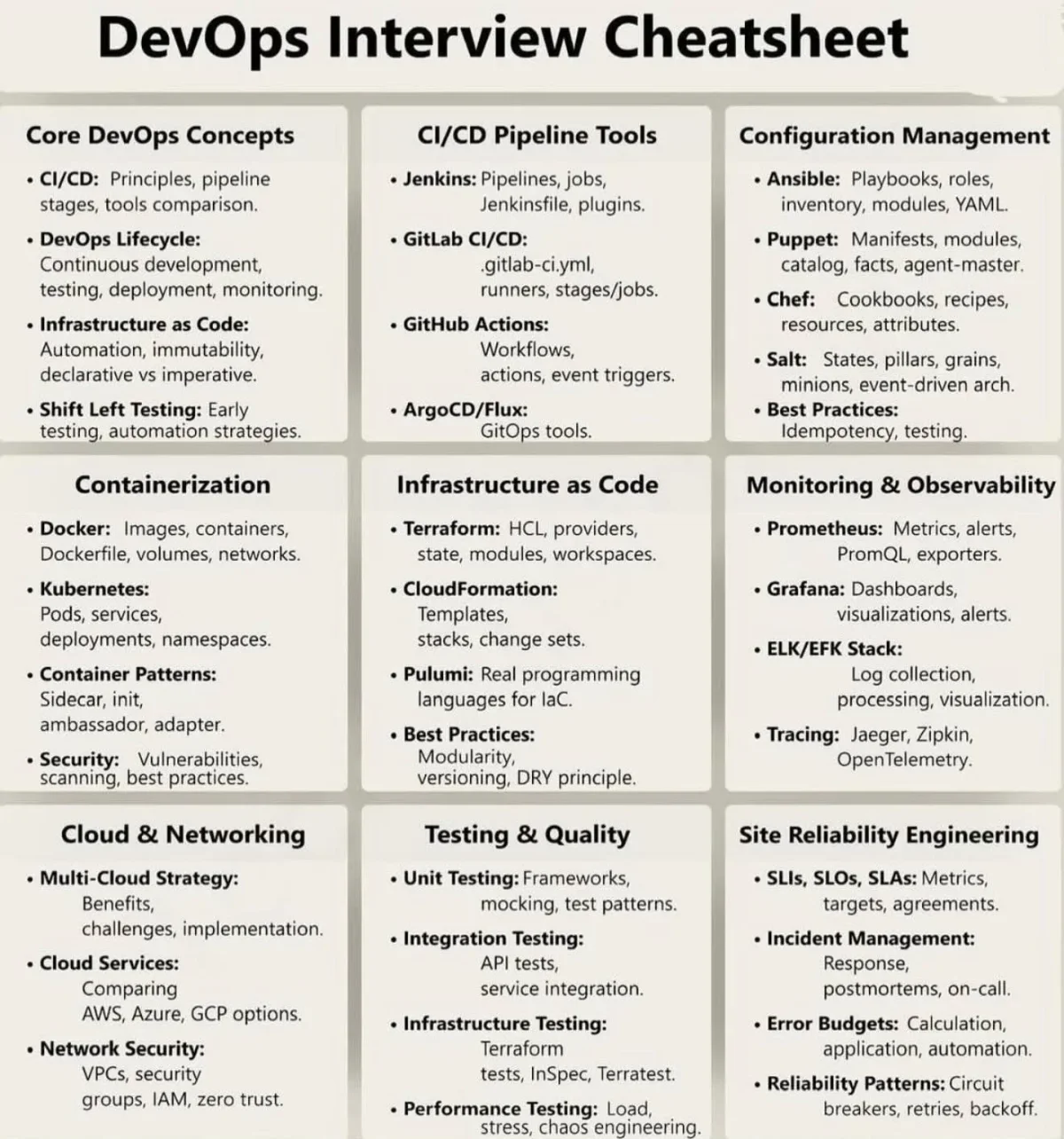
DevOps Interviews Test Thinking, Not Tool Memorization
Most DevOps interviews don’t test tools… they test how you think. This cheat sheet covers the core: CI/CD, Kubernetes, IaC, monitoring, networking, and SRE fundamentals. If you can connect these together in real-world scenarios, you’re already ahead. Don’t memorize—understand the system. What area are you...
AI Coding Agents Overload CI/CD Pipelines, Raising New DevOps Bottlenecks
Generative AI coding agents are flooding CI/CD pipelines with ten‑times more code, creating integration chaos, review backlogs and hidden technical debt. Engineers report exploding merge‑request queues, divergent credential setups and stalled deployments, prompting a rethink of validation infrastructure.
Restrict DB Access; Run with Minimal Privileges
Okay honestly this makes vibe coding into production very dangerous, you guys were all right I think what I'll do is cut off all access to DBs and run it as a user with almost no privileges

Rescue a Running Remote Job Without Killing It
1/ Last year I was running a 6-hour alignment job on a remote server. Then I realized: I forgot to start screen or tmux. My laptop was about to die. Panic mode. Here's exactly how I saved that process without killing it:...

Chainguard Unveils Factory 2.0 to Automate Hardening the Software Supply Chain
Chainguard introduced Factory 2.0 at the Assemble conference, revamping its supply‑chain hardening platform with an AI‑powered control plane and agentic reconciliation bots. The new DriftlessAF framework continuously updates and patches approved open‑source artifacts across containers, libraries, and CI/CD workflows. Chainguard also...

Test Multiple Account Plans and Permissions on Staging
Engineering question How do I emulate different customer account types on staging? I want the ability to review changes by plan and permissions? What's best practice here?

AI-Generated Markdown Streamlines Code Review Feedback
not sure if this is a new thing, but seeing this be very effective for code review at @remote: instead of submitting line-by-line comments, get AI to generate a large markdown file with all suggested changes, including some extra context on...

Axios Npm Supply‑chain Breach Exposes Millions of Developers to North Korean‑linked RAT
A compromised Axios maintainer account allowed attackers to publish malicious versions of the popular JavaScript library, injecting a remote‑access trojan that reached an estimated 180 million weekly downloads. The three‑hour window before removal highlights the fragility of open‑source supply chains and...

How AI Is Transforming Cloud‑Native Operations
AI is reshaping cloud‑native operations by embedding predictive scaling, AIOps, and MLOps directly into Kubernetes and serverless platforms. Machine‑learning models now forecast capacity needs, auto‑adjusting clusters before bottlenecks and cutting costs. AIOps tools ingest telemetry, detect anomalies, and can autonomously...

What NLP in Test Automation Actually Means and Why It Matters Now
Natural language processing (NLP) is reshaping test automation by converting plain‑language requirements into runnable test scripts. The technology lets business analysts, testers, and developers describe test steps in everyday English, which the tool parses into actions and validations. By automatically...

"The Year of Surgical Refactors": $400 in Tokens Saves $500k in Annual Costs, Says Former Vibe-Code Sceptic
The article details how a new JSON query‑and‑transform language built in Go slashes latency and Kubernetes expenses. A modest $400 token purchase unlocked roughly $500,000 in annual cost savings, illustrating a high‑return refactor. The author, once skeptical of vibe‑code, now...

State Management in Stream Processing: How Apache Flink and Kafka Streams Handle State
The article compares how Apache Flink and Kafka Streams manage state in real‑time stream processing. Flink treats state as a first‑class citizen, persisting snapshots to durable storage like S3 via periodic checkpoints. Kafka Streams materializes state changes in compacted Kafka...
Refactoring at the Speed of Mission: An "Agent Mesh" Approach to Legacy System Modernization with Red Hat AI
Legacy Python and Java applications in government and aerospace are being modernized to Red Hat Enterprise Linux 10 using an agentic platform built on Red Hat AI and OpenShift AI. The solution replaces years‑long manual refactoring with a mesh of specialized AI agents...

Architecture Deep Dive: What Makes a Bug Reproducible?
The article argues that the toughest bugs stem from complex state rather than code, and that true reproducibility requires a deterministic, version‑controlled environment. It outlines three pillars—service parity, state consistency, and immutable deployment behavior—to achieve production‑identical clones. Upsun’s platform demonstrates...
Red Hat Solutions for the Hybrid SAP Landscape
Red Hat’s portfolio—RHEL, Ansible Automation Platform, and OpenShift—provides a unified foundation for hybrid SAP environments spanning on‑premise, IaaS, PaaS, and SaaS. RHEL for SAP delivers high‑availability add‑ons, automated risk assessments, and system‑role automation, now supporting S/4HANA on RHEL 10. Ansible streamlines...
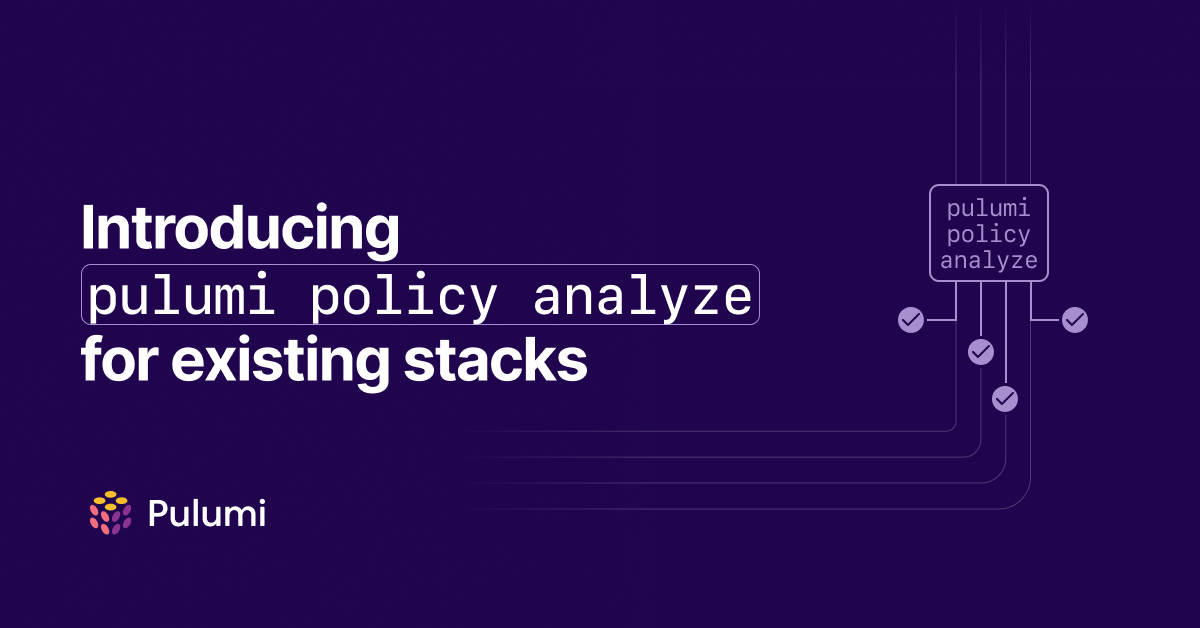
Introducing the Pulumi Policy Analyze Command for Existing Stacks
Pulumi has added the pulumi policy analyze command, letting users run policy packs against an existing stack’s state without executing the Pulumi program or invoking cloud providers. The tool provides instant, side‑effect‑free validation, cutting the traditional preview‑or‑up loop to a simple analysis...
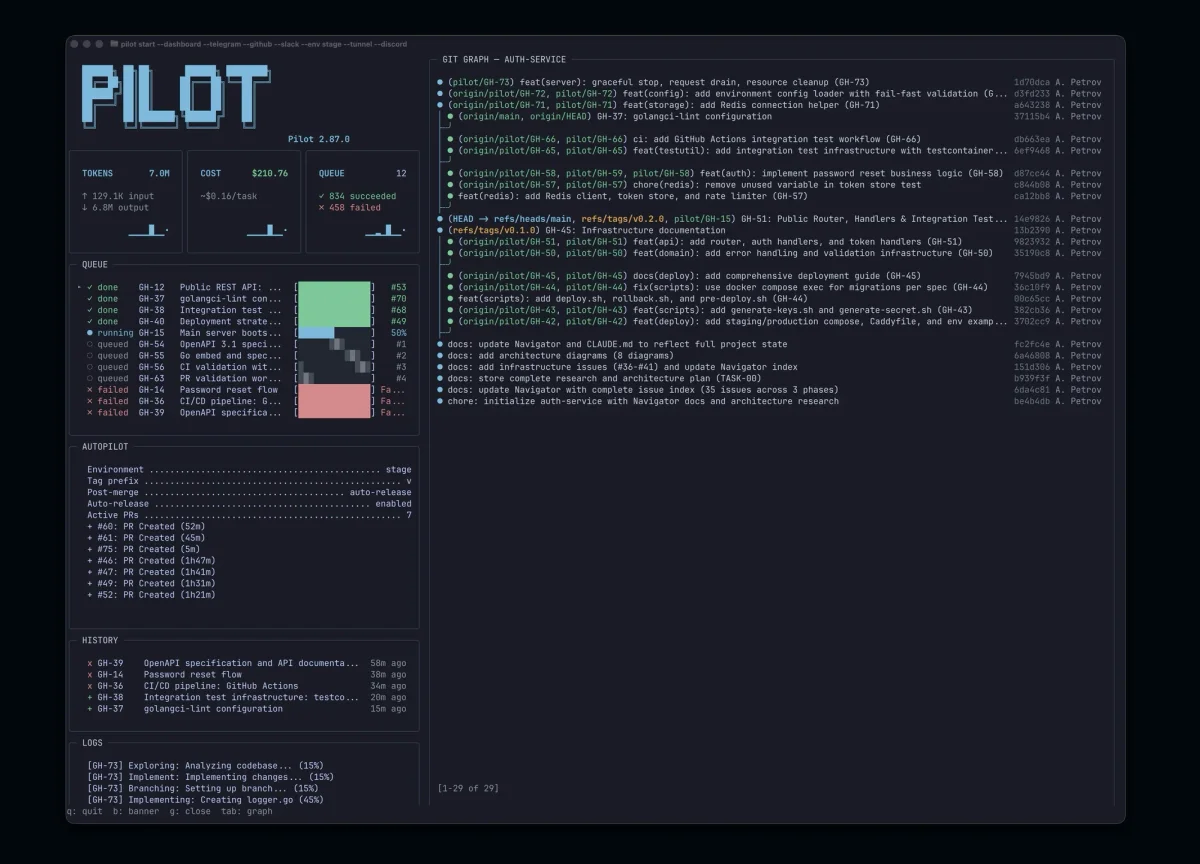
Pilot Ships with Short Video and GIF Demos
Pilot on delivery duty today. Cutting short videos and gifs to show how it ships. https://github.com/qf-studio/pilot

Direct Code, Let Agents Handle Execution
Stop writing code. Start directing it. Cursor 3 is built for a world where agents do the heavy lifting and you stay focused on decisions, not syntax. Run multiple agents across local, SSH, worktrees, and cloud. Collaborate through a dedicated interface that...

Broadcom Donates Velero to CNCF Sandbox, Elevating Kubernetes Data‑Protection Tools
Broadcom has transferred ownership of the open‑source backup/restore project Velero to the Cloud Native Computing Foundation (CNCF) Sandbox. The donation, announced at KubeCon Europe 2026, is intended to remove perceived vendor lock‑in and accelerate Velero’s evolution into a de‑facto standard for Kubernetes...

New Agentic AI Tool Analyzes Oracle Fusion and Workday Releases
Opkey has unveiled Release Advisor, an agentic AI platform that automates analysis of Oracle Fusion and Workday release notes. The tool promises to slash manual review time by 60‑80% and enable certification of updates in as little as three days....

KernelEvolve: How Meta’s Ranking Engineer Agent Optimizes AI Infrastructure
Meta unveiled KernelEvolve, an autonomous agent that automates low‑level kernel creation and tuning for its diverse AI accelerator fleet—including NVIDIA GPUs, AMD GPUs, custom MTIA silicon, and CPUs. By treating kernel optimization as a search problem, the system compresses weeks...

Webinar: High Availability, Simplified
DH2i is hosting a webinar on April 16 at 12:00 pm EDT to demonstrate its newest high‑availability solution for Microsoft SQL Server across Windows, Linux and Kubernetes. The session will walk IT teams through automated scale‑up and scale‑down of SQL Server...

Meta Researchers Verify Code Patches without Running Them at 93% Accuracy
Meta researchers introduced a semi-formal reasoning technique that lets AI agents confirm functional equivalence of code patches without executing them. The approach forces agents to build explicit premises, trace execution paths, and draw formal conclusions, achieving 93% accuracy on real‑world...
Deploy Dashboards to Vercel for AI-Powered Data Queries
Here's a trick most people miss when they build dashboards with AI: ↓ Don't just host it locally. Deploy it to Vercel. With a free Vercel account your dashboard gets it's own API endpoint. Which means Claude Code can query the dashboard...
AI-Generated Code Merges Plateau at ~30%, Growth Slower than Expected
AI-generated merged code holds steady at ~30% https://t.co/vvEzTtKd4c < self-reported today. Going up, but not at the expected rate.
AI Coding Agents Overload CI/CD Pipelines and Merge‑Request Reviews
Analysts warn that AI coding agents are flooding CI/CD pipelines and merge‑request queues, generating up to ten times more code than engineers and exposing hidden technical debt. The surge is stretching senior reviewers, inflating cycle times and threatening delivery metrics...
Multi‑region Backups Essential; Can Backblaze B2 Set Region?
I guess this really proves you need multi-region backups of your servers, DBs, sites etc I wonder if you can set region in Backblaze B2?

Don’t Trust Your Supply Chain Blindly—Follow Docker’s Guidance
These recent software supply chain breaches are worrisome. How can we avoid assuming trust where we shouldn't? @Docker has a good post up with recommendations for engineering teams ... https://t.co/O5Mfag8N4y

BlueRock Launches Trust Context Engine for Agentic Systems
BlueRock unveiled its Trust Context Engine, a runtime layer that tags every action taken by AI agents with detailed metadata and trust signals. The engine classifies capabilities, components, and downstream effects, creating a unified view of the Agentic Action Path....

Unsupervised Coding
We’re likely < 12 months from unsupervised software development. Not just better models. Full closed loops: generate → run → evaluate → fix → repeat. Using @openclaw you can already see it. Once loops + models improve together, supervision will stop making sense.

Structured Prompting Can Supplant Execution Environments in Code Review
Meta's Semi-Formal Reasoning Shows How Structured Prompting Can Replace Execution Environments in Code Review https://t.co/Y9sW9DKSmx

Kubernetes Is Finally Getting Rid of externalIPs
Kubernetes will remove the long‑standing externalIPs field in the upcoming v1.36 release, slated for the end of April. The change begins with deprecation warnings in the current version, giving operators time to adjust. ExternalIPs have been a frequent source of...

ScaleOps Closes $130M Series C to Advance Autonomous AI Infrastructure Management
ScaleOps announced a $130 million Series C round led by Insight Partners, lifting its valuation to roughly $800 million. The funding backs its autonomous AI‑driven platform that continuously balances compute, memory, storage and networking resources. Founded in 2022, the company targets chronic GPU...
Why Broadcom Gave Velero to the CNCF Sandbox — and What It Means for Kubernetes Data Protection
Broadcom has transferred ownership of the Velero backup and recovery project to the CNCF Sandbox, moving governance away from its VMware unit. The donation aims to eliminate perceived proprietary control and encourage broader community contributions. Broadcom positions this move as...

Fix Real-Time AI Voice Lag with Right APIs
Got a hitch in your real-time AI voice app? That little lag throws off the experience. @anniewangtech figured out what was going on, and did a deep dive into the right APIs and patterns to apply. GREAT post. https://t.co/Xz0J6M0tcL https://t.co/Rmp0xlERUq

LLMOps in 2026: The 10 Tools Every Team Must Have
Large language model operations (LLMOps) have matured into a full‑stack production discipline by 2026, requiring specialized tools for everything from routing and observability to memory and real‑world integrations. The article highlights ten best‑in‑class solutions, including PydanticAI for type‑safe outputs, Bifrost...

The Death Spiral: How Overloaded Servers Crash and How Load Shedding Prevents It
The article explains how finite server resources—CPU, RAM, and bandwidth—can be overwhelmed by sudden traffic spikes, leading to queue buildup and latency spikes. When request arrival rates outpace processing capacity, servers enter a "death spiral" where resource contention degrades performance...

A New Mental Model for Harness Engineering
NEW POST Birgitta Böckeler wrote some initial thoughts about Harness Engineering last month. Since then she's been researching more and has now written a thoughtful mental model for understanding the topic. https://t.co/ChuxpRqjHQ
Akamai Unveils Hybrid AI Inference Platform Blending Centralized Cloud and Edge Compute
Akamai announced a hybrid AI inference platform that merges its centralized data‑center capacity with a worldwide network of edge nodes, aiming to cut latency for AI‑driven applications. The approach leverages 41 core datacenters in 36 countries and roughly 4,400 smaller...