
Sashiko Now Providing AI Reviews On Rust Code For The Linux Kernel
Google’s Gemini Pro‑powered AI reviewer Sashiko has expanded to monitor the rust‑for‑linux mailing list, automatically analyzing new Rust patches for the Linux kernel. The service currently operates without custom Rust prompts, but developers plan to add language‑specific rules and a Rust‑focused Coccinelle engine. Early feedback shows the tool can surface style and safety issues, easing the workload of kernel maintainers. As customizations roll out, Sashiko aims to become a trusted assistant for Rust contributions to the kernel.

Secure AI Factory: Cisco‑Nvidia Full‑Stack for Scalable, Private AI
What does a Secure AI Factory look like in an enterprise run by humans and AI agents? @Cisco's answer is Secure AI Factory, a full-stack architecture designed to generate tokens at scale while keeping data private and operations manageable. And it's...

GitHub Unveils Spec-Kit, Open‑Source AI Toolkit to Auto‑Generate Specs From Natural Language
GitHub released Spec-Kit, an open‑source toolkit that uses AI to turn natural‑language feature descriptions into structured technical specifications, project plans and executable code. The tool is built to work with every major AI coding agent, positioning it as a middleware...
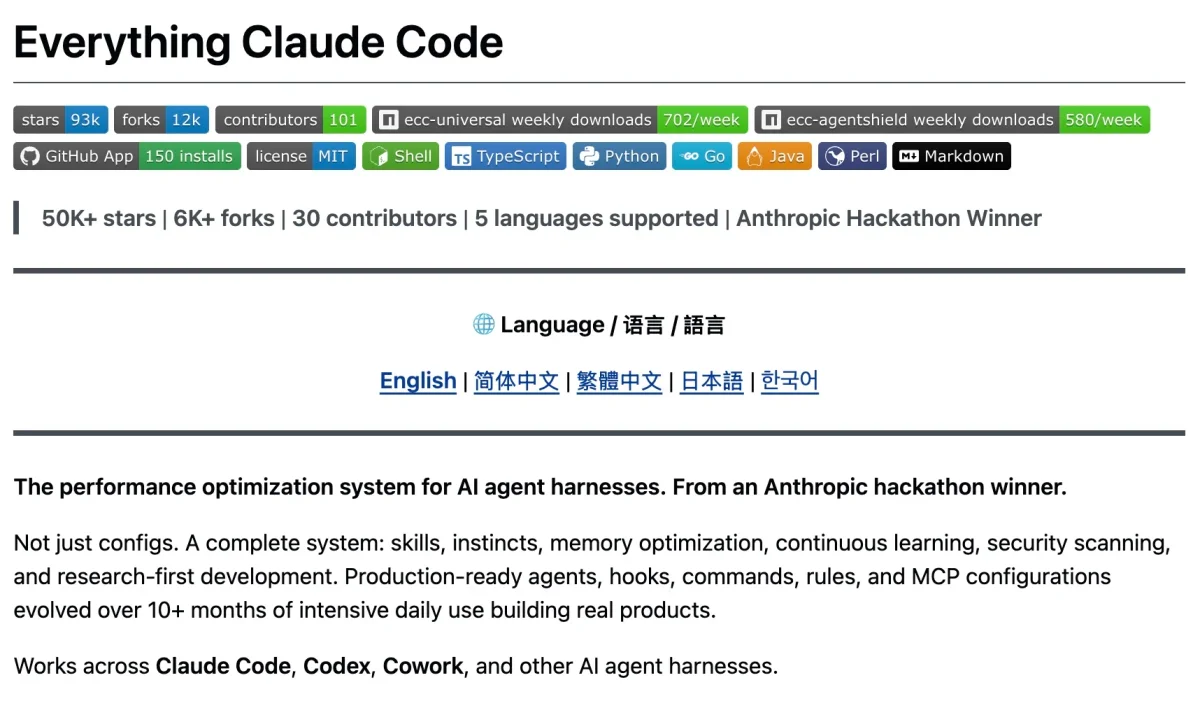
GitHub Repo Cuts Claude Code Token Costs 70%
Found a Github repo that 10x your Claude Code. 25 agents. 108 skills. 57 slash commands. Token optimization baked in. Agents handle architecture, security review, TDD, refactoring, E2E testing. Each one scoped to a single job. Best part: token costs cut 60-70%. Sonnet default. Thinking...

Floci – A Free, Open-Source Local AWS Emulator
Floci is a free, open‑source local AWS emulator that runs with a single Docker Compose command, positioning itself as a no‑strings‑attached alternative to LocalStack’s community edition, which will sunset in March 2026. It eliminates authentication tokens, offers unlimited CI/CD support, and...

Iterate in Small Steps: Safer Than Big Overhauls
One lesson from years of DevOps work: Small changes are safer. Large changes feel efficient but carry hidden risk. That idea seems just as true with AI assisted development. Iterate quickly, but in small steps.

Silencing AI Noise to Build Practical AWS Automation
I’ve started muting all the accounts pushing hot takes on ai 🤖 so I can focus on getting things done. If it’s not contributing towards accomplish something not really helping. Here’s what I’ve gotten done or trying to get done with...

Google AI Studio Unveils Antigravity Agent and Full-Stack Vibe Coding for Production Apps
Google announced a major upgrade to its AI Studio platform, adding the Antigravity coding agent and a full‑stack “vibe coding” experience that turns natural‑language prompts into production‑ready applications. The update integrates Firebase backend services, supports Next.js, and preserves project state...
AI Can Instantly Double Your Test Coverage
Okay this might be totally obvious but you can just tell Claude Code to double your test coverage and it will actually do it. Will need a lot of review, but if you’re just getting started with adding tests to your...

AI's Future Lies in Workflow Orchestration, Not Models
I am starting to believe that the most interesting part of AI development is not the models. It is the workflows around them. Agents coordinating work, orchestrating tasks, managing context. Feels a lot like the early days of DevOps when we started wiring...

Cursor Unveils Composer 2, a Cost‑Efficient AI Model for Scalable Code Generation
San Francisco‑based Cursor (Anysphere Inc.) released Composer 2, an AI coding model that can handle 200,000‑token prompts and costs as low as $0.50 per million input tokens. The model outperforms Claude Opus 4.6 and lower‑tier GPT‑5.4 configurations on internal benchmarks, positioning...
OpenAI Acquires Python Tooling Startup Astral to Bolster AI‑Assisted Development
OpenAI announced the acquisition of Python developer‑tool startup Astral, bringing its open‑source utilities such as uv, Ruff, and the pyx package registry into the Codex AI coding platform. The deal, disclosed on March 19, is pending customary closing conditions and...

Day 45: Implement a Simple MapReduce Framework for Batch Log Analysis
The post outlines a production‑grade MapReduce framework that handles a full map‑shuffle‑reduce pipeline for batch log analysis, processing millions of events. It features a coordinator‑worker model with automatic task retries and a partitioned storage backend for efficient shuffling. While Kafka...
Secrets Management Vs. Secrets Elimination: Where Should You Invest?
Enterprises are weighing two divergent authentication philosophies: traditional secrets management, which safeguards static credentials in vaults, and secretless authentication, which eliminates static secrets by issuing short‑lived tokens tied to workload identities. While secretless reduces attack surface and operational friction for...

Harness Unveils Artifact Registry to Streamline DevSecOps Pipelines
Harness announced the general availability of its Artifact Registry, a built‑in capability that stores, secures, and governs software artifacts directly within the Harness delivery platform. The move aims to cut the operational overhead of managing separate repositories and tighten supply‑chain...

Security Considerations on Istio's CRDs with Namespace-Based Multi-Tenancy
Istio’s VirtualService resource, when configured as a mesh gateway, applies routing rules across the entire service mesh, not just the namespace where it is defined. This design flaw enables tenants with permission to create or modify Istio CRDs to launch...
Removing Depth Limit Boosts Agent Success From 58% to 88%
Spent two weeks benchmarking Pilot on Terminal Bench 2.0. Ran 500+ tasks across 15 experiments. Built analysis pipelines. Measured variance. Compared agent behavior across pass vs fail runs. The fix that moved the needle? Removing one env var that forced maximum thinking...

Introducing ClawBytes
The blog introduces ClawBytes, a cookbook of ready‑to‑use automation recipes built for KiloClaw and OpenClaw. It positions the offering between basic setup guides and elaborate multi‑agent projects, delivering practical workflows such as GitHub triage, Todoist management, and research sourcing. Currently...

AI Can Write Your Infrastructure Code. There’s a Reason Most Teams Won’t Let It.
Spacelift co‑founder Marcin Wyszynski says AI is now writing infrastructure‑as‑code in HCL, eliminating the need for developers to hand‑craft Terraform or OpenTofu configurations. While this speeds provisioning, it creates a comprehension gap that can lead to dangerous production changes. Spacelift’s...
Komodor Unveils Klaudia AI Multi‑Agent SRE Platform with Extensibility Framework
Komodor released a multi‑agent version of its Klaudia AI platform, adding an extensibility framework that lets customers run more than 50 specialized AI agents—or their own custom agents—side‑by‑side to automate detection, investigation and remediation of incidents. The launch, previewed at...

AI Simulates Six Months, Cuts Build Time 30%
In 48 hours our AI agent simulated 6 months of activity in the app. Anthropic dropped a 1 million context window last weekend and we put it to work. No human intervention. The results: • 30% faster build times • 50% reduction in...

GStack Adds Windows Support, Falls Back to Node.js
GStack just shipped Windows support. Thanks to all my Windows users for bearing with us. There was a Bun runtime error on Windows and now it falls back to Node.js. Big thanks to the GStack contributor community - sorry it...
Announcing Ingress2Gateway 1.0: Your Path to Gateway API
SIG Network announced Ingress2Gateway 1.0, a migration assistant that converts Kubernetes Ingress‑NGINX resources into Gateway API manifests. The release expands support to over 30 common NGINX annotations and adds extensive integration testing that validates runtime behavior across controllers. It also...

Prioritize Indexing, Caching, and Transport for Faster APIs
20 steps to improve API performance ⚡️ DB + code: indexing, query caching, pooling, efficient algorithms Caching: Redis/Memcached, HTTP cache headers, CDNs Transport: GZIP/Brotli, HTTP/2–3, keep-alive, TCP tuning Scale: pagination, async processing, load balancing Reliability: rate limiting, timeouts, proper errors Ops: monitoring/profiling, versioning UX: smaller payloads, better...

Redesign Feedback Loops, Don’t Just Add AI
RT Your new backlog shouldn't "add AI." It's redesign feedback loops so models, pipelines, and platforms learn together. Think: model drift to incident response, feature flags to guardrails, SLOs to AI behavior. #AI #DevOps #Agile @Star_CIO https://t.co/7dcoLIKa0K
Trusted Java Containers: Azul Zulu OpenJDK Joins Docker’s Official Images
Azul Systems announced that its Zulu OpenJDK builds are now part of Docker’s Official Images, making them directly pullable from Docker Hub. The images meet Docker’s rigorous security, signing and maintenance standards and cover all current LTS Java versions—8, 11,...

Agentic AI Empowers Solo Architects, yet Breeds Unextendable Black‑box Apps
Agentic AI can turn a single architect into a "full-stack squad" in minutes, but it can also create black-box apps that no one can safely extend. #AI #DevOps https://t.co/p18hdtdbZn

Kubernetes 1.36 Adds Native Scale‑to‑zero Pods
If only my Kubernetes pod could scale to zero. That'd be great for staging/test environments or irregular production workloads. Oh, that's coming in Kubernetes v1.36 after sitting in alpha for years? Sweet. https://t.co/klzNA6Hs0X https://t.co/Yee1mpTLEh

Running Agents on Kubernetes with Agent Sandbox
The AI landscape is shifting from brief, stateless inference calls to long‑running, coordinated agents that require persistent state and secure execution. Traditional Kubernetes objects like StatefulSets struggle to manage thousands of singleton agents efficiently. The open‑source Agent Sandbox project introduces...

How to Monitor LLMs in Production with Grafana Cloud,OpenLIT, and OpenTelemetry
Grafana Cloud now offers AI Observability, a unified platform for monitoring large language model (LLM) workloads in production. By integrating the OpenLIT SDK and OpenTelemetry, developers can automatically capture traces, metrics, and logs for multiple model providers, vector databases, and...
JFrog Introduces MCP Registry to Guard AI Coding Agents in the Software Supply Chain
JFrog has unveiled a Model Context Protocol (MCP) registry within its AI Catalog, giving enterprises a single source of truth for AI coding agents and MCP servers. The service aims to extend traditional software‑supply‑chain controls to AI‑driven workflows, addressing threats...
Enterprise Data Protection, Governance, and Cost Optimization with Xray and Revyz in Jira
Revyz has launched an integrated backup and governance layer for Xray, Atlassian’s test‑management add‑on in Jira. The solution replaces native Atlassian backups with automated, forever‑incremental, immutable snapshots that also deduplicate attachments. By adding configuration‑drift analytics and role‑based access controls, Revyz...
Honeycomb Offers New Observability Tools for AI Agents
Honeycomb.io announced the general availability of Honeycomb Metrics and a suite of AI‑driven observability tools. The new features include Agent Skills for Claude Code, Cursor and AWS DevOps Agent, Automated Investigations, a Slackbot with natural‑language queries, and Pipeline Intelligence that...

Advanced Object Recognition in Test Automation: Comparing Leading Enterprise Solutions
Object recognition is the linchpin of modern test automation, enabling scripts to locate and interact with UI elements across web, desktop, mobile, and legacy environments. The article compares four enterprise‑grade tools—SmartBear TestComplete, Ranorex Studio, Tricentis Tosca, and Keysight Eggplant—focusing on...
Stop Trusting Your RAG Pipeline: 5 Guardrails I Learned the Hard Way
The author recounts a payroll‑tax error caused by a stale document in a retrieval‑augmented generation (RAG) pipeline, illustrating that simple vector similarity is insufficient for enterprise AI. Five non‑negotiable guardrails are presented: relevance re‑scoring, forced citation, post‑generation NLI validation, staleness...

Crossplane and AI: The Case for API-First Infrastructure
AI‑assisted development has moved the bottleneck from writing code to post‑push activities such as provisioning, compliance, and day‑two operations. Traditional platforms expose policies and state through fragmented UIs and pipelines, which hinders AI agents that require machine‑readable interfaces. Crossplane extends...

Turn Intent Into Tests, Free QA for Quality Thinking
This direction is very meaningful, since translating intent into executable tests can reduce friction in QA workflows and let teams focus more on quality thinking rather than repetitive implementation.

GitLab 18.10 Launches AI‑Native Triage, Automated Remediation and Free‑Tier Credits
GitLab rolled out version 18.10, embedding AI‑native SAST false‑positive detection and an agentic remediation flow for Ultimate customers while also granting free‑tier AI credits, passkey sign‑in and new work‑item features. The update, driven by 212 community contributions, targets faster vulnerability...

Microservices Platforms - Part 6: Build Platform
The sixth article in the Microservices Platforms series introduces the Build platform, a core component that, together with the Deployment platform, maps the journey of code changes from a developer’s laptop to production. It outlines how the Build platform automates...

Seer Fixes Seer: How Seer Pointed Us Toward a Bug and Helped Fix an Outage
On February 21, 2026 Sentry’s AI‑powered Seer service suffered an 80‑90% failure rate in its EU Issue Summary API after a Google Cloud Vertex AI Gemini outage triggered a bug in Seer’s region‑fallback logic. The bug blocklisted the provisioned‑throughput region europe‑west1,...

Shift Gears: 10 Stories Redefining Enterprise IT
Red Hat unveiled a suite of production‑ready tools aimed at simplifying enterprise AI, container, and virtualization workloads for 2026. Highlights include the Sovereignty Readiness Assessment, an enterprise‑grade Podman Desktop, and a migration toolkit that accelerates VM moves tenfold. The company also...
Solve Multi-Controller Contention with Red Hat OpenShift Networking
Red Hat OpenShift now supports governed multi‑controller load balancing using the Kubernetes loadBalancerClass field. By assigning a class to external services, enterprises can separate MetalLB’s internal load‑balancing from hardware‑based solutions like F5 BIG‑IP, preventing controller contention. The approach eliminates race conditions, ensures deterministic...

From DLT to Lakeflow Declarative Pipelines: A Practical Migration Playbook
Databricks is rebranding Delta Live Tables as Lakeflow Spark Declarative Pipelines, adding open‑source Spark alignment and new features. Existing DLT pipelines run unchanged, but Databricks recommends updating imports, decorators, expectations, and CDC logic to the new `dp` API. The migration...
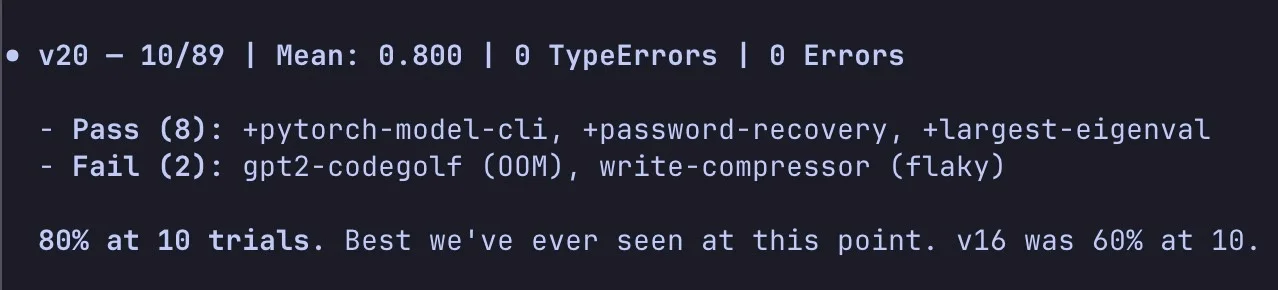
CLI Version Beats Prompts and Node Upgrades
Node 18 + ClaudeCode 2.1.72 is a cheat code 😉 We benchmark Pilot on Terminal Bench 2.0. 89 real coding tasks, Opus 4.6, Modal containers. Ran 10+ full experiments over two days. The CLI tool version matters more than prompt engineering, effort...

Pulumi IAM Expands: Manage Access at Scale with Tags, Roles, and Teams
Pulumi has added three major IAM capabilities—tag‑based access control, team role assignments, and user role assignments—to its existing custom‑role framework. Tag rules let permissions be granted automatically when stacks, environments, or accounts carry matching tags, eliminating manual selection. Teams can...

Harness Wins Workday Deal to Power Agentic AI Software Delivery, Boosting AI‑Native DevOps
Harness announced that Workday will adopt its AI Software Delivery Platform to accelerate agentic AI releases, a deal unveiled on March 19, 2026. The partnership follows a strategic collaboration between Harness and Wipro, underscoring growing demand for AI‑native DevOps solutions.

Beyond Bugs: Observability Shapes Agentic Programming Over GPS
Fragments: code review isn't just catching bugs, what role for observability in agentic programming, what we lose with GPS over maps https://t.co/f2tfkLanN4

Production Is Real Flight; Observability Guides the Journey
"Formal methods and test suites are flight simulators. Production is flying the actual plane. Observability is how you fly it." -@mipsytipsy Important post from Charity on why you must treat production as more than a place you go to fix...

DevOps Anti-Patterns: What They Are and How to Avoid Them
The article outlines common DevOps anti‑patterns that undermine speed, quality, and collaboration, such as creating a dedicated DevOps team, over‑investing in tools, and inserting manual approvals into CI/CD pipelines. It highlights cultural pitfalls like blame‑oriented environments and misapplied microservices, as...

Microsoft Issues Emergency Patch for Critical .NET 0-Day Vulnerability CVE-2026-26127
Microsoft rolled out emergency patches for .NET 9.0 and 10.0 to close CVE-2026-26127, a remote denial‑of‑service vulnerability with a CVSS score of 7.5. The fix, required across Windows, macOS and Linux, forces DevOps teams to update critical runtime components immediately.