
CleanStart Takes Aim at BusyBox to Harden Container Security
CleanStart has introduced a BusyBox‑free container architecture that replaces the traditional monolithic utility binary with statically compiled, purpose‑specific tools. By validating the filesystem during image construction, the platform removes unused components and blocks BusyBox from final images, delivering deterministic containers. This approach shifts security from post‑deployment scanning to build‑time enforcement, providing verifiable SBOMs and tighter compliance. The solution targets regulated sectors where auditability and reduced attack surface are critical.

Introducing Bun as a Runtime for Pulumi
Pulumi now supports Bun as a full runtime for TypeScript projects, letting users set `runtime: bun` in Pulumi.yaml and execute programs without Node.js. Bun offers native TypeScript execution, dramatically faster package installs, and near‑complete Node.js API compatibility. The capability ships...

Amazon S3 Files Gives AI Agents a Native File System Workspace, Ending the Object-File Split that Breaks Multi-Agent Pipelines
Amazon announced S3 Files, a service that mounts any S3 bucket directly into an agent’s local environment using Elastic File System technology. The solution provides true file‑system semantics while keeping S3 as the system of record, eliminating the need for...
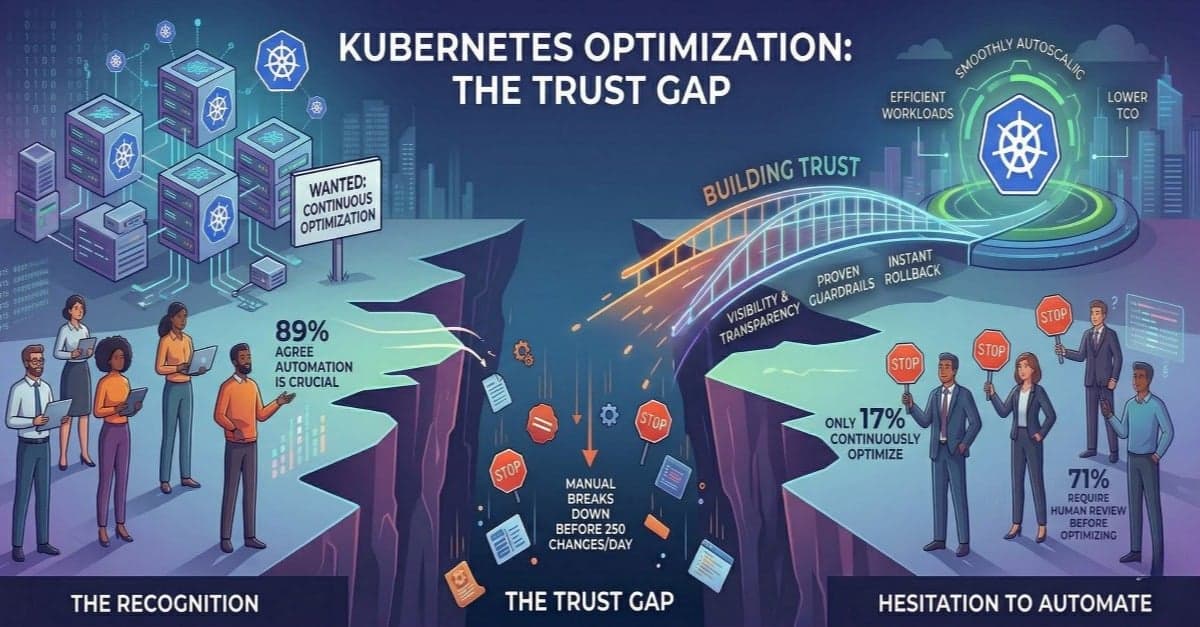
Survey: Few IT Teams Can Continuously Optimize Kubernetes Clusters
CloudBolt surveyed 321 Kubernetes practitioners at enterprises with over 1,000 employees. While 89% say automation is essential, only 17% can continuously optimize their clusters. Seventy‑one percent still require human review for resource changes, and 48% cite visibility as the biggest...

Amazon S3 Files Gives the World’s Biggest Object Store a File System
Amazon Web Services introduced S3 Files, a new feature that exposes Amazon S3 buckets as native NFS v4.1 file systems. The service runs on top of Amazon Elastic File System, delivering sub‑millisecond latency and full POSIX‑like operations such as file locking...

Chainguard Actions Introduced
Chainguard introduced Chainguard Actions, a secure‑by‑default catalog for CI/CD workflows that automatically evaluates, remediates, and republishes third‑party GitHub Actions. The service leverages the Chainguard Factory to continuously monitor upstream changes and apply AI‑driven security rules that block unsafe patterns, excessive...

Nutanix Targets Neocloud AI Economics With Platform Push
Nutanix announced a major upgrade to its Nutanix Cloud Platform, branding it for the "agentic AI era" where autonomous workloads generate unpredictable demand. The rollout adds bare‑metal Kubernetes (NKP Metal), multi‑tenant AI tooling via SP Central, and deeper integrations with NetApp, Cisco...

The Hidden Cost of UI-Driven Data Pipelines: Why Teams Are Moving to Infrastructure as Code
UI‑driven data pipeline tools let early‑stage teams launch pipelines quickly, but the convenience hides configuration state across multiple dashboards and vendor accounts. As organizations scale, hidden operational debt accumulates, leading to schema drift, silent failures, and an inability to diff...
TOP-5 Lightweight Linux Distributions for Container Base Images
Choosing a lightweight Linux distribution for container base images directly influences image size, runtime performance, security exposure, and maintenance overhead. The guide evaluates five production‑grade options—Alpine, Alpaquita, Chiseled Ubuntu, RHEL UBI Micro, and Wolfi—against criteria such as footprint, libc implementation,...

OpenNebula Systems Launches OpenNebula 7.2 to Power Sovereign Clouds and AI Factories at Scale
OpenNebula Systems released OpenNebula 7.2, a minor update aimed at production‑scale sovereign clouds and AI factories. The version adds a gRPC‑based API, deeper NVIDIA integration, and hardware‑rooted security features such as confidential computing and virtual TPM. It also expands storage mobility...

TestRail Launches AI Test Script Generation to Eliminate Boilerplate Coding for Automation Engineers
TestRail unveiled version 10.2, introducing AI Test Script Generation as an open‑beta for all TestRail Cloud customers. The feature converts documented test cases into fully‑structured automation code and project files in seconds, cutting 30‑60 minutes of manual boilerplate per test....

The Terraform Scaling Problem: When Infrastructure-as-Code Becomes Infrastructure-as-Complexity
Terraform dominates IaC with 76% market share and 90% cloud adoption, but scaling introduces severe state file contention, module sprawl, long plan times, and drift that double failure rates. Organizations with over 500 resources see plan operations stretch to 15‑30...

GitHub Copilot CLI Gets a Second-Opinion Feature Built on Cross-Model Review
GitHub introduced Rubber Duck, a cross‑model review feature for Copilot CLI that pairs a primary Claude model with a GPT‑5.4 reviewer. The reviewer flags unsupported assumptions, missed edge cases, and conflicting implementation details, and can be triggered automatically at three...

AI-Driven Cloud Moderation in Kubernetes Clusters
Kubernetes platforms frequently overspend on cloud resources, with bills rising 30‑50 % due to orphaned assets and over‑provisioned pods. AI‑driven moderation analyzes real‑time telemetry, predicts waste, and enforces budget policies automatically. By integrating custom controllers and a CRD like AIClusterBudget, teams...
Ahsan Hadi: Using the pgEdge MCP Server with a Distributed PostgreSQL Cluster
Ahsan Hadi demonstrates how the pgEdge MCP Server integrates with a pgEdge Distributed PostgreSQL cluster, giving AI assistants like Claude natural‑language access to schema details, performance metrics, and replication status. The server supports full schema introspection, pg_stat_statements, and secure TLS...

GitLab Duo CLI: Agentic AI for the Development Lifecycle, Now in the Terminal
GitLab has launched the Duo CLI in public beta, extending its AI‑driven Duo Agent Platform to the terminal. The tool offers two operating modes—a chat‑based interactive mode and a headless mode for scripts and CI/CD pipelines. It integrates security guardrails...
.png)
Why Harness AI Uses a Knowledge Graph, Not Raw APIs
Harness AI agents now rely on a schema‑driven Knowledge Graph instead of raw Model Context Protocol (MCP) API calls. By modeling entities, relationships, and field metadata, the platform can answer multi‑module queries with Harness Query Language (HQL) in just two...

Managed Identity in Azure Red Hat OpenShift: Deploy in Just a Few Clicks with the Azure Portal
Red Hat and Microsoft announced general availability of managed and workload identities for Azure Red Hat OpenShift, enabling short‑lived, permission‑scoped credentials. A new Azure portal experience now automates the entire cluster‑creation workflow, provisioning user‑assigned managed identities and role assignments with...
Overcoming Inference Challenges
Enterprises scaling large language model (LLM) inference face mounting operational complexity as model variants multiply and GPU fleets span from H100s to T4s. Manual, guess‑and‑check deployments waste expensive GPU capacity, cause latency spikes, and hinder reliable Day 2 operations. Red Hat Services...

AI Agent Observability: The Developer's Guide to Agent Monitoring
AI agents require observability that goes beyond traditional APM metrics, capturing every LLM call, tool execution, and sub‑agent handoff. The OpenTelemetry `gen_ai` semantic conventions provide a standardized span model—`gen_ai.request`, `gen_ai.invoke_agent`, and `gen_ai.execute_tool`—enabling structured tracing and unified dashboards. Sentry’s auto‑instrumentation supports...

Pipeline Security Lessons From March Supply Chain Incidents
Between March 19 and March 31, 2026, the TeamPCP threat group executed four supply‑chain attacks that compromised the open‑source scanner Trivy, the IaC scanner Checkmarx KICS, the AI model gateway LiteLLM, and the JavaScript client axios. Each breach leveraged malicious...

Unlock Efficient Model Deployment: Simplified Inference Operator Setup on Amazon SageMaker HyperPod
Amazon announced the SageMaker HyperPod Inference Operator as a native EKS add‑on, delivering one‑click installation and managed upgrades. The operator automates IAM role creation, S3 bucket provisioning, VPC endpoint setup, and required add‑ons, removing the need for complex Helm charts....

Radim Marek: Don't Let Your AI Touch Production
AI coding agents now generate SQL that looks correct but often ignores execution plans, locking behavior, and data distribution, leading to costly production incidents. Radim Marek argues that the missing piece is real‑time awareness of the production schema, including table...

NeuBird AI Closes $19.3M Round Led by Xora Innovation
NeuBird AI announced an oversubscribed $19.3 million funding round led by Xora Innovation, with participation from Mayfield, StepStone Group, Prosperity7 Ventures and Microsoft’s M12 fund. The capital will accelerate product development, global go‑to‑market expansion and broaden access for DevOps, SRE and...

Observability in Go: Where to Start and What Matters Most
Grafana Labs’ "Big Tent" podcast hosted a deep dive into Go observability, emphasizing that logging is the natural starting point. The hosts explained how logs can be transformed into actionable metrics, such as panic frequency, and fed into Grafana Loki...
Hybrid Cloud and AI: The New Enterprise Architecture
Enterprises are shifting from cloud‑first to strategic hybrid cloud to support AI production at scale. AI‑native platforms combined with centralized governance enable modular, continuously evolving architectures that integrate with ERP, CRM, and edge systems. Deloitte and PwC research highlights that...

Peer-to-Peer Acceleration for AI Model Distribution with Dragonfly
Dragonfly, a CNCF‑graduated P2P file distribution system, now supports native hf:// and modelscope:// protocols for Hugging Face and ModelScope hubs. The new backends let dfget download model files or entire repositories directly, preserving authentication, revision pinning, and recursive capabilities. By...

SUSE Wants to Take the Cognitive Load Out of Infrastructure – and Liz Is How It Plans to Do It
SUSE announced a major upgrade to its Rancher Prime AI assistant, Liz, re‑architecting it as an orchestration layer that coordinates specialized agents for fleet management, security, observability and more. The new Model Context Protocol (MCP) lets customers plug in third‑party...

Turn AI Pilots Into Trusted, Scalable Production by Design
TM Forum’s AI & Data Mission introduces an AI&D blueprint that unites scale, trust, and deployment for communications service providers (CSPs). The framework splits into three pillars—AI for Leaders, AI for Delivery, and AI for Practitioners—offering governance models, ROI‑focused case...

The Testing Disconnect That’s Undermining Your API Quality
APIs have evolved into core business assets, but testing remains fragmented across disparate tools, creating bottlenecks and quality risks. The article outlines six stages of the API testing lifecycle where misaligned tooling leads to duplicated effort, environment drift, and data‑integrity...

Inside Capital One’s Shift to a ‘Serverless-First’ Operating Model
Capital One is five years into a "serverless‑first" transformation, using AWS Lambda as the default platform for new development. The shift has cut run‑engine costs and boosted developer productivity, with engineering teams reporting roughly 30% less time spent on infrastructure...

DevOps Metrics and KPIs You Should Track
The article argues that DevOps leaders must move beyond basic uptime or velocity charts and adopt outcome‑driven KPIs that tie technical activity to business value. It outlines common challenges—metric overload and lack of strategic alignment—and proposes a framework for selecting...
.png)
An Introduction to Disaster Recovery Testing in 2026
Disaster recovery (DR) testing has become a continuous discipline in 2026 as cyber‑attacks, cloud outages, and supply‑chain disruptions threaten uptime. Modern platforms combine automation, AI, and chaos engineering to turn once‑a‑year fire drills into frequent, low‑risk validations. The article outlines...

That Production Incident Cost More than Downtime
Production incidents cost far more than the visible downtime. After a P0 alert, engineers spend hours on manual reconciliation to align environments, creating undocumented toil that stalls the roadmap. The real expense includes the “momentum tax” of context‑switching and the...

Debugging the Black Box: Why LLM Hallucinations Require Production-State Branching
LLM‑powered features such as RAG search or autonomous agents often fail in production with hallucinations that cannot be reproduced in standard dev environments. The root cause is the mismatch between live production data, vector embeddings, and the exact model version...
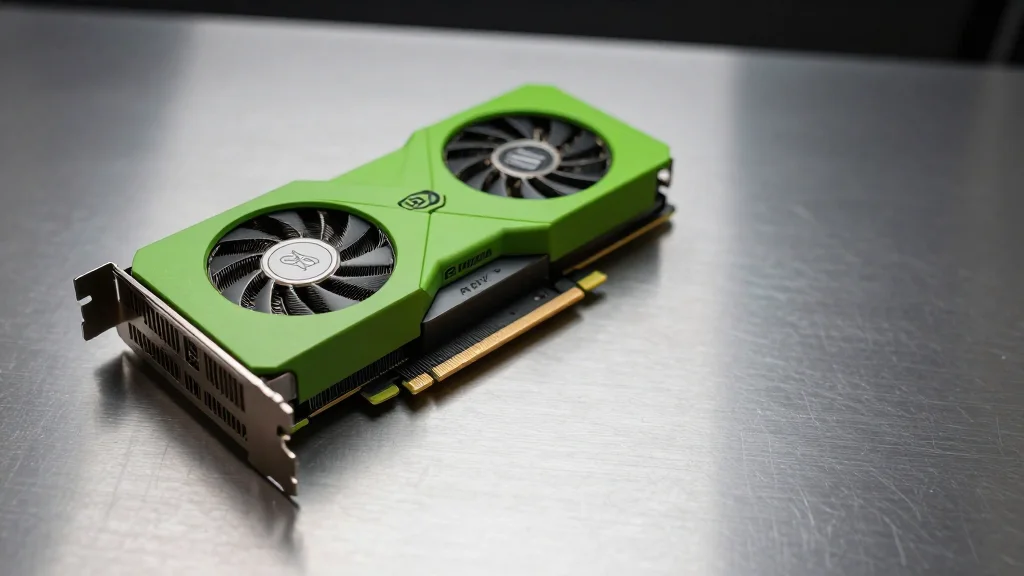
Vultr Says Its Nvidia-Powered AI Infrastructure Costs 50% to 90% Less than Hyperscalers
Vultr announced an Nvidia‑powered AI infrastructure that it says costs 50% to 90% less than comparable offerings from major hyperscalers. The service lets platform engineering teams train AI agents on internal security, networking and compliance policies, then expose those as...
Cypress Test Replay Now Captures Canvas Elements by Default
Cypress Test Replay now records canvas elements by default for every project in Cypress Cloud, eliminating the placeholder graphics that previously appeared during debugging. The change requires no Cypress version upgrade; it works with any installation of Cypress 15.5.0 or...

Human Oversight in AI Automation Testing
AI‑driven test automation can efficiently execute predefined flows, but it often fails to interpret complex interfaces, generates false alerts, and misses device‑specific or localization defects. Global App Testing highlights five key limitations of AI‑only testing and promotes a human‑in‑the‑loop methodology...
GitOps Implementation at Enterprise Scale, Moving Beyond Traditional CI/CD
Enterprise engineering teams hit a ceiling with traditional CI/CD pipelines, experiencing repeated deployment incidents caused by configuration drift and manual rollbacks. To restore consistency, they migrated to a GitOps model, selecting ArgoCD for its pull‑based synchronization, drift detection, and clear...

Beyond The Wave: What Customers Really Think About Autonomous Testing Platforms
Forrester’s Q4 2025 Wave highlighted 15 vendors delivering AI‑powered autonomous testing platforms, and its Q1 2026 Buyer’s Guide surveyed 37 enterprise users. Customers reported automation coverage climbing to 51‑60% of tests, with a few teams exceeding 80%, yet full autonomy remains low...

Reducing Deployment Time by 60% on GCP: A CI/CD Pipeline Redesign Case Study
A team re‑engineered its CI/CD pipeline on Google Cloud Platform by swapping self‑managed components for managed services such as Cloud Build, Artifact Registry, GKE Autopilot, Cloud Deploy, and Cloud SQL. The redesign slashed total deployment time from roughly 52 minutes...

Digital Experience Monitoring Belongs in the Modern Developer Workflow
Digital Experience Monitoring (DEM) is reshaping observability by tying frontend performance and real‑user outcomes to backend telemetry. The article explains how DEM integrates synthetic testing, Core Web Vitals, and crash data into developers' daily workflow, from CI/CD pipelines to incremental...

Chainguard Unveils Factory 2.0 to Automate Hardening the Software Supply Chain
Chainguard introduced Factory 2.0 at the Assemble conference, revamping its supply‑chain hardening platform with an AI‑powered control plane and agentic reconciliation bots. The new DriftlessAF framework continuously updates and patches approved open‑source artifacts across containers, libraries, and CI/CD workflows. Chainguard also...

How AI Is Transforming Cloud‑Native Operations
AI is reshaping cloud‑native operations by embedding predictive scaling, AIOps, and MLOps directly into Kubernetes and serverless platforms. Machine‑learning models now forecast capacity needs, auto‑adjusting clusters before bottlenecks and cutting costs. AIOps tools ingest telemetry, detect anomalies, and can autonomously...

What NLP in Test Automation Actually Means and Why It Matters Now
Natural language processing (NLP) is reshaping test automation by converting plain‑language requirements into runnable test scripts. The technology lets business analysts, testers, and developers describe test steps in everyday English, which the tool parses into actions and validations. By automatically...

"The Year of Surgical Refactors": $400 in Tokens Saves $500k in Annual Costs, Says Former Vibe-Code Sceptic
The article details how a new JSON query‑and‑transform language built in Go slashes latency and Kubernetes expenses. A modest $400 token purchase unlocked roughly $500,000 in annual cost savings, illustrating a high‑return refactor. The author, once skeptical of vibe‑code, now...

Refactoring at the Speed of Mission: An "Agent Mesh" Approach to Legacy System Modernization with Red Hat AI
Legacy Python and Java applications in government and aerospace are being modernized to Red Hat Enterprise Linux 10 using an agentic platform built on Red Hat AI and OpenShift AI. The solution replaces years‑long manual refactoring with a mesh of specialized AI agents...

Architecture Deep Dive: What Makes a Bug Reproducible?
The article argues that the toughest bugs stem from complex state rather than code, and that true reproducibility requires a deterministic, version‑controlled environment. It outlines three pillars—service parity, state consistency, and immutable deployment behavior—to achieve production‑identical clones. Upsun’s platform demonstrates...
Red Hat Solutions for the Hybrid SAP Landscape
Red Hat’s portfolio—RHEL, Ansible Automation Platform, and OpenShift—provides a unified foundation for hybrid SAP environments spanning on‑premise, IaaS, PaaS, and SaaS. RHEL for SAP delivers high‑availability add‑ons, automated risk assessments, and system‑role automation, now supporting S/4HANA on RHEL 10. Ansible streamlines...
Introducing the Pulumi Policy Analyze Command for Existing Stacks
Pulumi has added the pulumi policy analyze command, letting users run policy packs against an existing stack’s state without executing the Pulumi program or invoking cloud providers. The tool provides instant, side‑effect‑free validation, cutting the traditional preview‑or‑up loop to a simple analysis...