
Charlotte Douglas Airport Deploys Airspan MobileAccess 6000 Platform
Airspan Networks and Wireless Services have installed the Airspan MobileAccess 6000 Digital DAS platform throughout Charlotte Douglas International Airport. The system supports every sub‑6 GHz cellular band and the C‑band, delivering consistent, high‑speed in‑building wireless connectivity. This deployment is a key component of the airport’s ongoing wireless infrastructure upgrade. It expands network capacity and coverage for both passengers and airline operations.

Mexico's Telcel and AT&T Disconnect 1 Mln Mobile Lines in Year to Date
Mexico's two largest mobile carriers, Telcel and AT&T, have disconnected more than 1 million prepaid lines in the first quarter of 2026. AT&T alone deactivated 577,000 numbers, while Telcel cut 483,000. The mass disconnections stem from a new regulatory mandate that...

DOGE Affiliate Is Now in Charge of the US Government’s ID Platform
Greg Hogan, a former Comma.ai executive and DOGE affiliate, has been named acting assistant commissioner of the General Services Administration’s Technology Transformation Services (TTS). In this role he will direct Login.gov, the federal government’s secure identity platform, with a mandate...

A Roundup of US Federal Agencies and Their APIs
The API Evangelist has compiled a comprehensive catalog of public‑facing APIs, RSS feeds, and data surfaces for 211 U.S. federal agencies, now hosted in a dedicated GitHub repository. Each entry links to a machine‑readable APIs.yml file and, where available, OpenAPI...

Google Signs Pentagon AI Deal with Weaker Guardrails than OpenAI, Faces Internal Backlash From 1,000 Employees
Google has inked a Pentagon contract that lets its Gemini AI models operate on classified military networks for any lawful purpose. Unlike OpenAI’s defense deal, the agreement omits strong safeguards and a clause barring mass domestic surveillance, allowing Google to...

Smart as a City: The Politics of Test-Bed Urbanism
Burcu Baykurt’s new book examines Kansas City’s experiment with Google’s city‑wide gigabit broadband and a suite of municipal smart‑city pilots in transportation, public housing, and services. The ethnography follows civic entrepreneurs, residents, and officials as they try to match local...

EFF Submission to UK Consultation on Digital ID
Britain's Labour government is moving forward with a national digital ID scheme, prompting the Electronic Frontier Foundation (EFF) to submit formal comments to a government consultation. The EFF’s submission outlines six core concerns—mission creep, privacy infringements, security vulnerabilities, reliance on...

Florida Monetized Test Scores
The Curve Weekly highlights four major shifts shaping K‑12 markets. Florida enacted HB 1279 and SB 1296, converting advanced‑course assessment results into teacher payroll incentives and tightening union‑dues rules. Houston ISD introduced a $500 per‑student academic‑need subsidy while centralizing budget control, signaling...

Constructing a New Knowledge Infrastructure
The authors argue that effective community health and safety depend on timely, granular environmental data. They propose building an environmental knowledge commons—a shared data infrastructure that aggregates real‑time measurements, historical records, and analytical tools across neighboring towns such as Benicia,...

Brazil and OKFN Partner to Enable Citizens to ‘Talk’ to National Data
Today the Open Knowledge Foundation announced a collaboration with Brazil’s Office of the Comptroller General to pilot a natural‑language interface for public data. Using a Model Context Protocol, the system will connect large‑language models directly to CKAN‑based datasets, delivering AI‑generated...
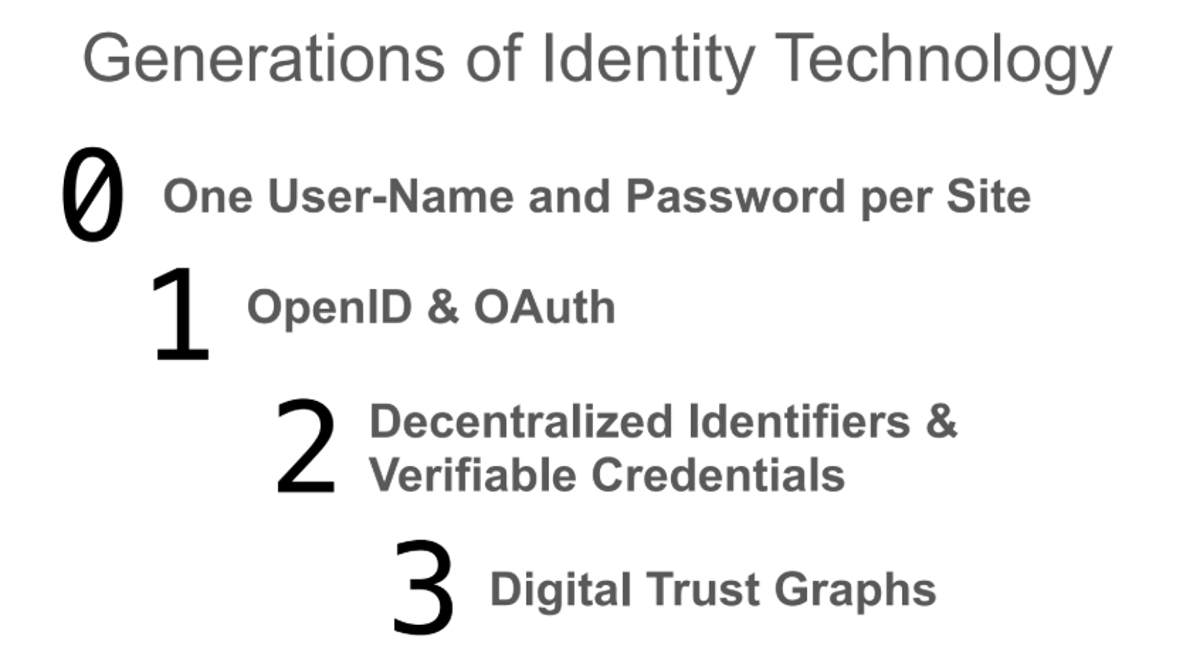
My Presentation at Who Is Real Online?
On May 4, 2026, a speaker presented at Georgetown University’s “Who is Real Online? Personhood, Privacy, and Trust Infrastructure in the Age of AI.” The talk, titled “Decentralized Trust: Three Generations of Digital Identity Protocols,” traced the evolution from centralized identifiers to...

Non-Traditional Data in Pandemic Preparedness and Response: Identifying and Addressing First- and Last-Mile Challenges
A new paper by Mattia Mazzoli et al. examines how non‑traditional data—mobility traces, social media, wearables—were used during COVID‑19 and why they fell short. Drawing on a March 2024 Brussels workshop with 50 stakeholders and a survey of 29 epidemic modelers, the...

Orange to Set up AI-Driven Tourism Platform in Aragon
Orange Spain, operating as MasOrange, has been awarded a contract by the regional government of Aragon to develop an AI‑driven tourism platform. The solution will modernize the collection and management of tourism data, moving away from outdated manual processes. By...

Burundi Signs USD 6 Mln Deal to Expand 4G in Rural Areas
Burundi’s state‑owned telecom operator Onatel has signed a $5.9 million agreement with PAFEN Burundi, backed by the World Bank, to roll out 4G coverage in rural areas. The Ministry of Finance, Budget, and Digital Economy will oversee the project, which will...

How Mongolia Is Turning Data Silos Into Cost-Efficient Governance Tools
Mongolia is converting fragmented agency data into a unified governance platform by linking its population‑housing and business registration systems. The integration enabled a mixed‑method census in 2020 that slashed costs from 15.2 billion MNT ($5.4 million) to 4.7 billion MNT ($1.7 million), with the upcoming 2025...

The Commodification of Sensitive Open Data
The European Union’s European Health Data Space (EHDS) regulation, adopted in March 2025, will make the electronic health records of roughly 450 million residents available for secondary use by March 2029. The framework defaults to inclusion, requiring citizens to opt out and offering...

New Lawsuit: Do We Have a Right to Know We're Being Surveilled?
The New York Civil Liberties Union has filed a lawsuit against the Village of Scarsdale demanding disclosure of police‑camera locations under the Freedom of Information Law. The suit follows the village’s cancellation of a $2.1 million contract with surveillance firm Flock...

China Outlaws Drones Within Beijing City Limits
China’s civil aviation authority announced a blanket ban on civilian drone flights within the Beijing municipal area, effective immediately. The decree imposes fines of up to 50,000 yuan (approximately $7,000) for violations and requires operators to obtain special permits for...

Santa Monica Kicks Off Bike Month By Starting Automated Bike Lane Enforcement
Santa Monica will launch an automated bike lane enforcement program on May 1, using camera‑equipped city vehicles to ticket illegally parked cars. The initiative, run with tech firm Hayden AI, follows a pilot that recorded nearly 1,700 violations in six weeks,...

Sam Houston State University Paper: Maritime Cybersecurity
Researchers Scott Lynn and Joe Weiss released a Sam Houston State University paper titled “Maritime Cybersecurity: Patching the Holes in Control System Cybersecurity.” The paper argues that current U.S. Coast Guard cybersecurity regulations and maritime training programs lack sufficient depth...

She Refused a Smart Meter for Health Reasons — So New Jersey Water Company Shut Off Her Water
New Jersey American Water shut off a couple’s water for six days after the homeowner, Alla Goldman, refused a smart water meter citing health concerns. The state Board of Public Utilities confirmed the utility had no legal authority to force...

Government Control of AI Has Begun
The White House has asked Anthropic to pause broader access to its Mythos model, citing national‑security and cyber‑risk concerns, marking the first direct government intervention in AI model deployment. The request lacks statutory authority, creating an informal, ad‑hoc licensing regime...

£3 Million Added to West and Parts of North Yorkshire Gigabit Contract
The UK Department for Science, Innovation and Technology (DSIT) has allocated an extra £3,195,012 (about $4.1 million) to the West and North Yorkshire Project Gigabit contract, raising its total value to £65,470,012 (≈$83.8 million). The amendment adds 2,642 premises, bringing the rollout scope...

California Hits Tesla Cybercab and Robotaxi Driverless Cars with New Law
California’s DMV adopted new regulations that let police ticket autonomous‑vehicle companies for moving violations, effective July 1, 2026. The rules treat the operating firm as the driver, require incident reporting within 72 hours (24 hours for collisions), and impose penalties ranging from fleet‑size caps...

Over 80% of US Government Agencies Already Use AI Agents – and It’s only the Beginning
IDC research shows that more than 80% of U.S. federal agencies have already integrated AI agents into their operations, moving the technology from pilot projects to mandated workflows. Adoption is driven by budget constraints, regulatory compliance, workforce skill gaps, and...

Utah’s New Law Targeting VPNs Goes Into Effect Next Week
Utah’s Senate Bill 73, signed on March 19, 2026, takes effect on May 6 and targets VPNs used to evade state‑mandated age‑verification checks. The law treats any user physically in Utah as subject to verification, even if they mask their...

Should Regulators Rely More on AI to Accelerate Drug Approvals?
Regulators, led by the FDA, are testing AI tools to speed drug approval processes. The agency’s pilot projects include AI‑driven real‑time monitoring of clinical trials and automated data review. Proponents argue AI can cut analysis time and uncover hidden patterns,...

Open Records Laws Reveal ALPRs’ Sprawling Surveillance. Now States Want to Block What the Public Sees.
The Electronic Frontier Foundation warns that a wave of state bills in Arizona, Connecticut, Washington, Illinois, Georgia, Maryland and Oklahoma would exempt automated license‑plate reader (ALPR) data from public‑records disclosure. Using FOIA requests, journalists and advocates have exposed misuse, error...
Google’s Pentagon Deal Blindsided Its Own AI Researchers
Google announced a classified AI contract with the Pentagon that lets the department use its models for any lawful government purpose. The deal was revealed without prior notice, catching more than 600 Google employees off guard and prompting a massive...

Reveal: Legal Tech in the Public Sector: A Story of Transformation and Innovation
The Reveal report highlights how U.S. government legal departments are grappling with exploding electronic data volumes, heightened regulatory oversight, and aging IT infrastructure. A 2023 GAO study notes agencies struggle with records management and litigation readiness as staff mobility rises....

Government Is Deploying AI Faster Than It's Training Anyone to Use It
Government agencies are rolling out dozens of artificial‑intelligence applications before their workforces are ready to use them. A recently leaked slide deck lists more than 30 AI tools slated for deployment by year‑end, complete with vendor names and go‑live dates....

Announcing the Summit “Fight for Us, Not for Them”: A Public Interest Vision for EU Tech Policy
Civil society groups announced a summit on 23 June 2026 in Brussels to present a public‑interest alternative to the EU’s digital deregulation agenda. Eleven NGOs, together with European lawmakers, regulators and journalists, will debate proposals to “simplify” core digital rights laws such...

NCC Expands Regulatory Remit to Tower Companies and Warns of Potential Fines
The Nigerian Communications Commission (NCC) announced it will extend its regulatory oversight to include tower companies, in addition to mobile network operators. The move aims to compel tower firms to upgrade infrastructure and support systems critical for nationwide service delivery....

Afghanistan Starts First 5G Trial in Kabul
Afghanistan’s Ministry of Communications and Information Technology has launched a pilot 5G service in Kabul, upgrading 74 city antennas to the new standard. The trial is being run by domestic carrier Afghan Wireless (AWCC) and marks the country’s first foray...

The Regulatory Reality Behind the Autonomous ATC Gold Rush
Venture capital is pouring into autonomous air traffic control startups, attracted by aging controller workforces, incomplete FAA modernization, and booming eVTOL demand. However, the FAA’s AI Safety Assurance roadmap limits the use of learning‑AI and mandates certification within existing frameworks,...
Maryland the First State to Regulate Grocery Surveillance Pricing
Maryland became the first U.S. state to ban "surveillance pricing," a practice where grocery retailers adjust prices based on a shopper’s personal data such as address, income or browsing habits. The new law prohibits price discrimination tied to demographic information...

US Tightens Import Rules for 600+ Product Categories
Starting July 8, 2026, the United States will require electronic filing of import data for more than 600 consumer product categories through the Customs and Border Protection ACE system. Importers must submit at least seven core data elements, such as...

S.F. Advocates Mark One Year of Speed Cameras
San Francisco marks one year of its speed‑camera program, reporting an 80% drop in speeding across 33 locations and a 98% reduction at the Columbus Avenue site. The city estimates 40,000 fewer dangerous‑speeding instances daily, with 65% of drivers cited...

Inside Josh Shapiro’s Attempt to Navigate the Data Center Backlash
Governor Josh Shapiro is wrestling with a growing backlash against AI data centers in Pennsylvania. After Amazon warned it would halt projects without certainty, a real‑estate developer urged the governor to require challengers to post bonds double the project’s value....

FMCSA's DataQs Reform Sparks Call for 'Frivolous'-Challenge Penalties
The Federal Motor Carrier Safety Administration (FMCSA) rolled out new DataQs rules that prohibit the issuing officer from participating in challenge decisions and set tighter timelines for state reviews. Early feedback from the 48 contiguous states and Alaska shows most...
FMCSA's State DataQs Reform Sparks Call for 'Frivolous'-Challenge Penalties
The Federal Motor Carrier Safety Administration (FMCSA) issued new DataQs rules that ban issuing‑officer decisions on challenges and shift the burden of proof to the requestor. Six states that have responded say the standards will not alter their existing processes,...

Isle of Man Passes World-First Legislation to Establish Data as an Asset
The Isle of Man has enacted world‑first legislation that creates Data Asset Foundations, a statutory framework that legally recognises data as an asset. Built on the 2011 Foundations Act, the new regime lets companies treat data like property, enabling valuation,...

Openwashing by Architecture: How AI Reveals Budget Opacity
The article argues that AI’s ability to query public budget APIs exposes a long‑standing supply‑side flaw: many government datasets underreport financial figures by up to five times. While the open‑data movement focused on demand‑side challenges—who uses the data and how—AI...

April Global Regulatory Brief: Digital Finance
In April 2026 regulators across Japan, Switzerland, the United States and the United Kingdom released new guidance targeting digital‑finance risks. Japan’s Financial Services Agency issued a comprehensive cybersecurity policy for crypto‑asset exchanges, while Switzerland’s FINMA published a digital‑fraud risk‑management guide for...

Hospital Patients Can Now View Appointments in NHS App
Hospital patients at every acute NHS trust in England can now view, reschedule or cancel referrals and appointments through the NHS App, covering about 64% of all hospital bookings. The rollout adds to the 41 million registered users, with 15 million logins...

What Blockchain Does the Digital Yuan Use?
China’s digital yuan runs on a purpose‑built, permissioned blockchain rather than a public network like Bitcoin. The system prioritizes transaction speed, scalability and central‑bank oversight, allowing near‑instant retail payments while preserving user privacy. By distributing the ledger across numerous nodes...

Greece’s AI Smart Policing System Ruled Unlawful After €4 Million Public Spending\
In 2019 the Hellenic Police awarded a €4 million (≈ $4.3 million) contract to Intracom Telecom for a “Smart Policing” system that equips officers with portable devices for facial‑recognition, fingerprint and license‑plate scanning. The AI‑enabled tools were intended to speed up identity checks...

EDRi Responds to European Commission’s Consultation Call on the Digital Omnibus
The European Commission has opened a consultation on its Digital Omnibus package, a set of technical tweaks aimed at simplifying EU digital law. Civil‑rights group EDRi submitted a response warning that the draft could erode core safeguards in the ePrivacy...

The EU AI Office Must Prioritise Setting up the Advisory Forum
A coalition of 35 civil‑society groups and researchers has urged the EU AI Office to publish a clear timeline for establishing the Advisory Forum, the sole formal channel for non‑governmental input on the AI Act. The Forum, whose call for...

AI Documentation Tool Transforms Adult and Children’s Social Care
System C is rolling out its AI‑driven FormFlow Assistant to 15 English local authority social‑care teams, automating real‑time documentation during assessments. Early data show documentation time halved, with a 68% efficiency gain in the paperwork stage and a 40% overall...