
AI Will Write the Government Software. Who Writes the Spec?
Government technology leaders are confronting a new dilemma: spend $4 million on a traditional custom‑software contract or adopt AI that writes code from a plain‑language specification. The AI‑first approach promises faster delivery and lower costs, but it forces agencies to own and author the specification—a skill most program staff lack. This shift redefines the valuable asset from code to the specification, challenges existing procurement frameworks, and forces the civic‑tech community to rethink its open‑source sharing model.

Sustaining Decision Advantage: The Case for Analytic Tradecraft Reform
The opinion piece argues that the U.S. intelligence community must overhaul its analytic tradecraft to keep pace with an information environment flooded by real‑time data and AI‑driven tools. While Cold‑War‑era standards once ensured rigor, they now risk becoming bureaucratic and...

Boost for Miners as Online Export Permit System Now 96% Complete
Zimbabwe’s Ministry of Mines reports the Online Mineral Export Permit System is 96% complete, moving the country closer to a digital platform that will replace the cumbersome paper‑based process. The system is designed to streamline approvals, boost transparency and cut...

T-Mobile Poland, Polkomtel Win Tender at Border Police
T‑Mobile Poland and Polkomtel, operating under the Plus brand, have each secured a 36‑month tender to provide mobile monitoring services for Poland’s border police. T‑Mobile Poland’s contract is valued at roughly $0.4 million, while Polkomtel’s agreement is worth about $0.48 million. The...

Quantum Knight’s CLEAR Offers Up To 10,240-Bit Post-Quantum Security
Chugach Government Solutions (CGS) has partnered with Quantum Knight Inc. to market the company’s CLEAR cryptosystem, a lightweight post‑quantum encryption platform that claims up to 10,240‑bit security. CLEAR can be integrated with just two lines of code and occupies less...

JT/DL: Does Justice Tech Work? 🤷
The American Bar Foundation paper “A Research Agenda for Justice Technology” finds that despite billions of dollars poured into digital tools—from AI legal assistants to online dispute resolution—there is scant rigorous evidence that they improve outcomes for people in the justice...

EFF to Fourth Circuit: Electronic Device Searches at the Border Require a Warrant
The Electronic Frontier Foundation, joined by the ACLU, state affiliates and the National Association of Criminal Defense Lawyers, filed an amicus brief urging the Fourth Circuit to require a warrant for all electronic device searches at U.S. borders. The brief...

ATC Modernization Strains the Definition of ‘America First’
The Federal Aviation Administration has shortlisted European firms—Spain’s Indra, France’s Thales and Austria’s Frequentis—for its Brand New Air Traffic Control System (BNATCS) modernization, prompting U.S. contractors to argue the moves violate the Trump‑era “America first” stance. Companies such as RTX,...

ICE Plans to Deploy 1,570 Additional Iris Scanners Nationwide Under No-Bid Contract
The Department of Homeland Security’s Immigration and Customs Enforcement (ICE) is set to add 1,570 iris‑scanning devices to its nationwide network within 30 days under a no‑bid contract with Massachusetts‑based Bi2 Technologies. The sole‑source award expands a prior $4.6 million, 200‑device...

FMCSA Registration to Go Dark: How Truckers Can Prep for Motus
The FMCSA will deactivate its current registration portal on May 14, forcing all motor carriers with authority to transition to the new Motus system. Carriers must log in, verify their account, update company details, and designate a primary official for ID...

First 1,563 Premises in Northern Ireland Get Full Fibre From Project Gigabit Contract
Fibrus has secured a UK‑government‑backed Project Gigabit contract to deliver full‑fibre broadband to 9,333 rural and hard‑to‑reach premises in Northern Ireland. The first phase has connected 1,563 homes, allowing residents to upgrade from legacy 5 Mbps lines to speeds of 500 Mbps...

A Curious Footnote Misses the Point on Judicial Use of AI and Judge Rodriguez's AI Scholarship
U.S. Circuit Judge Edith Jones added a footnote to a Fifth Circuit decision on alleged ballot harvesting that implied Judge Rodriguez relied on artificial‑intelligence tools for his legal judgment. The footnote’s source, however, demonstrates that Rodriguez used AI responsibly for...

Did the EU Parliament Really Vote Not to Protect Children Online?
In April 2026 the EU’s interim ePrivacy derogation – known as “Chat Control 1.0” – expired after the European Commission delayed its extension proposal and the Council refused Parliament’s privacy safeguards. The European Parliament voted to preserve its negotiating mandate...

Welcoming the Costa Rican Government to Have I Been Pwned
Have I Been Pwned (HIBP) has added Costa Rica as its 42nd government client for the free government‑focused breach‑monitoring service. The Costa Rican CSIRT now gains continuous visibility into compromised government email addresses, enabling faster identification of exposure and more...

Project Gigabit Expansion in Essex
The UK Department for Science, Innovation and Technology announced that an additional 9,500 premises in Essex will receive gigabit‑capable broadband under Project Gigabit. The rollout, funded by £8.3 million (about $10.6 million) of government support, expands Openreach’s full‑fibre network into urban neighbourhoods such...

Thailand Considers Suspending BOLT Ride Sharing Over “Compliance and Safety Concerns”
Thailand’s Digital Economy Ministry is moving to withhold BOLT’s operating licence after the ride‑hailing firm failed to meet mandated driver vetting and safety standards. The Department of Land Transport warned that the current licence expires on May 31 2026, and a 90‑day...
Congress Narrowed the GUARD Act, But Serious Problems Remain
Congress has narrowed the GUARD Act, limiting its scope to AI companions that simulate emotional interactions rather than all AI chatbots. The revised bill still mandates intrusive, identity‑linked age verification and raises penalties to $250,000 per violation. Critics argue the...

“Where Do I Start?”: How Governments Can Prioritise AI Solutions for Health
Governments face mounting pressure to deliver health outcomes with shrinking budgets and rising demand. While AI is touted as a solution, ministries lack a clear roadmap to identify high‑impact projects. A new paper offers a practical framework that helps officials...

European Data Protection Authority Fines Yango €100M
The Dutch data‑protection authority (AP) fined Yango’s Dutch arm MLU B.V. €100 million (≈$109 million) for illegally sending driver and rider personal data to Russia. The joint probe with Norway and Finland revealed that sensitive information—including licence scans, addresses, payment details and...

One Company’s Blueprint for Taking a Whole Engineering Org Agentic
Ida Infront, a Swedish government‑software vendor with a 25‑year‑old platform, aims to double its development speed by year‑end. To achieve this, it has adopted Kilo Code, an agentic engineering platform, rolling it out to three pilot teams and 70 seats....

Swedish Regulator Finds Telia Compliant with Emergency Call Relay Rules
Swedish telecom regulator PTS announced that Telia Company complies with emergency call relay rules after a year‑long review. The investigation was sparked by concerns that shutting down 2G and 3G networks could block 112 calls from older phones even on...

Elisa Takes Part in Finnish Border Guard Drone Detection Trial
Elisa is joining a pilot with the Finnish Border Guard and Sensofusion to test a drone‑detection system in southeast Finland. Sensofusion supplies the sensor and AI hardware while Elisa provides the digital infrastructure, including edge computing and secure data links....

EU AI Act Deal Would Delay High-Risk Rules to 2027, Ban Abusive AI Content
EU lawmakers reached a provisional Digital Omnibus on AI that pushes the high‑risk Annex III obligations to Dec 2 2027 and the product‑embedded Annex I rules to Aug 2 2028. The deal also adds Article 5, a categorical ban on AI systems that generate child sexual abuse...

New York Spy Trial Exposes Beijing's Blueprint for Embedding Huawei Cloud Linking CCP Police Stations From New York to Toronto...
A federal trial in Brooklyn accuses naturalized citizen Lu Jianwang of running a covert Chinese Ministry of Public Security outpost in Manhattan’s Chinatown. Prosecutors allege Lu operated an overseas police service station, coordinated with Fujian‑based officials, and planned to install...

ETSI Publishes Common Test Specification for Next Generation Emergency Networks
The European Telecommunications Standards Institute (ETSI) has issued TS 103 480, a common test specification designed to verify interoperability of next‑generation emergency communications equipment. The methodology provides standardized test cases and an end‑to‑end framework applicable across 4G, 5G and future 6G networks....

Airtel Tanzania's Vocational Skills Service VSOMO Becomes Training Authority's Official Platform
Airtel Tanzania signed a memorandum of understanding with the Vocational Education and Training Authority (VETA) to make its VSOMO digital education platform the official online vocational training solution. The agreement will scale VSOMO’s reach, delivering more affordable skills courses to...

The "Anti-Lightning" Wildfire AI Tech Firm Skyward Gets $1M In Funding From British Columbia. Collaboration Trials To Begin In July.
Skyward Wildfire Technologies, a Vancouver‑based firm that blends AI analytics with drone‑delivered cloud‑seeding chemicals, has secured a $1 million CAD (approximately $740,000 USD) grant from the British Columbia government to test its anti‑lightning system. The field trials, slated to start in July,...

The AI Industry Is Where Banking Was in 2006. (We're Hiring)
CeSIA, the French Center for AI Safety, is hiring three senior staff—Head of Policy Analysis, Head of Communications, and Operations & Executive Associate—by May 22, 2026, with options for remote work across the EU or UK. The organization aims to shift AI...

Modernization Without AI?
One year after its creation, the UK House of Commons Modernization Committee released 18 recommendations, none of which directly address artificial intelligence or digital transformation. The House Administration responded positively to most proposals, fully committing to five and aligning eight...

Portuguese Minister Calls for Faster Investment in Standalone 5G
Portugal’s Minister of Infrastructure and Housing, Miguel Pinto Luz, warned that the nation’s 5G rollout is far from complete, with only about 30 percent of the network fully upgraded. While commercial 5G services are available, most of the infrastructure still operates in non‑standalone...

Startup Profile: Hazel - The AI Procurement Platform for Government Agencies
Hazel offers an AI‑native, end‑to‑end procurement platform designed exclusively for government agencies. The solution lets public‑sector teams define requirements, auto‑generate solicitations, conduct market research, and evaluate vendor responses within a single interface. Backed by Y Combinator, Hazel positions itself as...

Smart Glasses for the Authorities
ICE is preparing to field AI‑enhanced smart glasses that can pull facial‑recognition, gait and other biometric data from federal databases in real time. The devices are modeled on counter‑terrorism tools such as ABIS and BEWL, extending them to routine street...
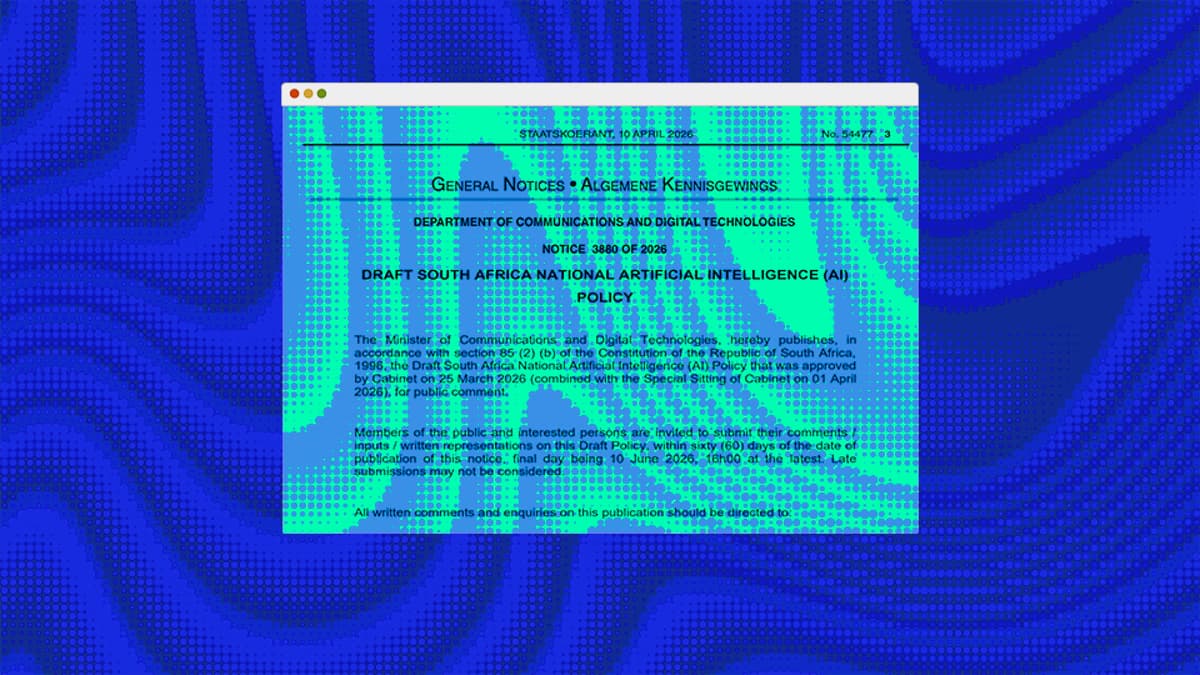
Five Times AI Hallucinations Embarrassed Governments
Over the past two years, multiple governments have been embarrassed by AI‑generated hallucinations in official documents. South Africa withdrew its draft AI policy after six fabricated citations were discovered, marking the first outright retraction due to AI errors. Similar incidents...

Opinion: We Must Price and Manage The Curb Before Robo-Taxis and Other AVs Scale Up
Autonomous vehicles are already cruising in 103 cities, adding about 6% more vehicle‑miles traveled as they idle, search for parking, or travel empty. Cities lack the tools to see, price, or ticket these robo‑taxis, creating a looming curb‑management crisis. The...

Vienna’s Hydrogen Bus Failure Is A Warning To Transit Agencies
Vienna’s transit agency found seven of its ten newly delivered hydrogen buses out of service by May 2026 because the Portuguese OEM CaetanoBus could not provide ordinary spare parts such as door compressors and blind‑spot monitors. The buses, which entered service...

Security Researcher Tears Apart White House App and Finds a Tracking and Security Nightmare
A security researcher decompiled the White House’s new mobile app and uncovered several serious flaws, including background GPS tracking, lack of SSL certificate pinning, and the loading of JavaScript from an external GitHub page. The app also injects custom JavaScript...

Why Districts Are Rewriting Gaggle Contracts
Districts across the U.S., including Lawrence, Durham, Vancouver, and Montgomery County, are renegotiating or terminating contracts with student‑monitoring vendor Gaggle amid lawsuits, privacy breaches, and operational challenges. While Gaggle claims to have saved 5,790 lives, independent research has yet to...

Building Capacity in Technology Horizon Scanning
The OECD released a working paper that surveys 129 technology‑horizon‑scanning exercises conducted between 2020 and 2025. It maps a wide range of practices, from dedicated government units to multilateral initiatives, and highlights methodological breakthroughs such as AI‑driven analytics. The paper...
![Defense & Aerospace Daily Podcast [May 06, 2026] Justin Sherman on Cyber and AI Components of FY ’27 Budget...](https://hixhlmpcokxhartfkpyi.supabase.co/storage/v1/object/public/images/thumbnails/a84e42003a632a4fda8fdddeb823d048.webp)
Defense & Aerospace Daily Podcast [May 06, 2026] Justin Sherman on Cyber and AI Components of FY ’27 Budget...
Justin Sherman, founder of Global Cyber Strategies and senior fellow at the Atlantic Council, discussed the cyber and artificial‑intelligence components of the Trump administration’s FY ’27 defense budget on the Defense & Aerospace Daily Podcast. The budget proposes about $15 billion...

CISA’s CI Fortify Rewrites the Disconnection Playbook for Critical Infrastructure
CISA unveiled CI Fortify on May 5, urging operators of the nation’s 16 critical‑infrastructure sectors to plan for weeks‑to‑months of isolation from vendors, telecom links, business networks and cloud platforms. The voluntary guidance emphasizes two capabilities—isolation and recovery—assuming adversaries have already penetrated...

Poland Updates Spectrum Plan for 700 MHz, Upper 6 GHz Bands
Poland’s Government Legislation Centre has released a draft regulation amending the National Spectrum Allocation Table, earmarking the 6,425‑7,125 MHz range for mobile use. The change expands the pool of frequencies available for 4G, 5G and prospective 6G networks. By formally identifying...

AI Can’t Even Forecast Inflation
A Federal Reserve research team compared ChatGPT’s inflation forecasts to the Cleveland Fed’s nowcast model and found the AI’s errors dramatically larger—up to twelve times higher during ambiguous periods and seven times higher in a true out‑of‑sample test. The study...

Pentagon Connects with Big Tech: U.S. Department of Defense Integrates AI From OpenAI, Google, and NVIDIA
In April 2026 the U.S. Department of Defense announced framework agreements with seven leading AI companies—including OpenAI, Google, NVIDIA, Microsoft, AWS and SpaceX—to embed artificial‑intelligence capabilities into secure military networks. The contracts focus on using AI for data analysis, logistics...

FMCSA Update on 'Prohibited Coercion of Drivers' Amid Widespread ELD Cheating Reports
The Federal Motor Carrier Safety Administration (FMCSA) released a FAQ document in late April clarifying the "prohibited coercion of CMV drivers" rule under 49 CFR 390.6. The guidance defines coercion, lists examples such as forcing drivers to exceed hours‑of‑service limits or falsify...

Over 800 New EV Chargers May Be Coming To Philadelphia
Philadelphia announced a public‑private partnership, ChargePHL, to install over 800 electric‑vehicle charging stations citywide within a decade, with some estimates reaching 1,000. The rollout averages about 80 new chargers per year and awaits City Council approval in June. Officials highlight...

Keeping Pace
POPVOX Foundation debuted its monthly "Keeping Pace" newsletter, rebranding from Future‑Proofing Congress, to give congressional staff nonpartisan, vendor‑free AI and technology education. The launch comes amid a rapid AI surge, with Anthropic, OpenAI and China’s DeepSeek unveiling new frontier models...

Governor Polis Announces New Tool to Help Coloradans Navigate Life After Disaster
Governor Jared Polis unveiled the Colorado Disaster Recovery Navigation Tool, an online platform that offers step‑by‑step guidance, a searchable resource database, and best‑practice advice for homeowners, renters, small businesses, and agricultural producers after natural disasters. The tool consolidates state, federal...

EFF and 18 Organizations Urge UK Policymakers to Prioritize Addressing the Roots of Online Harm
The Electronic Frontier Foundation and 18 digital‑rights groups have sent a joint letter to UK policymakers urging a shift away from blanket age‑gating and access restrictions proposed under the Children’s Wellbeing and Schools Bill. They argue that mandatory age‑assurance systems...

Building the Future of Parliaments, Together: Digital Parliaments Project 2026 Q1 Convening Progress Report
The Digital Parliaments Project (DPP) released its Q1 2026 progress report, highlighting the open‑source ParlLink platform’s rapid adoption across Caribbean legislatures and its expansion into Africa. Since its launch, ParlLink has digitized more than 4,000 documents and introduced AI‑driven tools...

Anritsu Deploys Wireless Test Infrastructure at CERT Tunisia to Support Device Certification
Anritsu has installed a comprehensive wireless test infrastructure at Tunisia’s national testing authority, CERT. The solution spans 2G through 5G NR, including IoT and WLAN, enabling full‑spectrum device validation. With this platform, CERT can certify all wireless equipment entering the...