Today's Human Potential Pulse

Clock vs Compass: Rethinking Productivity Tools
The article contrasts speed‑focused clock methods with direction‑focused compass approaches, arguing that without a clear north‑star fast work leads to wasted effort. It recommends starting weekly reviews with two simple questions, a habit that can trim about a third of work.

Working-Class People Who Want to Be Successful Should Remove These 10 Words From Their Vocabulary
The article argues that the words we habitually use shape our mindset and career trajectory, especially for people from working‑class backgrounds. It lists ten common terms—luck, fair, just, try, actually, can’t, should, spend, problem, maybe—and suggests direct replacements that reinforce agency and internal control. By swapping these phrases for more decisive language, individuals can signal confidence, accountability, and a solution‑oriented attitude. The piece frames this linguistic shift as a low‑cost mental upgrade for climbing the professional ladder.

Warren Buffett Advice: If You Notice These 5 Behaviors, You’re Dealing With a Wise and Mature Person
Warren Buffett outlines five behaviors that signal genuine wisdom and maturity: knowing one’s competence limits, protecting reputation, emotional stability, guarding time, and using an internal scorecard. These traits, drawn from his shareholder letters and public talks, extend far beyond investing...

Foraging Weeds
The article explores urban foraging as a slow, mindful practice that reconnects people to local ecosystems and addresses broader polycrisis challenges. It highlights how Colorado’s plant phenology is shifting 2‑4 weeks earlier, underscoring climate urgency, and stresses harvesting native species...

Did You Exchange a Walk-On Part in the War for a Lead Role in a Cage?
Dave Tate uses a Pink Floyd lyric—"Did you exchange a walk‑on part in the war for a lead role in a cage?"—to illustrate how lifters and entrepreneurs often trade genuine ambition for comfortable routines. He defines the "war" as the...

Face the Fear Directly
The post argues that fear grows when we imagine difficulties instead of confronting them, turning a manageable problem into an unbounded threat. It explains that our brain’s evolutionary bias to over‑estimate danger can distort modern, non‑lethal challenges like social or...

The Art of Not Being Ready and Doing It Anyway
The essay urges readers to act even when they feel unprepared, arguing that waiting for a perfect moment often turns opportunity into loss. It frames readiness as a shield that masks fear, while courage and imperfect action drive personal growth....

There’s a Specific Exhaustion that Has Nothing to Do with How Much You Did Today, It Tracks How Many Different...
The article describes a form of mental fatigue that stems from constantly shifting between different social roles—a phenomenon psychologists call cultural frame switching. Research from the IMT School for Advanced Studies Lucca shows that even short bouts of executive‑function tasks...

Selftalk Raises €270K to Scale Moldovan Mental‑Health Platform to $1.1M ARR
Selftalk, a Moldovan mental‑health startup, closed a €270,000 seed round and set a goal of $1.09 million in annual recurring revenue while supporting 100 teams. The funding follows a bootstrapped return to Moldova and a pivot toward data‑driven organizational psychology.

Break Limiting Beliefs, Even if It Costs Everything
Nothing holds you back more than your faulty beliefs. Do whatever you have to do to change them. Spend all your money. Go into debt. Move across the country. Work for free. Do whatever you have to do to change...

Low Odds Don’t Define Your Success
I was rejected 53x before I got a PhD position. Success rate < 2%. I relapsed 50+ times before I stopped binge-eating. Success rate < 2%. I failed with 20+ diets until I figured out how to eat healthy. Success rate <...

Engineer’s Anti-Brain-Fog Routine: Stare at a Wall for 10 Minutes
Software engineer Alex Selimov combats afternoon brain fog by staring at a blank wall for ten minutes. The routine follows a day of poor sleep, heavy caffeine, and constant news feeds that leave him with headaches and waning motivation. By...

5 Signs of Wisdom According to Warren Buffett
Warren Buffett Advice: If You Notice These 5 Behaviors, You’re Dealing With A Wise And Mature Person https://t.co/ZJF7C23Hgy

Live Fully, Embrace Self‑curiosity Before It’s Too Late
Two thoughts from Irvin D. Yalom “Live your life to the fullest; and then, and only then, die. Don’t leave any unlived life behind.” “When people don’t have any curiosity about themselves, that is always a bad sign.”

Allyson Felix Targets 2028 LA Olympics in Bold Comeback Bid
Allyson Felix unveiled "Project Six," a plan to qualify for her sixth Olympic Games in Los Angeles in 2028 at age 42. The former 11‑medal sprinter says the comeback is a "once‑in‑a‑lifetime homecoming" and a test of human potential, sparking...

Commit 1,000 Days, Master Anything Before Quitting
You can do almost anything if you commit to 1,000 days. Volume is a great teacher. But most people never find out because they quit before day 10.

Over‑prepare to Honor the Moment and Showcase Your Best
Over preparing is the key to success. It shows you respect the situation (the interview, the meeting, the presentation, the test, the tryout, etc) and it shows off the best of who you are with no regrets regardless of the...

Study Finds AI‑Driven Personal Support May Undermine Workplace Connection
A Harvard Business Review study of 1,545 U.S. knowledge workers reveals that more than half feel lonely at work while turning to AI for career advice and emotional validation. The findings warn that substituting human interaction with AI could erode...

CEO‑style Prep Transforms Doctor Visits
Imagine walking into your next doctor's appointment with: — A briefing on your own labs — A ranked list of questions — A clear sense of what you want to decide before you leave None of that requires becoming a doctor. It requires CEO...

Focus Drives Tasks; Mindfulness Cultivates Presence
Focus versus #mindfulness Focus is about directing your attention towards a specific goal or task, allowing you to concentrate and complete it efficiently. Mindfulness is about being present in the moment, observing your thoughts, feelings, and sensations without judgment. https://t.co/HJLuiGyqNZ

“Is Your Childhood Still Running Your Marriage”
Dr. Kim’s essay reveals how silent conflict‑avoidance learned at a 1962 dinner table still governs her marriage. She identifies five common childhood emotional scripts—Fixer, Withdrawer, Exploder, Peacekeeper, Intellectualizer—and shows how opposing scripts create friction between spouses. The piece offers a...

True Confidence Is Quiet, Evidence‑Based, Not Loud
Confidence demands evidence. Calm beats control. Real confidence is quiet. Insecurity is loud. Discomfort is information, not a verdict. Toughness isn't the junk you hear on the internet. Learn more. My book is 45% off: https://www.amazon.com/Hard-Things-Resilience-Surprising-Toughness/dp/006309861X?_encoding=UTF8&=&qid=&=&sr=&_encoding=UTF8&linkCode=sl2&tag=onanofthtr-20&linkId=3a530dc2dd71cc20c69b59ad23ef2640&language=en_US&ref_=as_li_ss_tl
Reassess Your Self‑Worth: Stop Being Too Harsh
How many of you struggle with loving yourself fully? 🫢 Here is what I urge you to do if this is something that you are going through: re-evaluate how you measure your self-esteem and life. You will probably find that you...

You’re Not Lazy. You’re Running Too Many Simulations.
The post argues that what appears as laziness is often a paralysis caused by excessive mental simulations. High‑capacity brains—common among gifted, ADHD, or autistic individuals—run predictive models faster than the environment demands, leaving decisions stalled. The author suggests that recognizing...

Put Down Your Phone, Unlock Creativity and Happiness
You’re stuck you’re constantly on your phone. When you wake up. Before you go to bed. While you eat. While you walk. While you work. Whenever you feel the smallest sense of boredom. And so every time your mind almost...

How To Reduce Fear Of Failure By Changing A Single Memory (M)
Psychologist Dr. Jeremy Dean outlines a brief mental exercise that weakens the fear of failure by targeting a single negative memory. The technique involves recalling the memory, then visualizing a new, less threatening outcome, which diminishes associated sadness and guilt....

Reparenting Through a Rigid Calendar: 35-Day Sprint Begins
Day one of a 35-day sprint. White paper publishes June 1. Morning routine on lock: 5am wake, coffee, weights, no inbox until 7. My therapist would call this 'reparenting myself with a calendar.' She's not wrong.

Google Gemini’s ‘Eat the Frog’ Prompt Boosts Productivity, User Calls It a Game‑Changer
Google Gemini now offers an “Eat the Frog” prompt that nudges users to tackle their toughest tasks first. Amanda Caswell of Tom’s Guide tested the feature and described it as a game‑changing productivity aid, highlighting AI’s role in reinforcing classic...

Inside Artists’ Studios: Vulnerability Fuels Creative Breakthroughs
Veteran photographer Rohit Chawla’s new book, Portrait of an Artist, opens the doors to 67 Indian studios, exposing the raw, often uncomfortable rituals that drive creation. From F.N. Souza’s hostile relationship with paint to Paresh Maity’s morning yoga, the work argues...

My Wife Asked Me when I Last Felt Joy — Not Relief, Not Gratitude, Not the Quiet Satisfaction of Getting...
A 66‑year‑old electrician reflects on a pivotal moment when his wife asked when he last felt real joy, revealing years of emotional numbness. He describes how the realization spurred a deliberate experiment: granting himself small permissions, saying no to unnecessary...

Discomfort Signals Growth: Push Beyond Your Comfort Zone
Being uncomfortable is a signal that we are in a place to grow. Adaptation and development doesn’t occur when we are smack dab in the middle of our comfort zone, instead it occurs when we are pushing our boundaries.

Melissa Duge Spiers on What Happens After You Leave a High-Control Religion
In this episode Frank Schaefer interviews award‑winning essayist and religious‑abuse advocate Melissa Duge Spiers about her new book *Holy Disobedience*, which chronicles her life inside and after leaving the Seventh‑day Adventist Church—a global denomination of 21‑25 million members. Melissa explains how...

Showing up when You Don’t Feel Like It Wins
The people who win this week are the ones who show up when they don’t feel like it.
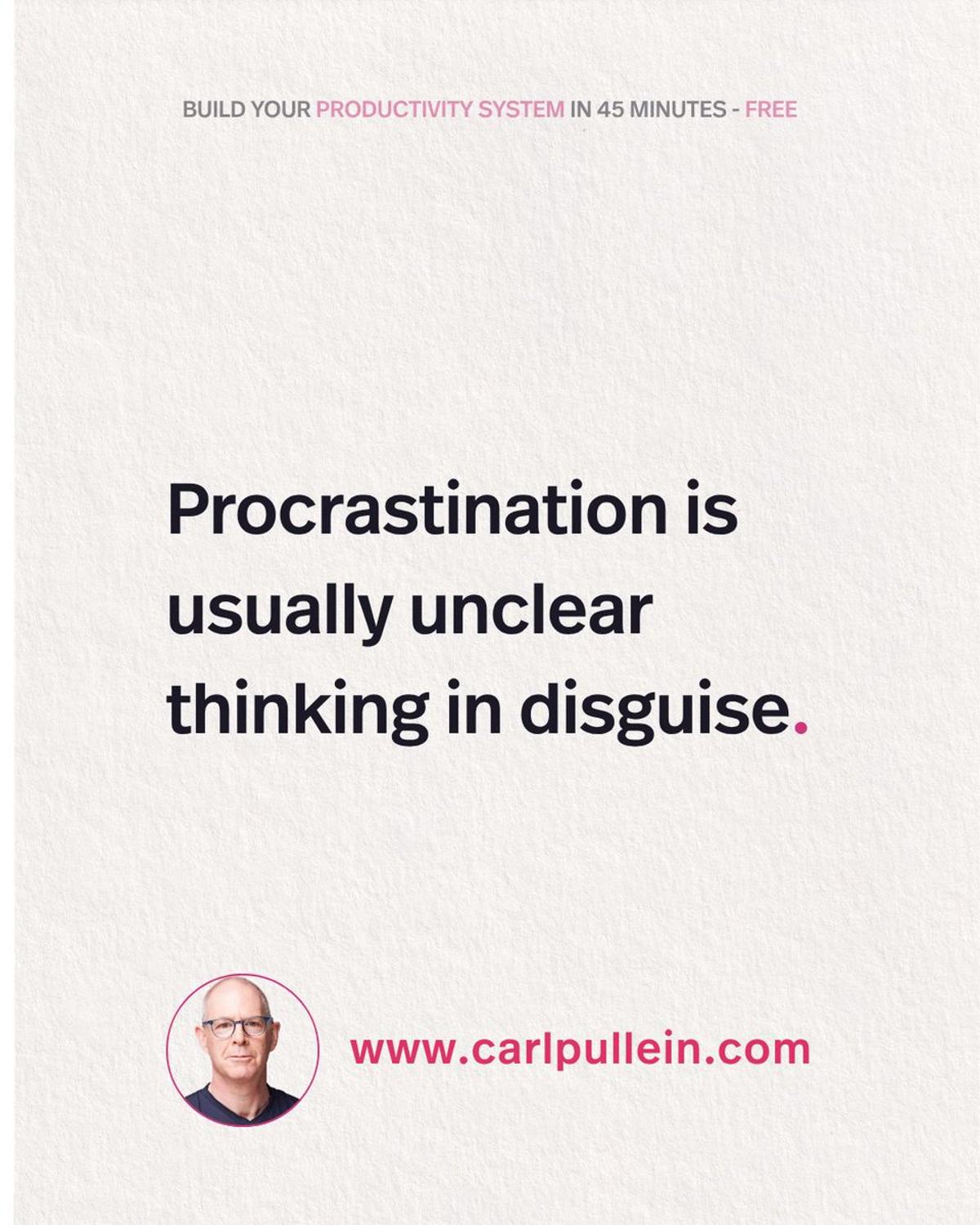
Clarity Beats Procrastination: Break Tasks Into Small Steps
You’re not procrastinating because you’re lazy. You’re procrastinating because: – it’s not clear – it’s not defined – you don’t know where to start So your brain avoids it. The fix? Make things obvious. Break it down. Schedule it. Start small. That’s literally what the COD Method helps you do. Clarity...

Julia Cumming: In Full Bloom
Julia Cumming, longtime frontwoman of Sunflower Bean and model, released her debut solo album “Julia” on Partisan Records. The record emerged from a two‑year lockdown that stripped away touring schedules and forced her into solitary studio sessions. Drawing on 60s...
From Self‑Defeating Coping to Calm, Grounded Action
Its not about going from bad behaviour to good behaviour. Its about going from a self-defeating coping strategy to a calmer, grounded one. You know what to do. You want to do it. But do you feel safe to try?
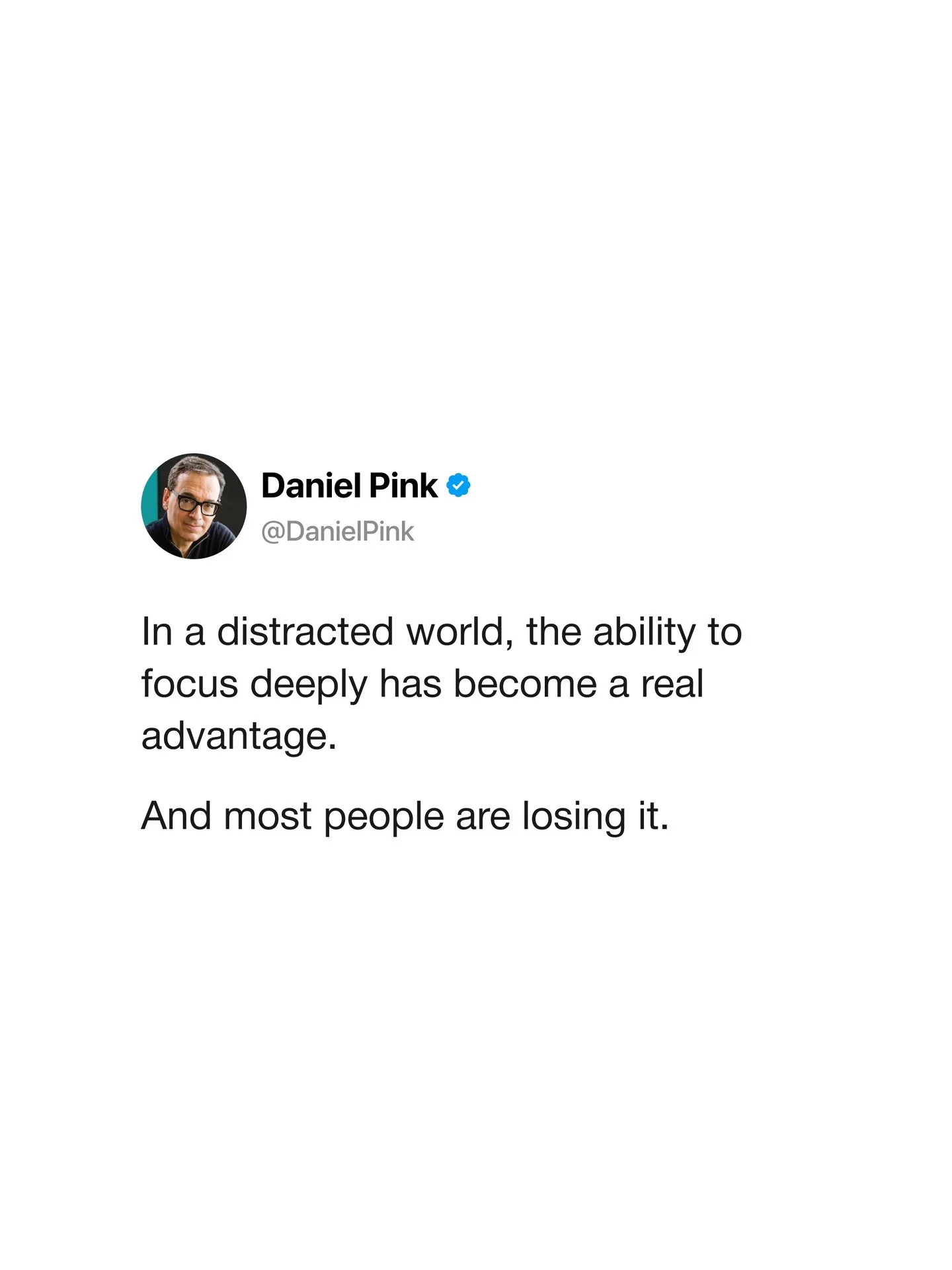
Deep Focus: The Superpower Modern Brains Need
Your brain wasn’t built for 100 tabs open at once. 🧠 In a world full of notifications, messages, and constant distractions, the ability to focus deeply has quietly become a superpower. Cal Newport

Your Mind Is Already Living a Day That Hasn’t Happened Yet
The post explains how most people mentally fast‑forward through their day the moment they open their eyes, turning a naturally calm morning into a source of tension. It describes how this anticipatory thinking triggers physical stress responses and makes simple...

Choose Identity over Tasks: Act From Purpose
Shifting your thinking from "What do I need to do?" to "Who do I want to be?" helps your actions flow from purpose instead of pressure.

Choosing Alignment Over Survival: Leaving Burnout Behind
Not making decisions from burnout anymore. Not chasing what feels safe just because I’m exhausted. Not saying yes to things that drain me just because they’re familiar. I’ve seen what life feels like when I’m energized, inspired, and actually choosing it, and...

Skipping College? You Must Self‑Educate, Startups Won’t
If you skip some or all of college to start a startup, it's on you to develop your mind the way college would have. And that's not something that happens by default in most startups.

Self‑investment in 2026 Yields Real Returns
I know there's an old Warren Buffett around "the best investment you can make is in yourself" and I am fully leaning into that in 2026. It's already paying off 🚀🚀

Every Day Counts: Small Steps Toward Your Dream
I can't remember one single day in the past 40 years that I didn't move at least a tiny bit closer in the direction of my dream. What did you do today to get you closer to your dream?

ChatGPT Simplifies the 7 Habits Self‑Improvement System
I tried using ChatGPT to follow The 7 Habits of Highly Effective People step by step — and it made one of the most famous self-improvement systems feel surprisingly simple to put into practice https://t.co/cFUr0LBgpo

Sports Lessons: Raising Life Winners, Not Just Game Champions
What Can Sports Teach You About the Game of Life? https://t.co/kv3nTszlaR Do your child a favor and teach him or her how to become a winner because even though it’s great to win a game, it’s even better to be...
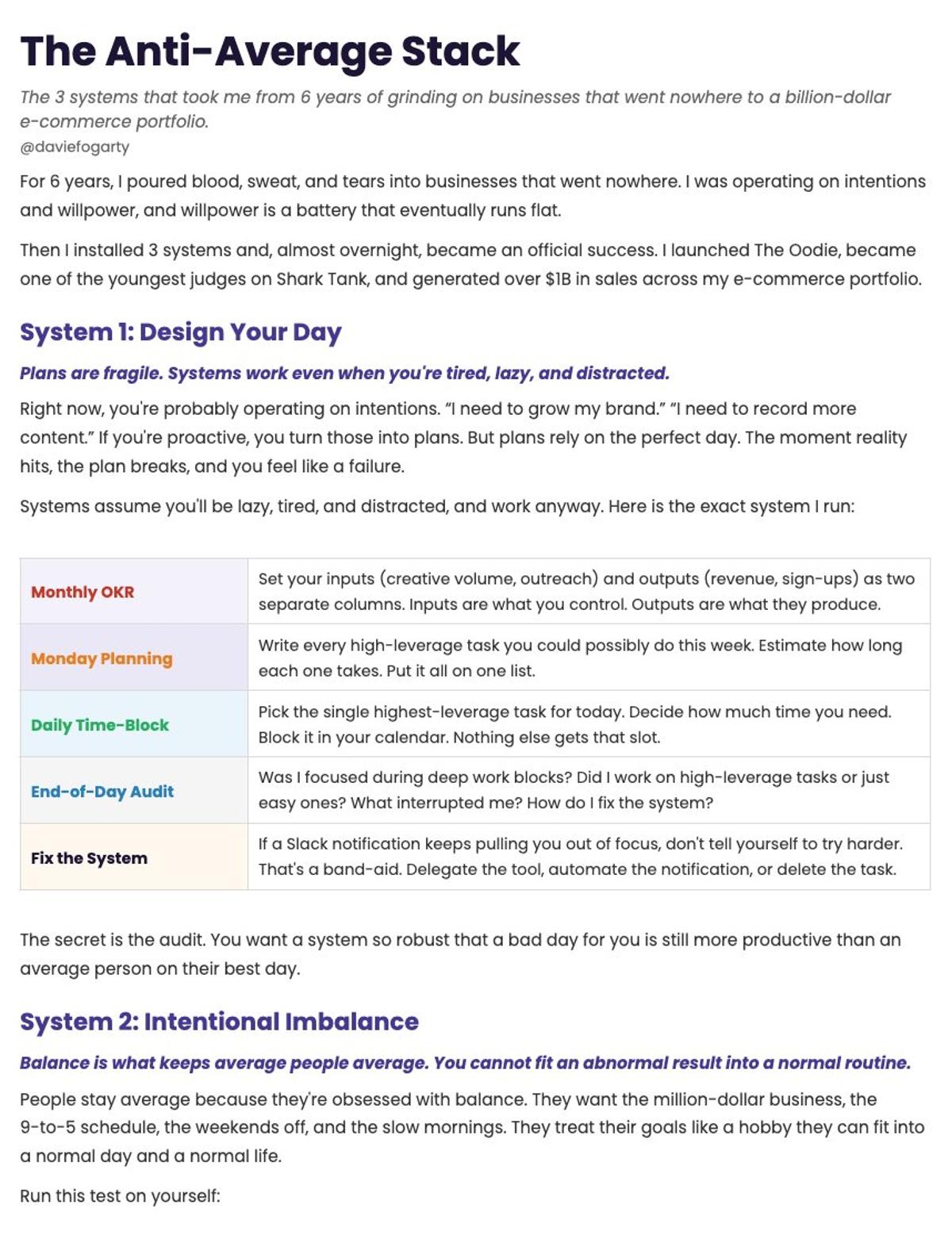
Three Habits that Break the Average Mindset
Here's why 99% of people stay average (and the 3 habits that fix it) https://t.co/l1QJHJKWdX

Beyond Success: The Fading Joy and New Purpose
You got what you wanted. Now what? @debbiemillman's unnerving and inspiring #TEDtalk about the half-life of joy and the deepest measure of achievement https://t.co/xSaQ1GrD0r

Keep Moving Forward; Consistency Beats Watching the Clock
"Don’t watch the clock; do what it does. Keep going." – Sam Levenson Time management is crucial, but what’s more important is your perseverance and consistency in working towards your goals.

Stop Comparing Beginnings; Build Your Own Story
The moment you stop comparing your chapter one to someone else's chapter ten... you'll start building something that actually belongs to you.
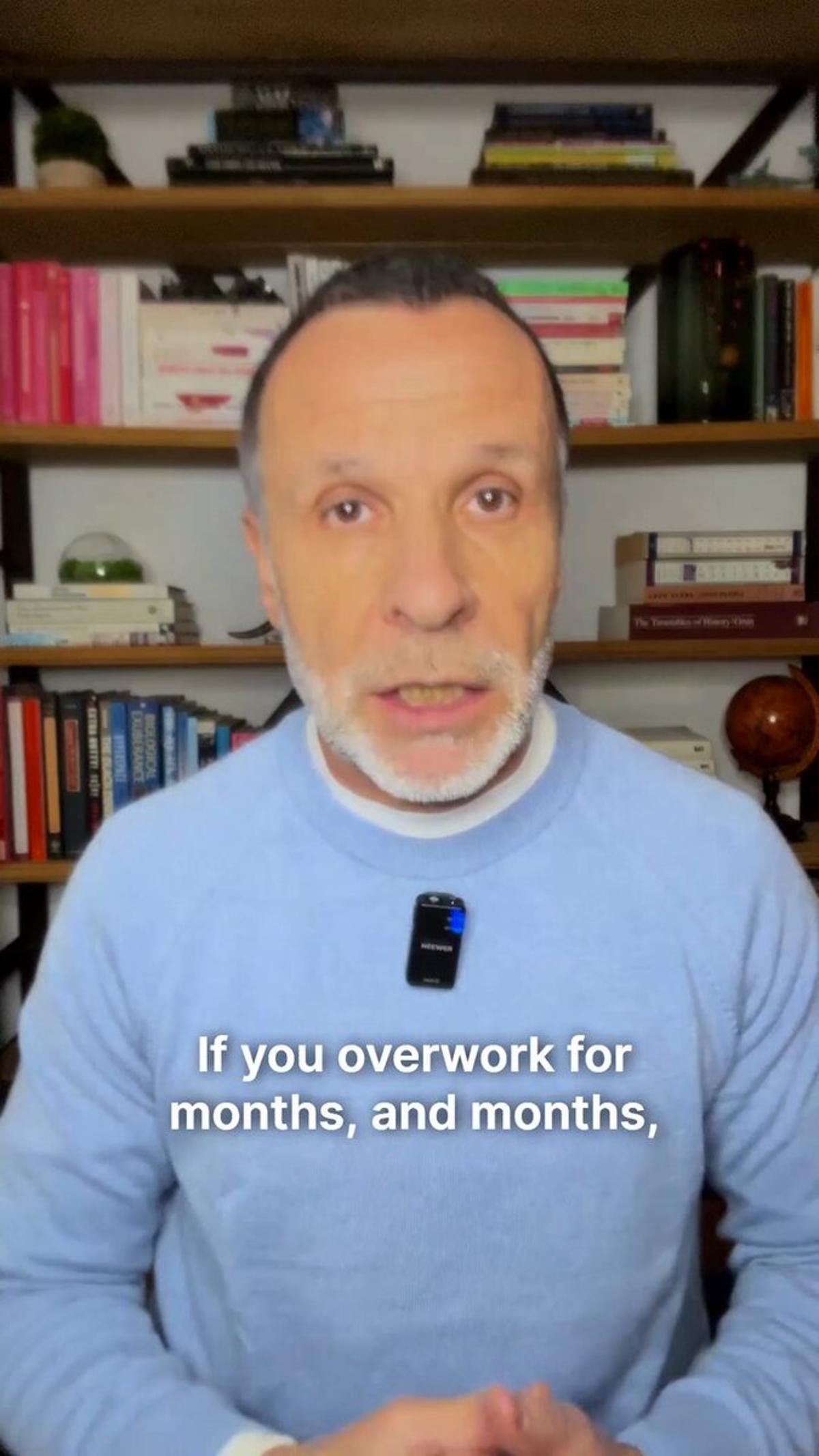
Biohacking Overwork Ignites Hidden Health Risks
Experts who advocate biohacking and productivity optimizing in order to get the most out of overworking, are putting you at serious risk. Not just because of the long hours but because of everything you quietly neglect along the way. https://t.co/Oh5LVTJhew

Enjoy the Journey, Not Just the Destination
Our journeys are often filled with winding roads. When we are on our journey, we must learn to enjoy the scenery and not just focus on reaching our destination. 🙏 The journey+process are as important as the destination+final product. 💙 #MondayMotivation #Life...