
Roland Berger: The Main Question in Life Sciences Consulting
Roland Berger’s life‑sciences consulting team is helping a fast‑moving biotech client decide where to allocate capital as the industry races toward multi‑omics, cell‑and‑gene therapies, rare‑disease treatments and AI‑driven drug interpretation. The core question posed by the client – “what do we fund first and what do we not fund yet?” – forces a strategic triage of scientific ambition against financial reality. The firm’s analysis prioritises three high‑impact domains: multi‑omics platforms, next‑generation cell‑and‑gene therapies (CGT) and AI‑enabled interpretation tools for rare diseases. By working directly with the CFO, CEO, chief genetics officer and chief medical officer, Berger translates lofty scientific goals into decision‑grade funding choices, defining clear partnership criteria and a timeline for investment. A key illustration from the interview is the “200 kilometers per hour” pace of change, underscoring the urgency of disciplined decision‑making. The consultants stress that strategic direction, partner selection and immediate funding allocations must be aligned across the C‑suite and scientific leadership to avoid mis‑spending on lower‑impact projects. The implication for the broader industry is clear: firms that embed cross‑functional governance and a rigorous funding roadmap will capture early‑stage market leadership in next‑gen therapeutics, while competitors risk lagging behind as the pace of innovation accelerates.

SAP S/4HANA Integrator Secrets Revealed! 🚀 #shorts
The short video distills veteran consultant Eric’s reflections on working with SAP system integrators, emphasizing that every integration engagement is fundamentally a business transaction. Eric stresses that consultancies operate under the same profit imperatives as any other firm—revenue generation, gross margin...

You're Using AI Wrong If You're Just Editing Emails With It
The video argues that most firms treat generative AI as a reactive editing tool—primarily to polish emails—rather than rebuilding processes around its capabilities. True strategic value emerges when organizations redesign workflows from the ground up, using AI as a thought partner...

How Honeywell Prioritizes Growth Projects
The webinar walks through Honeywell’s systematic approach to selecting and funding growth initiatives, highlighting a three‑stage process that blends a proprietary playbook framework with rigorous, evidence‑based decision making. Senior Product Director Maxwell Johnson and Strategizer facilitators explain how the company...

Strategy& Digital Executive Summit 2026
The Strategy& Digital Executive Summit 2026 convened Europe’s top digital leaders at the Zugspitze under the banner “Digital Compass 2030 – Navigating Technology in an Uncertain World.” Over two days, executives, policymakers and scientists debated scaling AI with governance, building...

Consulting Resume Mistakes That Kill Your Application (March 29 Deadline)
The video warns consulting hopefuls that a sub‑par resume will cost them a shot at firms like McKinsey, BCG or Oliver Wyman, especially with the March 29 application deadline looming. Recruiters scan each résumé for roughly seven seconds, so candidates must convey...

M&A Consulting Case Interview: Apple Vs. Netflix Vs. Warner Bros (W/ McKinsey and A&M Consultants)
The video presents a mock M&A case where Apple evaluates a potential acquisition of Warner Bros. Discovery, competing against Netflix and Paramount in a two‑round auction. Ben outlines a three‑part framework—pre‑auction target assessment, auction dynamics, and post‑auction execution. He stresses a...

How Can Telco Keep up with the Rapid Advancement of Tech? #mwc26
The video highlights how telecom operators are scrambling to keep pace with an unprecedented surge in data traffic and the rapid rollout of 5G. What was once a future promise is now an immediate client demand, while AI‑driven applications on...

Transformation as Strategy, Ep. 13: Inside the Shift: How New Mobility Is Rewriting the Aftermarket
The podcast episode explores how new mobility—particularly autonomous fleets and electric vehicles—is reshaping the automotive aftermarket in 2026. Host Mackenzie Putici interviews Neury Freitas, head of North America Aftermarket at Roland Berger, to map the evolving value chain from OEMs to...

The Journey of Leadership
The video features a round‑table hosted by former Fortune editor Brian Demain, joined by McKinsey partners Romesh Shrinasan and Donna Mayor, to explore how CEOs can lead in an AI‑driven era. Their conversation is anchored in the recently released book...

𝗦𝗜𝗟𝗘𝗡𝗖𝗘𝗗: What the Technology Industry Doesn't Want You to Hear
The video features a candid interview with Ema Roloff of Roloff Consulting, exposing hidden conversations in the technology sector about digital transformations. It highlights how customers are often pressured into decisions they don’t fully grasp, while vendor narratives can distort...

Women's Networks Offered More Support in the Workplace During Times of Instability More than Men's
The video reports research on gendered networking behavior during corporate reorganizations such as mergers and acquisitions, highlighting divergent strategies. Findings show men prioritize expanding their networks by forging new ties with other men, while women concentrate on strengthening existing female...

APQC CONNECT 2026 Breakout Sessions | APQC's Annual Process & Knowledge Management Conference
APQC Connect 2026, the association’s annual Process and Knowledge Management conference, dedicates a substantial portion of its agenda to breakout sessions. Over two days, attendees can choose from six blocks of sessions organized into five curated tracks, each designed to...

Here's How a Bain Consultant Analyzes a Complex Bubble Chart #shorts
In a short video, a Bain consultant walks through a bubble chart that visualizes the performance of all ports within a major European city, comparing annual throughput (millions of tons) on the x‑axis with EBITDA margin on the y‑axis. The chart...

Clarkston - The Secret to Biotech Launch Success
The video focuses on how pre‑commercial biotech firms can set themselves up for a successful product launch by rigorously mapping out sequencing, prioritization, and the necessary people, process, and technology capabilities. It emphasizes that a clear commercial strategy should be...

150 Years Strong: How Campbell’s Is Investing in Leadership to Drive Growth and Innovation.
The video marks Campbell’s 150‑year milestone and outlines a strategic bet on leadership development, executed in partnership with consulting firm McKinsey. The initiative reframes leadership as a skill set that can be cultivated, positioning people and the top‑team as the...

We’re at NVIDIA GTC This Week...
At NVIDIA’s GPU Technology Conference (GTC), executives highlighted accelerating demand for practical AI deployments across industries. Clients are asking how to make AI tangible for scientists, clinicians and patients, seeking solutions that can run both in the cloud and on‑premise without...

How to Avoid "Gemba Theater" -- Karen Martin on Making Gemba Walks Real
The video tackles “Gemba theater” – staged Gemba walks that hide problems – and offers practical steps to make walks authentic, emphasizing psychological safety as the foundation. Speakers stress surprising teams minutes before a walk to prevent “clean‑up” efforts, insisting leaders...

In Conversation with Coca-Cola CEO James Quincey at London Business School
In a London Business School session, Coca‑Cola chief executive James Quincey discussed how the company is reinventing an iconic brand while confronting sustainability and a rapidly shifting consumer landscape. He outlined the dual challenge of protecting the timeless elements of...

Building a Foundation for the Future: The Heritage Group’s Workday Transformation
Heritage Group, a 95‑year‑old, family‑owned conglomerate spanning infrastructure, chemicals and battery recycling, embarked on a comprehensive Workday transformation to replace fragmented legacy systems that had accumulated 25 years of technical debt. The initiative, led by EVP Betsy McCaw and HR VP...

The Art of the Possible with AI in Procurement
The video argues that procurement must pursue 1,000‑10,000× efficiency gains, not incremental tweaks, by re‑imagining the function through artificial intelligence. It calls for a shift from isolated, discrete optimizations to continuous category‑management, where competitiveness is measured by speed, innovation, agility and...

What If Your CEO Doesn't Support Lean? Karen Martin on Influencing Without Sponsorship
In a live Q&A, Karen Martin tackles a common dilemma: how a lean team can drive change when the CEO shows little interest in lean principles. She advises practitioners to locate the highest‑ranking leader who does support lean—often a division VP...

Faculty Joins Accenture, Dr. Marc Warner Named CTO
Accenture announced a strategic partnership with Faculty, a leading applied‑AI firm, and introduced Dr. Marc Warner as Faculty’s new chief technology officer. The alliance is positioned to embed artificial intelligence at the core of enterprise and government operations, leveraging Accenture’s...

Here's How a BCG Consultant Builds a Market Entry Framework for a Consulting Case #shorts
The video walks viewers through a BCG consultant’s market‑entry framework for deciding whether a restaurant owner should open a second location or pursue alternative growth options. The approach is organized into three buckets: external environment, internal factors, and option evaluation. The...

How Consultants Make Strategy Happen
The video explains how consultants translate a biotech firm’s scientific ambition into a concrete, decision‑grade strategy. By working directly with the CFO, CEO, chief genetics officer, and chief medical officer, they bridge the gap between cutting‑edge genomics research and executable...

Sustainability in Turbulent Times: Circularity and Growth at BIC Lighter
The INSEAD webinar highlighted BIC’s lighter division as a case study in sustainability amid turbulent market conditions. Since its 1973 launch, BIC has manufactured 50 billion lighters, producing 1.5 billion units in 2024 alone, and has leveraged its legacy of quality and...

From AI Hype to Execution: The Future of Supply Chain Planning
At Manifest 2026, OMP’s Andrew Driscoll discussed the shift from AI hype to tangible supply‑chain execution. He highlighted how integrated planning platforms, digital twins, and connected data ecosystems are accelerating decision‑making and disruption response. The conversation underscored the critical challenge...

Ask Karen Martin Anything: Clarity, Leadership, and Continuous Improvement
Karen Martin joined Mark Graban for a live Ask the Expert session, fielding audience questions on Lean, leadership, and continuous improvement. She emphasized that adopting Lean tools without clear priorities and role definitions leads to confusion and stalled initiatives. Martin...

Can Your Business Thrive in Today’s Landscape?
The Think Ahead podcast episode tackles how leaders can blend organizational agility with enduring strategic vision amid today’s chaotic business landscape. Professor Sergey Gurif hosts strategy scholar Jessica Spangin and COO Suzanne Haywood, who argue that rapid geopolitical shifts, AI...

APQC Webinar: Data Driven Insight & Credibility Leveraging Survey-Based Operational KPIs
The APQC webinar highlighted how survey‑based operational KPIs can transform raw benchmark data into persuasive, data‑driven sales narratives. Host Kathy Hill introduced APQC’s extensive metric library and its process classification framework, while guest Stephen Timmy explained how his firm, Finlistic...

Open Innovation That Actually Scales | Vibha Gaba, Benjamin N. Haddad, Giacomo Silvestri
The panel, featuring ENI’s Jakub Silvestri, Accenture’s Benjamin Haddad, and INSEAD professor Vibha Gaba, explored why open innovation must evolve from a peripheral experiment to a scalable, core capability for modern enterprises. They framed open innovation as the new...

Here's How a BCG Consultant Analyzes a Complex Bubble Chart #shorts
A BCG consultant walks through a bubble chart that maps nursing activities across the imaging workflow, plotting task complexity on the y‑axis and activity type on the x‑axis. The chart uses color to differentiate administrative work (blue) from direct patient...

PwC - Your Interview Advantage
The video outlines PwC’s interview expectations, emphasizing industry depth—particularly within Technology, Media and Telecommunications (TMT) consulting. PwC looks for candidates who have dug into a narrow sub‑segment, such as semiconductors, mobile communications, or streaming video, and can articulate a clear point...
Vision, Communication, & Leadership Secrets
The discussion centers on three pillars of effective change management—vision, communication, and leadership—while also probing the strategic risks of emerging technologies like SAP’s AI‑enhanced master data governance. Speakers argue that a clear, purpose‑driven vision aligns teams, but without two‑way dialogue...

Why GenAI Projects Fail
The video warns that more than half of generative AI initiatives stall before production, citing Gartner’s prediction that over 50% fail to transition from proof‑of‑concept to deployment. It attributes failures to three root causes: AI that does not deliver measurable business...

Ask Karen Martin Anything: Lean, Operational Excellence, and Leadership (Webinar Preview)
The KEXUS podcast is previewing a March 11, 1 p.m. Eastern “Ask an Expert” webinar featuring lean and operational‑excellence authority Karen Martin. The session will be a live, no‑PowerPoint Q&A where participants can submit questions on topics such as value‑stream mapping, leadership...
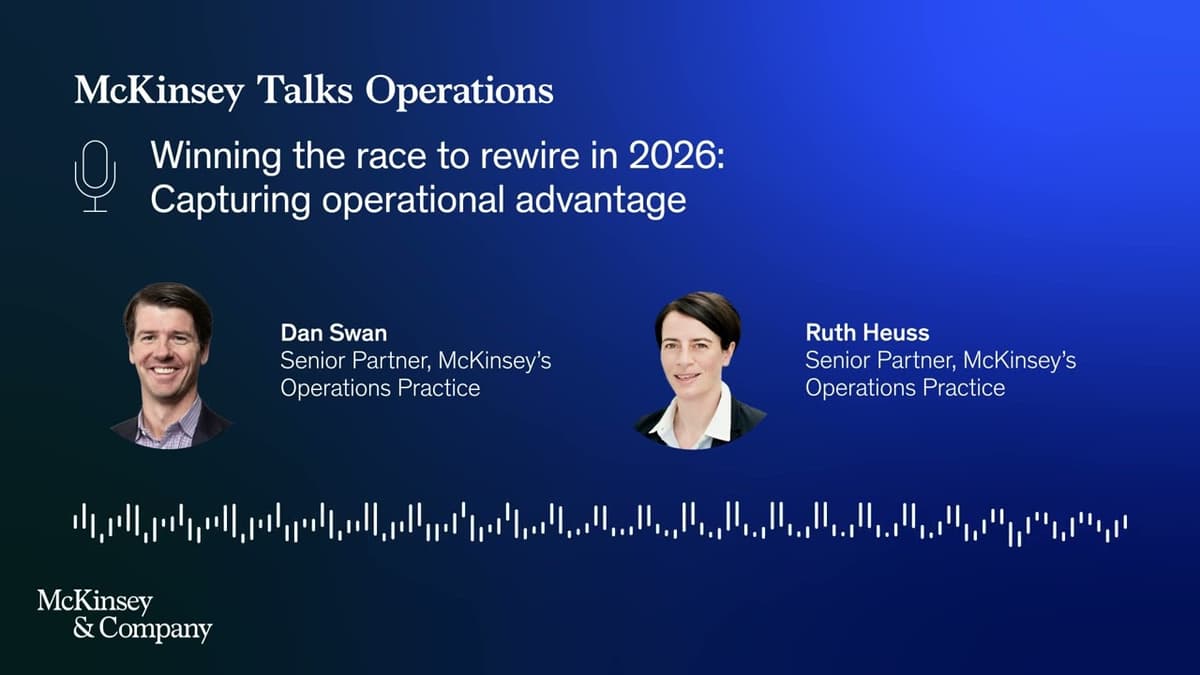
Winning the Race to Rewire in 2026: Capturing Operational Advantage
McKinsey senior partners Dan Swan and Ruth Heuss explain that organizations must move beyond isolated technology deployments to achieve end‑to‑end process transformation. They argue that true operational excellence, when rewired for 2026, becomes a sustainable competitive advantage. The conversation highlights...

Connectivity Driving Manufacturing Transformation Across the Product Lifecycle | On the Mind: MWC
Verizon’s Daniel Lawson told attendees at MWC that 5G has reached critical mass in manufacturing, shifting from pilots to full production deployments that stitch together use cases end‑to‑end. Deployments now span high‑reliability private 5G for robotics and computer vision in...

BSS and OSS in an Agentic World | On the Mind: MWC Day Three
Speakers at MWC 2026 framed OSS and BSS evolution as an unfinished journey from legacy, integration-heavy stacks toward cloud-native platforms—and said the arrival of agentic AI adds a new architectural layer. An agent fabric or operating layer will sit above...

The Rookie Mistake That Can Quietly Hurt Your Consulting Career
Jenny Rae recounts a rookie mistake she made during her first month at Bain—taking a beach day during an unstaffed period. While technically allowed, the decision limited early visibility and slowed her trajectory toward high‑profile projects. She explains why unstaffed...

GA 622 | The State of AI with Steven Remsen
The Gemba Podcast episode features Steve Remsen, a former Intel continuous‑improvement leader, discussing how Lean Six Sigma evolved within a high‑tech environment and how it intersects with emerging AI tools. Remsen recounts his transition from a physicist‑scientist to an enterprise‑wide...
Trust in the Age of Agents
The McKinsey Podcast explores how enterprises can move from experimental AI pilots to deploying thousands of autonomous agents at scale. Rich Isenberg frames agency as a transfer of decision rights, shifting focus from model accuracy to accountability for system actions....

A World Without Truth: Building TrustOps for the AI Era
The Gartner Thinkcast episode, hosted by Karen Stokes Lockhart, spotlights a looming "world without truth" where misinformation, disinformation, and the newer category of malinformation threaten every strategic decision. Dave Aaron quantifies the problem as a $1 trillion global risk—about 1% of...

Life Sciences Consulting Explained | Careers, AI, and Industry Trends (2026)
A recent Management Consulted panel brought together leaders from Guidehouse, Clarkston Consulting, ClearView Healthcare Partners, and Roland Berger to dissect the current state of life‑sciences consulting. The discussion highlighted how artificial intelligence is delivering tangible value in drug development, how precision...

Turnaround Consulting Case Interview: Craft Beer Decline (W/ BCG & EY Consultants)
The video walks through a mock consulting case in which Dashes Brewery, a top‑10 U.S. craft brewer, faces an 11% decline in volume and a $10 million revenue drop despite a modest 2.9% growth in the overall craft‑beer segment. The CEO...

Supply Chain Leadership in the Never Normal: Where Strategy Meets Execution
The panel discussion titled “Supply Chain Leadership in the Never Normal: Where Strategy Meets Execution” brought together senior executives from 3M, Hershey, Procter & Gamble, and Danone to explore how supply‑chain leaders can thrive amid constant disruption. Host Karen Bersa...

Strategy& at Munich Security Conference 2026
At the 2026 Munich Security Conference, Strategy& highlighted Europe’s shifting defense posture, emphasizing resilience as the dominant theme among policymakers and industry leaders. Speakers noted that the continent is embarking on a new era of defense capabilities, driven by heightened...
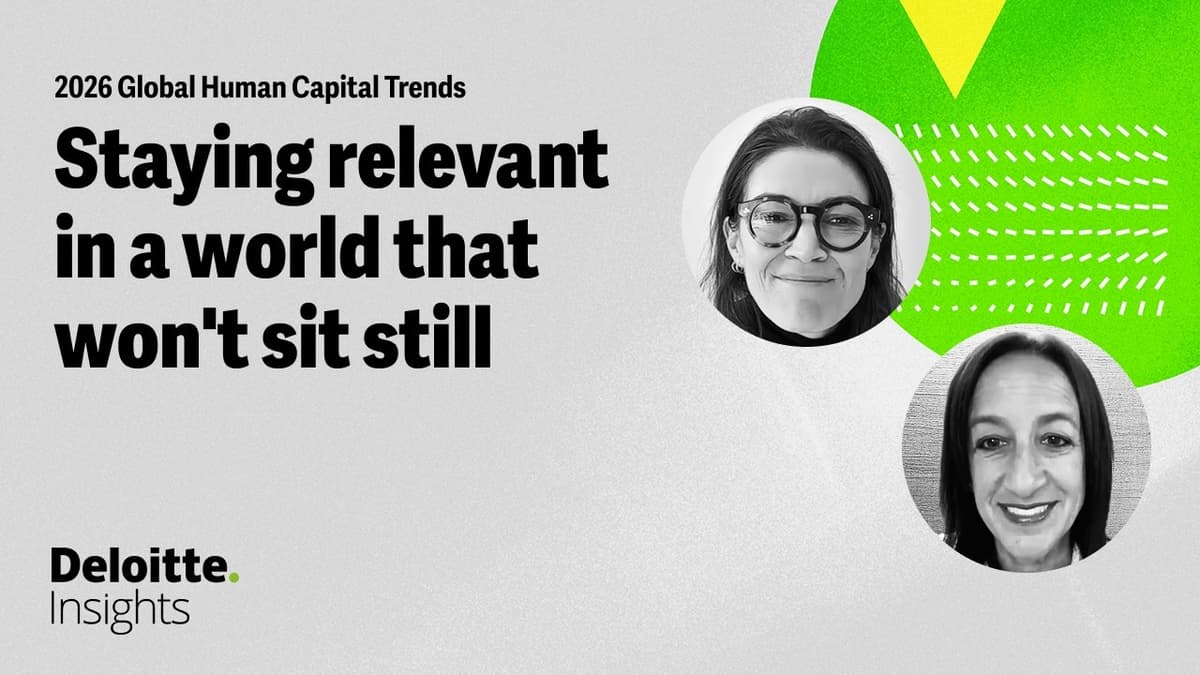
Adaptability and AI: Staying Relevant | Global Human Capital Trends 2026 | Deloitte Insights
The Deloitte 2026 Global Human Capital Trends video argues that today’s workers experience an unprecedented pace of change—averaging fifteen disruptions per year—forcing organizations to rethink how they manage adaptability. The speakers highlight that traditional change‑management and training programs are obsolete; only...

The Human Advantage in the Age of AI | Global Human Capital Trends 2026 | Deloitte Insights
Deloitte’s Global Human Capital Trends 2026 report highlights the growing imperative for enterprises to treat the human advantage as a board‑level priority. It urges leaders to shift the narrative from “humans plus machines” to “humans times machines,” unlocking exponential value...
The MBB Internship Playbook: Your Step-by-Step Plan to an Offer
The webinar titled “The MBB Internship Playbook” walks candidates through a step‑by‑step plan to secure an internship at McKinsey, BCG, or Bain. It highlights the surprise shift in recruiting timelines—McKinsey’s deadline is March 29—forcing applicants to accelerate their preparation and leverage...