
Strategic Personal Finance Moves to Reduce Fees and Improve Returns
The article outlines practical personal‑finance tactics that cut hidden fees and boost net returns. It advises consolidating redundant bank and brokerage accounts, moving idle cash into high‑yield checking or savings products, and favoring low‑cost index funds or ETFs. Automation tools and rewards programs are highlighted as ways to streamline cash flow and capture incremental value. Together, these steps aim to preserve capital, improve transparency, and enhance long‑term wealth growth.

Retirement Accounts
The article dismantles the myth that retirement accounts are merely "paper wealth" by highlighting their flexibility and powerful tax benefits. It explains early‑withdrawal options such as IRS Rule 72(t) and the Rule of 55, and notes that Roth IRA contributions can be...

My Family Isn't Rich but I Have $2 Million in Company Stock. How Much Should I Sell?
A former employee who helped build a startup now faces a $2 million equity windfall after the company’s IPO. The author asks how much of the stock to sell and how to allocate the proceeds, citing both financial and emotional concerns....
![Should I Switch Bank Accounts? [Calculator]](https://hixhlmpcokxhartfkpyi.supabase.co/storage/v1/object/public/images/thumbnails/1eaadd21b72b0c8b25db6d6da84e4acb.webp)
Should I Switch Bank Accounts? [Calculator]
A new interactive calculator helps savers decide whether to move money between high‑yield savings accounts. Users input current balance, existing APY, the prospective account’s APY, any sign‑up bonus, and transfer‑time days. The tool computes the final balances, net gain or...

The Best Time for Roth Conversions May Be Now
The article advises physicians to scrutinize the timing of Roth conversions, noting that the break‑even point often doesn’t arrive until the mid‑80s. Converting using after‑tax cash eliminates a safety net that protects against sequence‑of‑returns risk in the first several retirement...

The Shelter Debate
Recent Statistics Canada data shows 11.3 million Canadians contributed to retirement accounts in 2023, with 5 million using only a TFSA (median $6,500 CAD ≈ $4,750 USD) and 3.8 million using only an RRSP (median $3,420 CAD ≈ $2,500 USD). A further 2.5 million Canadians contributed to both,...

Filtering Ideas: Learning to Say No
Dean’s latest post in the "How I Run My Portfolio" series argues that mastering the art of saying no is essential for both managers and investors. He describes how, after becoming a manager of 30+ reports, he learned to prioritize...

Best High Yield Savings Accounts – up to 5.00% APY
The article compiles a ranked list of 80+ high‑yield savings and money‑market accounts, highlighting rates from 4.25% APY up to a standout 5.04% APY from Sunward Credit Union. It notes that many offers are tied to minimum balances, bonuses, or...

AmEx Offers: Get 15% Back At Aldi Grocery Stores (Up To $6 Statement Credit)
American Express has re‑launched its Aldi grocery offer, giving cardholders 15% back as a statement credit, capped at $6 per account. The promotion runs through May 24 2026 and applies to in‑store purchases and online orders for in‑store pickup, excluding delivery and...

Tim Sykes Review: Is This Trading Education Worth It for Building Long-Term Wealth?
Tim Sykes, a former college‑age penny‑stock millionaire, now runs a trading‑education platform that bundles archived video lessons, real‑time alerts, and a community forum. The service emphasizes momentum trading, chart analysis, and risk management, while publicly sharing trade records via Profit.ly...

How Interest Rates Affect Your Mortgage Loan Over Time
Interest rates are the primary driver of mortgage costs, influencing both monthly payments and the total amount repaid over a loan’s life. A one‑percentage‑point shift can change a 30‑year payment by hundreds of dollars and double the overall interest paid...

9 Ways to Stretch Your Food Budget when SNAP Benefits Get Cut
The article outlines nine practical ways to stretch a food budget when SNAP benefits are reduced. It draws on founder Kevin Curry’s personal experience and offers actionable tips such as meal planning, bulk buying, and leveraging coupons. The guide also...

Why Your Inflation Hedge Protects Against the Wrong Kind of Inflation
New research by Fang, Liu and Roussanov shows that assets marketed as inflation hedges—stocks, REITs, commodities and gold—only offset energy‑driven price spikes, while they provide little or negative protection against core inflation, which accounts for about 71 % of CPI. The...

Do You Model Good Financial Behaviors For Your Kids?
The article stresses that parents must actively teach children money fundamentals rather than assuming they’ll learn on their own. It highlights a personal anecdote about a teen learning interest through a borrowed‑allowance experiment and introduces four core lessons: assigning a...

Where’s My Lunch?
The article revisits Harry Markowitz’s classic claim that diversification is the only free lunch, arguing that the concept has been stretched beyond its original meaning. It shows that merely spreading investments across more assets—such as an equal‑weight S&P 500 versus a...

Meb Faber’s Momentum and Trend-Following Strategy For Gold, Stocks, And Bonds
Meb Faber’s 2015 momentum‑and‑trend‑following model allocates across gold, equities and bonds, rebalancing monthly or quarterly based on six‑month performance. Back‑testing from 2010 through 2025 shows a compound annual growth rate of 8.7% with 92% market exposure and a modest 15%...
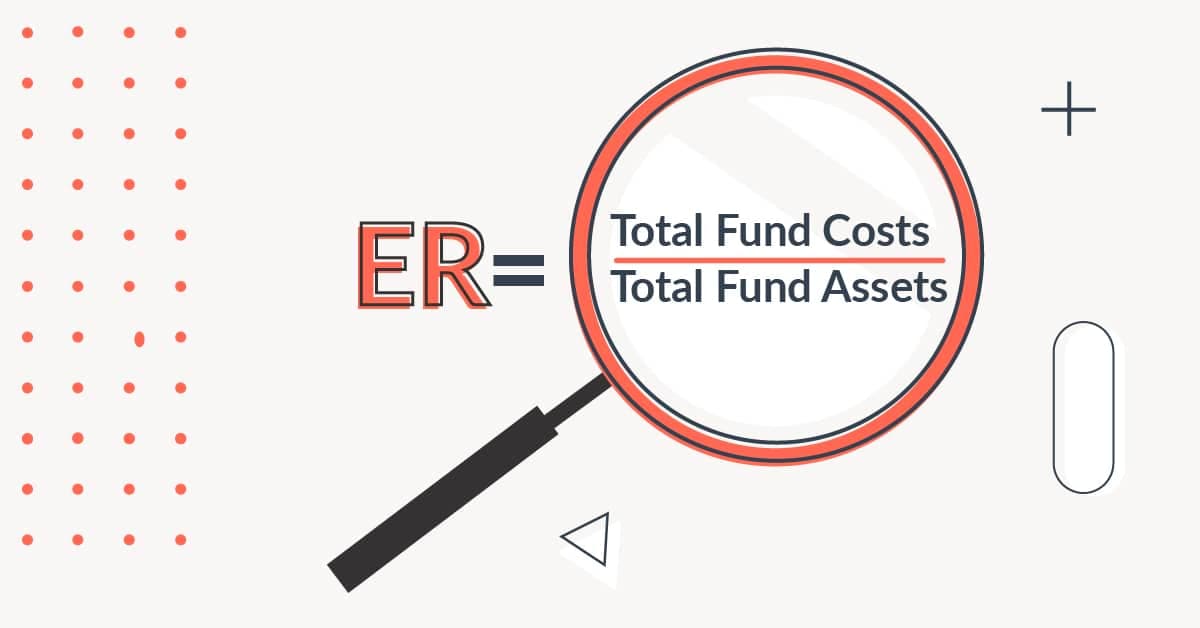
Expense Ratio: Why It Matters In Investing
The article breaks down expense ratios—the annual fees charged by mutual funds and ETFs—and shows how even fractional differences can erode investor returns over time. It cites Burton Malkiel’s research that active managers rarely beat benchmarks while charging higher costs,...

Introducing the 530A Accounts
The Treasury will launch 530A accounts—dubbed “Trump Accounts”—in 2026, offering a federal $1,000 seed contribution for children born between 2025 and 2028. Parents, guardians, or grandparents can open an account using IRS Form 4547, with annual contribution limits of $5,000, including...

The Five Levels of Financial Freedom
Frances Cook’s Money Memo breaks financial freedom into five progressive levels, starting with honest bookkeeping to eliminate fear and ending with the ability to make work optional. Level 1 urges readers to list income, expenses, debts and assets, while Level 2 focuses...
Benefits Young Adults Should Look at Before Taking a Job
The article urges young adults entering the workforce to look beyond base salary and evaluate the full benefits package. It highlights health insurance, 401(k) matching, paid leave, tuition assistance, and promotion pathways as critical components of total compensation. By treating...
When a One-Time Rental Sale Triggers an IRMAA Surprise
A one‑time capital gain from selling a rental property can push a retiree’s Modified Adjusted Gross Income into a higher IRMAA bracket, raising Medicare premiums two years later. IRMAA calculations rely on a two‑year income lookback, so the spike may...

I Filled Out the Top End of My TIPS Ladder Last Week
An investor recently completed a Treasury Inflation‑Protected Securities (TIPS) ladder that ends in October 2028, noting that current pricing reflects at least 3% inflation expectations. iShares has expanded the market with the launch of IBIM, a TIPS‑focused ETF that matures in 2036,...

7 Signs You Will Have A Comfortable Working-Class Retirement
The article outlines seven practical signals that indicate a working‑class American is on track for a comfortable retirement. It emphasizes keeping housing costs under 30% of expected income, maximizing Social Security by delaying benefits, and building a diversified three‑legged income...

How To Budget And Save Money
Personal finance experts stress that budgeting is a flexible habit, not a strict rule. By first tracking spending, individuals can identify hidden costs and set meaningful savings goals. Simple categorization of needs, wants, and savings, combined with starting small and...

Average Savings By Age: How Much Should You Have Saved At 25, 30, 35, 40, And Beyond?
The article outlines average financial assets by age in the U.S., using Federal Reserve data and Fidelity’s retirement‑savings benchmarks. It shows that under‑35s hold roughly $34,780 on average, while experts recommend saving one year’s salary by 30, two by 35,...
The Never Ending Payday
The article frames retirement income as a "payday" that mimics a regular paycheck, combining a modest pension, Social Security, bond‑fund interest and occasional dividends. The author outlines a personal schedule: a $400 vested pension on the first, Social Security on...

From Working Class to Wealthy: 10 Life-Changing Money Habits
The article outlines ten practical money habits that let anyone—regardless of income—bridge the gap to self‑made wealth. Core actions include paying yourself first, avoiding lifestyle creep, eliminating high‑interest debt, and automating investments. It emphasizes that consistent behavior, not occasional opportunity,...

Personal Finance Lessons People Still Ignore
The post warns that Indian consumers repeatedly buy poor‑value products like ULIPs and endowment policies despite years of expert criticism. It highlights the same pattern in health‑insurance purchases, where complex clauses often lead to unexpected out‑of‑pocket costs. Even with instant...
Slow on the Draw
A 64‑year‑old physical therapist outlines his retirement roadmap, emphasizing Roth conversions to lock in current tax rates before required minimum distributions begin. He favors a simplified two‑fund index portfolio—Vanguard Total Stock Market and Total International Stock—paired with a bond‑cash buffer...

Just Got Married? 9 Smart Money Moves To Make Right Away
Getting married triggers a financial merger that, if unmanaged, becomes a leading source of marital conflict. The article outlines nine immediate money moves—starting with a full transparency conversation and ending with estate planning—to help couples build a solid financial foundation....
Betterment: Up To $1,500 Investment Bonus (3 Year Hold Period)
Betterment has relaunched its tiered investing reward, offering up to $1,500 in bonus cash for new customers who deposit between $2,500 and more than $200,000 within 45 days of opening an account. The bonus scales across six tiers, with the...

Barclays $200-$400 Savings Bonus
Barclays is running a limited‑time savings‑account promotion that pays a $400 bonus for new AARP‑linked accounts that receive a $40,000 deposit, and a $200 bonus for standard accounts that receive $25,000. Both offers require the balance to stay in place...

Just Paid Off Debt? 10 Things To Do Next (Don’t Skip This)
Paying off debt is a major milestone, but the weeks that follow are critical for preserving that gain. The article outlines ten strategic actions—ranging from redirecting former debt payments to building an emergency fund and boosting retirement contributions—to prevent lifestyle...
My Parents Have Made Some Horrible Financial Decisions.
A reader asks how to stop his parents from draining their retirement savings to fund an unemployed brother, his wife, and four grandchildren, despite a vague promise that a grandparent’s estate will eventually be shared among the grandchildren. The advice...

20 Passive Income Streams You Can Start in 2026
The Substack post outlines 20 practical passive‑income ideas for 2026, grouped into investing, content creation, software tools, and asset rentals. Each stream includes a quick‑start tip, from opening a high‑yield savings account to launching an AI‑powered digital product. The guide...

10 Warren Buffett Rules to Help the Middle Class Become Rich
Warren Buffett’s ten wealth‑building rules target middle‑class investors by emphasizing disciplined habits over market timing. He urges saving first, investing in one’s own skills, leveraging compounding, avoiding high‑interest debt, and using low‑cost index funds. The advice also stresses staying within...

5 Common Things Working-Class People Shouldn’t Buy Right Now Due to Inflation
Inflation in 2026 is uneven, hitting working‑class households hardest in specific categories. Prices for new cars, premium beef, food‑delivery apps, brand‑new electronics, and full‑price streaming subscriptions have surged well above the 3.3% CPI. Switching to used vehicles, cheaper proteins, home...

BofA Cards For Bilt Points, Chase Reserve 150K and Citi’s ThankYou Problem
Bank of America’s credit cards can now be used to earn Bilt rent‑reward points, expanding the fintech’s partnership with the property‑payment platform. Chase has revived its premium travel card appeal with a 150,000‑point sign‑up bonus for the Sapphire Reserve, while...

The Market Is Paying You 7% to Lend to a Hundred-Year-Old Franchise. Value Worth Exploiting.
A century‑old franchise’s senior unsecured 2033 notes are yielding nearly 7% despite the company’s robust financial profile. The firm boasts over $8 billion in primary liquidity and less than $1.5 billion of debt maturing in the near term, while its top rating...

What Is Dollar Cost Averaging?
Dollar‑cost averaging (DCA) lets investors commit a fixed dollar amount at regular intervals, buying more shares when prices dip and fewer when they rise. The method removes market‑timing anxiety and works best with low‑cost index funds that provide broad diversification....
CIT Bank (First Citizens Wealth) Up To $750 Brokerage Bonus
CIT Bank, via its First Citizens Wealth platform, is offering a tiered bonus of up to $750 for new self‑directed investing accounts. To qualify, customers must fund the account with at least $1,000 and maintain the balance for a 60‑day...
Jonathan’s Advice for 2026 Graduates
Jonathan offers five core pieces of advice for the class of 2026. He urges graduates to quickly build a financial cushion in a taxable account and to invest that money in diversified stock index funds for long‑run growth. He warns...

Barclays Select Savings W/ AARP: $400 Bonus on $40,000 Deposit (+4% APY)
Barclays Bank Delaware’s Select Savings account, available through its AARP Digital Banking program, offers a flat 4.00% APY on all balances. New AARP members who deposit at least $40,000 receive a $400 bonus after meeting a 30‑day funding window and...
Sundry Memories of Mom
The author reflects on his mother’s life, from running a small-town pharmacy‑turned‑sundries store after her father’s death to raising a family in 1960s Los Angeles. She mastered budgeting, credit management, and charitable giving with only a high‑school education and a merchants’...

The 8 Most Important Money Moves To Make After Having A Baby
Having a baby reshapes household finances, prompting immediate budget revisions to capture new costs like diapers, formula and childcare. Parents should bolster their emergency fund to six months of expenses and act quickly to add the newborn to health insurance...

When Might The 50/30/20 Rule Not Be The Best Saving Strategy To Use?
The 50/30/20 budgeting rule, which allocates 50% of income to needs, 30% to wants, and 20% to savings, is popular for its simplicity but often misaligned with real‑world financial situations. The article outlines twelve scenarios where the rule falls short,...

How to Budget When You Regularly Use Cards
Regular contactless spending can obscure a household’s cash flow, making budgeting harder. The article recommends the 50/30/20 rule—allocating 50% of income to essentials, 30% to discretionary items, and 20% to savings or debt repayment—as a simple framework. It warns that...

How to Make Private Equity in Retirement Savings Work
The U.S. Department of Labor’s proposed fiduciary‑safe‑harbor rule would let 401(k) plans offer private‑equity funds, but the author argues the change is unlikely to succeed. First, past safe‑harbor incentives—such as those for in‑plan annuities—have not moved plan sponsors, suggesting a...

These May Tax Moves Could Make for Merry Savings
The article outlines three May‑time tax actions to improve your 2026 tax outlook. First, taxpayers should revisit their W‑4 withholding to better match their anticipated liability and free up cash each paycheck. Second, redirect the reclaimed cash into retirement accounts—either...

Save on Stays at Choice’s Cambria & Ascend Collection Brands with Targeted Amex Offers
American Express has rolled out two targeted offers for Choice Hotels’ upscale brands. A $50 statement credit is available after spending $200 on Ascend Collection properties in the U.S. and Canada, while a $100 credit is granted after $300 spend...