
Why High Income Doesn’t Guarantee Financial Security
Physicians earn among the highest salaries in the U.S., yet many lack financial security because of massive student debt, delayed earning power, and lifestyle inflation. The average medical‑school debt of $217,000 and resident salaries around $68,000 push wealth‑building back a decade, cutting compounding gains. Even a $400,000 gross salary can net only $220,000‑$250,000 after federal and state taxes, while high fixed costs create "golden handcuffs" that limit flexibility. Recent shifts in medical education and employer models are prompting doctors to prioritize early, automated savings and cost control.

How to Know If You’re Getting a Good Offer From a Money Lending Program
Personal loans are increasingly used in the Philippines for medical bills, tuition, and small‑business needs, but many borrowers focus only on advertised interest rates. The article explains that APR, total payback amount, loan term, speed of disbursement, repayment flexibility, hidden...

For Richer, For Poorer: 37 Years of Compounding
A hypothetical $10,000 investment in the S&P 500 on the writer's 1989 wedding day would be worth about $492,000 today, illustrating the power of long‑term compounding. The portfolio grew modestly to $16,500 after five years, surged to $56,759 by 1999,...

What Has to Go Right to Make Money
Dean outlines a practical framework for dissecting any equity investment by explicitly mapping the sequence of events that must occur for the trade to succeed. He shows how this roadmap informs position sizing, risk identification, and valuation ranges, especially for...

12 Frugal Tips Every Senior Should Know
The article outlines twelve practical ways seniors can stretch fixed incomes, from budgeting and home‑cooked meals to using public transport and community services. It emphasizes that frugal habits need not sacrifice comfort, instead fostering financial confidence and independence. By adopting...

Most People Work Hard Their Whole Lives But Never Get Ahead
The post outlines a four‑step sequence for building lasting wealth: save a portion of every paycheck first, invest in education rather than image, increase the value of your skills instead of merely logging hours, and finally put saved capital to...

Why Every New Investor Needs a Financial Safety Net
New investors are urged to build a financial safety net before committing capital, emphasizing an emergency fund that covers several months of expenses. The article explains how a cash cushion prevents forced selling during market downturns, preserving long‑term compounding. It...

My Parents Gave Us $30,000 for Our Daughter’s Education. I Can’t Believe How My Husband Wants to Spend It.
The couple received a $30,000 education trust for their two‑year‑old daughter after the grandparents sold stock. The husband’s brother was arrested, and the husband is urging the wife to divert $15,000 of the trust for bail. The wife worries the...

Get up to 10% Back at Kroger Brands with New Chase Offer
Chase has re‑launched a targeted Offer that returns either 5% or 10% cash back on purchases at Kroger‑owned stores. Cardholders receive a maximum of $9 (10% tier) or $4.50 (5% tier) back, capped at $90 of eligible spend per card....

Free CE Credit: Beyond Bonds, the 4% Rule, and Covered Call ETFs (Apr 30)
Tuttle Capital Management, a $4 billion‑AUM ETF issuer, is hosting a free continuing‑education webinar on April 30, 2026 to challenge the traditional retirement‑income playbook of bonds, dividend stocks, and covered‑call ETFs. The panel will explain why the classic 4 % withdrawal rule no longer...

Dual Physician Households and FIRE Planning – How You Can Have Your Cake (And Eat It Too)
Dual‑physician households earn $550,000‑$900,000 annually and have two sets of retirement benefits, yet many lag financially due to student‑loan debt, lifestyle inflation, and burnout. The article shows how applying FIRE principles—using the 4 % rule, the Rule of 25, and aggressive...

Financial Milestones That Matter More Than You Think
Personal‑finance writers often celebrate round‑number targets, but true financial freedom hinges on subtler milestones. The article outlines seven indicators—effortless saving, a 12‑month liquid reserve, the point where portfolio gains exceed contributions, a $1 M net worth excluding the primary home, a...

Best High-Yield Savings Rates for April 27, 2026: Up to 5%
High‑yield savings accounts are still offering APYs up to 5.00% as of April 27 2026, though many banks have begun trimming rates. Varo and Consumers Credit Union lead with 5.00% on the first $5,000‑$10,000, while PiBank, Axos, and CIT Bank provide 4.10%‑4.40%...

How Much Money Can You Save With Solar Panels?
UK homeowners facing soaring electricity bills are increasingly installing residential solar panels to cut costs. Depending on system size and the inclusion of battery storage, annual savings range from about $570‑$760 for a six‑panel 2.8 kW system to $1,020‑$2,030 for a...

How To Save Money Fast Without A Job
The article outlines practical strategies for rapidly building savings when unemployed, emphasizing habit‑based budgeting over income dependence. It advises tracking every expense, cutting nonessential costs, avoiding impulse purchases, and leveraging existing resources. Additional tactics include cooking at home, saving small...

Chart of the Week: April 27, 2026: Evaluating Focused Sustainable Index Funds
The sustainable‑index market now comprises 151 focused funds and ETFs with $167 billion in assets as of March 31, 2026. The ten largest vehicles, ranging from $4.6 billion to $23.4 billion, hold roughly half of the segment’s AUM and delivered 12‑month returns between 4.3% and...

Vanguard Index Funds at 50: Cost Still Matters
Vanguard commemorated 50 years of indexing with a retrospective that underscores how low‑cost funds have outperformed the market. Jack Bogle’s 1951 thesis warned that fees erode long‑term returns, a principle proven when a $10,000 investment in the original Vanguard 500...

Instant Gift Card Deals: Save Money & Get Rewarded
The article outlines how shoppers can instantly purchase e‑gift cards to cut costs or earn extra rewards, bypassing the delays of physical cards. It highlights several platforms—United MileagePlus X, Fluz, DoorDash, Samsung Pay, Raise, Ibotta, Upside, TopCashback, and others—that let users specify...

Is Floor & Decor Holdings, Inc. (FND) A Good Stock To Buy Now?
Floor & Decor Holdings (FND) is trading at $54.59, roughly 45% below its recent peak, as the housing market’s slowdown pressures specialty flooring demand. The company’s trailing and forward P/E ratios have compressed to 28.4 and 25.7, reflecting valuation discounts...

Chase/AmEx/U.S. Bank Offers: Get 5% Back At Food Lion (Max $5 Back)
Several major issuers—including Chase, American Express, and U.S. Bank—have re‑launched a limited‑time grocery promotion that delivers 5% cash back on purchases at Food Lion. The reward is capped at $5 per cardholder and is available through May 23, 2026, with earlier versions...

How Would The Greats Like Buffet, Lynch, & Templeton Invest In Today's Market? | Pieter Slegers
Pieter Slegers, founder of the Substack Compounding Quality, outlines how legendary investors like Warren Buffett, Peter Lynch and John Templeton would navigate today’s volatile market. He stresses a timeless formula: acquire wonderful companies led by managers with skin in the...

How to Earn ~7% APY From Raisin
Raisin, a fintech partner of banks, is running a limited‑time promotion with Everbank that locks a 4.10% APY for 90 days and adds a cash bonus ranging from $70 to $1,500 depending on deposit size. By combining the interest earned...

TreasuryDirect, Ditch the ‘Gift Box’ and Raise the I Bond Purchase Cap
TreasuryDirect has sent a new email urging holders of Series I Savings Bonds in the gift‑box program to deliver their bonds promptly. The notice clarifies that while only one gift bond can be delivered at a time, recipients can receive unlimited...

How To Save Money Fast As A Student
Students often struggle with tight budgets, but simple habits can quickly boost savings. The article outlines practical steps such as tracking every dollar, setting small savings goals, cooking at home, using public transport, and exploiting student discounts. It also recommends...

Grading Meta’s Severance Package Offer: Strong On The Surface
Meta announced a May layoff affecting roughly 8,000 U.S. employees and offered a severance package of 16 weeks base salary plus two weeks for each year of service, along with 18 months of fully‑covered COBRA health insurance. After accounting for...

The Sunday Best (04/26/2026)
The Sunday Best newsletter highlights three key pieces of content for physicians: a guide on retiring at 55, a lifestyle piece on boating as a post‑career pursuit, and an analysis of the “spending guilt” many doctors feel once they have...
Live a Little
A wave of "no‑spend" videos urges viewers to cut every discretionary expense, but a recent clip by Christina Mychas sparked debate by stripping away pleasures like breakfast outings, movies, and flights. The article counters that extreme frugality can diminish quality...
Around the Obstacles
At 48, Dan Smith finalized a divorce, keeping his IRAs and 401(k) while his ex‑wife took the house. Facing health issues from three decades as a beer‑truck driver, he leveraged union‑taught bookkeeping skills to launch a tax‑preparation practice that grew...
Investing Fundamentals: A Simple Guide for Beginners
The article breaks down investing fundamentals for beginners, stressing that cash left in savings loses value to inflation and that owning shares or diversified index funds can preserve purchasing power. It explains how stocks are bought through brokerages and why...

New Online IRS Tax Debt Tool Helps Taxpayers Find the Best Way to Pay
The Internal Revenue Service has introduced a new online Tax Debt Help tool on its Get Help With Tax Debt page. The interactive questionnaire asks six financial‑status questions and then recommends the most suitable resolution, such as a temporary collection...

Tax Planning as the Backbone of a Durable Retirement Income Plan
A durable retirement income plan hinges on proactive tax planning, not just cash‑flow generation. While tax preparation reports past liabilities, tax planning strategically shapes withdrawals, Roth conversions, and Social Security timing to manage taxable income over decades. Without coordination, retirees...

Giving Up My Sports Club Membership Despite the Health Benefits
The author chose not to renew a Bay Club membership that cost about $2,500 for 13 months, citing recent car repairs and rising guest fees. Guest fees surged from $25 to $75 per person, making a typical Sunday swim session...

Economics-Based Financial Planning -- My Presentation to Wade Pfau's Retirement Income Institute
Larry Kotlikoff delivered a presentation to Wade Pfau’s Retirement Income Institute, showcasing how his MaxiFi Planner software can apply economics‑based financial planning to retirement strategies. The session, recorded on YouTube, walks advisors through consumption‑smoothing models, optimal asset allocation, and the...
10 Real Assets vs 10 Fake Assets (Most People Get This Wrong)
The post contrasts ten "real" assets that generate cash flow with ten "fake" assets that drain money, arguing that wealth hinges on what you buy, not how much you earn. Real assets include rental properties, dividend stocks, REITs, index funds,...

Warren Buffett Explains Passive Income: Making Money While You Sleep
Warren Buffett frames passive income as the long‑term result of owning high‑quality businesses and letting compounding work, not a quick‑cash hack. He emphasizes front‑loading effort—saving, learning, investing—and then allowing assets to generate cash flow for decades. Buffett’s own portfolio, from...

Cash On The Barrel
The Heisenberg Report highlights that a 25/25/25/25 portfolio—equal parts equities, bonds, commodities and cash—is delivering a 26% annualized return so far in 2026, outpacing the traditional 60/40 mix. The surge is largely driven by a 33% rise in the S&P...

Investment 101 With The Building Financial Podcast
The Macro Butler appeared on The Building Financial Podcast to deliver an Investing 101 crash course, emphasizing that starting early outweighs trying to be overly clever. The discussion highlighted compounding as the silent engine of wealth, and argued that investors...

The Disposition Effect: Why Losing Investors Keep Getting Worse
New research on 189,530 Chinese retail investors shows that prior losses amplify the disposition effect by roughly 10%, while prior gains dampen it. The bias—selling winners early and holding losers—creates a self‑reinforcing “doom loop” that hurts portfolio performance, especially for...

A Beginner’s Guide to Investment Diversification
The article offers a beginner‑level overview of investment diversification, explaining how spreading capital across asset classes—such as property, stocks, bonds, and crypto—reduces portfolio risk. It outlines a common crypto allocation model (60% stablecoins, 30% medium‑risk coins, 10% emerging projects) and...

The Overlooked Ways People Leave Money on the Table Every Year
Most people focus on earning more or cutting costs, but overlook financial inefficiencies that silently drain wealth. Small, repeatable opportunities—like reward‑point optimization, idle cash placement, and unnoticed subscription fees—can cumulatively cost hundreds of dollars annually. By designing automated systems and...

Smart Ways Retirees Can Lower Home and Auto Insurance Costs
Retirees are urged to re‑evaluate home and auto insurance as lifestyle shifts can create savings opportunities. Lower driving mileage, home upgrades, and changes in risk tolerance often make existing policies misaligned with current needs. Adjusting deductibles, bundling policies, or switching...

6 Investing Mistakes I'll Never Make Again
The author reflects on six personal investing blunders, from panic‑selling Meta during the 2018 Cambridge Analytica scandal to over‑weighting Alibaba and under‑weighting Palantir. He also highlights the pitfalls of buying thematic AI ETFs without company analysis, speculating on Fed rate...

Best Student Loan Refinance Rates for April 23, 2026: Credible Leads At 3.66%
Student loan refinance rates have remained steady in early 2026, with variable APRs as low as 3.66% and fixed APRs starting at 3.71%. Credible leads the market on variable rates, while Splash offers the lowest fixed rates. Lenders such as...

Why Precious Metals Remain a Smart Financial Choice
Precious metals such as gold, silver, platinum and palladium are being promoted as reliable stores of wealth amid economic uncertainty. Their historical performance shows they can outpace inflation and hold value when equities and bonds falter. The article highlights both...

Podcast with Morgan Housel on Money in Your 40s and Beyond
Todd Wenning of Flyover Stocks hosted Morgan Housel, author of The Psychology of Money, for a deep‑dive on personal‑finance challenges faced in one’s 40s and beyond. The conversation highlighted the scarcity of guidance tailored to this age group, despite its...
How Do You Retire at 55?
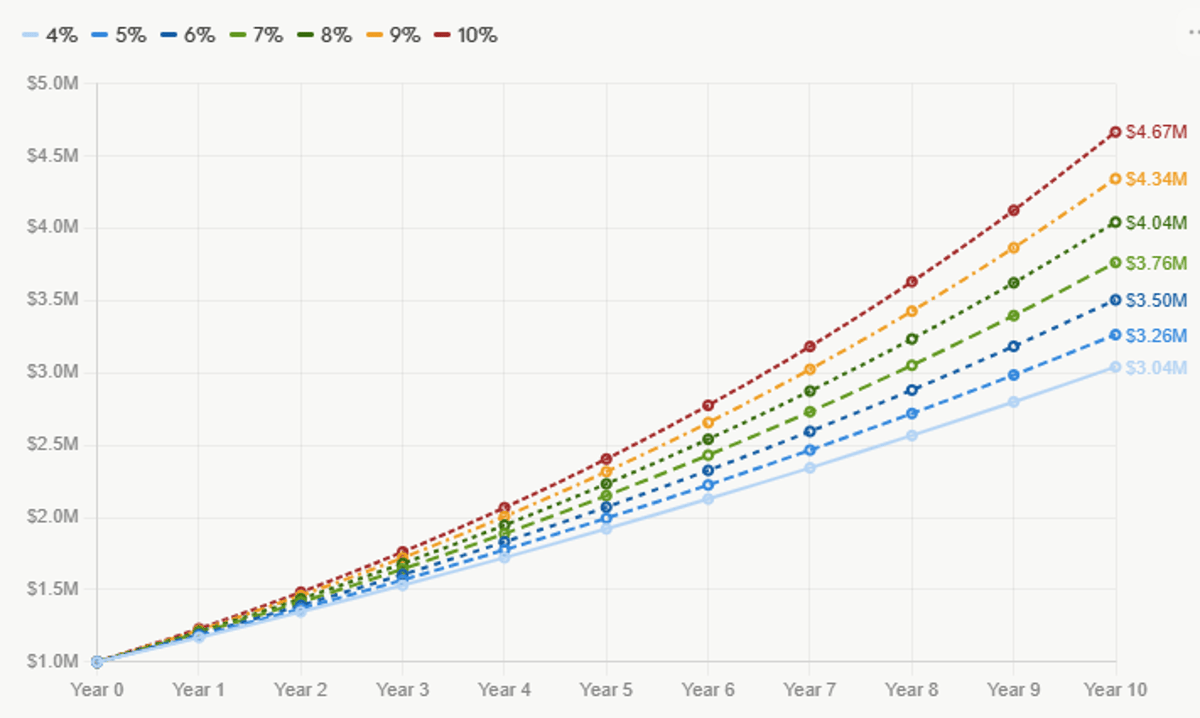
A 45‑year‑old earning $300,000 annually has $1 million saved and contributes $130,000 each year, aiming to retire at 55. Using the 4 % rule, a $3.5 million portfolio would cover the current $12,000‑per‑month lifestyle, and a 10‑year projection shows that target is reachable...

Charlie Munger Advice: Top 4 Tips To Become The First Millionaire In Your Family
Charlie Munger outlines a four‑step framework for anyone aiming to become the first millionaire in their family. He stresses self‑improvement as the foundation, then urges aggressive frugality to amass the first $100,000, which unlocks the power of compounding. Once that...
Rethinking the “Right” Time for Social Security
The author, who could have started Social Security at 62, delayed filing until age 67 based on conventional advice, changed course after a close friend received a terminal diagnosis. He and his brother claimed benefits at 64½, noting a break‑even...
BofA Flags Investor Caution on The Goldman Sachs Group, Inc. (GS) Despite Solid Quarterly Performance
Bank of America Securities trimmed its price target on Goldman Sachs (GS) to $1,050 from $1,100 while keeping a Buy rating, citing strong first‑quarter results but elevated market expectations. The firm also cut its earnings forecasts for the next several...

What To Know About Your Options When Debt Becomes Hard To Manage
When debt pressures mount, the article outlines a step‑by‑step framework for Canadians to regain control. It starts with a full cash‑flow review, then suggests informal budgeting tweaks before moving to formal mechanisms such as consumer proposals or bankruptcy. Each option...