
The 10 Minute Shutdown That Helps Your Mind Stop Running
The article presents a 10‑minute evening shutdown routine designed to help the mind stop racing and achieve true rest. It explains how modern life leaves the brain in an open state and then breaks the process into four steps: unload unfinished thoughts, pick a single first action for tomorrow, create a physical cue that the day is over, and stop adding new input. By signaling the nervous system that the day has ended, the habit improves sleep latency and mental clarity. Repetition trains the brain to release lingering mental loops, leading to deeper, faster rest.

Why Expectations Change Experience… and How to Change Yours
The article explains how expectations act as mental instructions that can rewrite perception, biology, and performance. It cites classic studies where color cues altered taste and placebos triggered endogenous opioids, showing expectation can override sensory input. Research on athletes demonstrates...
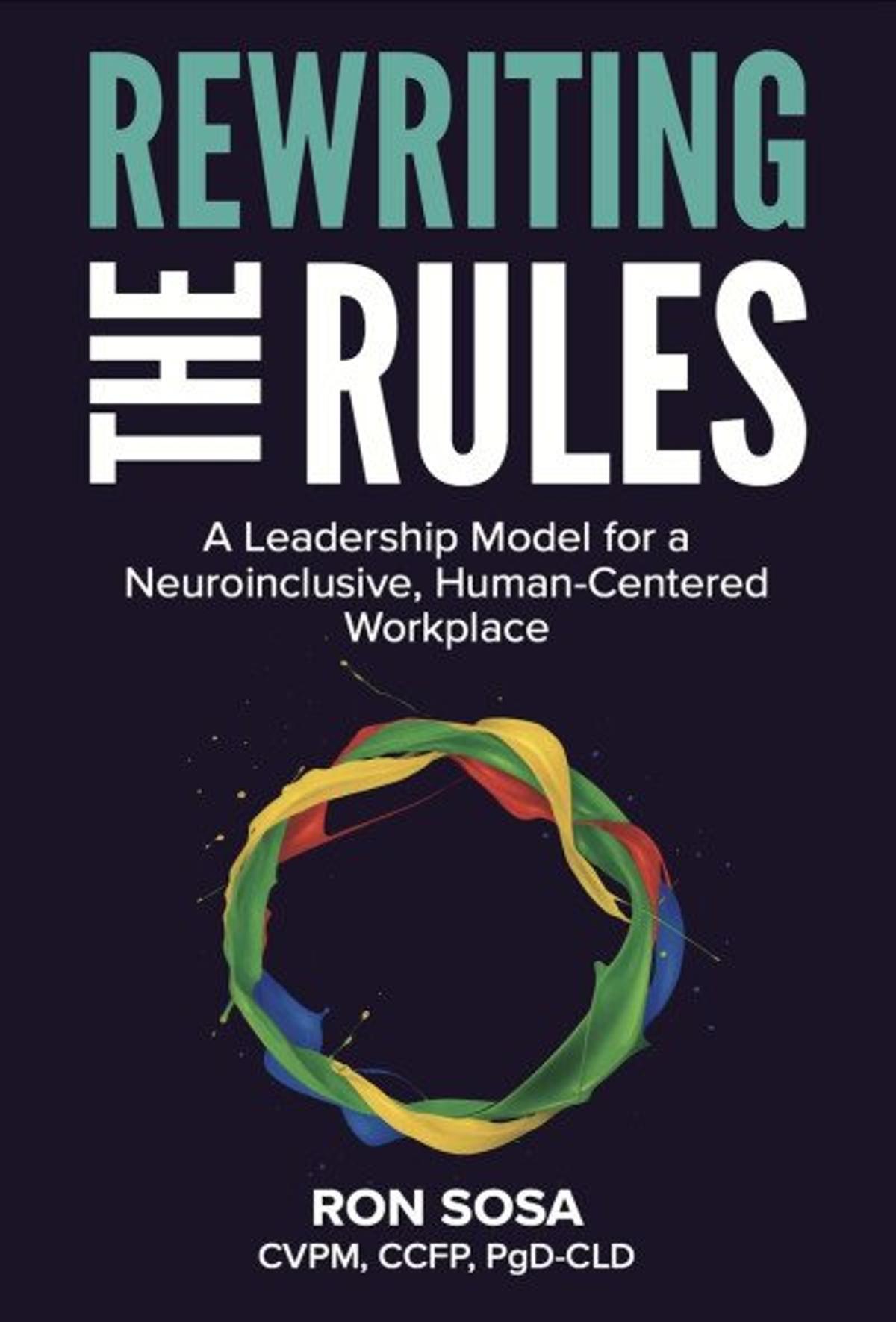
Book Review: Rewriting Leadership for a More Human Workplace
Ron Sosa’s *Rewriting the Rules* challenges the conventional view that leadership problems stem from flawed employees, arguing instead that many workplace systems reward conformity and mask neurodivergent talent. Drawing on his veterinary background and personal experience with ADHD and autism,...

The Problem Isn’t That You Think About What Could Go Wrong
The article argues that vague optimism fails because it leaves anxiety unnamed, preventing concrete action. Kyle Austin Young’s "success diagram" forces you to list required conditions and potential failure points, turning vague fear into specific risks you can mitigate. By...

Great Managers Don’t Coddle People. They Coach Them With Truth.
Great managers focus on honest, challenging feedback rather than coddling employees. The article argues that leadership success is measured by how much a team improves, not by a manager’s personal output. Tough, truth‑based coaching forces high‑performers to shed outdated habits...

How To Do Great Work In A Fast-Changing World
Melissa Swift, founder of Anthrome Insight, releases "Effective: How To Do Great Work In A Fast‑Changing World." The book introduces an "Effectiveness Architecture"—knowledge, methods, people ability, and technology ability—to help professionals at any level improve performance. It offers a self‑assessment,...

10 Warren Buffett Life Principles to Live By for a Successful Life
The article distills ten personal principles that Warren Buffett attributes to his success, ranging from guarding reputation to practicing extreme patience. Each principle is illustrated with anecdotes about his modest lifestyle, relationship choices, and disciplined decision‑making. Buffett treats time, self‑education,...

The Next Six Months Matter More Than You Think
The post reminds readers that while half the calendar year has passed, the remaining six months hold untapped potential. It argues that most people underestimate the power of consistent, small actions over time and overestimate short‑term bursts of effort. By...

Design the Day Before It Designs You
The author outlines a simple morning ritual called “Pick 6,” where six vibe cards are chosen to set the emotional tone for the day. By deciding the day’s energy before emails or news intervene, the practice aims to prevent reactive...

The Psychology of Delayed Gratification
The article explains that humans naturally favor immediate rewards due to present bias, making delayed gratification challenging. It argues that self‑control functions like a muscle that strengthens through repeated practice. Small, disciplined choices—such as studying instead of scrolling or saving...
.jpg)
How To Harness Your Experiential Intelligence
Soren Kaplan’s new book "Experiential Intelligence" introduces XQ, a framework that blends mindsets, abilities and know‑how derived from personal experiences. Kaplan argues that XQ complements traditional IQ and EQ, offering a deeper predictor of success in today’s disruptive environment. He...

Can AI Make Us Worse Thinkers?
In a recent interview, engineering professor Barbara Oakley warned that financial advisers risk weakening their judgment by over‑relying on AI and letting empathy override objective analysis. She described "pathological altruism" as well‑meaning actions that harm clients, such as avoiding tough...

From Impossible To Inevitable (The 5-Point Mindset)
The article outlines a five‑level mindset framework that moves entrepreneurs from a defeatist "Impossible" stance to an "Inevitable" outlook. It ties this mental progression to current macro pressures—record‑low job growth, wage stagnation, and a housing market slump—showing why resilience matters...

The Real Reason You Feel the Need to Upgrade Your Creator Gear
Creator‑gear upgrade culture, driven by aggressive marketing, is diverting creators from the core of storytelling to a perpetual chase for the newest equipment. While rapid tech advances expand possibilities, many creators feel a constant sense of inadequacy despite already having...

Five Books for Women Learning to Take up Space
The Substack post curates five recent titles aimed at women who want to claim their space and amplify their voices. It highlights Samara Bay’s “Permission to Speak,” Tara Mohr’s “Playing Big,” Nedra Glover Tawwab’s “Set Boundaries, Find Peace,” Elaine Welteroth’s...

The Leadership Blind Spots That Turn Good Managers Into Bosses People Dread
Leadership coach Sabina Nawaz explains how traits that helped her rise can become blind spots that turn managers into dreaded bosses. In a Leadership Biz Cafe podcast she identifies two forces—power gaps and pressure pitfalls—that erode trust and performance. Drawing...

The Difference Between Motion and Meaning (And Why Most Productivity Systems Can’t Tell Them Apart)
Mike Vardy argues that most productivity systems mistake motion for meaning, encouraging people to act out of inertia rather than intention. He introduces three operating realms—ruthless, reckless, and reasoned—highlighting the reasoned realm as the only one aligned with personal values....

How to Talk Yourself Out of Self-Sabotage, According to Your Personality Type
The article from 16Personalities offers a concrete, one‑sentence script for each of the 16 Myers‑Briggs personality types to counteract self‑sabotaging thoughts in real time. Building on a previously released "Inner Saboteur" guide, the scripts focus on the core belief behind...

Why Your Brain Needs Creative Rest (and What That Actually Looks Like)
Lawyers’ deep, analytical work drains cognitive resources, a condition researchers label ego depletion. Passive activities like scrolling or TV keep the brain in activation mode, offering little recovery. The article proposes "creative rest"—low‑stakes, absorbing tasks such as cooking, gardening, or...

Return Before You Drift Too Far — 24 May
The post warns that minor lapses in routine can quietly expand into significant drift, making it harder to regain lost ground. It argues that waiting for perfect conditions before returning only deepens the gap. Instead, the author advocates taking small,...

21 Days Is Enough To Become Someone New
The post proposes a 21‑day "New You" roadmap that breaks personal transformation into three weekly phases—momentum, focus, and identity. Each week introduces specific micro‑habits, such as consistent wake‑up times, 10‑minute movement, and deep‑work blocks, to build discipline. A daily "10‑10‑10"...

The Weekly Blueprint 2.0
The post introduces a 15‑minute AI‑driven weekly planning system that transforms chaotic task lists into a prioritized calendar. It illustrates the method with a mid‑size commercial HVAC firm struggling under new EPA refrigerant mandates and rising supply‑chain costs that squeezed...

A Guide to Staying Human (Part 3): Does Mindfulness Matter When the World Is Breaking Down?
In part three of his "Staying Human" series, the host explores how mindfulness and presence can counteract the brain’s default mode network, which fuels endless future‑focused rumination. Drawing on neuroscience, contemplative traditions, and civilizational‑risk modeling, he argues that constant preoccupation...

The Multifamily Operations Daily Huddle: Why the Morning Sets the Margin
The article introduces the idea of a "morning margin," urging multifamily property managers to reserve the first thirty minutes of each day for a single high‑leverage task before opening email or Slack. By shielding this block from reactive demands, leaders...

Is Our Daily News Consumption Shaped by a Negative Thinking Bias and How Can We Shift to Positive Perspectives?
People’s brains are wired to prioritize threat signals, causing a natural tilt toward negative news. Media outlets exploit this bias because negative stories generate more clicks, shares, and ad revenue, reinforcing a cycle of pessimistic headlines. The constant exposure fuels...

The Psychology Trick that Can Help You Regain Control over Anxiety
Psychologists Christian Waugh and Kateri McRae demonstrate that emotional reappraisal is a two‑step process: first generating an alternative interpretation, then implementing it by elaborating on that view. Laboratory experiments with undergraduate participants showed modest mood gains after generation alone, but...

Why Communicating With Context Is The Practice Most Leaders Get Wrong
Research with The Harris Poll of 2,206 U.S. workers shows that exceptional leaders are 2.2 times stronger at communicating with context than merely good leaders. The key differentiator is that top performers not only share the facts they know, but also...

The Psychological Cost of Internal Negotiation: Why “Later”?
The post argues that most procrastination starts with an internal negotiation where the mind labels a task as “later.” This mental postponement isn’t neutral; it creates a lingering cognitive load that distracts attention. By keeping the deferred task in the...

Stop Chasing Happiness. That's How You Find It.
The author spent time at a Benedictine monastery in New Mexico to study why monks report unusually high life‑satisfaction despite an austere routine. Evolutionary research shows human happiness is designed to be fleeting, yet monks achieve lasting contentment through purpose,...

Self-Control Is the Key to Success: 5 Lessons From Charlie Munger
Charlie Munger, the late vice‑chair of Berkshire Hathaway, framed self‑control as a compoundable economic advantage. He argued that avoiding predictable mistakes, mastering cognitive biases, exercising extreme patience, keeping ego in check, and rejecting envy are the core levers of lasting...

You Don’t Need a New Skill. You Need to Dig Up the One You Buried.
The article argues that seasoned professionals suffer from the "curse of knowledge," which blinds them to the market value of their existing expertise. Rather than learning new skills, they should excavate and translate the tacit knowledge accumulated over a decade...

How To Become More Courageous
Leadership coach Margie Warrell’s new book *The Courage Gap* presents a research‑backed, five‑step roadmap for turning fear into measurable action. The framework teaches readers to manage fear, act despite risk, and embed a courage mindset across teams. Warrell argues that...

When a Peak-Performance Expert’s Brain Turned on Him
Brad Stulberg, a powerlifter‑turned performance psychologist, released *The Way of Excellence*, which quickly entered the New York Times bestseller list. The book blends his philosophy of "Quality"—rooted in deep care for craft—with a candid account of his own struggle with obsessive‑compulsive disorder...

How to Actually Get What You Want in Life
The article challenges the myth that success hinges on innate brilliance, arguing that strategic thinking, keen observation, and relentless focus are the real drivers of achievement. It asserts that anyone can tap into these levers by abandoning competition based on...

10 Upper-Class Lessons That Working-Class Men Learn Too Late in Life
The article outlines ten mindset shifts that working‑class men often discover too late, contrasting hard‑work‑first attitudes with the strategic habits of the upper class. It emphasizes networking as social capital, prioritizing income‑producing assets, and building passive income streams. It also...
12 Ways You’re Wasting Time Every Day
The post outlines twelve common habits that silently drain daily productivity, from overthinking future outcomes to endless phone scrolling. It emphasizes that these behaviors cost more time than any monetary savings and that perfectionism often stalls progress. The author encourages...

7 Signs of High-IQ People According to Charlie Munger
Charlie Munger outlined seven habits that distinguish truly intelligent people from those with high IQs alone. He emphasizes building a latticework of mental models, recognizing and correcting biases, and using inversion to anticipate failure. Munger also stresses extreme intellectual honesty,...

How to Stay Motivated Every Day: The Honest Guide
Lilach Bullock argues that motivation isn’t a feeling but a by‑product of seven daily inputs—sleep, morning movement, stable blood‑sugar nutrition, decision‑fatigue reduction, environment design, a pre‑identified daily win, and supportive peers. She backs each input with research and personal data,...

Why the Smartest Leader Usually Fails
In a Duct Tape Marketing podcast, Jason Wild argues that the lone‑genius leadership model stalls innovation, advocating instead for "genius at scale" where leaders act as architects, bridgers, and catalysts. He highlights that only 5‑15% of ideas succeed because integration,...

The Power of Positive Leadership
Jon Gordon’s updated "The Power of Positive Leadership" argues that optimism, purpose and grit are measurable competitive advantages for finance teams. The book cites research showing workplace negativity costs the U.S. economy $250‑300 billion annually, while case studies like Ford’s $12.7 billion...
![[Outliers] Chung Ju-Yung: The Hyundai Founder Who Put a Country on His Back](/cdn-cgi/image/width=1200,quality=75,format=auto,fit=cover/https://fs.blog/wp-content/uploads/2026/05/chung-Ju-yung-episode-art-1024x1024.png)
[Outliers] Chung Ju-Yung: The Hyundai Founder Who Put a Country on His Back
The Knowledge Project released a new episode profiling Chung Ju‑yung, the founder of Hyundai, who transformed a modest repair shop into a conglomerate that once generated 16% of South Korea’s economic output. The podcast details how Chung’s relentless drive built highways,...

Hawk Responds To Viewer Comments on His Survival Story
In a recent video, mental‑health advocate Hawk recounts his 2001 Christmas Eve suicide attempt, saved when his dog Oscar intervened. He reads aloud dozens of viewer comments, ranging from personal trauma stories to gratitude for his openness. At 58, retired...

The Question I Ask Myself At The End of Every Day
Ryan Holiday explains how he abandoned rigid word‑count goals in favor of a simpler rule: make a positive contribution to his writing each day. He argues that measuring pages creates perverse incentives, while focusing on any forward‑moving action—writing, editing, research,...

How to Stay Steady When the World Is Crazy
Equanimity, defined as the capacity to feel life’s full weight without being derailed, is highlighted as a vital mental skill. The post explains that modern algorithms amplify outrage, making emotional reactivity the default, while equanimity offers a third path—neither suppression...

The Hidden Happiness Habit: Why Getting Organized Feels Better Than a Vacation
A Dynata survey for Inspired Closets of over 1,000 U.S. adults shows that organization dramatically lifts mood, with 48% saying mornings are most affected by shoe clutter and more than 80% reporting a mood boost each time they use an...

7 High Performance Mindset Shifts That Protect Your Best Work
Maurathomas outlines seven high‑performance mindset shifts that replace outdated productivity hacks with deeper behavioral changes. The article moves the focus from managing time to protecting attention, from racing to respond to delivering accurate communication, and from busyness to measurable results....

From Then to Now
Pearl Zhu’s poetic manifesto chronicles a personal transformation from self‑doubt to confident influence. The piece traces the journey of turning fear into resilience, adopting an agile mindset, and reshaping one’s purpose into a visible personal brand. By rejecting external validation,...

Secret Powers of Informal Influencers
Leaders who rely only on formal authority often overlook informal influencers—employees who shape opinions and behavior without a title. The article outlines a three‑step process: identify hidden leaders using five probing questions, develop them by investing in “almost ready” talent,...

The Coworking Industry Can Lead On Mental Health — Here’s How To Meet The Challenge
At its 50th global conference in New York, the Global Coworking Unconference (GCUC) unveiled a bold initiative called GCUC Access—The Door is Open, pledging to make coworking the first industry to provide free, universal mental‑health support to members worldwide. The...

You and Your Two Wolves
Michael Bungay Stanier highlights Eric’s new book *How a Little Became a Lot*, which grew from the *One You Feed* podcast. The book uses the classic two‑wolf fable to explore how we nurture either uplifting or draining relationships. Stanier urges readers...