
Is Cellular Reprogramming Junk Science? Nearly 20 Patients Are Getting Eye Injections in the First FDA-Cleared Cellular Trial
Boston‑based Life Biosciences has begun the first FDA‑cleared human trial of cellular reprogramming, delivering an epigenetic injection into the eye of a glaucoma patient. The approach aims to reset the epigenetic age of ocular cells, potentially reversing age‑related damage. Co‑founder David Sinclair, a prominent yet controversial longevity researcher, provided the scientific foundation though he is not involved in day‑to‑day operations. Researchers will monitor safety and efficacy over six months, making this a pivotal test for anti‑aging therapeutics.

LONGEVITY EXPERTS: How Close Are We to Solving Death? (Beyond Tomorrow Podcast)
A panel of geroscience experts warned that predictions of achieving Longevity Escape Velocity within the next decade are not backed by animal data. They criticized the longevity market’s reliance on opaque epigenetic clocks and unregulated peptide sales, highlighting safety hazards...
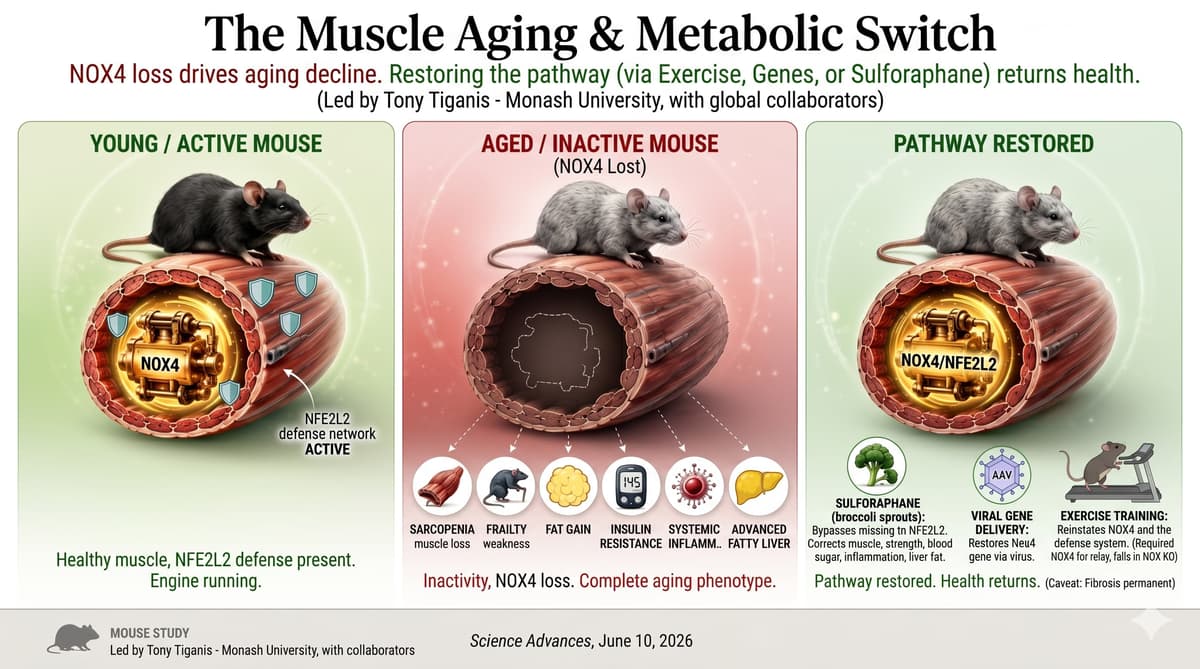
Can't Exercise? Sulforaphane From Broccoli Sprouts Reverses Frailty in Aging Mice
A recent Science Advances study showed that sulforaphane, a compound from broccoli sprouts, can reverse frailty phenotypes in aging mice when administered intraperitoneally at 2 mg/kg three times a week. Translating that exposure to humans yields an estimated systemic dose of...

Opposing Protein Pathways Steer Skin Stem Cells Toward Renewal or Repair
Stanford researchers identified two opposing ubiquitin‑like pathways—NEDDylation via NEDD8 and SUMOylation via SUMO2—that dictate whether skin stem cells stay progenitor‑like or differentiate into keratinocytes. Experiments in human organoids, cultured keratinocytes, and genetically engineered mice showed that inhibiting NEDDylation accelerates differentiation,...

Just Three Hours of Weekly Exercise Combining Cardio, Strength Training, and Stretching May Help You Live Longer, Study Finds
A secondary analysis of the U.S. POINTER trial found that older adults who followed a structured regimen of cardio, resistance, and flexibility training—totaling three to three‑and‑a‑half hours per week—experienced a measurable reduction in frailty index and better cognitive function over...
New Insight Into How Cells Move Copper Out of the Mitochondrial Matrix Could Guide Novel Treatments
Texas A&M AgriLife researchers discovered that the mitochondrial carrier protein SLC25A3 exports excess copper from the matrix, preventing toxic buildup. Using the copper‑transporting drug elesclomol as a probe, they showed that cells lacking SLC25A3 can import copper but cannot release...