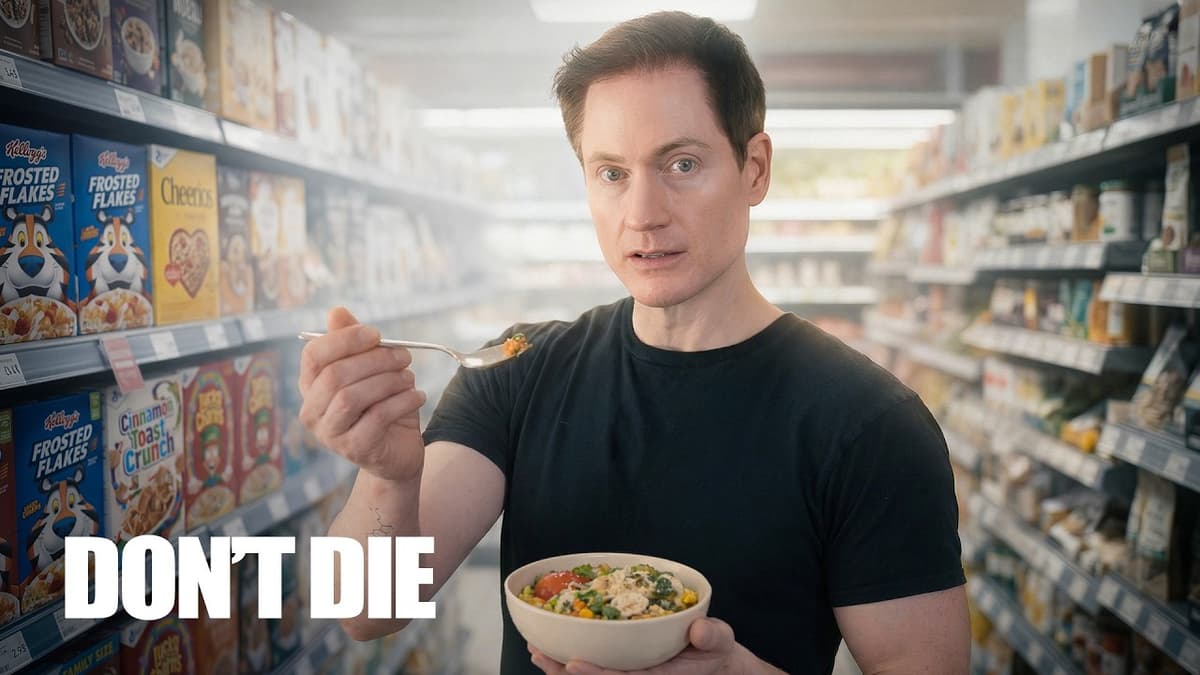
Most Food Is Toxic... So I Fixed It
The video argues that the U.S. food system has become a toxic, ultra‑processed industry that hijacks human biology, and introduces Blueprint, a startup that builds a healthier alternative from the ground up. It points out that engineered combinations of fat, sugar, and salt create addiction‑like cravings, that even CEOs refuse to eat their own products, and that conventional grocery aisles resemble predator‑prey battlegrounds. Blueprint’s approach selects top‑ranked nutrients from scientific literature and assembles them into two core products – “nutty pudding” and “super veggies” – delivering balanced carbs, fats, protein and fiber. The founder demonstrates the meals, noting the use of macadamia milk, hemp and flax seeds, black‑lentil base with garlic, ginger and mushrooms, and eco‑friendly fiber paper trays, while acknowledging the difficulty of finding truly non‑toxic packaging. Testimonials from a mother‑counselor and a son mixing pudding illustrate personal adoption. If Blueprint can scale, it could pressure major manufacturers to reformulate products, offer consumers a transparent, affordable nutrition option, and spark broader regulatory scrutiny of additive‑driven food addiction. Its two‑year track record suggests a viable business model that prioritizes health over profit.

If I only Have Osteopenia, Not Osteoporosis, Am I Okay? No, You're Still at Risk! | Felice Gersh, MD
The video explains that osteopenia, often perceived as a milder condition than osteoporosis, still carries substantial fracture risk, especially for women. Data reveal that 54% of hip fractures in women occur in those with osteopenia, and a recent randomized, placebo‑controlled trial...
Fitness Expert Shares Most Powerful Predictors on Healthspan
The video argues that traditional weight‑centric metrics miss the mark for longevity; instead, grip strength and VO2 max are the most reliable predictors of healthspan and functional independence. Grip strength serves as a proxy for overall muscular power and neuromuscular health,...

Why 65 Is Too Late to Begin Monitoring Bone Health. Start Early! | Felice Gersh, MD
Dr. Felice Gersh likens bone health to personal finance, urging individuals to treat their skeleton as a “savings account” that must be funded early. She explains that the bone‑building window spans puberty through the twenties, with peak bone mass typically...

How Can the Gut Microbiome Affect Menopause Bone Loss?!? | Felice Gersh, MD
The video discusses emerging evidence linking the gut microbiome to bone loss in menopause, highlighting a novel gut‑bone axis. Researchers use ovariectomized mouse models to mimic post‑menopausal estrogen decline. When mice are raised germ‑free—lacking any gut microbes—they fail to experience the...
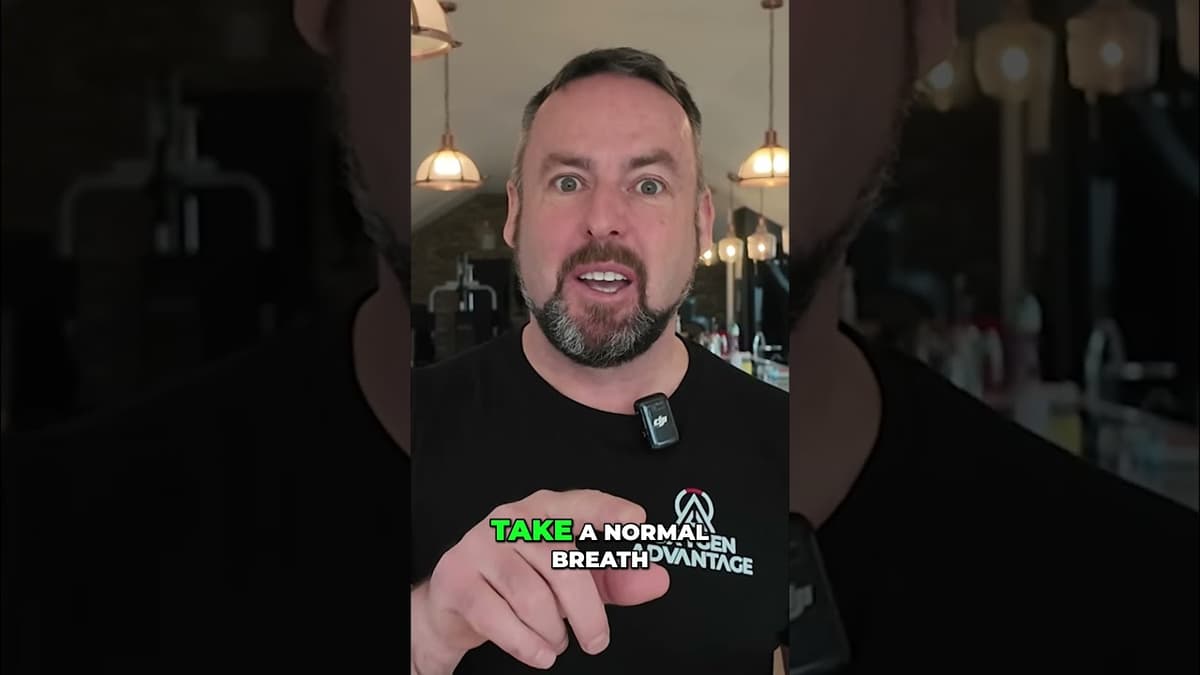
What’s Patrick McKeown’s MBT Score?
The video walks viewers through Patrick McKeown’s Maximum Breathlessness Test (MBT), a simple yet rigorous breathing exercise that quantifies how long a person can hold their breath while walking in place. Each step counts as one pace, and the goal...
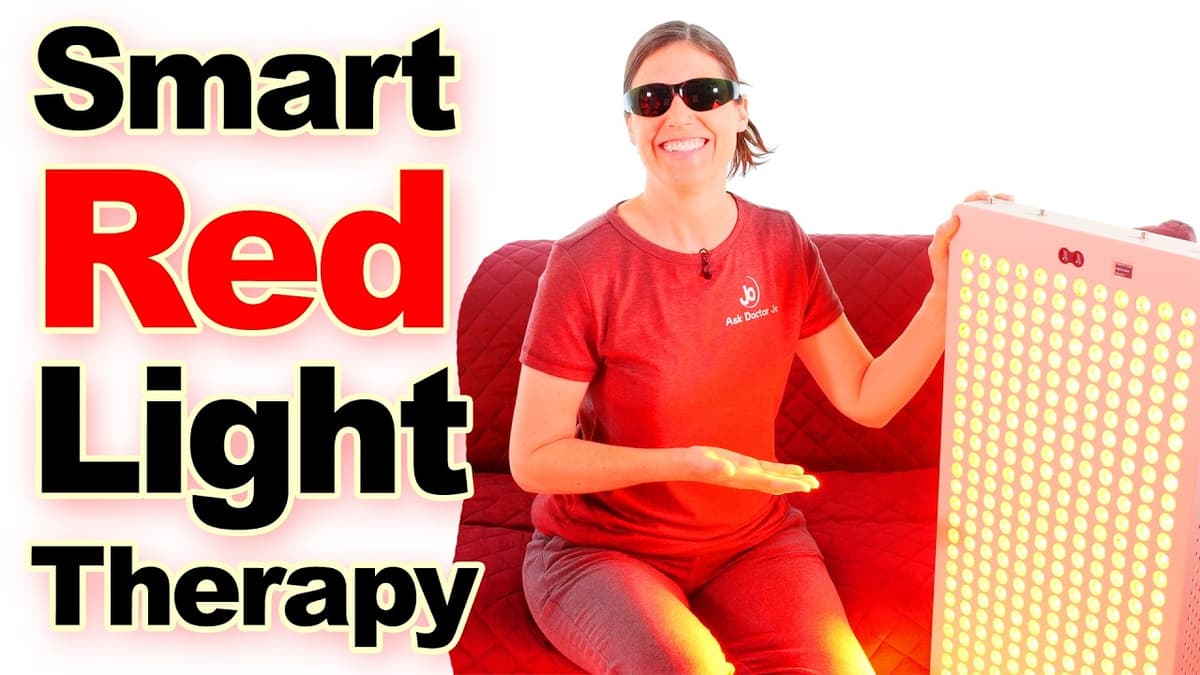
What Is Smart Red Light Therapy? | A Look at the Luxxe Flex
Dr. Jo introduces the Lux Flex, a red‑light therapy panel that straddles the line between consumer‑grade home units and clinical‑grade professional devices. The system combines near‑infrared and red LEDs with smart sensors, positioning it as a turnkey solution for users...
This Stops Hair From Greying (and It Works Fast)
The video delves into the cellular biology behind hair greying, arguing that gray hair is not an inevitable consequence of age but a reversible condition driven by oxidative stress, mitochondrial failure, and stem‑cell depletion within the follicle. It explains how...

Lower Blood Pressure Fast? NIH Study Shows Simple Team-Based Care Works
A new NIH‑funded trial shows that a low‑cost, team‑based care model—combining health coaching, home blood‑pressure monitoring, and care coordination—significantly lowers blood pressure in high‑risk patients. The study reported measurable reductions in systolic pressure and a decline in heart‑attack and stroke...
How to Better Regulate Your Emotions | Dr. Marc Brackett
The conversation between Andrew Huberman and Dr. Marc Brackett centers on redefining emotion regulation. Rather than viewing regulation as suppression, Brackett frames it as cultivating a new relationship with feelings, especially when environmental cues trigger strong reactions. Key insights include the...
This Mindset Shift Unlocks Hidden Athletic Ability | Liz Gleadle
The video features three‑time Olympian Liz Gleadle explaining how a simple mindset shift—treating movement as play and harnessing emotions—can unlock hidden athletic potential. Gleadle argues that pleasure, gratitude, and emotional awareness directly improve biomechanics. She cites a six‑inch mobility gain from...
Metabolic Health Expert: Doing Everything Right But Feel Worse? Fix Your Gut to Fix Your Hormones
The episode centers on how gut health underpins the hormonal upheaval many women experience during perimenopause and menopause, arguing that the “missing link” is often an overlooked microbiome. Host Cynthia and the expert explain that chronic stress, poor sleep, ultra‑processed diets,...
Peptide Expert: The Breakthrough Drugs Big Pharma and the FDA Buried!
The video explores the rapidly evolving peptide landscape, highlighting a controversial new peptide that promises dramatic belly‑fat loss and unprecedented liver‑health benefits. The host and Dr. Alex Tatum discuss how the FDA’s upcoming decision to legalize seven peptides could upend...

Why Sexual Health Is Actually a Life-or-Death Issue with Dr. Juliana Hauser
In this episode of the Better podcast, Dr. Juliana Hauser argues that sexuality is not a luxury but a vital sign that can determine life or death. She frames sexual health as a core component of holistic well‑being, intersecting mental,...
How-To Monitor For Overtraining
The video explains a practical method for spotting overtraining by monitoring session‑specific Rate of Perceived Exertion (RPE). The presenter suggests rating each workout on a 1‑to‑10 scale, where 10 reflects maximal difficulty and 1 indicates a light session that could...
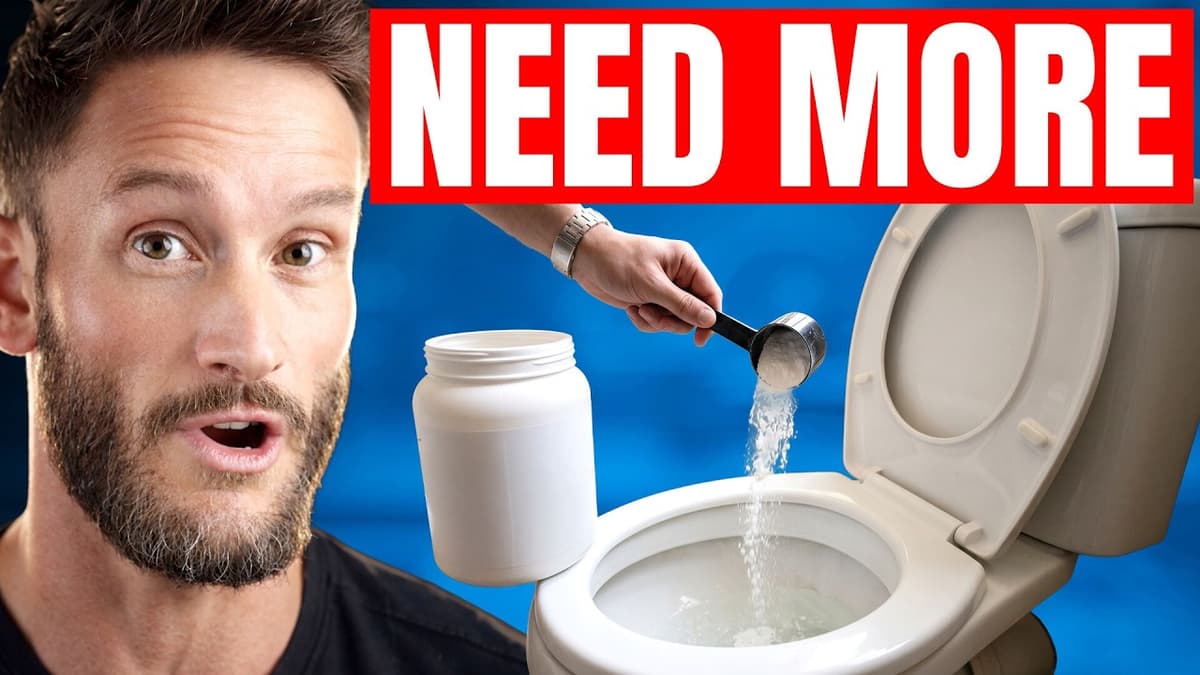
1 Pinch Makes Creatine Absorb 3X Better (Stop Wasting It)
The video explains why many users experience bloating rather than performance gains from creatine: the mineral‑dependent SLC68 transporter that moves creatine into muscle and brain cells requires sodium. Without adequate electrolytes, creatine stays extracellular, causing water retention and limited benefits. Key...
Stress Is Worsening Your Gut Health
The video highlights how chronic stress can aggravate gut integrity, specifically by intensifying leaky‑gut conditions. A recent study comparing high‑stress and low‑stress participants measured blood response to lipopolysaccharide (LPS), a marker that leaks through a compromised intestinal barrier. Results showed that...
Saturated Fat vs Unsaturated Fat: What 82% Drop in Heart Deaths Actually Proves | David Katz
The video examines how different types of dietary fat influence long‑term cardiovascular health, arguing that the total amount of fat matters far less than its quality and source. Katz emphasizes a plant‑centric diet and points out that fats are energy‑dense,...
Can Blood Tests Detect Bone Loss Before a DEXA Scan? | Dr Belinda Beck
The video explores whether blood tests can serve as an early indicator of bone loss before a DEXA scan, with Dr. Belinda Beck explaining the limitations of using serum markers as a surrogate for bone mineral density. Beck outlines the bone...
Your Dopamine Is Broken — How to Rebuild It in 30 Days
The video argues that modern life has "broken" our dopamine system, leaving us dependent on constant, high‑frequency hits from caffeine, social media, and other quick‑reward stimuli. It frames the problem as a 30‑day reset challenge: identify the sources of overstimulation,...
Stop Training Wrong After 40 | Debra Atkinson
The video centers on how women’s exercise needs shift dramatically after the fourth decade of life. As estrogen wanes, the body’s ability to build and retain muscle and bone diminishes, making traditional high‑intensity cardio less effective and sometimes counterproductive. Host...
Cycling Training Q&A: Overtraining, Cardiac Drift, Crit Heart Rate, and Gran Fondo Prep
Fast Talk Labs debuted its new brand in a Fast Talk Podcast episode where hosts Chris Case and Trevor Connor tackled listener questions on overtraining, cardiac drift, crit heart‑rate spikes, and gran fondo preparation. The discussion linked breathing mechanics to carbon‑dioxide...
Why You Wake up at 3AM in Menopause (and How to Fall Back Asleep) | Felice Gersh, MD
Dr. Felice Gersh explains why many menopausal women experience abrupt awakenings around 3 a.m. and offers a step‑by‑step toolkit to restore uninterrupted sleep. She links the phenomenon to erratic estradiol production, which destabilizes the hypothalamic thermostat, causing night sweats, hot flashes,...

The Truth About Magnesium Supplements May Surprise You
Magnesium supplements dominate online health discussions, but the creator stresses that dietary sources remain the optimal strategy. He warns that supplementation should be discussed with a physician, particularly for individuals with kidney disease, before considering pills. The video outlines where magnesium...

The Simplest Breathing Hack for High-Pressure Moments #performance #stressrelief #breathingtechnique
The video introduces a minimalist breathing technique designed to keep the nervous system calm during high‑pressure situations such as presentations or tense meetings. The presenter explains that a soft inhale through the nose followed by a slow, gentle exhale—without counting or...
Doctor Jason Fung Still Doesn't Understand Obesity | What the Fitness | Biolayne
The video critiques Dr. Jason Fung’s assertion that obesity, not overeating, drives excess caloric intake, and his broader carbohydrate‑insulin hypothesis. Fung argues that elevated insulin traps fat in adipocytes, creating a perceived starvation state that spikes hunger hormones. The host counters...
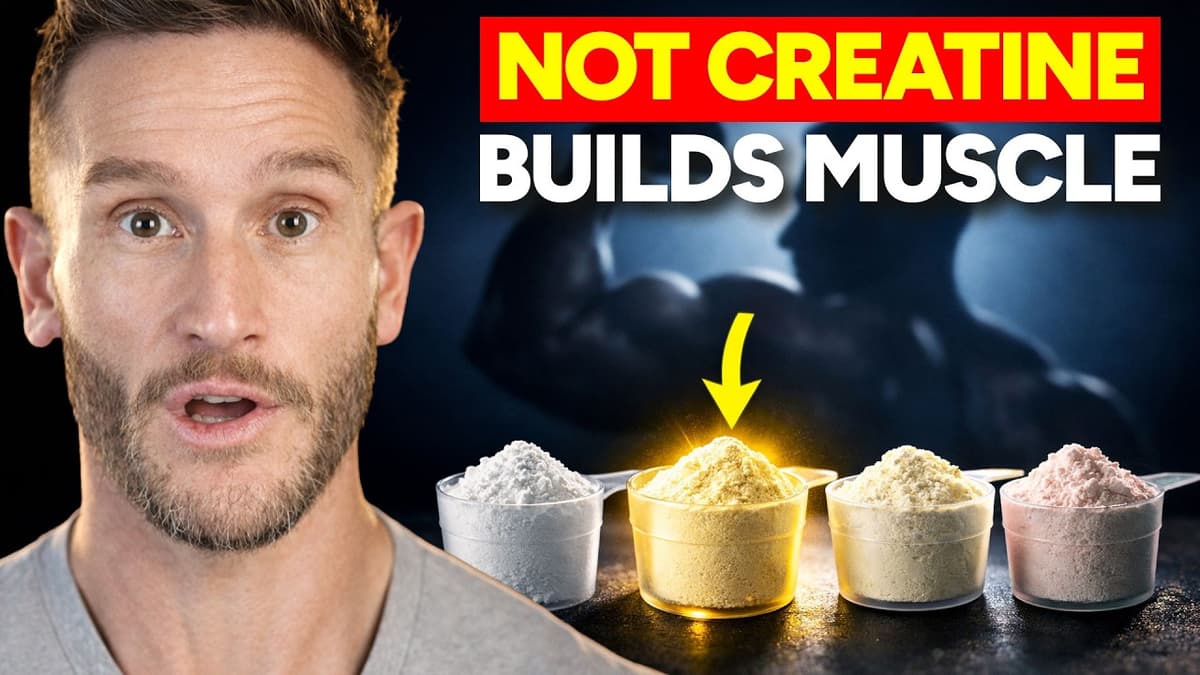
4g of This Powder Builds Muscle LEGALLY Without Steroids
The video outlines a suite of legally available supplements that can accelerate muscle growth without resorting to steroids. It highlights taurine, creatine, whey protein, essential amino acids, beta‑alanine, vitamin D, and HMBB, explaining how each targets one of three levers: training...
Do You Actually Need Probiotics?
The video examines whether probiotics, glutamine, and bovine colostrum can reliably repair leaky gut and alleviate IBS symptoms, contrasting dietary intake with supplemental dosing. A 2023 Frontiers in Immunology meta‑analysis of 26 randomized trials (≈1,800 participants) found probiotic supplementation lowered serum...
Is Fasted Training Actually Bad for Women in Perimenopause? | Dr. Lauren Colenzo-Semple
The video tackles a common dilemma for perimenopausal women: whether exercising on an empty stomach harms performance or hormonal health. Dr. Lauren Colenzo‑Semple explains that, for typical gym sessions, fasted training yields comparable strength and muscle‑gain outcomes to fed workouts,...

$67B Longevity Boom & Big Tech Health Partnerships | Longevity News Roundup — Week 16, 2026
The episode spotlights a rapidly expanding longevity economy, now projected to reach $67 billion by 2035, driven by consumer demand, expanding clinical pipelines, and a surge of venture capital. Hosts Nina Patrick and Phil Newman dissect how the sector now spans...
How Much Spermidine Do You Actually Need — And How to Know If Your Supplement Is Fake
The video explains how much spermidine people actually need, where to obtain it from whole foods, and how to evaluate the credibility of commercial supplements. Typical Western diets deliver roughly 8 mg of spermidine per day, far below the 30‑35 mg range suggested...
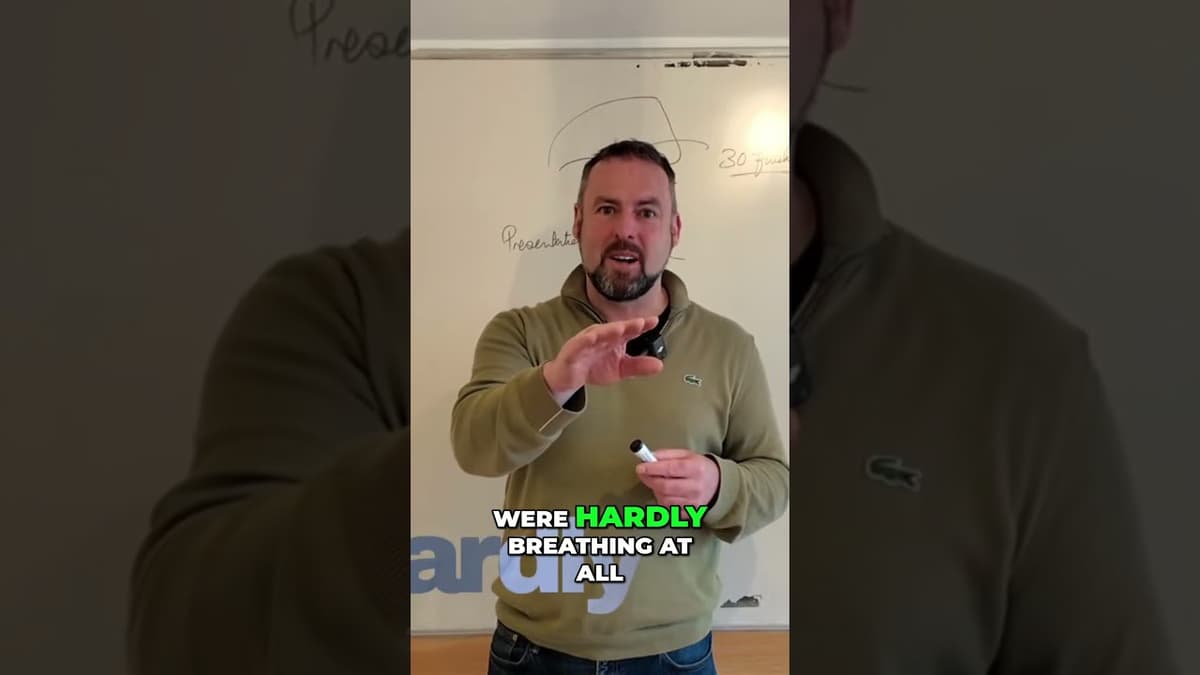
Your Breathing Is Killing Your Circulation #healthtips #breathwork
The video introduces reduced‑volume breathing, also called “breathe light,” a core exercise of the Buteyko method that purposefully limits the amount of air inhaled. By taking a barely perceptible nasal inhale and a slow, relaxed exhale, CO₂ levels rise modestly, which...
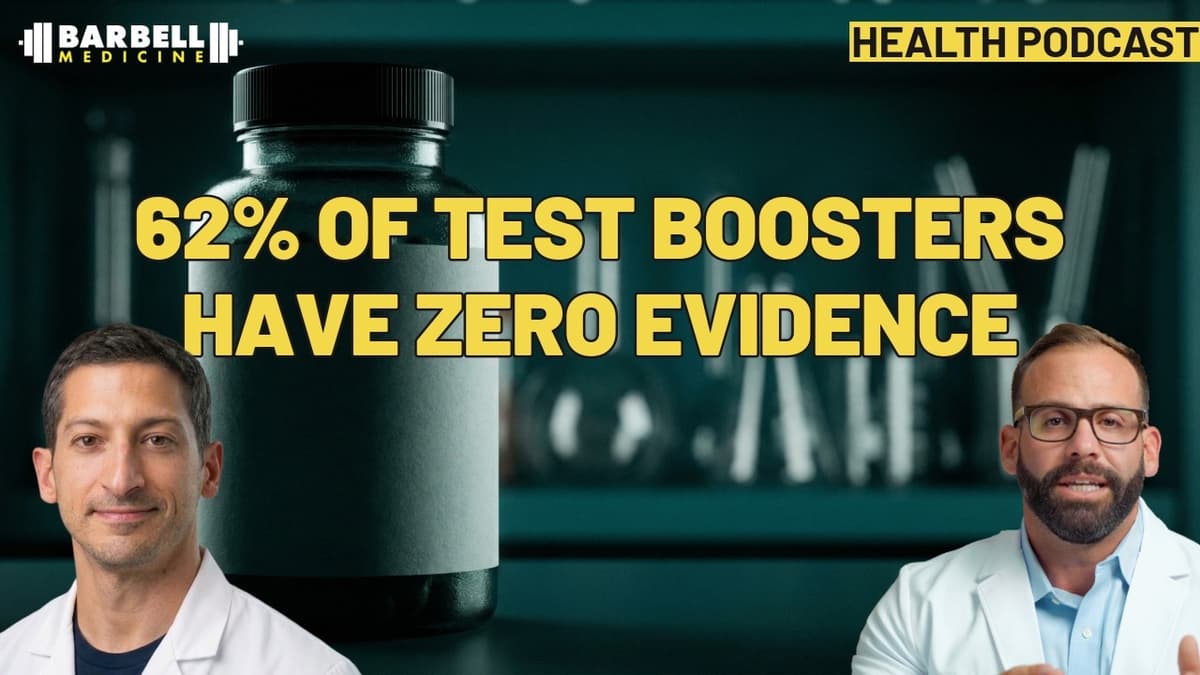
Do Testosterone Boosters Actually Work?
The video scrutinizes the efficacy and safety of over‑the‑counter testosterone boosters, featuring a physician who blends research findings with real‑world clinical anecdotes. A 2018 JAMA analysis revealed that 62% of these supplements have no published data supporting their claims, while 10%...
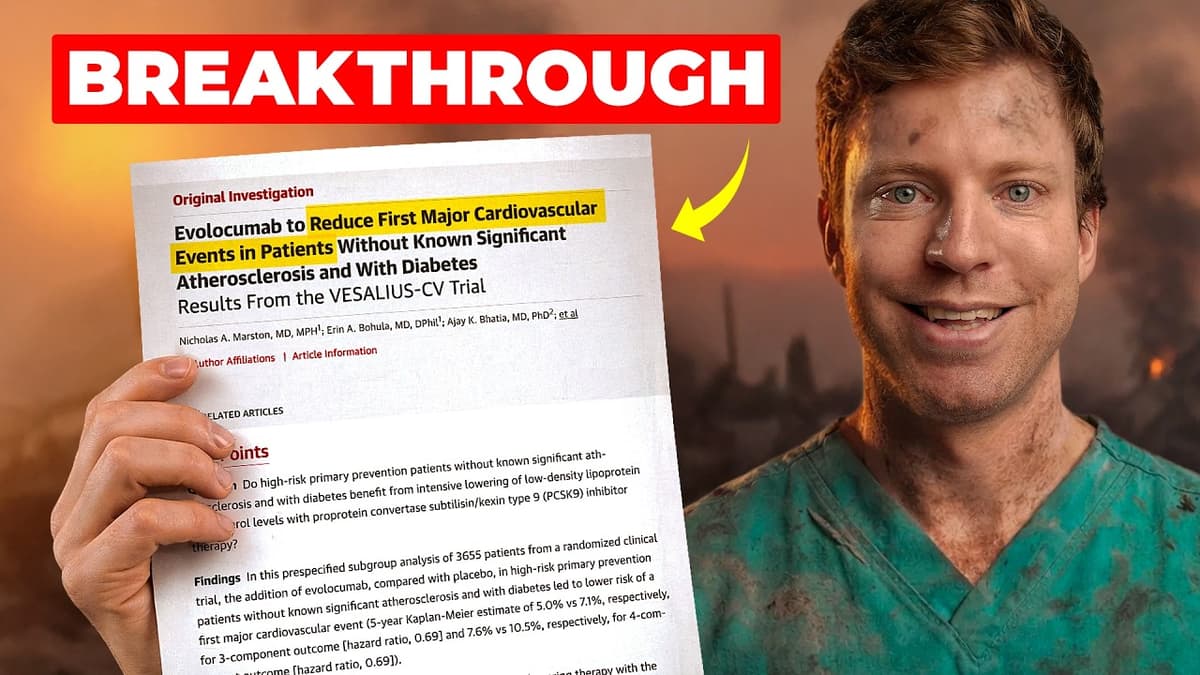
The 60-Year Cholesterol War Is Finally Over
The video chronicles the resolution of a six‑decade debate over cholesterol management, tracing its origins to a 2006 Dallas Heart Study discovery of a woman with an LDL of 14 mg/dL caused by PCSK9 loss‑of‑function mutations. Researchers realized that silencing PCSK9...
This Coffee Hack Melts Abdominal Fat (Journal Intl Society Sports Nutrition Study)
The International Society of Sports Nutrition recently published a study examining how the timing of a 3 mg per kilogram caffeine dose influences maximal fat oxidation. Participants who consumed the dose at 8 a.m. experienced a 10.7% rise in fat‑burning capacity, while...
AI Just Compressed 160 Years of Aging Research — Here's What They Found | Dr. David Sinclair
In a recent interview, Dr. David Sinclair explained how artificial intelligence is reshaping his lab’s quest to reverse human aging. By leveraging AI‑driven virtual screening, his team evaluated roughly eight billion synthetic molecules, seeking a single compound that could replicate the...
Understand & Improve Memory Using Science-Based Tools | Huberman Lab Essentials
In a “Huberman Lab Essentials” recap, neurobiologist Andrew Huberman outlines science‑backed tactics to accelerate memory formation, emphasizing the role of specific neurochemicals rather than mere repetition. He reviews classic rodent studies by James McGaw and Larry Kahle showing that a single...
Your Gut Microbiome Could Be the Source of Colon Cancer | Here’s Why With Dr Emeran Mayer
The video features Dr. Emeran Mayer discussing how the gut microbiome may be a hidden driver of the recent surge in early‑onset colorectal cancer. While widespread screening programs have lowered overall adult incidence, cases are climbing among people in their...
Podcast: Losing Weight with Fiber-Rich Foods
The Nutrition Facts podcast, hosted by Dr. Michael Greger, examines how fiber‑rich foods influence weight management, arguing that a single dietary tweak can raise resting metabolic rate. Observational data—from ecological comparisons of Pima Indians to cohort studies of youth, postpartum women,...
Dr. Tim Spector: Why Eating Clean Makes You More Sensitive to Sugar | EP#412
In the latest episode, epidemiologist Dr. Tim Spector argues that “clean‑eating” labels on natural sweeteners such as honey, maple syrup or agave do not alter the body’s metabolic response compared with refined sucrose. He explains that chemically these sugars are 99 %...

The Spermidine-Rich Risotto You Need to Make This Week
The video walks viewers through a spermidine‑focused culinary plan, centering on a risotto that maximizes this longevity‑linked polyamine. It highlights everyday foods—legumes, mushrooms, whole‑grain wheat, leafy greens, and especially aged cheeses—as primary dietary sources of the whole‑form compound. Key nutritional tactics...
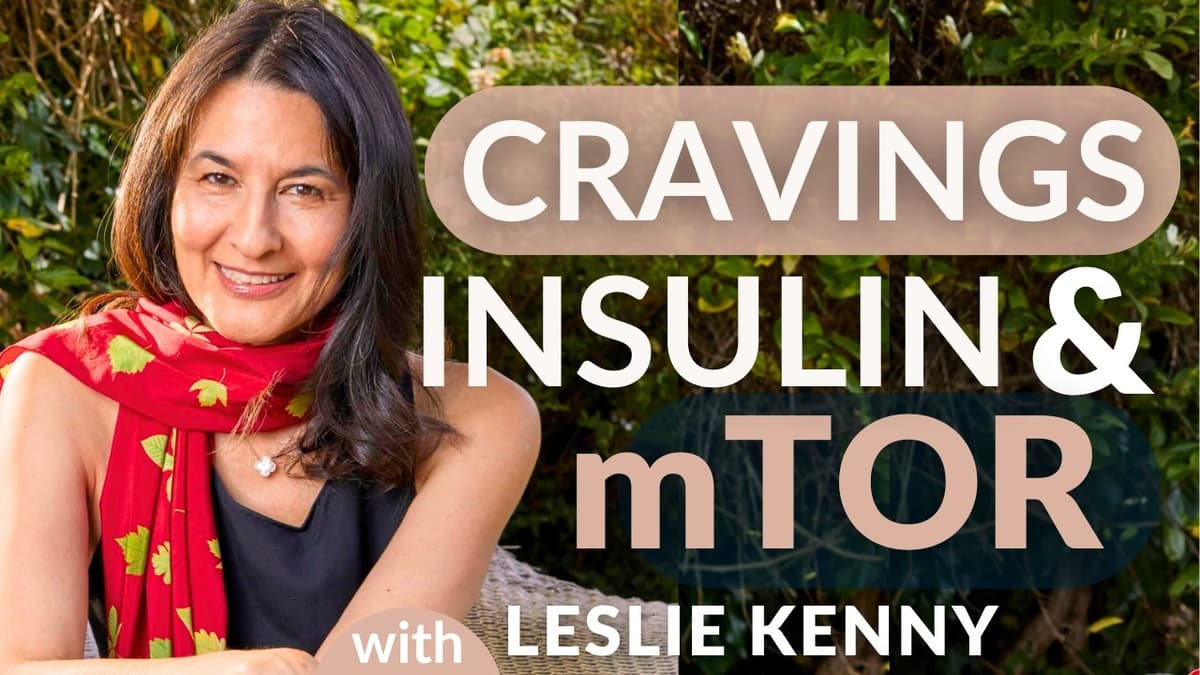
Why You Can't Stop Snacking After 40 — And the Molecule That Fixes It Without Killing Your Muscle
The video explains why snack cravings surge after age 40, linking the phenomenon to age‑related insulin resistance and dysregulated nutrient‑sensing pathways. As insulin responses weaken, blood‑sugar spikes trigger constant hunger, inflammation, and a compulsion to reach for quick carbs. Key insights focus...
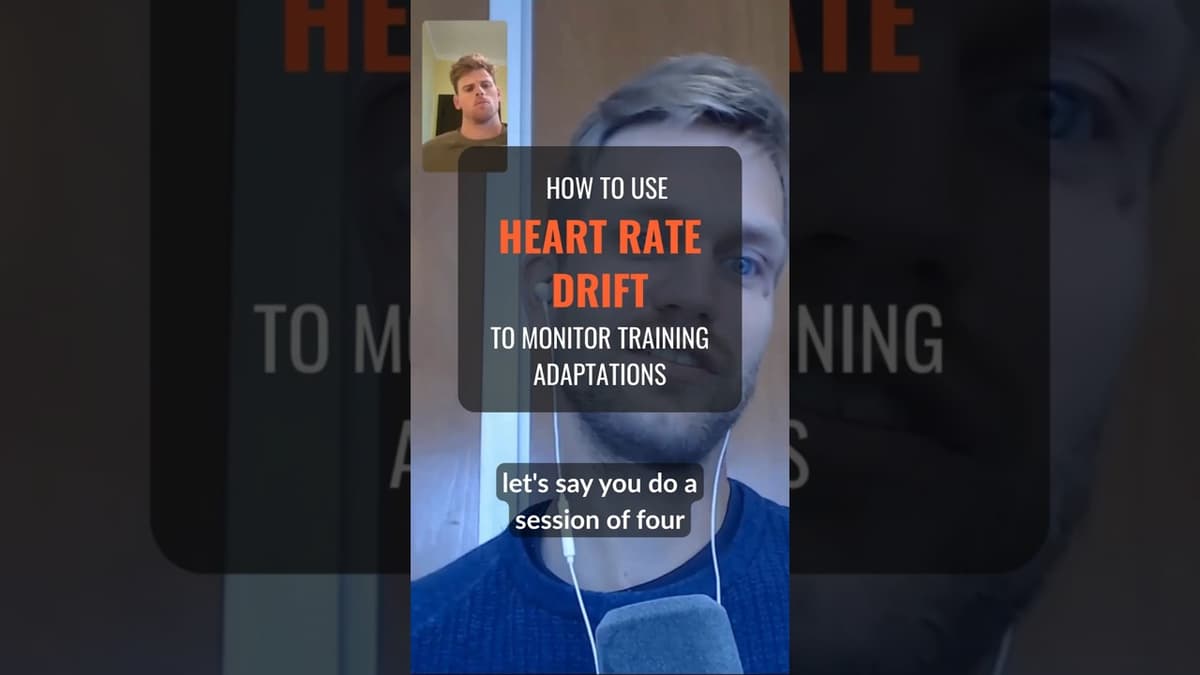
How to Use Heart Rate Drift to Monitor Training Adaptations #triathlon #ironman
The video explains how athletes can use heart‑rate drift during structured workouts to gauge physiological adaptations, a technique especially relevant for triathletes and Ironman competitors. By comparing heart‑rate responses across repeated intervals, riders and runners can detect subtle changes in...
Why Are You Training but Not Seeing the Strength or Recovery You Expect?
The video reframes muscle from a mere aesthetic tool to a metabolically active organ that underpins longevity and overall health. It argues that traditional strength training overlooks the crucial role of muscle energy production. The speaker highlights emerging research showing that...
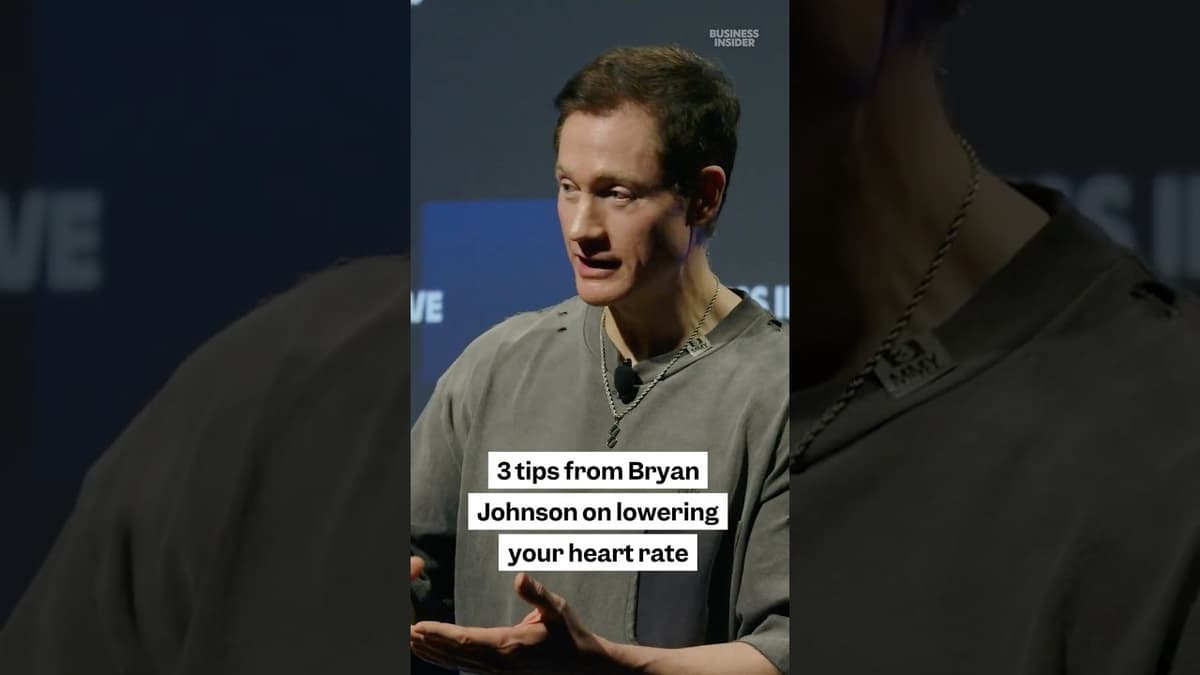
Here Are Three Simple Habits Bryan Johnson Uses to Lower His #heartrate
In a recent video, entrepreneur Bryan Johnson outlines three simple habits he uses to lower his resting heart rate, arguing that a lower rate is the single most important metric for sleep quality, willpower and overall health. He recommends finishing the...

Support Your Nervous System Through Your Gut
The video explains that chronic stress does more than elevate cortisol—it reshapes the gut microbiome, creating a feedback loop that constantly signals threat to the brain via the vagus nerve. This gut‑brain axis can keep the nervous system locked in...
They Were WRONG About Melatonin (Neuroscientist Proves It)
The video challenges common myths about melatonin, arguing that long‑term supplementation does not create physical dependence or withdrawal symptoms. A neuroscientist with three decades of personal and research experience explains how melatonin functions as a small molecule hormone that readily...
Do Carbs Build Muscle? | Educational Video | Biolayne
The video reviews a newly published meta‑analysis examining carbohydrate intake, resistance training, and muscle hypertrophy. Researchers compared studies that kept protein constant while varying carbs, using objective muscle‑mass measures such as DEXA, MRI, and ultrasound. The analysis concluded that carbohydrate consumption...

Dr. Karan: The "Sticky Matrix" Protecting Your Gut
In the video, Dr. Karan explains how certain soluble fibers may act as a “sticky matrix” that captures micro‑plastics in the gastrointestinal tract. He notes that beta‑glucans found in oats or psyllium husk bind bile acids, cholesterol and micro‑plastic particles, forming...
Why Womens Heart Disease Rises After 40 | Dr. Christopher Davis
The video examines why women’s heart disease incidence spikes after age 40, highlighting microvascular disease that eludes standard angiograms, hormonal shifts during the menopause transition, and lifestyle factors that together elevate cardiovascular risk. Dr. Davis explains that declining estrogen reduces arterial...