
Antioxidant Nanoparticles May Protect Male Fertility During Chemotherapy
A preclinical study published in Reproductive and Developmental Medicine found that combining melatonin with zinc oxide nanoparticles mitigates cyclophosphamide‑induced reproductive toxicity in male rats. The antioxidant duo restored testosterone and luteinizing hormone levels, lowered oxidative stress markers, and preserved spermatogenic cell populations. Researchers administered the treatments weekly for eight weeks across six experimental groups, demonstrating that the combined formulation outperformed either agent alone. The findings suggest a promising strategy to protect male fertility during chemotherapy, pending human trials.

UV Red Flag: Color-Changing ‘Living’ Material Warns of Harmful Radiation
Researchers at the Technical University of Munich have created a bio‑hybrid coating that visibly signals UV‑A exposure by turning from green to red. The sensor embeds dry Escherichia coli cells loaded with the photoconvertible protein mEosFP, which undergoes an irreversible...

Genentech’s Fenebrutinib Yields Positive Results in Phase III MS Trial
Genentech’s oral BTK inhibitor fenebrutinib met its primary endpoint in the Phase III FENtrepid trial for primary progressive multiple sclerosis, showing non‑inferiority to Ocrevus and a 12% risk reduction in confirmed disability progression. The drug also delivered a 26% lower risk...
Anti-Aging Gene Therapy in Alzheimer’s and ALS with Klotho Neurosciences’ Dr. Joseph Sinkule — Episode 243
The Xtalks Life Science Podcast featured Joseph Sinkule, CEO of Klotho Neurosciences, discussing the company’s secreted α‑Klotho gene therapy platform aimed at age‑related neurodegenerative diseases such as Alzheimer’s, ALS and Parkinson’s. Klotho leverages a patented anti‑aging gene to develop cell‑ and...

Reduced APOE Expression Improves Bone Regeneration in Aged Mice
Researchers discovered that elevated circulating APOE in older mice suppresses bone regeneration by inhibiting osteoblast differentiation. Liver‑specific knockout of APOE or a single dose of a neutralizing antibody lowered serum APOE, restored Wnt/β‑catenin signaling, and markedly improved fracture callus density...

Aceclidine
Aceclidine (Vizz®) received FDA approval in 2025 as an ophthalmic solution for presbyopia, targeting age‑related near‑vision loss. The drug acts as a pupil‑selective muscarinic agonist, inducing miosis without significant ciliary muscle activity, thereby enhancing depth of focus through a pinhole...

Global Conference to Tackle Longevity Clinical Translation
The National University of Singapore Academy for Healthy Longevity is hosting the Geromedicine Conference on February 26-27, 2026, bringing together geroscience researchers, clinicians, and industry leaders. The event emphasizes clinical translation of molecules such as NAD+ precursors, urolithin A, and ergothioneine,...

How Does Cholera Colonize the Gut? Unmasking Virulence Activation with Cryo-EM
Cryogenic electron microscopy enabled researchers to solve five structures of Vibrio cholerae transcription activation complexes, revealing how the bacterium initiates virulence in the human gut. The study shows ToxR and TcpP transcription factors bind the RNA polymerase α‑C‑terminal domain via...

Global Genomics: Representative Research Is Key to Unlocking the Full Potential of Precision Medicine
Professor Segun Fatumo highlights the stark under‑representation of African genomes in global research, where over 86% of GWAS participants are of European ancestry despite Africa housing the greatest genetic diversity. He explains how this gap limits the accuracy of polygenic...
IRF7 Expression Drives Instability in Atherosclerotic Plaques
Researchers identified interferon regulatory factor 7 (IRF7) as a master transcriptional driver that pushes vascular smooth muscle cells (SMCs) into a pro‑inflammatory, macrophage‑like state, a key step in plaque destabilisation. Single‑cell RNA sequencing and trajectory analysis uncovered an intermediate stem‑endothelial‑monocyte...

The Biotech Bi-Weekly: A 48-Channel SPR Platform, Robust RNA-Seq Libraries and Microgravitational Discoveries
Carterra unveiled Vega, the industry’s first 48‑channel high‑throughput SPR platform, delivering roughly 12‑fold higher screening capacity for small‑ and large‑molecule drug candidates. Covaris introduced the truCOVER® Total RNA Library Prep Kit, enabling robust RNA‑seq libraries from as little as 10 ng...

Nanoparticle-Based Gene Editing Could Expand Treatment Options for Cystic Fibrosis
UCLA researchers have engineered lipid nanoparticles to co‑deliver CRISPR/Cas9 components and a full‑length CFTR gene, achieving precise, mutation‑agnostic insertion in human airway cells. The non‑viral system corrected 3‑4% of cells yet restored up to 100% of normal chloride channel function,...
Injectable Nanocomposite Hemostat Speeds Blood Clotting for Trauma Care
Researchers at Texas A&M have created injectable nanocomposite hemostats that cut blood clotting time from six‑seven minutes to one‑two minutes, slashing bleeding duration by up to 70% in internal hemorrhage models. The devices combine clay‑derived nanosilicates with a shape‑memory foam...

What the Folinic Acid Retraction Means for Autism Treatment
The European Journal of Pediatrics retracted the 2024 randomized trial that claimed folinic acid reduced autism symptoms, citing data that did not support its conclusions. The study had been the largest of its kind, influencing clinical recommendations and regulatory guidance....

Key Obstacle to Integrated Bioelectronic Implants Removed with Use of Solid-State Hydrogel
Swedish researchers have created a photo‑patternable solid‑state hydrogel electrolyte using i‑carrageenan and PEGDA, achieving ionic conductivity above 10 mS cm⁻¹ and feature sizes down to 15 µm. The material replaces liquid electrolytes in organic electrochemical transistors (OECTs), enabling fast, dense, and flexible circuits...

The Aging of Retinal Vasculature Reflects the Aging of the Brain
Researchers used UK Biobank data to map vascular phenotypes across the retina, carotid artery, aorta, and brain, revealing consistent cross‑organ correlations. Retinal vascular density showed modest but significant negative links with white‑matter hyperintensities, carotid intima‑media thickness, and aortic lumen size,...

The Payload Paradox: Why the Obsession with Potency May Be Holding the ADC Field Back
A European biotech is challenging the ADC status quo by prioritising novel targets and payloads over sheer potency. In an interview, the company’s CSO argues that the industry’s obsession with ultra‑potent cytotoxins like MMAE and DM1 is stalling progress, creating...

Safer CNS Drugs with BrainOnly Pharmacology
The article outlines a growing strategy to develop central nervous system (CNS) therapeutics that remain pharmacologically active only within the brain, termed "BrainOnly" pharmacology. By leveraging selective transport mechanisms, pro‑drug designs, and peripheral clearance pathways, researchers aim to minimize off‑target...

Free Access to Single-Cell Long-Read mRNA Sequencing Tech with New Grant
ArgenTag, now a PacBio Compatible Partner, has launched a grant that provides free access to its Single‑Cell RNA Library Kit for Long‑Read Sequencing. The kit uses a gravity‑based microfluidic chip to isolate individual cells, capture full‑length mRNA, and prepare barcoded...

Rare Disease Month Developments, Part 1 – The Good: RPD PRV Program Renewed, FDA Rare Disease Hub’s 2026 Strategic Agenda...
Congress renewed the Rare Pediatric Disease Priority Review Voucher (RPD PRV) program, extending it to September 30 2029 and eliminating the dual sunset dates. The FDA released its Rare Disease Innovation Hub’s 2026 Strategic Agenda, allocating $1 million in funding and outlining plans...

MRNA-Packed Nanoparticles Restore Fertility in Genetically Infertile Mice and Produce Live Offspring
Researchers at Shanghai Jiao Tong University engineered a lipid nanoparticle (LNP) formulation that delivers therapeutic mRNA directly to spermatocytes in mice. By injecting mRNA encoding the wild‑type Msh5 gene, they transiently restored meiosis in mice with a genetic block, achieving...
People Are Still Working on the Senolytic Peptide FOXO4-DRI
FOXO4‑DRI, a peptide that blocks the FOXO4‑p53 interaction, continues to be explored as a senolytic therapy. Recent preclinical work shows that injecting the peptide into aged and progeroid mice reduces endothelial cell senescence and improves aortic function. Companies such as...

Silencing Growth Hormone Has Strong Effects in Mouse Brains
Researchers engineered mice lacking growth hormone receptors specifically in adipose tissue (Ad‑GHRKO) and observed striking brain benefits in aged males. Compared with control mice, the Ad‑GHRKO group showed increased neuronal activity, reduced neuroinflammation, lower tau phosphorylation, and fewer senescence markers....
3D Fragments vs the Histamine H1 Receptor
Researchers at Vrije Universiteit Amsterdam built an 80‑compound, three‑dimensional fragment library and screened it against the histamine H1 receptor. Only one fragment (1a) showed activity, but iterative optimization yielded the low‑nanomolar antagonist VUF26691 with picomolar cellular potency. The campaign required...

Making a MASH Hit: PNPLA3 and the Rise of Genotype-Driven Therapies
The lipid serine hydrolase PNPLA3, especially its I148M mutant, has emerged as a genetically validated driver of MASLD/MASH, prompting a wave of genotype‑focused drug programs. RNA‑based modalities—Arrowhead’s GalNAc‑siRNA ARO‑PNPLA3 and AstraZeneca/Ionis’ GalNAc‑ASO AZD2693—are in clinical trials aiming to lower mutant...

Increased O-GlcNAc Transferase Expression as an Approach to Improving Function in the Aging Brain
Age‑related decline in O‑GlcNAc Transferase (OGT) activity contributes to neurodegenerative disorders such as Alzheimer’s, Parkinson’s and ALS. Traditional approaches aim to raise O‑GlcNAc levels by inhibiting O‑GlcNAcase, but recent research highlights transcriptional control of OGT as a more direct therapeutic...

Inflammatory Glycogen Produced by Gut Microbes Contributes to Neurodegeneration
Researchers have identified inflammatory glycogen produced by gut microbes as a driver of age‑related neurodegeneration, especially in ALS and frontotemporal dementia linked to C9ORF72 mutations. In germ‑free mice lacking C9ORF72, colonization with glycogen‑producing Parabacteroides merdae triggered monocytosis, blood‑brain barrier breakdown,...
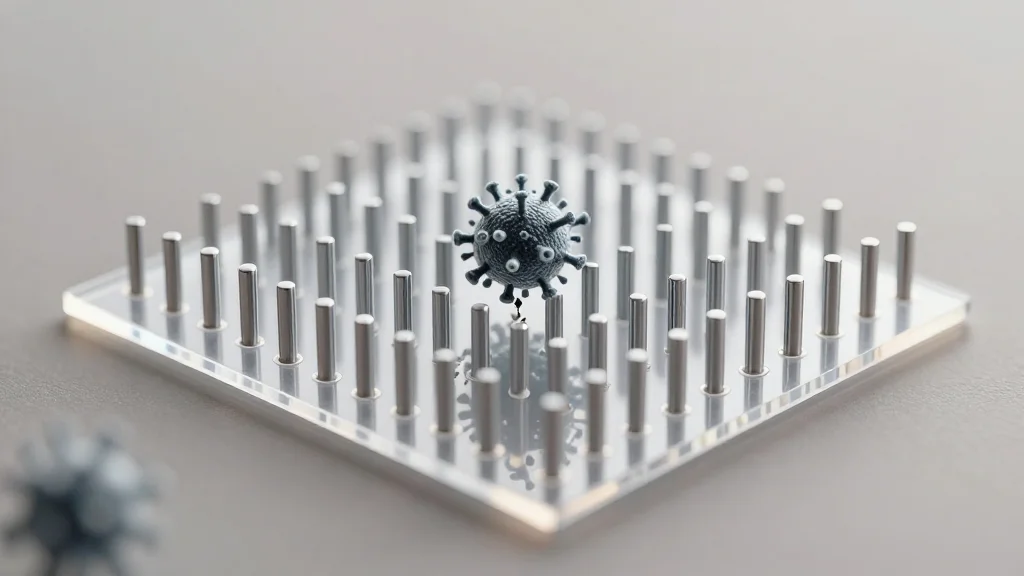
Nanopillar-Studded Plastic Films Physically Destroy Viruses, Cutting Infectivity by 94% without Chemicals
Researchers at RMIT and international partners engineered flexible acrylic films stamped with dense nanopillar arrays using ultraviolet nano‑imprint lithography. The 60 nm pitch configuration reduced human parainfluenza virus type 3 infectivity by up to 94 % within one hour, achieving mechanical rupture of...

DNA Nanomachine Inside Living Cells Measures How Aggressive a Cancer Is
Researchers at Wenzhou and Fuzhou Universities unveiled a three‑wheel DNA nanomachine (TW‑harvester) that rides a gold‑nanoparticle track inside living tumor cells. The device uses a DNA tetrahedron with an aptamer targeting nucleolin and miR‑21‑triggered wheel activation to cleave fluorescent substrates,...
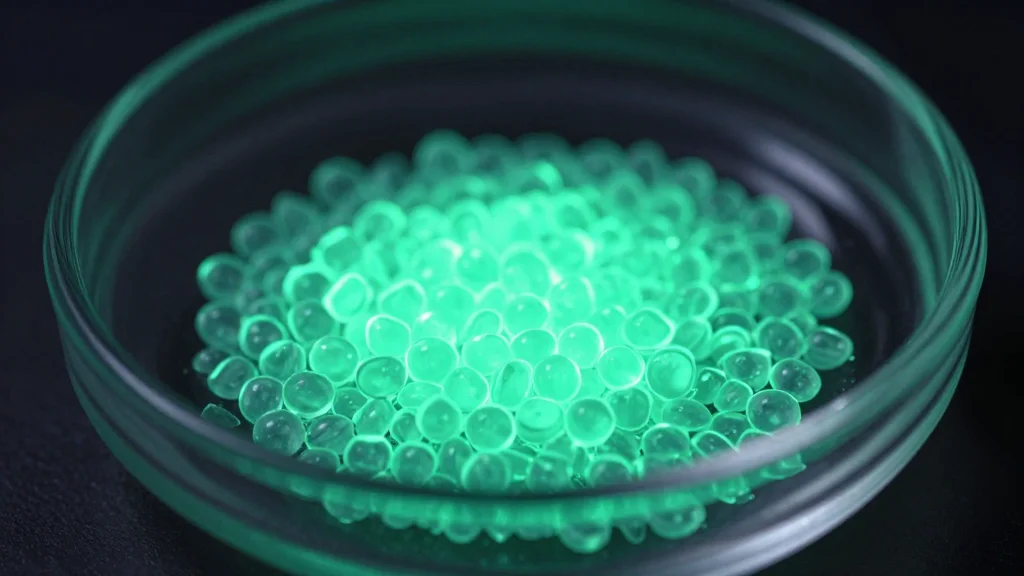
New Fluorescence Strategy Could Enable Real-Time Tracking of Microplastics Inside Living Organisms
Researchers have devised a fluorescence‑monomer synthesis that embeds light‑emitting units directly into microplastic polymers, allowing stable, real‑time imaging of particles inside living organisms. Current detection methods provide only static snapshots and require destructive sampling, limiting insight into particle transport, transformation,...

Longevity Innovation Forum in San Diego
Longevity Global is launching the inaugural Longevity Innovation Forum in San Diego on March 11‑12, 2026, gathering leading scientists, clinicians, biotech founders and investors to accelerate healthy‑aging research. The two‑day summit features high‑profile speakers such as Mike Snyder, Eric Verdin,...

Cellular Reprogramming Rescues Memory-Encoding Neurons
Scientists at EPFL applied a three‑factor (OSK) partial reprogramming cocktail to memory‑encoding engram neurons in 9‑10‑month‑old mice and Alzheimer’s‑model strains. Using a dual‑AAV system gated by doxycycline, OSK expression was limited to neurons active during a learning event, preserving cell...

The FDA: Promoting Quack Nostrums Based on “Incredible Stories” While Rejecting Vaccines Despite Successful RCTs
The U.S. FDA declined to review Moderna's mRNA influenza vaccine, even though two phase‑3 trials involving 43,800 participants demonstrated a 27% efficacy advantage over the standard Fluarix vaccine and a 49% reduction in hospitalizations. FDA officials cited the comparator arm...

Organoids and Artificial Intelligence 🫐
The episode explores the rapid convergence of organoid technology and artificial intelligence, highlighting how AI-driven image analysis, multidimensional data integration, and high‑throughput screening are transforming organoid research. It introduces the emerging field of Organoid Intelligence, where brain organoids act as...

Creating CAR-T Cells Using Current Alzheimer’s Antibodies
Researchers engineered CD4+ T cells with chimeric antigen receptors (CARs) derived from FDA‑approved Alzheimer’s antibodies aducanumab and lecanemab. The lecanemab‑based CAR (Lec28z) selectively bound fibrillar amyloid‑beta and reduced plaque burden in mouse brains, especially when delivered via transient mRNA transfection....

FDA OKs Risky, Pioneering OSK Rejuvenation Trial with Sinclair’s ER-100
The U.S. Food and Drug Administration has cleared an investigational new drug application for Life Biosciences' ER‑100, a viral gene‑therapy that delivers inducible Oct‑4, Sox‑2 and Klf‑4 (OSK) to the eye. The first‑in‑human trial will enroll a small cohort of...

Young Microbes Rejuvenate Intestinal Function in Mice
Researchers performed heterochronic fecal microbiota transplants, moving gut microbes from young to aged mice, which reactivated canonical Wnt signaling and enhanced intestinal stem cell regeneration. Aged mice receiving young microbiota showed increased expression of Wnt3, Ascl2, Lgr5 and improved epithelial...
A Reinvigorated Alcor and Growth in Cryonics
The post highlights Alcor’s recent surge in funding and operational upgrades, marking a turning point for the cryonics sector. New initiatives include the first in‑house whole‑body CT scan for real‑time vitrification assessment, improved organ‑preservation protocols, and pioneering brain‑slice culture experiments....

After T-DXd: Target, Payload, or Something Else?
The article examines the split debate over trastuzumab deruxtecan (T‑DXd) resistance, questioning whether the drug’s payload has failed or the tumor has lost HER2 engagement. Both mechanisms are supported by data, and the true challenge lies in identifying which drives...

Vimseltinib
Deciphera Pharmaceuticals received FDA approval for vimseltinib, an oral, selective CSF1R kinase inhibitor, to treat tenosynovial giant cell tumor (TGCT). The drug emerged from structure‑based drug design (SBDD) and extensive SAR optimization, as reported in Bioorganic & Medicinal Chemistry Letters...
BDNF Gene Therapy Improves Cognitive Function in Alzheimer's Model Mice
Researchers engineered a novel adeno‑associated virus serotype, AAVT42, that shows superior neuronal tropism compared with AAV9. By stereotactically injecting AAVT42‑delivered BDNF into the hippocampus of three Alzheimer’s disease mouse models, they achieved long‑term BDNF expression. This intervention mitigated neuronal loss...
A Technique for Generating Artificial Lymph Nodes
Researchers have introduced a centrifuge‑based bioengineered lymphatic tissue (CeLyT) that merges lymphatic endothelial cells (LECs) with mesenchymal stem/stromal cells (MSCs) using an additive‑free cell‑stacking method. The construct self‑assembles a functional lymphatic network in culture and, after implantation in mice, generates...
Novel Microfluidic Method Improves Nanoparticle Separation Accuracy
University of Oulu researchers unveiled a microfluidic technique that merges electrophoretic slip and viscoelastic forces to separate sub‑micron particles. The approach raises the purity of synthetic polystyrene beads by 30‑50% and improves cancer‑cell vesicle purity by over 20%. Unlike conventional...