
DNSSEC Changes Are Coming. MSPs Should Check Customer Readiness Now
ICANN will introduce a new DNSSEC root trust anchor (KSK‑2024) with a rollover slated for October 2026, forcing validating resolvers to update their trust anchors or face SERVFAIL errors. While the root and most TLDs are signed, over 80% of individual domains remain unsigned, leaving them vulnerable to cache poisoning and spoofing. The transition adds operational risk, requiring automated key management, monitoring, and clear runbooks. Managed service providers (MSPs) can differentiate by helping customers inventory zones, validate resolver readiness, and automate DNSSEC lifecycle tasks.

State CIOs Are More Change Leaders than Techies, Report Says
State chief information officers are transitioning from pure technologists to executive change leaders, according to NASCIO’s new report. The role now blends reliable operations with a mandate to drive digital transformation, modernization, and strategic alignment across state agencies. This shift...

People Moves: Society Insurance Names Kohli as VP of Information Technology
Society Insurance announced the appointment of Kshitij Kohli as Vice President of Information Technology. In his new role, Kohli will direct the company’s technology strategy, core systems, infrastructure, cybersecurity, and investment decisions. He arrives from Church Mutual Insurance, where he served...

Google Update: Android Flaw Could Put Billions of Devices at Risk
Google disclosed a critical remote‑code‑execution bug (CVE‑2026‑0073) in Android’s adbd daemon that can be triggered without any user interaction, affecting Android 14 through 16‑QPR2 and potentially billions of devices. The flaw is proximal, meaning attackers only need network or physical...

Oracle Will Patch More Often to Counter AI Cybersecurity Threat
Oracle announced it will move from quarterly to monthly security patch cycles for its ERP, database and other software, beginning May 28, 2026. The first Critical Security Patch Update (CSPU) will be released on the fourth Thursday of May, with subsequent patches...

AI Is Saving Pharma Billions in Manufacturing and Back-Office Work, Just Not in the Lab
Eli Lilly’s digital chief says AI is delivering cost savings across pharma, but not in drug discovery where expectations were highest. The company’s AI‑driven digital twin of tirzepatide manufacturing cut production time and lifted output, echoing similar back‑office efficiencies at...

OpenGov Expands AI-Native Platform to Unify ERP, HCM, and Public Sector Operations
OpenGov announced a major upgrade to its Public Service Platform, merging its ERP system with human capital management (HCM) on a single data foundation. The AI‑native suite now includes OG Assist, an embedded assistant that guides users through tasks, data...

CISA Urges Critical Infrastructure Firms to ‘Fortify’ Before It’s Too Late
The Cybersecurity and Infrastructure Security Agency (CISA) released new guidance under its international “CI Fortify” initiative to help critical infrastructure operators isolate and recover from cyber intrusions. The advice, modeled on Australian 2025 guidance, stresses preparing for unreliable third‑party connections...

Stealthy Malware Abuses Microsoft Phone Link to Siphon SMS OTPs From Enterprise PCs
Security researchers at Cisco Talos have uncovered a new malware campaign that leverages Microsoft’s Phone Link (formerly Your Phone) to intercept SMS‑based one‑time passwords from enterprise Windows PCs. The remote‑access trojan, dubbed CloudZ, works with a custom Pheno plugin to...

General Mills Adds Transformation to Tech Chief’s Remit
General Mills has expanded chief digital and technology officer Jaime Montemayor’s role to include transformation, making him chief digital, technology and transformation officer. The change supports a three‑year transformation effort that aims to deliver $600 million in FY2026 savings through AI‑driven...

Build Fast, Pay Your Way: Washington’s AI Infrastructure Doctrine
In early 2026 Washington re‑defined data‑center projects as strategic AI infrastructure, pairing fast‑track permitting and federal land access with strict cost‑allocation rules. The Ratepayer Protection Pledge obligates Amazon, Google, Microsoft, Meta, OpenAI, Oracle and xAI to finance new generation and...

Scalable IT Infrastructure: Balancing Speed with Stability
Rapid digital transformation is outpacing architectural governance, causing fragmented, fragile IT ecosystems. Leaders must adopt deliberate, modular frameworks that emphasize reuse and interoperability to keep pace with innovation while preserving stability. Visibility tools such as automated dependency mapping and regular...

Microsoft, Google Push AI Agent Governance Into Enterprise IT Mainstream
Microsoft and Google have launched enterprise‑focused AI governance tools—Microsoft’s Agent 365, now generally available, and Google’s AI Control Center for Workspace. Both solutions let IT and security teams discover, monitor, and secure AI agents that operate across SaaS, cloud, and...

New Data Center Developments: May 2026
Aligned Data Centers announced Project Caprock, a 540 MW, 313‑acre data‑center campus in Hale County, Texas, slated for first delivery in Q1 2027 and projected to generate about $5 billion in economic impact. The rollout comes amid a wave of regulatory changes in the...
Digital Twins Are only as Good as the Pipes that Feed Them
Digital twins are gaining traction across manufacturing, healthcare, logistics and energy by providing real‑time virtual replicas of physical assets. Their value hinges on a continuous, high‑speed flow of sensor data that keeps the virtual model synchronized with reality. However, without...

Your Architecture Is the Ceiling on Your AI Strategy. Here’s How to Raise It in 90 Days
In April 2026 Vercel disclosed a breach in which a third‑party AI productivity tool, granted full access via a corporate Google account, was compromised and used to steal a customer database later listed for $2 million. The incident highlighted an architectural...

IBM Pursues Enterprise AI With Agents for Hybrid Cloud, Mainframes
IBM announced a suite of enterprise‑AI offerings at its Think 2026 conference, including the BM Bob development package for mainframes, new capabilities for Watsonx Orchestrate, and the general availability of IBM Sovereign Core. The updates target hybrid and regulated environments, stressing that...

SAP Buys Dremio, Prior Labs for AI Data Push
SAP announced two strategic acquisitions to strengthen its enterprise‑AI data infrastructure. It will buy Dremio, a data‑lakehouse platform, to augment the SAP Business Data Cloud and HANA Cloud with real‑time, non‑SAP data processing. SAP also secured Prior Labs, a startup...

Tech Roles Expand in the C-Suite Amid Questions About AI Value
Deloitte’s 2026 Global Tech Leadership Study finds that more than three‑quarters of tech executives now prioritize delivering measurable enterprise value over merely managing technology. The proportion of organizations with five or more tech‑focused C‑suite leaders has risen to 71%, reflecting...

Nueva Network CEO, CIO To Exit Following MLC Moves
José Villafañe, founder and CEO of Nueva Network, announced his exit after selling his 65% stake to Carlos Moncada, who now holds full ownership. Chief Information Officer René Alegría is also leaving, and several advertising sales executives are departing. Villafañe...
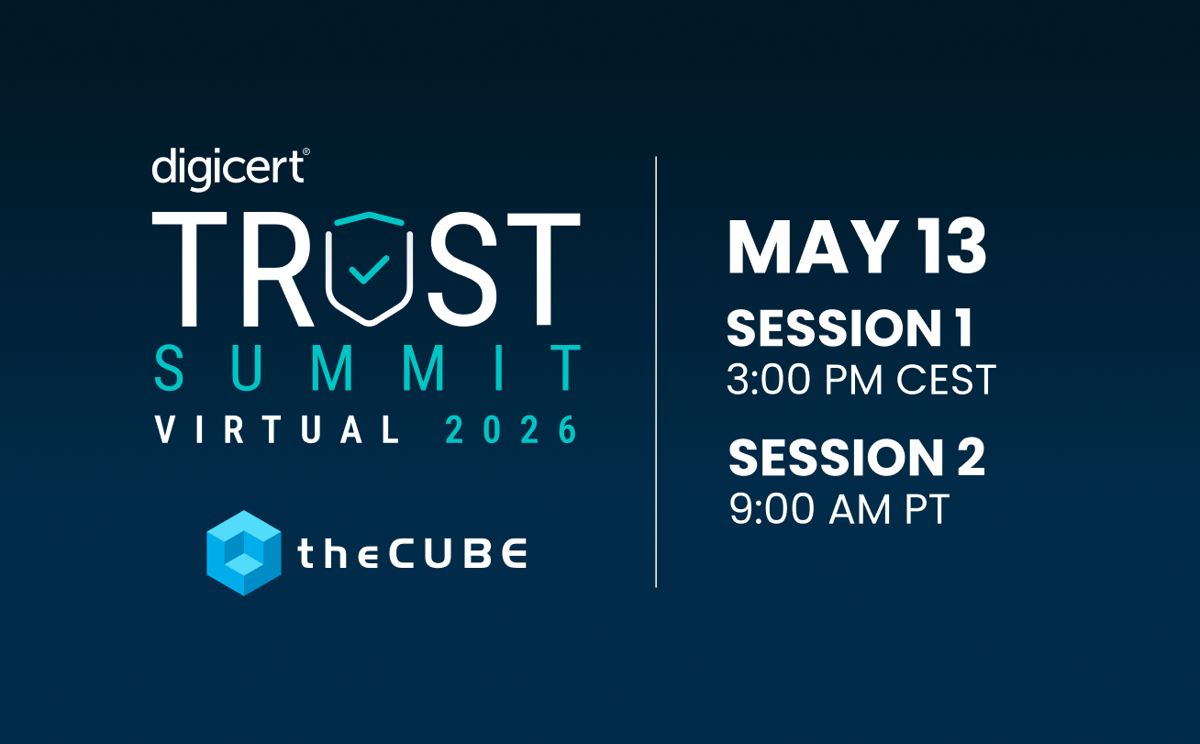
What to Expect at the DigiCert Trust Summit: Join theCUBE May 13
The DigiCert Trust Summit on May 13 will explore how enterprises can build an "intelligent trust" framework that unifies PKI, DNS, software integrity and device identity for AI‑driven environments. TheCUBE research shows 70% of firms have deployed AI security tools,...

The Future of IT Service Delivery Is Built on AI and Automation
The IT services market is confronting a costly wave of tool sprawl, where fragmented platforms force technicians into manual, duplicate work. A Freshworks report estimates this inefficiency wastes $2.38 trillion annually in the United States. Vendors such as Kaseya argue that...

SAP’s New API Policy Restricts AI Access, Draws Customer Criticism
SAP has rolled out a new API policy that restricts access to only those interfaces listed in the SAP Business Accelerator Hub or product documentation, labeling all others as unpublished. The policy expressly forbids using APIs for generative AI, large‑scale...

Former Federal Tech Leaders Push for Government Delivery Reform
April Harding, former IRS director of digital services, and Maureen Klovers, ex‑deputy COO of USDA Rural Development, left federal service in 2025 and launched We The Doers, a consultancy focused on government delivery reform. Harding’s tenure produced a five‑year digital...

Growing Agency Talent Is Critical for Modernization, Transportation’s IT Head Says
The U.S. Department of Transportation is driving its "1DOT" initiative to consolidate IT systems, cut technical debt, and streamline processes. Chief Digital and Information Officer Pavan Pidugu says building new technology is easier than reshaping the workforce needed to use...

UChicago Medicine Rolling Out Smart Hospital Platform System-Wide
UChicago Medicine is rolling out Artisight’s smart‑hospital platform across more than 1,800 rooms, marking a system‑wide deployment of computer‑vision, voice and RTLS technology. The first three use cases focus on a Smart OR, virtual nursing workflows, and AI‑driven fall‑risk assessment....

North Carolina Targets Hyperscale Costs with Proposed AI Infrastructure Bill
North Carolina lawmakers introduced the Ratepayer and Resource Protection Act, requiring hyperscale data centers of 40 MW or more to pay the full cost of power, water and infrastructure and to forgo state and local tax incentives. The bill also mandates...

Why Infrastructure Fails Most Enterprise AI Systems — and the Four Decisions Abduaziz Abdukhalimov Made Before Launch
Enterprise AI projects often fail because the supporting infrastructure isn’t built for production stress, not because the models are flawed. A Gartner survey shows only 28 % of AI initiatives meet ROI expectations, with 20 % failing outright due to under‑funded operations....
Measuring AI-Enabled Success: 3 KPIs CIOs Should Track
CIOs must move beyond traditional gatekeeping and create secure, pre‑approved AI pathways that embed security controls directly into workflows. To gauge success, three KPIs are essential: time from idea to production, employee adoption of approved AI tools, and the rate...

The CIO Remit: Treat GenAI as a Mission-Critical Enterprise App
Generative AI has moved from pilot projects to a mission‑critical status, with 96% of enterprise IT leaders ranking it alongside ERP and CRM systems. A Foundry survey of 300 CIOs shows two‑thirds already embedding GenAI into SaaS applications and core...

Cisco Nerds Out: May the Fourth Be with Your AI Assistant
Cisco unveiled "Galaxy Mode" for its AI Assistant, a limited‑time Star Wars‑themed interface for Meraki and Thousand Eyes customers that runs through June 4. The release introduces Deep Reasoning, an AI‑driven analysis engine that interprets network events and offers security compliance...

Memory Shortage and Cost Surge Push Enterprises Toward the Cloud
Enterprises are accelerating cloud migration as memory component prices soar and supply lags, a trend highlighted by Amazon CEO Andy Jassy during the Q1 2026 earnings call. Hyperscalers reported strong growth—Google Cloud up 63%, AWS 28%, Azure 40% year‑over‑year—driven by...

Shake Shack’s Tech Chief Forges a Practical AI Strategy
Shake Shack is rolling out Project Catalyst, an AI‑driven overhaul that will reach 1,500 restaurants, while simultaneously building an internal AI strategy for its 13,400‑member workforce. Chief information and technology officer Justin Mennen emphasizes practical applications that free staff time...

Why Data Centers Now Belong on the Critical Infrastructure List
Recent missile and drone attacks on cloud data centers in the Middle East highlighted a new strategic vulnerability: the physical disruption of digital infrastructure that underpins modern economies and militaries. As artificial intelligence workloads surge, data centers have become indispensable...

Agentic Browsers Rewrite the Rules of Enterprise Security
Enterprise browsers are evolving from passive tools to autonomous agents, driven by rapid AI adoption. Deloitte reports 74% of organizations will deploy agentic AI within two years, while 84% of knowledge workers are eager to use it. These agentic browsers...

Stop IT Outages Before They Start: How DEX Predicts and Prevents System Failures
TeamViewer’s Digital Employee Experience (DEX) platform shifts IT from reactive firefighting to predictive maintenance. By continuously monitoring endpoints, applications and network traffic, DEX surfaces early‑warning signs that let teams fix issues before they cause outages. The solution combines real‑time data,...

Avoiding a Chain of Custody Crisis: Why CIOs Are Bringing Data Destruction In-House
CIOs are re‑evaluating data disposal as the volume of retired hard drives, SSDs and backup media surges, exposing a hidden security gap. Traditional outsourced shredding creates multiple handoffs that weaken chain‑of‑custody control and increase breach risk. To meet stricter audit...

Why IT Strategies Fail
Strategy expert Anael Granoux warns that overly long, jargon‑filled IT strategies distract organizations. He advocates a concise, four‑page execution framework focused on clarity and alignment with business goals. Together with Wolfpack MD Craig Rosewarne, they will run a hands‑on workshop...

Vocus and Fortinet Fighting Shadow AI with Secure Shield Launch
Australian telecom Vocus and cybersecurity firm Fortinet have launched Vocus Secure Shield, a managed SASE platform designed to expose and control shadow AI usage within enterprises. The service leverages Fortinet’s AI‑driven security and deep application awareness to detect AI tools,...

How to Address 7 Common Endpoint Management Mistakes
Enterprises face mounting complexity as laptops, smartphones, and IoT sensors multiply, exposing gaps in endpoint management. The article outlines seven common mistakes—from delayed patching and fragmented tooling to weak access controls and insufficient monitoring—and offers practical remediation steps. Implementing automated...

IBM Security Executive Emerges as Possible Contender to Lead CISA
Tom Parker, a two‑decade IBM security services veteran, has emerged as the Trump administration’s preferred candidate to lead the Cybersecurity and Infrastructure Security Agency after Sean Plankey withdrew his nomination. Parker lacks government experience, aligning with Homeland Security Secretary Markwayne...

Fact of the Week – 5/4/2026
Juniper Research forecasts that only 27% of global enterprises will have deployed post‑quantum cryptography by 2035, even as the total number of adopters climbs past 100 million. The market is projected to expand from $1.2 billion in 2026 to $13.3 billion by 2035,...

A Tale of Two States: The 2026 Cybersecurity Paradox
State CIOs and CISOs at the NASCIO Midyear Conference reported a stark confidence gap, with only 22% feeling very confident about protecting public data—a drop from 48% in 2022. The 2026 NASCIO‑Deloitte Cybersecurity Study highlighted five themes, including AI’s dual...

Are Your AI Deployments Quantum-Resistant? How to Protect Against Future Cyberattacks
AI deployments still depend on RSA and ECC encryption, which are vulnerable to future quantum attacks. The article warns that adversaries are already harvesting encrypted traffic for a “store now, decrypt later” (SNDL) strategy, turning today’s data into tomorrow’s open...

Rising Memory Costs Already Affecting Most IT Buyers
Rising DRAM prices, driven by AI workloads, are already affecting 53% of IT decision‑makers, with another 39% expecting impact soon. The shortage has forced 72% of affected firms to delay or cancel projects slated for 2026, while 49% are extending...

Sponsored: Silicon Diversification: How a Growing Choice of Chips Is Reshaping Data Center Infrastructure
Data center operators are moving beyond x86 CPUs toward a broader mix of AI accelerators, including GPUs, custom ASICs, inference chips, and wafer‑scale processors. A Futurum Group survey shows GPUs command 75% of AI compute spend, with XPUs and CPUs...

SAP API Policy Raises New Questions About ERP Integration and AI Access
SAP has updated its API policy, restricting usage to only published APIs listed in the Business Accelerator Hub and imposing rate limits, quotas, and monitoring. The change bars the use of undocumented or non‑published interfaces, which many customers and partners...

Hybrid Infrastructure Powers University Research
R1 research universities are confronting surging AI workloads that strain on‑premises clusters and campus networks. Leaders are adopting hybrid infrastructures that blend cloud resources with local high‑performance compute, using unified schedulers and orchestration tools to place jobs where performance, cost,...

DXC Adds Agentic AI To Managed Services With DXC Oasis
DXC Technology introduced DXC Oasis, an intelligent orchestration platform that merges human expertise with agentic AI for its managed services. The dashboard lets operators view servers, receive AI‑driven recommendations, and trigger automated actions while keeping a human in the loop....

AI Is Forcing Even Insurance’s Most Cautious Players to Move Fast
AI is reshaping the insurance and healthcare sectors at a speed unprecedented for an industry built on caution. Jake Sloan, Appian’s VP of global insurance, highlighted that insurers can now move from pilot projects to full production in weeks, not...