
Nigerian Communication Commission Orders Telecoms to Report Cyber Threats Within 4 Hours
Nigeria’s Communications Commission (NCC) has issued a Cyber Resilience Framework requiring telecom operators to report any cyber‑attack to the regulator within four hours of detection. The rule, effective February 2027, applies to major providers such as MTN Nigeria, Airtel Nigeria, Globacom and T2 Mobile, which must also submit updates every four hours via a dedicated portal. This mandate places Nigeria alongside China and Singapore in demanding rapid breach notification, contrasting with the U.S. seven‑day window. The directive aims to harden the nation’s telecom infrastructure and safeguard subscriber data.
Why Portfolio Companies Struggle with Third-Party Cyber Risk
Portfolio companies are grappling with third‑party cyber risk as digital ecosystems expand and vendor reliance grows. Traditional perimeter defenses have eroded, leaving sensitive data and operational resilience dependent on external partners. Lean security teams and rapid onboarding prioritize speed over...

Unanimous Vote Passed on SB 275, the State-Endorsed Digital Identity Program Amendments Bill
Utah’s Senate voted unanimously to pass SB 275 Sub 2, amending the State‑Endorsed Digital Identity Program. The legislation authorizes a wallet‑based digital ID that places data control and privacy in the hands of citizens. It builds on the SB 260...

DPRK Hackers Target Crypto Firms, Steal Keys and Cloud Assets in Coordinated Attacks
Suspected North Korean‑linked threat actors launched a coordinated campaign against cryptocurrency firms, exploiting the critical React2Shell (CVE‑2025‑55182) remote code execution flaw in React Server Components and Next.js. After gaining initial web‑app access, they leveraged stolen AWS tokens to enumerate and...

Where Multi-Factor Authentication Stops and Credential Abuse Starts
Multi‑factor authentication (MFA) is effective for cloud and federated apps, but many Windows authentication paths—interactive logons, RDP, NTLM, Kerberos tickets, and service accounts—remain outside its protection. Attackers exploit these gaps using stolen passwords, pass‑the‑hash, or forged tickets, gaining lateral movement...

Arknights: Endfield Community Raises Alarm over Pull Tracker Tools After Reports of Hacked Computers
The Arknights: Endfield community is warning players against third‑party pull‑tracker sites after reports that uploaded game logs exposed session tokens, leading to compromised computers and stolen data. The most cited case involves streamer Fobm4ster, who had to reinstall Windows 11 following...

The Great Security Culture Shift: Building a Proactive Defense in an Era of Advanced Threats and Social Engineering
The article highlights a surge in DLL side‑loading attacks delivered through LinkedIn Messenger, where malicious PDFs bypass traditional endpoint defenses. It reveals that 66% of malware infections occur on devices already equipped with endpoint protection, exposing gaps in reactive security...

How to Build Trust Into Automation at Scale
Autonomous robots are moving from pilot projects to large‑scale deployments across warehouses, retail and healthcare, turning robotics‑as‑a‑service into a core managed‑service offering. As fleets grow, each additional machine widens the attack surface, blurring IT and OT responsibilities and exposing misconfigurations,...

A QUICker SASE Client: Re-Building Proxy Mode
Cloudflare has rebuilt the proxy mode of its Cloudflare One client, swapping the WireGuard‑based L3 tunnel for direct L4 proxying over QUIC. By leveraging HTTP/3 CONNECT and MASQUE, traffic remains at the transport layer, eliminating the smoltcp conversion step. Internal...

Trump’s CISA Nominee Said He Left Coast Guard to Address GOP Hold
President Trump’s nominee for CISA, Sean Plankey, resigned from his advisory role at the U.S. Coast Guard to allay concerns about his prior shipbuilding contracts that prompted Sen. Rick Scott’s hold. Plankey emphasized his focus on leading CISA and highlighted his turnaround of...

MCP Security: Implementing Robust Authentication and Authorization
The Model Context Protocol (MCP) is becoming a core interface for AI agents to invoke tools and access enterprise data. To mitigate rising security threats, the latest guidance recommends treating MCP servers as OAuth 2.1 resource servers and adopting modern authentication...

Codific Highlights Five Key Cyber Risks to Power Grids
Codific’s new analysis outlines five recurring cyber‑attack pathways that threaten power‑grid operations, from spear‑phishing and credential theft to remote‑access exploitation, ransomware, and the misuse of legitimate industrial commands. The report stresses that most disruptive incidents follow familiar patterns rather than...

Russian Ransomware Administrator Pleads Guilty to Wire Fraud Conspiracy
Evgenii Ptitsyn, the administrator of the Phobos ransomware platform, pleaded guilty to wire‑fraud conspiracy in a Maryland federal court. Phobos ransomware was used by affiliates to compromise more than 1,000 public and private entities worldwide, extracting over $39 million in ransom...

Bitwarden Adds Support for Passkey Login on Windows 11
Bitwarden announced native support for Windows 11 passkey login, letting users authenticate with credentials stored in their encrypted vault. The feature works across all plans, including the free tier, and uses a QR‑code flow to confirm the passkey on a mobile...

How to Avoid Confidentiality Gaps in Early-Stage Startups
Early‑stage startups often sacrifice confidentiality for speed, leaving critical data exposed during pitches, hiring, and partnership talks. Two recurring gaps—lack of security protocols and delayed legal safeguards—lead to breaches that cost billions annually. A lightweight, repeatable NDA workflow—dual pitch decks,...

Mail2Shell Zero-Click Attack Lets Hackers Hijack FreeScout Mail Servers
Researchers at OX Security disclosed a maximum‑severity zero‑click vulnerability (CVE‑2026‑28289) in the open‑source FreeScout help‑desk platform. By embedding a zero‑width space before a malicious filename, attackers can bypass recent upload filters and achieve remote code execution through a single crafted...

AWS Launches DDos Protection for Games Running on Amazon GameLift Servers
Amazon Web Services announced a new DDoS protection service tightly integrated with its GameLift managed server platform. The solution leverages AWS Shield to automatically detect and mitigate volumetric attacks targeting multiplayer titles. By embedding security directly into GameLift, developers can...

Fake Zoom, Teams Meeting Invites Use Compromised Certificates to Drop Malware
Researchers at Microsoft Defender uncovered a new phishing campaign that disguises malicious updates for Zoom, Microsoft Teams and Adobe Reader as legitimate meeting invites. The attackers leverage stolen Extended Validation certificates from TrustConnect Software to make the payloads appear trusted,...

Windows 10 KB5075039 Update Fixes Broken Recovery Environment
Microsoft released KB5075039, a Windows 10 update that restores the Windows Recovery Environment (WinRE) after the October 2025 KB5068164 patch broke it. WinRE is essential for offline system repair, malware removal, and OS restoration. The fix requires a hidden WinRE partition of...

JetStream Security Inks $34M Seed Funding
JetStream Security announced a $34 million seed round, marking one of the largest early‑stage financings in the cybersecurity sector this year. The round was led by Redpoint Ventures and featured strategic participation from the CrowdStrike Falcon Fund. Angel investors included George Kurtz...

Iran’s Authorities Using NtechLab’s Live Facial Recognition to Crush Dissent
Iranian authorities have integrated Russia’s NtechLab FindFace facial‑recognition system into a live surveillance network, accessed through local partners Rasad, Kama and BPO. The technology is deployed in Tehran’s university entrances, Mashhad’s subway, and other public venues to identify and detain...

Dragon Sword Bill: New Korean Game Industry Law Targets User Data Protection
South Korea’s People Power Party introduced a partial amendment to the Game Industry Promotion Act, creating Article 14‑2 to obligate game operators to protect and, with user consent, transfer gameplay records and payment data when services end. The measure directly responds...
These 2 Recent Cases Confirm DOJ Is Escalating Cyber Enforcement
At the close of 2025 the Department of Justice announced two high‑profile cyber enforcement actions that spotlighted deficient cybersecurity practices among DoD contractors. The first settlement involved Swiss Automation’s breach of the DFARS 7012 clause, which mandates NIST 800‑171 compliance. The second...

Idemia Public Security, Proof Partner on Single Portable Digital Credential
Idemia Public Security and Proof have announced a strategic partnership to launch a verifiable digital credential (VDC) that merges biometric verification with PKI‑based digital signatures. The solution delivers a single, portable credential that is user‑controlled, privacy‑preserving, and revocable, leveraging selective...

HID Debuts Cloud‑based Visitor Verification System for Healthcare
HID Global unveiled a cloud‑based visitor verification platform at HIMSS 2026, designed for hospitals to authenticate and track visitors in real time. The solution integrates directly with major electronic health record systems such as Epic and Oracle Health, enabling photo capture,...

NDSS 2025 – On The Realism Of LiDAR Spoofing Attacks Against Autonomous Driving Vehicle
The NDSS 2025 paper presents the first large‑scale measurement of physical‑world adversarial attacks on commercial traffic‑sign recognition (TSR) systems used in autonomous vehicles. While academic attack techniques can achieve 100% success against specific commercial TSR functions, overall success rates are...

The Verification Imperative: How One Framework Is Reshaping Trust in Financial Code
Financial institutions are tightening code integrity after supply‑chain attacks. Mitsubishi UFJ VP Jamshir Qureshi introduced the Hybrid Chain of Trust (HCoT), a framework that cryptographically signs and continuously validates software and container artifacts within CI/CD pipelines. The model enables compliance‑ready...

Unique Capabilities of Edge Computing in IoT
The article outlines how edge computing transforms IoT by enabling federated learning, real‑time analytics, and stronger data sovereignty. By processing data locally, edge nodes cut latency, lower bandwidth demands, and keep sensitive information compliant with regulations such as GDPR and...

The 10-Hour Problem: How Visibility Gaps Are Burning Out the SOC
According to a Forrester Consulting study commissioned by NETSCOUT, 61% of SOC analysts spend more than ten hours each week in the analysis phase due to fragmented visibility. Inadequate network analysis and visibility (NAV) forces analysts to manually stitch logs...

Cisco Warns of Max Severity Secure FMC Flaws Giving Root Access
Cisco has issued emergency patches for two maximum‑severity flaws in its Secure Firewall Management Center (FMC) software. The authentication‑bypass vulnerability (CVE‑2026‑20079) lets unauthenticated attackers gain root access, while the remote code execution bug (CVE‑2026‑20131) permits arbitrary Java code execution as...

Emails To Outlook.com Rejected By Faulty Or Overzealous Blocking Rules
Microsoft’s outbound email filters mistakenly rejected legitimate messages sent to Outlook.com, Live, Hotmail and MSN accounts last week. The over‑aggressive IP reputation checks generated 550 errors, blocking invoices, notifications and authentication emails despite senders having clean SNDS scores and being...

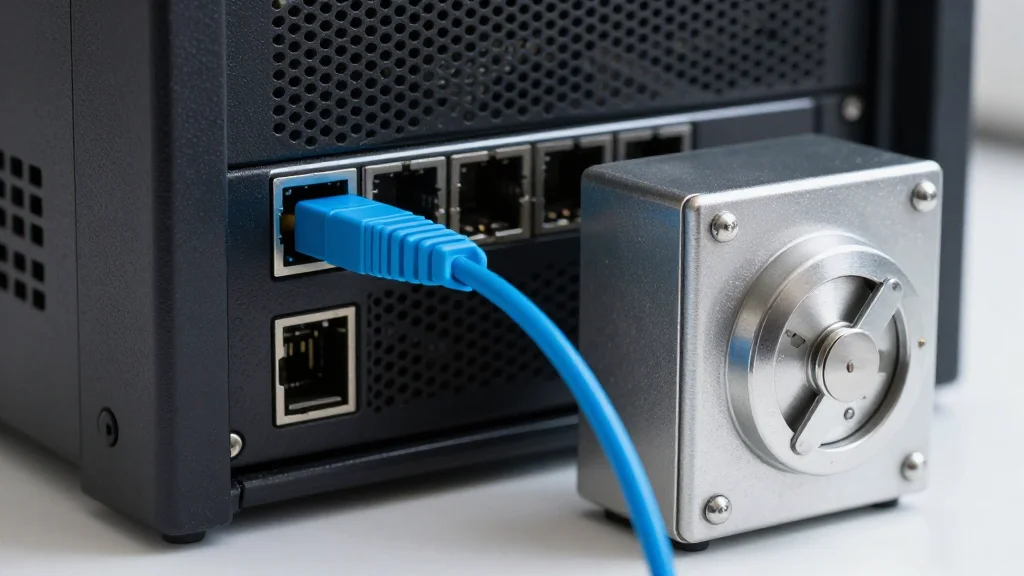
How Vulnerable Are Computers to an 80-Year-Old Spy Technique? Congress Wants Answers
Senators Ron Wyden and Rep. Shontel Brown have asked the GAO to study how vulnerable modern computers are to TEMPERST‑style side‑channel attacks, which capture data from electromagnetic, acoustic or vibrational emissions. The request follows a new Congressional Research Service report...

The Instagram API Scraping Crisis: When ‘Public’ Data Becomes a 17.5 Million User Breach
On January 7, 2026 a dataset of 17.5 million Instagram user profiles was posted for free on BreachForums, exposing usernames, emails, phone numbers and partial location data. Meta responded that no breach occurred because the data was scraped from its public APIs rather...

Hacker Mass-Mails HungerRush Extortion Emails to Restaurant Patrons
Customers of restaurants using the HungerRush point‑of‑sale platform received extortion emails claiming the attacker possessed millions of customer records, including credit‑card details. The messages were sent through Twilio SendGrid, passing SPF, DKIM and DMARC checks, making them appear authentic from...

Tycoon 2FA Phishing Platform Dismantled in Global Takedown
A coordinated operation by Europol, Microsoft and dozens of security firms dismantled the Tycoon 2FA phishing‑as‑a‑service platform. The service, responsible for roughly 62% of Microsoft‑blocked phishing attempts, sent tens of millions of phishing emails to 500,000 organizations each month and...

Lawmakers Question Intel’s Use of Tools From Blacklisted Chinese Firm
A bipartisan group of U.S. senators sent a letter to Intel CEO Lip‑Bu Tan questioning the chipmaker’s use of semiconductor tools from ACM Research, a Chinese subsidiary on the U.S. blacklist. The inquiry underscores national‑security concerns, especially after the U.S....

Modernizing Federal Risk Management
Federal agencies are overhauling risk management as artificial intelligence moves from pilot projects to core missions. The AI Risk Management Framework has been refreshed, and NIST introduced the ARIA 0.1 framework to quantify real‑world AI behavior. Simultaneously, quantum‑computing challenges and tight...

Stranger Things Meets Cybersecurity: Lessons From the Hive Mind
The commentary likens modern cyber threats to the "hive mind" of Stranger Things, highlighting how botnets and APTs such as Salt Typhoon exploit default IoT credentials to create sprawling, often unseen attack surfaces. It stresses that telemetry—network traffic, logs, and user‑behavior data—combined...

Europol-Coordinated Action Disrupts Tycoon2FA Phishing Platform
Europol coordinated an international operation that dismantled the Tycoon2FA phishing‑as‑a‑service platform. Law enforcement seized 330 domains supporting the service’s infrastructure across six European countries. The platform, active since August 2023, had been delivering tens of millions of phishing emails each month,...

Enterprise AI Governance for Revenue Teams
Revenue teams are adopting AI features—email drafting, call summaries, forecasting—without a unified governance layer, leading to data leaks and compliance delays. The article outlines an operational framework: data classification, use‑case policies, platform controls, and regular review cadence. It emphasizes mapping...

ANYbotics Achieves ISO 27001 Certification
ANYbotics earned ISO 27001 certification on its first audit, achieving zero non‑conformities. The independent, third‑party audit validates the company’s world‑class Information Security Management System. Certification directly benefits customers operating robots in hazardous and mission‑critical environments by embedding security into design, build,...
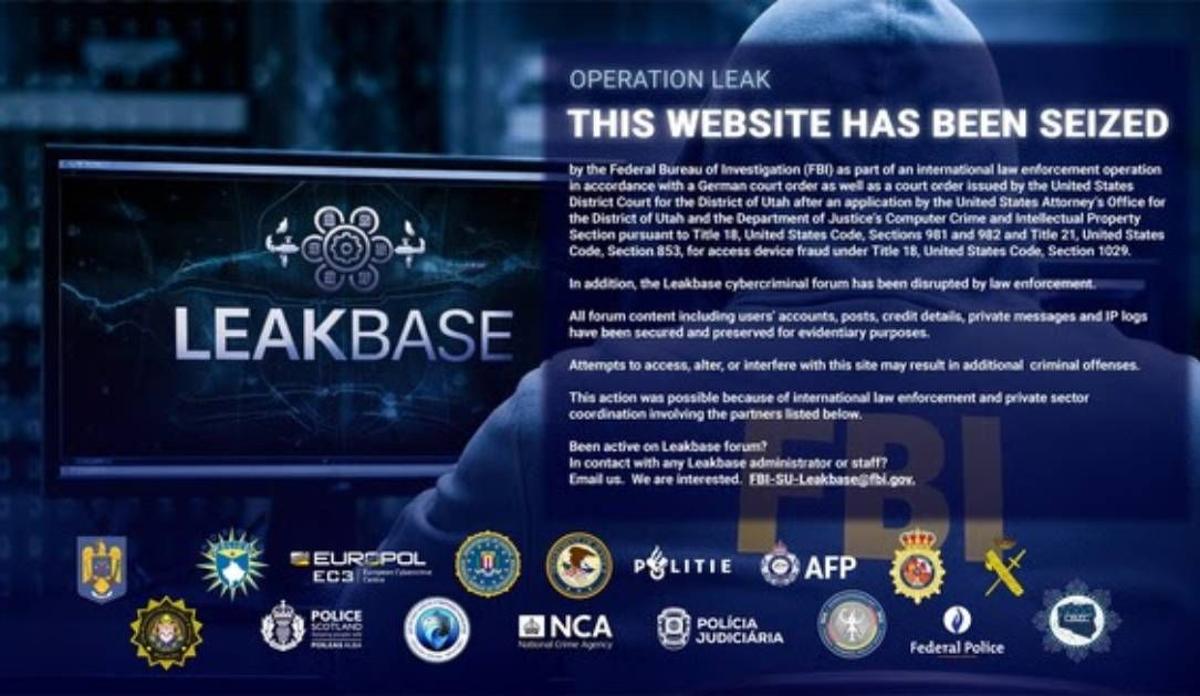
Sprawling FBI, European Operation Takes Down Leakbase Cybercriminal Forum
The FBI, together with European law‑enforcement partners, dismantled Leakbase, a subscription‑based cybercrime forum that sold stolen credentials and exploit tools. The coordinated “Operation Leak” involved 100 actions against 45 targets across more than a dozen nations, resulting in 13 arrests,...

Global Takedown Neutralizes Tycoon2FA Phishing Service
Investigators led by Microsoft and Europol dismantled the Tycoon2FA phishing‑as‑a‑service operation, seizing over 300 associated domains. The service, launched in August 2023, offered subscription‑based MFA bypass using adversary‑in‑the‑middle attacks, attracting roughly 2,000 criminal users and leveraging more than 24,000 domains....

Assured Data Protection Brings BackBox Network Configuration Protection to MSP Partners
Assured Data Protection has teamed with BackBox to add automated network‑configuration backup, version control, and rapid restoration to its managed services. The integrated offering supports more than 5,000 firewall, switch, router and security device types, storing encrypted copies off‑site for...

CMS Advances Zero Trust, AI Security in IT Modernization Push
The Centers for Medicare & Medicaid Services (CMS) is accelerating its IT modernization by consolidating platforms, expanding shared services, and adopting a zero‑trust cybersecurity framework. Under Director Wade Zarriello, the agency has already exceeded its FY 2025 savings target, cutting $750 million in...

Surge in Attacks on Surveillance Cameras Linked to Iranian Hackers
Check Point Research has identified a coordinated surge in attempts to compromise internet‑connected surveillance cameras across the Middle East, targeting Hikvision and Dahua devices. The campaign, which intensified on February 28, aligns with Iranian threat actors and exploits CVE‑2021‑33044 and CVE‑2017‑7921....

Dark Reading Confidential: This Threat Hunter Helped Cops Bust Up An African Cybercrime Syndicate
Will Thomas, senior threat researcher at Team Cymru, partnered with Interpol on Operation Sentinel, a coordinated bust of an African ransomware, business‑email‑compromise and data‑extortion syndicate. The effort spanned 19 countries, resulted in 574 arrests, seized over 6,000 malicious links and...

Digital.ai Expands Post-Build Protection for Android and iOS Applications
Digital.ai unveiled Quick Protect Agent v2, an LLM‑enhanced solution that adds AI‑powered post‑build hardening for Android and iOS apps. The tool automatically applies code‑aware obfuscation and other security controls after the build, requiring no source changes and integrating with Digital.ai...

The Most Common Swap Scams in 2026, and How to Avoid Them
Crypto swap scams have become more sophisticated in 2026, targeting users across DEXs and centralized exchanges. Scammers use fake interfaces, phishing URLs, unlimited approval requests, and MEV sandwich attacks to drain funds. The guide outlines common vectors—approval and permit scams,...
Tufin’s AI-Powered Tools Simplify Network Security Operations
Tufin unveiled a suite of AI‑powered tools, including four new assistants and an Executive Dashboard, built on its TufinAI engine. The assistants automate rule searches, device discovery, compliance exception analysis, and access‑request handling via natural‑language prompts. Integrated with Tufin’s Unified...