
Unique Capabilities of Edge Computing in IoT
The article outlines how edge computing transforms IoT by enabling federated learning, real‑time analytics, and stronger data sovereignty. By processing data locally, edge nodes cut latency, lower bandwidth demands, and keep sensitive information compliant with regulations such as GDPR and China’s CSL. It also fuels advanced use cases like swarm intelligence, device‑to‑device collaboration, and dynamic digital twin synchronization, delivering up to 98% effectiveness in high‑capacity scenarios. Overall, edge deployment promises higher ROI and more secure, actionable IoT ecosystems.

The 10-Hour Problem: How Visibility Gaps Are Burning Out the SOC
According to a Forrester Consulting study commissioned by NETSCOUT, 61% of SOC analysts spend more than ten hours each week in the analysis phase due to fragmented visibility. Inadequate network analysis and visibility (NAV) forces analysts to manually stitch logs...

Cisco Warns of Max Severity Secure FMC Flaws Giving Root Access
Cisco has issued emergency patches for two maximum‑severity flaws in its Secure Firewall Management Center (FMC) software. The authentication‑bypass vulnerability (CVE‑2026‑20079) lets unauthenticated attackers gain root access, while the remote code execution bug (CVE‑2026‑20131) permits arbitrary Java code execution as...

Emails To Outlook.com Rejected By Faulty Or Overzealous Blocking Rules
Microsoft’s outbound email filters mistakenly rejected legitimate messages sent to Outlook.com, Live, Hotmail and MSN accounts last week. The over‑aggressive IP reputation checks generated 550 errors, blocking invoices, notifications and authentication emails despite senders having clean SNDS scores and being...

How Vulnerable Are Computers to an 80-Year-Old Spy Technique? Congress Wants Answers
Senators Ron Wyden and Rep. Shontel Brown have asked the GAO to study how vulnerable modern computers are to TEMPERST‑style side‑channel attacks, which capture data from electromagnetic, acoustic or vibrational emissions. The request follows a new Congressional Research Service report...

The Instagram API Scraping Crisis: When ‘Public’ Data Becomes a 17.5 Million User Breach
On January 7, 2026 a dataset of 17.5 million Instagram user profiles was posted for free on BreachForums, exposing usernames, emails, phone numbers and partial location data. Meta responded that no breach occurred because the data was scraped from its public APIs rather...

Hacker Mass-Mails HungerRush Extortion Emails to Restaurant Patrons
Customers of restaurants using the HungerRush point‑of‑sale platform received extortion emails claiming the attacker possessed millions of customer records, including credit‑card details. The messages were sent through Twilio SendGrid, passing SPF, DKIM and DMARC checks, making them appear authentic from...

Tycoon 2FA Phishing Platform Dismantled in Global Takedown
A coordinated operation by Europol, Microsoft and dozens of security firms dismantled the Tycoon 2FA phishing‑as‑a‑service platform. The service, responsible for roughly 62% of Microsoft‑blocked phishing attempts, sent tens of millions of phishing emails to 500,000 organizations each month and...

Lawmakers Question Intel’s Use of Tools From Blacklisted Chinese Firm
A bipartisan group of U.S. senators sent a letter to Intel CEO Lip‑Bu Tan questioning the chipmaker’s use of semiconductor tools from ACM Research, a Chinese subsidiary on the U.S. blacklist. The inquiry underscores national‑security concerns, especially after the U.S....

Modernizing Federal Risk Management
Federal agencies are overhauling risk management as artificial intelligence moves from pilot projects to core missions. The AI Risk Management Framework has been refreshed, and NIST introduced the ARIA 0.1 framework to quantify real‑world AI behavior. Simultaneously, quantum‑computing challenges and tight...

Stranger Things Meets Cybersecurity: Lessons From the Hive Mind
The commentary likens modern cyber threats to the "hive mind" of Stranger Things, highlighting how botnets and APTs such as Salt Typhoon exploit default IoT credentials to create sprawling, often unseen attack surfaces. It stresses that telemetry—network traffic, logs, and user‑behavior data—combined...

Europol-Coordinated Action Disrupts Tycoon2FA Phishing Platform
Europol coordinated an international operation that dismantled the Tycoon2FA phishing‑as‑a‑service platform. Law enforcement seized 330 domains supporting the service’s infrastructure across six European countries. The platform, active since August 2023, had been delivering tens of millions of phishing emails each month,...

Enterprise AI Governance for Revenue Teams
Revenue teams are adopting AI features—email drafting, call summaries, forecasting—without a unified governance layer, leading to data leaks and compliance delays. The article outlines an operational framework: data classification, use‑case policies, platform controls, and regular review cadence. It emphasizes mapping...

ANYbotics Achieves ISO 27001 Certification
ANYbotics earned ISO 27001 certification on its first audit, achieving zero non‑conformities. The independent, third‑party audit validates the company’s world‑class Information Security Management System. Certification directly benefits customers operating robots in hazardous and mission‑critical environments by embedding security into design, build,...
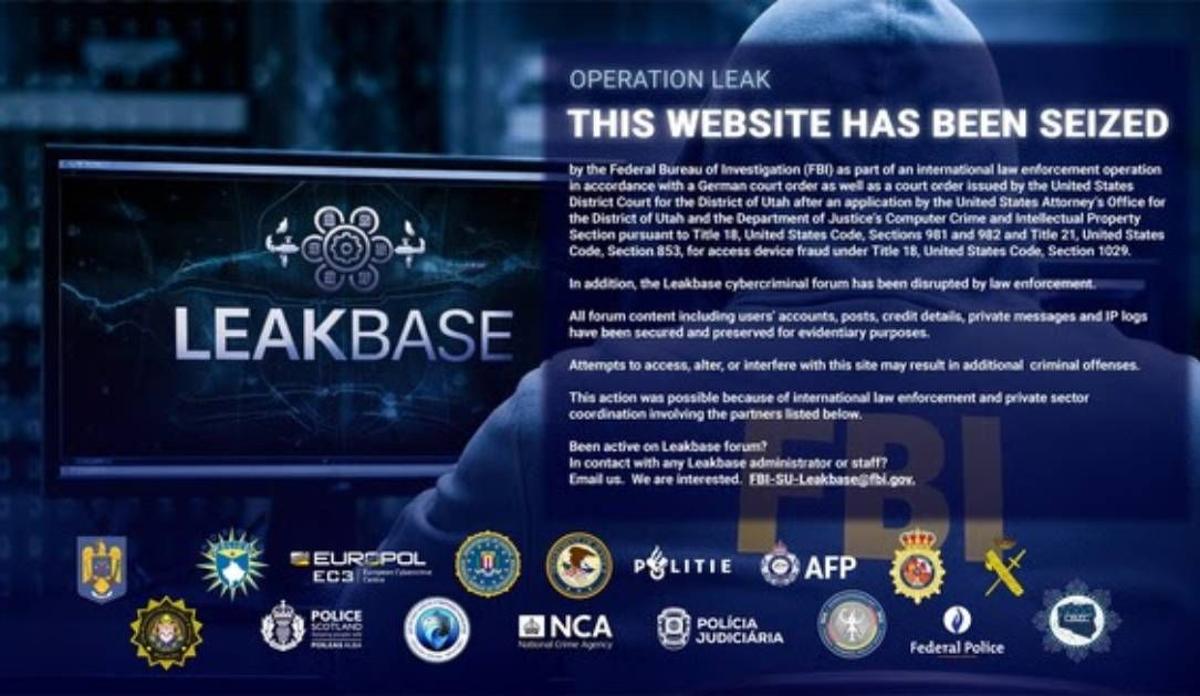
Sprawling FBI, European Operation Takes Down Leakbase Cybercriminal Forum
The FBI, together with European law‑enforcement partners, dismantled Leakbase, a subscription‑based cybercrime forum that sold stolen credentials and exploit tools. The coordinated “Operation Leak” involved 100 actions against 45 targets across more than a dozen nations, resulting in 13 arrests,...

Global Takedown Neutralizes Tycoon2FA Phishing Service
Investigators led by Microsoft and Europol dismantled the Tycoon2FA phishing‑as‑a‑service operation, seizing over 300 associated domains. The service, launched in August 2023, offered subscription‑based MFA bypass using adversary‑in‑the‑middle attacks, attracting roughly 2,000 criminal users and leveraging more than 24,000 domains....

Assured Data Protection Brings BackBox Network Configuration Protection to MSP Partners
Assured Data Protection has teamed with BackBox to add automated network‑configuration backup, version control, and rapid restoration to its managed services. The integrated offering supports more than 5,000 firewall, switch, router and security device types, storing encrypted copies off‑site for...

CMS Advances Zero Trust, AI Security in IT Modernization Push
The Centers for Medicare & Medicaid Services (CMS) is accelerating its IT modernization by consolidating platforms, expanding shared services, and adopting a zero‑trust cybersecurity framework. Under Director Wade Zarriello, the agency has already exceeded its FY 2025 savings target, cutting $750 million in...

Surge in Attacks on Surveillance Cameras Linked to Iranian Hackers
Check Point Research has identified a coordinated surge in attempts to compromise internet‑connected surveillance cameras across the Middle East, targeting Hikvision and Dahua devices. The campaign, which intensified on February 28, aligns with Iranian threat actors and exploits CVE‑2021‑33044 and CVE‑2017‑7921....

Dark Reading Confidential: This Threat Hunter Helped Cops Bust Up An African Cybercrime Syndicate
Will Thomas, senior threat researcher at Team Cymru, partnered with Interpol on Operation Sentinel, a coordinated bust of an African ransomware, business‑email‑compromise and data‑extortion syndicate. The effort spanned 19 countries, resulted in 574 arrests, seized over 6,000 malicious links and...

Digital.ai Expands Post-Build Protection for Android and iOS Applications
Digital.ai unveiled Quick Protect Agent v2, an LLM‑enhanced solution that adds AI‑powered post‑build hardening for Android and iOS apps. The tool automatically applies code‑aware obfuscation and other security controls after the build, requiring no source changes and integrating with Digital.ai...

The Most Common Swap Scams in 2026, and How to Avoid Them
Crypto swap scams have become more sophisticated in 2026, targeting users across DEXs and centralized exchanges. Scammers use fake interfaces, phishing URLs, unlimited approval requests, and MEV sandwich attacks to drain funds. The guide outlines common vectors—approval and permit scams,...
Tufin’s AI-Powered Tools Simplify Network Security Operations
Tufin unveiled a suite of AI‑powered tools, including four new assistants and an Executive Dashboard, built on its TufinAI engine. The assistants automate rule searches, device discovery, compliance exception analysis, and access‑request handling via natural‑language prompts. Integrated with Tufin’s Unified...

Multi-Stage "BadPaw" Malware Campaign Targets Ukraine
ClearSky researchers have uncovered a new malware campaign dubbed “BadPaw” that exploits the Ukrainian email provider ukr.net to lend credibility to phishing messages. The attack delivers a ZIP archive that actually contains a hidden HTA application, which checks system age...

Privacy-First IOT: Why Retail and Public Spaces Are Moving Away From Camera-Based Analytics
Retailers and public‑space operators are abandoning camera‑based analytics in favor of radar‑based people counting solutions that respect privacy. Traditional video systems capture personally identifiable information, triggering GDPR obligations, costly consent processes, and public distrust. Radar sensors operating at 60 GHz millimetre‑wave...

Webinar: The True State of Security 2026
Storyblok’s "True State of Security 2026" webinar brings together its VP of Engineering, Information Security Manager, and content marketer to challenge the prevailing AI‑centric security narrative. The presenters argue that AI, while a genuine risk, has become a costly distraction,...

Thales Updates and Enhances Naranja X’s Payment Security
Thales announced that Argentina fintech Naranja X has expanded its use of the Thales D1 Platform, adding Entersekt’s authentication suite to secure online payments. The cloud‑native solution enables tokenized Apple Pay and Google Pay wallets and implements 3‑DS protocols for e‑commerce. Naranja X reports over...

Pentagon Vendor Cutoff Exposes the AI Dependency Map Most Enterprises Never Built
The Pentagon’s six‑month ban on Anthropic’s Claude has exposed a blind spot in enterprise AI risk management: most firms cannot map the full chain of AI model dependencies. A Panorays survey shows only 15% of CISOs have complete visibility, while...

Zero Trust Vendor Keeper Security Delivering New Partner Program Benefits for MSPs
Keeper Security announced its 2026 MSP partner program, introducing four tiered levels—Authorized, Silver, Gold and Platinum—with revenue‑based discounts and expanded market development funds. The program centers on KeeperPAM, an AI‑enabled, cloud‑native privileged access management solution that delivers zero‑trust encryption across...

Over 1,200 IceWarp Servers Still Vulnerable to Unauthenticated RCE Flaw (CVE-2025-14500)
A critical unauthenticated remote code execution flaw (CVE-2025-14500) affects IceWarp's business communication platform, allowing attackers to execute OS commands as root or SYSTEM. The vulnerability, rooted in improper handling of the X‑File‑Operation header, was disclosed in September 2025 and patched...

Amex Taps Customers for Fraud Fight
American Express is leveraging direct conversations with cardholders who have faced fraud to gather real‑time intelligence on scam tactics. The data helps the firm refine detection models as U.S. consumers lost $12.5 billion to fraud in 2024, a 25 percent rise. Executives...

Siemens Delivers Verified AI-Driven Cybersecurity Solution for Industrial 5G with Palo Alto Networks
Siemens announced a verified AI‑driven cybersecurity solution for private industrial 5G networks, developed with Palo Alto Networks. The offering integrates Siemens’ private 5G infrastructure, the SINEC Security Monitor, and Palo Alto’s next‑generation firewall optimized for OT protocols, delivering IEC 62443‑grade protection...

How Pirated Software Turns Helpful Employees Into Malware Delivery Agents
Employees seeking free, cracked software inadvertently introduce malware into corporate networks, according to Barracuda’s recent findings. The illicit installers often disable antivirus and embed payloads such as infostealers, cryptominers, and ransomware, leading to complex remediation that may require full system...

As Market Pivots Toward Identity Resilience, iProov Surpasses 1M Daily Transactions
iProov, the leading science‑based biometric verification provider, announced it processed over one million daily transactions in 2025, marking a milestone in high‑assurance identity checks. The surge coincides with a Gartner‑reported 62% of organizations suffering deep‑fake attacks, prompting a market shift...

Coruna: The Mysterious Journey of a Powerful iOS Exploit Kit
Google Threat Intelligence Group uncovered a powerful iOS exploit kit called Coruna, covering iOS 13.0 through 17.2.1 with five full exploit chains and 23 vulnerabilities that use non‑public techniques. The kit first appeared in targeted surveillance operations, then in Ukrainian‑focused...

How CIOs Can Build an Evolving Crisis Strategy
CIOs must treat crisis strategies as living documents, revisiting them at least quarterly as new services, integrations, and threat vectors emerge. Experts from Pynest, Tufin, and Euristiq stress defining clear decision‑making roles, integrating automation, and simplifying language to ensure rapid...

LastPass Issues Alert as Customers Face Second Major Phishing Campaign of 2026
LastPass warned customers of a new phishing wave that mimics internal email threads and uses display‑name spoofing to appear legitimate. The messages, sent from unrelated domains, direct recipients to a fake verify‑lastpass.com site and its numbered variants to harvest credentials....

VoidLink Malware Framework Targets Kubernetes and AI Workloads in New Cyber Attack Wave
VoidLink is a new Linux‑based malware framework that specifically targets Kubernetes clusters and AI workloads, using fileless, in‑memory techniques to remain invisible. The framework fingerprints cloud environments, harvests credentials and metadata, and can compile payloads on demand for AI‑enabled attacks....

Defusing the MCP Ticking Time Bomb
The AI Accelerator Institute highlighted a looming security crisis in Model Context Protocol (MCP) deployments after analyzing 281 MCP servers and finding that ten of them carry a 92% security risk. The report warns that vulnerabilities such as prompt injection,...
Njordium Vendor Management System Eliminates Duplicate Third-Party Assessments
Njordium Cyber Group unveiled its Vendor Management System (VMS), a platform that consolidates third‑party risk assessments to satisfy Europe’s overlapping regulations in a single run. The solution claims to replace up to five parallel assessments with one, automatically generating outputs...

New RFP Template for AI Usage Control and AI Governance
Enterprises are finally allocating budgets for AI security, but many lack clear requirements. A new RFP template reframes AI protection as an interaction‑level problem rather than an app‑cataloging exercise, enabling tool‑agnostic control. It exposes the blind spots of legacy CASB/SSE...

Calls for Global Digital Estate Standard as Posthumous Deepfake Fraud Risk Grows
The OpenID Foundation released a report urging the creation of a global digital‑estate framework to protect deceased users’ online accounts. It warns that the absence of consistent standards leaves devices, social media, email and cryptocurrency vulnerable to fraud, especially as...

Protecting Education: How MDR Can Tip the Balance in Favor of Schools
The education sector faces escalating cyber threats from ransomware gangs, nation‑state actors, and AI‑enabled attackers, putting student data and learning continuity at risk. In the first half of 2025 ransomware incidents rose 23 % year‑over‑year, while infostealer‑as‑a‑service lowers entry barriers for...

The Most Important Google Setting You Aren't Using
Google’s free "Results About You" tool lets users request removal of personal details—such as name, address, phone number—from Google Search results. The service automatically scans the web, notifies users when new data appears, and allows both automated and manual removal...

Fake Laravel Packages on Packagist Deploy RAT on Windows, macOS, and Linux
Cybersecurity researchers discovered three malicious Laravel packages on Packagist—nhattuanbl/lara-helper, simple-queue, and lara-swagger—that install a cross‑platform remote access trojan (RAT) on Windows, macOS, and Linux. The RAT connects to a C2 server at helper.leuleu.net, gathers system data, and executes commands via...
Anthropic AI Ultimatums and IP Theft: The Unspoken Risk
Anthropic’s Claude AI is caught between a massive Chinese extraction campaign and a U.S. government ban that forces the model out of federal systems. China‑based firms generated over 16 million interactions to map Claude’s reasoning, tool use and coding abilities, while...

AzCopy Utility Misused for Data Exfiltration in Ongoing Ransomware Attacks
Ransomware groups are weaponizing Microsoft’s Azure data‑transfer tool AzCopy to steal large volumes of data before encrypting victims’ systems. By leveraging valid Azure credentials and Shared Access Signature tokens, attackers can silently upload files to attacker‑controlled Blob storage using standard...

IPVanish VPN for macOS Flaw Enables Privilege Escalation and Code Execution
A critical privilege‑escalation flaw was found in IPVanish VPN for macOS, allowing any local, unprivileged user to execute arbitrary code as root. The vulnerability resides in the helper tool "com.ipvanish.osx.vpnhelper," which accepts unauthenticated XPC connections and skips code‑signature verification for...
ArmorCode AI Exposure Management Identifies, Governs, and Reduces Shadow AI Risk
ArmorCode introduced AI Exposure Management (AIEM) on its Agentic AI Platform, expanding its unified exposure management suite. AIEM continuously ingests AI usage signals from security tools, creating a centralized inventory and assigning ownership to mitigate shadow AI. The solution offers...
Arkose Device ID Uses AI to Recognize Devices Across Changing Fingerprints
Arkose Labs unveiled the latest version of Arkose Device ID within its Arkose Titan platform, adding AI‑driven similarity analysis to traditional exact‑match identification. The enhancement allows persistent device recognition even as fingerprints evolve, reducing fraud from identity‑fragmentation attacks while keeping...