
Daniel Benjamin: The Engineer Building the Infrastructure Layer Modern Systems Depend On
Daniel Benjamin, a Nigerian software and infrastructure engineer, has been the silent architect behind high‑performing fintech and consumer apps. At Risevest he led mobile engineering, slashing crashes and enabling seamless expansion into three African countries. He then built the backend for Yohanna, an AI‑powered religious app that reached 150,000 users in three months with virtually no bugs. Looking ahead, Benjamin aims to deepen expertise in large‑scale distributed systems and AI while contributing open‑source tools to Nigeria’s tech ecosystem.

Researchers Uncover Fast16, a 2005 Sabotage Framework That Beats Stuxnet
SentinelLABS disclosed Fast16, a malware framework first seen in 2005 that modifies high‑precision calculation software at runtime. The discovery shows the tool predates Stuxnet by five years and highlights a long‑standing threat to software supply‑chain integrity.

ECSite, VIAVI Partner to Drive Hyperscale Data Center Fiber Testing
ECSite has integrated its end‑to‑end automation platform with VIAVI’s SmartClass Fiber MPOLx test sets, creating a streamlined workflow for hyperscale data‑center fiber testing. The combined solution automates test execution, validation, and cloud‑based reporting, cutting manual error rates from 10% to...

The 3-Question Framework for Choosing Between Fail-Fast and Graceful Degradation
The post explains how to decide between fail‑fast and graceful degradation for system components. Graceful degradation maintains core functionality by falling back to simple, static responses when non‑critical services fail, while fail‑fast returns an immediate error for critical failures to...

AI Is Reshaping DevSecOps to Bring Security Closer to the Code
Artificial intelligence is fundamentally reshaping DevSecOps by embedding security controls directly into code‑generation tools, expanding vulnerability detection with large‑language‑model scanners, and automating remediation suggestions. AI‑assisted coding assistants now enforce policies at the point of creation, while LLMs identify logic flaws...

Chapter 10: Production Deployment Patterns (Claude Code Vs. Hermes Agent)
The post compares two production‑deployment philosophies for AI agents: Claude Code’s SDK‑first, async‑generator model and Hermes Agent’s CLI/gateway‑first approach. Claude Code exposes a streaming API, 30 compile‑time feature flags, multi‑provider abstraction and a detailed deployment checklist. Hermes Agent relies on a standalone CLI,...

Secret Management in Production: Vault, KMS, and Rotation Strategies
The post outlines a three‑layer secret‑management model that separates key management (KMS), secret storage (Vault or cloud secret managers), and application consumption. It explains envelope encryption, showing how KMS protects data‑encryption keys while Vault handles lifecycle tasks such as rotation,...

Anthropic's Magic Code-Sniffer: More Swiss Cheese than Cheddar, for Now
Anthropic’s new AI code‑security model, Mythos, is being rolled out through Project Glasswing to a limited set of trusted partners. The tool excels at spotting known vulnerability patterns but still struggles with novel, unseen flaws. Its early‑stage deployment reflects both...
The 4-Layer Metrics Pipeline: OpenTelemetry, Kafka, Time-Series Storage, and Grafana
The blog outlines a four‑layer real‑time metrics pipeline—instrumentation with OpenTelemetry, transport via Kafka, time‑series storage (Prometheus, Mimir, InfluxDB), and visualization in Grafana. It argues that pull‑based scraping introduces multi‑minute latency and drops short‑lived workloads, while a streaming architecture delivers sub‑second...

Patch Applies Fake Diffs From Commit Messages
GitHub’s .patch export includes any diff‑shaped text found in a commit message, not just the actual changes. When fed to GNU patch, this embedded “phantom” diff is applied as a real change, creating files that never existed in the commit. The...
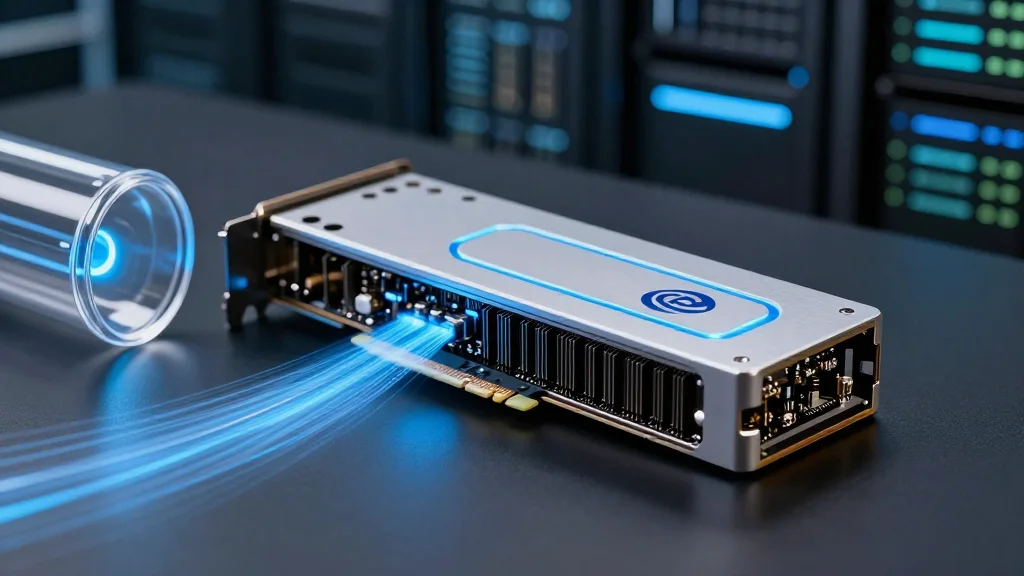
DeepSeek V4 Model Cuts Inference Time by Up to 90% for Code‑Centric AI Workloads
DeepSeek released its DeepSeek‑V4 family on April 24, 2026, offering a 1.6‑trillion‑parameter Pro model and a 284‑billion‑parameter Flash variant that run up to 3.7‑times faster than the prior generation. The efficiency boost targets developers building long‑context agents, code assistants and enterprise...
OpenAI Launches GPT‑5.5, a Code‑centric AI Engine for DevOps Automation
OpenAI rolled out GPT‑5.5 on April 23, 2026, embedding the model in ChatGPT, Codex and upcoming API access. The upgrade promises faster, more accurate code generation, multi‑step workflow execution and a 20% API price increase despite lower token consumption, positioning...

MyClaw Review: The Easiest Way to Run Your Own AI Agent in 2026
MyClaw is a managed cloud platform that hosts OpenClaw, the open‑source autonomous AI agent with over 134,000 GitHub stars. By handling all infrastructure—Docker, SSL, backups—it lets users launch a private, always‑on instance in about 30 seconds without touching a terminal....

SAP Launches Cloud ALM for Business Technology Platform Operations
SAP announced a new Cloud ALM offering tailored for SAP Business Technology Platform (BTP) operations, promising to elevate operational efficiency and provide a roadmap for future enhancements. The announcement, posted on SAP’s website, highlights an upcoming overview, strategy briefing and...
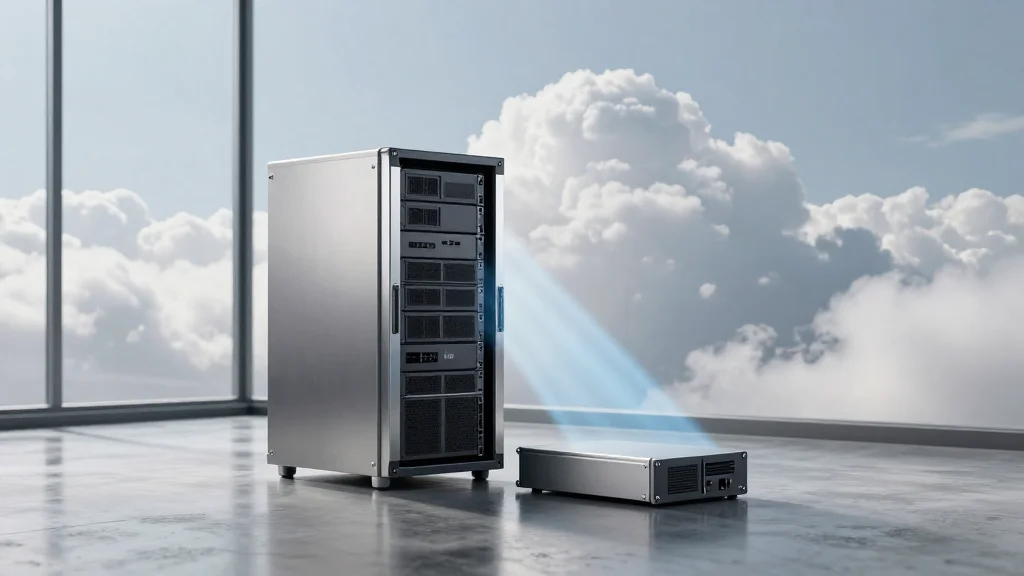
Kyndryl Expands Google Cloud Portfolio to Power AI Workloads Across Hybrid Environments
Kyndryl announced an expanded managed service that combines Google Distributed Cloud with Kubernetes‑based modernization, enabling large enterprises to run AI‑intensive workloads across on‑premises, edge and public cloud. The move targets regulated sectors seeking tighter data control while leveraging Google’s AI...

Kyverno Graduates to CNCF Top‑Tier, Cementing Its Role as Kubernetes Policy Engine
Kyverno was elevated to CNCF Graduated status at KubeCon + CloudNativeCon in Amsterdam, confirming its production‑ready stance and growing adoption as the leading policy‑as‑code engine for Kubernetes governance. The milestone underscores the project's shift to the Common Expression Language and...
XTAO Completes Upgrade, Validator Ranks 4th on Bittensor as AI Crypto Gains Traction
xTAO Inc. announced the completion of an infrastructure upgrade that moved its Bittensor validator to fourth place, delivering an 8.86% annualized yield. The move comes as Bittensor (TAO) draws investor attention with a $2.4 billion market cap and a Bitcoin‑style supply...

Orkes Secures $60 Million Series B to Accelerate AI‑Driven Workflow Orchestration for Enterprises
Orkes raised $60 million in a Series B round led by AVP, with participation from Prosperity7 Ventures and existing backers. The funding will expand its AI‑driven workflow orchestration platform, already deployed by more than 3,000 enterprises, and underscores the surge in demand...

Rate Limiting Essential to Curb Runaway API Costs
i have the minimax ultra plan that gives me 30,000 api calls/5 hours. i had to build a rate limiter to keep it from maxing out and getting other 429 rate limits. several times claude code unfortunately added opus as...

The One Slack Message that Proved Our Elite Engineering Team Was Flying Blind
A Slack question asking "What are we actually running across both cloud environments?" revealed that the engineering team lacked a unified view of its multi‑cloud footprint. The organization was spread across AWS, GCP, Azure, and Cloudflare after years of ad‑hoc...
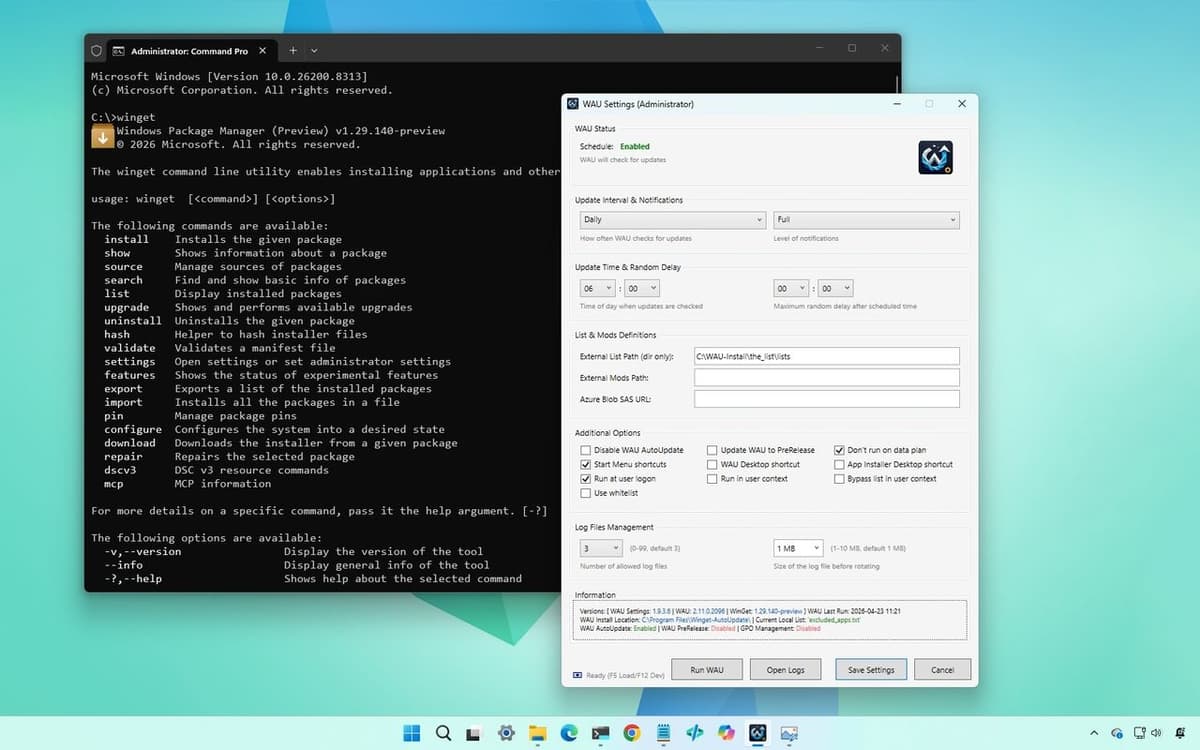
“Your Apps Should Update Themselves” — Winget-AutoUpdate Is the Missing Piece for Automatic App Updates on Windows 11
Winget‑AutoUpdate (WAU) introduces a graphical interface that automates updates for apps installed via the Windows Package Manager on Windows 11. The tool lets users schedule updates, manage allow‑lists and block‑lists, and receive toast notifications without running manual commands like "winget upgrade...

100% Coverage ≠ Bug-Free: Quality Matters More
I’ve seen an app crash with 100% test coverage It’s easy to assume that 100% test coverage means a bug-free app, but that’s not always true What does 100% test coverage actually mean? It means you’ve written a test for every line of...
The New Linux Kernel AI Bot Uncovering Bugs Is A Local LLM On Framework Desktop + AMD Ryzen AI Max
Greg Kroah‑Hartman’s new AI‑driven fuzzing bot, gkh_clanker_t1000, has been actively hunting Linux kernel bugs on a Framework Desktop equipped with an AMD Ryzen AI Max processor. Since April 7, the tool has helped merge nearly two dozen patches covering subsystems such as ALSA, HID,...

ChatPlayground AI Offers Lifetime Access to Unified 25‑Model Testing Platform for $74.97
ChatPlayground AI introduced a lifetime Unlimited Plan priced at $74.97 (regular $619), consolidating over 25 leading large‑language models into a single workspace. The deal, available through May 10, promises unlimited queries, prompt‑engineering tools, and a Chrome extension, targeting developers and product...
Cloudflare Transforms Into Full Developer Cloud Platform
Cloudflare is shifting from a CDN to a full "Developer Cloud." Workers, R2, and AI at the edge are driving higher revenue retention and usage growth. The platform is becoming sticky for developers building the next internet. 📈 Cloudflare

Context Decay, Orchestration Drift, and the Rise of Silent Failures in AI Systems
Enterprise AI deployments are increasingly plagued by silent failures that evade traditional monitoring. Issues such as context decay, orchestration drift, and partial degradations cause models to produce confidently wrong answers without triggering alerts. The article argues that observability stacks built...
Google NotebookLM Adds Auto‑labeling to Streamline Research Source Management
Google has rolled out an automatic source‑labeling and categorization feature in NotebookLM that activates when a notebook contains five or more sources. The AI‑powered assistant groups related material and assigns editable labels, reducing the time engineers and researchers spend organizing...

Christophe Pettus: All Your GUCs in a Row: Archive_command
PostgreSQL’s archive_command is the hook that moves completed WAL segments from the primary to durable storage, forming the backbone of point‑in‑time recovery, warm standbys, and backup solutions. The command is a single‑line shell script that must return a zero exit status...

Jaeger Switches to OpenTelemetry to Bridge AI Agent Observability Gap
Jaeger announced it will embed OpenTelemetry as its foundational instrumentation library, aiming to close the observability gap for AI agents. The move unifies tracing standards across emerging AI workloads and signals a broader DevOps shift toward vendor‑agnostic telemetry.
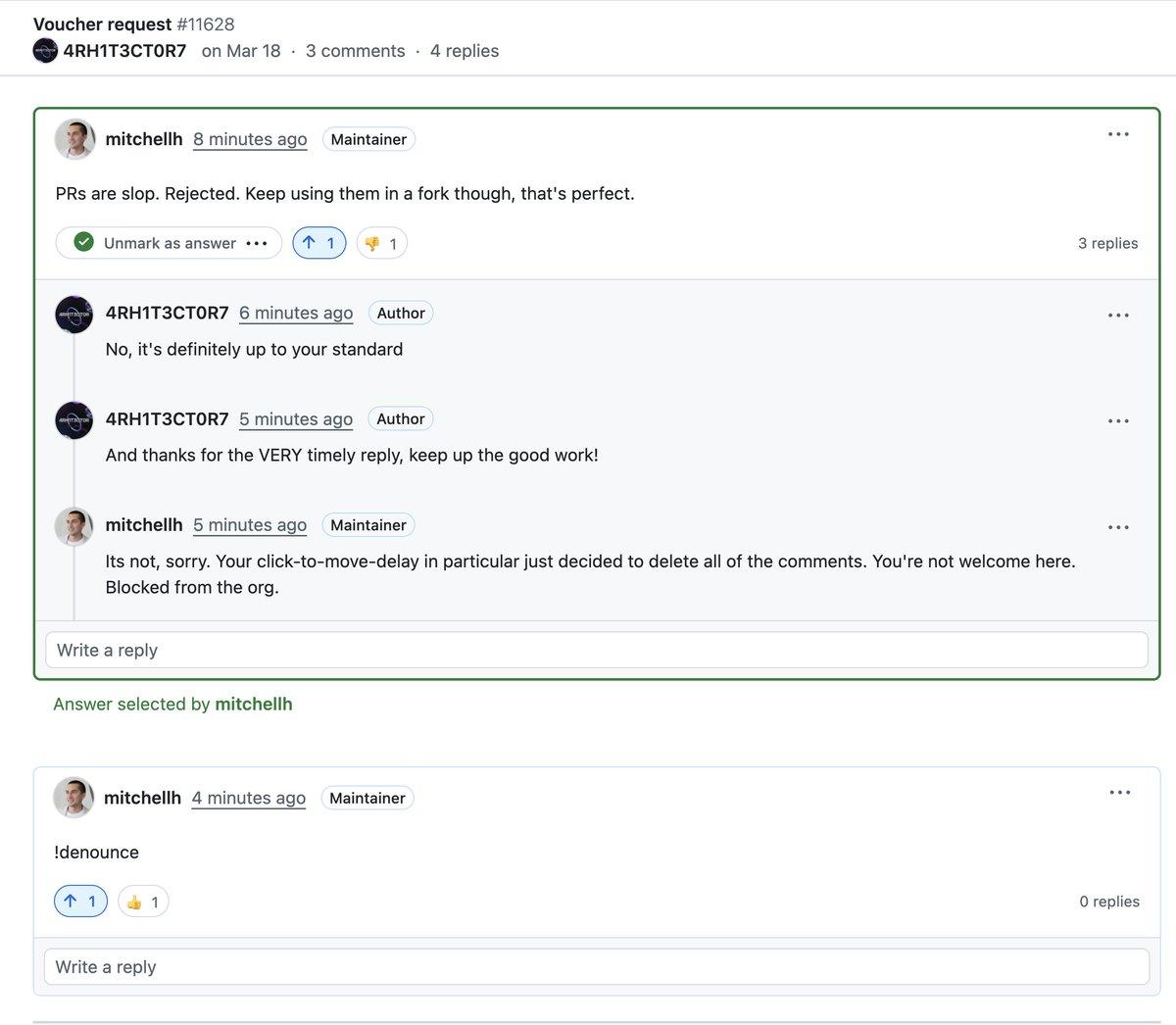
Easy Vouch Boosts PR Quality Without Slowing Flow
A couple months in and Vouch in Ghostty is working extremely well. Our PR quality is up and the rate of PRs has not gone down at all. Getting a vouch is easy, and the minimal barrier to entry easily...
SUSE Launches Model Context Protocol Ecosystem to Power AI‑Driven Infrastructure Ops
SUSE announced that its Model Context Protocol (MCP) is now generally available across Rancher Prime, Multi‑Linux Manager, SUSE Linux and SUSE AI, backed by a partner ecosystem that includes AWS, Fsas Technologies, n8n, Revenium and Stacklok. The move gives enterprises...

Unveiling Vector DBs: Design, ANN, and Scaling Secrets
Today’s post is a collaboration I’m really excited about. I partnered with @systemdesignone to break down vector databases from both a system design and DevOps perspective. Not just what they are, but how they actually behave when you’re building real systems: • Why...

Google to Invest Up to $40 Billion in Anthropic, Accelerating AI for DevOps
Google, through Alphabet, announced a staged investment that could total $40 billion in AI startup Anthropic, beginning with $10 billion and valuing the company at roughly $350 billion. The funding is tied to performance milestones and is aimed at fast‑tracking Anthropic’s next‑gen models...
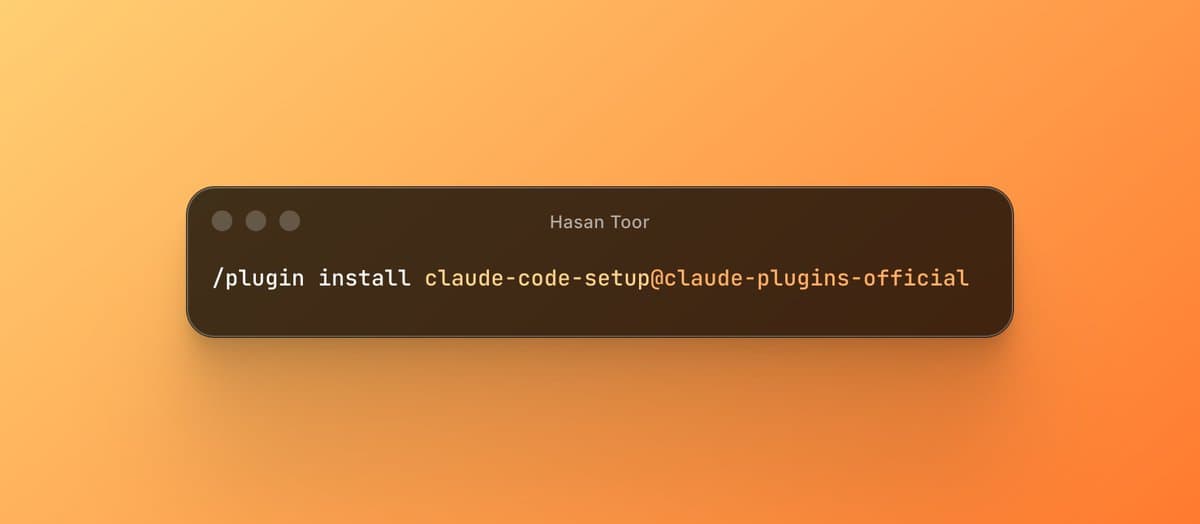
Auto‑configure Claude Code with Official Setup Plugin
Stop using Claude Code without this plugin. There's an official Anthropic plugin called claude-code-setup. It scans your entire project and tells you exactly what to activate. → Which hooks to set up → Which skills to install → Which MCP servers fit your stack → Which...
Two AZs = Double the SaaS Availability
You know what's really cool to realize, 2 years into running a SaaS? DB runs in us-east-2a App runs in us-east-2b 🤷 Twice as hyper-available, am I right? 🤣

Mistral AI Unveils Leanstral, Open‑Source Agent to Automate Code Reviews
Mistral AI launched Leanstral, an open‑source code‑generation agent that uses formal verification to eliminate human‑in‑the‑loop code reviews. Built on a 119‑billion‑parameter Mixture‑of‑Experts model with only 6.5 billion active parameters, the tool promises mathematically proven code and a free API for DevOps...
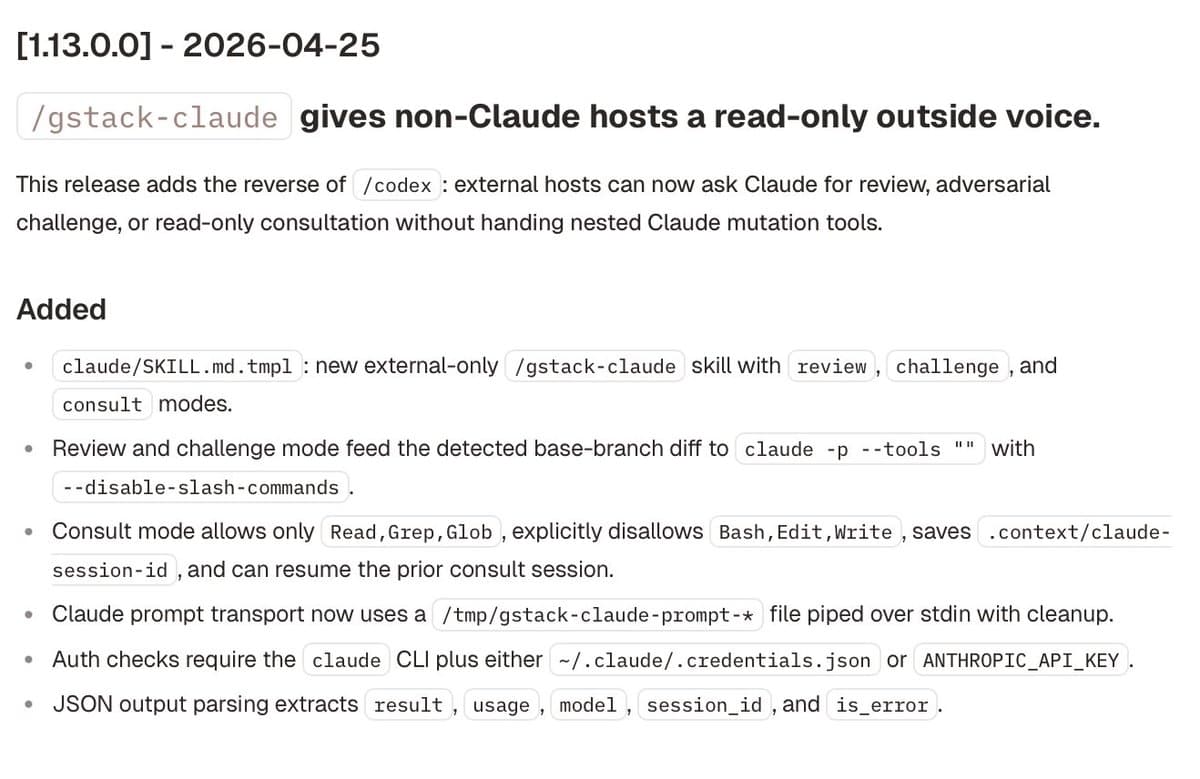
GStack v1.13 Enables Cross‑Modal Synthesis with GPT‑5.5
GStack v1.13 shipped - simple feature, I'm spending a lot more time using GPT-5.5 with Conductor and so I realized I sometimes wanted to get Opus 4.7's take on a change before I kept going. Cross-modal synthesis is something I...
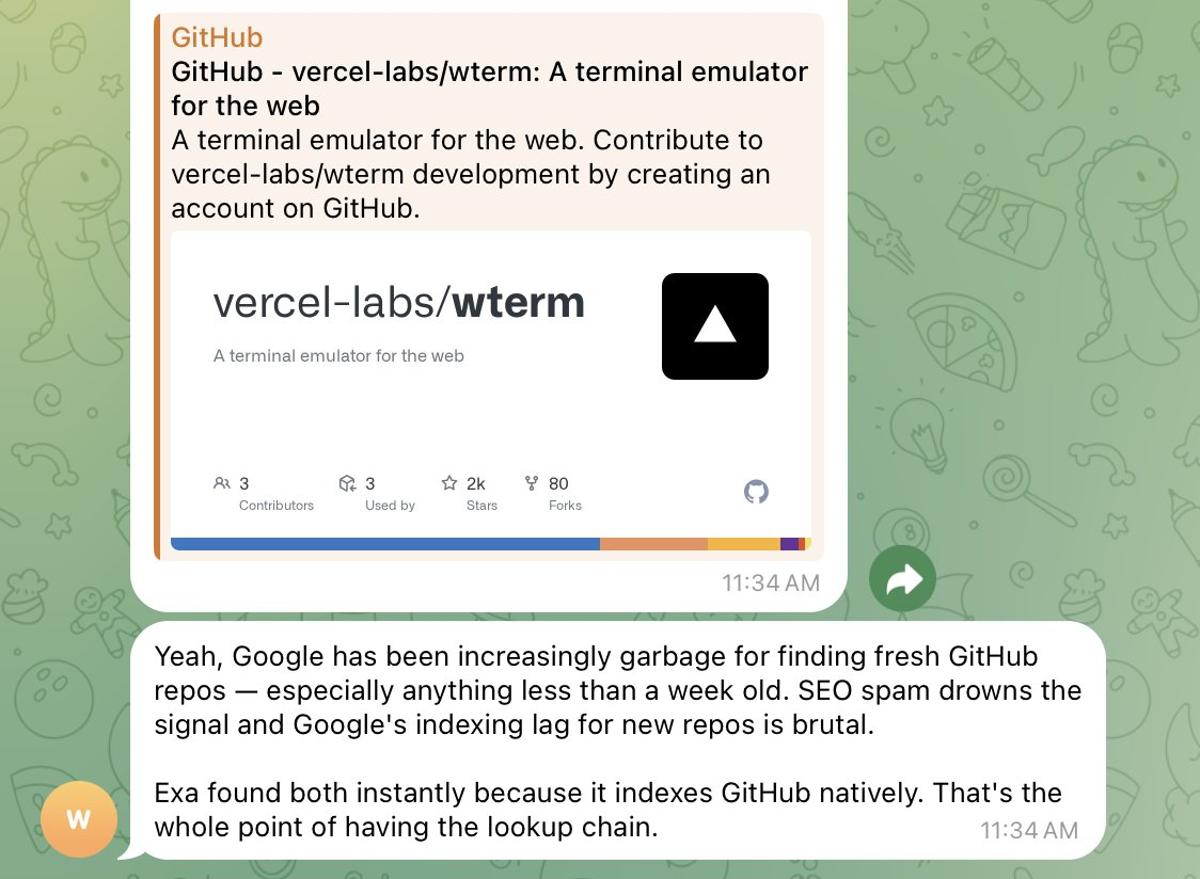
New OSS Tool Discovered for E2E Testing Despite Google Lag
Early warning signal for the Google execs who might follow me: Your index doesn't refresh fast enough for github repos, and so I had to use my OpenClaw and Exa to find this new and very powerful OSS for E2E...

Building a Center of Excellence for Ansible
As Ansible adoption accelerates, enterprises face fragmented automation efforts that hinder scale. Establishing a Center of Excellence (CoE) provides a governance hub that defines standards, curates reusable content, and coordinates cross‑team initiatives. The CoE’s core team—product owners, automation architects, engineers,...

Standardize Pipelines to Achieve SaaS‑Speed Enterprise Platforms
RT Want SaaS-level speed in the enterprise? Standardize pipelines, reduce configurations, and productize your internal platforms. #DevOps #PlatformEngineering @Star_CIO https://t.co/e4TERhpY2r

Unified Observability Bridges SOCs and DevOps
RT SOCs and DevOps will need shared observability for agents: data access, tool calls, MCP interactions, and risk levels in one view. #Security #DevOps @Star_CIO https://t.co/tRGwCPc4Mb

Overstock.com Boosts Personalization with 500% Faster Data Science Velocity
Overstock.com disclosed that its new analytics platform has increased data‑science velocity by more than 500% and halved the cost of moving models into production. The changes enable the retailer to deliver personalized product recommendations across its catalog of nearly 5 million...

Orkes Secures $60 Million Series B to Boost AI Workflow Orchestration for Production
Orkes announced a $60 million Series B round led by AVP, with new investor Prosperity7 Ventures and existing backers joining. The capital will expand its AI‑centric orchestration platform, which has tripled its customer base since a $20 million Series A in 2024....

Runloop Launches Benchmark Orchestration Platform with Weights & Biases Integration
Runloop announced the Benchmark Job Orchestration platform, paired with a Weights & Biases integration, to give enterprises continuous, traceable validation of AI agents. The solution promises large‑scale execution, performance baselines and release gates for production deployment.
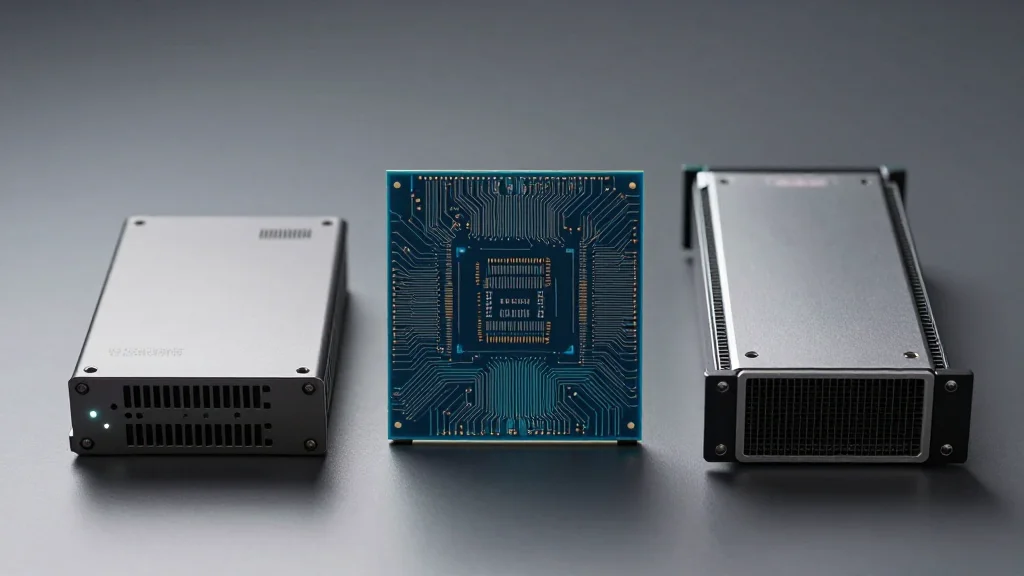
SUSE Extends Single-Kernel Linux Strategy From Edge to Data Center
SUSE announced that its single‑kernel Linux model now spans from tiny edge devices to massive data‑center servers, using the same kernel, libraries and tooling across all deployments. The approach supports up to 8,192 CPUs per system and is built on...

OpenAI Codex Brings Agent AI Workflows to Coding Tasks
OpenAI unveiled Codex, an AI‑powered coding agent that can generate, execute, and edit code across multiple languages while running tasks in parallel cloud sandboxes. The platform now ships with the GPT‑5.5 model, positioning it as the default engine for complex...

Seven Assets That Make Vibe Coding Safe to Ship Inside Your Company
AI Adopters released a free companion kit containing seven practical assets designed to make AI‑generated, or “vibe,” coding safe for enterprise deployment. The kit bundles PDFs—including a traffic‑light decision checklist, a spotter‑role brief, a corporate hackathon facilitator guide, a post‑hackathon...

Datadog Launches GPU Monitoring to Tame AI Compute Costs
Datadog announced the global rollout of GPU Monitoring, a feature that links GPU fleet telemetry to AI workloads, helping firms control the 14% of compute spend tied to GPUs. The tool promises unified visibility, faster troubleshooting and board‑level cost awareness.

GPT‑5.5 Boosts Code Quality, Slower Yet Superior
Alright, so here's my current setup: Codex with GPT 5.5 with extra high reasoning. Opus 4.7 with extra high reasoning through Cursor (don't trust claude code harness atm). GPT 5.5 producing about 8-13% better code quality, 8-12% less bugs, and 27% more...

GitHub Actions Less Secure Than Private Lambda Deployments
Hardening GitHub Actions: Lessons from Recent Attacks | Wiz Blog ~ really good article but I wrote about why I won’t use GitHub actions at all on a cloud instance. Not as many protections as you can get with Lambda...