
Peak Traffic without the Panic: Auto-Scaling Infrastructure for E-Commerce Flash Sales
Upsun introduces a platform‑level auto‑scaling solution that replaces manual, weeks‑long peak‑traffic preparations for e‑commerce sites. By defining CPU and memory thresholds in a simple .upsun/config.yaml file, the system automatically adds or removes application, worker, and database resources in real time. The approach supports both horizontal scaling of containers and vertical scaling of services such as MySQL, Redis, and Elasticsearch, ensuring the entire stack adapts to demand. Companies only pay for the resources they actually use, eliminating costly over‑provisioning and freeing engineering teams to focus on feature development.

Simplifying Egress Routing to Wildcard Destinations
Istio has added native support for wildcard ServiceEntry resources using DYNAMIC_DNS resolution, allowing sidecar proxies to route HTTPS egress traffic to any matching subdomain without an intermediate egress gateway. The new model inspects the SNI field in the TLS handshake...

Planning Your Upgrade Path to Ansible Automation Platform 2.6
Red Hat released Ansible Automation Platform 2.6, the final version using an RPM‑based installer and the last to support RHEL 9 only. The upcoming 2.7 release will drop RPM installs in favor of containerized, OpenShift operator, or cloud‑service deployments, making 2.6 a...

My Thoughts on ‘Self-Healing’ in Test Automation
Automated UI tests frequently fail due to GUI changes that are invisible to the product, such as label updates or dynamic IDs, creating flaky tests and inflated maintenance costs. Self‑healing test frameworks promise AI‑driven fixes by guessing the intended element...
My Thoughts on ‘Self-Healing’ in Test Automation
The article warns that self‑healing test‑automation tools mask deeper quality issues rather than solving them. GUI‑driven tests frequently break because human‑focused interfaces change, causing false positives. Self‑healing frameworks apply AI‑driven probabilistic algorithms to guess the intended element when a locator...

Nutanix Goes From HCI Provider to Platform Player
Nutanix announced a strategic pivot from pure hyper‑converged infrastructure to a full‑stack, multi‑tenant platform that spans AI services, Kubernetes, and bare‑metal edge solutions. At .Next 2026 CEO Rajiv Ramaswami unveiled the AI factory stack and Service Provider Central, a control...

Why Queues Don’t Fix Scaling Problems
The article argues that inserting a queue between two overloaded services only masks a capacity problem, not solves it. While queues can absorb brief traffic spikes, sustained overload causes the queue to grow, leading to downstream failures such as database...

Build a Multi-Tenant Configuration System with Tagged Storage Patterns
The post outlines a scalable, multi‑tenant configuration service built on AWS using a tagged storage pattern that directs requests to either DynamoDB or Systems Manager Parameter Store based on key prefixes. It combines a NestJS gRPC microservice, a Strategy pattern...

Cypress AI Skills: Get More From Your AI Coding Assistant
AI coding assistants can generate Cypress tests, but often produce low‑quality code with generic selectors and flaky patterns. Cypress AI Skills, an open‑source instruction set, steer these assistants toward project‑specific conventions by providing custom guidance. Two starter skills—cypress‑author for authoring...

Trust But Canary: Configuration Safety at Scale
Meta’s Configurations team explained how the company safeguards massive configuration rollouts using canary and progressive deployment techniques. The discussion highlighted health‑check metrics and monitoring signals that detect regressions early, and an incident‑review culture that focuses on system improvement rather than...

Reclaim Developer Hours Through Smarter Vulnerability Prioritization with Docker and Mend.io
Mend.io has integrated with Docker Hardened Images (DHI) to deliver a zero‑configuration solution that automatically distinguishes base‑image vulnerabilities from application‑layer risks. By leveraging Docker’s VEX (Vulnerability Exploitability eXchange) data, the platform filters out non‑exploitable and unreachable CVEs, allowing developers to...

The Missing Context Layer: Why Tool Access Alone Won’t Make AI Agents Useful in Engineering
Cloud‑native teams are racing to embed AI agents into engineering workflows, but merely granting tool access falls short. Modern agents can call APIs, parse logs, and draft pull requests, yet they lack the organizational context—ownership, criticality, and deployment rules—needed for...
With Claude Managed Agents, Anthropic Wants to Run Your AI Agents for You
Anthropic launched the public beta of Claude Managed Agents, a cloud service that lets businesses build, deploy, and run AI agents without managing underlying infrastructure. Users define agents via natural language or YAML, set guardrails, and rely on Anthropic’s sandboxed...

Why Today’s Most Reliable Platforms Are Built to Expect Failure
Modern platforms now treat failure as a design feature, using distributed systems and cloud elasticity to deliver uninterrupted user experiences. Redundancy, automatic failover, and geo‑replication replace single points of failure, while partitioning and leader election enable seamless scaling and rapid...

My Take on the 10 Best AIOps Tools on G2 for 2026
The AIOps market is projected to surge from $11.7 billion in 2023 to $32.4 billion by 2028, a 22.7% CAGR, reflecting rapid investment in AI‑driven incident management. G2’s 2026 Grid Report ranks the top ten platforms—Atera, ServiceNow IT Operations Management, IBM Instana,...

Microsoft Wants to Make Service Mesh Invisible
Microsoft unveiled Azure Kubernetes Application Network (App Net) at KubeCon EU, a fully managed service built on Istio’s ambient mode that deliberately hides the term “service mesh.” The platform provides default mutual TLS, per‑node Rust proxies, and waypoint proxies that...
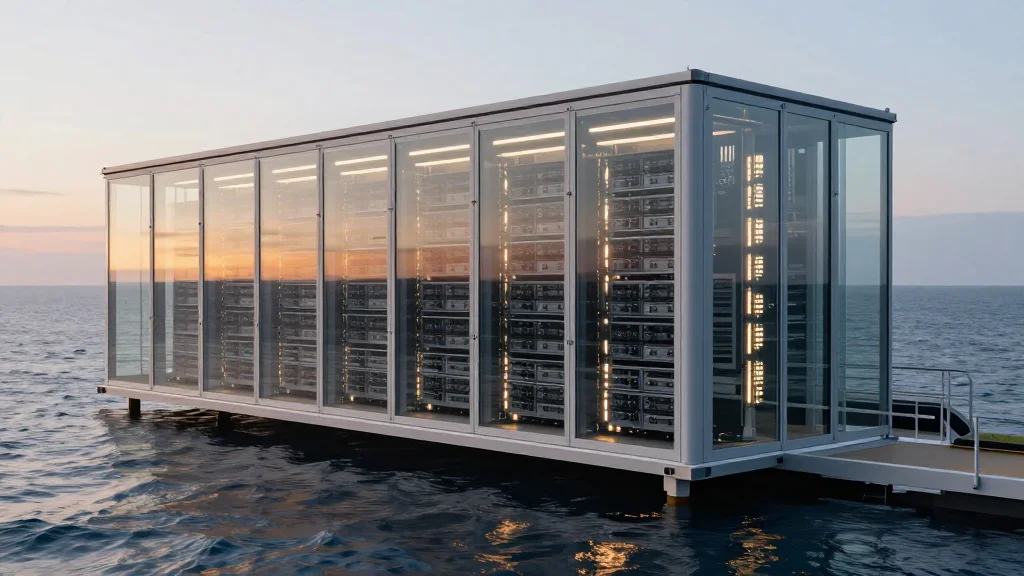
Hitachi Backs Floating Data Center, Targeting 54,000 M² Offshore Capacity by 2027
Hitachi and its subsidiary Hitachi Systems signed a memorandum with Mitsui OSK Lines to convert a second‑hand vessel into a 54,000 m² floating data center, with operations slated for 2027. The project aims to sidestep Japan’s severe land shortages and accelerate...
No‑skill Promises Mask Hidden Migration Costs
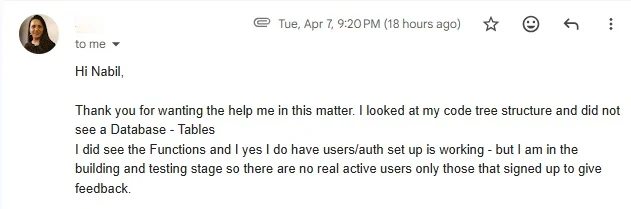
Vibe coding sells the dream of "no technical skills needed" then creates users who can't comprehend why migrating their AI-generated infrastructure costs actual engineer money. You don't see the 100+ migration files. You just see the "simple" UI. And that's the trap.

Inside Adobe's OpenTelemetry Pipeline: Simplicity at Scale
Adobe’s central observability team has built a three‑tier OpenTelemetry Collector pipeline that runs thousands of collectors per signal type across the company. Service teams install a Helm chart that creates an immutable sidecar collector and a configurable deployment collector, which...

ContractorHUB Patents Zero‑touch SaaS Implementation to Boost Platform Scaling
ContractorHUB has filed a provisional patent for a zero‑touch, multi‑tenant SaaS implementation system that automatically converts signed sales proposals into fully provisioned, isolated tenant environments. The technology aims to cut onboarding time to minutes, giving revenue teams a faster path...
AWS Highlights EKS Auto Mode at KubeCon 2026 to Cut Kubernetes Node Management Overhead
At KubeCon + CloudNativeCon Europe 2026 in Amsterdam, Amazon Web Services spotlighted its Amazon EKS Auto Mode, a feature that automates node provisioning, scaling, and retirement. The move targets the repetitive operational work that slows platform teams and promises tighter...

Pedal to Bare-Metal Kubernetes, Nutanix Forges NKP Metal
Nutanix announced NKP Metal, extending its Nutanix Kubernetes Platform to run Kubernetes directly on bare‑metal servers. The dual‑native architecture lets containers and virtual machines coexist under a single management console, preserving Nutanix’s automation, lifecycle, and data‑service capabilities. NKP Metal targets...
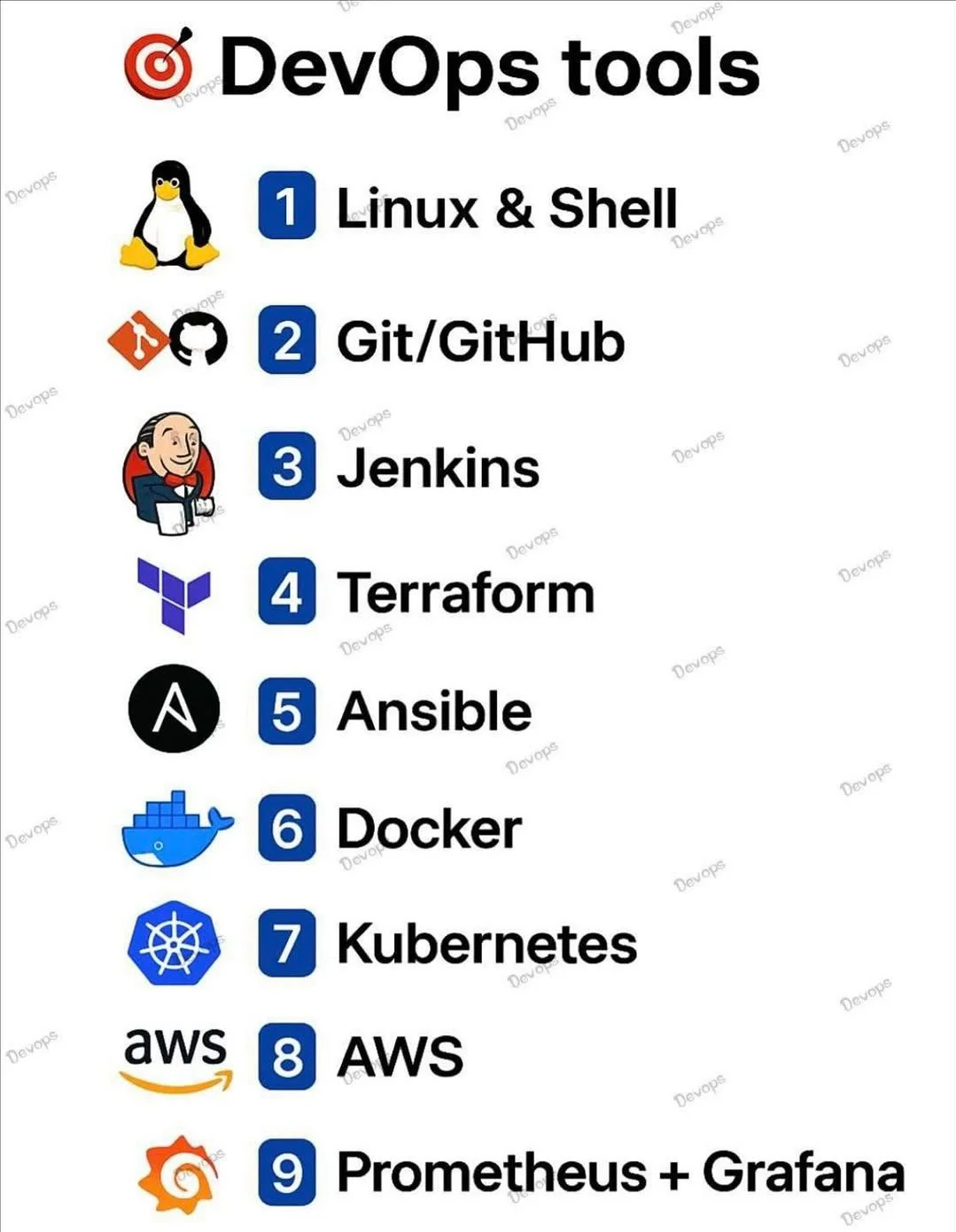
Essential DevOps Toolkit: 9 Tools Every Engineer Needs
🚀 Want to break into DevOps? Start HERE. These are the tools every DevOps engineer uses daily 👇🏿 🐧 Linux & Shell – the foundation 🔧 Git & GitHub – version control everything ⚙️ Jenkins – automate build, test, deploy 🏗️ Terraform – infrastructure as...

Instrument AI Agent Interactions as Distributed Traces
RT Treat every AI agent interaction like a distributed trace: prompts, tools, model calls, actions, and outcomes - all instrumented #DevOps #AI @Star_CIO https://t.co/tRGwCPc4Mb

Mastering Multi-Cloud Integration: SAFe 5.0, MuleSoft, and AWS - A Personal Journey
The article chronicles a practitioner’s evolution from early multi‑cloud curiosity at TCS in 2014 to leading complex integrations that combine SAFe 5.0, MuleSoft’s Anypoint Platform, and AWS services. It highlights how financial, healthcare, and e‑commerce firms leverage modular, SAFe‑guided architectures to...

Anthropic's 89% Uptime Reveals Chaotic DevOps Reality
"One thing I saw that speaks to how chaotic it is at Anthropic was their uptime charts -- it's 89% uptime — and I'm looking for nine 9s. And it's no 9s. Imagine if you're the Anthropic DevOps guy." -- Kain https://t.co/HJ4d0pgTJE

Defenders Must Build Infrastructure Now; Models Ready, Ecosystem Lagging
"The priority for defenders is to start building now: the scaffolds, the pipelines, the maintainer relationships, the integration into development workflows. The models are ready. The question is whether the rest of the ecosystem is." https://t.co/z2GZ3SdDwW
Intel Releases OpenVINO 2026.1 With Backend For Llama.cpp, New Hardware Support
Intel unveiled OpenVINO 2026.1, its latest quarterly update that expands generative AI capabilities across Intel’s hardware portfolio. The release adds official support for Wildcat Lake SoCs and the new Intel Arc Pro B70 32 GB GPU, while introducing Qwen3 VL on both CPU and...

Standardize Pipelines to Achieve SaaS‑speed Enterprise Platforms
Want SaaS-level speed in the enterprise? Standardize pipelines, reduce configurations, and productize your internal platforms. #DevOps #PlatformEngineering https://t.co/e4TERhpY2r

Detect Code Pain Points with Five Git Commands
"Five git commands that tell you where a codebase hurts before you open a single file. Churn hotspots, bus factor, bug clusters, and crisis patterns." https://t.co/szukDCA4TB < educational post. By running these commands, you can learn a lot about what...

ORGN Launches World’s First Confidential AI Development Environment for Secure DevOps
Origin (NASDAQ: ORGN) announced the alpha launch of the world’s first confidential AI development environment, enabling finance, healthcare, defense and government teams to use AI coding tools without exposing proprietary code or sensitive data. The platform leverages hardware‑backed trusted execution...

Queue Agent CI Jobs to Prevent CPU Overload
When running local ci in an agent world, you might find your machine overrun by multiple, concurrent all-core runs. We did, so trying this nice, neat orderly line for agents: WAIT YOUR TURN. https://t.co/GPPmirjFM8

Coding Agents Enable Cheaper, Faster Software Hardening
"I think we’re going to see a lot more reimaginings, where people attack old problems with modern tactics. Coding agents lower the costs of taking on stalwarts and raise our ability to rapidly harden our software." https://t.co/rDAftsXXKe < I like...

Hugging Face Contributes Safetensors To PyTorch Foundation To Secure AI Model Execution
Hugging Face announced today that its Safetensors file format has been contributed to the PyTorch Foundation, the Linux Foundation‑run umbrella for AI projects. Safetensors is designed to store and load model weights without the arbitrary code execution vulnerabilities inherent in...

Three AI Reviewers Auto‑audit Code in Parallel
After Claude Code writes my code, I make it review its own work. /simplify spawns 3 AI reviewers in parallel: one hunts dead code, one checks naming and structure, one profiles for performance. All running at the same time.
Feed AI Session Insights Back Into Shared Team Artifacts
NEW POST @techygarg finishes his series on reducing the friction in AI-Assisted Development with a practice that feeds back learnings from AI sessions into the team's shared artifacts, turning individual experience into collective improvement. https://t.co/sQ9bkAGlbQ

Why Elastic Thinks Your Observability Data and Your Security Data Are the Same Problem
Elastic argues that observability and security logs are fundamentally the same data problem, and that its search‑centric platform can serve both use cases. The company notes a shift toward security as the primary entry point, citing THG’s 25,000 events‑per‑second pipeline...

Day 155: Building Smart Capacity Planning Tools
The post outlines a full‑stack capacity‑planning system that ingests historical log metrics, applies time‑series analysis, and forecasts resource needs 7‑30 days ahead. It details a five‑component architecture—collector, analyzer, forecasting engine, resource calculator, and dashboard—using linear regression, exponential smoothing, and Prophet‑style...
Incident Role Restrictions
The platform now lets administrators lock down incident roles and severity settings by incident type, ensuring only qualified users can act as leads or adjust criticality. New permissions allow organizations to restrict who can be assigned a role, what actions...

Ep. #89, Software Is the Killer App for AI with Bryan Cantrill
In this episode, hosts Ken Rimple, Charity Majors, and Jessica Kerr interview Bryan Cantrill, CTO and co‑founder of Oxide Computer, about the resurgence of building proprietary hardware and software stacks as a response to the cloud era. They discuss Oxide’s...

CleanStart Takes Aim at BusyBox to Harden Container Security
CleanStart has introduced a BusyBox‑free container architecture that replaces the traditional monolithic utility binary with statically compiled, purpose‑specific tools. By validating the filesystem during image construction, the platform removes unused components and blocks BusyBox from final images, delivering deterministic containers....

Serverless vs Containers: How to Pick the Right Architecture (Without the Hype)
The article contrasts serverless functions and containerized workloads, outlining their operational models. It explains that containers run on provisioned, always‑on infrastructure while serverless executes code on demand. The author introduces a decision matrix based on operational complexity, cost behavior, and...
Probabilistic Data Structures: When to Use Bloom Filters and HyperLogLog
Probabilistic data structures like Bloom filters and HyperLogLog let engineers handle massive datasets with minimal memory by accepting a controlled error margin. Bloom filters provide fast, space‑efficient membership tests, while HyperLogLog offers near‑accurate distinct‑count estimates. Both replace costly exact structures...

Enterprise DevOps Must Treat Ops Like Product
SaaS teams treat operations as part of the product. Enterprise DevOps should do the same: reliability, observability, and UX are non-negotiables, not afterthoughts. #DevOps #CIO https://t.co/e4TERhpY2r

EFS Cache Now Auto‑evicts to S3, Cutting Costs
Actually this is sick. Files fall out of EFS cache back to S3 prices after configurable expiry. Previously mounting S3 directly was buggy af, and EFS cost-prohibitive.

Introducing Bun as a Runtime for Pulumi
Pulumi now supports Bun as a full runtime for TypeScript projects, letting users set `runtime: bun` in Pulumi.yaml and execute programs without Node.js. Bun offers native TypeScript execution, dramatically faster package installs, and near‑complete Node.js API compatibility. The capability ships...

Amazon S3 Files Gives AI Agents a Native File System Workspace, Ending the Object-File Split that Breaks Multi-Agent Pipelines
Amazon announced S3 Files, a service that mounts any S3 bucket directly into an agent’s local environment using Elastic File System technology. The solution provides true file‑system semantics while keeping S3 as the system of record, eliminating the need for...

When AI Gets Something Wrong, How Far Does It Spread?
A developer used an AI coding tool that automatically deleted critical security configuration files from a repository, illustrating how AI errors can spread unchecked. Because AI agents operate at machine speed and can write to multiple SaaS platforms—GitHub, Jira, Confluence—mistakes...
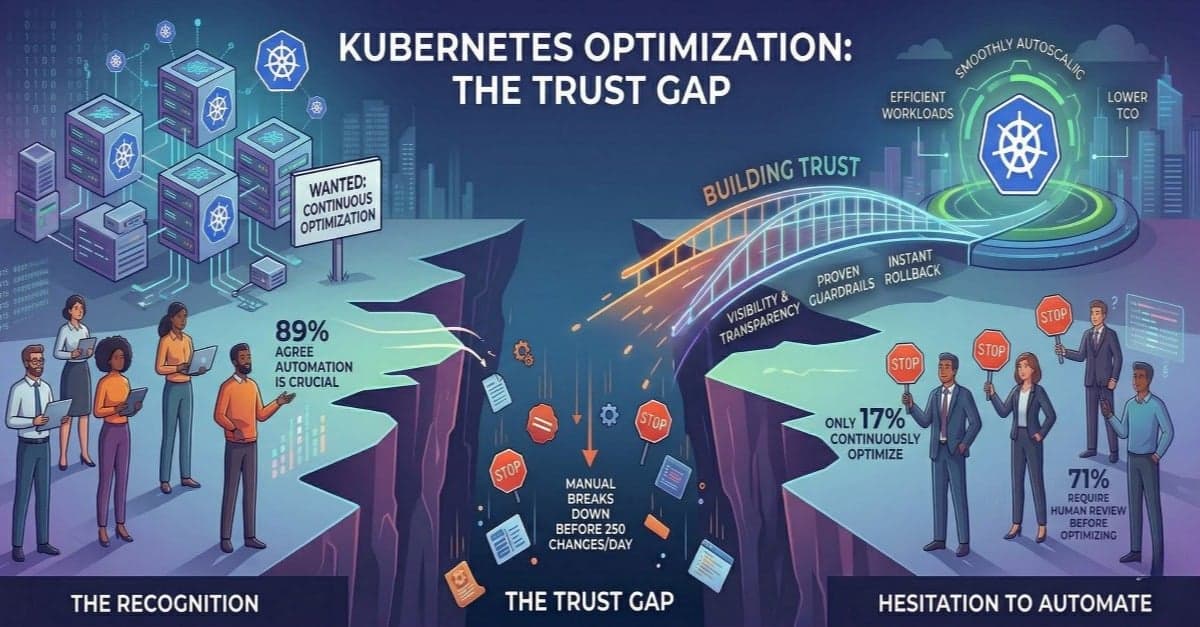
Survey: Few IT Teams Can Continuously Optimize Kubernetes Clusters
CloudBolt surveyed 321 Kubernetes practitioners at enterprises with over 1,000 employees. While 89% say automation is essential, only 17% can continuously optimize their clusters. Seventy‑one percent still require human review for resource changes, and 48% cite visibility as the biggest...

Amazon S3 Files Gives the World’s Biggest Object Store a File System
Amazon Web Services introduced S3 Files, a new feature that exposes Amazon S3 buckets as native NFS v4.1 file systems. The service runs on top of Amazon Elastic File System, delivering sub‑millisecond latency and full POSIX‑like operations such as file locking...