
Docker Isn’t Just About Containers Anymore
Docker, long known for popularizing containers, is repositioning itself as an AI‑infrastructure platform. The company launched Docker Model Runner to pull and run large language models locally via an OpenAI‑compatible API, introduced MCP Gateway to centralize AI tool configuration and credential injection, and unveiled Docker Sandboxes that isolate autonomous AI agents in lightweight microVMs. By joining the Linux Foundation’s Agentic AI Foundation, Docker signals a strategic bet on becoming the standard layer for AI agent orchestration. Teams should consider Sandboxes for safety, use the Gateway for multi‑tool coordination, and treat Model Runner as a prototyping aid.

Scalable Infrastructure Starts with Early Assumption Documentation
The difference between infrastructure that scales and infrastructure that doesn't: The decisions made before it needed to scale. Think ahead. Document your assumptions. Revisit them.

SRE Wasn't Google Search’s Silver Bullet
We like to say there is "no silver bullet" in software engineering: a technology or management technique that by itself promises an order of magnitude improvement in productivity, in reliability, in simplicity." So tell, me what was SRE for Google Search...

Volvo CTO Anders Bell Details Software‑First Strategy for EVs
Volvo Cars' chief engineering and technology officer Anders Bell told Automotive News that the company is reorganizing around a software‑first approach to accelerate its electric‑vehicle portfolio. The interview outlines how a unified software organization, new development tools and tighter integration...

Critical CVE‑2024‑YIKES Fuels 73‑hour Supply‑chain Breach Affecting 4 Million Developers
A compromised JavaScript package triggered CVE‑2024‑YIKES, leading to a 73‑hour incident that spread malware to roughly 4 million developers. The breach moved through a Rust compression library and a Python build tool before being unintentionally patched by a cryptocurrency mining worm.

Linux Distro Debian Goes All in on Reproducible Software
Debian, one of the oldest Linux distributions, announced a new security policy that mandates all future packages be reproducible, meaning they can be rebuilt byte‑for‑byte from source. The release team has updated its migration tooling to automatically reject any package...

How to Secure Secrets in CI/CD Pipelines
CI/CD pipelines automate every code change but rely on a web of credentials, making them prime targets for secret leakage. Common missteps include storing plain‑text tokens in repositories, using long‑lived keys, and exposing secrets through logs or environment variables. The...
How to Get Engineering Time Back From Kubernetes Upgrades
Kubernetes upgrades consume disproportionate engineering effort, especially for mid‑size EKS deployments where a single minor version bump across three regions can require four to six weeks of senior time. Industry reports show teams lose roughly 34 workdays per year to...

Anthropic’s Claude Code Upgrade Triggers 157k‑Developer Shift to OpenCode
Anthropic announced a massive boost to Claude Code’s rate limits and a full‑capacity lease of SpaceX’s Colossus 1 data centre, giving it access to over 300 MW and 220,000 Nvidia GPUs. The move coincided with a wave of developers flocking to the...

Java Code Isn’t the Problem – The Container Is
A development team discovered that dozens of vulnerabilities in a Java Spring Boot service were coming from the container, not the application code. Outdated base‑image packages and unsafe Maven transitive dependencies were the culprits. By integrating Docker Scout into their CI...
My AI Learning Journey – Part 11 – AI Assisted Coding – Good or Bad?
The author frames AI‑assisted coding as the latest abstraction layer built on decades of software stack evolution, from transistors to DevOps. While large language models can generate and refactor code quickly, the piece warns that without deep understanding of lower‑level...

Dynatrace Named a Leader and an Outperformer for the Second Consecutive Year in the 2026 GigaOm Radar for Kubernetes Observability
Dynatrace has been named a Leader and Outperformer in the 2026 GigaOm Radar for Kubernetes Observability, placing closest to the radar’s center for the second consecutive year. GigaOm evaluated 20 top solutions and gave Dynatrace the highest scores for key...

Linux Foundation Forms Working Group to Secure Open‑Source Package Registries
The Linux Foundation announced the creation of the Sustaining Package Registries Working Group, uniting the world’s leading package‑registry operators to confront a surge in machine‑generated traffic and a fragile funding model. The effort aims to define a sustainable governance and...

Teradata Unveils Autonomous Knowledge Platform to Streamline Continuous AI Agent Ops
Teradata announced the Autonomous Knowledge Platform, a unified AI‑studio and data‑management system that runs autonomous AI agents 24/7 across cloud, on‑premises and hybrid settings. The platform aims to curb the growing infrastructure spend caused by always‑on AI workloads and bridges...

Coinbase Cuts 14% of Staff to Accelerate AI‑Driven Operating Model
Coinbase is eliminating 14% of its workforce—about 693 jobs—from a headcount of 4,951 to embed artificial‑intelligence tools across product development. CEO Brian Armstrong frames the move as a strategic redesign rather than a market‑driven layoff, aiming for a flatter organization...

SRE Weekly Issue #516
SRE Weekly Issue #516 curates a range of SRE insights, from incident.io’s four‑step incident workflow framework to Datadog’s 99% query‑latency reduction by optimizing index scans. The issue also examines AI’s realistic role in SRE by 2026, critiques superficial blameless postmortems,...

Christophe Pettus: All Your GUCs in a Row: Autovacuum_work_mem
PostgreSQL 17 replaces the fixed 1 GB TID array used by autovacuum with an adaptive radix‑tree based TIDStore, eliminating the hard memory cap and reducing multi‑pass index clean‑ups. The autovacuum_work_mem setting, which defaults to -1 to inherit maintenance_work_mem, now rarely needs...
GitLab Makes Anthropic’s Claude Default Engine in Duo Agent Platform
GitLab has expanded its partnership with Anthropic, positioning Claude as the default model across its Duo Agent Platform. The move embeds AI code generation, review and vulnerability remediation within GitLab’s existing governance framework, while leveraging Google Cloud Vertex AI and...

Microsoft Unveils Copilot Pipelines for AI-Powered Data Workflows
Microsoft announced Copilot Pipelines, an AI‑enhanced extension to Power Automate that automates data‑centric workflows. Early pilots show up to 60% faster deployments and a 30% increase in logic‑error detection, with a public rollout planned for the third quarter of 2026.

Agents Just Made Your Feature Launch Channel Smarter
Amplitude introduced AI‑powered agents that live inside a Slack launch channel, turning it into a single command center for feature rollouts. By linking the channel to Amplitude Analytics and Feature Experimentation, teams can set alerts, embed AI context, and manage...

“It Works on My Machine”: Why Environment Parity Is Still a Platform Problem in 2026
Environment parity remains a critical bottleneck in 2026, with many teams still facing the “repro gap” where code works locally but fails in staging or production. The root cause is drift caused by separately maintained environments, leading to version and...

Vercel Open‑Sources DeepSec, AI‑Driven Scanner to Shift Security Left in CI/CD
Vercel has open‑sourced DeepSec, an AI‑powered security scanner that integrates directly into development workflows. The tool can cost thousands of dollars per scan for large repositories, yet promises a false‑positive rate of only 10‑20 percent, aiming to move vulnerability detection...

Built and Deployed an AI Agent
Engineers often stall after building a local AI demo, hitting a deployment wall. This post provides a step‑by‑step guide that lets anyone spin up a fully functional AI task‑agent on Render in about 30 minutes, complete with a public URL....
Why Prometheus Couldn’t See Cilium Metrics at 2 A.m.
The article exposes the hidden "integration tax" that plagues CNCF stacks, illustrated by a 2 a.m. outage where Prometheus could not scrape Cilium metrics because ServiceMonitors were missing. It details similar friction points—cert‑manager versus ingress controllers and duplicate kubelet timestamps—that consume...

Datadog and T‑Mobile Flag Production Risks for AI Agents
At the AI Agent Conference in New York, Datadog’s chief scientist and T‑Mobile’s director of AI engineering warned that AI coding agents cannot yet be trusted in production without strict governance. Their remarks underscore a growing tension between rapid AI...

Firefox Finds 20 Year Old Bug and Patches 14 Months of Fixes in 30 Days Using Anthropic’s Mythos AI
Mozilla leveraged Anthropic’s Claude Mythos Preview to patch 423 Firefox security bugs in April 2026, compressing roughly 14 months of work into a single month. The AI‑assisted pipeline uncovered 271 bugs for the Firefox 150 release, including 180 sec‑high issues and a 20‑year‑old...

The Attack Surface Moved Inside the Agent. So Did Arcjet.
Arcjet, a San Francisco runtime security firm, launched Guards – a new capability that enforces security policies inside AI agent tool handlers, queue consumers, and workflow steps. Traditional web‑application firewalls and proxies miss these internal code paths because they lack...
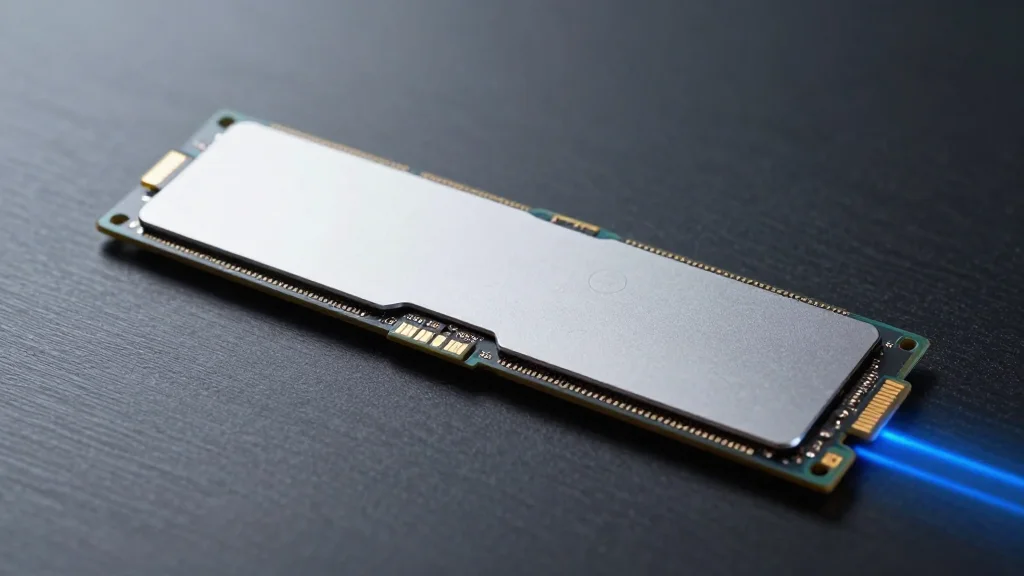
Axboe Hacking On New Linux Patches For 60% Increase To Per-Core I/O Performance
Linux kernel maintainer Jens Axboe released a proof‑of‑concept patch series that lifts per‑core storage I/O performance by roughly 60%. The changes extend io_uring’s registered buffers with pre‑allocated bios and DMA mapping, eliminating bio allocation and map/unmap overhead. The patches target...

Debian Release Team: Debian Must Now Ship Reproducible Packages
The Debian release team announced that Debian 14 “Forky” will be the first major release to mandate reproducible packages, enforcing bit‑for‑bit identical builds from source to binary. A new migration check now blocks any package that fails reproducibility or regresses...

Day 163: Build Service Dependency Mapping
The post outlines building an automated service‑dependency mapping system that parses logs to generate a real‑time graph of microservice interactions. It details four core components—a log parser, graph builder, visualization dashboard, and health‑impact analyzer. By weighting edges with call frequency...

VMware Tanzu Leverages 15‑Year Legacy to Bring AI Into DevOps Pipelines
The New Stack’s latest analysis notes that VMware is tapping the 15‑year evolution of its Tanzu platform to embed AI capabilities into modern DevOps pipelines. By drawing on its Cloud Foundry roots, Tanzu aims to meet the accelerated AI‑driven demands...

Nova Intelligence Raises $40 Million to Accelerate AI‑Driven SAP Modernization
Nova Intelligence announced a $40 million seed‑Series A financing round led by Chemistry, Accel, Conviction and SAP.iO. The capital will fund engineering, sales and marketing as the startup scales its AI agents that automate SAP development, migration and operations, already delivering 5‑fold...
Week 3 Integrated Logging Pipeline (MVP): From Serialization to Production-Style Observability
The post walks developers through building an end‑to‑end logging pipeline MVP that mirrors a production observability path: ingestion, normalization, optional validation, enrichment, and output. It reuses Week 3 course lessons—JSON logs (Day 15), canonical normalization (Day 18), and context enrichment (Day 21)—and stitches them...
Essential DevOps Skills Every Engineer Must Master
Core DevOps Skills Every Engineer Should Learn ♾️ → Learn Linux, networking, and shell scripting → Understand Git workflows and collaboration → Build CI/CD pipelines with Jenkins and GitHub Actions → Master Infrastructure as Code with Terraform and Ansible → Learn Docker, Kubernetes, and Helm...
Shared Observability Unites SOCs and DevOps
RT SOCs and DevOps will need shared observability for agents: data access, tool calls, MCP interactions, and risk levels in one view. #Security #DevOps @Star_CIO https://t.co/tRGwCPc4Mb
AWS Accelerates Aurora Serverless Scaling by 45% and Boosts Throughput 30%
Amazon Web Services rolled out Platform Version 4 of Aurora Serverless in April 2026, cutting ramp‑up time by roughly 45% and lifting throughput by up to 30%. The upgrade promises faster, more efficient scaling for the serverless database that underpins...

Code Contributions Need Built‑in Robustness, Not Just MVP
Force-feeding Claude Code strange edge cases and attack surfaces to consider bc it doesnt seem to spot them automatically will hopefully be ironed out soon. Ideally robustness and hardening should be the default of any code contribution yet it seems...

OpenClaw Feels Like a Ferrari—Requires Mechanic Skills
I literally went through this today. OpenClaw messed up its own PATH and I spent the morning going into the guts of Dockerfiles and using Claude code to remove the bug... but then I was flying again by afternoon.

Intent‑Based Chaos Testing Emerges to Safeguard Enterprise AI Agents
Industry experts introduced intent‑based chaos testing, a method that injects anomalous scenarios to verify that autonomous AI agents stay within their intended behavioral boundaries. The approach highlights failures like a four‑hour outage caused by an over‑confident observability agent that acted...
Claude Code's Ultrareview Redefines Code Review, Not Just AI Feedback
Claude Code shipped /ultrareview and almost nobody is talking about what's actually new about it. It's not "AI reviews your code." We had that.
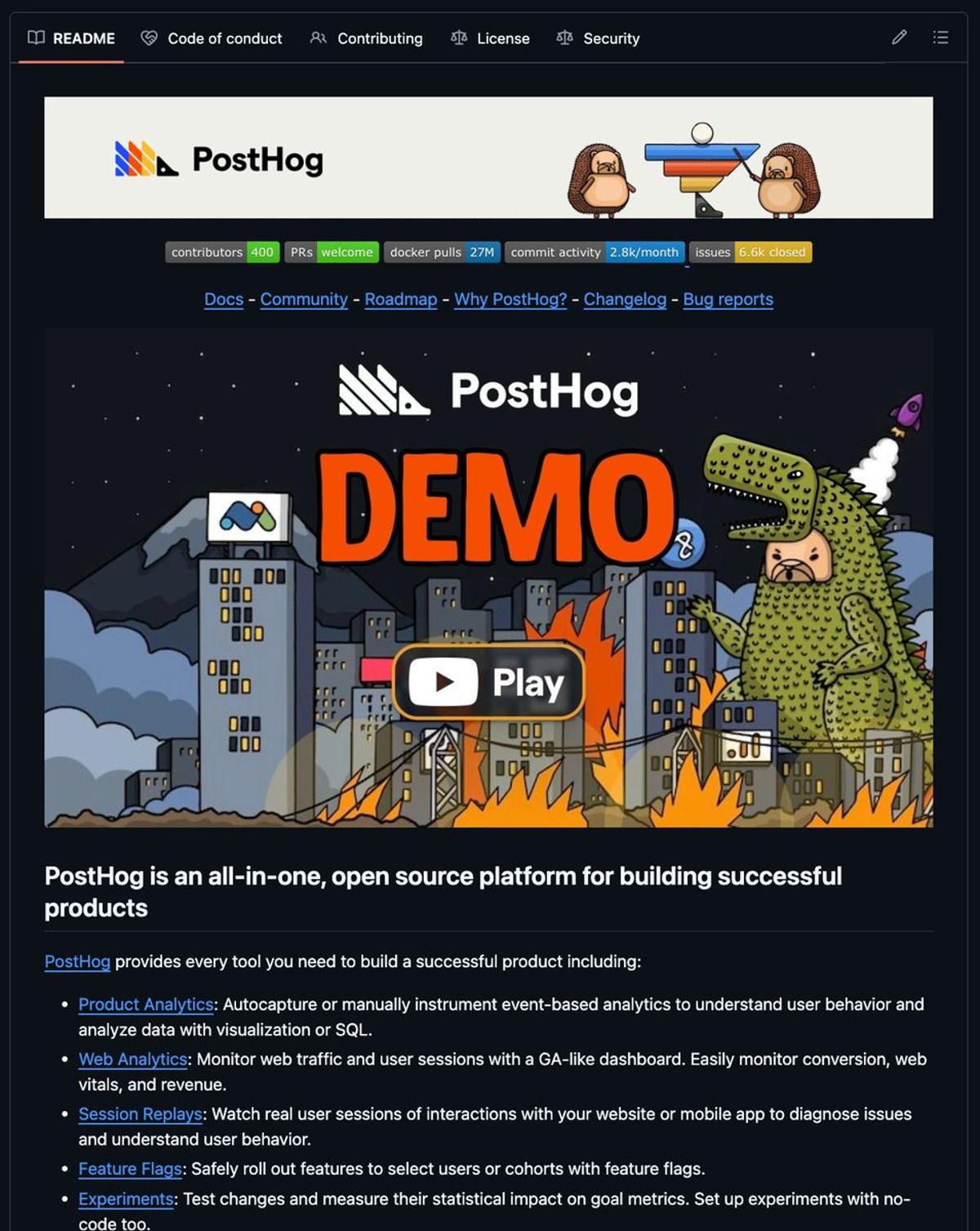
Top 10 Open‑Source Tools for Harness Engineers This Weekend
10 Best open source repos for Harness engineering to try this weekend: 1. Harness: https://t.co/a7Sdo5G9pz 2. PostHog: https://t.co/VvG4OaixDH 3. Chaos Mesh: https://t.co/GKNUI0vewG 4. GrowthBook: https://t.co/4auIXIH1pv 5. Kubescape: https://t.co/L2ItY0yscK 6. Flagsmith: https://t.co/aDreSaAFmK 7. ChaosBlade: https://t.co/imG5EEMLTa 8. Litmus: https://t.co/XjWu1xwQ5M 9. Kusion: https://t.co/eZi2KIa1p8 10. Rig: https://t.co/UrvsKXG2t2

MongoDB Launches Unified AI Data Platform with 45% Faster Reads for Enterprise Agents
MongoDB announced a unified AI data platform at its London 2026 event, delivering automated embeddings, persistent agent memory and version 8.3 that lifts read throughput by 45%. The move consolidates vector search, memory and operational data to cut engineering overhead...
OpenAI Unveils Codex Chrome Extension, Bringing AI Coding Assistants to Enterprise Browsers
OpenAI rolled out a Codex Chrome extension that lets AI coding assistants operate inside live browser sessions, granting enterprise developers access to signed‑in SaaS tools and multiple tabs. The move targets the growing need for browser‑centric AI automation in corporate...
Recover Fast: MTTR Beats MTBF in Tech
Everyone in tech talks about failing fast. Fewer people talk about recovering fast. Your MTTR matters more than your MTBF. How fast can you fix it when it breaks?

The AI Code Review Checklist that Prevents the Next $1M Production Incident
A series of high‑profile AI‑driven code failures—including Replit’s agent that erased SaaStr’s production database—has exposed a growing gap between rapid AI code generation and human review capacity. Data from GitClear, Apiiro, Veracode and other studies show AI‑generated code now carries...

Never Trust Cloud Defaults—Review Settings First
Working in cloud taught me that defaults are dangerous. ☁️ Default security groups are too open ☁️ Default instance sizes cost more than you need ☁️ Default retention policies keep too much or too little Always know what you're accepting when you accept a...

Async Infrastructure Paved Path to AI Agent Era
https://t.co/EAT6n7xgeL lets developers add AI agents to their products with a simple SDK, handling execution, long-running workflows, and reliability so they don't have to. Over 90% of their usage now comes from agent workflows, and they recently announced their $16M...

AI Engineers Must Master This Essential ‘Just‑in‑Case’ Guide
this is a big deal, on the order of Kelsey Hightower’s “Kubernetes The Hard Way” and probably all ai engineers should go thru this once mostly i advocate “just in time learning”, but this is one scenario you want “just in...
Google Cloud Run Provides Built‑In Zonal Redundancy
OK this is a superb characteristic of Google Cloud Run I just learned Building zonal redundancy is a bunch of work… when a platform offers it, it’s worth paying attention to (don’t know of many platforms that do) Thanks @steren
Cloud Run Offers Built‑in Zonal Redundancy and Multi‑regional Failover
FYI, Cloud Run gives you *zonal* redundancy out of the box, which means that if GCP loses a zone, your worloads are automatically moved to healthy zones in the region. You can also build multi-*regional* architectures with automated fail over using...