
PPC Audit Checklist Every Ecommerce Brand Should Run | Eastside
A PPC audit uncovers hidden budget leaks and mis‑tracked conversions that can mask declining performance in ecommerce brands. Automation tools like Performance Max and smart bidding have become opaque, making it harder to gauge true ROI. Rising CPCs—up 12.9% in 2025—and a 40% jump in customer acquisition costs intensify the need for regular account reviews. The checklist covers structure, tracking, spend efficiency, creative, landing experience, and profitability metrics beyond ROAS.

Keyword Research Guide for Ecommerce Businesses (2026) – Shopify
Shopify’s 2026 guide explains how systematic keyword research powers ecommerce SEO, citing that 33% of shoppers discover new brands via search and the top organic result captures roughly 40% of clicks. It breaks down the four search‑intent types and outlines...

What Is Generative Engine Optimization (GEO)?
Generative Engine Optimization (GEO) is the practice of shaping content so AI systems such as ChatGPT, Perplexity, Google AI Overviews, and Copilot quote it directly. Unlike traditional SEO, which chases link‑clicks, GEO seeks citation inside AI‑generated answers. As AI‑driven answers...

Why iSpot Is Confident that AI Will Revolutionize TV Ads - Eventually
iSpot CEO Sean Muller says AI will eventually overhaul TV advertising by moving beyond mere measurement to outcome‑based decisioning. He points to iSpot’s neutral‑measurement partnerships with every major network and DSP as a foundation for cross‑platform optimization. While fragmentation, trust...

Search Ads vs Display Ads: Where Shopify Brands Should Put Their Budget
The article outlines a stage‑aware framework for Shopify brands to split paid‑media spend between search and display ads. It argues that search captures high‑intent demand while display creates awareness and recovers lost visitors through retargeting. Brands under $50 K monthly revenue...

AI for SEO in 2026: How to Use It Without Getting Penalised by Google
The article outlines how to leverage AI for SEO in 2026 while avoiding Google’s helpful‑content penalties. It distinguishes tasks where AI adds value—such as schema generation, sitemap diagnostics, internal linking, and competitor gap analysis—from risky activities like mass AI‑only content,...

The New Kind of Invisible: AI Can’t Find Your Business
John Jantsch warns that most small businesses are invisible to modern AI‑driven search. While traditional SEO still matters, today a brand must be findable on Google, social platforms, and AI assistants, prove credibility with specific client proof, and be retrievable...

How I Rewrote an 11,700-Product Google Shopping Feed (Real Before/After)
The author rewrote the titles and descriptions of a 11,700‑product Google Shopping feed for fashion brand Bellerose, moving product type, material, color and key features to the front of each title and placing the brand last. By pulling existing attribute...

Multi-Agent SEO Research
Shawn, the CEO of a mid-sized PropTech SaaS firm, saw organic traffic plunge after Google’s latest core update labeled his generic blog posts as commodity content. Competitors gained visibility by covering niche topics like IoT predictive maintenance and sustainability reporting....

TikTok Metrics: What To Track And Why In 2026
TikTok’s algorithm continues to prioritize short‑form video engagement, making metric tracking essential for brands in 2026. Marketers should focus on average watch time, follower growth, click‑through rates, hashtag performance, and conversion tracking to measure both reach and ROI. The platform’s...

Improve Your Digital Content Quality with GPT Image 2
GPT Image 2, now embedded in the Love Art platform, lets marketers launch full‑scale multi‑asset campaigns from a single brief. The system automatically locks logos, fonts and color palettes, guaranteeing brand consistency across digital ads, social posts and merchandise. Editable layers let...
Amazon PPC for Margin Protection: 7 Fixes UK Sellers Should Make Before Scaling Spend
UK Amazon sellers often blame high PPC spend on bidding errors, but the real culprits are unclear margins, weak listing conversion, and sloppy campaign structure. The article outlines a seven‑step diagnostic that forces sellers to calculate true landed‑cost margins, tighten...
Google Testing New AI-Generated Ad Formats in AI Mode and Standard Search Results, but Not yet in Gemini
Google announced a test of AI‑generated ad formats across standard search and its new AI Mode at I/O 2026. The "conversational discovery" ads are created by Gemini using brand website content, appear below AI‑Mode responses, and are clearly labeled as...

OpenAI Testing Larger Ad Formats and Dedicated E-Commerce Ad Units with Dynamic CTAs and Carousel-Style Placement in ChatGPT
OpenAI is piloting larger‑image ad formats in ChatGPT that include optional, personalized call‑to‑action buttons such as “shop now” or “learn more.” The rollout also introduces a dedicated e‑commerce unit that can appear in portrait or landscape orientation, pulling live product...

How to Activate Around the 2026 FIFA World Cup Without an Official Sponsorship
The 2026 FIFA World Cup is projected to generate more than $10 billion in global advertising spend, yet most brands will lack official FIFA rights. To capture fan attention without infringing trademarks, marketers are urged to adopt a "corridor" strategy that...

Why Organic Visibility Matters More Than Ever for Growth-Focused Brands
Organic visibility has become a strategic growth asset as paid media costs surge, with global digital ad spend projected to exceed $870 billion by 2027. Brands are shifting focus to SEO because it delivers lasting traffic without ongoing spend, compounding over...

When the Bid Disappears: A Forensic Look at Why Ads Lose the Auction
Programmatic advertisers often see shortfalls in delivery without realizing the loss stems from auction mechanics rather than creative or budget issues. In real‑time bidding, a bid can be the highest yet still lose due to publisher floor prices, bid shading,...

Old vs New Facebook: How to ACTUALLY Grow in 2026
The post argues that 2026 Facebook success hinges on Reels, AI‑enhanced content, and algorithmic discovery rather than traditional text posts and links. Consistent weekly posting beats timing tricks, while the platform now surfaces content to strangers through a recommendation engine....
Why People Aren’t Following You: 7 Profile Fixes to Make Today
Instagram creators often blame low follower counts on content, but the real bottleneck is the profile. The post outlines seven concrete fixes—optimizing the bio, profile picture, name field, highlights, the last nine grid posts, calls to action, and the link—to...
TikTok Unveils Ad Updates at TikTok World Including Search Hubs, Branded Buzz, and MCP Integration with Claude and ChatGPT
TikTok announced a suite of ad‑product upgrades at its sixth TikTok World event, merging TopView and TopFeed into a unified TopReach daily reach buy and introducing Search Hubs, a brand‑controlled slot at the top of TikTok Search results. The new...

Playable Ads Trends in Mobile Games & Apps - April 2026
Playable ads have evolved from short, skippable spots to immersive mini‑game experiences in April 2026. Average session lengths now top 60‑90 seconds, with many creatives extending beyond one minute and featuring multi‑stage or endless loops. Advertisers are using this depth...

Generative Engine Optimization: The Marketing Strategy Reshaping Digital Visibility in 2026
Generative Engine Optimization (GEO) is emerging as the discipline that ensures brands appear in AI‑generated answers from platforms like ChatGPT, Gemini, and Copilot. Unlike traditional SEO, GEO focuses on being cited rather than ranking, leveraging question‑first content, consistent entity data,...

☕🤖Tutorial: Turn ChatGPT Into Your AI SEO Specialist (Get Ranked on AI Platforms)
The post introduces an Answer Engine Optimization (AEO) framework that turns ChatGPT, Claude and Perplexity into a brand’s AI SEO specialist. It walks marketers through a six‑stage engine—audit, mine, map, plan, brief and score—to audit current AI visibility, identify high‑intent...

Your Instagram Followers Can’t Pay Your Bills.
Wellness entrepreneurs are finding that Instagram and TikTok no longer deliver reliable organic reach, with typical post visibility dropping from about 20% of followers to just 4‑8%. At the same time, the cost to acquire a lead on paid social...

EP264: Leveraging TikTok Shop for Amazon PPC Efficiency
In episode 264 of the High Voltage Business Builders Podcast, host Neil Twa explains how adding TikTok Shop to an Amazon catalog can slash advertising costs. Sellers who run both channels report a 30‑50% drop in Amazon ACoS, with a...

How the Shuffle Crypto Trend Is Shaping Streaming, Sponsorship, and Entertainment Coverage
The Shuffle crypto platform has become a touchstone for how streaming services, sponsorship models, and entertainment coverage are evolving. Ad‑supported tiers on major streamers now attract fintech, crypto and esports brands, while writers’ rooms embed Web3 plotlines to keep shows...

When Credibility Comes First, Capability Sells Itself: The Case for News-Led Marketing
B2B marketers are reallocating budgets toward original research and editorial‑grade content as hidden decision‑makers favor thought leadership over traditional sales collateral. The 2025 Edelman‑LinkedIn report shows 71% of these influencers trust thought leadership, while a 2026 TopRank study finds 47%...
How Digital Marketing Transforms Local Businesses Into Regional Powerhouses
Digital marketing is reshaping local Shopify merchants into regional competitors by prioritizing local SEO, email, content, and paid channels in a strategic sequence. The framework targets businesses earning $10K‑$500K monthly, promising early signals within 90 days and measurable regional reach...

What Is Generative Engine Optimization and Why Every Business Needs It Now
Generative Engine Optimization (GEO) is a new discipline that prepares businesses for AI‑powered search platforms such as ChatGPT, Google AI Overviews, Perplexity and Microsoft Copilot. It shifts focus from traditional ranking positions to earning citations within AI‑generated answers. The framework...

Claude + YouTube = Dollar$: Video Automation Machine
The post outlines a repeatable workflow that pairs Anthropic’s Claude with GPT‑5.5 to produce faceless YouTube channels at scale. By moving an idea through script, voice, visuals, and cross‑platform distribution (Shorts, TikTok, Telegram), creators can generate a week’s worth of...

Metrics Publishers Prioritize May Not Drive Revenue (New Report From Playwire)
Playwire’s “State of Publisher Ad Revenue 2026” report, based on over 113 billion impressions, finds that traditional metrics such as CPM, viewability and session duration are weak predictors of publisher revenue. The strongest levers are ad density, page depth, fill calibration...

How One Brand Made TikTok Shop Their #1 Sales Channel in 6 Months
Clean‑eez, a family‑owned cleaning products brand, turned TikTok Shop into its top sales channel in six months, delivering a 180× revenue surge and capturing 53% of its Shopify earnings. The growth was driven by 600+ affiliate creators, 8,099 new customers,...

You Have Two Seconds to Hook Your Distracted Reader (Here's the Sentence That Does It)
The blog promotes The Startler, a tool that creates attention‑grabbing first sentences for writers. It argues that readers decide within two seconds whether to continue, making the opening line critical. The Startler uses a prompt to produce ten unexpected hook...

Why Display CPMs Fell in 2025 and How Publishers Can Protect Revenues in 2026
In 2025 UK display CPMs fell despite a 10% rise in overall digital ad spend and strong video growth. The slump stemmed from abundant display inventory, static demand, and AI‑driven traffic shifts, even as some publishers posted record display revenue...
Creator Marketing 101: Building a Creator Marketing Strategy
The creator economy, valued at $250 billion in 2023, is projected to reach $480 billion by 2027, prompting brands to adopt creator marketing as a core channel. Unlike traditional influencer campaigns, creator marketing emphasizes expertise, authenticity, and flexible partnership models such as...

Stop Paying for Analytics Tools. Claude Builds Your Dashboard in 5 Minutes.
Claude’s new live‑artifact feature lets users construct a fully functional analytics dashboard in about 15 minutes, pulling live data from platforms like Substack and YouTube. The tool operates inside the Claude interface, requiring no additional software and no extra cost...
Modern Marketing With MichaelAaron Flicker – This Week’s Thinking With Mitch Joel Conversation
Episode #1035 of Thinking With Mitch Joel features behavioral‑science expert MichaelAaron Flicker discussing the paradox of modern marketing: unprecedented data, tools, and precision coexist with fragile consumer trust, attention, and loyalty. Flicker, who founded his first company at 14 and...
How to Buy Podcast Ads: A 2026 Playbook
Podcast advertising has moved from experimental to a core media category, with global ad revenue reaching $4.02 billion in 2024 and U.S. spend at $2.57 billion. The playbook outlines how B2B marketers can treat podcast buys with the same rigor as paid...

TikTok Director Says 77% of Interested Shoppers Search for Product Info After Seeing Affiliate Content, with Comments Driving Purchases
TikTok’s North America director of beauty, wellness, and personal care, Donte Murry, revealed that 77% of shoppers who encounter affiliate content on the platform subsequently search for more product information. He emphasized that combining sponsored and affiliate videos meets shoppers...
Google Ends Support for FAQ Rich Results in Search, Removing Reporting From Search Console in June and August
Google announced that FAQ rich results will cease to appear in search results after May 7, 2024. Reporting for FAQ structured data will be removed from Search Console in June, and the related API endpoint will be disabled in August. Publishers...
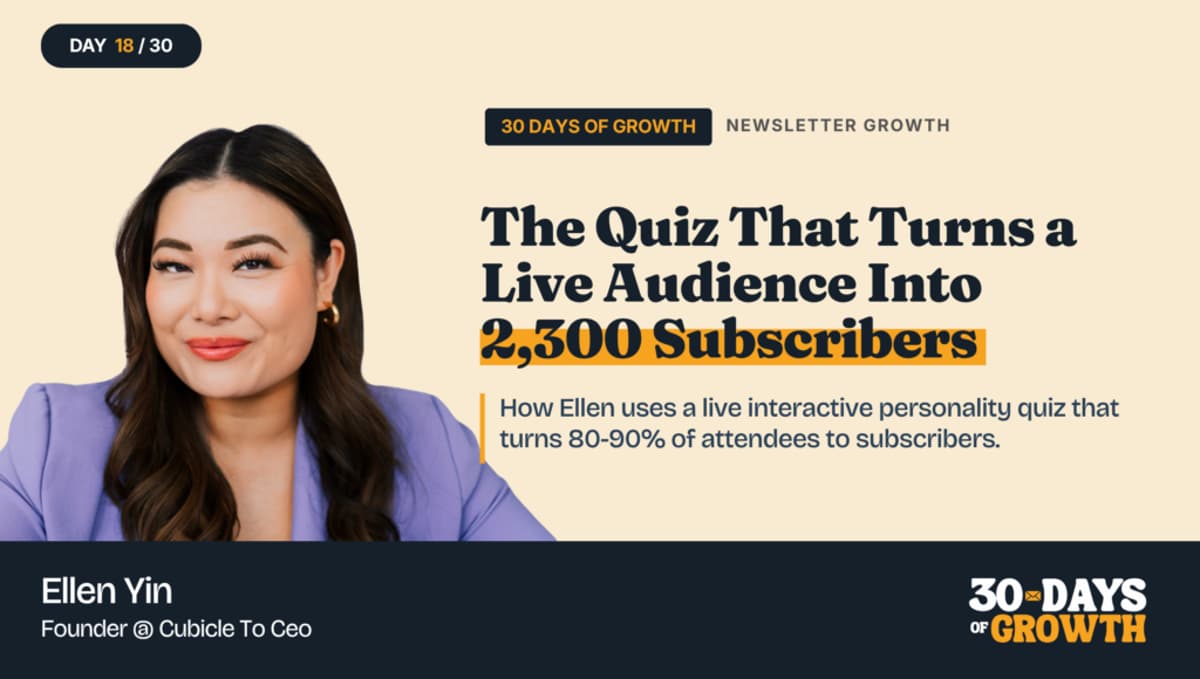
Day 18: The Quiz That Turned A Live Audience Into 2,300 Subscribers
Ellen Yin of Cubicle to CEO turned a simple live quiz into a high‑conversion list‑building engine. By displaying a QR code early in her talks, she guides the audience through a 10‑question personality quiz that doubles as a buyer‑persona classifier....

Unlock Growth with a Spotify Advertising Agency
Brands increasingly view Spotify as a core growth channel, with advertising revenue projected to hit $2.2 billion by 2027 and delivering five times higher ad recall than other platforms. However, the platform’s fragmented buying paths, ambiguous measurement, and internal priorities make...

Magnite Inc. (MGNI) CTV Momentum Strengthens Its Small-Cap Value Case
Magnite Inc., the world’s largest independent sell‑side advertising platform, received a reiterated Buy rating from Benchmark on April 28, accompanied by a $30 price target. The firm is leveraging its relationships with Walmart, Amazon and over ten commerce‑media partners to...
The Kyle Kingsbury Podcast Podcast - Episode 2 - Dave Rossi
The Kyle Kingsbury Podcast released its second episode featuring Silicon Valley entrepreneur Dave Rossi, author of “Alphas Die Early.” The episode is sponsored by PodPitch, an AI‑powered platform that automates podcast pitch creation and delivery for PR professionals. Kyle humorously...

Organic
The author reflects on the dual meaning of "organic," contrasting organic chemistry with organic search results that are generated algorithmically rather than through paid ads. He explains how SEO practices, driven by Goodhart's law, can corrupt search metrics and make...

Best Marketing Tools and Platforms For Growth
The article spotlights four purpose‑built marketing platforms—Ravetree, Passionfruit, GeoTargetly, and ClickGUARD—each targeting a specific growth bottleneck for ecommerce brands. It frames the recommendation against a backdrop of martech overload, noting Gartner’s finding that 59% of marketers deem their stacks too...

SEO Strategies That Drive Consistent Client Inquiries
The article outlines a systematic SEO approach that prioritizes high‑intent, service‑specific keywords and aligns landing pages with user intent to generate qualified client inquiries. It recommends building a content funnel that moves prospects from awareness through mid‑level education to bottom‑of‑funnel...

Write2Sell: My Welcome Email Formula Behind 21% On-the-Spot Upgrades
Writer Yana G. reports that 21% of new paid Substack subscribers upgrade on the spot after receiving her welcome email, far above industry norms. She attributes the lift to a conversion‑focused email built on a four‑part PPSA (Pain → Proof...

How To Optimize Facebook Ads To Boost Online Sales
Facebook ad optimization is essential for ecommerce brands seeking higher ROAS and lower CAC. Retail conversion rates average 3.26%, but marketers can exceed this by consolidating campaigns, aligning budget across the funnel, and leveraging Meta’s Advantage Plus and dynamic product ads....

OpenAI Expands ChatGPT Ads Pilot to UK, Japan, South Korea, Brazil, and Mexico Just Two Days After Launching Self-Serve Ads
OpenAI is expanding its ChatGPT ads pilot to the United Kingdom, Japan, South Korea, Brazil and Mexico, following the launch of a self‑serve ad platform in the United States two days earlier. Users in the new regions will encounter sponsored...