
Water Tower's Severson: The Economy Sees $75 Oil 'as the New $60'
In this episode, host Chuck Jaffe talks with Sean Severson, CEO of Water Tower Research, about the emerging "$75 oil" market, which he likens to the former $60 oil era, and how it’s reshaping investor expectations for energy stocks and broader market dynamics. Severson explains the "tale of two markets" – a high‑yield, inflation‑driven energy sector versus a more subdued, AI‑focused equity landscape – and offers guidance for small‑cap investors seeking opportunities amid shifting yields. The show also features insights from Jenny Harrington on yield‑on‑inception strategies and from Stephen Cates on modest improvements in housing affordability and mortgage rates.
EM Lens: Investors Aren’t Packing Their EM Bags Just Yet
In this episode of Emerging Markets Lens, senior EM fixed‑income manager Araf Joshi discusses how the Iran‑related oil shock is tightening LNG supplies and pressuring Asian and African economies, leading to higher bond spreads and fiscal stimulus measures. He contrasts...

OPEC Fractures
The episode focuses on three major market developments: the UAE's unexpected exit from OPEC, signaling a potential shift toward higher global oil production; Jerome Powell's likely final meeting as Federal Reserve Chair, raising questions about future monetary policy and inflation...

King Trump Welcomes King Charles
In this episode of Pod Save the World, hosts Tommy Vitor and Ben Ritz dissect the chaotic aftermath of the recent White House Correspondents' Dinner, highlighting a security breach that resulted in gunfire and questioning the event’s safety protocols. They...

Are Investors Underestimating Emerging Markets?
In this episode, Andrew Van Sickle talks with Charles Gillings, manager of the Utilico Emerging Markets Trust, about why investors may be undervaluing emerging markets and the fund’s sector‑focused, infrastructure‑centric approach. Gillings explains that the recent EM rally was driven...
The European Market Brief 23: The Case for a Global Portfolio
In this episode of the European Market Brief, Eurex executive Rachna Mathur and MSCI experts Anshul Kamra and Vass Kassoulis discuss the importance of global diversification beyond the U.S. market. They explain how MSCI’s multi‑currency, multi‑country index family serves as...

Boom! United Arab Emirates Exits OPEC
In this episode, Patrick Wood explains how the United Arab Emirates' withdrawal from OPEC on May 1, 2026 signals the collapse of the petrodollar system and the rise of a new technocratic trade architecture centered on asset tokenization and the...

The Cognitive Dissonance Is Getting Painful Here.
The episode focuses on the escalating tension between global energy markets and risk sentiment, driven by the Iran‑U.S. standoff over the Strait of Hormuz and its impact on oil prices. Host Boyd highlights record U.S. diesel exports, rising Brent and...

Monday: Way Cleared for Warsh to Be Fed Chair
The episode covers the ongoing closure of the Strait of Hormuz, the stalled Iran‑Pakistan peace talks, and the clearing of Kevin Walsh’s path to become Federal Reserve Chair. ANZ senior commodity strategist Daniel Hines explains how oil production shut‑ins in...

Global Data Pod Weekender: How Bad Could It Get?
In this JP Morgan Weekender episode, Bruce Casman and Joe Lupton dissect the evolving oil‑supply shock from the Strait of Hormuz, moving from earlier optimism about a quick reopening to a more sobering view of prolonged closure. They examine recent PMI...

US Consumer Confidence and Electric Vehicles
The episode examines the plunge in US consumer confidence to a record low, driven primarily by soaring gasoline prices amid the Iran‑related conflict and its ripple effects on inflation and everyday budgets. Experts Joanne Hsu and financial adviser Jacob Chen...

Global Rates: Central Banks Likely to Wait-and-See Against a Backdrop of Ongoing Middle-East Uncertainty
The episode examines upcoming policy meetings of the Fed, ECB, and BoE against the backdrop of the Middle‑East conflict and rising energy prices. Analysts attribute the US rate rise to solid consumption data and a dovish‑leaning Fed nominee, Kevin Warsh,...

The Case for Making Up with China, and Which Car Company Is Winning the Energy Crisis?
The episode argues that the United States should reconcile with China, emphasizing that improved relations could act as a massive tax cut by leveraging China's unparalleled manufacturing and supply chain capabilities alongside America's strengths in IP, innovation, and capital. The...
SaaSpocalypse NOW. Also, Massive Earnings and Central Bank Week Ahead.
The episode dissected the volatile market moves on April 24, 2026, focusing on the SaaS sector’s sharp sell‑off after ServiceNow’s earnings miss and broader AI‑related concerns that rattled names like Adobe, Workday, and Palantir. Hosts highlighted contrasting winners such as...
The Hidden Toll of Tariffs
In this episode of Thoughts on the Market, Morgan Stanley Global Chief Economist Seth Carpenter and economist Mayank Fatki examine the current state of U.S. tariffs, noting that effective rates have fallen to about 8% but are expected to stabilize...

BREAKING: Congressman Tom Suozzi Just Tore Apart Trump’s Trade Defense With One Simple Line of Questioning
In this episode, host challenges the prevailing narrative that recent U.S. tariffs are dramatically raising household costs, disputing figures from the Tax Foundation, Yale Budget Lab, and Moody's that claim tariffs add $1,000 to $4,200 per family annually. The discussion...
MacroVoices #529 Ole S Hansen: Commodities in The Wake of The Iran Crisis
In this episode, Saxo Bank’s chief commodity strategist Ola Hansen explains how the Iran crisis is rippling through energy markets, refined products, fertilizers, metals and agriculture, creating extreme backwardation in crude oil futures. He argues that the forward curve’s steep backwardation...

Interview with Turkiye's Diplomacy 23.04.2026
In this episode, financial consultant Laurent LeCou discusses the current market rally, warning that geopolitics—especially tensions in the Middle East and President Trump's tweets—are driving volatility and could usher in a stagflationary environment reminiscent of the 1970s. He highlights soaring...
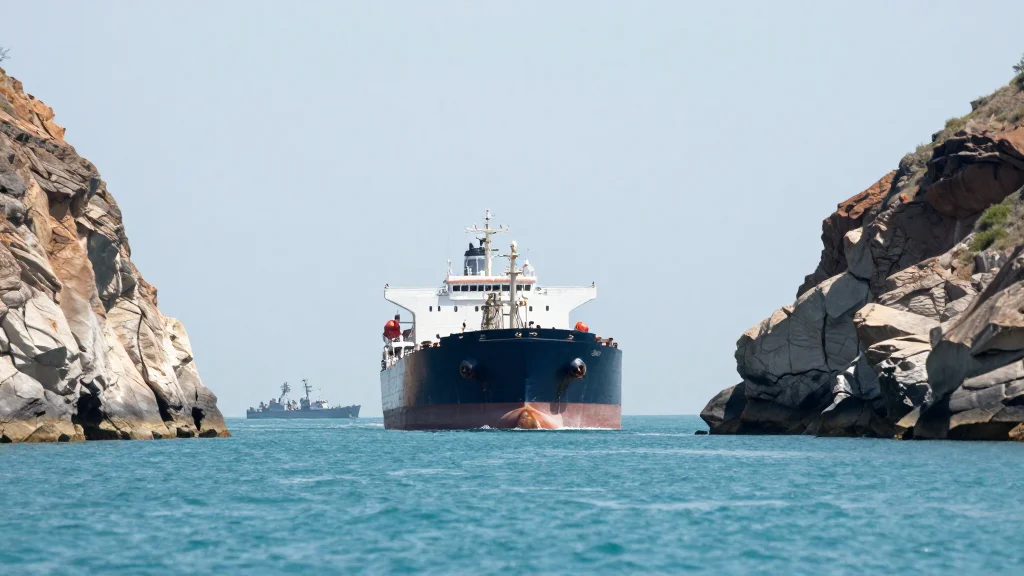
Xi Wants the Strait of Hormuz Reopened; Cakes and An E-Commerce Crackdown; The Next Stage of Decoupling; The MATCH Act...
In this episode of Sharp China, Andrew Sharp and Bill Bishop dissect a recent call between Xi Jinping and Saudi Crown Prince Mohammed bin Salman, focusing on China's call for the Strait of Hormuz to remain open amid ongoing Iranian...

British Retail Consortium CEO on Inflation, Labor Reform, and AI Regulation in UK Retail | RTS 2026
Helen Dickinson, CEO of the British Retail Consortium, discussed how the BRC supports UK retailers amid rising inflation, supply‑chain pressures from the Middle East conflict, and upcoming labor law changes. She highlighted the need to influence government on energy taxes...
EU Frees up Money for Ukraine
The episode reports that the European Union has finally unlocked a €90 billion (≈ $100 billion) loan for Ukraine after a dispute with Hungary over the Druzhba oil pipeline was resolved. Former Ukrainian economy minister Timothy Milovanov explains that about two‑thirds of the...
Credit Crunch: Around the World of Global Credit in 60 Minutes
In this 60‑minute special, Bloomberg Intelligence’s global credit team walks through the latest dynamics across regions, starting with the Gulf Cooperation Council (GCC) where Basel Al‑Wakayan notes a surprisingly resilient credit market post‑ceasefire, tighter sovereign spreads and a shift toward...
Tuesday - April 21, 2026
In this episode of the Dividend Cafe, host Brian Seitel reviews a down day in the markets, noting the impact of the Iran‑U.S. tension on oil prices, inflation expectations, and rising Treasury yields. He highlights stronger‑than‑expected March retail sales, pending...
Consumer Spending: Feeling the Impact of War
In this episode, host Mandy Drury and ComBank Senior Economist Ashwin Clark examine how Australian consumers have fared amid the Iran war and rising energy costs. They note that after a strong 2025 where real household spending grew over 2.5%...
#167 - Andrew Lilico - Britain Is Poorer Than The Poorest US State
In this episode, Andrew Lilico argues that the UK has slipped from being wealthier than the average US state in 2008 to now being poorer than the poorest US state, warning of a looming fiscal crisis within the next decade....

Trump's Pick for Fed Chair Heads to Capitol Hill
The episode covers President Trump's nomination of Kevin Warsh to lead the Federal Reserve, highlighting Warsh's testimony that balances a claim of Fed independence with the President's desire for lower interest rates. It then shifts to energy companies seeking new...

Beef Imports, Red Tape Reductions, & a New Canola Processing Facility | RealAg Radio, April 21, 2026
The episode examines Canada’s stalled progress on red‑tape reduction and regulatory reform, featuring Pierre Patel of CropLife Canada who critiques the federal government’s weak response to a House of Commons report with 26 recommendations. It also covers concerns from the...
What to Look for in Warsh Nomination Hearings as US-Iran Talks Also in Focus.
The episode reviews the mixed market backdrop on April 21, 2026, highlighting a modest pullback in major U.S. indices while the Russell 2000 held steady and AI‑related stocks like Micron drove earnings revisions. It delves into escalating geopolitical risk as...

New Normal, New Opportunities W/ Triton’s Peder Prahl
In this episode, Hugh MacArthur talks with Peter Prahl, founding CEO of Triton, about navigating the new normal of higher interest rates, tighter leverage, and heightened geopolitical uncertainty. Prahl explains why these conditions create attractive buying opportunities, highlighting value dislocations...
US Businesses Begin Claiming Tariff Refunds
The episode examines the rollout of a new U.S. Customs portal that lets businesses claim refunds for tariffs imposed under the Trump administration, featuring firsthand accounts from small‑business owners Beth Benneke and Cassie Abel who describe technical glitches, locked accounts,...
Where Investment Themes Intersect and Beat Markets
In this episode, Stephen Byrd reviews how Morgan Stanley's ten thematic predictions for 2026 are unfolding, highlighting the rapid acceleration of AI, its soaring compute demand, and its transformative impact on the labor market. He links AI's growth to a...
Credit Crunch: Saturna’s Drum on Sukuk Growth, Geopolitical Risk
In this episode of Bloomberg Intelligence’s FIC Focus, host Noel Hebert talks with Patrick Drum, fixed‑income lead at Saturna Capital, about the rapidly expanding sukuk market – the Islamic‑compliant bond universe now exceeding $1 trillion in issuance. Drum outlines the market’s...

Eliot's Return & Schrodinger's Strait | Shield of the Republic
In this episode of Shield of the Republic, Eric Edelman and strategy veteran Elliot Cohen dissect the unfolding Iran‑U.S. conflict, focusing on President Trump’s decision to impose a naval blockade of the Strait of Hormuz and the strategic missteps that...

211. How One Small American Manufacturer Is Dealing with Trump's Tariffs
In this episode, host Chad Bowne visits Clearview Corporation, a small Massachusetts maker of chair cushions, to explore how the firm navigated the wave of Trump-era tariffs on Chinese textile imports. Co‑owner Sam Cooper explains that the company relies on...
Monday: Oil & US$ to Rise as Strait Closes Again
The episode examines the renewed closure of the Strait of Hormuz after Iran attacked two vessels, sparking a rebound in oil prices and heightened geopolitical risk. ANZ economists explain that while oil may climb $1 per barrel in Asian trade,...
Global Data Pod Weekender: Much Ado About Oil
In this J.P. Morgan Weekender episode, Bruce Kasman and Joe Lupton dissect the implications of a potential reopening of the Strait of Hormuz and a broader U.S.-Iran agreement on oil markets. They outline a baseline scenario where a modest, sustained...
Global FX: Cease-Fire, the Dollar, DM/EM FX Impact, IMF Round-Up
In this episode, J.P. Morgan FX strategists discuss the market reaction to the recent cease‑fire announcement, noting that high‑yielding currencies like Brazil, the Australian dollar and emerging‑market (EM) FX have rebounded, while low‑yielders such as the Chinese yuan have lagged....
The “Strait of Iran” Illusion: How a 7-Week War Broke the American Empire
In this episode of Democracy‑ish, hosts Danielle Moody and Wajah Tali dissect the recent seven‑week conflict sparked by the U.S. and Israel’s strikes on Iran and Lebanon, which they label the "Strait of Iran" illusion. They argue the war caused...

MTN TRUMP PANICS OVER THE FINAL ULTIMATUM / IRAN DOES ULTIMATUM ABOUT THE RED SEA
The episode details escalating tensions between the United States under Donald Trump and Iran, focusing on Iran's threat to close the Bab al‑Mandab Strait in the Red Sea if the U.S. does not accept a 10‑point framework and lifts its...
Is the Labor Market About to Tip Us Into Recession?
In this episode of Prop G Markets, hosts Ed and Scott discuss the looming risk that a weakening labor market could push the U.S. economy into recession, drawing on insights from labor economist Catherine Anne Edwards. They explore key indicators...

Greggs, Domino’s Pizza & Asda: Why They’re Pivoting
In this episode Dan Coatsworth and Charlene Young discuss the latest market dynamics amid the Middle East conflict, highlighting a modest risk appetite as oil dips below $100 per barrel and fund managers remain cautiously bullish despite a bearish sentiment...
Exporting with Confidence
In this episode, Kalpana Fitzpatrick interviews Darren Lytton, founder of Coco Bar, a UK-based maker of premium hot chocolate and chocolate trees, about how UK Export Finance (UKEF) has enabled the company’s rapid overseas growth. Darren explains the brand’s origins,...

The Road That Runs Through Tehran: Pepe Escobar on the Corridor Reshaping the World
In this episode of Think Bricks, journalist Pepe Escobar discusses his documentary "Golden Corridor," which reveals the emerging North‑South transport corridor linking Russia, Iran, and India—a multimodal network of rail, road, and sea routes that integrates Eurasia and complements China’s...
#166 - Freddie New - How Governments Destroy Money and Empires (The Lessons From Rome)
In this episode Freddie New examines how currency debasement contributed to the fall of the Roman Empire and draws parallels to modern monetary policy, especially the erosion of the British pound and U.S. dollar through extensive money printing. He explains...
What a Time to Be a Central Bank
In this brief Marketplace segment, chief economist Diane Swank of KPMG breaks down the Federal Reserve’s looming decision on interest rates, highlighting how the war in Iran and lingering supply‑chain disruptions are pushing policymakers toward higher rates despite a surprisingly...

Trump Wants Regime Change at the Fed
In this episode, Paul Krugman warns that former President Donald Trump is attempting to undermine the Federal Reserve’s independence by pressuring for lower interest rates and targeting Fed officials. Krugman explains why monetary policy is a technical, credibility‑driven tool that...
Trump Threatens to Fire Fed Chairman
The episode examines President Donald Trump's threat to fire Federal Reserve Chair Jerome Powell unless he steps down within a month, highlighting the political pressure on monetary policy and the potential fallout of such interference. Economist Claudia Ray‑Sarm explains why...

Episode 442: Poland Bets on LNG and Tariff Reform to Strengthen CEE Gas Hub Status
Poland’s gas transmission operator, Gas System, is positioning the country as a central hub for Central and Eastern European (CEE) gas supplies by expanding LNG import capacity, unifying tariffs, and strengthening cross‑border corridors such as the Baltic Sea and Amber...

The European Market Brief 22: Throw Out The Old Conflict Playbook
In this episode of the European Market Brief, hosts Mark Longo, Murad Asgar (founder of EdgeClear), and Matt Corrin (Eurex V‑Stocks lead) dissect the market turbulence sparked by the U.S.–Iran conflict and the Strait of Hormuz blockade. They highlight unprecedented...
Tuesday - April 14, 2026
In this episode of the Dividend Cafe, host Brian Seitel reviews a strong market rally—Dow up 317 points, S&P 500 up 1.2%, Nasdaq up nearly 2%—driven by tech, software, and semiconductor gains as the Iran‑U.S. conflict eases. He explains how...