Thursday - May 14, 2026
In this mid‑week Dividend Cafe briefing, host Brian Seitel reviews a broadly positive market backdrop—Dow up 370 points, S&P 500 up 0.7%, Nasdaq up 0.9%—while noting modestly higher 10‑year Treasury yields hovering around 4.48%. He highlights the boost from $202 billion in Q1 tax refunds, a $100 billion tariff rebate, and strong Q1 earnings that compressed S&P multiples to roughly 21×, creating a balanced “porridge‑just‑right” market outlook. Seitel also addresses geopolitical headlines, including Trump’s China visit and Middle‑East tensions, and explains that The Bonson Group’s value lies in client relationships rather than publicly shared dividend‑growth ideas. He wraps up with a quick economic snapshot: retail sales in line, slightly higher jobless claims, and import prices up but offset by even higher export prices.
Macro Matters: NISA Investments’ Douglass on Fed, Fiscal Outlook
In this episode of FIC Focus, Bloomberg Intelligence chief interest‑rate strategist Ira Jersey talks with Stephen Douglas, chief economist of NISA Investments, about the firm’s $480 billion in assets and its client‑focused, liability‑driven approach. Douglas outlines the macro outlook, noting that...

EM Fixed Income: Inflation Pressures and Idiosyncratic EMEA EM Politics
In this episode, JPMorgan’s Ben Ramsey, Aneska Kristovova, and Mike Harrison discuss how recent U.S. inflation data and the lingering Iran‑related energy conflict are reshaping risk‑reward dynamics in emerging‑market (EM) fixed income. They note that stronger-than‑expected CPI and PPI numbers...

Trump and Xi Talk - Markets Wait
The episode covers President Trump's Beijing meeting with Xi, noting the diplomatic warmth but lack of concrete trade announcements, and highlighting Trump's delegation of CEOs focused on economic and tech issues. It then shifts to U.S. inflation data, with producer...

Battle Chess with China
The episode dissected the geopolitical and market fallout from the upcoming Trump‑Xi summit, exploring rumors that the U.S. might pause arms sales to Taiwan in exchange for Chinese help de‑escalating the Iran conflict. It highlighted the IEA’s warning of a...
What to Expect From the U.S.-China Summit
In this brief episode, Ariana Salvatore of Morgan Stanley outlines modest expectations for the U.S.-China Summit in Copenhagen, noting that discussions will likely center on trade, Taiwan arms sales, and the Iran conflict rather than sweeping policy shifts. She anticipates...

Inflation: No Quick Fix
In this episode of Inside Economics, Mark Zande, Chris Dorides, and Matt Collier dissect the latest CPI report, noting a 0.6% month‑over‑month rise in headline inflation and a 3.8% year‑over‑year rate—the highest since early 2023—driven largely by energy and food...

Sanjac Alpha's Wells: Interest Rates Will Rise This Year, Even if the Fed Cuts
In this episode, host Chuck Jaffe talks with three experts—Martha Moore on the NABE Business Conditions Survey, Matt Harris on market technicals, and Andy Wells, CIO of Sanjak Alpha—about the current economic landscape. The discussion highlights rising input costs from...

First Came the TACO Trade. Now It’s the NACHO.
The episode covers three main stories: political turmoil in the UK as Prime Minister Keir Starmer faces pressure after a poor local‑election showing, the U.S. Supreme Court’s approval of Alabama’s congressional map that could erase a majority‑Black district, and the rise...

Trump Flies to Beijing — But Who's Actually Desperate?
The episode critiques former President Donald Trump's recent trip to Beijing, arguing that his diplomatic overtures are empty promises that can be reversed overnight. It highlights how Trump's erratic, business‑first approach undermines U.S. credibility, especially in negotiations like those with...

Korean Politician Pops the Chip Vibe. Sterling Under Pressure.
The Saxo Market Call highlighted a shift in market sentiment driven by political risk in the UK and policy talk in South Korea, putting pressure on the British pound and creating volatility in Korean chip stocks like SK Hynix and...

The Hidden Costs of Resilience: Financing the New Supply Chain Reality
The episode examines how the long‑standing just‑in‑time supply‑chain model is being upended by geopolitics, AI‑driven capex, critical‑mineral shortages and ongoing disruptions from conflicts such as the Middle East war. Guests Natasha Condon (JP Morgan Global Head of Sales for Trade and...
Why AI Funding Is So Price-Insensitive
In this brief episode, Morgan Stanley’s Global Head of Fixed Income Research, Andrew Sheets, explains why AI‑related capital spending is remarkably price‑insensitive. He highlights the massive $800 billion U.S. tech investment this year—nearly double last year’s spend—and notes that component costs...

Tuesday: Eyes on Australia Budget for Household Help
The episode covers three main topics: the upcoming Australian federal budget and its potential cost‑of‑living measures, rising oil prices after Donald Trump dismissed Iran’s peace‑talks offer, and a deep‑dive on how the Middle‑East conflict threatens aluminium supply, given the region’s...

Andrew Bridgen on NZ-India FTA, Migration and COVID-Era Policies
In this episode, Andrew Bridgen warns that a pending New Zealand‑India free‑trade agreement will hand over immigration control and key technologies to India, undermining national sovereignty and sparking unchecked migration. He links the deal to broader globalist agendas, including digital ID...

Inflation Data, War News Could Dominate Week Ahead
The Schwab Market Update for Monday, May 11, highlighted a quiet start to the week, giving investors time to digest the strong April jobs report that showed 115,000 new jobs and a steady 4.3% unemployment rate. Upcoming key data includes...

When Money Is a Fiction
In this episode of the Timeless Investor Show, Ari van Gemmeren examines Turkey’s ongoing currency collapse, using the price jump of a simple street bread (simmet) to illustrate how the Turkish lira has lost about 92% of its value against...
Week in Review: Big Oil Bets, Jobs and Tariffs
In this episode, Reuters reporters expose roughly $7 billion in coordinated oil futures trades that timed market moves around geopolitical events, prompting regulatory scrutiny. They also discuss President Trump's renewed tariff threats on EU autos and the legal pushback that limited...
Jobs: Soft, Stable, or Something Else
In this Inside Economics episode, Mark Zandi, Chris Derides, Mercedina Talley, and guest Dr. Dante D'Antonio dissect the April jobs report. Payroll data showed a surprisingly strong gain of 115,000 jobs, driven mainly by healthcare, transportation & warehousing, and retail,...
Global FX: Yentervention and Other FX Policy Stories
In this episode, Arindam Sandhile and his global team dissect the current FX landscape, focusing on Japan's recent yen intervention, the limited upside for the dollar amid uncertain Fed policy, and the performance of real‑rate currencies like the Norwegian krone...

Guest: Omar Qari of Logicbroker on How Retailers and Brands Respond to Shifting Geopolitical Uncertainty; Carton Diversity Drives Sortation Designs;...
In this episode, Omar Qari, CEO of LogicBroker, explains how retailers and brands are grappling with persistent geopolitical uncertainty, tariff volatility, and fragmented supply chains, which are straining inventory visibility and fulfillment orchestration. He emphasizes that resilience now hinges on...

US Oil Exports Surge to Record High & What to Know About the Hantavirus
The episode covers two main stories: a surge in U.S. oil exports reaching record levels amid the Iran‑Israel conflict, and a rare Andes hantavirus outbreak on the Hondias expedition cruise ship. Hosts explain how the closure of the Strait of...
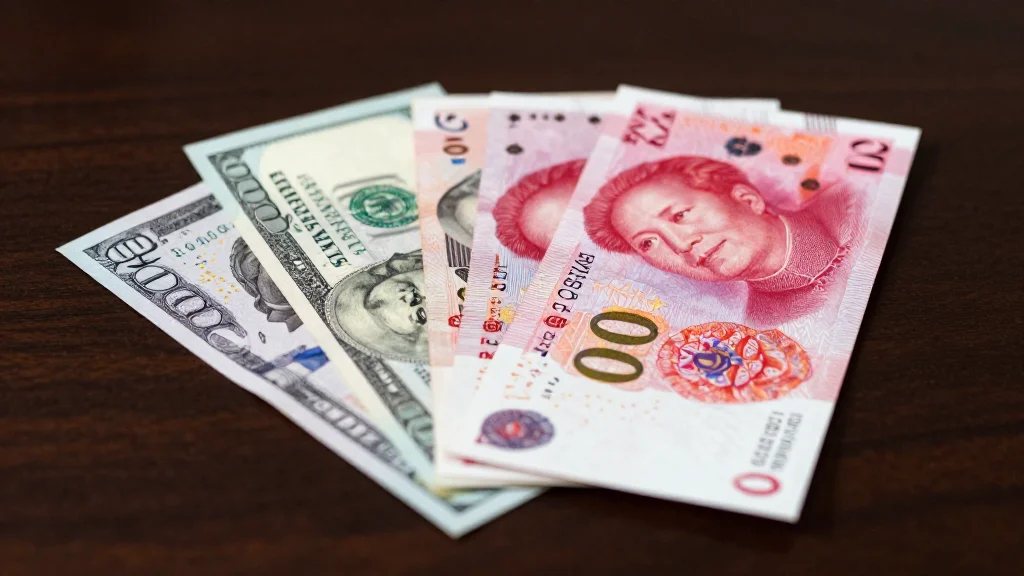
Sterling's Resilience and China’s Tactical Game
In this episode of the Currency Exchange podcast, NatWest Markets’ G10FX strategist Paul Robson explains why sterling has remained surprisingly resilient despite Middle‑East turmoil, citing safe‑haven flows, historic UK‑GCC links, and limited fast‑money pressure. He then assesses the impact of...
EM Fixed Income: Parsing Peace Talks and Payrolls
In this episode of Emerging Market Fixed Income, JPMorgan strategists Aneska Christovova, Ben Ramsey, and Tanya Escobedo dissect the latest Middle East cease‑fire talks, U.S. non‑farm payroll data, and their ripple effects across EM FX, sovereign credit spreads, and local...
Macro Matters: BI’s Ira Jersey Talks Fed & US Rates Outlook
In this 11‑minute Macro Matters episode, Bloomberg Intelligence chief interest‑rate strategist Ira Jersey outlines the Fed’s likely stance over the next two to six months, predicting a hold on policy through at least September and noting the difficulty of cutting...
Chip Stock Boom
The episode focuses on the ongoing AI-driven chip stock boom, highlighted by massive gains in Asian markets such as Japan's Nikkei (+6%) and South Korea's KOSPI, with SoftBank and Samsung leading the surge. While a one‑page U.S. proposal to end...

Trump’s Hormuz Withdrawal, Fetterman’s GOP Flirtation, & Kevin O’Leary’s Data Center War
In this lively Wednesday livestream, Ron Placone and Nolan Higdon dissect a whirlwind of political news, from Donald Trump's abrupt halt to the Hormuz naval operation and the ensuing diplomatic spin, to Pennsylvania Senator John Fetterman's surprising flirtation with the...
Wednesday - May 6, 2026
In this 7‑minute Dividend Café market commentary, host Brian Seitel reviews a strong market follow‑through driven by lower oil prices, positive earnings surprises, and better‑than‑expected private payroll data. He highlights that the Dow, S&P 500, and Nasdaq posted notable gains,...

PETER LEWIS' MONEY TALK - Wednesday 6 May 2026
Peter Lewis’s Money Talk episode on May 6, 2026 examined the fallout from the recent Iran‑U.S. tensions in the Strait of Hormuz, highlighting how the blockade has cut roughly 23 million barrels of oil and 20 % of LNG supply from global...

Tensions Rise in the Persian Gulf
The BBC World Business Report episode examines the escalating conflict in the Persian Gulf, focusing on the U.S. "Project Freedom" to reopen the Strait of Hormuz and the resulting impact on global oil shipments. It features insights from U.S. officials,...

Eswar Prasad on Escaping the Doom Loop
In this episode, Cornell professor and Brookings senior fellow Eswar Prasad discusses his new book *The Doom Loop*, which argues that the intertwining of economics, domestic politics, and geopolitics has created a self‑reinforcing negative feedback cycle eroding strong institutions worldwide....

Interview with Turkiye's Diplomacy 05.05.2026
In this episode, host Uma speaks with financial consultant Laurent Lecon of The Macro Butler about the cascading economic fallout from the war disrupting oil shipments through the Strait of Hormuz. Lecon warns that Asian oil reserves will only last...
Hard Lessons: Rick Rieder
In this Hard Lessons episode, Morgan Stanley’s chief economist Seth Carpenter interviews Rick Rieder, BlackRock’s CIO of Global Fixed Income and head of the Global Allocation Investment Team, who oversees roughly $3 trillion in assets. Rieder challenges the efficient‑market hypothesis, arguing...
Does This Market Rhyme with 1926, 1928 or Even 1929?
The episode reviews the latest market turbulence driven by escalating tensions in the Persian Gulf, which have spiked oil prices and boosted the U.S. dollar, while U.S. equities show mixed reactions to AI hype and recent earnings. Key corporate updates...

213. Ups and Downs at the Port of Los Angeles
In this episode, host Chad Bowne tours the Port of Los Angeles with executive director Gene Soroka, exploring the port’s massive scale, its role in moving roughly $1 billion of cargo daily, and its critical impact on the U.S. economy—supporting about...
Tariffs’ Messy Reality: The Cost-of-Living Election | Part 1: Ohio
In this episode, host Sabrina Siddiqui examines how President Trump's tariff policy is affecting Ohio's manufacturing sector, spotlighting the closure of the Conselmer brass instrument plant and the contrasting expansion at Whirlpool's washing‑machine factory. Workers like Katrina McAvoy blame tariffs...
Trump Announces 25% Tariffs on Cars From the EU
The episode examines President Donald Trump's announcement of a 25% tariff on European cars and trucks, arguing the move stems from perceived EU non‑compliance with a recent trade deal, especially over steel and aluminium disputes. BBC correspondents and EU officials...
The Outbreak of Warsh
The episode examines the revival of Gulf public bond issuance after a two‑month war‑induced pause, highlighted by Emirates NBD’s $750 million AT1 bond that priced at 6.25% and attracted a $2 billion order book with roughly 24% international demand. Analysts discuss why...
How King Charles Un-Tariffed Scotch
The episode covers three main stories: a thaw in U.S.-Venezuela relations that has reopened commercial flights and attracted U.S. oil majors back to Venezuela; Australia’s response to the global energy crunch sparked by the Iran‑Israel conflict, including fuel stockpiling, diversified...

Cathie Wood: How to Invest for 2026
In this episode, hosts Dan Coatsworth and Danny Hewson dissect a week of market‑shaking news, from the Bank of England’s rate hold and rising inflation forecasts to the fallout of the UAE exiting OPEC and its impact on oil prices....

The Iran War Has No Exit — Ft. Ian Bremmer
In this episode, host Scott interviews geopolitical analyst Ian Bremmer about the escalating Iran war and its ripple effects on global politics and energy markets. Bremmer explains how the United Arab Emirates' sudden exit from OPEC deepens the split between...
The Metric Taking Over Earning Season
In this episode, Morgan Stanley’s Global Head of Fixed Income Research, Andrew Sheets, explains why capital expenditure on AI infrastructure is becoming the dominant metric in earnings season, eclipsing traditional earnings focus. He highlights that U.S. hyperscalers like Alphabet, Amazon,...
#171 - Michael Saylor - Bitcoin Is The Only Way To Win In The AI Economy
In this episode, Michael Saylor argues that the relentless 7% annual expansion of the dollar supply is eroding wealth for those without assets, while a forthcoming AI-driven economy will create unprecedented prosperity for owners of scarce digital capital like Bitcoin....
Oil Prices on a Rollercoaster Ride
The episode examines the sudden volatility in oil prices, which spiked to a four‑year high of $126 per barrel before falling $10 within hours, driven by escalating US‑Iran tensions and concerns over Iran’s dwindling storage capacity. Investment strategist Emma Wall...
Ray Dalio: The World Order Has Unraveled
In this episode, Ray Dalio explains his "big cycle" framework, outlining five forces—monetary, debt, political/social, geopolitical, and natural/technological—that shape the global economic order. He describes how the debt cycle functions like a circulatory system, where rising debt service relative to...

Understanding the World's Most Unusual Commodity Cycle
In this episode, Chris interviews Grant Isaac, COO of Cameco, to unpack why uranium is a uniquely atypical commodity—its primary consumers secure fuel years in advance, leaving virtually no in‑year demand. Isaac explains Cameco’s vertically integrated model, spanning mining, milling,...
Divided He Falls. But Stays.
The episode reviews the latest surge in oil prices amid a stagnant Gulf crisis and recent statements from Donald Trump, while dissecting the Federal Reserve’s latest meeting where Jerome Powell held rates steady and faced an unprecedented four dissenters, signaling...
Wednesday - April 29, 2026
In this episode of the Dividend Cafe, host Brian Seitel reviews a mixed market day marked by a dip in major indices, rising bond yields, and a surge in oil prices driven by Middle East tensions and the UAE’s exit...
Thursday: Fed Holds with 'Hawkish' Dissenters
The episode reviews the Fed’s decision to hold rates steady, noting three dissenting governors who opposed an easing bias, and examines the market reaction, including a dip in U.S. equities and a rise in oil prices after Donald Trump’s comments...
In Conversation with Treasurer Jim Chalmers
In this 41‑minute interview, Australian Treasurer Jim Chalmers outlines his long‑term economic philosophy: steering Australia through frequent global shocks by building a "fourth economy" powered by clean energy, technology and social mobility. He warns that mismanaging this transition could deepen...