
Change What You Do by Changing Who You Are
Behavior change experts argue lasting habits stem from identity, not just goals. Research shows framing actions as part of self‑concept—e.g., “I am a runner”—creates durable motivation. The article advises swapping outcome‑based questions for identity‑based ones and taking a single, aligned action each day. This simple shift leverages the brain’s preference for consistency, making change feel natural.

Your Brain Isn't a To-Do List (Stop Treating It Like One)
The article explains that unfinished tasks crowd the brain's limited working memory, creating a loop of mental clutter. It distinguishes two ways to clear this space: completing tasks immediately or scheduling them for a specific future moment. A 2011 study...

What I’ve Learned Writing 500 Blog Posts
The author marks the milestone of 500 blog posts, averaging just over one article per week since 2017. He distills four core lessons: relentless consistency beats sporadic effort, continuous production sharpens skill more than isolated quality drills, the process itself...

From Technical Expert to Mindset Coach
A seasoned technical trainer with 600+ courses and global consulting experience discovered his market appeal lay not in the details of rigging systems, but in the decision‑making mindset he cultivated under pressure. After eight weeks of reframing his messaging from...

Working-Class People Who Want to Be Successful Should Remove These 10 Words From Their Vocabulary
The article argues that the words we habitually use shape our mindset and career trajectory, especially for people from working‑class backgrounds. It lists ten common terms—luck, fair, just, try, actually, can’t, should, spend, problem, maybe—and suggests direct replacements that reinforce...

The Art of Not Being Ready and Doing It Anyway
The essay urges readers to act even when they feel unprepared, arguing that waiting for a perfect moment often turns opportunity into loss. It frames readiness as a shield that masks fear, while courage and imperfect action drive personal growth....

Engineer’s Anti-Brain-Fog Routine: Stare at a Wall for 10 Minutes
Software engineer Alex Selimov combats afternoon brain fog by staring at a blank wall for ten minutes. The routine follows a day of poor sleep, heavy caffeine, and constant news feeds that leave him with headaches and waning motivation. By...

You’re Not Lazy. You’re Running Too Many Simulations.
The post argues that what appears as laziness is often a paralysis caused by excessive mental simulations. High‑capacity brains—common among gifted, ADHD, or autistic individuals—run predictive models faster than the environment demands, leaving decisions stalled. The author suggests that recognizing...

How to Keep Your Anki Deck Relevant and Useful
The author admits abandoning his own spaced‑repetition habit and explains why AI’s rise and deck bloat made his Anki cards less useful. He argues that memorization remains vital, but only for information that supports critical thinking and real‑world decisions. The...

When Reading About Stoicism Isn’t Enough
The post argues that reading about Stoicism is insufficient without practical application, and proposes one‑to‑one coaching as a bridge. Drawing on three decades of psychotherapy experience, the author blends ancient Stoic principles with modern CBT to help clients align daily...

Start the Week Without Trying to Catch Up
Monday mornings often feel like a race against unfinished tasks, creating a mental backlog before the day even starts. The article argues that the common “catch‑up” mindset actually adds pressure and reduces productivity. Instead, it proposes a slower start: pick...

The 4 Permissions You Need to Give Yourself a Remarkable Life
Jon Acuff’s latest podcast episode introduces the DPDR framework—permission to dream, plan, do, and review—as the core of his new book “Procrastination Proof.” Drawing on 15 years of coaching over a million people, he explains how each permission forms a...

The Brag Doc
Product managers are urged to treat their own careers like products, tracking features, bugs, and roadmaps through a personal "brag doc" or ship log. The article explains that without visible documentation, especially in remote settings, achievements go unnoticed and can...

When Have You Changed Your Mind?
The post argues that iterative thinking—continually revising beliefs and strategies—is essential for both personal growth and business innovation. It contrasts the "Innovation Cycle," which embraces feedback and adaptation, with the "Status Quo Cycle," which repeats without learning. Drawing on examples...

10 Tiny Habits With the Biggest Compound Effect
An article outlines ten micro‑habits that, when practiced daily, generate a powerful compound effect on personal and professional performance. The habits span reading, daily reviews, regular movement, deep work, expense tracking, morning hydration, weekly mentorship, pre‑sleep meditation, systematic saving, and...

You Don’t Need More Confidence, You Need to Trust Yourself
The post argues that confidence is less useful than self‑trust, which arises when your actions consistently match your words. It explains self‑perception theory, noting the brain judges identity based on observed behavior rather than aspirations. The author recommends starting with...

"Thinkhaven"
Thinkhaven is a proposed intensive writing program designed to train participants to generate novel, useful ideas daily. Participants must publish a 500‑word research journal each day, embed at least one new question, and produce a 2,500‑word effort post every two...

10 Success Habits To Become Unstoppable, According to Charlie Munger
Charlie Munger argues that unstoppable success stems from disciplined habits rather than raw intellect. He outlines ten practices—from delivering genuine value and continuous learning to inverting problems and staying within one’s circle of competence—that compound over decades. The habits emphasize...

How To Stop Being Your Own Tragic Hero
The post warns founders against inflating successes and catastrophizing setbacks, urging a realistic view of their stakes. It outlines practical steps—finding joy in small wins, balancing humility with conviction, and prioritizing self‑care—to protect mental health. The author stresses that genuine...

The Hidden Strength of Detached Discipline
The post introduces "detached discipline," a mindset where actions are taken regardless of fleeting emotions. By pre‑deciding when and how to act, individuals sidestep motivation spikes and dips, turning behavior into an automatic habit. The author outlines a simple practice:...

Falling in Love With the Process Instead of Results
Most people tie discipline to visible results, causing motivation to dip when progress stalls. The blog argues that sustainable discipline emerges when individuals prioritize the process over outcomes. By decoupling effort from immediate rewards, consistency becomes a habit rather than...

The Productivity Routine: Structure Your Day
The post argues that productivity hinges less on raw discipline and more on daily structure. By giving the day a clear shape, individuals guide their attention and avoid the drift that erodes output. The author contrasts common advice—early rising, harder...

Stop Waiting to Feel More Serious — 24 April
George argues that waiting for a feeling of seriousness before starting work is a self‑defeating habit. He contends that seriousness is a byproduct of consistent action, not a prerequisite. By treating tasks with full attention from the outset, the desired...
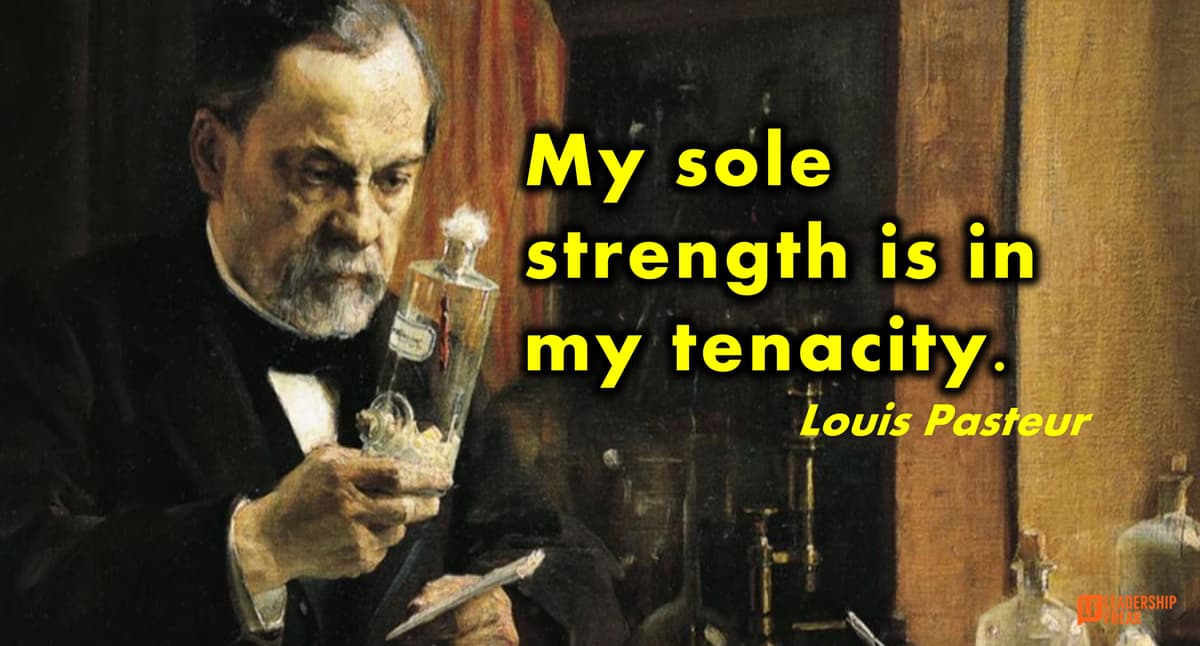
4 Ways to Build Tenacity in Others
The article outlines four practical ways leaders can cultivate tenacity in their teams. First, it urges an “earn‑it” mindset that frames opportunities as rewards for effort. Second, it recommends adding challenge weight incrementally to avoid overwhelming employees. Third, it suggests...
Dumb Ways to Attract Anything You Want
The article argues that attracting success hinges on quiet, disciplined habits rather than loud self‑promotion. It advises whispering goals, honoring a single broken promise, and doing unseen work to rebuild self‑trust. Additional tactics include saying no to easy offers, prioritizing...

Why You Need “White Space” (And 5 Prompts to Find It)
The post argues that entrepreneurs must carve out "white space"—unused time for strategic thinking—rather than packing every calendar slot. It illustrates the concept with Victoria, a solo aviation charter broker who, amid a fuel crisis, used an AI‑driven audit to...

Orbit Theory (Stop Thinking About Changing Your Life and Actually Start Changing It)
The post introduces "orbit theory," a metaphor for people who endlessly research, plan, and visualize a better life without ever taking decisive action. It outlines seven tell‑tale signs—research fatigue, waiting for a perfect self, restarting from zero, mistaking clarity for...

What I'd Tell My 21-Year-Old Self
The author reflects on 17 hard‑earned lessons he wishes he’d known at 21, emphasizing that relentless ambition built on fear and scarcity never delivers lasting fulfillment. He argues that true success stems from aligning actions with personal values, prioritizing rest,...

Top 10 Habits of Successful People According to Warren Buffett
Warren Buffett attributes his multibillion‑dollar success to ten disciplined habits that anyone can adopt. He spends roughly 80% of his workday reading, protects his reputation, and operates strictly within his circle of competence. Buffett also emphasizes focus, time valuation, delayed...

Charlie Munger Advice: Top 4 Tips To Become The First Millionaire In Your Family
Charlie Munger outlines a four‑step framework for anyone aiming to become the first millionaire in their family. He stresses self‑improvement as the foundation, then urges aggressive frugality to amass the first $100,000, which unlocks the power of compounding. Once that...

Most People Wait to Be Chosen. I Decided to Become Undeniable.
The author, lacking a tech background or elite pedigree, built a personal sales brand from the ground up by creating newsletters, events, and podcasts, and by cold‑messaging hundreds of executives on LinkedIn. This relentless outreach generated over $1 billion in revenue...
Emotional Avoidance Is the Root of Inconsistency
The post argues that inconsistency is not a lack of discipline but a pattern of emotional avoidance. When discomfort arises, people instinctively step away, gaining short‑term relief while reinforcing a brain‑based avoidance loop. Over time this cycle erodes productivity and...
When Self-Respect Starts Replacing Motivation
The article argues that most people initially rely on fleeting motivation to start tasks, but over time they transition to acting out of self‑respect. This shift replaces the need for emotional triggers with a stable internal driver, enabling consistent performance....

Your Brain Is Not Lazy, It Is Protecting You From Discomfort
The post argues that what feels like laziness is actually the brain’s built‑in safety system, steering us away from discomfort. When an alarm rings, the mind negotiates with subtle excuses—"later," "more rest," or "not today"—to keep us stationary. This avoidance...

How Consultants and Coaches Become Confident Speakers with Dr. Christina Madison
Dr. Christina Madison, a former clinical pharmacist turned TEDx speaker, explains how consultants and coaches can become confident speakers by starting with a clear message, cultivating body awareness, and practicing in low‑stakes environments before scaling up. She stresses that speaking...

Charlie Munger Advice: If You Really Want to Be Happy in Life, Start Saying No to These 10 Things
Charlie Munger, Berkshire Hathaway’s longtime partner, argues that happiness stems more from what you refuse than what you pursue. He outlines ten habits to reject—envy, resentment, self‑pity, overspending, unreliable people, high expectations, rigid ideology, disrespectful coworkers, liquor/leverage, and intellectual stagnation....

5 Reasons Self-Improvement Is Lonely According to Warren Buffett
Warren Buffett argues that genuine self‑improvement is a solitary pursuit, driven by an inner scorecard rather than external validation. As individuals raise their standards, they gravitate toward higher‑quality associations, which naturally narrows their social circles. Protecting time by saying “no”...

How to Not Take Things So Personally: 6 Helpful Habits
The Positivity Blog outlines six practical habits to stop taking things personally, ranging from simple breathing exercises to improving self‑esteem. By pausing to breathe, seeking clarification, and recognizing that others’ behavior often reflects their own issues, readers can create mental...
My Mother Read My Journal when I Was 17. I Didn't Write Again for 30 Years.
The author recounts how her mother read a private journal entry when she was 17, prompting a 30‑year silence from writing. Decades later she returns to journaling, confronting the lingering nervous‑system alarm that honesty can be punished. She describes a...

Podcast: Build Better Habits & Master the Mental Game of Eating
The Two Percent podcast released a new episode featuring Melissa Hartwig, co‑founder of the Whole30 movement, to discuss how short‑term elimination diets can rewire eating habits and uncover food sensitivities. Hartwig shares personal stories of trauma, sobriety, and how a...

Be Productive by Doing Nothing... With Meghan Joyce of Duckbill
In a recent Code Story podcast, Meghan Joyce, co‑founder of Duckbill, recounts a moment in Amsterdam where a malfunctioning breast‑pump disrupted her ability to attend Uber meetings. While on hold with the pump’s support line, she imagined a hands‑free solution...

Doing the Work Isn't the Hard Part. Believing the Results Is.
Peter shares a personal breakthrough after filming himself doing chest flys, realizing he truly looks transformed. He describes watching the video repeatedly, moving from disbelief to acceptance as his brain caught up with his physical change. The post argues that...

Your Brain Wants You to Be Happy.
The new book "Born to Flourish" by Richard Davidson and Cortland Dahl argues that flourishing is a set of trainable skills—awareness, connection, insight, and purpose—rooted in neuroplastic brain networks. Research shows that just five minutes of daily practice for 28...
Your Future Is Hidden in Your Defaults — 21 April
George from Interesting Daily Thoughts argues that the trajectory of one’s future is determined less by singular, dramatic choices and more by the automatic habits—defaults—that govern everyday behavior. He explains that defaults arise from repeated actions, bypassing conscious deliberation, and...

Radical Honesty Isn’t a Policy. It’s a Habit.
The essay argues that radical honesty should be treated as a daily habit, not a formal policy, illustrating the point with personal stories of a lying boat captain and a compulsive liar. It credits Netflix’s early culture—shaped by co‑founder Reed...

The Fear of Being Average
The post argues that the greatest fear isn’t failure but living a life of average by constantly choosing safe, logical options. It describes how society’s education‑to‑career pipeline conditions people to accept mediocrity and how fear disguises itself as reason. The...

Why I Gossiped and What I Now Do Instead
Lisa Ingrassia, a former HuffPost writer, recounts how a sudden termination after a 20‑year career forced her to confront her habit of gossiping. She realized gossip was a coping mechanism for shame and insecurity, and that it eroded trust among...

The Discipline of Facing What You Don’t Want To Feel
The post argues that many professionals postpone tasks, conversations, and decisions not because they lack clarity, but because the associated feelings are uncomfortable. It describes how short‑term avoidance provides temporary relief while allowing new anxieties to surface. The author urges...

Neglecting Your Own Long-Term Well-Being
The post warns that constant focus on immediate responsibilities often pushes rest, health, and mental space to the back of the priority list. This pattern creates a slow, almost invisible decline in energy, focus, and overall capacity. Because the negative...

Assuming You Can Always Start Later
The post argues that postponing tasks, even briefly, erodes mental readiness and makes future starts harder. It frames “later” as an illusion of control that quietly degrades motivation and clarity. The author highlights that delays accumulate hidden cognitive costs, turning...