
Quantum Computing Weekly Round-Up: Week Ending April 18, 2026
The latest Quantum Computing Weekly Round‑Up highlights a surge of capital and technical breakthroughs across the sector. Venture firms and governments collectively injected over $1.2 billion into quantum startups and research programs this week. AI‑driven tools are now being used to calibrate qubit hardware, cutting error rates by roughly 30%. Meanwhile, hardware leaders such as IBM and Google announced new platforms that push qubit counts and performance beyond previous limits, signaling rapid maturation of the industry.
Quantum-Informed AI Improves Long-Term Turbulence Forecasts While Using Far Less Memory
Researchers at University College London have demonstrated a hybrid quantum‑informed AI model that predicts long‑term turbulence more accurately than leading classical approaches. By feeding simulation data through a 20‑qubit IQM quantum processor before training on a supercomputer, the model achieved...
The Race to Quantum-Proof the Internet Has Already Begun
The tech industry is moving from viewing quantum computing as a distant risk to treating it as an imminent threat. Researchers at a Fhenix livestream warned that encrypted data can be harvested now and decrypted later once quantum computers become...

How HPC And AI Digital Twins Accelerate Quantum Error Correction
Researchers from AWS, Quantum Elements, USC, and Harvard used AI‑powered digital‑twin technology on AWS’s HPC7a cloud instances to simulate a distance‑7 rotated surface code involving 97 physical qubits. The 75‑minute run on a single 96‑vCPU node captured realistic coherent and...
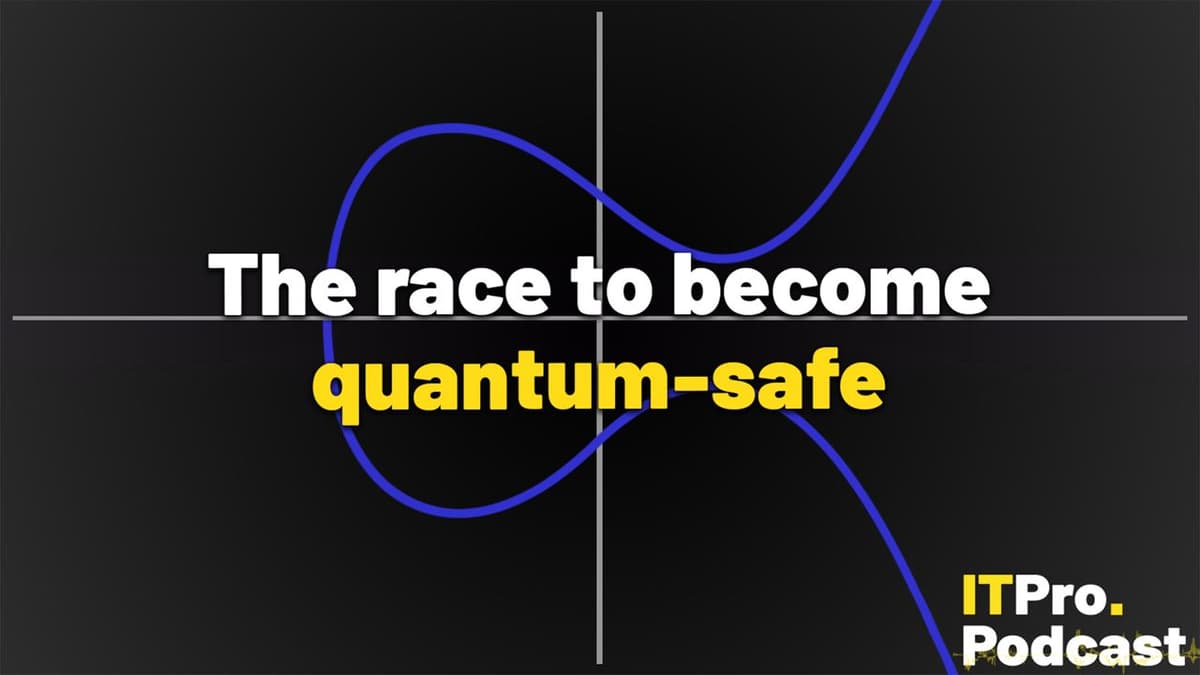
The Race to Become Quantum-Safe
Quantum computing is projected to reach a cryptographically relevant scale by 2029, after a recent breakthrough demonstrated 10,000 physical qubits. That capability threatens RSA, ECC and blockchain key pairs, making current encryption obsolete. Standards bodies such as NIST and the...

Helsinki’s Algorithmiq Wins €1.7 Million Prize for Quantum-Enabled Light-Sensitive Cancer Drug Discovery
Algorithmiq, a Helsinki‑based quantum software firm, secured the €1.7 million ($2 million) Wellcome Leap prize for demonstrating a practical quantum advantage in drug discovery. The team built an end‑to‑end quantum‑classical workflow that ran on up to 100 qubits to simulate a photosensitiser...

C12 Unveils Roadmap to Utility-Scale Fault-Tolerant Quantum Computing by 2033
French startup C12 released a decade‑long roadmap to build a utility‑scale, fault‑tolerant quantum computer by 2033. The plan hinges on purified carbon‑12 nanotube spin qubits, promising unprecedented noise isolation and low power per qubit. Four generational milestones—Aidōs (2027), Zélos (2030),...

PsiQuantum, University of Tokyo, Mitsubishi Launch Quantum Workforce Training Program in Japan
PsiQuantum, the University of Tokyo, and Mitsubishi Chemical have launched a six‑month quantum workforce training program in Japan, backed by NEDO’s Post‑5G ICT initiative (2025‑2027). The curriculum, developed by the university and delivered with PsiQuantum’s Construct platform, targets fault‑tolerant quantum...

Quantum Bottleneck Breaks Wide Open as One Light Beam Carries 23 Secure Channels at the Same Time
Bar‑Ilan University researchers have demonstrated a way to transmit, manipulate, and measure quantum information across many frequency channels at once, breaking the long‑standing detector bandwidth bottleneck. Using broadband squeezed light, spectral shaping and parametric homodyne detection, they performed continuous‑variable quantum...
A Look at One of the Biggest Years in Quantum
The Quantum Economic Development Consortium’s 2026 report shows the global quantum market expanding to $1.9 bn in 2025, driven by $1.4 bn in computing and $470 m in sensing revenues. Workforce growth accelerated, with 16,000 new pure‑play quantum hires and 8,000 related positions...
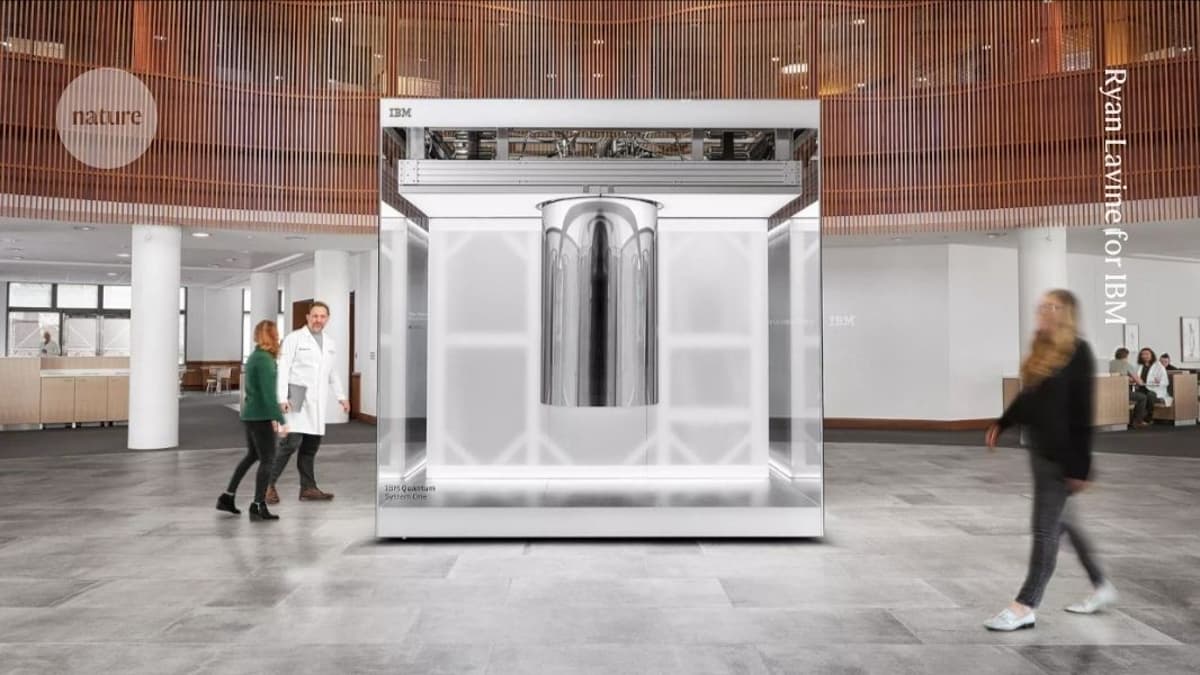
Quantum Computers Take on Health Care: Light-Sensitive Cancer Drugs Win US$2-Million Contest
A team comprising Algorithmiq, IBM, and the Cleveland Clinic secured the $2 million Quantum for Bio prize by demonstrating a hybrid quantum‑classical simulation of a light‑sensitive cancer drug. The approach models photon‑electron interactions on IBM’s Quantum System One, revealing how molecular...
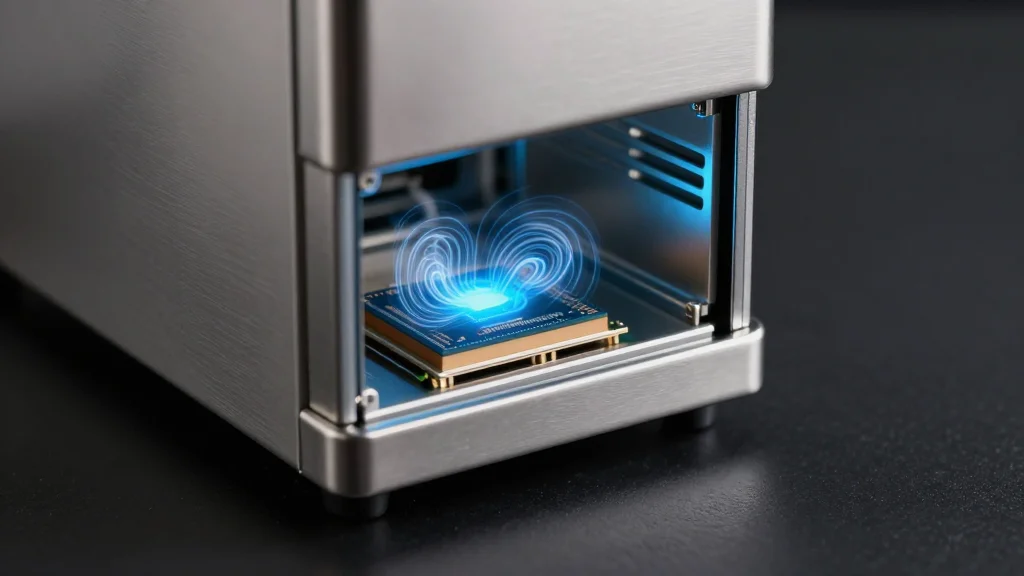
Quantum Simulations Reveal Spin Transport in 1D Materials
Researchers at Oak Ridge’s Quantum Science Center used a 40‑qubit IBM Heron processor to perform the first digital quantum simulations of spin‑transport dynamics in a one‑dimensional Heisenberg model. The study captured ballistic, diffusive and super‑diffusive regimes and validated the results...

NVIDIA Debuts AI Models for Quantum Computing
NVIDIA unveiled the Ising family of open AI models designed to tackle quantum computing’s toughest hurdles—error correction and system calibration. The models use neural‑network decoding for real‑time error correction and a vision‑language framework to slash calibration times from days to...

Forrester’s Top 10 Emerging Technologies For 2026: Beyond Chat
Forrester’s 2026 Top 10 Emerging Technologies list marks a pivot from chat‑centric AI to a three‑layer framework—Interact, Build, and Fuel. It highlights layer‑zero experiences that overlay apps, physical AI and robotics delivering 20‑50% efficiency gains, and multi‑agent systems that coordinate autonomous...

Quantum Computing Stocks Are Back on the Rise. Here’s Why IONQ, QBTS, RGTI, and QUBT Are Up
Quantum‑computing stocks surged on World Quantum Day, with IonQ jumping 20% and D‑Wave gaining 16% after announcing a photonic interconnect milestone and a DARPA contract. The other members of the so‑called Quantum Four—Rigetti and Quantum Computing Inc.—also posted double‑digit gains,...

Quantum Industry Projected to Surpass USD 4 Billion by 2028
The Quantum Economic Development Consortium forecasts the global quantum technology market to more than double, rising from $1.9 billion in 2025 to over $4 billion by 2028. Quantum computing will drive most of the growth, reaching $3 billion with a 30% annual compound...

Senate Committee Approves Quantum Reauthorization Bill with 7 Amendments
The Senate Commerce Committee advanced the reauthorization of the National Quantum Initiative Act, attaching seven amendments that broaden its scope. Senator Marsha Blackburn’s three proposals embed a quantum manufacturing institute, a public‑private sandbox for near‑term applications, and a federal quantum...
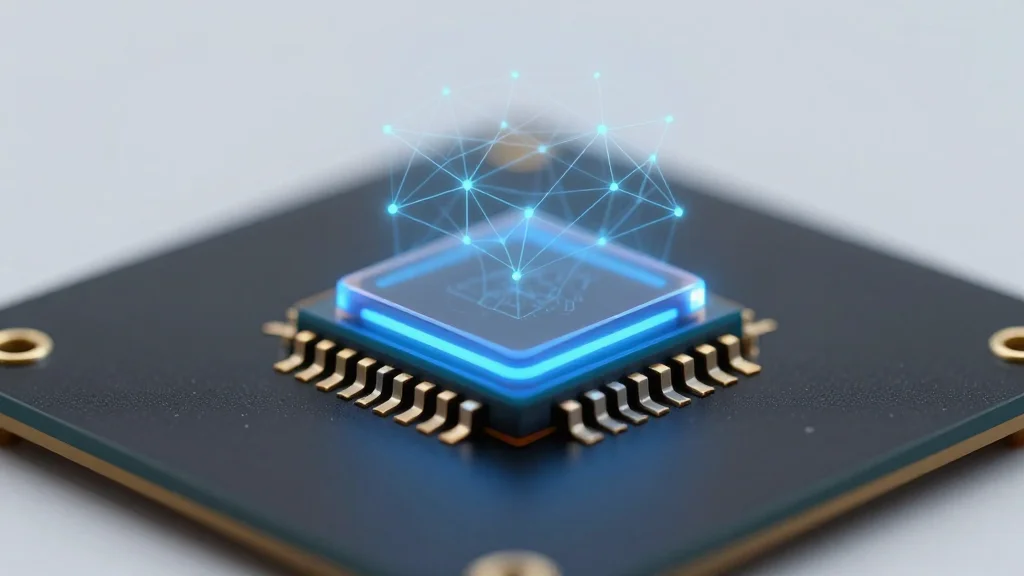
Northwestern and Fermilab Quantum Data Helps Build a New AI Benchmark for Quantum Calibration with NVIDIA Ising Open Models
Northwestern researchers at Fermilab's NEXUS underground lab have released a high‑dimensional superconducting qubit dataset on the American Science Cloud, marking the first globally accessible charge‑jump measurements. The data enabled NVIDIA to train its new Ising Calibration vision‑language model, which can...
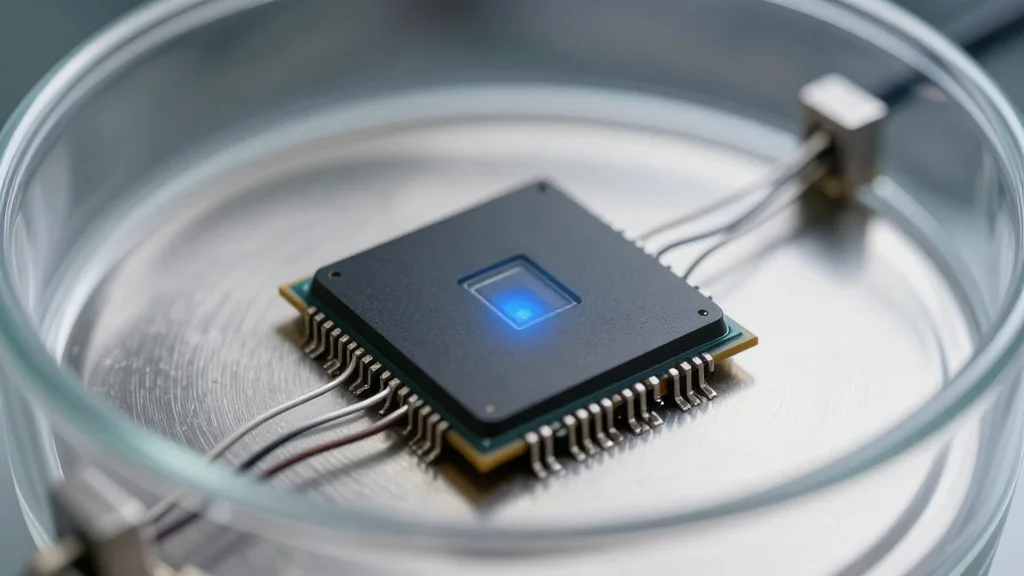
Key Quantum Innovations Covered by eeNews Europe
World Quantum Day on April 14 highlighted a surge of commercial‑grade quantum activity. Rigetti Computing unveiled a 108‑qubit superconducting processor aimed at research and enterprise workloads, while Finland’s IQM raised €50 million (about $55 million) to fast‑track its roadmap. Parallel advances include...

Answering Your Trending Questions on World Quantum Day
Google’s Quantum AI team used World Quantum Day to field the most‑searched questions about quantum computing, outlining its mission to build large‑scale, error‑corrected machines. The team highlighted the unique properties of qubits, such as superposition on the Bloch sphere, and...
IQM Advances AI-Driven Agentic Calibration, Opening Quantum Computing to the Enterprise With NVIDIA Ising
On World Quantum Day, IQM Quantum Computers unveiled an AI‑driven agentic calibration system built on NVIDIA Ising models. The technology automates qubit tuning by inspecting calibration results across all qubits in parallel, eliminating the traditional sequential bottleneck. By shifting calibration...

Nvidia Unveils Ising AI Models for Quantum Error Correction and Calibration
Nvidia announced Ising, the first open‑source AI model family designed for quantum computing calibration and error correction. The suite includes two 3‑D convolutional neural network models—one optimized for speed, the other for accuracy—delivering up to 2.5× faster processing and three...

Quantum Computers Could Usher in a Crisis Worse than Y2K
Quantum researchers warn that a functional, large‑scale quantum computer capable of breaking RSA and ECC encryption – dubbed Q‑Day – may emerge within the next decade. The threat mirrors the Y2K panic, but the underlying cryptographic foundations are far more...
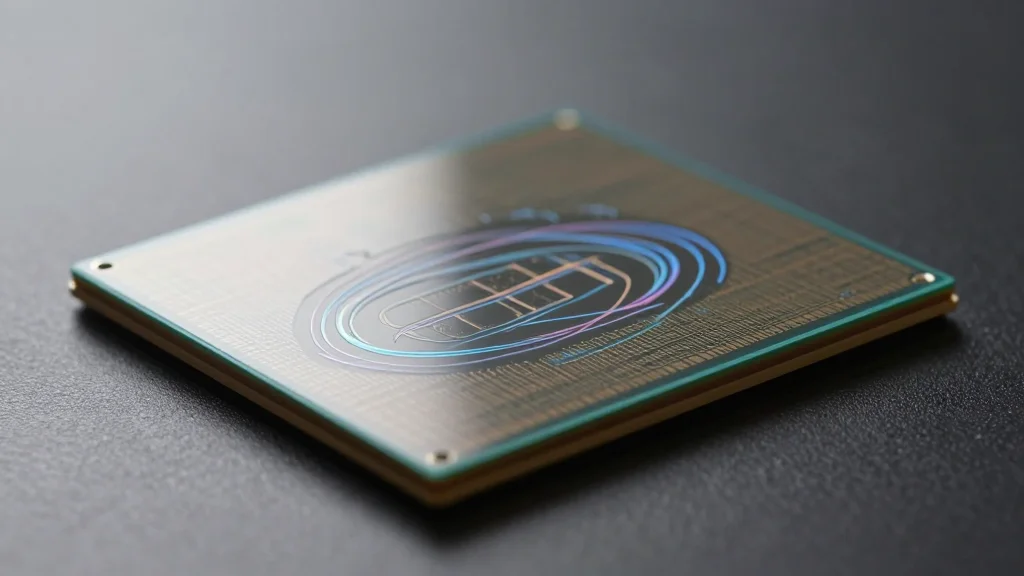
How GlobalFoundries Is Manufacturing Quantum at Scale
GlobalFoundries (GF) is positioning its specialty‑foundry capabilities to become the manufacturing backbone for quantum computers across all qubit modalities. By extending proven semiconductor platforms—such as 22FDX® FD‑SOI, high‑voltage/RF, and 300 mm silicon photonics—GF offers a repeatable, high‑yield path from prototype to...
Lloyds Banking Group Leads Landmark Quantum Computing Experiment to Catch Money Mules
Lloyds Banking Group has completed a nine‑month pilot that used IBM’s 156‑qubit Quantum Heron computer to spot a concealed money mule within a synthetic transaction graph. By running quantum algorithms on anonymized real‑world data, the experiment successfully isolated the mule, demonstrating...

3 Quantum Realities to Confront This World Quantum Day
World Quantum Day highlighted the accelerating timeline toward a post‑quantum future, with industry leaders warning that waiting for certainty will delay critical migration. Experts emphasized that the operational risk lies in how long it takes to identify dependencies, prioritize remediation,...

Reducing Wires in Quantum Computers
A new theoretical study shows that time‑multiplexing control wires across multiple superconducting qubits can dramatically cut wiring density while adding only a modest speed penalty. By scheduling fast single‑qubit operations during the longer two‑qubit gate windows, the researchers found that...
Quantum and AI Begin to Converge in Hybrid Computing Experiments
Researchers are increasingly pairing artificial‑intelligence tools with quantum‑computing research to tackle the soaring cost of large AI models. Companies like Multiverse Computing are applying quantum‑inspired tensor networks to compress neural‑network parameters, while quantum‑software firm Classiq unveiled an AI‑driven coding assistant...

Curious About Quantum? Check Out Training Options From ISC2, IBM, AWS and More
The quantum computing sector is accelerating toward a so‑called Q‑day, projected by Forrester to arrive by 2030, as vendors move from theoretical fault‑tolerant designs to early engineering reality. IBM targets fault‑tolerant quantum processors by 2029, while industry leaders warn that...

Finnish Quantum Computing Champion IQM Determined to Make ‘Impossible’ Engineering Breakthrough
IQM, Europe’s largest quantum‑computing firm, is raising roughly €300 million (about $330 million) to fund R&D and acquisitions aimed at overcoming the engineering limits of superconducting qubits. CEO Jan Goetz argues that breakthroughs—especially in cabling‑free, tiled qubit architectures—can prove DARPA’s warning that current...

Chinese Team Shows Quantum Tech Can Disrupt AI in a Real World Task
Chinese researchers demonstrated a nine‑qubit nuclear magnetic resonance quantum reservoir that matched or exceeded a classical 10,000‑node network in multi‑step weather prediction. The experiment achieved comparable accuracy at less than 1 % of the $100 million cost of typical AI weather‑forecasting supercomputers....
IonQ and University of Maryland Expand QLab Partnership to Advance Quantum Networking
IonQ and the University of Maryland have expanded their QLab partnership with a $7.5 million multi‑year agreement. The deal adds IonQ’s first silicon‑vacancy quantum memory node, more compute time on trapped‑ion systems, and joint research on quantum machine learning and error‑correcting...

Quantum Computing: A Tech Race Europe Could Win?
Alice & Bob, a French quantum‑computer startup, is spending $50 million on a new Paris‑area campus that will house larger cryostats and an in‑house chip‑fab. Co‑founder Théau Peronnin says the firm will soon link its machines to high‑performance computers, delivering exponential speed‑ups that could...
Physicists Discover How to Reverse 'Quantum Scrambling'
Physicists at UC Irvine have unveiled a method to reverse quantum scrambling, a process that spreads and seemingly loses information across qubits. By exploiting the microscopic time‑reversibility of quantum systems, the team engineered a precise backward‑evolution protocol that refocuses dispersed...
Podcast with Matt Kinsella, CEO of Infleqtion
Infleqtion, a Boulder‑based quantum technologies firm, leverages neutral‑atom platforms to sell both quantum sensors and emerging quantum computers. CEO Matt Kinsella says the company’s diversified product line—clocks, RF and inertial sensors—generates near‑term cash while the computing roadmap aims for 100...

QAI Ventures and QCentroid Partner to Accelerate Industrial Quantum Adoption
QAI Ventures has teamed with portfolio company QCentroid to embed the Quantum Ops platform across its Global Industry Clusters. The partnership introduces a three‑tier engagement model—sandbox environments, a readiness roadmap, and end‑to‑end proof‑of‑concept delivery—to move enterprises from curiosity to validated...

“Giant Superatoms” Could Finally Solve Quantum Computing’s Biggest Problem
Researchers at Sweden’s Chalmers University have proposed “giant superatoms,” a hybrid quantum architecture that fuses giant atoms with superatoms. The design leverages multi‑point coupling to create a quantum‑echo effect, dramatically lowering decoherence while allowing multiple qubits to act as a...
D-Wave CEO Brings Commercial Quantum Computing to the Center of Global Economic and Technology Discussions at Semafor World Economy and...
D‑Wave Quantum Inc. announced that CEO Dr. Alan Baratz will appear on the mainstage at Semafor World Economy on April 14, 2026, and at the QED‑C Quantum Summit on April 15, 2026. The talks will emphasize the shift from experimental...

HPE Accelerates Quantum Readiness Ahead of Q-Day
Hewlett Packard Enterprise (HPE) is positioning itself as a leader in quantum readiness ahead of the industry‑wide “Q‑day” when quantum computers could break current cryptography. The company announced its Quantum Scaling Alliance, a full‑stack partnership aimed at marrying quantum processors...

Quantum Computing Weekly Round-Up: Week Ending April 11, 2026
The quantum computing sector is moving from experimental labs to real‑world deployments, with major cloud providers now offering on‑demand quantum processors for commercial workloads. Governments and industry consortia are accelerating post‑quantum cryptography initiatives to safeguard data against future quantum attacks....
QuantrolOx and RAQS Quantum Partner to Scale Automation and Workforce Development in Asia Pacific
QuantrolOx and Singapore‑based RAQS Quantum announced a partnership to bring the Quantum EDGE automation platform and Quantum EDGE Academy to the Asia Pacific region. The collaboration, unveiled at GITEX Asia 2026, aims to replace manual calibration of quantum hardware with automated workflows, targeting research labs,...

Q-CTRL Proposes Heterogeneous Architecture to Optimize Fault-Tolerant Resource Requirements
Q‑CTRL unveiled Q‑NEXUS, a heterogeneous quantum‑computing architecture that separates logic, memory and state‑generation into specialized modules. By offloading idle qubits to high‑density storage, the design cuts physical‑qubit requirements for fault‑tolerant tasks by up to 138× and reduces logical error rates...

Pasqal Partners with True Nexus on Quantum Food Protein Design
Quantum computing firm Pasqal has teamed up with computational‑intelligence specialist True Nexus to use Pasqal’s neutral‑atom quantum processors for protein modeling in alternative food systems. The partnership will develop the first fully vectorized, dynamic 3‑D model of protein gelation, integrating...

Qoro Quantum Secures $750,000 Pre-Seed to Orchestrate Hybrid Networks
London‑based deep‑tech startup Qoro Quantum announced a $750,000 pre‑seed round led by Ada Ventures, with participation from Superangels Venture Fund and the Polsky Center. The company’s platform provides a unified orchestration layer that condenses roughly 150,000 lines of integration code...

Infleqtion and NASA Deploy Upgraded Quantum Hardware to International Space Station
Infleqtion, in partnership with NASA’s JPL, delivered an upgraded physics package to the International Space Station aboard the Northrop Grumman‑24 cargo flight. The new hardware enhances the Cold Atom Laboratory’s ability to generate record‑large atom clouds and reach ultracold temperatures in...
Riverlane Demonstrates Real-Time QEC Latency Performance Advancements
Riverlane unveiled its second‑generation Deltaflow 2 quantum error‑correction system, reporting a mean real‑time decoding latency of 16.32 µs—about four times lower than Google’s 2024 Willow benchmark. The platform also achieved a maximum sub‑shot latency tenfold better than prior records, edging toward the...

Chip Can Project Video the Size of a Grain of Sand
Researchers from MIT, the University of Colorado, Sandia National Laboratories and MITRE have unveiled a sub‑0.1 mm² photonic chip that can steer light with unprecedented speed. The device uses voltage‑actuated metallic cantilevers to project up to 68.6 million light spots per second...

European Union Deep Tech Plan Too Late for Quantum Champions IQM and Pasqal
Europe’s two leading quantum‑computing firms, Finland’s IQM and France’s Pasqal, announced U.S. SPAC listings to secure the capital needed for next‑generation hardware. Their moves coincide with the European Commission’s rushed €3 bn (≈$3.2 bn) ScaleUp Europe fund, designed to keep late‑stage deep‑tech...

BMO to Open Institute to Boost Quantum Computing and AI Capabilities
Bank of Montreal announced the launch of the BMO Institute for Applied Artificial Intelligence and Quantum, headed by former chief AI and data officer Kristin Milchanowski. The institute will fuse AI and quantum research, aiming to move quantum from experimental...

Cryptographers Place $5,000 Bet Whether Quantum Will Matter
Two leading cryptographers, Filippo Valsorda and Matthew Green, are arranging a $5,000 wager to test whether post‑quantum cryptography (ML‑KEM‑768) or classic elliptic‑curve cryptography (X25519) will be broken first, either by classical or quantum attacks. The bet follows Google’s claim that...